Welcome to China Agricultural University (CAU): A Visitor’s Guide
Situated in Beijing’s vibrant academic district, China Agricultural University welcomes students, researchers, and travelers interested in the evolution of agricultural sciences and the role of education in China’s development. This guide provides detailed information on campus access, historical sites, transportation, and practical tips to help you plan your visit.
Visiting Hours and Admission
- General Campus Access 8:00 AM to 6:00 PM, Monday through Saturday. Some facilities may have restricted access due to academic or research activities.
- Admission Entry to campus grounds is free. Special exhibitions, museums, and certain events may require tickets or prior registration.
For up-to-date details, always check the CAU official website.
CAU consists of three main campuses, each with its own distinct character:
- East Campus Hosts the university’s main administrative offices and teaching buildings, combining historic and contemporary architecture.
- West Campus Features botanical gardens, experimental farms, and the CAU History Museum, making it ideal for those interested in nature and the university’s heritage.
- Jianshe Campus Focused on engineering and technology, housing cutting-edge laboratories and research facilities.
Notable attractions include the Agricultural Museum and green spaces that highlight CAU’s commitment to sustainability and ecological research.
Guided Tours and Visitor Services
- Guided Tours Available for individuals and groups. Tours cover major landmarks, gardens, and research facilities. Bookings can be made through the university’s visitor center.
- Visitor Resources Maps, brochures, and occasional public lectures or events are available to enrich your experience.
Accessibility and Transportation
- Public Transport CAU is well-served by Beijing’s subway and bus network. East Campus is closest to Wudaokou Station (Line 13), while West Campus is near Yuanmingyuan Park Station (Line 4). Several bus routes connect to both campuses (CAU Official).
- On-Campus Mobility The campuses are pedestrian-friendly, with clear signage in both Chinese and English. Shared bike services are widely available.
- Accessibility Most main buildings have wheelchair access, but some older structures may have limitations. Contact visitor services in advance for special accommodations.
Nearby Attractions and Travel Tips
- Old Summer Palace (Yuanmingyuan) Adjacent to West Campus, a must-visit for its historical ruins and gardens.
- Summer Palace and Olympic Park Easily accessible via public transport.
- Other Universities Peking and Tsinghua Universities are nearby, contributing to the area’s rich academic atmosphere.
Travel Tips:
- Wear comfortable shoes for extensive walking.
- Photography is permitted in outdoor areas; inquire about indoor restrictions.
- Spring and autumn are the best seasons to visit.
- Use translation apps if needed; signage is bilingual in key areas.
Visual Experience
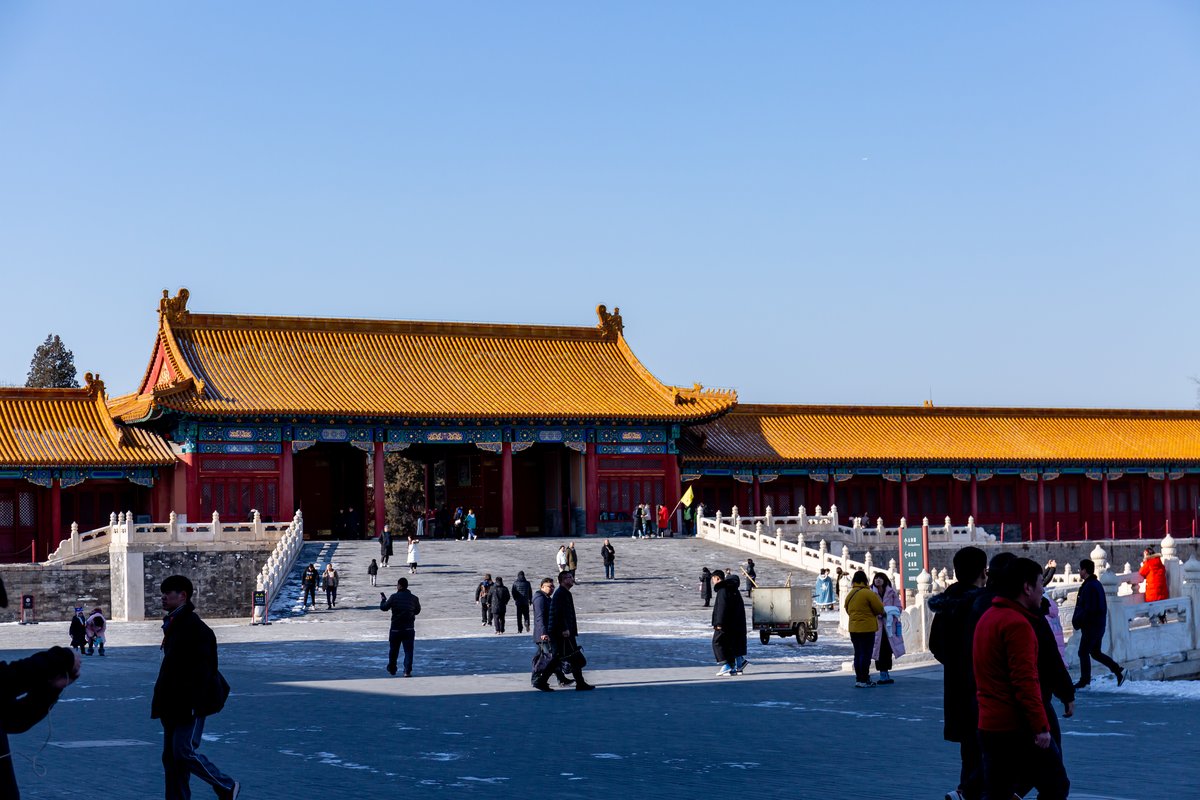
Visitors can enjoy and photograph the botanical gardens, tree-lined avenues, and historical buildings. The CAU History Museum and surrounding green spaces provide excellent opportunities for capturing the university’s unique blend of tradition and innovation.
Frequently Asked Questions (FAQ)
Q: What are the visiting hours of CAU?
A: 8:00 AM to 6:00 PM, Monday through Saturday.
Q: Do I need a ticket to visit the campus?
A: General access is free; special events or museums may require tickets.
Q: Are guided tours available?
A: Yes, arrange through the visitor center in advance.
Q: How do I get to CAU?
A: Accessible via Beijing Subway and bus routes; parking is limited.
Q: Is photography allowed?
A: Yes, outdoors. Always check for indoor restrictions.
Brief History of China Agricultural University
Tracing its roots to 1905, CAU’s legacy began at Peking University’s College of Agriculture. The 1995 merger between Beijing Agricultural University and Beijing Agricultural Engineering University solidified its status as a leading institution (en.cau.edu.cn). With over 70,000 students, CAU’s influence extends across China and internationally.
Academic Excellence and Global Impact
CAU is recognized as a key national university under China’s Ministry of Education and is part of Project 211 and Project 985. Its research output in biology, environmental science, genetics, and sustainable agriculture distinguishes it as a global leader (besteduchina.com). According to EduRank, CAU ranks 38th in China and 469th worldwide, with top 100 global rankings in 14 research fields (edurank.org).
Subject-Specific Rankings
- Biology 20th in China, 238th globally.
- Environmental Science 20th in China, 175th globally.
- Chemistry 30th in China, 247th globally.
- Engineering 68th in China, 474th globally.
- Medicine 39th in China, 511th globally.
- Computer Science 69th in China, 606th globally.
Historical Significance and Institutional Legacy
CAU’s history mirrors China’s agricultural modernization. The 1949 formation of Beijing Agricultural University through the merging of several colleges, and the subsequent creation and renaming of engineering faculties, highlight its evolving focus on both science and technology (besteduchina.com). The 1995 merger, with the university’s name inscribed by former President Jiang Zemin, cemented its national importance (en.cau.edu.cn).
Practical Visitor Information
- Visitor Access Public areas open during weekdays, 8:30 AM–5:30 PM. Contact the visitor center or check the official website for updates.
- Guided Tours Group and individual tours available by prior arrangement.
- Transportation Subway lines, buses, and shared bikes provide convenient access.
Research Contributions and Societal Impact
CAU is at the forefront of research in agricultural modernization, biotechnology, food safety, and sustainable development. Its projects support policy reform and rural innovation, influencing China’s agricultural landscape (besteduchina.com).
Campus Infrastructure and Academic Environment
Occupying 157 hectares, CAU’s campuses feature state-of-the-art laboratories, libraries, and research centers, fostering a vibrant, collaborative academic community (en.cau.edu.cn).
International Students and Scholars
CAU offers English-taught programs and scholarships for international students, supporting a diverse learning environment (globalscholarships.com). Its Beijing location provides access to rich cultural and academic experiences.
Notable Alumni and Institutional Influence
Graduates of CAU include renowned scientists and policymakers who have made significant contributions to agricultural science and rural development, both in China and internationally.
Historical Landmarks and Visitor Guide
CAU History Museum
- Location West Campus, near the main administrative building.
- Hours Tuesday–Sunday, 9:00 AM–5:00 PM.
- Admission Free.
- Exhibits: Documents, artifacts, and photographs tracing agricultural education in China.
Proximity to Yuanmingyuan (Old Summer Palace)
- Location Adjacent to West Campus.
- Hours 7:00 AM–7:00 PM (seasonal variations).
- Tickets RMB 10–30.
Both sites offer rich photographic and educational opportunities.
Essential Visitor Tips
- Weather Summers are hot and humid; spring and autumn are mild. Bring water, sun protection, and a rain poncho as needed (Tour-Beijing).
- Language Mandarin is the primary language. Use translation apps for assistance (AskChinaTravel).
- Safety Standard precautions suffice. Emergency numbers: Police 110, Medical 120, Fire 119 (Ruqin Travel).
- Etiquette Dress modestly, respect campus rules, and avoid disruptive behavior (Ruqin Travel).
- Photography Allowed outdoors; always seek permission indoors.
Facilities and Amenities
- Dining Multiple cafeterias and coffee shops serve local and international cuisine.
- Restrooms Available campus-wide; Western-style may be limited.
- Connectivity Wi-Fi in public areas; local SIM recommended for visitors.
Plan Your Visit: Booking and Reservations
No tickets are required for general campus access, but guided tours and group visits should be booked in advance via the CAU official website.
Sustainable and Responsible Tourism at CAU
Visitors are encouraged to:
- Dispose of waste properly.
- Respect research areas, green spaces, and campus rules.
- Avoid disturbing academic or scientific activities.