What Chegongzhuang Station is
Chegongzhuang Station (车公庄站) is an interchange in Beijing’s Xicheng District, serving Lines 2 and 6. Located at the intersection of Chegongzhuang Street and the West 2nd Ring Road, it provides access to government, business, cultural, and residential areas. Guanyuan Park and Mei Lanfang Grand Theatre are nearby (Wikipedia, ExploreBeijing).
The station is also a gateway to historic sites, museums, hutongs, parks, and other parts of the city. The surrounding area combines traditional alleyways, modern development, educational and cultural institutions, markets, and street life. Nearby institutions include China Foreign Affairs University, known for diplomatic studies.
The station currently serves Lines 2 and 6. Line 13A is planned, with Chegongzhuang set to become its southern terminus and gain additional connections to the northern suburbs (Chegongzhuang Station Guide). Further information includes the Miaoying Temple Visitor Guide and Top Attractions Near Chegongzhuang Station.
History
The area is part of a city with more than three millennia of urban and transportation history. Beijing developed from a Western Zhou Dynasty settlement (1046–771 BCE); its growth through the Yuan, Ming, and Qing dynasties shaped the city’s present layout. Ming-era walls and gates continue to influence transport routes.
Construction of the Beijing Subway began in 1965, inspired by the Moscow Metro. Plans were adjusted to protect historic sites, including Qianmen Gate. Today, the system is among the world’s largest and busiest and serves as part of daily life for millions.
Chegongzhuang Station opened in 2012 as part of Line 6 and connects with Line 2. Its continuing development, including the planned Line 13A expansion, reflects Beijing’s effort to modernize while preserving its past.
What to see
Chegongzhuang provides access to nearby historic, cultural, and recreational sites. Some are within walking distance; others can be reached by subway, bus, taxi, or a combination of these.
| Attraction | Distance | Access | Visiting hours | Tickets | Highlights |
|---|---|---|---|---|---|
| Forbidden City | ~3 km SE | Line 2/1 transfer | 8:30 AM–5 PM | ~60 CNY | UNESCO palace complex, museums |
| Jingshan Park | ~3 km SE | Line 2/5 transfer | 6:00 AM–9 PM | ~2 CNY | Panoramic city views |
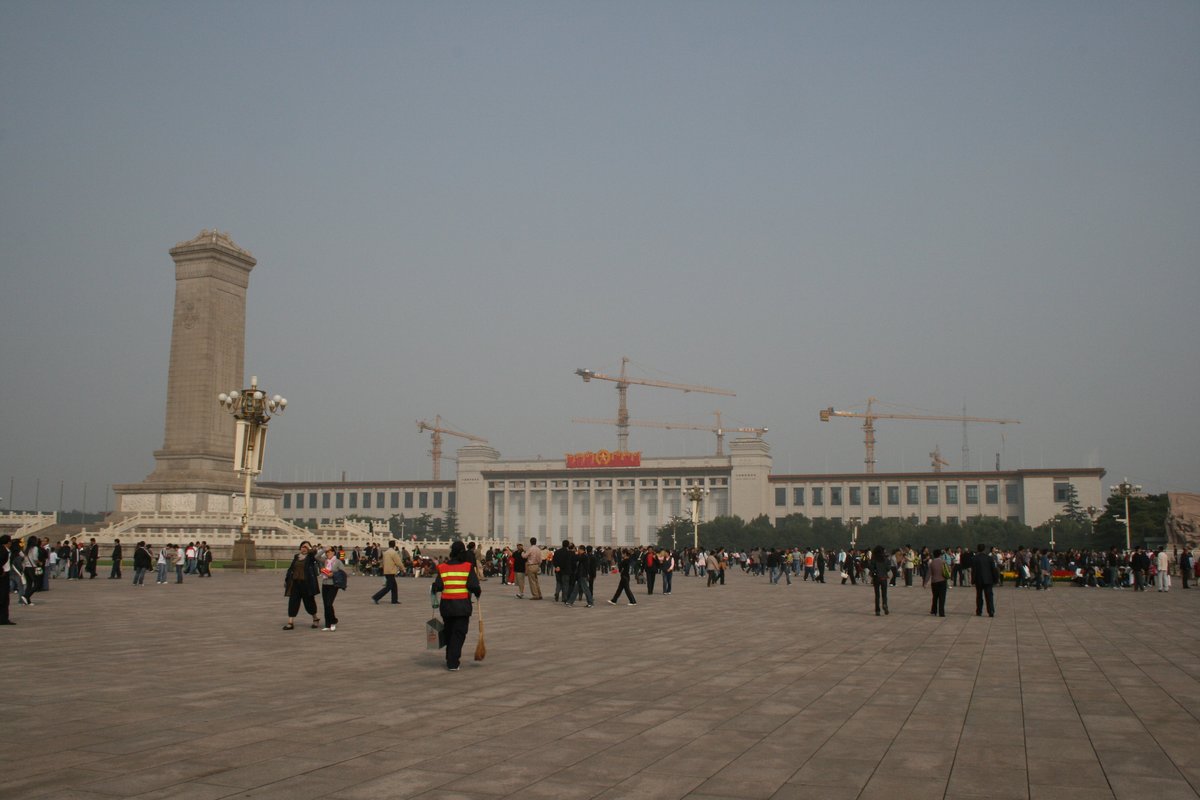
| Tiananmen Square | ~4 km SE | Line 2/1 transfer | Open 24 hours | Free | National monuments, historical events |
| Nanluoguxiang | ~3 km E | Line 6 direct | 10 AM–10 PM (shops) | Free | Shopping, dining, historic hutong |
| Beihai Park | ~2.5 km E | Bus/taxi | 6:30 AM–9 PM | ~10 CNY | Imperial gardens, White Dagoba |
| Huguosi Snack Street | ~1 km E | Walk | Varies | Free | Traditional Beijing snacks |
| Capital Museum | ~2 km SW | Line 1/9 transfer | 9:00 AM–5 PM | Free (res.) | Beijing history and culture exhibitions |
| Guangji Temple | ~0.5 km N | Walk | 7:00 AM–5 PM | Free | Buddhist temple, serene gardens |
| White Pagoda Temple | ~1.5 km E | Bus/taxi | 8:00 AM–5 PM | ~10 CNY | Yuan Dynasty stupa, religious site |
| Lu Xun Museum | Nearby | Walk | Varies | Free | Literary history |
| Shichahai and hutongs | ~2 km NE | Line 6/8 transfer | Varies | Free | Lakes, nightlife, historic alleys |
Miaoying Temple (White Stupa Temple)
Miaoying Temple, also called the White Stupa Temple (白塔寺), is a Yuan Dynasty Buddhist temple described as a short walk from Chegongzhuang Station. Its 50-meter-tall white stupa combines Han Chinese and Tibetan styles and symbolizes peace and spiritual harmony.
- Opening hours 8:00 AM–5:00 PM daily
- Tickets 10 RMB; discounts for students, seniors, and groups
- Guided tours Available in multiple languages
- Accessibility Partial; inquire at the entrance
- Getting there From Exit B, walk 5–10 minutes east. Numerous bus lines also serve the temple.
- What to see The Yuan Dynasty white stupa, temple halls with intricate carvings and Buddhist statues, and cultural festivals and ceremonies held throughout the year.
- Visitor details Photography is allowed in outdoor areas.
The attraction table also lists White Pagoda Temple at ~1.5 km east, with tickets at ~10 CNY and hours of 8:00 AM–5:00 PM.
Visiting information
Hours and station layout
- Operating hours Approximately 5:00 AM–11:30 PM daily. Check real-time hours through official sources or apps before traveling.
- Platforms Underground island platforms serve both lines; Line 6 is also described as having a split island.
- Exits Five exits—A, B, C, E, and H. Exits C and H are accessible, with ramps and elevators.
The station has bilingual Chinese and English signage and announcements, plus digital displays with real-time train information. Elevators, ramps, and tactile paving support accessibility. Restrooms are available in the paid area, and information desks are staffed by Chinese- and English-speaking personnel. Security checks, including bag scans, take place at all entrances.
Tickets, fares, and payment
Tickets are available from vending machines, ticket counters, and mobile apps. Single-journey tickets can be purchased at machines or counters with cash or major credit cards. Most major credit cards, including foreign cards, are accepted at ticket machines and counters.
Fares are distance-based and start at RMB 3 for short trips. The rechargeable Beijing Yikatong Smart Card can be used for subway and bus travel and offers fare discounts. The station’s payment options also include the Beijing Pass.
Tips
- Avoid peak periods for a less crowded journey. One suggested range is 7:30–9:00 AM and 5:30–7:00 PM; another is 7:00–9:00 AM and 5:00–7:00 PM.
- Keep your subway ticket or card until you exit at your destination.
- Check station signage and maps to choose the nearest exit for your destination (Tour-Beijing).
- Download a real-time subway app such as Baidu Maps or Beijing Subway Guide for route planning. Baidu Maps and Audiala are also suggested for real-time navigation and travel planning.
- Keep some small bills for occasional cash-only situations, and be prepared for security checks at station entrances.
- Queue, let passengers alight first, and offer priority seats. Learning basic Chinese phrases may make travel easier.
- For Miaoying Temple, weekdays or early mornings are suggested for a quieter visit. Dress modestly at the place of worship.
Nearby places and connections
Other transport
Multiple bus routes serve the station area, including 743, 438, 50, 604, and 693 (ExploreBeijing). Taxis and DiDi ride-hailing services are available at marked pickup zones, and bicycle-sharing docking stations are located near station exits (RuqinTravel).
Subway routes and major destinations
- Line 2 Circles central Beijing and connects railway stations, business districts, and tourist areas (ChinaDiscovery).
- Line 6 Runs east–west, linking commercial and residential areas (TravelChinaGuide).
- Within Beijing Direct or single-transfer access is available to Beijing Railway Station, Xizhimen, the Forbidden City, Tiananmen Square, Wangfujing, Nanluoguxiang, and Olympic Park (TravelChinaGuide).
- Airports Take Line 2 to Dongzhimen for the Capital Airport Express. For Daxing Airport Express, travel via Line 4 and Line 19 to Caoqiao (TheBeijinger).
- Intercity rail Subway transfers connect to Beijing North, South, and West Railway Stations (RuqinTravel). Direct subway access to Beijing North, West, and South Railway Stations also provides connections for travel to the Great Wall, Shanghai, Tianjin, and beyond. The station information also lists intercity rail access via Xizhimen (Line 13) and transfers to Beijing South and West Railway Stations.
For up-to-date maps and operating information, see the Beijing Subway Map and Beijing Subway Guide.
Further information
Related Articles:
Frequently Asked Questions (FAQ)
Q: What are Chegongzhuang Station’s operating hours?
A: Approximately 5:00 AM–11:30 PM daily.
Q: How do I buy tickets?
A: Tickets are available from vending machines, counters, or mobile apps. Yikatong cards are also accepted.
Q: Is the station accessible?
A: Yes. Exits C and H have elevators and ramps.
Q: What’s the best time to visit nearby historical sites?
A: Spring and autumn are described as offering comfortable weather and lighter crowds.
Q: Can I use foreign bank cards?
A: Yes. Foreign cards are accepted at most ticket machines and counters.