
Historical Background and Architectural Significance
Origins and Development
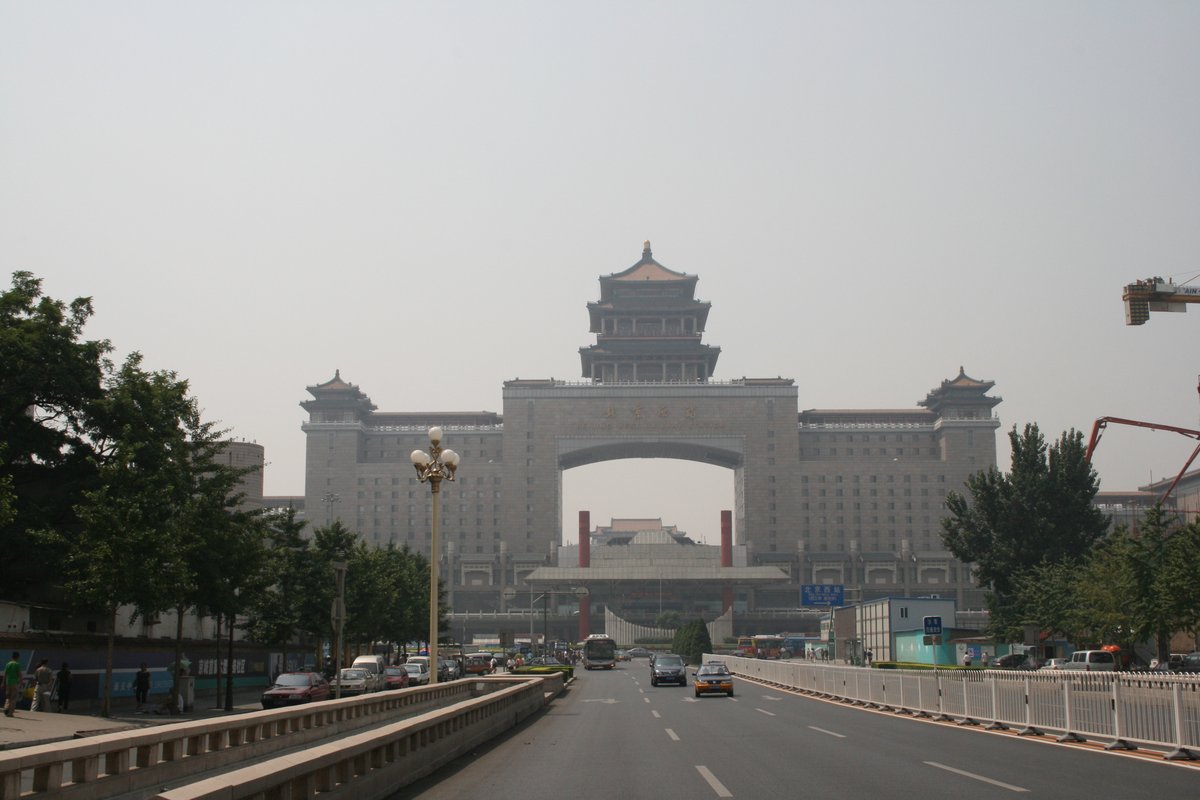
Beijing West Railway Station was envisioned to address the overwhelming passenger flow at Beijing’s original rail hub. Construction began in 1993, and by its completion in 1996, Beijingxi had become Asia’s largest railway station, covering 510,000 square meters (visitbeijing.com.cn, railway-technology.com). The station became the departure point for major routes including the Beijing–Kowloon and Beijing–Guangzhou lines, and played a vital role during the 2008 Olympics (chinatrainguide.com).
Architectural Features
Designed to symbolize the fusion of tradition and modernity, Beijingxi incorporates traditional Chinese palatial motifs—sweeping eaves, golden tiles, and red columns—into its vast glass-and-steel structure. The main building rises 90 meters, dominating the Fengtai District skyline. Engineering innovations, such as expansive column-free concourses, facilitate efficient passenger flow and reflect late 20th-century Chinese architectural ambition (link.springer.com).
Renovations and Modernization
Since its opening, Beijing West has undergone continual upgrades, including expanded parking, computerized ticketing, bilingual signage, and improved accessibility—especially in preparation for international events (visitbeijing.com.cn). Today, it remains a key link to cities like Guangzhou, Shenzhen, Xi’an, Chengdu, and Hong Kong (chinatrainguide.com).
Practical Visitor Information
Visiting Hours
- Station Operations 24/7
- Ticket Offices & Service Centers Typically open from 6:00 AM to 10:30 PM
- Waiting Halls Open 24 hours
Arrive at least 60–90 minutes before train departure, especially during peak travel seasons.
Ticketing
- Online Official China Railway website and apps
- Mobile Apps China Railway and third-party travel apps
- On-site Multiple ticket counters and self-service machines on all main floors
- Agencies Authorized citywide ticket agencies
Tip: International travelers must present passports when purchasing or collecting tickets.
Accessibility
Beijing West is equipped for travelers with disabilities, including ramps, elevators, tactile pavements, and accessible restrooms. Staff assistance is available upon request.
Station Layout and Facilities
Location
Situated at East Lianhuachi Road, Fengtai District, roughly 8 km from the Forbidden City and 12 km from Beijing Railway Station (TravelChinaGuide).
Major Areas
- North Square Long-distance bus station, taxi stand
- South Square Bus hub, airport shuttle terminal
- Underground Passage Connects North and South Squares
Floor Plan
- 2F Main waiting hall (13 waiting rooms), ticket offices, restaurants, information desk
- 1F Ticketing and direct platform access
- -1F Subway lines (7 & 9), taxi stands, transfer hall
- -2F Additional ticket offices, transfer formalities, taxi stands
Facilities
- Comfortable waiting lounges
- Multilingual electronic displays
- Restaurants, food stands, and convenience stores
- Luggage storage and red-cap porter services
- Security screening at station entry
- Free Wi-Fi (Chinese mobile required for registration)
- Charging stations for electronics
Train Services
High-Speed Rail
- Beijing–Guangzhou High-Speed Railway Connects to southern China, including Wuhan, Changsha, Guangzhou
- Beijing–Xi’an High-Speed Railway Travel to Xi’an in 4.5–6 hours
- Beijing–Shanghai High-Speed Railway Fast connections, typically under 5 hours (chinatrainguide.com)
Conventional and Overnight Trains
Direct overnight services to major cities such as Shanghai, Guangzhou, and Chengdu.
International and Cross-Border Services
Direct service to Hong Kong (Kowloon) via the Beijing–Kowloon Railway.
Popular Destinations
Shanghai, Xi’an, Guangzhou, Shenzhen, Chengdu, Chongqing, Wuhan, Hong Kong (Kowloon).
Travel Tips for Visitors
- Arrive Early Allow ample time for security and finding your waiting area.
- Ticketing Documents Bring your passport for ticket purchase/collection.
- Use the Passage Move between North and South Squares via the underground passage.
- Language Bilingual signage is present, but announcements are mostly in Chinese; translation apps are useful.
- Luggage Storage available; red-cap porters can assist.
- Digital Tools Download the Audiala app for real-time updates and ticket bookings.
- Peak Times Avoid weekends/holidays or book tickets early to reduce wait times.
Nearby Attractions
Within 30 Minutes
- Forbidden City & Tiananmen Square 8 km away, accessible via metro or taxi. Forbidden City tickets: 40–60 RMB (China Discovery).
- Temple of Heaven Entry ~35 RMB, UNESCO World Heritage site.
- Beijing Capital Museum Free admission.
Western Beijing Highlights
- Marco Polo (Lugou) Bridge 10 km away, free to visit.
- Tanzhe Temple 20 km west; entrance ~10 RMB.
Day Trips
- Mutianyu Great Wall 1.5 hours by car, tickets ~45 RMB.
- Fragrant Hills 30–40 minutes by car; tickets ~30 RMB.
- Beijing Zoo/Aquarium Tickets 15–40 RMB.
Shopping & Dining
- Xidan Commercial District Major malls, street food, a few subway stops away.
- Local Cuisine Numerous eateries and international options near the station.
Ground Transportation
- Subway Lines 7 & 9 connect directly to the station.
- Bus North and South Squares serve both city and intercity buses.
- Taxi Ranks at -2F and -1F, plus outside both squares.
- Airport Shuttle Regular buses to Capital and Daxing airports from South Square (6:00–20:30, every 30–60 minutes).
- Parking Ample for private vehicles.
Frequently Asked Questions (FAQ)
Q: What are Beijingxi Railway Station’s opening hours?
A: The station operates 24/7; ticket counters generally open 6:00 AM to 10:30/11:00 PM.
Q: How can I buy train tickets?
A: Online, at station counters, via ticket machines, or travel agencies. Passport required for international travelers.
Q: Is the station accessible for people with disabilities?
A: Yes, with elevators, ramps, accessible restrooms, and staff assistance.
Q: How early should I arrive before my train?
A: At least 60–90 minutes before departure, especially during holidays.
Q: Are there guided tours at the station?
A: No official tours, but city tours often include the station.