1. Historical Development
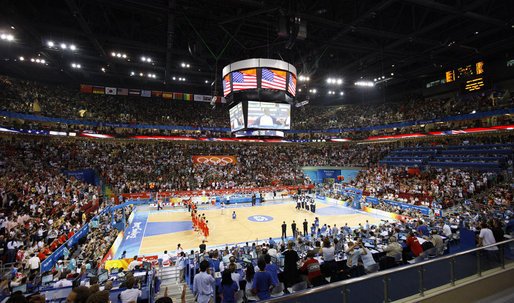
The BIT Gymnasium is central to the university’s sports infrastructure expansion, covering approximately 15,692 square meters. Its significance was firmly established after serving as a volleyball venue during the 2008 Beijing Olympic and Paralympic Games, reflecting both the university’s and Beijing’s commitment to world-class sports and architectural standards (Archidiaries, China.org.cn Wiki).
2. Architectural Design and Features
Designed by Atelier Alter Architects, the gymnasium’s architecture draws on Renaissance ideals of holistic education, referencing Leonardo da Vinci’s scientific studies. Its “batfish” silhouette and flowing lines foster a sense of movement and connectivity, both internally—between sports halls—and externally, with the campus and surrounding urban landscape (Archidiaries). The gymnasium seats up to 4,000 spectators and is part of a complex that includes a basketball stadium, swimming pool, and martial arts spaces (China.org.cn Wiki).
3. Environmental Sustainability
In line with the “Green Olympics” philosophy, the gymnasium features a three-layer insulation envelope for energy efficiency and noise reduction, and maximizes natural lighting with abundant windows and skylights. Water- and energy-saving systems are integrated throughout, reinforcing BIT’s commitment to sustainable campus development (China.org.cn Wiki).
4. Accessibility and Inclusivity
The gymnasium is fully compliant with accessibility standards, offering barrier-free entrances, ramps, elevators, and restrooms to accommodate athletes and visitors with disabilities. This inclusiveness reflects both Olympic requirements and the values of a modern public university (China.org.cn Wiki).
5. Integration with Campus and Community
Serving as a landmark at the gateway to the BIT campus, the gymnasium integrates seamlessly with the university’s academic and social life, as well as with the broader Liangxiang community. It functions as a symbol of BIT’s holistic educational mission and as a center for community engagement (Archidiaries).
6. Visitor Information
Visiting Hours
- General 7:00 AM to 10:00 PM, Monday to Sunday
- During Events or Holidays May vary; always check the official BIT website in advance.
Tickets
- General Entry Usually free or modestly priced, with discounts for students and faculty.
- Special Events Tickets are required and can be purchased online or at the gymnasium box office.
- Advance Booking Advised for popular events, classes, or guided tours.
Directions
- Subway Line 4 to Zhongguancun Station (main campus) or Liangxiang University Town Station (satellite campus).
- Bus/Taxi Multiple bus routes serve the area; taxis and ride-hailing services are widely available.
- Campus Address No. 5, South Zhong Guan Cun Street, Haidian District, Beijing, 100081, P.R. China
Guided Tours
- Offered during open days and for international groups; focus on architecture and Olympic heritage. Advance booking is recommended.
Photography
- Allowed in public areas; restrictions may apply during certain events. Always ask for permission before photographing individuals.
Nearby Attractions
- On Campus BIT Sports Center, libraries, and cultural landmarks
- Nearby Zhongguancun technology hub, Summer Palace, Beijing Zoo
7. Current Uses and Activities
- Sports Basketball, volleyball, badminton, table tennis, gymnastics, fitness programs (TravelChinaGuide)
- Academic/Cultural Ceremonies, festivals, exhibitions, student activities (Atelier Alter Architects)
- Community Public fitness classes, martial arts workshops, health initiatives
- Olympic Legacy Commemorative events and sports exchanges, highlighting the venue’s international significance
8. Role in the 2008 Olympics and Paralympics
The gymnasium was a key venue for volleyball events during the 2008 Olympic Games, and for goalball during the Paralympics. Designed with flexibility, it accommodated up to 5,000 spectators with both permanent and temporary seating, and was fully accessible for athletes and visitors with disabilities. Its Olympic legacy is preserved through commemorative displays and ongoing educational programs (ibiblio.org, factsanddetails.com, olympedia.org).
9. Cultural and Social Context
The gymnasium represents a modern approach to sports and fitness in China, aligned with the country’s “985 Project” and “Double First-Class” university initiatives (Times Higher Education). Its environmental technologies, inclusivity, and integration with campus life make it a role model for public architecture in China (ACSA Proceedings, Visit Beijing).
10. Practical Visitor Information
- Public Transport Subway Lines 4 and 10, plus numerous bus lines (The China Journey)
- Best Seasons Spring and autumn for comfortable weather (Ruqin Travel)
- Cultural Tips Carry ID, use digital payments, basic Mandarin or translation apps recommended, public restrooms may be squat toilets (Hey Roseanne, The China Journey)
- Safety Emergency numbers—Police 110, Medical 120, Fire 119. Avoid tap water (The China Journey)
11. Frequently Asked Questions (FAQ)
Q: What are the Beijing Institute of Technology Gymnasium visiting hours?
A: 7:00 AM to 10:00 PM daily, but confirm on the official website.
Q: Are tickets required?
A: General visits are free or modestly priced; tickets are needed for special events.
Q: Is the gymnasium accessible for people with disabilities?
A: Yes, with full barrier-free facilities.
Q: How do I reach the gymnasium by public transport?
A: Take Subway Line 4 to Zhongguancun Station, then walk or use a taxi.
Q: Are guided tours available?
A: Yes, during university open days and by arrangement for groups.