Plan and listen to Torre Entel with Audiala.
Audio guide in your pocket, itinerary in your browser. Built for the way you actually visit.
Introduction
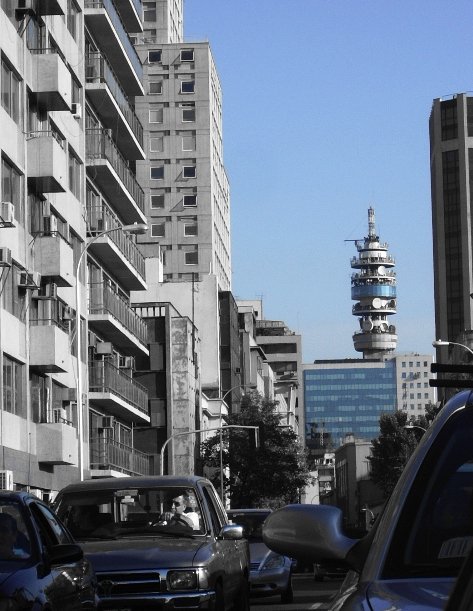
Torre Entel, an iconic landmark in Santiago, Chile, is a symbol of the nation's architectural evolution and technological advancement. Inaugurated in 1975, this towering structure quickly became a significant point of reference for both locals and tourists. Designed by Chilean architect Sergio Larraín García-Moreno and engineered by Heurtey S.A. of France, Torre Entel stands at an impressive 127.5 meters (418 feet) tall. Initially the tallest structure in Chile, it served as a critical telecommunications hub, connecting Santiago with the rest of the country and the world. The tower's importance extends beyond its technological capabilities; it embodies Chile's journey through modernization, political turbulence, and cultural evolution. Despite its observation deck being currently closed, Torre Entel remains a must-see due to its historical significance and the vibrant surroundings that offer a rich cultural experience (Visiting Torre Entel - History, Significance, and Visitor Information).
A Historic Beacon - Torre Entel's Story
Inaugurated in 1975, Torre Entel (Visiting Torre Entel - History, Significance, and Visitor Information) quickly became a symbol of Santiago and Chile, much like the Eiffel Tower in Paris or the Empire State Building in New York. Its construction was a significant technological feat, marking Chile's foray into modern architecture and telecommunications.
Early Years and Technological Prowess
Standing tall at 127.5 meters (418 feet), Torre Entel was Chile's tallest structure for over a decade. Its construction, commissioned by the national telecommunications company, ENTEL, was a source of national pride. The tower was designed by Chilean architect Sergio Larraín García-Moreno and the structural engineering was undertaken by Heurtey S.A. of France.
The tower's primary purpose was to modernize Chile's telecommunications infrastructure. It served as a crucial link for telephone and television signals, connecting Santiago with the rest of the country and the world. Its advanced technology placed Chile at the forefront of telecommunications in Latin America.
A Symbol of Change and Resilience
Beyond its technological significance, Torre Entel quickly became a cultural icon. Its imposing presence in the heart of Santiago made it a reference point for locals and tourists alike. The tower's image was widely disseminated, appearing on postcards, television programs, and even the national currency.
However, the tower's history is also intertwined with Chile's turbulent past. During the military dictatorship of Augusto Pinochet (1973-1990), Torre Entel was used for propaganda purposes, with its facade displaying pro-regime messages. Despite this difficult period, Torre Entel has shown remarkable resilience. Following the return to democracy in 1990, the tower underwent a process of symbolic "re-democratization." The propaganda messages were removed, and the tower was reclaimed as a symbol of unity and progress.
Torre Entel's Architectural Significance
A Blend of Architectural Influences
Torre Entel's design, a collaborative effort between Chilean architect Sergio Larraín García-Moreno and the Canadian firm ARUP, reflects a fusion of architectural styles:
- Modernist Principles: The tower's emphasis on functionality, clean lines, and minimalist aesthetics aligns with the core principles of modernist architecture. Its towering form, devoid of excessive ornamentation, speaks to the movement's celebration of technological advancement and structural innovation.
- Brutalist Elements: The exposed concrete structure, a hallmark of Brutalist architecture, lends a sense of raw, industrial strength to the tower. This style, popular in the mid-20th century, often employed concrete in its unfinished form, showcasing its textural qualities and celebrating its structural capabilities.
Structural Design and Features
Beyond its aesthetic appeal, Torre Entel's design showcases impressive structural engineering:
- Cylindrical Form for Stability: The tower's cylindrical shape provides inherent stability against wind loads, a crucial consideration for tall structures. This design choice ensures the tower's resilience against the forces of nature, particularly in earthquake-prone Chile.
- Reinforced Concrete Core: A robust reinforced concrete core forms the backbone of the tower, providing strength and support for its considerable height. This core houses essential services like elevators and stairwells, ensuring the tower's functionality.
- Observation Deck: Initially designed with a public observation deck, Torre Entel offered panoramic views of Santiago, allowing visitors to appreciate the city from a unique vantage point. While currently closed to the public, the observation deck remains a testament to the tower's initial ambition to connect people with the cityscape.
Practical Visitor Information
While the observation deck is currently closed to the public, Torre Entel remains a must-see for visitors to Santiago. Here are some practical details to help plan your visit:
- Location: Avenida Libertador Bernardo O'Higgins, Santiago, Chile.
- Visiting Hours: Although the observation deck is closed, visitors can explore the surrounding areas at any time.
- Tickets: There is no ticket required to view the tower from the outside. Check for updates on the observation deck's reopening.
- Nearby Attractions: The Plaza de la Constitución, adjacent to the tower, is a vibrant hub hosting cultural events, protests, and celebrations.
- Accessibility: The area around Torre Entel is accessible to visitors with mobility issues, with nearby public transportation options.
Nearby Attractions and Accessibility
Torre Entel is situated in a bustling area of Santiago, surrounded by several notable attractions:
- Plaza de la Constitución: A significant public square located near the Presidential Palace, offering a glimpse into Chile's political history.
- Museo Chileno de Arte Precolombino: A museum dedicated to pre-Columbian art and artifacts, providing a deep dive into the region's rich cultural heritage (Museo Chileno de Arte Precolombino).
- Accessibility: The area around Torre Entel is pedestrian-friendly and accessible to visitors with disabilities. Public transportation options include buses and the metro system.
Special Events and Guided Tours
While there are no public tours available for Torre Entel itself, the tower often serves as a backdrop for various cultural and public events. Keep an eye on local listings and event calendars to catch any special activities taking place in the vicinity.
Photographic Spots
For the best photographs of Torre Entel, consider these locations:
- Plaza de la Ciudadanía: Offers unobstructed views of the tower.
- Parque Forestal: Capture the tower framed by lush greenery.
- Cerro Santa Lucía: Provides a panoramic view of Santiago with Torre Entel prominently in sight.
Visitor Tips
- Be Aware of Your Surroundings: Like any major city, be mindful of your belongings, especially in crowded areas.
- Stay Hydrated: Carry water, especially during warmer months.
- Respect the Landmark: Torre Entel is a symbol of the city. Treat it and its surroundings with respect.
- Learn Some Spanish: While many people in tourist areas speak English, knowing basic Spanish phrases will enhance your interactions with locals.
- Enjoy the Views: Take your time to appreciate the panoramic views of Santiago and the Andes Mountains from the plaza surrounding Torre Entel.
FAQ
Q: What are the visiting hours for Torre Entel?
A: Torre Entel is not open to the public for ascents. However, you can visit the surrounding plaza at any time.
Q: Are there any tickets required to visit Torre Entel?
A: No tickets are required to visit the area around Torre Entel.
Q: What are some other historical sites in Santiago?
A: Nearby historical sites include Palacio de La Moneda, Plaza de Armas, and Museo Chileno de Arte Precolombino.
Listen to the full story in the app
The whole Torre Entel,
told well.
Audio guides for 1,100+ cities across 96 countries. History, stories, and local insight — offline ready.

Verified, and shown.
Researched and written by the Audiala editorial team from historical records, architectural archives, and local expertise.
Last reviewed
Researched from Wikidata, Wikipedia & official sources · fact-checked · How we make our guides →


