Destinations

Chad

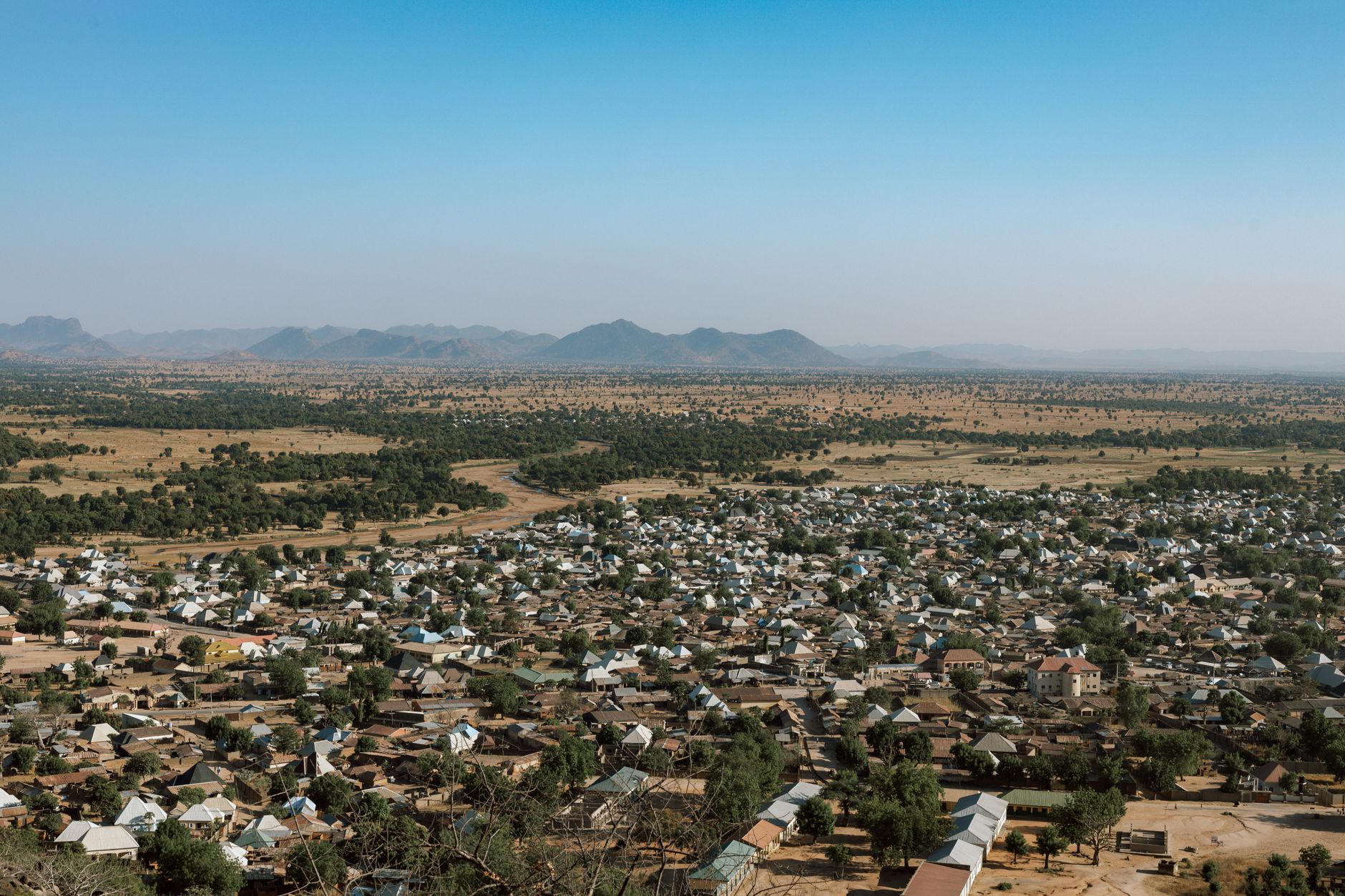
"Chad is not one trip but four climates stitched into one country, where Saharan arches, fossil-water lakes, river cities, and Sahel history sit on the same map."

location_city

Capital

N'Djamena

translate

Language

French, Arabic

payments

Currency

Central African CFA franc (XAF)

calendar_month

Best season

November-March

schedule

Trip length

7-14 days

badge

EntryVisa required in advance; yellow fever certificate required.

Introduction

A Chad travel guide starts with a surprise: one country holds four climates, from Lake Chad fisheries to Sahara arches and fossil-water lakes.

Most travelers begin in N'Djamena, where the Chari River, embassy errands, money exchange, and international flights all meet in the same dusty orbit. This is a cash country, not a tap-your-card country, and the practical rhythm matters: visa in advance, yellow-fever certificate in your bag, then mornings shaped around markets, grilled meat, and the long greeting rituals that tell you more about Chad than any museum label could.

Then the country pulls apart in useful directions. East from Abéché, the Sahel opens toward Ouara's ruins and the road corridors that lead into Ennedi; north from Faya-Largeau, the Sahara turns theatrical, all rock arches, canyon walls, and the improbable lakes near Ounianga Kebir, where fresh and salt water sit side by side in a region that can go years without meaningful rain. Distances are brutal, signals disappear, and that is part of the point.

The south changes the mood completely. Around Moundou and Sarh, sorghum fields, river country, and greener horizons replace desert stone; meals lean toward peanut sauces, fish, and millet rather than expedition rations. Chad works best for travelers who plan around weather instead of wishful thinking: November to March for the broadest window, February to April if wildlife in Zakouma matters most, and enough time to accept that road travel here runs on patience, not promises.

A History Told Through Its Eras

When the Sahara Was Green and the Lake Had Cities

Before the Kingdoms, c. 9000 BCE-1000 CE

A herd moves across grass where sand now rules. On the cliffs of the Ennedi, in the far northeast near today's Ounianga Kebir and Fada, painters left cattle with lyre-shaped horns, swimmers with raised arms, even hippos. That is the first shock of Chad: the desert was not always desert.

What those images preserve is not only beauty but weather. Between roughly 9000 and 4000 BCE, lakes, rivers, and pasture covered land that now receives almost no rain. Ce que l'on ignore souvent, c'est que Chad's oldest monuments are not palaces or walls but rock shelters, where a brushstroke became a climate archive.

Farther west, around Lake Chad, another world rose from mud and floodwater. Archaeologists use the name Sao for a cluster of settled societies that built earthen mounds, cast bronze, fired terracotta, and learned how to live with a capricious lake. Their sculpted heads, often larger than the bodies beneath them, still have the solemn, watchful look of figures made for ritual rather than decoration.

No court chronicler wrote their story. That absence matters. The Sao left their memory in clay, in burial sites, in fortified mounds, and in the legends of those who later conquered them. By the time larger Muslim kingdoms took shape around the lake, this older civilization had already become half history, half rumor, the kind of past that makes later empires look over their shoulder.

The Sao remain anonymous, which may be the most moving detail of all: a civilization important enough to shape Lake Chad, yet known mostly through the fragments it buried.

Some Ennedi rock paintings show animals that cannot survive in today's climate, which means the stone is recording vanished rainfall as clearly as any scientific chart.

The Kings of Kanem Turn Toward Mecca

Kanem and the Lake Empire, c. 800-1396

Picture a royal camp east of Lake Chad: leather tents, horses stamping in the dust, scribes bent over Arabic manuscripts, traders arriving from Fezzan with salt and cloth. This was Kanem, the great medieval power of the central Sahara and Sahel, a court that understood something early and used it well. Religion could be conviction, yes. It could also be statecraft.

Around the eleventh century, Mai Hummay adopted Islam and changed the direction of the kingdom. The move tied Kanem more firmly to trans-Saharan trade and to the scholarly prestige of North Africa and Egypt. A ruler on the edge of the Sahara had found a way to speak to Cairo and Tripoli in a language they respected.

Then came Mai Dunama Dabbalemi, one of those rulers history remembers because he made everything larger: the territory, the ambition, the risk. He campaigned widely, performed the hajj, corresponded with Muslim powers, and gave Kanem a stature that traveled far beyond the lake. But power in Chad rarely comes without a fracture.

The fracture was spiritual as much as political. Later chronicles say Dunama destroyed the Mune, a sacred dynastic object guarded by older religious custodians. Whether it was a drum, an ark, or something even more mysterious, the gesture broke a compact between old belief and new monarchy. The revenge came slowly, then all at once: the Bulala rose, kings fell in battle, and by the late fourteenth century the Sayfawa dynasty had been driven from Kanem toward Bornu on the western side of the lake.

Mai Dunama Dabbalemi looks, at first glance, like the perfect conquering monarch; the closer one gets, the more he resembles a man who won an empire and destabilized it at the same time.

Egyptian records mention scholars from the Kanem world studying abroad, which means the Lake Chad basin was sending students to major centers of learning while much of medieval Europe still imagined inner Africa as blank space.

Bornu, Baguirmi, Ouaddai: Thrones in the Dust

Sultans, Caravans, and Rival Courts, c. 1500-1893

A letter sealed in a sultan's court, a musket unloaded beside a saddle, a caravan inching west with slaves, ostrich feathers, cloth, and rumor. Early modern Chad was not one kingdom but a tense constellation of them. Bornu still mattered around Lake Chad, Baguirmi took shape to the southeast, and Ouaddai rose in the east with its capital at Ouara, not far from today's Abéché.

The grandest of these rulers was Idris Alooma of Bornu in the sixteenth century, a sovereign with the instincts of both a general and a stage manager. He reformed taxation, strengthened roads, used firearms with unusual effectiveness, and wanted his state to look legible to the wider Muslim world. Brick mosques and diplomatic ties were part of the same performance: authority needed architecture.

But Chad's history is never only the story of courts. Pastoralists moved cattle across fragile ecologies. Merchants crossed dangerous routes toward Libya and Darfur. Villages paid taxes, tribute, or worse, depending on which army had passed last. Ce que l'on ignore souvent, c'est que these kingdoms were linked as much by raiding and slave trading as by ceremony.

In the eighteenth and nineteenth centuries, Ouaddai became a serious regional power. From Ouara and later Abéché, its sultans managed caravan routes eastward toward Sudan and northward into the Sahara, drawing wealth from commerce while fighting to control frontiers that were never still. Then, at the end of the nineteenth century, the whole balance tipped. Rabih az-Zubayr, a warlord from the east, smashed Baguirmi, threatened Bornu, and turned the region into a battlefield just as the French were arriving with imperial plans and rifles.

Idris Alooma understood image as well as force: he did not merely win battles, he made rulership visible in roads, mosques, and disciplined administration.

The ruins of Ouara, once the seat of Ouaddai power, lie in the desert east of Abéché like the remains of a court that expected permanence and received wind instead.

Conquest, Cotton, and the Republic That Could Not Rest

French Rule and a Difficult Independence, 1893-1990

The end came with smoke and artillery at Kousséri in 1900, on the edge of the Chari River opposite what would become N'Djamena. Rabih az-Zubayr was killed, French officers died too, and Chad was pulled into French Equatorial Africa by force, not consent. One regime of violence ended. Another began under a different flag.

Colonial rule tied the south more tightly to administration, taxation, and cotton schemes, while much of the north remained harder to govern and easier to punish. Roads were thin, schools fewer than they should have been, and political trust almost nonexistent. France built an apparatus, certainly. It did not build a shared national bargain.

When independence came on 11 August 1960, François Tombalbaye inherited borders drawn by empire and resentments sharpened by unequal rule. He also inherited a nearly impossible question: how does one make a state out of regions that had been connected more by coercion than by common institutions? His answer grew harsher with time.

Rebellion broke out in the north in 1965 and fed the long civil wars that followed. Coups, foreign interventions, Libyan ambitions in the Aouzou Strip, and rival armed factions turned the republic into a succession of emergencies. By 1979, even the capital had changed names and symbols, but not its habit of political fracture. Fort-Lamy became N'Djamena, a welcome correction of colonial vocabulary, while the struggle for power remained bitter enough to empty the gesture of any easy romance.

Then came Hissène Habré in 1982, and with him one of the darkest chapters in modern African history. His security police jailed, tortured, and killed opponents on a large scale. The regime spoke the language of order. Families learned the language of disappearance.

François Tombalbaye wanted to embody sovereignty after empire, yet he governed with such suspicion that he helped turn independence into another source of fear.

N'Djamena was called Fort-Lamy until 1973, when Tombalbaye renamed it after a nearby Arab village, a symbolic break with French rule made in the middle of deepening internal conflict.

Power by Convoy, Power by Pipeline

Déby, Oil, and the Age of Transitions, 1990-Present

At dawn in December 1990, armed columns rolled toward N'Djamena and Hissène Habré fled. Idriss Déby, a former ally turned rival, entered the capital promising a different future. Chad, exhausted by dictatorship and war, had heard promises before. Still, after such terror, even cautious hope can feel like relief.

Déby proved durable where others had been brittle. He survived rebellions, co-opted rivals, kept a tight military core around him, and made Chad indispensable to foreign partners who valued regional security more than domestic reform. Oil exports began in 2003 through the pipeline to Cameroon, and for a moment one could imagine a state transformed by revenue. One could imagine many things.

The money did not dissolve the old problems. Patronage deepened, inequality stayed sharp, and armed politics never truly left the stage. Yet the period also fixed modern Chad in the world's view: a country of hard frontiers, strategic soldiers, and astonishing landscapes too often reduced to a footnote. That reduction is absurd. The dunes and sandstone towers of Ennedi, the impossible lakes near Ounianga Kebir, the river life around Sarh and Moundou, the crowded pulse of N'Djamena, all belong to the same national story, even when politics tries to break it into fragments.

Idriss Déby was killed in April 2021 after visiting troops at the front, which would have seemed melodramatic in a novel and merely typical in Chadian history. His son, Mahamat Idriss Déby, took power through a military transition, then formal politics resumed under fierce scrutiny. Ce que l'on ignore souvent, c'est que Chad's modern drama is not only about presidents and generals. It is also about traders, students, herders, mothers, prisoners, and refugees from neighboring wars who keep forcing the state to confront the people it prefers to manage from a distance.

The next chapter is still being written. That is why Chad feels so immediate. Its past has not settled into marble yet.

Idriss Déby cultivated the image of a battlefield president, and in the end he died in exactly the posture that had long sustained his legitimacy.

The 1,070-kilometer Chad-Cameroon pipeline changed state finances in 2003, but in many everyday transactions across the country, cash and personal trust still mattered more than grand development language.

The Cultural Soul

A Market Made of Tongues

Chad speaks in layers. French signs hang on ministries in N'Djamena, Arabic carries scripture and prestige, and Chadian Arabic does the daily miracle of buying onions, settling fares, praising a child, teasing a cousin, and rescuing a misunderstanding before it hardens into offense.

You hear the hierarchy with your own ears. Official French has starch in its collar. Street Arabic has dust on its sandals. Then other languages rise underneath and beside them: Sara and Ngambay in the south, Kanembu around the lake basin, Teda toward the desert, each one less a museum piece than a tool still warm from use.

A country reveals itself by what cannot be hurried. In Chad, greetings are an art of deliberate delay. People ask after your health, your family, your night, your road, the heat. Only after this verbal laying of the table does business appear, and by then it no longer feels like business. It feels like relation.

The Ceremony Before the Sentence

In Chad, politeness does not skim the surface. It settles in. You do not arrive and begin. You arrive, you greet, you ask, you wait, you accept the slow unfolding of another person’s presence. Anyone who mistakes this for ornament has not understood the structure of the house.

The first lesson is time. Elders receive it. Guests borrow it. A rushed question can sound less efficient than predatory. In a courtyard in Abéché or at a plastic table in N'Djamena, the opening exchange may last longer than the practical matter that brought you there. Good. That is the point.

The second lesson is the hand. The right hand gives, takes, eats, and greets. The left hand is not scandalous in some abstract theological sense; it is simply the wrong instrument for trust. Shared bowls teach the rest. You work from your side, watch the eldest hand, and never behave as if hunger has cancelled manners. Hunger never has.

Millet, Fire, and the Discipline of Hunger

Chadian food begins with climate. Millet survives where sentiment does not. Sorghum holds its ground. Okra thickens the pot, peanuts round the edges, dried fish brings the lake into the dry season, and meat appears with the authority of an event rather than the casual abundance of a supermarket nation.

The staple logic is beautiful in its severity. Boule, firm and elastic, sits in a common bowl with sauce. You pinch, roll, press, scoop. The hand becomes cutlery, then grammar. Kisra tears and folds. Daraba slides between green and earthy, its okra silk pulling against the fingers in a way that would horrify the timid and delight anyone with a soul.

Street food has its own theology. Skewers hiss over charcoal. Tea darkens in glasses. Hibiscus drink arrives cold enough to feel like mercy. Around Lake Chad and toward Bol, fish carries smoke, salt, and the memory of water in a country that knows exactly what water costs.

Prayer on Dust and River

Religion in Chad is not a decorative identity. It orders the day, the week, the body, the threshold. Islam shapes much of the north and center; Christianity has deep presence in the south; older practices still breathe under both, not always declared, often lived. The result is less a clean map than a fabric with visible repairs.

The call to prayer in N'Djamena does something curious to the air. Diesel keeps grumbling, motorcycles keep whining, a market does not become silent like a disciplined choir, and yet the whole city tilts for a moment toward another register. In the south, church choirs answer with their own authority: clapping, layered voices, a collective insistence that devotion should enter the body before it enters doctrine.

Ritual here is practical before it is theoretical. Ablution, greetings, feast days, funeral meals, Ramadan evenings, Christmas gatherings, blessings over food: these acts make belief edible, audible, visible. A religion survives because it knows where the water jar stands and who drinks first.

Drums for the Road, Lutes for the Night

Music in Chad does not ask permission from categories. Sahelian lutes, praise songs, mosque recitation, church harmonies, wedding percussion, radio pop from the capital, Sudanese and Hausa currents crossing the border without bothering to show a passport: all of it lives together with the casual authority of long acquaintance.

Listen at dusk and the distinctions become delicious. One neighborhood gives you amplified devotional singing. Another gives you a wedding rhythm so persistent that the feet understand before the mind does. In the south, drums and call-and-response singing can turn a courtyard into a social engine. In the east, the line between poetry and song narrows until it nearly disappears.

Chad’s music loves repetition because repetition is not sameness. It is insistence. It is memory doing its work. A refrain returns, the voices answer, the pulse thickens, and suddenly one understands that communal music is a form of architecture: invisible walls, a temporary roof, everyone briefly housed inside the beat.

Exile Writes in the Margins

Chadian literature has often been written from a distance. War, censorship, weak publishing networks, exile: these are not romantic inconveniences but material facts, and they leave a mark on the sentence. Writers carry Chad abroad and then discover that memory is a harsher editor than any schoolmaster.

That distance produces a strange clarity. The homeland appears in pieces: a market smell, a childhood courtyard, a state office, a vanished road, a mother tongue half-covered by the official one. French often becomes the language of publication, but it does not erase the oral worlds beneath it. You can feel storytelling traditions pressing against the page, asking prose to behave less like a report and more like a witness.

A country with many spoken languages and fragile literary infrastructure learns to trust memory, rumor, proverb, and testimony. This does not weaken literature. It gives it teeth. The page in Chad has had to compete with the spoken word for survival, which is perhaps why the lines that endure tend to sound as if someone is still saying them aloud.

What Makes Chad Unmissable

landscape

Ennedi and Ounianga

Northeastern Chad holds two UNESCO sites that barely seem compatible with each other: wind-cut sandstone towers and 18 lakes sustained by ancient groundwater. From Faya-Largeau to Ounianga Kebir, the scenery feels less like a backdrop than a geological argument.

history_edu

Empires of Lake Chad

The Lake Chad basin shaped the Sao world and the Kanem-Bornu empire long before modern borders existed. Around Bol, Abéché, and the ruins of Ouara, history is not abstract; it is a chain of trade routes, court politics, and vanished capitals.

park

Zakouma Dry Season

Zakouma National Park comes into focus when the water shrinks and wildlife has fewer places to hide. February to April is the sharpest window for elephant, antelope, and big-sky savanna sightings.

restaurant

Millet, Okra, Smoke

Chadian food follows climate with blunt logic: boule from millet or sorghum, daraba thick with okra and peanuts, grilled meat in the cities, fish closer to the lake and rivers. In N'Djamena and Moundou, the best meals often look modest and taste exact.

travel_explore

Big Distances, Little Noise

Chad suits travelers who do not need polished infrastructure to stay interested. North of Faya-Largeau or west toward Lake Chad, weak signal, long roads, and real silence become part of the experience rather than a flaw to edit out.

Cities

Cities in Chad

N'Djamena

"A city of dust and diesel where Chadian Arabic stitches together a dozen ethnicities across markets that run from dawn prayer to well past dark."

Abéché

"The old caravan capital of the east, where Ottoman-era architecture crumbles alongside a livestock market that has operated on the same logic for five centuries."

Moundou

"Chad's second city runs on cotton and beer — the Gala brewery here supplies most of the country — and its southern energy feels like a different republic from N'Djamena."

Sarh

"Set on the Chari River in the fertile south, this former French administrative post still wears its colonial grid while surrounding villages fish and farm as they did long before any European arrived."

Faya-Largeau

"A Saharan oasis town of date palms and military history, the last substantial settlement before the Tibesti swallows the road entirely."

Bardaï

"A remote mountain village in the Tibesti at roughly 1,000 metres, used as the base for expeditions toward Emi Koussi — the highest peak in the entire Sahara at 3,415 metres."

Fada

"The gateway town for the Ennedi Plateau, where guides and camels are arranged before travelers push into the sandstone canyons holding 7,000 years of rock art."

Biltine

"A market town on the edge of the Sahel where Arab and Zaghawa traders have exchanged cattle, cloth, and news for centuries, and where the pace of life is still set by the camel rather than the clock."

Bol

"Perched on the shrinking shore of Lake Chad, Bol is a fishing community that makes its living from water that has retreated 90 percent since the 1960s — a living document of climate collapse."

Mongo

"The capital of Guéra region sits in rocky savanna country and serves as a rare junction between the Sahel's pastoral world and the wetter south, with a weekly market that pulls in traders from 100 kilometres in every dir"

Ounianga Kebir

"A village surrounded by the UNESCO-listed Lakes of Ounianga — 18 interconnected Saharan lakes fed by fossil groundwater, an ecological impossibility in a desert that receives almost no rain."

Am Timan

"Deep in the Salamat region near the Central African Republic border, this remote town is the closest permanent settlement to wetlands that seasonally flood into one of Central Africa's least-visited wildlife corridors."

Regions

N'Djamena

Capital and Chari Corridor

N'Djamena is where Chad makes practical sense before it makes emotional sense. Ministries, embassies, banks, fuel, markets, and the country's best hotel stock sit here on the Chari, and the city is also the place to sort cash, SIM cards, permits, and drivers before moving anywhere else.

placeN'Djamena placeChari River waterfront placeCentral Market placeNational Museum of Chad placeGaoui

Bol

Lake Chad Basin

The far west turns around water, fish, reeds, and a lake that keeps shrinking but still shapes trade and appetite. Bol feels less monumental than strategic: a base for understanding the Lake Chad world, where geography matters more than formal sightseeing.

placeBol placeLake Chad shoreline placeFishing villages near Bol placeNgouri area placeWetland birdlife zones

Abéché

Eastern Sahel and Caravan Country

Abéché still carries the weight of old sultanate routes and the hard logic of the Sahel. Markets, livestock traffic, mosque life, and long road departures give the city its character, while Biltine and Mongo show how settlement thins and toughens as you push deeper into the dry belt.

placeAbéché placeBiltine placeMongo placeOuara ruins placeRegional livestock markets

Fada

Ennedi and Ounianga

Northeastern Chad is the country at its most cinematic and least forgiving. Fada is the working gateway to the Ennedi plateau of arches, canyons, and rock art, while Ounianga Kebir sits beside lakes that should not exist in a desert this dry and therefore stay in the memory longer than most famous monuments do.

placeFada placeOunianga Kebir placeEnnedi Massif placeLakes of Ounianga placeRock art sites of Ennedi

Moundou

Southern Savanna Belt

The south feels greener, busier, and more domestically rooted than the desert routes. Moundou, Sarh, and Am Timan anchor a region of rivers, farming country, roadside grills, and market life, where travel is less about grand scenery than about watching how people actually live and trade.

placeMoundou placeSarh placeAm Timan placeLogone River corridor placeRegional food markets

Bardaï

Tibesti and the Far North

Bardaï belongs to the Sahara proper: volcanic massifs, Toubou country, hard roads, and a scale that makes maps feel optimistic. Faya-Largeau is the supply hinge, but the deeper pull is northward toward Tibesti, where remoteness is the main fact on the ground and every movement depends on security, fuel, and local knowledge.

placeBardaï placeFaya-Largeau placeTibesti Mountains placeEmi Koussi region placeDesert oasis settlements

Suggested Itineraries

3 days

3 Days: N'Djamena and the Lake Chad Edge

This is the shortest route that still shows how fast Chad changes once you leave the capital. Start in N'Djamena for markets and logistics, then head to Bol for the Lake Chad world of fish, boats, and dust-blown shoreline villages.

N'Djamena→Bol

Best for: short first trips, overlanders, travelers testing conditions before a longer journey

7 days

7 Days: Eastern Sahel from Abéché to Fada

This route follows the old caravan-facing side of the country, where the road feels closer to Sudan than to the Chari River basin. Abéché gives you the eastern urban base, Biltine marks the Sahel transition, and Fada opens the door to the Ennedi country of rock, distance, and silence.

Abéché→Biltine→Fada

Best for: repeat Africa travelers, desert landscapes, travelers interested in eastern Chad

10 days

10 Days: Southern Rivers and Market Towns

Southern Chad moves at a different rhythm: greener, more agricultural, and easier to read through food and markets than through monuments. Moundou, Sarh, and Am Timan make a coherent overland line through the country's more fertile belt, where millet gives way to river trade, cattle traffic, and denser settlement.

Moundou→Sarh→Am Timan

Best for: travelers who want daily life, regional food, and a less expedition-style route

14 days

14 Days: Sahara Circuit to Ounianga and Tibesti Gateway

This is Chad at its most demanding and most unforgettable: long distances, fuel calculations, and landscapes that look edited down to rock, salt, wind, and light. Faya-Largeau is the operational base, Ounianga Kebir brings the improbable lakes, and Bardaï pushes you toward the Tibesti world where every kilometer needs planning.

Faya-Largeau→Ounianga Kebir→Bardaï

Best for: expedition travelers, photographers, experienced desert teams

Notable Figures

Mai Hummay

died c. 1097 · Kanem ruler
Early Islamic ruler of the Kanem kingdom

Mai Hummay is remembered as the ruler who turned Kanem toward Islam and, with it, toward the commercial and scholarly circuits of North Africa. His decision was not a pious footnote. It changed the political grammar of the Lake Chad world.

Mai Dunama Dabbalemi

reigned c. 1210-1248 · Imperial sovereign
Expanded Kanem across the central Sahel

Dunama Dabbalemi had the appetite of a conqueror and the instincts of a zealot. He made pilgrimages, extended the kingdom's reach, and then, by attacking an older sacred order, helped sow the quarrels that would later drive his dynasty from Kanem.

Idris Alooma

c. 1530-1603 · Mai of Bornu
Ruled the Lake Chad empire at its early modern height

Idris Alooma belongs to that rare category of rulers who could organize a battlefield and a bureaucracy with equal skill. Chronicles describe firearms, cavalry, road security, and mosque building under his rule, which tells you he understood that power must be seen as well as feared.

Muhammad Sabun

died 1813 · Sultan of Ouaddai
Strengthened Ouaddai in eastern Chad

Muhammad Sabun made Ouaddai more than a frontier court. He tightened control over caravan trade, dealt in diplomacy and war with equal resolve, and helped shift the political center of eastern Chad toward the sultanate whose traces still haunt the road from Abéché to Ouara.

Rabih az-Zubayr

1842-1900 · Warlord and conqueror
Seized Baguirmi and fought for control of the Chad basin

Rabih arrived from the east with soldiers, firearms, and devastating ambition. He was not building a nation called Chad, of course, but his rise and fall shattered the old regional balance and opened the final path for French conquest.

François Tombalbaye

1918-1975 · First president of Chad
Led independent Chad from 1960 until his overthrow

Tombalbaye had the solemn privilege of inaugurating sovereignty and the tragic talent for narrowing it. He wanted to build a state after colonial rule, yet his authoritarian habits deepened the fractures that would haunt Chad for decades.

Hissène Habré

1942-2021 · President and dictator
Ruled Chad from 1982 to 1990

Habré presented himself as the man who would impose order after chaos. What he built instead was a state of prisons, fear, and secret-police violence so severe that survivors kept pursuing justice long after he had lost power.

Idriss Déby Itno

1952-2021 · President and military leader
Dominated Chadian politics from 1990 to 2021

Déby understood Chad's central truth better than most of his rivals: in this country, a convoy can matter more than a speech. He lasted because he balanced force, alliance, and foreign usefulness, though the stability he offered was always edged with coercion.

Mahamat Idriss Déby Itno

born 1984 · Transitional and later elected leader
Succeeded his father after the 2021 battlefield death

Mahamat Déby inherited power in the oldest possible style, through armed succession, and then sought legitimacy through a managed political transition. His story is less settled than the others here, which is precisely why it matters: Chad is still arguing with its own future.

Practical Information

badge

Visa

U.S., UK, EU, Canadian, and Australian passport holders need a visa before arrival. Your passport should be valid for at least 6 months beyond entry, with blank pages available, and you should carry a yellow-fever certificate because border checks can be strict.

payments

Currency

Chad uses the Central African CFA franc, abbreviated XAF, with a fixed peg to the euro. Cash still runs the country: ATMs in N'Djamena can fail or run dry, cards work mainly in a few large hotels, and exchange is easiest in the capital.

flight

Getting There

Most travelers arrive through N'Djamena International Airport, with current international links usually routed through Paris, Istanbul, Cairo, Addis Ababa, Douala, or Yaounde. Chad has no passenger rail network, so flying in is the realistic option for most visitors.

directions_car

Getting Around

Road travel is the default inside Chad, but it is slow, rough, and often unsafe after dark. Hiring a vetted car with a local driver is the standard practical choice for routes from N'Djamena to Bol, Mongo, or Moundou, while domestic flights are limited and should never be treated as fixed until reconfirmed.

wb_sunny

Climate

November to March is the safest planning window across most of the country, with drier roads and more tolerable temperatures. The north around Faya-Largeau, Fada, Bardaï, and Ounianga Kebir is best in the cooler months, while the south gets heavy rains from June to September that can cut roads completely.

wifi

Connectivity

Mobile coverage is usable in N'Djamena and patchy in larger southern towns such as Moundou and Sarh, but it drops away fast once you head north or deep into the east. For Ennedi, Tibesti, or the road to Ounianga Kebir, a satellite communicator is not a luxury item; it is basic trip equipment.

health_and_safety

Safety

Chad requires sober planning, not improvisation. Security advisories change quickly, several border areas carry high risk, and road conditions, checkpoints, fuel gaps, and weak medical infrastructure mean you should check current government advice and local operator guidance before committing to any route outside N'Djamena.

Taste the Country

restaurantBoule with daraba

Lunch in a shared bowl. Millet paste, okra sauce, peanuts, fingers, patience. Families, workers, guests. Right hand only.

restaurantKisra at supper

Thin sorghum pancake, torn and folded. Sauce, stew, fish. Evenings, courtyards, talk after heat.

restaurantBrochettes with agashe spice

Charcoal, smoke, meat, peanut powder. Street corners at dusk. Standing, waiting, eating before the second skewer cools.

restaurantLa bouillie at dawn

Millet or sorghum porridge in enamel bowls. Breakfast, children, early departures, bus stations, market mornings. Sugar or milk when the house agrees.

restaurantSmoked fish from the Lake Chad basin

Fish, smoke, salt, rice or boule. Bol tables, river towns, midday meals. Traders, drivers, uncles with opinions.

restaurantKarkanji in the afternoon

Hibiscus, sugar, sometimes ginger, always cold if fortune smiles. Heat, dust, plastic chairs, long conversation. The throat thanks you at once.

restaurantAttaya tea rounds

Tea boiled in stages, poured high, drunk slowly. Men talking politics, boys listening, time stretching. Sweetness first, then bitterness, then another glass.

Tips for Visitors

euro
Carry Cash

Bring clean euros or U.S. dollars and exchange in N'Djamena. Outside the capital, working ATMs and card terminals are too rare to build an itinerary around them.

train
No Trains

Do not plan around rail travel because Chad has no operational passenger train network. Overland trips mean road transport, and road time is often much longer than the map suggests.

hotel
Book by Message

Reserve major hotels in N'Djamena before arrival, then confirm by WhatsApp a day or two ahead. Outside the capital, online inventory can lag behind reality.

directions_car
Driver Beats Self-Drive

A local driver saves time at checkpoints, fuel stops, and route changes, especially on roads to Abéché, Bol, or Faya-Largeau. Self-driving looks flexible on paper and becomes exhausting very quickly.

health_and_safety
Daylight Only

Finish road travel before dark. Night driving adds animals, broken pavement, weak lighting, and checkpoint confusion to roads that are already hard enough in daylight.

restaurant
Read the Bowl

Shared dishes are common, especially with millet paste, sauce, or grilled meat. Wash your hands, use the right hand unless cutlery is offered, and watch the eldest diner before you start.

wifi
Download Offline Maps

Download Google Maps or Organic Maps before leaving N'Djamena. Coverage in Moundou or Sarh can be uneven, and northbound routes may leave you without signal for long stretches.

Explore Chad with a personal guide in your pocket

Your Personal Curator, in Your Pocket.

Audio guides for 1,100+ cities across 96 countries. History, stories, and local insight — offline ready.

smartphone

Audiala App

Available on iOS & Android

download Download Now

Join 50k+ Curators

Frequently Asked

Do I need a visa for Chad as a US or UK citizen? add

Yes, you need a visa in advance. U.S. and UK government guidance both say Chad does not offer a simple visa-free entry for ordinary tourist travel, and you should also expect passport-validity and yellow-fever requirements.

Is Chad safe for tourists right now? add

Chad can be traveled, but only with careful route planning and current security checks. Border areas, remote desert regions, and some overland corridors can change risk level quickly, so your decision should be based on live government advisories and trusted local operators, not on a fixed old guidebook.

What is the best month to visit Chad? add

January and February are usually the easiest months for most itineraries. They give you dry conditions in N'Djamena, more manageable heat for Abéché and Fada, and better odds of passable roads before the southern rains return.

Can you use credit cards in Chad? add

Only occasionally, and mostly in larger hotels in N'Djamena. For everything else, from taxis to meals to fuel stops outside the capital, assume cash is the real payment system.

Are there trains or buses in Chad? add

No usable national rail system exists for travelers, and intercity bus options are limited enough that they should not anchor a trip. Most practical movement inside Chad happens by private car, hired driver, local taxi, or the occasional fragile domestic flight.

Is N'Djamena worth visiting or just a transit stop? add

N'Djamena is worth at least a short stay because it explains how the country works. You come here for the Chari River, the markets, the pace of greetings, and the logistics that make every other Chadian trip possible.

Can I travel independently to Ennedi or Ounianga Kebir? add

Not realistically, unless you already know the terrain, permissions, and fuel logistics. Most travelers should treat Fada and Ounianga Kebir as expedition destinations that require a vehicle, supplies, and local support rather than casual self-guided day trips.

Do I need a yellow fever certificate for Chad? add

Yes, you should carry one. Entry rules and travel advisories consistently mention yellow-fever proof, and this is exactly the kind of document that becomes important at the border rather than in advance emails.

Sources

Last reviewed: