
Iron in the Soil
The ground beneath Bangui holds one of Africa's earliest industrial secrets. Scattered prehistoric iron-working sites, now on UNESCO's tentative list, prove metallurgy thrived here long before colonial contact.
The scent of woodsmoke and fresh-cut ebony hangs in the humid air of Bangui, a city built on a secret. Beneath its feet, in iron-rich laterite pits scattered near the Ubangi River, lie the remnants of a prehistoric furnace industry that once echoed with the sound of hammers. This is the Central African Republic's capital, a city of resilient rhythms and a river that flows like a slow heartbeat through its core.
Researched from Wikidata, Wikipedia & official sources · fact-checked · How we make our guides →
BThe scent of woodsmoke and fresh-cut ebony hangs in the humid air of Bangui, a city built on a secret. Beneath its feet, in iron-rich laterite pits scattered near the Ubangi River, lie the remnants of a prehistoric furnace industry that once echoed with the sound of hammers. This is the Central African Republic's capital, a city of resilient rhythms and a river that flows like a slow heartbeat through its core.
Bangui is a city shaped by confluence. The Ubangi River, a thousand meters wide, is its geographic spine, but the real meeting point is cultural. Here, the nation's diverse peoples—the Sango, Gbaya, Mandjia, and others—create a mosaic of daily life most visible at the Marché Central. You’ll hear transactions in a dozen languages, see pyramids of bright peppers, and find craftsmen shaping stories from dark wood.
Look for the city's character in its quiet moments. It's in the afternoon light filtering through the modern arches of Notre-Dame de Bangui, a cathedral that echoes a colonial past. It’s in the dedicated silence of the Boganda National Museum, where artifacts tell a history older than the metal tools that forged it. The city's narrative is one of endurance, repeatedly mending itself after political upheavals.
What makes this place worth slowing down for.
The ground beneath Bangui holds one of Africa's earliest industrial secrets. Scattered prehistoric iron-working sites, now on UNESCO's tentative list, prove metallurgy thrived here long before colonial contact.
The city doesn't just sit beside the river; it breathes with it. The Ubangi Riverfront is the city's true living room, where pirogues glide at sunset and the water's slow, brown current sets the rhythm for everything.
The city's character is forged in resilience and rhythm. Traditional dance troupes like the Compagnie Molika perform stories passed through generations, a defiant celebration of culture that persists through every upheaval.
Seventy kilometers north, the Mbali River throws itself over a 50-meter cliff at the Boali Falls. The mist cools your face, the roar drowns out everything else, and the crocodiles in the lake below remind you this isn't a theme park.
Where to wander, by quarter — each with its own rhythm.
This is Bangui's living room and its main artery. The wide, brown water dictates the pace of life here. Fishermen mend nets in the late sun, pirogues slide silently past, and the colonial-era silhouette of the Presidential Palace stands watch from the south bank. Come for the sunset, when the light turns the river to copper.
The city's administrative heart, centered on the memorial to independence leader Barthélemy Boganda. It feels formal, surrounded by government buildings, but it’s a necessary stop to grasp the modern political narrative of the CAR. The architecture here speaks of ambition and transition.
Less a neighborhood, more a full-body experience. This market is the city's sensory and economic engine. The air is thick with the smell of smoked fish, dried spices, and raw earth. It's a labyrinth of commerce where you can buy anything from a phone card to a hand-carved stool, all amid a cacophony of bargaining.
A concentrated node of creativity just outside the market chaos. This is where master carvers transform blocks of ebony into intricate sculptures, and artisans assemble delicate paintings from butterfly wings. It’s a place to witness skill passed through generations and to find a piece of Bangui’s artistry to take home.
The people who shaped the city — and were shaped by it.
He dreamed of a Central African Republic free from colonial rule, and his spirit is etched into Bangui's very fabric. The museum and central plaza bear his name, keeping his ambition alive in a city that has faced struggles he hoped to overcome.
Small things that change how the city treats you.
Consult your embassy or a trusted local contact for current security advisories before moving around the city. Avoid traveling alone at night.
Plan your trip for the dry season between December and March. Roads to waterfalls like Boali are more accessible, and the heat is less oppressive.
Bring crisp US dollars or Euros to exchange for Central African CFA francs. Credit cards are rarely accepted outside major hotels.
Use the Ubangi River for transport when possible. It's often safer and more scenic than some road routes, connecting you to riverside communities.
Visit Marché Central in the morning for the freshest produce and crafts. Be prepared for a vibrant, crowded atmosphere and negotiate prices politely.
Ask locally about performances by the Compagnie Molika. It's one of the best ways to experience the living rhythm and symbolism of CAR's culture.
The city, as it actually looks.
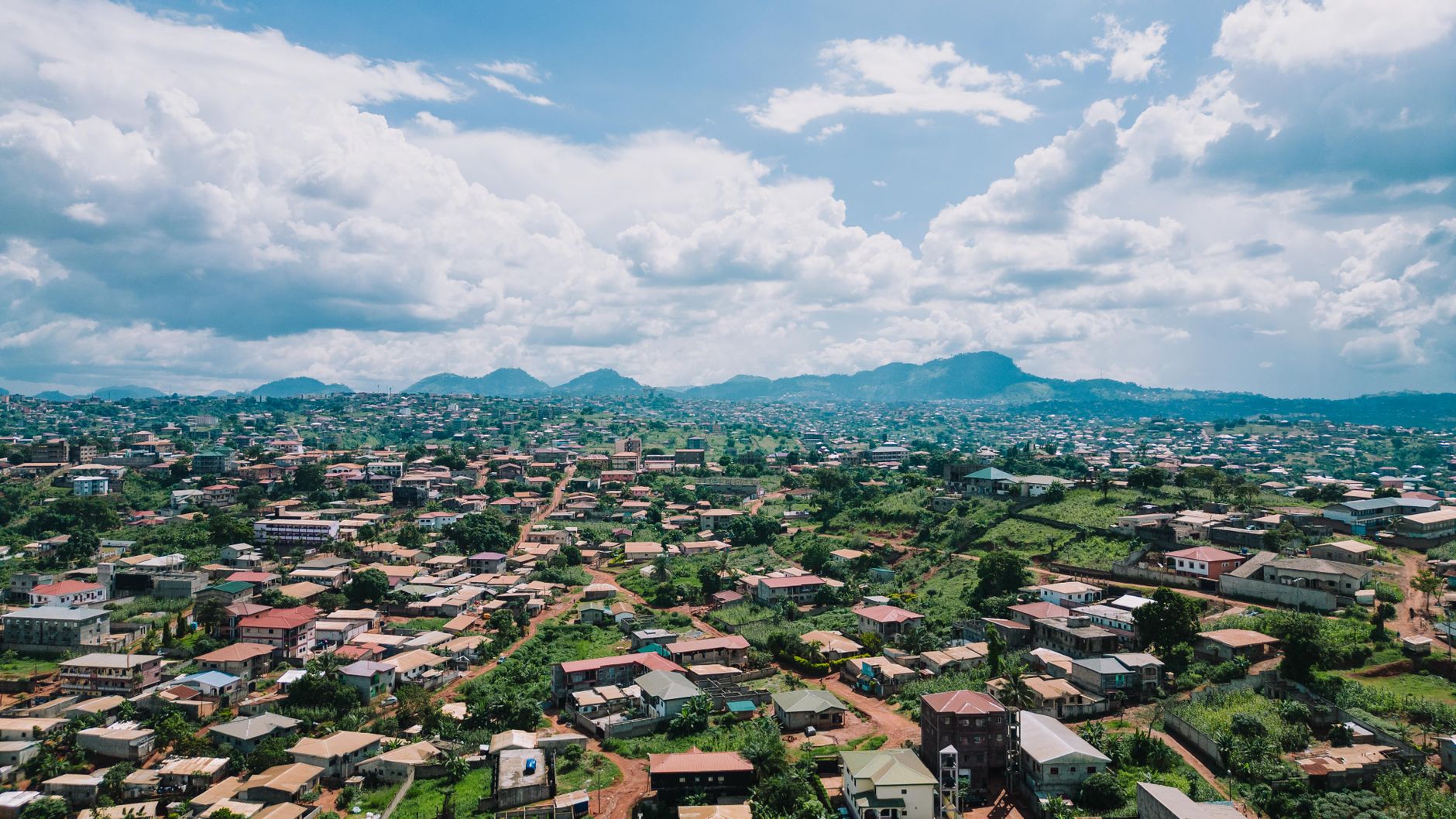
An expansive aerial view captures the sprawling residential neighborhoods and rolling hills of Bangui, the capital of the Central African Republic.
Kelly on Pexels

An expansive aerial perspective of Bangui, the capital city of the Central African Republic, highlighting its unique urban layout and green surroundings.
Kelly on Pexels

An aerial perspective of the vibrant central market in Bangui, Central African Republic, showcasing its distinctive oval architecture and busy urban surroundings.
Kelly on Pexels
Safety conditions in Bangui can change rapidly. While the city shows remarkable resilience, you must check current travel advisories from your government and rely on local guidance. Avoid demonstrations and travel at night.
Spend 2-3 days in the city itself, then add a day for excursions. This lets you explore the museum, market, and riverfront, and also take a day trip to the Boali Waterfalls, which are about 70km away.
Bangui holds prehistoric iron-working sites on UNESCO's tentative list. The city's colonial built heritage and the Ubangi River landscape are also flagged for their cultural significance, hinting at layers of history beneath the surface.
The Boali Waterfalls are the most popular day trip. The falls power a hydroelectric plant and the nearby lake reportedly holds crocodiles. A more ambitious trip could head to the Chutes de la Mbi, a 200-meter drop compared to Niagara.
Daily costs for food and local transport can be low, but international flights are expensive and secure accommodation options are limited and often costly. Budget significantly for logistics and safety.
Head to the Artisanal Center for authentic crafts. Look for ebony carvings, intricate wickerwork, gold jewelry, and unique butterfly-wing paintings. These are tangible pieces of local artistry.
Ready to book?
All international flights arrive at Bangui M'Poko International Airport (BGF). As of 2026, it's served by a handful of carriers, primarily Ethiopian Airlines via Addis Ababa and Kenya Airways via Nairobi. There are no passenger train services into the city; road access is via the RN1 and RN2 highways from Cameroon and the Democratic Republic of the Congo, respectively.
There's no metro or formal bus system. Transport is informal: shared taxis (yellow vehicles) and motorcycle taxis ("clandos") negotiate fares for point-to-point trips. For day trips to Boali or the Gorges of the Pipi, you'll need to hire a private 4x4 with a driver. Walking is feasible in the city center, but distances are long.
Bangui is hot year-round, averaging 26-28°C (79-82°F). The dry season, from November to March, is the only viable window for travel. Rainfall is negligible then. The long, intense wet season (April-October) brings daily downpours and can make roads impassable. Aim for December or January.
French is the official language, used in all formal settings. Sango is the lingua franca you'll hear in the markets and streets. The currency is the Central African CFA franc (XAF). Credit cards are rarely accepted outside major hotels; carry cash in small denominations.
Check your government's travel advisories thoroughly before considering a trip. Political instability and crime are serious concerns. If you travel, employ a trusted local guide for all movement, avoid travel after dark, and maintain a very low profile. Register with your embassy upon arrival.
0 places, one continuous walking route. Free with your first city.