Destinations

Central African Republic

"Central African Republic is one of the few places left where travel still feels contingent on rivers, weather, and nerve. Its reward is not polish but proximity: forest elephants at Dzanga Bai, megaliths near Bouar, and a capital that still lives by the Ubangi."

location_city

Capital

Bangui

translate

Language

French, Sango

payments

Currency

Central African CFA franc (XAF)

calendar_month

Best season

Dry season (December-February)

schedule

Trip length

7-12 days

badge

EntryVisa required in advance for most travelers

Introduction

Central African Republic travel guide: come for one of Africa's least-visited countries, stay for forest elephants, megaliths, and a capital set on the Ubangi.

Central African Republic is not a casual add-on between safaris. It is a landlocked country the size of Texas with barely any tourism infrastructure, and that is exactly why serious travelers pay attention. In Bangui, the mood is river port, checkpoint, market, ministry, all pressed against the brown sweep of the Ubangi. Outside the capital, the map opens into savanna, forest, and long distances that still feel earned. This is where a trip stops being about collecting stamps and starts becoming about access, timing, and patience.

The southwest around Bayanga holds the country's clearest answer to the question of why come at all. Dzanga-Sangha's lowland rainforest shelters western lowland gorillas, bongo, and the forest clearing called Dzanga Bai, where more than 100 forest elephants can gather in a day. Farther west, Bouar keeps one of Central Africa's strangest archaeological surprises: megalithic stone circles dated between roughly 2500 BCE and 600 CE. Then the road north shifts again. Ndélé carries the memory of Dar al-Kuti, a sultanate built on trade, scholarship, and violence in equal measure.

Travel here demands realism. Roads outside Bangui can turn to mud for days in the rains, cash is king, and the country remains a difficult destination from both a security and logistics standpoint. But for travelers who know what they are choosing, Central African Republic offers something increasingly rare: a place not yet sanded smooth for outsiders. You hear Sango in the market, eat cassava leaves and smoked fish with your hands, and understand quickly that the point is not comfort. The point is contact.

A History Told Through Its Eras

Circles of Stone, Songs of the Forest

Stone Ancestors and Forest Worlds, c. 2500 BCE-1800

Dawn comes slowly on the plateau near Bouar. Mist sits low over the grass, and then the stones appear: carved megaliths, upright and silent, arranged in lines and circles as if a vanished court had stepped away only yesterday. They were raised between roughly 2500 BCE and 600 CE, and nobody can name their builders with certainty. That is the first Central African lesson: some of the country's oldest monuments begin not with an answer, but with an enigma.

Ce que l'on ignore souvent, c'est que the people who later lived among these stones did not pretend to solve them. The Gbaya remembered them simply as the work of the ancients. No triumphant founding myth, no tidy royal genealogy. Just a landscape that kept its secrets, which is often how serious history begins.

Far to the southwest, around what is now Bayanga, another inheritance endured without stone at all. The Ba'Aka carried memory in the voice: hunting songs, mourning songs, honey-gathering songs, polyphonic music layered so finely that one line seems to breathe through another. Missionaries in the 1890s dismissed such ceremonies as superstition. A century later, ethnomusicologists heard something far more exacting: a whole theology of forest, rhythm, and reciprocity.

These two worlds, the stone fields of Bouar and the living musical traditions of the forest, tell you what the later state never fully erased. Central African history did not begin with a flag in Bangui or a decree in Paris. It began with peoples who marked land, season, and belonging in forms strong enough to outlast kingdoms, churches, and empires. And that endurance would matter once slave routes and foreign armies pushed in from every horizon.

The emblematic figures of this first era are anonymous by name but not by achievement: the unknown masons of Bouar and the Ba'Aka song leaders who turned memory itself into an archive.

The Ba'Aka do not treat the forest as backdrop; in certain rituals, elders address it almost as a person, with the gravity one reserves for a sovereign.

Princes, Oracles, and the Last Sultan of Ndélé

Savanna Frontiers and Slave Routes, c. 900-1911

Before colonial borders hardened on a European map, the region was stitched together by rivers, caravan paths, and fear. Banda communities held wide village federations without a single crowned center, while in the east the Zande built something sharper: a warrior aristocracy whose Avongara princes expanded by conquest, absorption, and slave raiding. A younger son did not wait politely for inheritance. He was given men and told to win his own domain.

Power, here, did not always speak through parchment or palace ritual. Among the Zande, rulers and judges consulted the benge oracle, dosing a chicken with poison while a question was posed. If the bird lived, one verdict; if it died, another. Edward Evans-Pritchard later showed how coherent that system was on its own terms. But let us not grow too philosophical: an oracle in the hands of a prince could remove an enemy as neatly as any signed warrant.

Then comes Ndélé, and with it one of the most arresting figures in Central African history. Muhammad al-Senussi, ruler of Dar al-Kuti, held court in a fortified tata of mud brick, towers, and calculation. He founded schools, kept a library in Arabic, negotiated with the French, prayed as a devout Muslim, and built his wealth on slave raids so violent that whole river valleys were emptied. The contradiction is not a footnote. It is the story.

French emissaries visited him as if they were approaching an ally they might one day need. Ce que l'on ignore souvent, c'est que when a missionary reached Ndélé in the 1890s, Senussi showed him books on theology, astronomy, and law before discussing politics. The visitor was startled to find a cultivated ruler at the edge of what Europeans called the bush. Senussi, one suspects, was amused by the surprise.

In 1911 the performance ended. A French column came not to bargain but to seize. Senussi fled from Ndélé into the countryside and died in hiding within months, an old man chased from his own capital. His fall opened the way for direct colonial rule, and with it a form of violence that would be less theatrical than the sultan's raids, but no less ruinous.

Muhammad al-Senussi was no desert romantic; he was a learned ruler who could discuss jurisprudence in the morning and send raiders out by afternoon.

At its height, Dar al-Kuti is thought to have exported thousands of enslaved people each year northward across the Sahara, even while its ruler cultivated the image of a scholar-prince.

Rubber, Whips, and the Priest Who Said No

Ubangi-Shari Under Concession Rule, 1899-1960

Colonial rule in Ubangi-Shari did not arrive draped in marble grandeur. It arrived with concession companies, quotas, and hostages. Paris handed vast territories to private firms that wanted rubber and ivory without the inconvenience of governing human beings, and villages paid the difference. Chiefs' wives and children were seized until production was met. Men who failed were flogged, mutilated, or shot. This was administration stripped to its commercial nerve.

A room in a district post is enough to picture it: ledger on the table, rifle by the wall, exhausted porters outside, and somewhere nearby a woman detained so the village will bring more latex tomorrow. The scandal never received the memorial architecture it deserved. Yet this system helped depopulate large parts of the territory and left scars far deeper than the paperwork suggests.

André Gide travelled through French Equatorial Africa in 1925 and wrote with mounting disgust about what he saw. His indignation changed less than he hoped. More decisive for the political future was a man born in 1910 in Bobangui, south of Bangui: Barthélemy Boganda, priest, deputy, and the rare anti-colonial leader who could speak to peasants, catechists, and parliamentarians without sounding borrowed from any of them. He had Roman collars, republican language, and formidable anger.

Ce que l'on ignore souvent, c'est que Boganda did not ask merely for a change of flags. He imagined a larger Central African federation and a social order less contemptible than concession rule or settler vanity. In markets, mission schools, and political meetings, he made colonial subjects sound like future citizens. That is a dangerous talent in any empire.

His plane crashed in 1959, just months before independence, and the country entered freedom already half-orphaned. When the Central African Republic was born on 13 August 1960, with Bangui as its capital, it inherited not a stable state but a territory exhausted by extraction and deprived of its most gifted founder. The void he left would soon be filled by men in uniform.

Barthélemy Boganda remains the country's moral lodestar: priest, nationalist, and restless political inventor who died before he could test power against principle.

One colonial inquiry found that in some concession zones the population had collapsed at a rate so sharp that even officials in the system struggled to explain it away.

From Boganda's Dream to Bokassa's Crown

Republics, Empire, and Fractured Power, 1960-present

Independence should have opened with a statesman's measured stride. Instead, Central African political life quickly became a sequence of fragile presidencies, barracks intrigue, and unpaid ambitions. David Dacko took the first presidency, but it was his cousin and army chief, Jean-Bedel Bokassa, who understood the theater of power better than anyone. On New Year's Eve 1965, he seized the state in a coup that was swift, disciplined, and very nearly intimate. Family, in politics, can be a most efficient corridor.

Then came the spectacle. In Bangui on 4 December 1977, Bokassa crowned himself emperor in a ceremony that cost a fortune the country did not have, with a gold eagle throne, imperial robes, and a coach modeled on Napoleon's. The absurdity would be funny if the bill had not landed on one of the poorest populations on earth. He wanted majesty. He purchased costume.

But every operetta hides a prison door. Repression hardened, corruption spread, and the schoolchildren's protests of 1979, followed by allegations of massacre, shattered the remaining facade. France, which had tolerated his extravagance for years, helped remove him in Operation Barracuda. Ce que l'on ignore souvent, c'est that the empire collapsed almost as theatrically as it had been staged: one flight abroad, one intervention, and the crown was suddenly only metal.

The decades that followed never quite repaired the breach. André Kolingba, Ange-Félix Patassé, François Bozizé, Michel Djotodia, Catherine Samba-Panza, Faustin-Archange Touadéra: each name belongs to a chapter of contested authority rather than calm continuity. Rebellions in the north and east, sectarian violence, foreign interventions, and mineral greed kept remaking the map of fear. Places like Bambari, Bria, Bossangoa, Kaga-Bandoro, and Obo entered the news less as towns than as warning signals.

Yet the country is not only its coups and armed groups. Around Mbaïki the forest still feeds markets; in Bayanga the great clearings still draw elephants; in Bangui life insists on going on beside the Ubangi River with a stubborn elegance no decree can manufacture. That is the bridge into the present: a state repeatedly broken, a society repeatedly forced to improvise, and a history whose next chapter remains unwritten because the struggle over who gets to write it is not over.

Jean-Bedel Bokassa was not simply a tyrant in medals; he was a wounded, theatrical veteran who mistook imperial imagery for legitimacy and paid for it with his country's dignity.

Bokassa's coronation alone consumed sums so extravagant that observers immediately compared the ceremony to Napoleon's, except Napoleon had a functioning state behind the crown.

The Cultural Soul

A Tongue Carried by the River

In the Central African Republic, language is never only a tool. It is rank, warmth, mischief, distance. French sits upright in the chair, cuffs buttoned, useful in ministries and schoolrooms. Sango walks in barefoot, knows everybody, and gets the room to breathe.

A greeting here is not a formality before the real exchange. It is the exchange. In Bangui, a person who rushes to the point announces a poverty of upbringing before saying anything else. You greet, you ask after health, family, sleep, the road, the heat. Only then do words deserve to carry business.

Sango has terms that feel like small philosophies. Zo means a person, yes, but with a moral pulse inside it: dignity, presence, the fact of being fully human. Nzoni means good and beautiful in one motion, as if ethics and elegance had refused to live apart. A country reveals itself in its vocabulary. This one does so with tact.

Listen in a market and you hear the social weather change by the second. A sentence leaves in French and returns in Sango. A joke begins in one, lands in the other. Code-switching is not hesitation. It is mastery, the verbal equivalent of carrying water on the head without spilling a drop.

Cassava, Smoke, and the Science of Hunger

The table in the Central African Republic begins with survival and ends somewhere close to ceremony. Cassava leaves pounded into gozo, peanut sauce thick enough to slow a spoon, smoked fish from the Ubangi, caterpillars dried for the season when the forest withholds generosity: this is a cuisine built by people who do not confuse abundance with waste.

In Bangui, roadside grills begin speaking after dark. Brochettes hiss over charcoal. Palm oil stains the fingers a priestly orange. Sweet tea appears at dawn with beignets de manioc, and by afternoon palm wine has already changed character, having started the day mild and ended it with opinions.

What moves me is the precision. Fufu is pinched, pressed with the thumb, then sent toward the sauce with the concentration of calligraphy. A communal bowl abolishes false drama. You eat together or you admit something antisocial. Solitary eating exists, of course. It simply feels like a grammatical error.

The forest enters the cooking without asking permission from anyone's squeamishness. Mboyo, those dried caterpillars that frighten visitors on sight, taste of smoke and depth and excellent sense. The outsider recoils, then chews, then falls silent. Good cuisines often produce this silence. It is the only honest review.

When the Forest Sings in Parts

The music most people associate with the Central African Republic does not begin on a stage. It begins in the forest around Bayanga, where Ba'Aka singers build polyphony the way other people build fires: collectively, attentively, with old knowledge passing through many hands at once. One voice lays a line, another slips under it, a third returns at an angle, and suddenly the air has architecture.

This is not decorative singing. It accompanies hunting, mourning, honey gathering, praise, calling, waiting. A melody can map a task. A rhythm can carry instruction. Missionaries once heard this and wrote down the usual colonial nonsense about primitivism, which is what happens when a blunt ear mistakes complexity for innocence.

In Bangui, the soundscape changes but the principle does not. Music remains communal before it becomes performative. Church choirs rise with a discipline that would make many European cathedrals blush. Bars and courtyards trade in amplified rumba, gospel, local pop, drums, and laughter, but always with that same conviction: a voice alone can charm, several voices can alter the structure of time.

A choir teaches a country. The Central African one teaches that harmony is not the absence of difference. It is difference, organized with grace.

The Ceremony of Not Rushing

Etiquette in the Central African Republic rests on a principle I wish more countries would adopt: haste is vulgar. You do not arrive and fire your purpose like a bullet. You arrive, you acknowledge the people present, you greet properly, and you let the social fabric recognize you before asking it for anything.

This has practical consequences. In Bangui, a taxi negotiation begins more smoothly if you remember that the driver is a human being before he is a rate. In a village near Mbaïki or on the road toward Bouar, failing to greet elders first does not read as efficiency. It reads as damage. Manners are not decorative here. They are the visible form of respect.

Food follows the same code. A shared bowl establishes temporary kinship. Refusing without explanation can sting. Taking too much, too quickly, also says things about you that you may not wish to communicate. The thumb-press into fufu, the waiting for others, the offering and counter-offering of drink: these are not minor gestures. They are social punctuation.

I admire cultures that know ceremony need not be grand to be exacting. A greeting, a seat offered, a pause before business. Civilization often hides in such small disciplines.

Mud Walls, Stone Circles, and a Palace Remembered

Architecture in the Central African Republic does not flatter the casual eye. It asks for attention instead. In the north, at Ndélé, memory clings to the remains of the old sultan's tata, the fortified compound of Muhammad al-Senussi, where mud brick once enclosed power, scholarship, commerce, and violence in a single plan. Empires have been built with less intelligence and more publicity.

Then come the older silences. Around Bouar stand the megaliths, carved stones raised between 2500 BCE and 600 CE by people whose names have not survived. They remain in circles and alignments across the savanna like a sentence from a vanished language. Nobody can fully translate them. That is part of their authority.

Elsewhere, building follows climate and necessity with beautiful stubbornness. Packed earth, timber, steep roofs, deep shade, verandas that negotiate with heat rather than pretending to defeat it. A good house here does not declare itself against the weather. It bargains with it, daily and intelligently.

I distrust architecture that wants applause. The best structures in this country want endurance. Different ambition. Better manners.

Where the Invisible Gets a Seat

Religion in the Central African Republic does not fit into the tidy drawers foreigners prefer. Christianity is strong, Islam has deep historical roots in the north around places such as Ndélé, and older spiritual systems continue to shape the texture of daily life with perfect indifference to imported categories. Official labels exist. Life leaks around them.

Go to church in Bangui and you may hear a hymn carried with such force that doctrine becomes secondary to sound. Visit Muslim communities in the north and you enter a world shaped by scholarship, memory, and old trans-Sahelian connections. Listen to forest communities around Bayanga and you understand that the forest itself can be addressed, invoked, thanked, feared. The invisible is not abstract here. It has habits.

What interests me is the lack of scandal in coexistence at the level of gesture. A person may attend church, respect ancestral practices, fear a curse, and still discuss public affairs in the sober French of the administration. Human beings are rarely doctrinally tidy. The Central African Republic knows this and has built a religious life spacious enough to contain contradiction.

A ritual is a way of admitting that not everything important can be argued. That admission strikes me as a form of intelligence.

What Makes Central African Republic Unmissable

pets

Forest elephant gatherings

Bayanga opens the door to Dzanga Bai, a mineral-rich forest clearing where forest elephants emerge from the trees in numbers that feel almost implausible. Few wildlife encounters in Africa match the sound of that many bodies moving through mud and silence.

travel_explore

Lowland gorilla tracking

Dzanga-Sangha is one of the continent's most serious gorilla destinations, with western lowland gorilla tracking in dense Congo Basin forest rather than open mountain slopes. The experience is wet, close, and physically demanding in the best way.

history_edu

Megaliths at Bouar

Bouar is not famous enough for what it holds: carved standing stones and stone circles dated back thousands of years. They sit in the grass with very little theatrical framing, which makes them stranger and better.

castle

Sultanate history in Ndélé

Ndélé carries the remains and memory of Dar al-Kuti, the last great sultanate in this part of the region. Its story mixes Quranic scholarship, palace intrigue, slave raiding, and French conquest without offering easy heroes.

forest

Congo Basin edge

The south shifts from red-dirt roads into dense rainforest around Bayanga and Mbaïki, where humidity, birdsong, and the smell of wet vegetation do half the storytelling. This is the Congo Basin before it becomes a documentary cliché.

restaurant

Sango street food

Bangui is where to taste the country's daily grammar of food: cassava leaves, peanut stews, smoked river fish, grilled brochettes, and palm wine poured young. Meals are communal, practical, and far more interesting than the restaurant scene suggests.

Cities

Cities in Central African Republic

Bangui

"A riverside capital where pirogue traffic on the Ubangi River and the colonial-era Km5 market district tell the story of a city that has survived everything the 21st century could throw at it."

Ndélé

"The ruins of Muhammad al-Senussi's fortified mud-brick tata still rise above this northern town, the last physical trace of a sultanate that once exported thousands of enslaved people annually across the Sahara."

Bayanga

"Gateway village to Dzanga-Sangha where, on any given morning, you can stand at the edge of Dzanga Bai and watch more than a hundred forest elephants work the mineral-rich clearing below."

Bouar

"Scattered across the savanna around this western plateau town are the tazunu — megalithic stone circles dating to 2500 BCE whose builders remain entirely unknown, even to the Gbaya people who arrived after them."

Bambari

"Sitting at the geographic heart of the country on the Ouaka River, this mid-sized town is the traditional homeland of the Banda people and a quiet lens into the village federation culture that predates every colonial bor"

Bossangoa

"A northwestern prefecture capital where the 2013 sectarian violence left physical and social scars still visible in the displacement camps on the town's edge, making it one of the most honest places in CAR to understand "

Carnot

"The diamond-washing pits outside this southwestern town are worked by hand by artisanal miners sifting alluvial gravel, a raw portrait of the industry that once accounted for nearly half the country's export earnings."

Mobaye

"A river town on the Ubangi where the DRC bank is close enough to shout across, and where dugout canoes still handle cross-border trade in the same way they did before either country had a name."

Bria

"Deep in the northeast, this isolated mining town sits inside the Haute-Kotto prefecture and has been at the center of armed group territorial disputes for over a decade, a name that appears in every UN peacekeeping repor"

Obo

"In the far southeastern corner near the South Sudan and DRC borders, this remote town was once a stronghold of the Lord's Resistance Army and remains one of the most logistically difficult inhabited places on the contine"

Mbaïki

"The last road town before the forest thickens into the Dzanga-Ndoki buffer zone, where BaAka communities still practice the polyphonic hunting songs that UNESCO inscribed in 2003 as an intangible heritage of humanity."

Kaga-Bandoro

"A Sudanian-zone market town in the center of the country where the single long rainy season shapes everything — agriculture, road access, the rhythm of weekly commerce — in a way that makes the climate feel like a govern"

Regions

Bangui

Ubangi Capital Belt

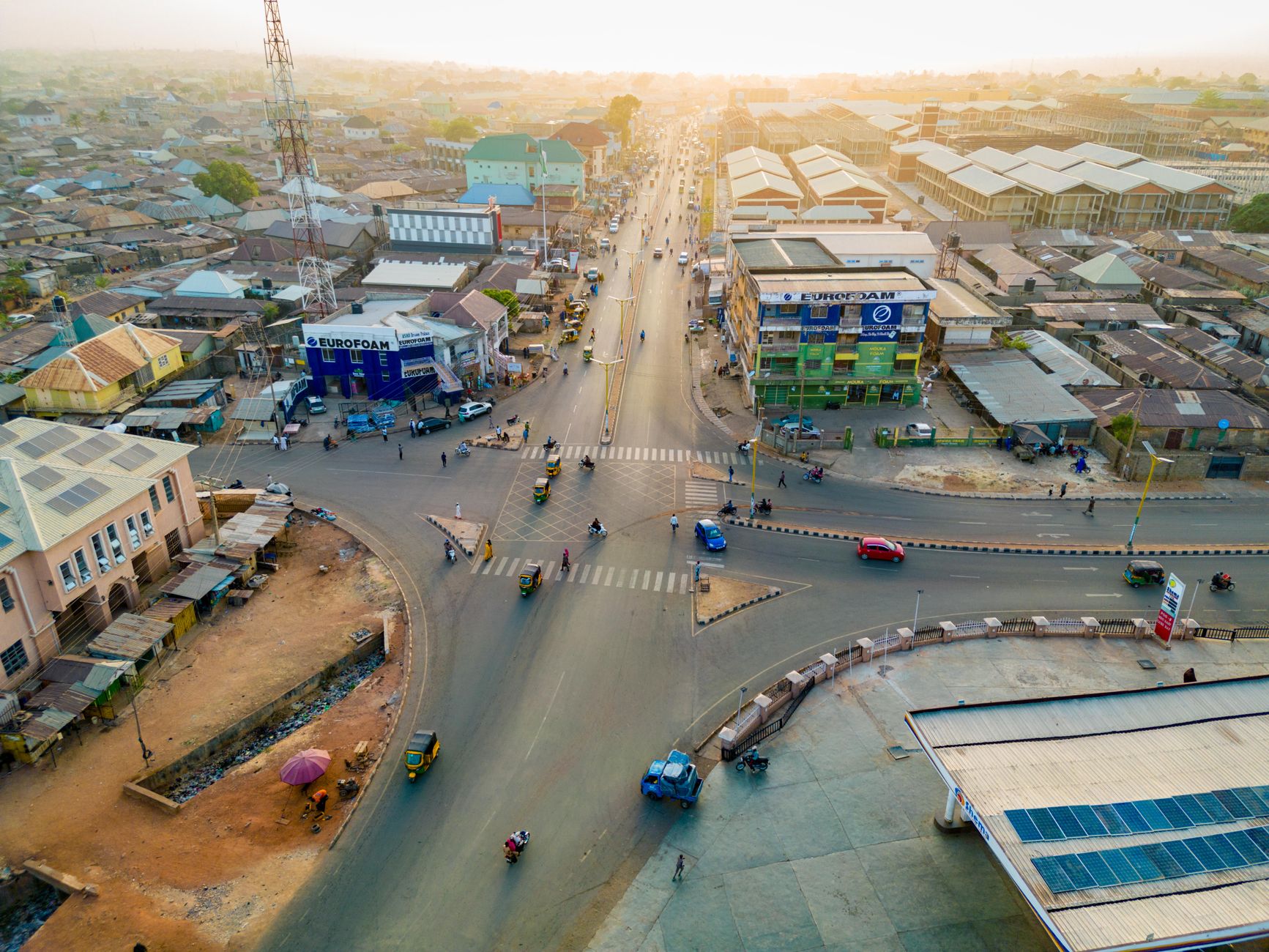
Bangui is where almost every practical question gets answered or fails to get answered: visas checked, cash changed, drivers hired, flights confirmed, plans rewritten. The city sits on the Ubangi River opposite the DRC, and its rhythm is equal parts river port, administrative capital, and place where every rumor about the road is treated as useful intelligence.

placeBangui placeBoganda Museum placeM'Poko riverfront placePK0 market area placeMobaye river corridor

Bayanga

Lobaye and Sangha Forest

Bayanga is the southern forest frontier, a place of logging roads, red mud, and the heavy wet air of the Congo Basin. This is where CAR shifts from savanna country to rainforest country, and where Dzanga Bai, western lowland gorillas, and Ba'Aka cultural encounters make the southwest the country's strongest argument for difficult travel.

placeBayanga placeDzanga-Sangha Reserve placeDzanga Bai placeDzanga-Ndoki National Park placeMbaïki

Bouar

Western Plateau and Stone Fields

Bouar anchors the west, where open plateau gives way to the Yade Massif and one of the country's strangest archaeological landscapes. The megaliths outside Bouar are the sort of site that would draw crowds almost anywhere else; here they stand in near-isolation, with cattle tracks and laterite roads for company.

placeBouar placeBouar megaliths placeYade Massif placeCarnot placeroute toward Cameroon border

Bambari

Central River and Cotton Belt

Bambari sits in the broad central band where river crossings, market towns, and old trade corridors matter more than monuments. This is a working landscape of cassava, trucking, and long distances, and it forms the hinge between the capital-facing center and the harsher east.

placeBambari placeOuaka River approaches placeMobaye placeKaga-Bandoro placelocal market streets

Ndélé

Dar al-Kuti and the Northern Drylands

Ndélé carries some of the deepest historical weight in the country. It was the seat of the Dar al-Kuti sultanate, and the north around it feels different from the forest south: drier air, longer horizons, more Sahel than Congo, and a history marked by caravan trade, slave raids, and fragile frontiers.

placeNdélé placeDar al-Kuti palace site placeBamingui-Bangoran corridor placeKaga-Bandoro placeBossangoa

Bria

Eastern Mining and Frontier Country

Bria and Obo belong to the far east, where diamond fields, military realities, and enormous distances shape daily life. This is not a region for casual drifting. It is the part of CAR that makes scale visible, with settlements separated by bush, insecurity, and roads that can look short on a map and take a full day in practice.

placeBria placeObo placediamond trading districts placeChinko landscape placeairstrip-linked settlements

Suggested Itineraries

3 days

3 Days: Bangui and the Lobaye Edge

This is the most realistic short stay: a few days in Bangui, then a controlled run into Mbaïki for forest-edge scenery and a clearer sense of southern CAR beyond the capital. It keeps distances manageable and avoids pretending the country works like a normal city-break destination.

Bangui→Mbaïki

Best for: business travelers, diplomats, and cautious country collectors keeping movements tight

7 days

7 Days: Rainforest Track to Bayanga

This southwest route trades comfort for the reason many people come at all: the forest around Bayanga, gateway to Dzanga-Sangha. Add Carnot for the western timber-and-river corridor and you get a week that shows how quickly paved logic gives way to red earth, logging roads, and Congo Basin humidity.

Carnot→Bayanga

Best for: wildlife travelers, conservation-minded visitors, and repeat Africa travelers with a fixer

10 days

10 Days: Megaliths to the Sultan's North

Start in Bouar among the megalithic fields, then push through the northwest corridor toward Bossangoa and Kaga-Bandoro before finishing in Ndélé, seat of the old Dar al-Kuti sultanate. The route moves from ancient stone to caravan history, and every leg depends on road conditions and current security advice.

Bouar→Bossangoa→Kaga-Bandoro→Ndélé

Best for: history-first travelers, photographers, and overland specialists with time buffers

14 days

14 Days: The Long Eastern Frontier

Bambari, Bria, and Obo sit in the part of CAR that feels least forgiving and most remote, with huge distances, weak infrastructure, and logistics that often depend on escorts, NGOs, or charter arrangements. Two weeks gives you enough slack for delays, which are not the exception here but the operating system.

Bambari→Bria→Obo

Best for: expedition travelers, researchers, and seasoned visitors working with institutional support

Notable Figures

Barthélemy Boganda

1910-1959 · Priest and independence leader
Born in Bobangui; founder of the political movement that led to independence

Boganda gave anti-colonial politics in Ubangi-Shari a moral force it had lacked. He spoke like a priest who had read the account books and found them obscene, and when he died in a plane crash months before independence, the future republic lost the one man who might have disciplined its birth.

Jean-Bedel Bokassa

1921-1996 · Soldier, president, and self-crowned emperor
Ruled the Central African Republic and later the Central African Empire from Bangui

Bokassa remains the country's most notorious son because he turned Bangui into the stage set for one of the 20th century's strangest coronations. The uniforms, medals, and imperial coach were not decoration; they were his attempt to force grandeur onto a state that could barely pay its teachers.

David Dacko

1930-2003 · First president of the Central African Republic
Led the country at independence and again after Bokassa's fall

Dacko had the burden of being first, which often means inheriting the ceremony without the machinery. He presided over independence in 1960, lost power to Bokassa, then returned after the empire collapsed, a reminder that in Central African politics exile and return are often part of the same career.

Muhammad al-Senussi

c. 1831-1911 · Sultan of Dar al-Kuti
Ruled from Ndélé, in the north of present-day Central African Republic

Senussi made Ndélé a center of scholarship, diplomacy, and slave trading, which is precisely why he unsettles any simple reading of the past. He could receive French envoys with the manners of a cultivated prince while his raiders emptied villages beyond the horizon.

André Kolingba

1936-2010 · General and president
Ruled the country from 1981 to 1993 after seizing power in a coup

Kolingba brought the army back to the center of political life with the dry assurance of a man who believed order mattered more than applause. Under him, the republic regained a kind of administrative shell, though never the trust that makes institutions feel larger than the officers guarding them.

Ange-Félix Patassé

1937-2011 · President
Elected president in 1993; major figure in the country's first pluralist transition

Patassé mattered because he embodied the hope that ballots might briefly outrank barracks. His presidency showed both the possibility of electoral change and the fragility of that promise when mutinies, patronage, and armed rivals remain close at hand.

Catherine Samba-Panza

born 1954 · Transitional president and lawyer
Led the country from 2014 to 2016 during one of its most dangerous crises

Samba-Panza stepped into office when the state was barely holding together and Bangui was living by rumor, checkpoint, and prayer. Her importance lies not in pageantry but in the colder work of keeping a country from sliding further into sectarian revenge.

Michel Djotodia

born 1949 · Rebel leader and transitional head of state
Took power in 2013 after the Seleka coalition captured Bangui

Djotodia was the first Muslim leader to rule the country, and his brief tenure revealed how quickly an insurgent victory can become a national fracture. His rise changed the political vocabulary of the republic, because after 2013 no one could pretend the old center still held.

Alexandre Banza

1932-1969 · Military officer and coup architect
Key ally of Bokassa in the 1965 coup; later executed after falling from favor

Banza helped make Bokassa's seizure of power possible, which is the sort of service autocrats rarely forgive for long. Brilliant, ambitious, and eventually suspected of plotting in turn, he ended before a firing squad, one more courtier consumed by the machinery he had helped build.

Practical Information

visa

Visa

Most travelers need a visa in advance, and current official guidance is clear: do not count on visa on arrival. U.S. guidance says tourist visas can be issued for 30, 60, or 90 days, or for 1 year; your passport should have at least 6 months' validity beyond arrival and at least 1 blank page. Yellow fever vaccination proof is required for travelers aged 9 months and older.

payments

Currency

The country uses the Central African CFA franc (XAF), pegged to the euro at 655.957 XAF to €1. Cash runs the show. In Bangui you can usually exchange euros or U.S. dollars, but outside Bangui card payments and reliable ATMs thin out fast, so arrive with clean cash in small denominations.

flight

Getting There

Bangui M'Poko International Airport is the main gateway and, in practice, the only airport with scheduled passenger service. Current international links connect Bangui with Addis Ababa, Douala, Yaounde, Kigali, Casablanca, and Libreville, so most long-haul trips route through one of those hubs.

directions_car

Getting Around

This is a 4x4-with-driver country, not a self-drive country. Outside Bangui, paved roads are limited, rainy-season mud can stop traffic for days, and several foreign ministries warn against road travel because of checkpoints, armed groups, and carjacking risk. Night travel is a bad idea.

wb_sunny

Climate

December to February is the easiest travel window: drier air, lower heat, and better road access. The south around Bayanga stays humid and rainy for much of the year, while the north around Ndélé turns hotter and drier, with temperatures that can push past 40C in the dry season.

wifi

Connectivity

Orange is the easiest network for travelers to verify in advance, with 4G packages and eSIM now advertised. Buy and download what you need before leaving Bangui; once you head toward Bayanga, Bouar, or Bria, coverage gets patchy and hotel Wi-Fi often becomes aspirational rather than real.

health_and_safety

Safety

This is not a standard leisure destination. As of early 2026, the U.S., Canada, Australia, and the U.K. all advise against travel to most or all of the country, with the U.K. keeping only limited carve-outs for Bangui. If you travel anyway, keep plans narrow, use vetted local logistics, and assume security costs will shape every decision.

Taste the Country

restaurantGozo with sangha

Morning bowl, family table, right hand. Cassava leaf paste, peanut sauce, talk, repetition.

restaurantMboyo stew

Market purchase, home pot, evening meal. Caterpillars, smoked fish, rice or manioc, shared bowl.

restaurantBrochettes in Bangui

Night street, charcoal smoke, standing crowd. Skewers, salt, chili, cash, fingers.

restaurantBeignets de manioc and tea

Dawn stall, metal tray, office workers, students. Fritters, sweet tea, quick gossip.

restaurantPalm wine circle

Late afternoon, courtyard, calabash, elders, visitors. Pouring, passing, waiting, listening.

restaurantSmoked Ubangi fish

River market, kitchen fire, midday plate. Fish, sauce graine, manioc, silence.

restaurantFufu at a communal bowl

Sunday meal, relatives, neighbors. Pinch, press, scoop, swallow, laughter.

Tips for Visitors

euro
Bring hard cash

Bring euros or U.S. dollars and exchange them in Bangui before heading onward. Crisp notes from recent series get fewer raised eyebrows, and small bills make checkpoint fees, meals, and tips easier to handle.

train
Forget trains

CAR has no useful passenger rail network, domestic or international. If you are moving between Bangui, Bouar, Bambari, or Ndélé, think flights into Bangui, then 4x4, convoy, or charter.

hotel
Book the car first

In most countries you book the room, then think about transport. Here it is the other way round. A vetted driver, fixer, or lodge transfer often matters more than the hotel itself.

wifi
Download offline

Download maps, hotel confirmations, passport scans, and French or Sango phrases before leaving Bangui. Network gaps are common enough that an offline map is not backup; it is the main system.

payments
Tip in cash

Tipping is discretionary, but cash tips smooth things out. Round up taxis, leave about 5 to 10 percent in restaurants when service warrants it, and agree guide or driver tips in advance so nobody is performing surprise arithmetic at the end.

health_and_safety
Yellow fever proof

Carry your yellow fever certificate in the same pouch as your passport. Border and airport checks can be inconsistent until they suddenly are not, and this is one document you do not want to be improvising.

handshake
Greet before asking

In Sango-speaking CAR, greeting is not dead time before the real conversation. Say hello, ask after the person, and only then get to business. Rushing straight to your request reads as bad manners.

Explore Central African Republic with a personal guide in your pocket

Your Personal Curator, in Your Pocket.

Audio guides for 1,100+ cities across 96 countries. History, stories, and local insight — offline ready.

smartphone

Audiala App

Available on iOS & Android

download Download Now

Join 50k+ Curators

Frequently Asked

Is Central African Republic safe for tourists in 2026? add

No, not by any ordinary travel standard. The U.S. State Department kept CAR at Level 4 Do Not Travel on January 15, 2026, Canada says Avoid all travel, Australia says Do not travel, and the U.K. advises against all travel to most of the country and all but essential travel to Bangui. Anyone going anyway should treat it as a managed high-risk trip, not a casual holiday.

Do I need a visa for the Central African Republic? add

Probably yes, and you should get it before departure. Official guidance for U.S., U.K., Canadian, and Australian travelers all points toward advance visa arrangements, and U.S. country information says visas are no longer available on arrival.

Can you use credit cards in Bangui and elsewhere in CAR? add

Only occasionally in top-end Bangui hotels, and even there you should not rely on it. Outside Bangui, assume cash only for rooms, meals, fuel, guides, and transport, with unreliable ATMs and limited banking support.

What is the best time to visit Bayanga and Dzanga-Sangha? add

December to February is the easiest overall window, with another workable stretch for wildlife from roughly May to September. Roads get worse in the wetter months, and access to Bayanga can turn from difficult to unrealistic once heavy rains take hold.

How do you get to Bangui from Europe or the United States? add

You usually connect through Addis Ababa, Douala, Yaounde, Kigali, Casablanca, or Libreville, then fly into Bangui M'Poko International Airport. Do not expect a wide route map or many backup options, so leave slack in both directions.

Is Bangui worth visiting if you are not going into the parks? add

Yes, but mainly as a working capital rather than a sights-first destination. Bangui makes sense if you are interested in river cities, post-colonial urban life, and the practical mechanics of central Africa; it makes less sense if you want polished museums and easy independent exploring.

Can you travel overland between Bangui, Bouar, Bambari, and Ndélé? add

Sometimes, but road conditions and security guidance decide the answer more than the map does. Some roads out of Bangui are paved for a while, yet checkpoints, washouts, fuel gaps, and local incidents can slow or stop movement with very little warning.

Do I need yellow fever vaccination for Central African Republic? add

Yes, in practice you should treat it as mandatory. Entry requires a yellow fever certificate for travelers aged 9 months and older, and health authorities also recommend the vaccine for essentially all travelers in that age group.

Is there mobile internet in Central African Republic? add

Yes, but coverage and reliability fall fast once you leave the capital. Orange is the most traveler-facing option currently easy to verify, with 4G packages and eSIM support, but rural data service can be weak enough that offline tools matter more than your signal bars.

Sources

Last reviewed: