Winnipeg
Canada Updated Apr 2026
The air hits minus thirty and the city keeps drinking Slurpees. That’s your first clue Winnipeg refuses to behave like anywhere else in Canada. Keep driving west from Toronto until the map runs out of pages and you’ll hit a place where Ukrainian grandmothers still roll perogies in church basements, bison wander inside city limits, and every sidewalk seems to end at a river that won’t decide if it’s liquid or ice.
 Photo: dilbar sandhu / Pexels
- Attractions
- 12
- Audio
- 3 h 20 min
- Trip length
- 3–5 days
- Best season
- July–August (or January for winter festivals)
Why Winnipeg
Built from cited sources · see the method · How we make our guides →
Winnipeg sits at the continent’s bull’s-eye—where the railroads once gambled everything on a muddy fork of two rivers—and the town has been making up for lost time ever since. Expect architecture that hides Masonic riddles in limestone, a national museum that asks you to feel uncomfortable on purpose, and a music scene that exports Grammy winners while the local bars still pass a hat for change.
The city’s charm is obstinate: it won’t flatter you with postcard views, but it will hand you honey-dill sauce for your fries, send you skating past grain elevators at dusk, and teach you that “cold” is just another word for solidarity. Come for the polar bears at the zoo, sure, but stay for the conversations you’ll overhear about hockey, colonial guilt, and why the rye bread here is darker than any night.
Human Rights in Glass
The Canadian Museum for Human Rights is the only national museum outside Ottawa, its 100-metre glass tower catching prairie light like a prism. Inside, 10 galleries move from Indigenous teachings to contemporary genocides, ending on an observation deck that makes the Red and Assiniboine rivers look like arteries.Polar Bears Downtown
Assiniboine Park Zoo’s Journey to Churchill lets you stand in a 21-metre acrylic tunnel while 400-kg orphaned polar bears paddle overhead. The same ticket now includes The Leaf, a new biome complex with Canada’s tallest indoor waterfall—60 feet of warm mist in a city that hits –40 °C.Inuit Art Vault
Qaumajuq, attached to the Winnipeg Art Gallery, stores 5,000 carvings in a three-storey glass vault visible from the street—like a jewellery box turned inside out. The main gallery rotates 8,000 sq ft of contemporary Inuit work that most travellers otherwise see only in travelling shows.Skate a Frozen Highway
When the rivers freeze, the city grooms a 6-km skating trail from The Forks past birch and cottonwood groves—no admission, just follow the red-oak trail markers glowing under LED lamplight. Locals commute on it; you can rent blades at the market and finish with cinnamon buns at Tall Grass Prairie bakery.
Neighborhoods
Where to wander, by quarter — each with its own rhythm.
The Forks
Six thousand years of trade meets twenty-first-century food courts where you can slurp Filipino noodles beside a Métis fiddler. In summer the riverside plazas smell of bannock and sunscreen; in winter the same paths become skate-ways where the city’s collective breath rises like a communal ghost.Exchange District
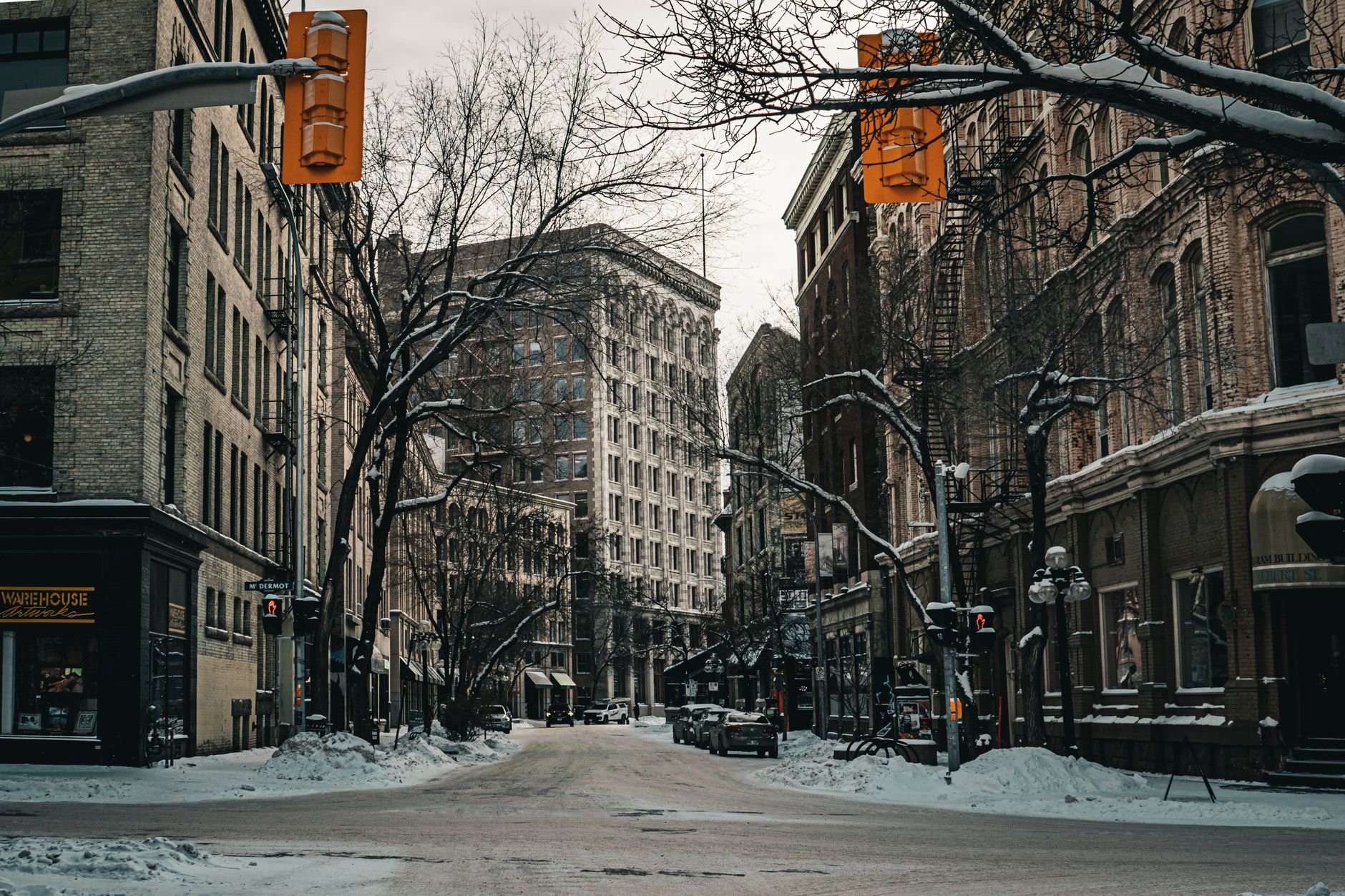
Warehouses of terra-cotta and brick built on grain money now house 51 restaurants, indie galleries, and jazz clubs that stay loud until the granite curbs glisten with dew. It’s the only place in town where you can buy a hand-bound book, drink a barrel-aged negroni, and watch a Fringe play about taxidermy—all within half a block.St. Boniface
Across the river, French is still spoken without apology and the smell of Tourtière drifts out of bakeries built in 1897. Festival du Voyageur turns February into a jigging, maple-whiskey rebellion against winter, while the cemetery holds the grave of Louis Riel, the executed father of Manitoba who still divides dinner-table conversation.North End
More grit than gloss, where Ukrainian social clubs share alleys with Vietnamese pho shops and the city’s best kubasa is sold beside hubcaps. The murals here don’t ask for selfies—they demand you remember whose land you’re standing on.Osborne Village
Vintage clothing racks spill onto sidewalks, coffee roasters operate out of former funeral homes, and the weekend pub crawls end with 3 a.m. pizza slices the size of snowshoes. It’s where university students age into artists who still can’t afford anywhere else.Assiniboine Park Belt
Technically inside the city limits but feels like you’ve driven three hours north: 640 acres of aspen and oak hiding a herd of plains bison, a polar-bear conservation center, and a botanical dome where the humidity jumps twenty degrees the second you step inside.
Plan your trip
Before you go
- Getting There
- James Armstrong Richardson International Airport (YWG) handles all flights; no rail link downtown—take Winnipeg Transit Route 15 (CAD $3.15, 35 min) or taxi (CAD 25–35, 15 min). Via Rail stops at Union Station, a 10-minute walk to The Forks; highways 1, 75, 59 and Perimeter 100 feed the city from all directions.
- Getting Around
- No metro—Winnipeg Transit buses only. The June 2025 network overhaul re-numbered every route; use the Winnipeg Transit app for real-time arrival. A Peggo smart card knocks ~15% off the CAD $3.15 cash fare. Bike-share (Peg City Co-op) exists but coverage is patchy; downtown to Assiniboine Park is 6 km on protected lanes.
- Climate & Best Time
- July peaks at 27 °C but brings mosquitoes; January bottoms out at –22 °C with wind-chill to –40 °C. June is wettest (10 rain days); September stays 20 °C and almost bug-free. Come late July for the Folk Festival at Birds Hill or February for river skating and Festival du Voyageur—just pack layers rated to –40.
- Safety
- Stick to well-lit corridors: The Forks, Exchange District, Osborne Village. After dark avoid the North End and West End; transit’s Request Stop program lets riders exit between stops after 7 p.m. Jets game nights flood downtown with crowds—safety in numbers, but still hide your phone on empty streets.
Where Rivers Meet and Nations Collide
From ancient gathering place to 'Chicago of the North'
- c. 4000 BCE
The Forks Becomes Trading Hub
Archaeology shows people gathering where the Red and Assiniboine rivers merge for 6,000 years. They come by birch-bark canoe to exchange copper from Lake Superior, shells from the Gulf of Mexico, and stories that will later be carved into stone. The meeting place smells of smoked sturgeon and sweetgrass.
- 1285 CE
Great Peace Summit
Nine First Nations send 4,000 representatives to The Forks—one of the largest diplomatic gatherings in pre-contact North America. They negotiate a treaty covering most of what Canadians now call the Prairies. The agreement is recorded on birch bark maps that traders will still reference four centuries later.
- 1738
Fort Rouge Rises
French officer Pierre Gaultier de Varennes builds a wooden stockade at The Forks for the North West Company. The post lasts barely two winters—spring floods rot the palisade—but it marks the first European footprint on what will become Winnipeg. Local women teach the French to make pemmican that keeps traders alive during -40° nights.
- 1812
Selkirk Settlers Arrive
Scottish Highlanders step off York boats onto frozen riverbank, promised land by Lord Selkirk's 116,000-square-mile grant. They build log cabins at Point Douglas while Métis buffalo hunters share dried meat to prevent starvation. Within four years the settlement will erupt into gunfire over pemmican exports.
- 1816
Battle of Seven Oaks
June 19: Métis under Cuthbert Grant face Hudson's Bay Company settlers. One hour later, 21 settlers and one Métis teenager lie dead in the prairie grass. The skirmish cements Métis identity and persuades Britain the fur companies must merge. You can still walk the exact field—now a quiet residential street named after the battle.
- 1844
Louis Riel Born
At St. Boniface, a boy enters the world who will grow up speaking French, Ojibwe, and Catholic Latin. By 25 he will block Canada's westward expansion, create Manitoba, and pay with his life. His childhood house still stands; locals leave tobacco on the doorstep on the anniversary of his execution.
Show the full timeline (16 moments)
- 1870
Manitoba Joins Canada
Ottawa creates the postage-stamp province—1/18 its current size—to appease the Métis provisional government. Louis Riel flees before Colonel Wolseley's troops reach Fort Garry; a decade of reprisals against Métis families begins. Winnipeg becomes capital almost by accident—the only town with a stone jail and two churches.
- 1878
Steel Rails Arrive
The first locomotive steams in from St. Paul, Minnesota, pulling boxcars of pine lumber and American speculation. Within seven years Winnipeg will handle 25 percent of Canada's grain trade. Property values on Main Street quadruple overnight; saloons stay open until the last train leaves at 3 a.m.
- 1885
Riel Hanged
November 16: Métis leader Louis Riel swings in Regina, convicted of treason for the North-West Resistance. Winnipeg newspapers print special editions; crowds burn him in effigy outside the Clarendon Hotel. His body returns by rail to St. Boniface, where 2,000 people file past the open coffin under candlelight.
- 1919
General Strike Paralyzes City
30,000 workers walk out May 15—tram operators, telephone girls, even the city band. For six weeks Winnipeg's heart stops beating; streetcars rust on their tracks, newspapers go silent. On Bloody Saturday, Mounties charge horseback into strikers, killing two. The event births Canada's labor movement and the Co-operative Commonwealth Federation party.
- 1920
Legislature Rises
After fifteen years of construction delays, Manitoba finally moves into its neoclassical palace. Architect Frank Worthington Simon hides hieroglyphics and Masonic symbols in the marble—treasure-hunt tours still reveal them. The Golden Boy statue, sheaf of wheat raised to the sky, becomes the city's compass point visible from ten kilometers away.
- 1945
Neil Young's First Guitar
At Kelvin High School a shy kid with polio learns three chords on a plastic ukulele. By 1966 he'll write 'Sugar Mountain' about the city's abandoned sugar beet factory. Winnipeg's grain elevators and winter wind reappear in his lyrics decades later—listen for the whistle of the CPR in 'Helpless.'
- 1950
Red River Flood
Water covers 1,100 square kilometers; 100,000 residents flee as the river climbs eight meters above normal. Army amphibious vehicles patrol Portage Avenue. The disaster spawns the 48-kilometre Red River Floodway—dubbed 'Duff's Ditch'—which will save the city repeatedly, most catastrophically in 1997.
- 1972
Unicity Amalgamation
Thirteen municipalities—Saint Boniface, Transcona, Fort Garry—merge into a single megacity. Overnight Winnipeg grows from 265,000 to 560,000 people. Street names change, school boards dissolve, and francophone Saint-Boniface fights to keep its hospital bilingual. The merger still shapes debates about pothole repair and snow removal.
- 2014
Human Rights Museum Opens
Antoine Predock's glass mountain rises 100 metres at The Forks, its limestone wings clawing at prairie sky. Inside, visitors climb glowing alabaster ramps past exhibits on residential schools and the Holocaust. Love it or hate it, the building forces Winnipeg to confront its own history—starting on land where Indigenous peoples traded for millennia.
- 2021
Population Tops 750,000
The census counts 749,607 souls inside the Perimeter Highway—more than Calgary in 1971. Newcomers from the Philippines, Nigeria, and Ukraine reshape strip malls where Ukrainian delis now share plazas with Jollibee. Winter still hits -30°C, but the city's soundtrack now includes Tagalog church bells and Afrobeats on campus radio.
Who lived here
-
Métis Leader · 1844–1885
Louis Riel
Lived here 1869–1870
He drafted Manitoba into existence in Upper Fort Garry’s council chamber, then returned in defeat to stand trial downtown. Today he’d recognise the Red River still bending past the Exchange warehouses—and the province his rebellion created.
-
Musician · born 1945
Neil Young
Born here 1945
The hospital where he was born is gone, but the rail lines he romanticised still slice across the prairie. He’d find the same wind-battered loneliness humming under the Elmwood bridges.
-
Actor · born 1982
Anna Paquin
Born here 1982
Winnipeg’s winters forged her Oscar-winning composure early—she learned to walk on River Heights sidewalks glazed with ice. The city’s small-film sets were her playground before Hollywood ever called.
-
WWII Spymaster · 1897–1989
Sir William Stephenson
Grew here 1900s
The quiet North End kid became Churchill’s ‘Intrepid’, running spy schools that changed the war. He’d smile at the ordinary-looking house on Alverstone Street where his legend began.
-
Film Director · born 1956
Guy Maddin
Lives and films here
He turns Winnipeg’s frozen back lanes into surreal silent-era dreamscapes. Ask him why he stays and he’ll point to the neon sign of the closed Uptown Theatre—still flickering in his memory.
Where to Eat
Where locals actually book dinner — not the tourist menus.
Insider tips
Small things that change how the city treats you.
Cash Tips Only
Manitoba law lets owners keep card tips. Hand cash to your server if you want them to actually get it.Mosquito Season
June–July bugs are legendary. Pack DEET or buy local ‘Off!’ the minute you land.Transit Overhaul
Routes re-numbered June 2025—old maps are worthless. Download the new Winnipeg Transit app before you go.Winter Walkways
Sky-walks exist but don’t link the whole core. Plan 5-min indoor hops or you’ll hit –30 °C wind in the face.Order the Social
Winnipeg’s weekend brunch ritual is a Caesar cocktail with honey-dill-dipped chicken fingers. Embrace the prairie hangover cure.Free Art Fix
The Forks riverside, Exchange District facades and Assiniboine Park’s English Garden cost nothing—budget day sorted.
Gallery
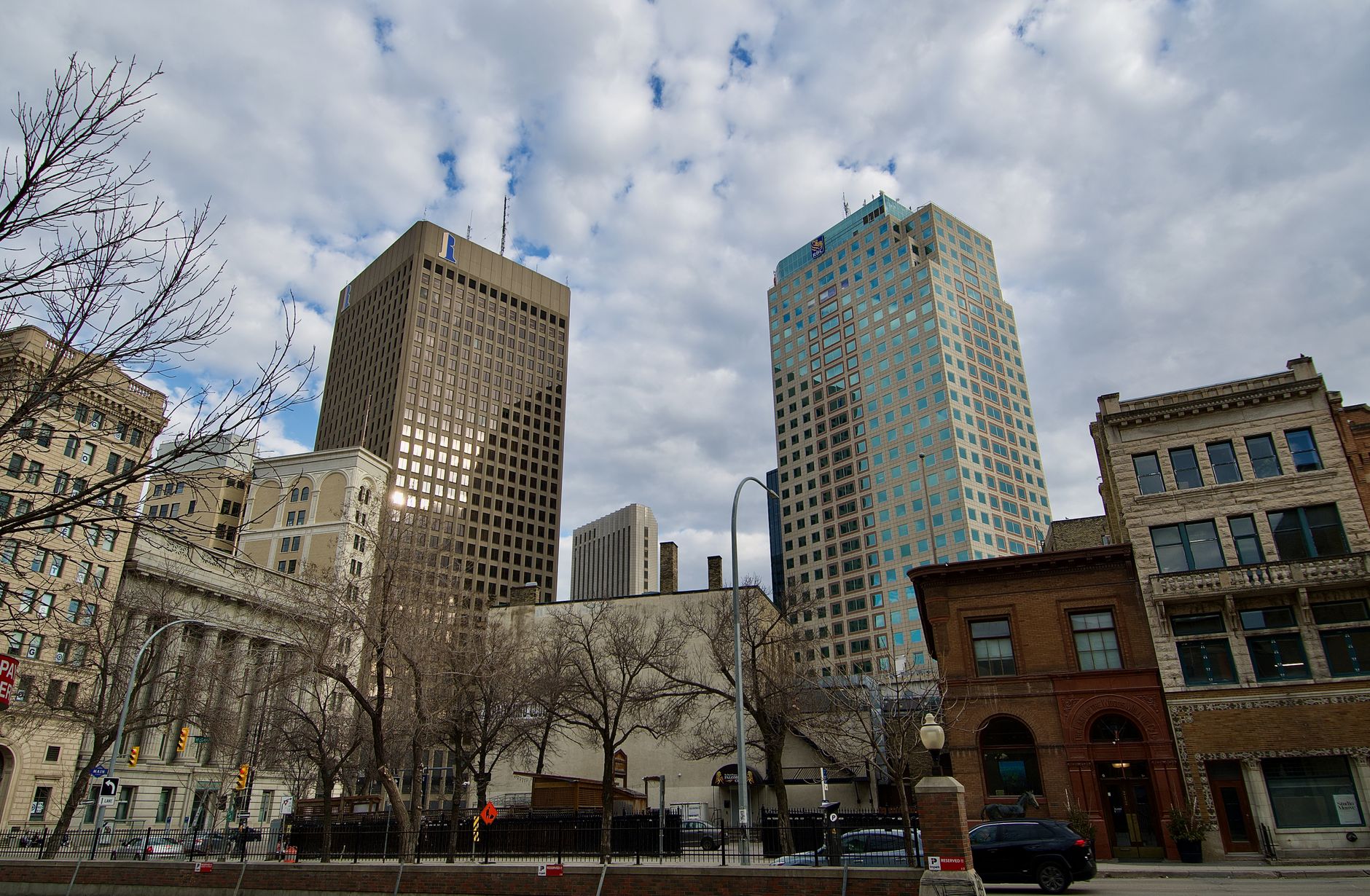
The city, as it actually looks.




Watch
-
Lauren Louise Winnipeg City Guide: restaurants, bars, vintage shopping, book stores etc.
-
Taylor & Jordan Travel Winnipeg Canada Travel Guide: 22 BEST Things To Do In Winnipeg Manitoba Canada
-
Drifter Dave - Travel the Unknown THREE PERFECT DAYS IN WINNIPEG! (Your ultimate guide to exploring Manitoba's capital city) #canada
-
The Posh Foodie 5 Popular All You Can Eat Restaurants in Winnipeg, Manitoba 🇨🇦 | 加拿大温尼伯5家受欢迎的任食餐厅



Frequently asked
Is Winnipeg worth visiting?
Yes—if you like human-rights architecture you can climb, polar bears swimming overhead and Ukrainian perogies at 2 a.m. It punches far above its weight in museums, festivals and food culture.
How many days do I need in Winnipeg?
Three full days covers CMHR, Assiniboine Zoo & Leaf, Forks market and Exchange District. Add two more for FortWhyte Alive or a Folk Festival weekend.
Is Winnipeg safe for tourists?
Downtown, The Forks and Osborne Village are fine by day. Stick to lit streets after dark and skip the North End; crime is concentrated there, not near the museums.
Do I need a car in Winnipeg?
For the core attractions—no. Bus 15 links the airport to downtown and the new Primary Transit Network runs every 10-15 min on key routes. Rent only if you’re heading to Birds Hill or Riding Mountain.
What’s the best time of year to go?
July–August for 30 °C days, 170-hour Folk Festival and river sunsets. January if you want to skate the Red River at -20 °C and see 30-ft snow sculptures at Festival du Voyageur.
How much does a weekend cost?
Budget CAD $150 a day: $20 museum entries, $15 for a giant plate of perogies and beer, $100 for a central Airbnb. High-end dinners at deer + almond push a night over $250.
Pick up where you left off
Saved and recently read places — kept on this device only.
Photo credits (10)
- dilbar sandhu — Pexels License (https://www.pexels.com/license/) — Source: https://www.pexels.com/photo/30420324/
- dilbar sandhu — Pexels License (https://www.pexels.com/license/) — Source: https://www.pexels.com/photo/19898165/
- Samuel Osho — Pexels License (https://www.pexels.com/license/) — Source: https://www.pexels.com/photo/234248/
- Tom Kowalsky — Pexels License (https://www.pexels.com/license/) — Source: https://www.pexels.com/photo/31520612/
- Tom Kowalsky — Pexels License (https://www.pexels.com/license/) — Source: https://www.pexels.com/photo/31721757/
- Tom Kowalsky — Pexels License (https://www.pexels.com/license/) — Source: https://www.pexels.com/photo/31520594/
- Tom Kowalsky — Pexels License (https://www.pexels.com/license/) — Source: https://www.pexels.com/photo/31721742/
- Tom Kowalsky — Pexels License (https://www.pexels.com/license/) — Source: https://www.pexels.com/photo/31520600/
- Tom Kowalsky — Pexels License (https://www.pexels.com/license/) — Source: https://www.pexels.com/photo/31520608/
- Tom Kowalsky — Pexels License (https://www.pexels.com/license/) — Source: https://www.pexels.com/photo/31520607/
Photos may have been resized or cropped.