Plan and listen to Pont Pierre-Laporte with Audiala.
Audio guide in your pocket, itinerary in your browser. Built for the way you actually visit.
Introduction
Towering over the Saint Lawrence River, the Pierre Laporte Bridge is both an engineering marvel and an essential part of Québec City's history and daily life. As the longest main-span suspension bridge in Canada, it connects Québec City with Lévis, easing the flow of more than 120,000 vehicles every day. Beyond its vital role in transportation, the bridge holds deep cultural significance, commemorates a pivotal event in Quebec’s political history, and offers travelers spectacular views of the city and river.
This comprehensive guide covers the Pierre Laporte Bridge’s origins, design, and strategic importance, as well as practical visitor information—including accessibility, real-time traffic tips, and the best nearby attractions. Whether you are a local commuter, history buff, or sightseeing traveler, you’ll find everything you need to fully appreciate this iconic Québec City landmark.
For official updates, refer to the Québec Ministry of Transport and Québec City Tourism.

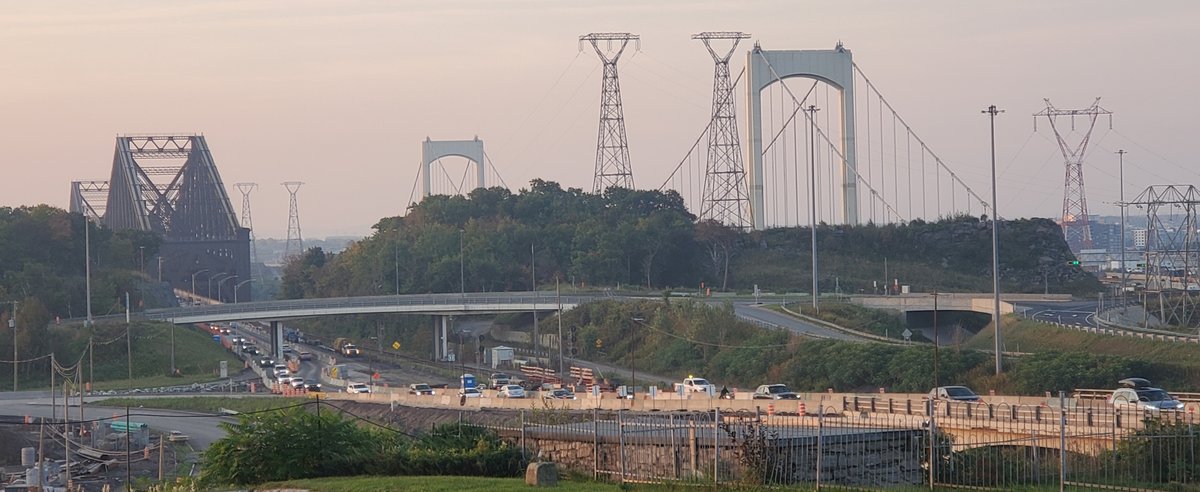
The Pierre Laporte Bridge: At a Glance
- Location: Spans the Saint Lawrence River, linking Québec City (north shore) and Lévis (south shore).
- Type: Suspension bridge; main span of 1,041 meters (3,415 feet).
- Opened: November 1970.
- Named for: Pierre Laporte, Quebec’s Vice-Premier, tragically killed during the October Crisis of 1970.
- Traffic: Six lanes for motor vehicles; no pedestrian or cycling access.
- Tolls: None; the bridge is always toll-free.
- Status: Canada’s longest suspension bridge span.
Historical Background and Cultural Importance
Origins and Motivation for Construction
By the 1950s, Québec City’s only road bridge—the Pont de Québec—could no longer support the region’s surge in automobile traffic. In response, government studies in the late 1950s and early 1960s led to the decision to build a second crossing adjacent to the existing bridge. The site was selected for its narrow river width and proximity to existing road infrastructure (fr.wikipedia.org).
Naming and Historical Resonance
Initially called Pont Frontenac, the bridge was renamed Pierre Laporte Bridge during its final construction phase to honor Quebec’s Vice-Premier, who was kidnapped and murdered during the October Crisis of 1970. This event marked a turning point in Quebec’s history, making the bridge both a symbol of modern progress and a lasting memorial (wikiwand.com).
Construction and Milestones
Work began in June 1966 under engineer Lucien Martin, with several leading Québec companies overseeing major construction segments. The bridge was completed in just over four years, opening for traffic in November 1970 at a cost of over $50 million CAD. The project is remembered as a landmark achievement in Québec engineering, despite a tragic accident in 1966 that claimed the lives of ten workers (portailconstructo.com; patrimoine-culturel.gouv.qc.ca).
Engineering and Structural Features
Suspension Bridge Design
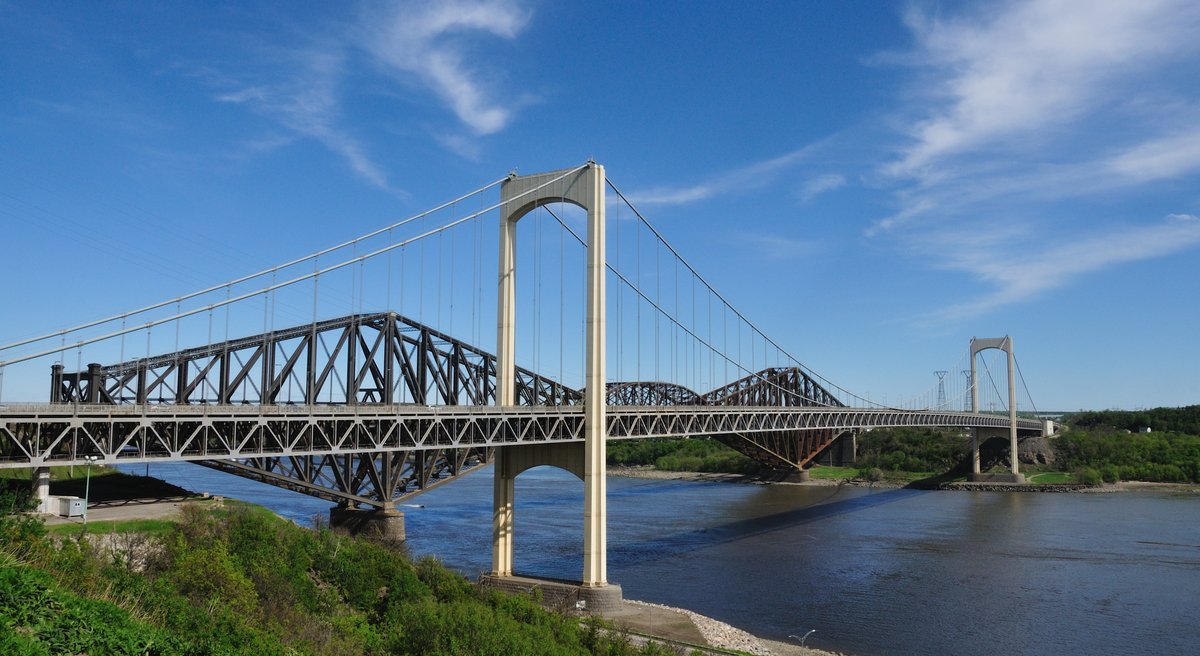
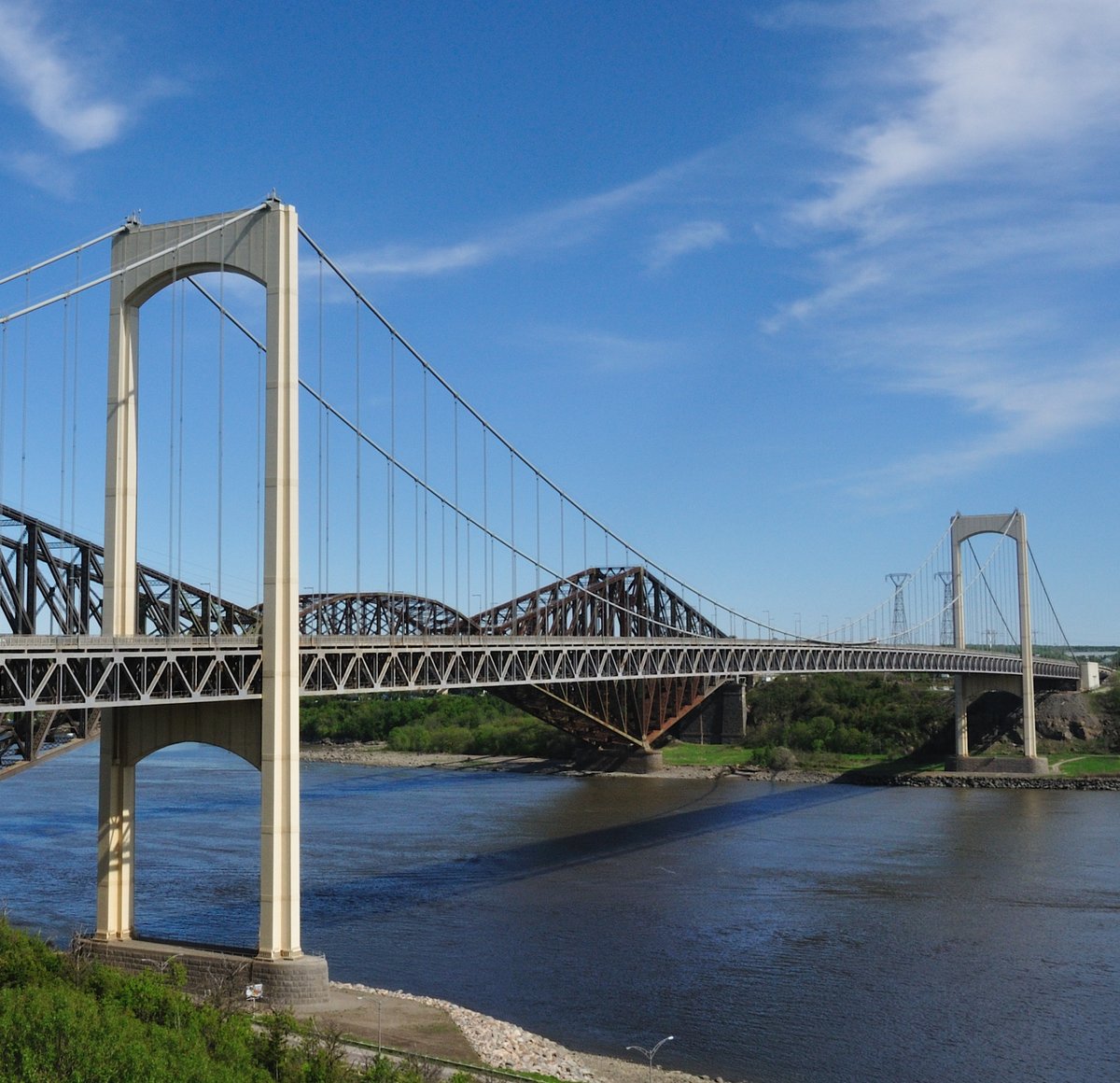
The Pierre Laporte Bridge’s design was chosen for its ability to span the wide, navigable Saint Lawrence River with minimal piers in the water. Its main span of 1,041 meters remains unsurpassed among Canadian suspension bridges (en.wikipedia.org; historicbridges.org).
- Towers: Two pylons, each 123 meters high, constructed with cruciform columns and cross-bracing.
- Cables: The main cables, over 60 cm in diameter and made from more than 12,500 steel wires, were the first in Canada to use parallel wire strand technology.
- Deck: Supports six lanes of motor vehicle traffic and is 26.8 meters wide—among the widest in Canada at the time of completion.
- Materials: Combination of high-strength steel and reinforced concrete; stone-faced tower foundations blend tradition and modernity (portailconstructo.com).
Maintenance and Innovation
Early corrosion concerns prompted an innovative large-scale anti-corrosion treatment in the late 1970s, including zinc metallization and vinyl overlays—a pioneering approach in North America (patrimoine-culturel.gouv.qc.ca). The bridge undergoes regular maintenance, with major works and temporary closures announced well in advance (lesoleil.com; Journal de Montréal).
Visitor Information: Access, Hours, and Safety
Accessibility
- Motor Vehicles Only: The bridge is exclusively for cars, buses, and trucks. No pedestrian or cycling lanes exist due to safety and design constraints.
- Open 24/7: There are no entry restrictions or tickets required; access is always free.
- Public Transit: RTC (Québec City) and STLévis buses cross the bridge, connecting major neighborhoods on both shores.
Best Viewing Spots
While you cannot walk or cycle across the bridge, the following locations offer excellent viewpoints and photo opportunities:
- Québec City Side: Parc de la Plage-Jacques-Cartier, Promenade Samuel-De Champlain, and the Aquarium du Québec.
- Lévis Side: Parc de la Rivière-Etchemin and local riverfront parks.
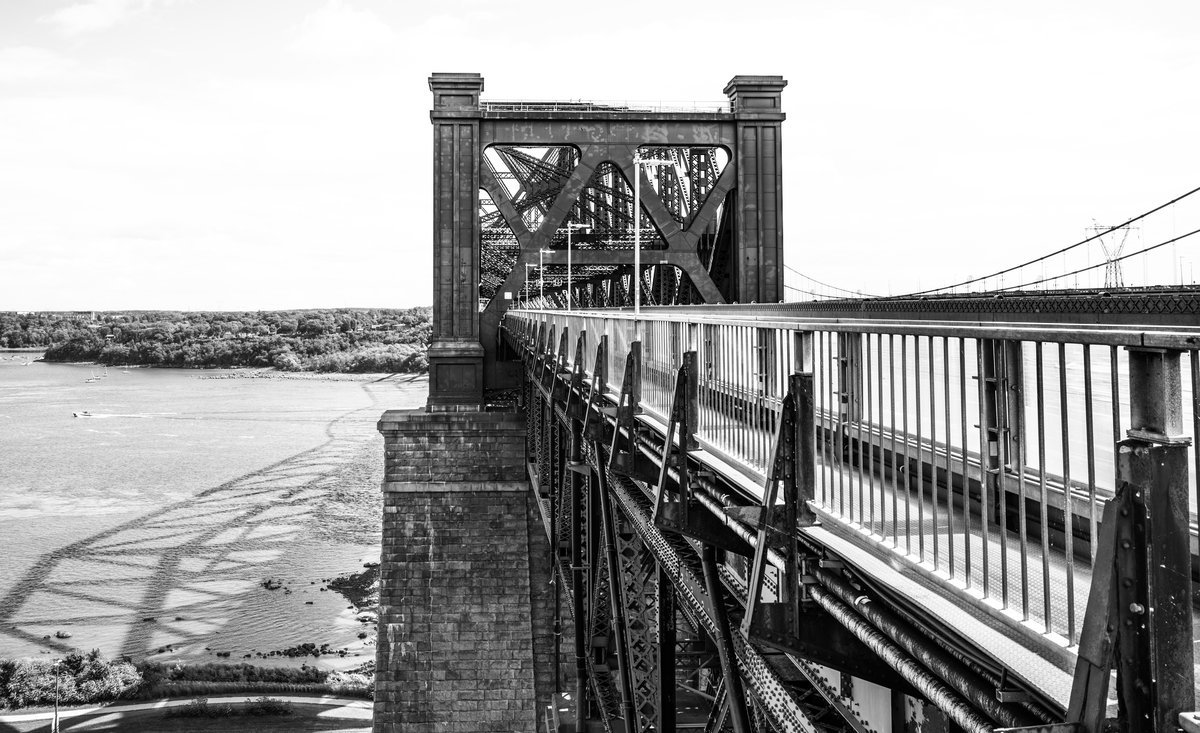
- Quebec Bridge: Just 200 meters to the east, the historic Quebec Bridge offers pedestrian and cycling access and contrasting architecture.
Safety and Regulations
- No stopping or parking on the bridge.
- Speed limits are strictly enforced.
- Winter driving: The bridge is maintained for snow and ice, but conditions may require caution; temporary closures are announced via official channels.
- No toll booths or fees.
Traffic Tips and Real-Time Updates
- Peak Hours: Expect congestion on weekdays between 7–9 AM and 4–6:30 PM.
- Best Times: Early mornings, late afternoons, and weekends offer lighter traffic and better conditions for sightseeing.
- Maintenance Closures: Check for scheduled works, especially in winter and during announced maintenance periods in 2025 and 2026.
- Traffic Updates: For current conditions, consult the Ministry of Transport and local GPS apps.
Nearby Attractions and Viewing Points
- Quebec Bridge: Adjacent historic bridge with pedestrian and cycling access.
- Promenade Samuel-De Champlain: Riverside park with walking and cycling trails, art installations, and views of both bridges.
- Aquarium du Québec: Family-friendly attraction near the north approach.
- Old Québec: UNESCO World Heritage Site, a short drive away, with historic architecture, shopping, and dining.
Frequently Asked Questions (FAQ)
Q: Can I walk or cycle across the Pierre Laporte Bridge?
A: No, only motor vehicles are permitted. Pedestrians and cyclists should use the Quebec Bridge.
Q: Are there tolls or tickets required to cross?
A: No, the bridge is toll-free and open to vehicles 24/7.
Q: Where can I get the best views or photos?
A: Visit nearby parks such as Parc de la Plage-Jacques-Cartier (Québec City side) or Parc de la Rivière-Etchemin (Lévis side), or use the Quebec Bridge for pedestrian access.
Q: Is the bridge open year-round?
A: Yes, the Pierre Laporte Bridge is open to vehicles at all times, barring rare, announced closures for maintenance.
Q: Are public transportation options available?
A: Yes, several bus routes cross the bridge; check with RTC and STLévis for schedules.
Visuals, Media, and Internal Links
Image Suggestions
- Illuminated nighttime shots (alt: "Pierre Laporte Bridge illuminated at night in Quebec City")
- Daytime photos showing towers and cables (alt: "Daytime view of Pierre Laporte Bridge suspension cables")
- Panoramic views from Promenade Samuel-De Champlain or Quebec Bridge (alt: "Panoramic view of Pierre Laporte and Quebec Bridges over the Saint Lawrence River")
For further exploration, see our guides on Old Québec Walking Tours, Quebec City Historical Sites, and Quebec Bridge Visitor Guide.
Listen to the full story in the app
The whole Pont Pierre-Laporte,
told well.
Audio guides for 1,100+ cities across 96 countries. History, stories, and local insight — offline ready.
Verified, and shown.
Researched and written by the Audiala editorial team from historical records, architectural archives, and local expertise.
Researched from Wikidata, Wikipedia & official sources · fact-checked · How we make our guides →