Plan and listen to Wellington Building with Audiala.
Audio guide in your pocket, itinerary in your browser. Built for the way you actually visit.
Introduction: History and Significance
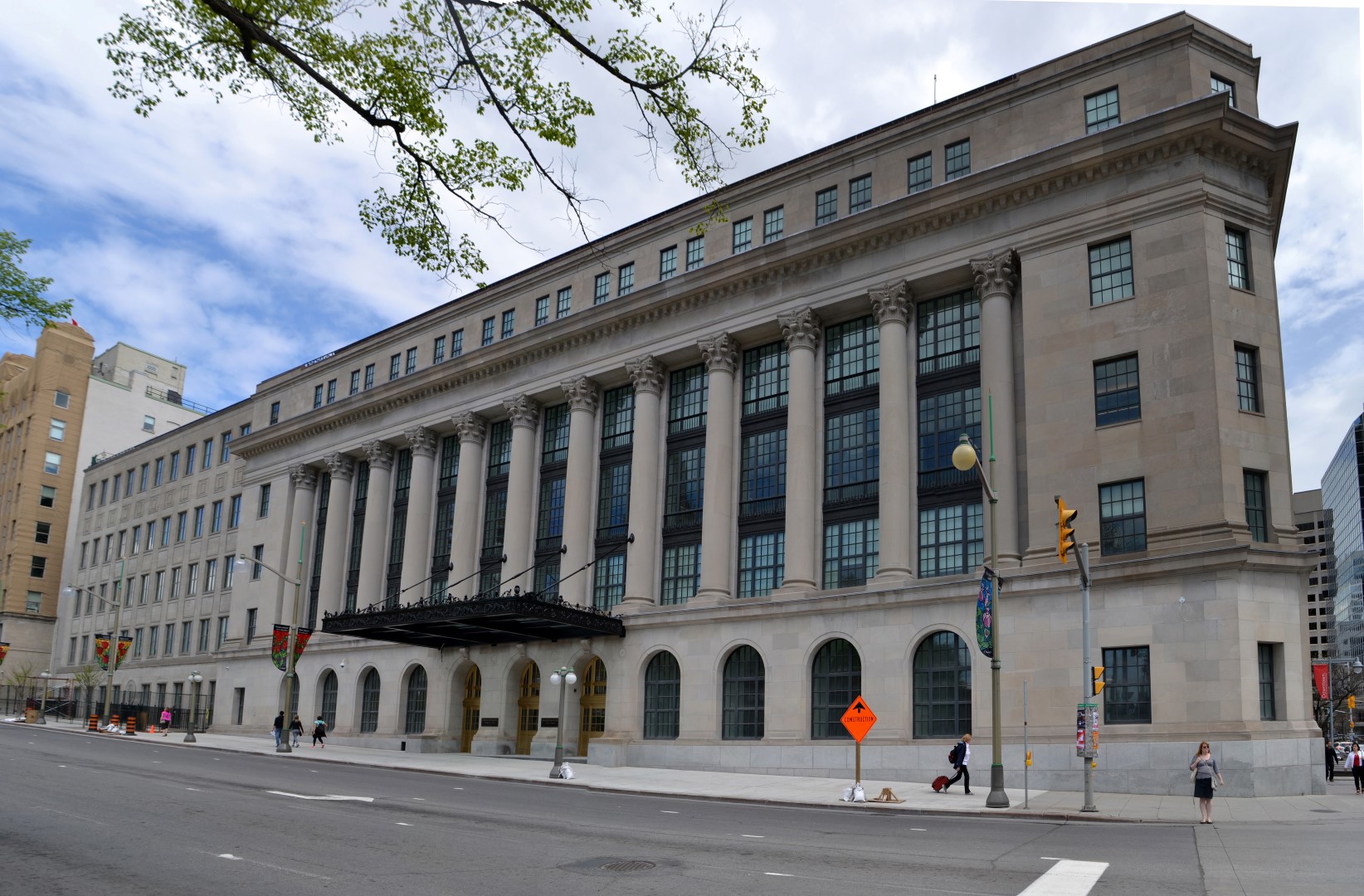
The Wellington Building, located at 180 Wellington Street in Ottawa, is an iconic landmark that fuses Canada’s rich architectural heritage with its vibrant parliamentary activity. Built between 1927 and 1928 as the headquarters for the Metropolitan Life Insurance Company, this Beaux-Arts structure is renowned for its grand limestone façade, classical ornamentation, and the mosaic-vaulted vestibule ceiling crafted by American muralist Barry Faulkner. Over time, the building transitioned from a commercial hub to a key federal government facility. Today, it serves as a parliamentary "swing space" for Members of Parliament (MPs), especially during the ongoing restoration of Parliament Hill’s Centre Block. This dual role as both a heritage monument and a functioning government space underscores the building's unique place in Canada’s architectural and civic landscape.
Due to its operational nature, public access inside the Wellington Building is generally limited. However, its architectural splendor can be admired from the exterior, and on occasions such as Doors Open Ottawa or parliamentary open houses, visitors may have the chance to explore its restored interiors. Its central location across from Parliament Hill places it at the heart of Ottawa’s Parliamentary Precinct, making it easy to combine a visit with nearby attractions like the National War Memorial, the Victoria Building, and the Fairmont Château Laurier.
This guide provides comprehensive information for tourists and architecture enthusiasts—including history, significance, visiting hours, ticketing, accessibility, and nearby attractions. For current updates, consult Parliament of Canada Visitor Services, Ottawa Tourism, and the Government of Canada Parliamentary Precinct website.
Early Origins and Architectural Vision
Commissioned in 1927 by the Metropolitan Life Insurance Company and designed by D. Everett Waid with J.A. Ewart, the Wellington Building exemplifies Beaux-Arts architecture with its imposing symmetry, limestone façade, and classical details. The building’s main entrance showcases a mosaic ceiling by Barry Faulkner, symbolizing health and well-being. (Canadian Interiors; NORR)
Expansion and Adaptive Reuse
In 1959, the building was expanded to accommodate more office space, aligning with the insurance industry’s growth and introducing mid-century modern elements. The V-shaped plan allowed for increased functionality while maintaining architectural integrity. Unique amenities, like a rooftop tennis court, were hallmarks of this period. (Canadian Interiors)
The Canadian government acquired the building in 1973, repurposing it for parliamentary offices and committee rooms. Sensitive interventions were made to preserve heritage features while adapting the building for modern government use. (NORR)
Heritage Restoration and Modern Rehabilitation
A comprehensive rehabilitation from 2010 to 2016 transformed the Wellington Building into a sustainable, secure parliamentary facility. This restoration included seismic upgrades, new building systems, and careful preservation of character-defining heritage spaces, such as the mosaic-vaulted lobby and original woodwork. The project introduced a central atrium, linking historic lobbies and providing a vibrant hub for parliamentary activity. (Government of Canada; NORR)
Architectural Highlights
Exterior Features
The Wellington Building’s limestone façade, strong pilasters, classical cornices, and ornamented entrances create a sense of stability and prestige. The façade features decorative elements that celebrate Canadian history and identity and harmonize visually with neighbouring government structures. (Ottawa Future)
Interior Features and Artistic Highlights
- Mosaic Vestibule: The entrance boasts a stunning ceiling mosaic, carefully restored to its original brilliance, and is a highlight during special event access.
- Heritage Interiors: Marble floors, decorative plasterwork, and period lighting evoke early 20th-century office luxury.
- Library and Committee Rooms: Recycled copper from the original roof and panoramic views of Parliament Hill characterize the upper floors’ modern spaces. (NORR)
Current Role and Function
Parliamentary Swing Space
As part of the Long Term Vision and Plan for the Parliamentary Precinct, the Wellington Building serves as a “swing space” for Members of Parliament and parliamentary committees during major renovations of Centre Block and other Parliament Hill buildings. This role is expected to continue for at least another decade, ensuring uninterrupted government operations. (AAR Project Overview)
Modernized Office and Meeting Facilities
The $425-million restoration included seismic retrofitting, new building systems, and creation of large column-free office areas. Heritage-defining elements were protected, while offices and committee rooms were equipped with state-of-the-art technology and accessibility features.
Heritage Recognition
The Wellington Building is a Recognized Federal Heritage Building, having received several awards for its architectural conservation and adaptive reuse. (AAR Project Awards)
Visiting Information
Visiting Hours and Admission
- Regular Access: The Wellington Building is not routinely open for public tours. The lobby may be accessible during weekdays (8:00 AM – 6:00 PM), but access can change based on parliamentary schedules.
- Special Events: Public entry is available during events like Doors Open Ottawa and parliamentary open houses. Admission is free, but advance reservations are recommended.
Accessibility and Visitor Services
- The building is fully accessible, with elevators, ramps, and accessible washrooms.
- Service animals are welcome, and family amenities are available during public events.
- Multilingual staff assist international visitors during open events. (VisitorFun)
Tickets and Guided Tours
- No tickets are required for the lobby during regular access, but tours of the interior are only available during special events and require advance booking.
- Free guided tours of the Senate of Canada Building, House of Commons (West Block), and East Block are available nearby and can be reserved online. (Parliament of Canada)
Security and Visitor Etiquette
- Expect airport-style security screening and bag limitations (1 small bag per person; no food or drink).
- Arrive 15–30 minutes early to allow for screening.
- Respect security instructions and event-specific guidelines.
Special Events and Virtual Experiences
- Doors Open Ottawa & Heritage Events: These occasions often include rare access to the Wellington Building’s interiors and guided tours.
- National Ceremonies: The building’s façade serves as a backdrop for state events, such as royal visits. (CBC)
- Virtual Tours: Explore project pages and online galleries for detailed views of the building’s rehabilitation and heritage features. (NORR)
Nearby Attractions and Travel Tips
- Parliament Hill: Directly across from the Wellington Building and the centrepiece of Canadian governance.
- Victoria Building, Supreme Court, National War Memorial: All within walking distance.
- Sparks Street Mall: Offers shops and eateries behind the building.
- Transit & Parking: Use public transit as parking is limited; OC Transpo buses stop nearby.
- Best Photography Spots: For the grand façade, shoot from across Wellington Street during golden hour; the mosaic vestibule is a highlight when open for events.
Photography Tips
- Exterior photography is encouraged at all times; interior photos are allowed during special events unless restricted.
- Always confirm photography permissions with staff during your visit.
Frequently Asked Questions (FAQs)
Q: What are the Wellington Building’s visiting hours?
A: There are no regular public hours; access is only during special events.
Q: Is there an entry fee?
A: Entry is free during public events but requires advance booking.
Q: Are guided tours available?
A: Only during special occasions such as Doors Open Ottawa.
Q: Is the building accessible?
A: Yes, the building is fully accessible.
Q: Can I bring bags or food?
A: Only one small bag per person is permitted; no food or beverages allowed inside.
Q: Is photography allowed?
A: Photography is generally permitted in public areas, but restrictions may apply.
Discover More
- Check for Special Events: Monitor Parliament of Canada Visitor Services and Ottawa Tourism for open house dates.
- Reserve Early: Event spaces fill quickly.
- Arrive Early: Allow time for security screening.
- Travel Light: No bag storage on site.
- Combine Tours: Consider guided tours of Parliament Hill’s other buildings.
- Stay Informed: Download the Audiala app for guided audio tours and interactive maps.
Listen to the full story in the app
The whole Wellington Building,
told well.
Audio guides for 1,100+ cities across 96 countries. History, stories, and local insight — offline ready.

Verified, and shown.
Researched and written by the Audiala editorial team from historical records, architectural archives, and local expertise.
Last reviewed
Researched from Wikidata, Wikipedia & official sources · fact-checked · How we make our guides →