Introduction
The Alexandra Bridge, officially known as the Royal Alexandra Interprovincial Bridge, is a celebrated landmark connecting Ottawa, Ontario, with Gatineau, Quebec, across the Ottawa River. Renowned for its century-old engineering, cultural symbolism, and breathtaking views, the bridge stands as a testament to Canadian ingenuity and unity. This guide offers detailed information on visiting hours, tickets, accessibility, historical context, nearby attractions, and practical tips—making it your essential resource for exploring this iconic Ottawa historical site (Canadian Society for Civil Engineering; National Trust Canada).
Photo Gallery
Explore Alexandra Bridge in Pictures
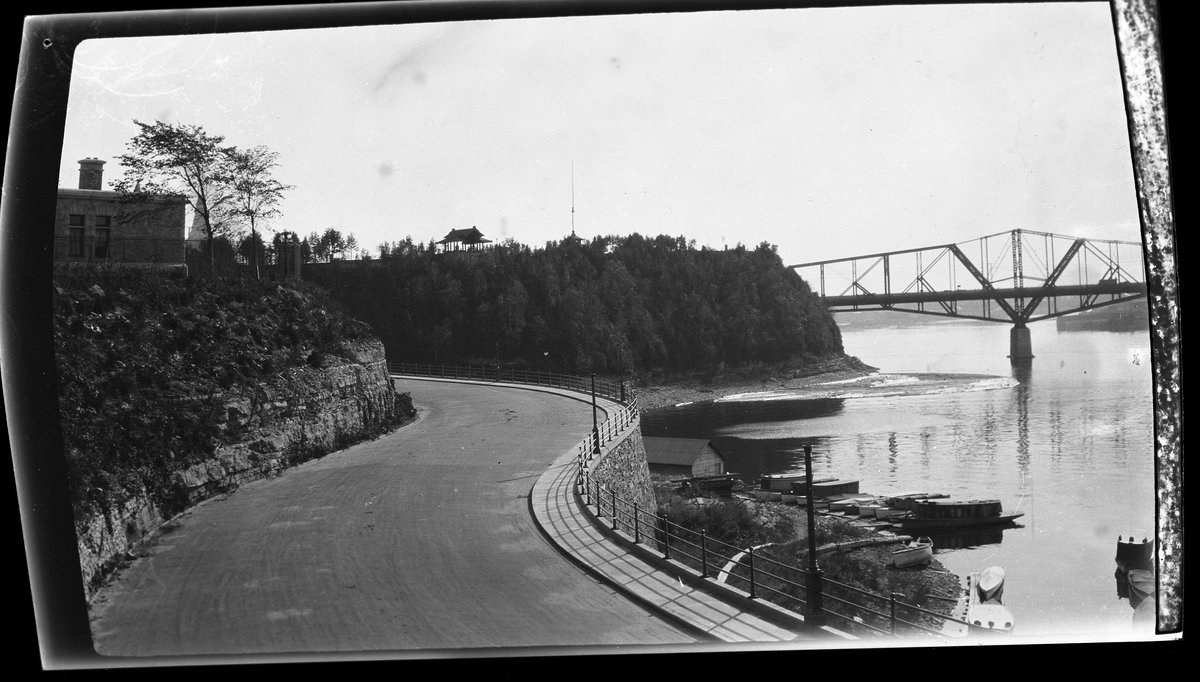
Historical view of Ottawa River shoreline drive featuring streetcars and early 20th-century buildings along the waterfront in Ottawa, 1913
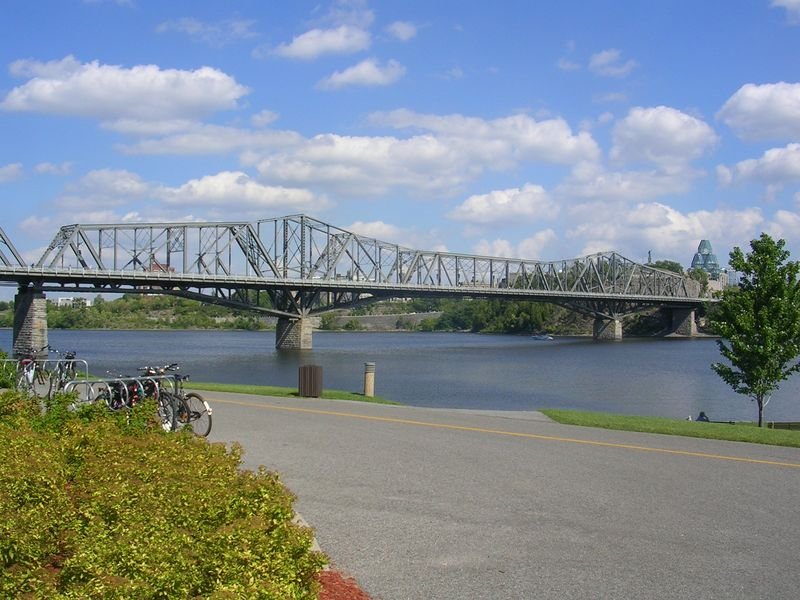
Scenic view of Alexandra Bridge spanning across the Ottawa River, connecting the cities of Ottawa and Gatineau with surrounding greenery and urban skyline
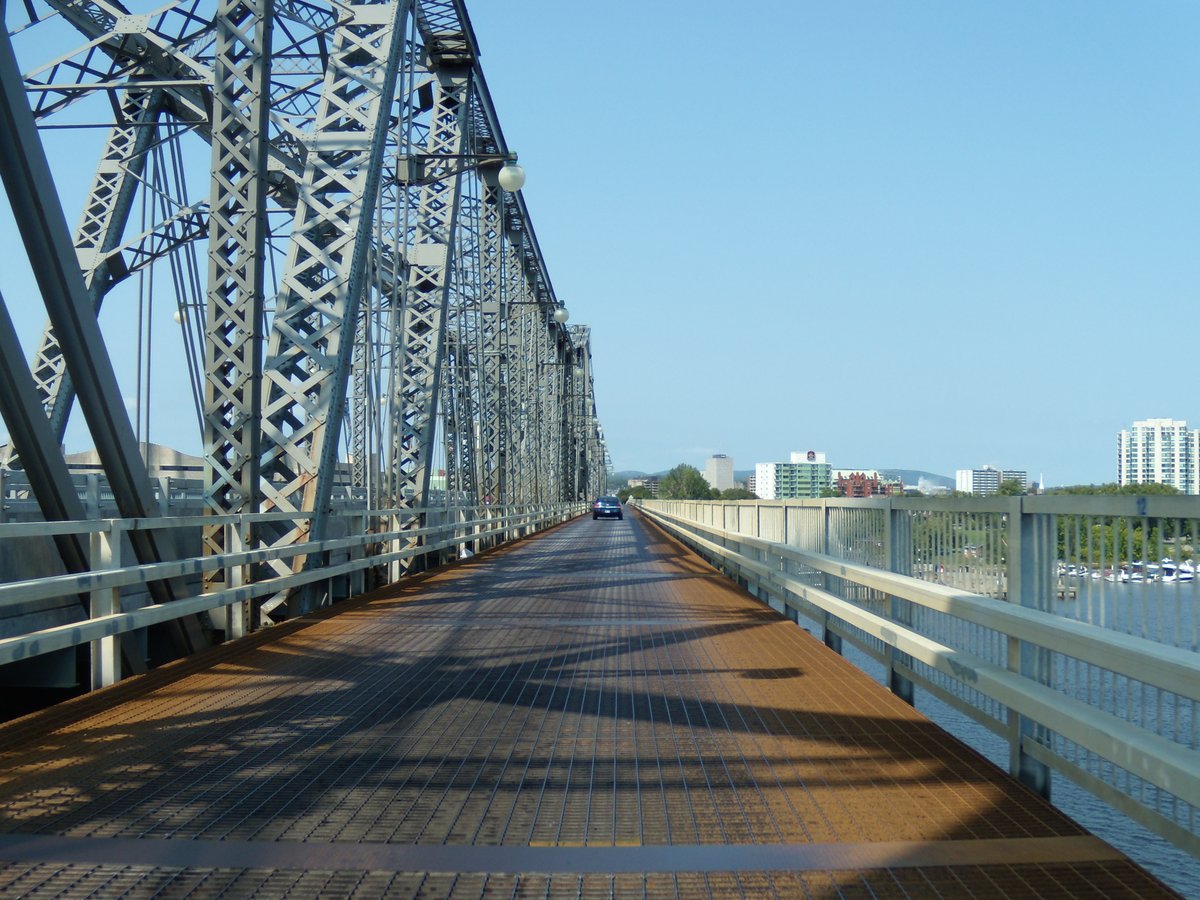
Scenic view of the Alexandra Bridge connecting Ottawa, Ontario and Gatineau, Quebec over the Ottawa River under clear skies
Historical Background and Significance
Origins and Construction
Conceived in the late 19th century to bridge Ottawa and Hull (now Gatineau), the Alexandra Bridge was built between 1898 and 1901 by the Interprovincial Bridge Company (later associated with Canadian Pacific Railway). The project faced technical challenges, such as excavating through riverbed debris and contending with harsh winters. Innovative construction techniques—including using timber cribs and underwater concrete placement—ensured successful completion (CSCE; HistoricBridges.org).
Architectural and Engineering Innovation
Completed in March 1901, the bridge was the fourth-longest cantilever span in its era, with a clear span of 320 meters and a total length of 818 meters. Its steel truss cantilever design was ahead of its time, utilizing mild steel and concrete foundations. Originally, it accommodated railway, road, and streetcar traffic, as well as pedestrians—demonstrating its multi-modal significance (CSCE; HistoricBridges.org).
Cultural and Symbolic Importance
Renamed the “Royal Alexandra Bridge” in honor of Queen Alexandra in 1901, the bridge is emblematic of unity between Ontario and Quebec, as well as English and French Canada. Its location near Parliament Hill and the UNESCO-listed Rideau Canal enhances its status as a focal point of the National Capital Region (Heritage Ottawa; Knight Architects).
The Bridge’s Role Today
Daily Use and Community Value
Today, the Alexandra Bridge is vital for commuters, tourists, and recreational users, carrying thousands of vehicles, pedestrians, and cyclists daily. It provides panoramic views of the Ottawa River, Parliament Buildings, and city skylines, making it a favorite for walkers, runners, and photographers. The bridge is also central to national celebrations, often hosting Canada Day festivities with exceptional vantage points for fireworks (Government of Canada; Canada.ca).
Accessibility and Active Transportation
With its well-maintained, accessible pedestrian and cycling paths, the bridge encourages sustainable, car-free travel between Ottawa and Gatineau. Ramps and gentle slopes at both ends ensure wheelchair and stroller accessibility (Wikipedia; NCC Alexandra Bridge Project).
Visiting Information
Hours and Entry
- Open 24/7: The bridge is accessible to pedestrians and cyclists at all times, year-round.
- Vehicular Access: Vehicles are permitted during standard city hours; restrictions may apply during special events or construction.
- No Tickets Required: Access is free for all users.
Getting There
- By Foot/Bicycle: The bridge’s dedicated multi-use path is ideal for walking or cycling, linking downtown Ottawa and Gatineau (TripHobo).
- By Car: Parking is available near Major’s Hill Park (Ottawa) and the Canadian Museum of History (Gatineau).
- Public Transit: OC Transpo (Ottawa) and STO (Gatineau) buses stop within walking distance of both entry points (Trek Zone).
Accessibility
The bridge’s pathway is flat and accessible, with ramps at both ends for wheelchairs and strollers. Cyclists are welcome but should yield to pedestrians and signal when passing (NCC Alexandra Bridge Project).
What to Expect During Your Visit
Scenic Highlights
- Ottawa River & Cityscapes: Enjoy unobstructed views of the river, Parliament Hill, the National Gallery of Canada, and the Canadian Museum of History.
- Photography: Sunrise and sunset offer the most dramatic lighting. Benches and viewing platforms are placed along the bridge for rest and sightseeing (Tiny Footsteps Travel).
- Seasonal Experiences: In summer, the bridge is lively with walkers and cyclists; in winter, the frozen river provides a unique backdrop.
Nearby Attractions
- Ottawa Side: Major’s Hill Park, National Gallery of Canada, ByWard Market, Rideau Canal.
- Gatineau Side: Canadian Museum of History, Jacques Cartier Park, Laval Street’s cafes and public art (The Planet D).
Guided Tours and Events
While the bridge itself does not offer regular guided tours, many city walking and cycling tours include it as a highlight. The bridge is a popular spot for viewing fireworks during major festivals like Canada Day and the Casino Lac-Leamy Fireworks Festival (Project Local Love).
Practical Tips for Visiting
- Best Times: Visit during daylight for safety and optimal views. Mornings and evenings are quieter; sunset is ideal for photography.
- Weather: Dress for the season; the bridge is exposed and can be windy or icy in winter. The walkway is maintained, but caution is advised (TripHobo).
- Duration: Most visits last 30 minutes to an hour, especially if combined with nearby attractions.
- Amenities: No facilities on the bridge; restrooms and dining are available at nearby parks, markets, and museums.
- Family Friendly: The bridge’s wide, flat path is suitable for strollers and children.
- Safety & Etiquette: Use recycling and waste bins, respect bilingual signage, and refrain from attaching locks or graffiti to the structure (Heritage Ottawa).
Preservation, Heritage, and Future Plans
Heritage Status and Ownership
The bridge is recognized as a National Historic Civil Engineering Site and is maintained by Public Services and Procurement Canada. It is also listed as an endangered heritage site, with ongoing preservation efforts (National Trust Canada; CSCE).
Replacement and Community Debate
Due to aging infrastructure, plans are underway for a replacement bridge, with construction set to begin in 2028 and completion by 2032 (NCC Alexandra Bridge Project; Ottawa Citizen). This raises important discussions about balancing modernization with heritage preservation (Heritage Ottawa).
Frequently Asked Questions (FAQ)
Q: What are the Alexandra Bridge visiting hours?
A: Open 24/7 for pedestrians and cyclists. Vehicles are permitted during standard city hours; special events may limit access.
Q: Is there an entry fee or ticket required?
A: No, the bridge is free to cross.
Q: Is the bridge wheelchair accessible?
A: Yes, with ramps and a flat pathway.
Q: Are guided tours available?
A: Guided tours of the bridge itself are not regular, but many Ottawa and Gatineau city tours include it.
Q: What nearby attractions can I visit?
A: Major’s Hill Park, National Gallery of Canada, ByWard Market, Canadian Museum of History, and Rideau Canal.
Discover More
The Alexandra Bridge is a living symbol of Canada’s engineering legacy, bilingual heritage, and vibrant urban life. Whether you are a local commuter, history enthusiast, or first-time visitor, the bridge offers a memorable experience that connects the past with the present. Combine your visit with nearby museums, parks, and cultural events for a complete Ottawa-Gatineau adventure.
For current information on construction updates, events, and heritage efforts, consult the official resources listed below. For guided tours, exclusive audio content, and interactive maps, download the Audiala app and follow our social media channels.
Listen to the full story in the app
Your Personal Curator, in Your Pocket.
Audio guides for 1,100+ cities across 96 countries. History, stories, and local insight — offline ready.
Audiala App
Available on iOS & Android
Join 50k+ Curators
Sources
- verified
- verified
- verified
- verified
- verified
- verified
- verified
- verified
- verified
- verified
- verified
Last reviewed: