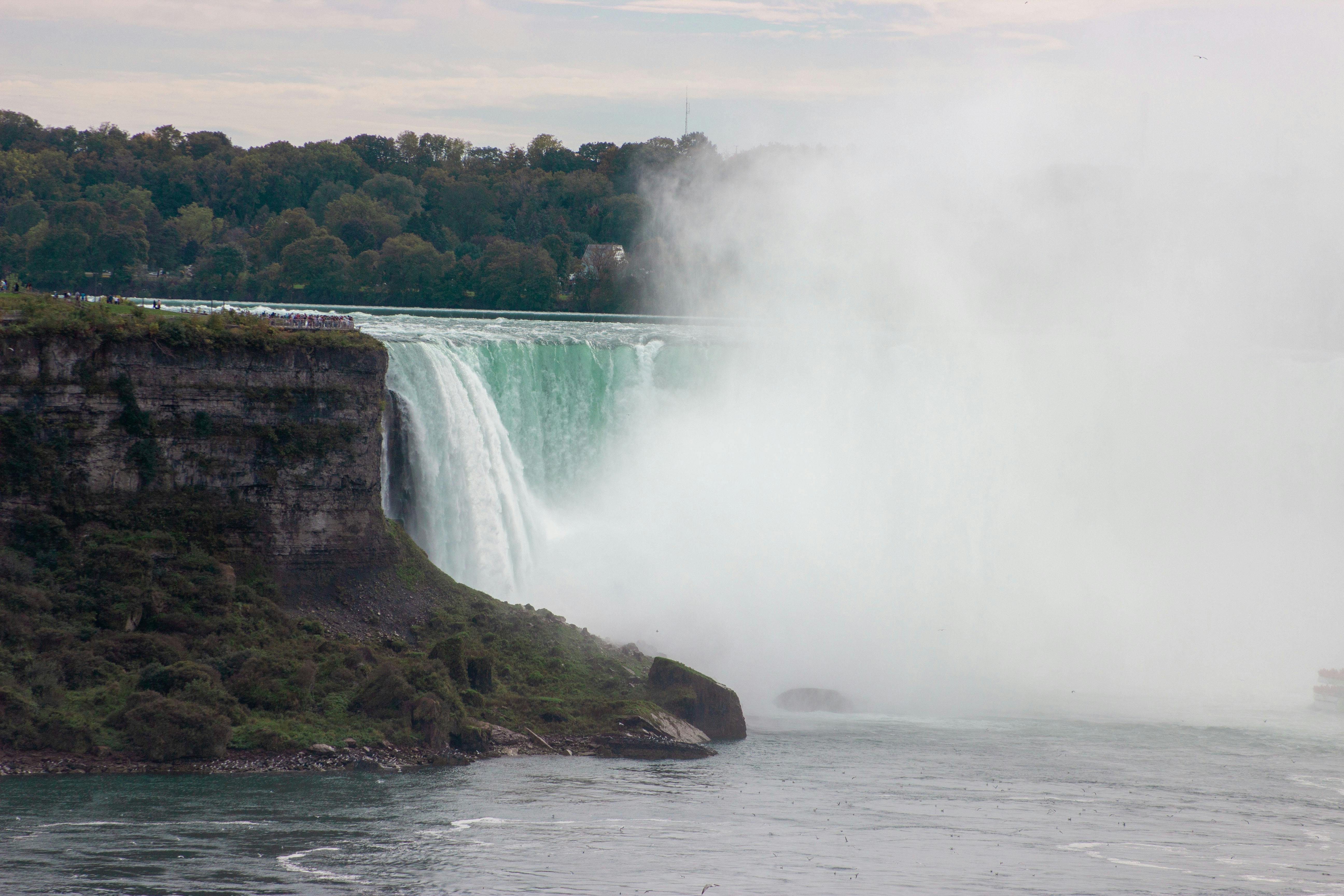
TThe reason the lights in your home run on alternating current — and not the direct current Thomas Edison bet his fortune on — traces back to a river plunging 167 feet over a limestone ledge in Niagara Falls, Canada. Niagara Falls is less a single waterfall than a managed spectacle: three cataracts straddling the Ontario–New York border, their combined flow throttled by treaty and turbine so that what you see during the day is, in a sense, a performance. Come anyway. The roar alone — audible from over a kilometre — rewires something in your chest.
The Canadian side owns the best view, and everyone knows it. From Queen Victoria Park, you stand face-on with the Horseshoe Falls, whose curving crest line stretches more than 800 metres — wider than eight football pitches laid end to end. Mist soaks your jacket in seconds. The ground vibrates beneath your shoes. No photograph has ever captured this; the Falls are a full-body event.
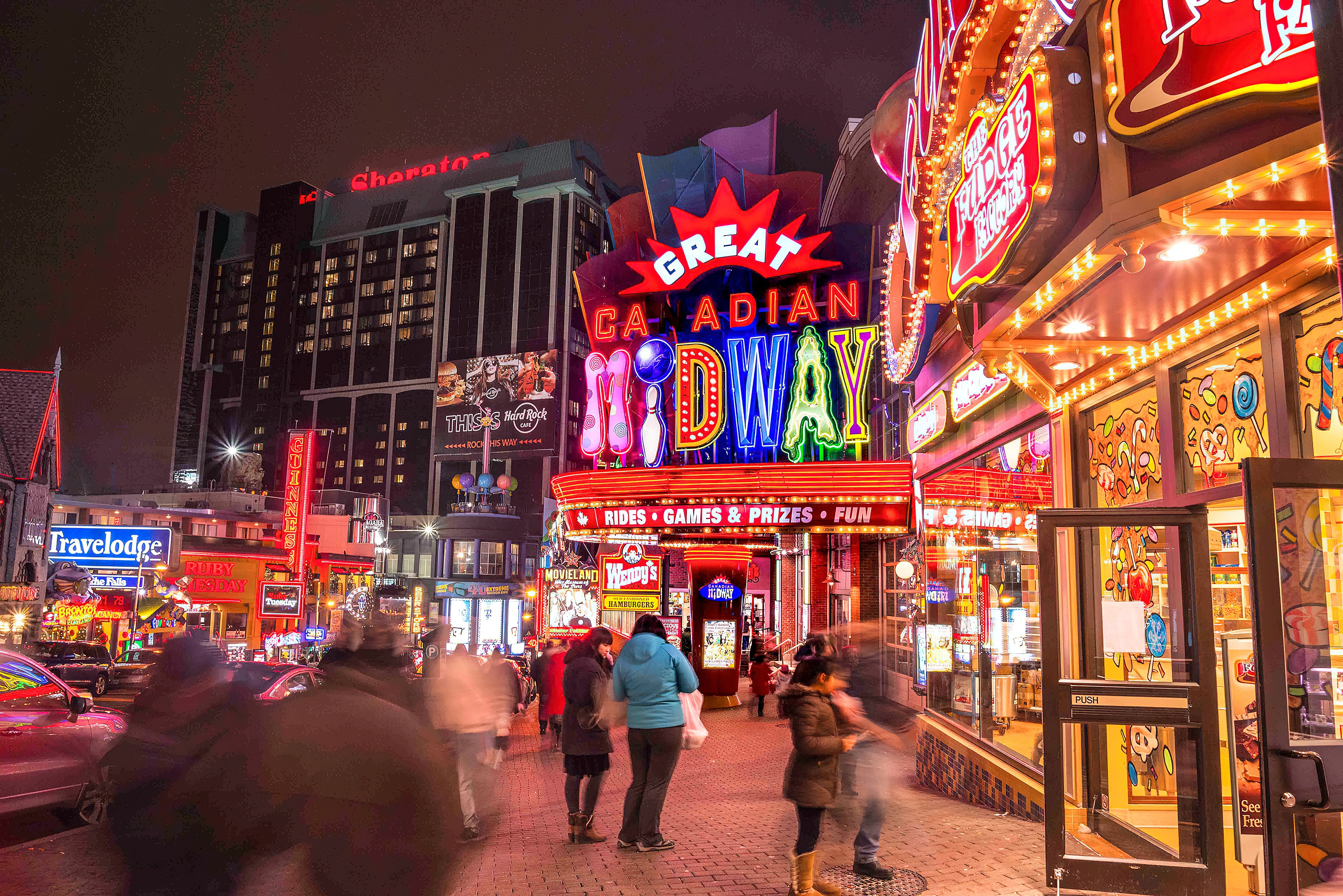
But Niagara is also a place layered with contradiction. Behind the candy-coloured tourist strip of Clifton Hill sits a landscape shaped by 13,000 years of Indigenous habitation, a pivotal War of 1812 battlefield, and the birthplace of large-scale hydroelectric power. The Falls themselves are retreating — eroding upstream at a rate of roughly one foot per year, a geological clock that makes your visit, in the longest view, unrepeatable.
The park area is free to enter, open every day, every hour. The WEGO hop-on, hop-off bus connects hotels to the gorge for $13 a day. Attraction passes start around $129 if you want the boat rides and tunnels. But the most important thing here costs nothing: standing at the railing, feeling the mist on your face, and understanding why people have been drawn to this edge for millennia.
The Hidden Engineering of Niagara Falls
Practical Engineering01 What to See
Horseshoe Falls from the Brink
You expect the sight. You don't expect the feeling in your ribcage — a low-frequency vibration that hums through your sternum before you even reach the railing. Horseshoe Falls drops roughly 167 feet, about the height of a 15-storey building, across a crest line stretching over 2,700 feet wide. That's longer than nine football fields of water tipping into nothing.
Stand at Table Rock and the mist hits you like walking into a warm rain, except it's cold and tastes faintly mineral. On sunny mornings, rainbows hang permanently in the spray — not fleeting arcs but stubborn, full semicircles that refuse to leave. Look upstream and you'll spot the rusted hull of a scow, lodged in the rocks since 1918 after a dramatic rescue involving a high-wire line fired from the roof of the Toronto Power Generating Station. Most visitors walk right past it. Don't.
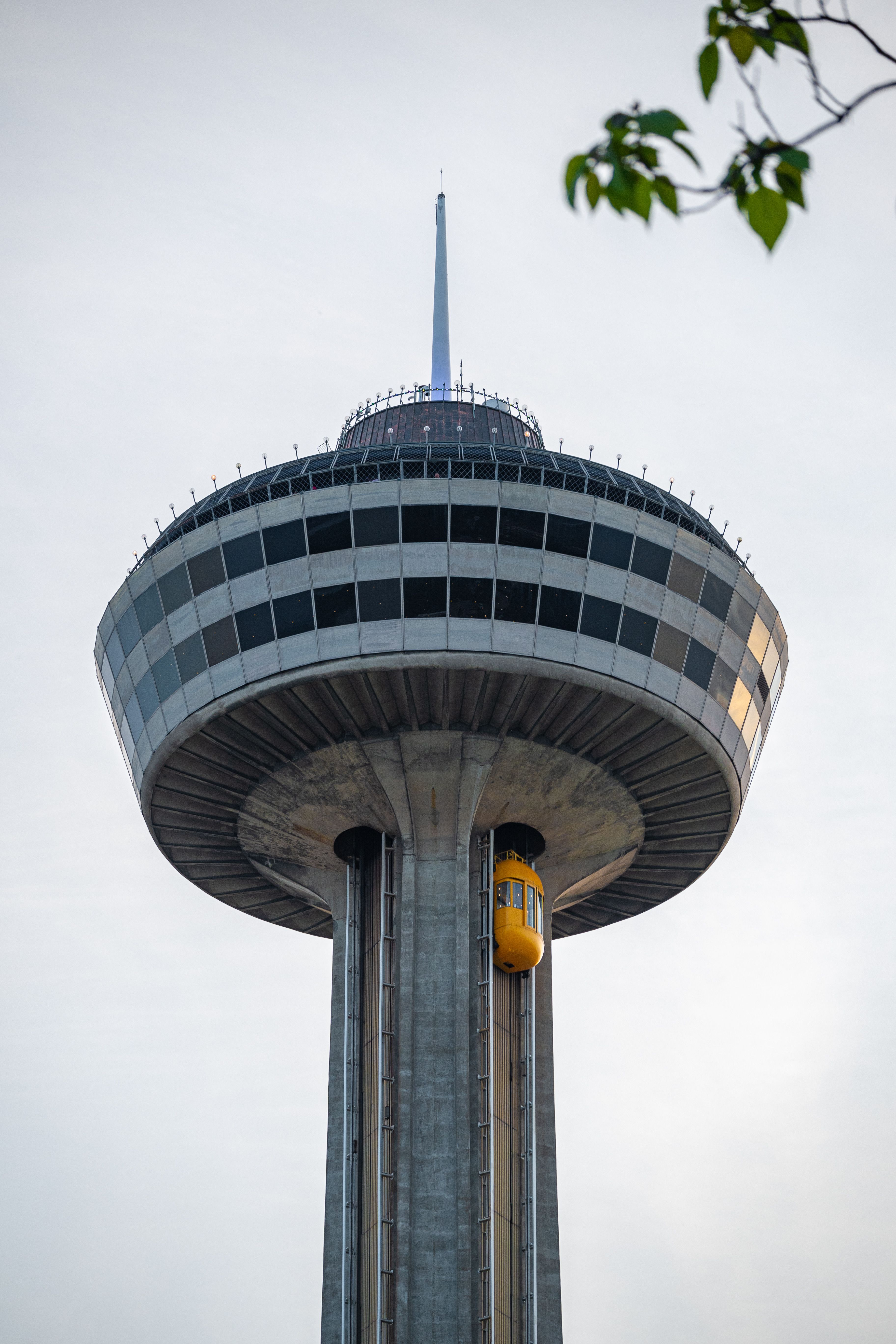
Niagara Parks Power Station
Here's what nobody tells you about Niagara Falls: one of the best things to see has nothing to do with water. The Niagara Parks Power Station, designed by Algernon S. Bell and operational from 1905, is a Romanesque Revival cathedral built not for God but for electricity. Its rusticated Queenston limestone walls glow amber in late afternoon light, and the green tile roof — still original — catches your eye from across the gorge like a copper patina.
Inside, the scale shifts your sense of proportion. Massive generators stand in rows under arched windows tall enough to frame a double-decker bus. Bronze door detailing and marble office finishes remind you this was built in an era when even industrial buildings received the dignity of craft. The Currents immersive show now reanimates the machinery with projected light and sound after dark, turning the turbine hall into something between a nightclub and a séance. Book the evening slot — the daytime tours are informative, but the night transforms the space entirely.
Oakes Garden Theatre to Dufferin Islands: A Walk Between Two Worlds
Start at Oakes Garden Theatre, the 1937 amphitheater designed by William Somerville with landscape work by the Dunnington-Grubbs. Its pergola wall frames both the American and Canadian falls simultaneously — this is the best photo spot on the Canadian side, and most people rush through it chasing the closer viewpoints. Linger. The sculpted reliefs and ornamental ironwork reward a slow eye, and the pavilions were positioned with deliberate theatrical precision.
From here, follow the Niagara Parkway south. The crowds thin fast. Within twenty minutes on foot you'll reach Dufferin Islands, a network of small, quiet islands linked by rustic footbridges where the only sound is birdsong and the distant bass note of the falls. The contrast is startling — from a place where six million cubic feet of water crashes every minute to a stillness so complete you can hear your own breathing. In winter, the spray freezes on surrounding trees and railings, building crystalline ice sculptures that no artist could plan. Come back changed.
02 Explore Niagara Falls in Pictures
 Scenic View of Niagara Falls, Canada with Tourists and Landscape
 Niagara Falls Canada: Stone Bridge Over Rushing Waterfall
 Niagara Falls Canada: Majestic Horseshoe Falls Landscape View
 Niagara Falls Canada: Majestic Waterfall View with Autumn Foliage
 Scenic View of Niagara Falls, Canada: Iconic Waterfall Landscape
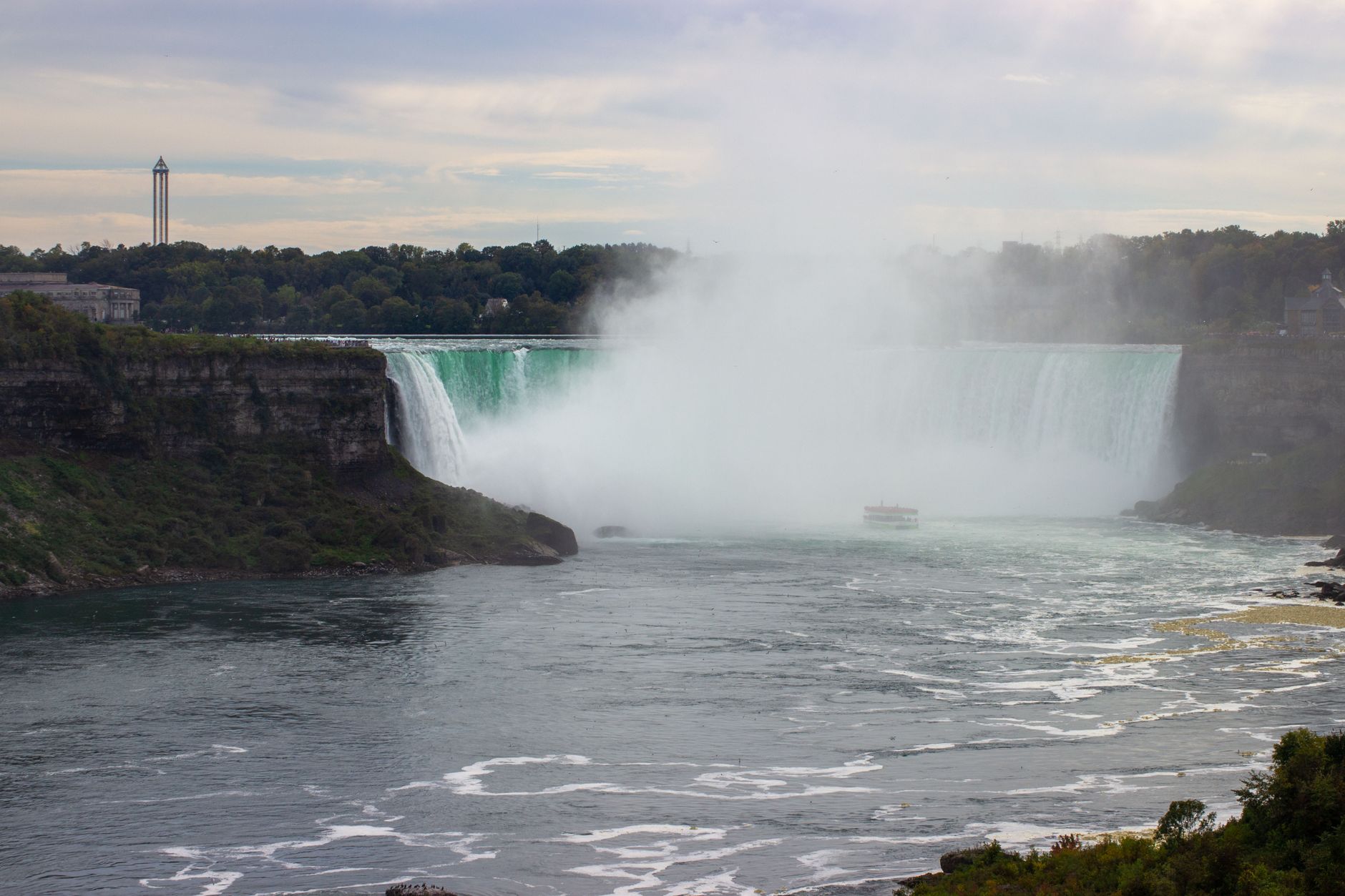 Niagara Falls Canada Horseshoe Falls Landscape View
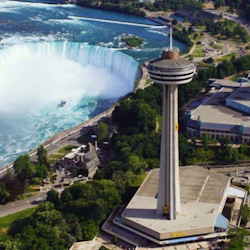
 Aerial View of Niagara Falls, Canada with Maid of the Mist Boat
 Niagara Falls Canada: Horseshoe Falls View with Tour Boat
 Iconic Horseshoe Falls at Niagara Falls, Canada
 Niagara Falls Canada Skyline and Scenic Park View
 Niagara Falls Horseshoe Falls and Table Rock Centre in Canada
 Tour Boat at Niagara Falls, Canada: Iconic Waterfall View
Videos
Watch & Explore Niagara Falls
Why Niagara Falls Looked Way Different in 1901
Niagara Falls: The ULTIMATE Travel Guide & MUST-KNOW Tips!
24 Hours in Niagara Falls - The Best Day Trip Itinerary
Plan and listen to Niagara Falls with Audiala
Audio guide in your pocket, itinerary in your browser. Built for the way you actually visit.
Book Niagara Falls

Prices shown are indicative — final pricing and availability are confirmed at checkout. Audiala may receive a commission from bookings made via these links.
03 Visitor Logistics
Getting There
Opening Hours
Time Needed
Accessibility
Cost & Tickets
05 Tips for Visitors
Eat Off the Hill
No Drones Allowed
Skip the Bundle Traps
Morning Light, Fewer Crowds
Layer Up Underground
Cross the Rainbow Bridge
04 Historical Context
Thunder, Current, and the War for Power
The name itself is a ghost. "Niagara" derives, according to most scholars, from the word "Onguiaahra," belonging to the people European settlers called the Neutral Nation — the Chonnonton, or Keepers of the Deer. They inhabited this region for centuries before the Iroquois-Huron conflicts of 1650–51 scattered their communities. The precise linguistic path from Onguiaahra to Niagara remains debated, and the Neutral Nation's full story is still being recovered from the silence colonialism imposed.
What followed was a parade of ambition. United Empire Loyalists settled the area around 1781, according to local records. The War of 1812 turned these fields into killing grounds. Then came the engineers, the daredevils, and the tourists — each generation projecting its own obsessions onto the falling water.
Tesla's Gamble: The Night the Falls Lit Up Buffalo
In the mid-1890s, Nikola Tesla was not yet a legend. He was a Serbian-born engineer with mounting debts, a fragile partnership with George Westinghouse, and a single, career-defining conviction: that alternating current could transmit electrical power over long distances, something Thomas Edison publicly called deadly and impractical. The test case would be Niagara Falls. If Tesla's AC generators could send power 26 miles to Buffalo, New York, the "War of Currents" was over. If they failed, Edison's direct-current empire would stand.
Records show that in 1896, the switch was thrown. AC power surged from the Niagara Falls Power Company's turbines to Buffalo, illuminating streetlights and powering streetcars in a city that had previously relied on local coal plants. The distance was modest by today's standards — about the length of a marathon course — but the principle was seismic. Tesla had proved that a waterfall in Ontario could run a factory in another state.
Tesla never grew rich from the achievement. He reportedly tore up his royalty contract with Westinghouse to save the company from bankruptcy. But the infrastructure his vision created still hums beneath the gorge. The Niagara Parks Power Station, designed by architect Algernon S. Bell and modeled after its American counterparts, stands today as a visitor attraction — its turbine hall cathedral-quiet now, stripped of the machines that once shook its walls.
Blood at Lundy's Lane
Barrels, Jet Skis, and the Edge of Reason
Listen to the full story in the app
06 Frequently Asked
Is Niagara Falls Canada worth visiting? add
Absolutely — the Canadian side offers the best head-on view of the 167-foot Horseshoe Falls, a curtain of water stretching wider than eight football fields laid end to end. What surprises most people is the physical force of the place: a low-frequency roar you feel in your ribs before you consciously hear it, and a mist so dense near the brink it soaks through a rain jacket in minutes. Beyond the Falls themselves, the 1905 Niagara Parks Power Station — a Romanesque Revival building in Queenston limestone with a green tile roof — now hosts an immersive light show inside its cavernous turbine hall, and it's one of the most striking industrial-heritage spaces in North America.
Can you visit Niagara Falls for free? add
Yes — Queen Victoria Park and the entire brink-side promenade are open 24 hours a day, 365 days a year, with no admission charge. You can walk right up to the railing above the Horseshoe Falls and stand in the spray without spending a cent. Paid attractions like the Hornblower boat cruise or Journey Behind the Falls are optional; if you want those, the Niagara Adventure Pass bundles four experiences for around CAD $72 adult / $47 child, which beats buying tickets individually.
How long do you need at Niagara Falls? add
A focused 3–4 hours covers the main promenade, the brink of the Horseshoe Falls, and a wander through Oakes Garden Theatre — a 1937 amphitheater whose pergola wall was designed specifically to frame both the American and Canadian Falls in a single sightline. But two full days lets you add the boat tour, the Power Station's Currents show, the quiet trails of Niagara Glen (a Carolinian forest gorge that feels a world away from the neon of Clifton Hill), and a side trip to the wine country in nearby Niagara-on-the-Lake.
How do I get to Niagara Falls from Toronto? add
GO Transit runs commuter trains and buses from Toronto's Union Station directly to Niagara Falls, and you can buy a combo GO + WEGO ticket that includes the local hop-on, hop-off bus once you arrive. If you're driving, expect to pay CAD $25–$35 per day for parking in the Fallsview area during peak summer months. The WEGO bus system connects most hotels to the parks and major attractions, and the buses are fully wheelchair-accessible with fold-out ramps and tie-downs.
What is the best time to visit Niagara Falls? add
Late May through September gives you the full suite of outdoor attractions — boat cruises, zip-lines, nightly fireworks at 10 PM — plus the best chance of catching rainbows permanently suspended in the afternoon mist. Winter is a different animal entirely: spray freezes on railings and tree branches, building a crystalline architecture of ice around the Falls, and the Winter Festival of Lights transforms the power stations into glowing landmarks. One thing most visitors don't realize is that the Falls' flow is actually reduced at night under an international treaty to feed hydroelectric intakes, so the most dramatic volume of water thunders over the brink during daytime tourist hours.
What should I not miss at Niagara Falls Canada? add
Don't skip the Niagara Parks Power Station — Algernon S. Bell's 1905 masterpiece with its arched windows reflected in a forecourt pool is worth seeing for the architecture alone, and the Currents light show inside reanimates the original massive turbine machinery with sound and projection. For something most visitors walk right past: look upstream from the brink and you'll spot a rusted iron scow lodged in the rocks since 1918, a relic of a dramatic rescue that involved firing a high-wire line from the roof of the Toronto Power Generating Station. And if the crowds feel oppressive, escape to Dufferin Islands — a chain of quiet, forested islands connected by rustic bridges, sitting on the site of historic Bridgewater Mills destroyed during the War of 1812.
What should I avoid at Niagara Falls Canada? add
Locals call Clifton Hill "Tacky Town" for a reason — the chain restaurants there charge tourist-inflated prices for forgettable food, and the bundled attraction passes for small wax museums and haunted houses rarely deliver value. Head a few blocks into the residential neighborhoods for better meals: The Blind Pig gastropub and Antica Niagara's wood-fired pizza are local favorites at mid-range prices. Also be aware that drone flying is strictly prohibited in park areas without a Niagara Parks Commission permit, and fines are steep.
-
verified
Niagara Parks – Indigenous Culture
Indigenous history of the Niagara region, including the Neutral Nation and origins of the name 'Niagara'.
-
verified
The Exchange – Brief History of Niagara Falls
Loyalist settlement history, Battle of Lundy's Lane, Portage Road, and Dufferin Islands background.
-
verified
Niagara Parks – Architectural Masterpieces
Details on the Power Station, Oakes Garden Theatre, Toronto Power Generating Station, and Oak Hall architecture.
-
verified
Niagara Falls State Park – History
Nikola Tesla's AC power transmission from Niagara and hydroelectric development history.
-
verified
UNESCO World Heritage Centre – Report WHC-05/29.COM/11A
Documentation on Niagara Falls' UNESCO World Heritage status discussions.
-
verified
Niagara Falls Live – Now Open
Current opening hours, illumination schedules, fireworks times, and daredevil history dates.
-
verified
Over the Falls Tours – Complete Niagara Falls Guide
Adventure Pass pricing, parking costs, accessibility info, and recommended visit duration.
-
verified
Niagara Falls Tourism – Tickets
Clifton Hill Fun Pass details and attraction ticket booking information.
-
verified
Niagara Falls Tickets – Opening Hours
Advice on advance online ticket purchasing to avoid queues.
-
verified
GO Transit – Niagara Falls Promotion
GO Transit commuter service and GO + WEGO combo ticket details.
-
verified
Niagara Parks – WEGO Bus
WEGO hop-on hop-off bus routes, passes, and wheelchair accessibility features.
-
verified
Doors Open Ontario – Niagara Parks Power Station
Architectural details of the 1905 Power Station including Queenston limestone exterior and interior finishes.
-
verified
Niagara Falls Tourism Canada (Facebook)
Sensory descriptions and atmospheric details of visiting the Falls.
-
verified
Niagara Action (Facebook)
Experiential details including mist, sound, and light conditions at the Falls.
-
verified
Clifton Hill Fun (Facebook)
Information on Dufferin Islands and Niagara Glen as quieter alternatives to the main tourist area.
-
verified
Grimsby Chamber – Destination Niagara Strategy
Regional tourism strategy shifting focus toward culinary and cultural offerings beyond the waterfall.
-
verified
Niagara Falls Tourism – History & Culture
Land acknowledgement details, War of 1812 re-enactments, and cultural events.
-
verified
Niagara Parks – Ontario Supporting Tourism Growth
Toronto Power Generating Station redevelopment into boutique hotel and museum.
-
verified
The Family Voyage – Niagara Falls Mistakes
Local advice on avoiding overpriced Clifton Hill restaurants.
-
verified
Explore.com – Tourist Traps at Niagara Falls
Warnings about inflated tourist pricing at Falls-view restaurants.
-
verified
Reddit r/niagara – Hidden Gems for Food
Local restaurant recommendations including budget options.
-
verified
Ashley Wanders – Hidden Gem Restaurants Niagara Falls
Budget dining recommendations for Niagara Falls, Canada.
-
verified
Facebook Group – Niagara Falls Dining
Local recommendations for mid-range dining including The Blind Pig and Antica Niagara.
-
verified
The Allonsy – Best Restaurants in Niagara Falls
Splurge dining options including Table Rock House Restaurant.
verified Verified · Same price as official site
Last reviewed:


