Plan and listen to Niagara Falls Railway Station with Audiala.
Audio guide in your pocket, itinerary in your browser. Built for the way you actually visit.
Introduction
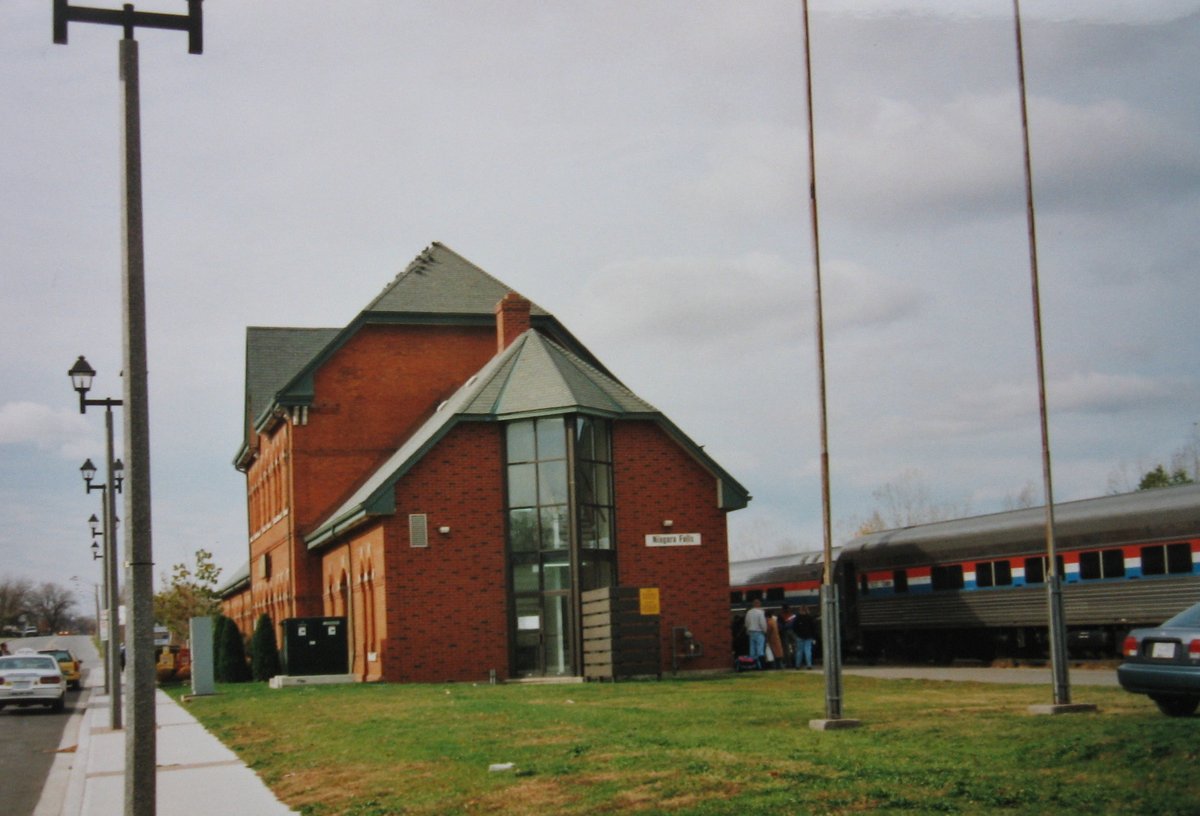
Nestled in the vibrant city of Niagara Falls, Canada, the Niagara Falls Railway Station stands as both a historic landmark and a functional gateway for millions of travelers each year. Established in 1879 and designed in the neo-Gothic style by Joseph Hobson, this station is more than a transit point; it is a living testament to the evolution of Canada’s railway history and the city’s growth as a tourism and economic hub (niagaraarchitects.ca; nfexchange.ca). Through continuous modernization, the station balances heritage preservation with enhanced passenger amenities, making it the ideal starting point for exploring the iconic Niagara Falls and nearby attractions (niagararegion.ca; twotravelingtexans.com).
This comprehensive guide delivers essential information on the station’s history, architecture, visiting hours, ticketing, accessibility, and travel tips—ensuring you get the most out of your visit.

Early Railways and Station History
The roots of Niagara Falls Railway Station stretch back to the dawn of Canadian rail travel. The Erie and Ontario Railway, operating as early as 1841, was instrumental in connecting the region and encouraging the movement of people and goods. The construction of the Great Western Railway in 1853 transformed Clifton (now part of Niagara Falls) from a modest settlement into a burgeoning town, with the population soaring from 100 to 2,000 within four years (nfexchange.ca).
The original Great Western station was destroyed by fire in 1879, leading to the construction of the current brick building at 4267 Bridge Street. Over the decades, the station has witnessed the city’s transformation into a vital transportation hub, supporting both local commerce and international tourism.
Architectural and Heritage Significance
Designed by Joseph Hobson, the station is a striking example of late 19th-century neo-Gothic railway architecture. Its warm red brickwork, asymmetrical forms, pointed Gothic windows with stone accents, and hipped-gable roof distinguish it from the more classical styles of its American counterparts (niagaraarchitects.ca).
Key features include:
- Brick façade with Flemish bond and hammered-stone accents
- Projecting, bevelled base course and quoined brick piers
- Raised brick borders and hammered-stone keystones
In recognition of its historical and architectural value, the station was designated a heritage site in 1994 by the Historic Sites and Monuments Board of Canada. Despite modern upgrades, the building retains its distinctive character and remains a proud symbol of the city’s railroad past.
Evolution of Rail Services
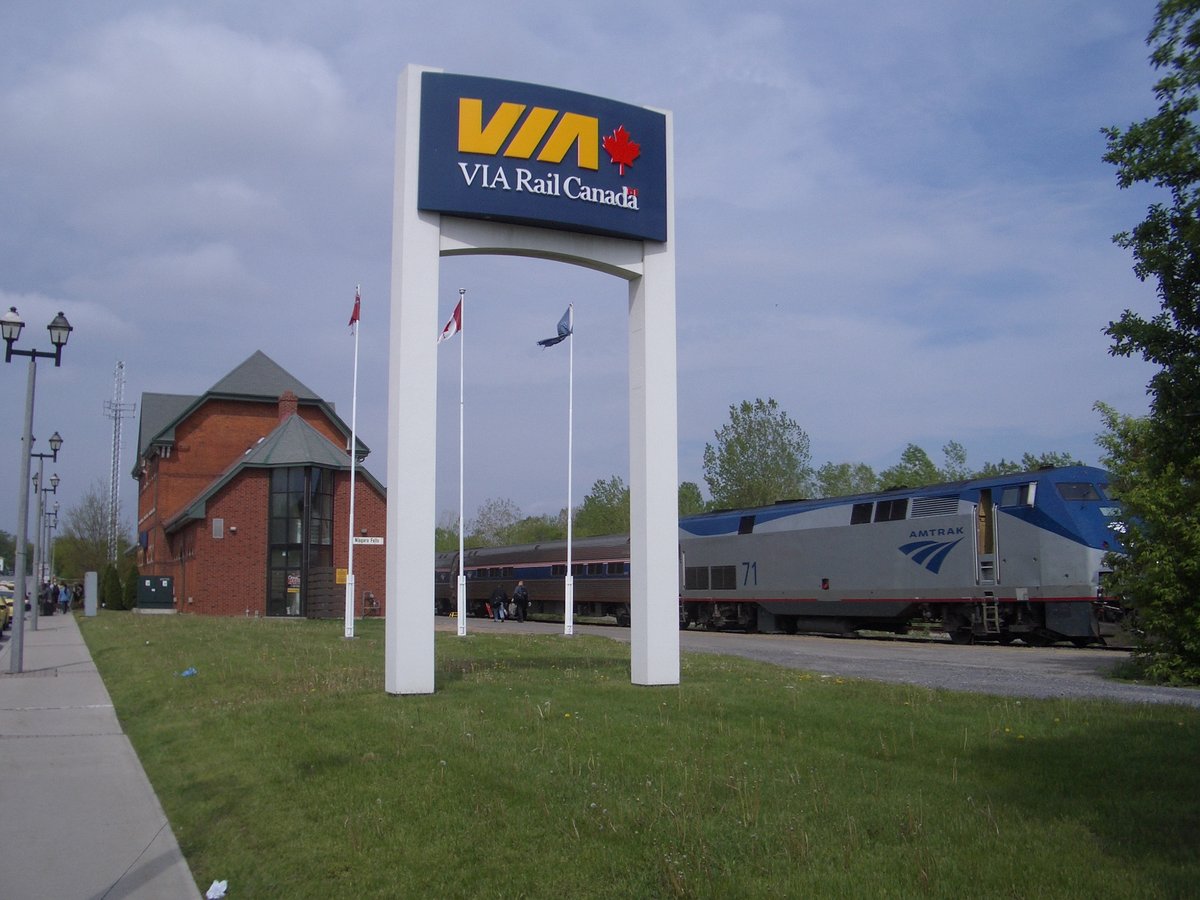
The station’s history is marked by changing ownership and evolving services. Initially serving the Great Western Railway, it later became part of the Grand Trunk system in 1884 and then Canadian National Railways in 1923. Today, it is a bustling transit hub for:
- VIA Rail: Offering cross-border service via the Maple Leaf route between Toronto and New York City
- GO Transit: Providing regular commuter trains to Toronto and the Greater Toronto Area (GTA)
- Amtrak: Connecting with the American rail network through the Maple Leaf line (niagaraarchitects.ca; nfexchange.ca)
The station’s adaptability reflects Niagara Falls’ ongoing importance as a regional and international transportation hub.
Visiting Hours and Ticket Information
Station Hours:
Niagara Falls Railway Station is generally open daily from 6:00 AM to 10:00 PM, aligning with train schedules. Note that the station may be unstaffed during some hours and opens 30 minutes before train arrivals and closes 30 minutes after departures for VIA Rail services.
Ticketing:
- VIA Rail and Amtrak: Purchase tickets online, via the VIA Rail app, or at self-service kiosks (where available). Advance booking is strongly recommended, especially for cross-border Maple Leaf services.
- GO Transit: Buy tickets using the GO Transit website, mobile app, or PRESTO card. Special fare options, like the $10 Weekend Day Pass, provide value for visitors (gotransit.com).
- Ticket Prices: Prices vary by route, service, and season, so it’s best to check current fares online before traveling.
Accessibility and Facilities
The station is fully accessible, featuring:
- Ramps and elevators for mobility devices
- Accessible washrooms
- Service animal relief area (advance notice for wheelchair lifts recommended)
- Waiting room with seating and payphones
- Free unsupervised parking
While there are no baggage storage or food vendors onsite, the station’s proximity to downtown Niagara Falls ensures easy access to restaurants and shops (twotravelingtexans.com).
Role in Tourism & Local Attractions
Historically, the station played a key role in making Niagara Falls a world-famous tourist destination, with railways enabling easy access for visitors. Today, the station remains a central gateway to:
- Niagara Falls State Park and Table Rock Centre
- Clifton Hill Entertainment District
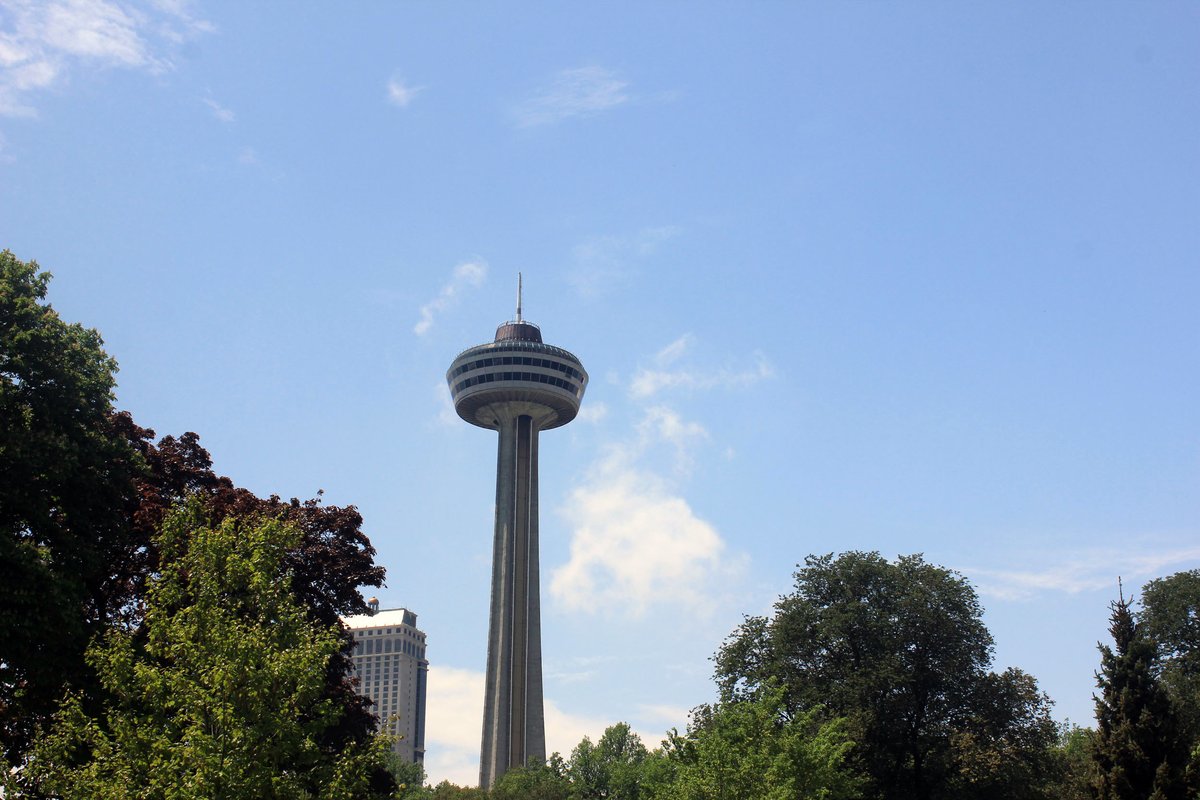
- Skylon Tower
- Niagara Parks Botanical Gardens and Butterfly Conservatory
- Historic sites such as the Niagara Falls History Museum and Laura Secord Homestead
The WEGO bus system, accessible from the station, provides convenient local transportation to major attractions.
Transportation Connections
- Train Services: VIA Rail and GO Transit connect Niagara Falls to Toronto, New York City, and beyond.
- Bus Services: Niagara Region Transit and the WEGO bus network offer city-wide and regional routes. GO Bus Route 12 links to Burlington and other communities.
- Taxis & Rideshares: Available at the station for quick access to the falls and hotels.
- Car Rentals: Located nearby for those wishing to explore the Niagara region at their own pace.
For international travelers, customs processing for arrivals from the U.S. is handled onsite by Canada Border Services Agency. Departures to the U.S. are processed at Niagara Falls, New York station.
Travel Tips
- Book train tickets in advance, especially during peak seasons.
- Travel light—no baggage storage is available.
- Check train schedules prior to arrival.
- Purchase a WEGO bus pass for unlimited rides to local attractions.
- Contact VIA Rail 48 hours ahead for accessibility services if needed.
- Bring necessary travel documents (passport, visa) for international routes.
Frequently Asked Questions
Q: What are the Niagara Falls Railway Station visiting hours?
A: The station operates daily, typically from 6:00 AM to 10:00 PM, and opens 30 minutes before train arrivals and closes 30 minutes after departures.
Q: How do I buy tickets?
A: Tickets for VIA Rail and GO Transit can be purchased online, via their respective apps, or at station kiosks.
Q: Is the station wheelchair accessible?
A: Yes, with ramps, elevators, accessible washrooms, and a service animal relief area.
Q: Are there food or baggage services at the station?
A: No, but nearby downtown offers dining options. No baggage storage is available.
Q: What are the best transportation options from the station?
A: Use WEGO bus for local attractions, or taxis/rideshares for quick access.
Listen to the full story in the app
The whole Niagara Falls Railway Station,
told well.
Audio guides for 1,100+ cities across 96 countries. History, stories, and local insight — offline ready.
Verified, and shown.
Researched and written by the Audiala editorial team from historical records, architectural archives, and local expertise.
Researched from Wikidata, Wikipedia & official sources · fact-checked · How we make our guides →