Introduction
Seventeen stories above one of the heaviest Brutalist buildings in Canada, ducks paddle through a heated pool surrounded by 2.5 acres of garden — and almost nobody on the street below knows it's there. Place Bonaventure in Montreal, Canada, is a concrete colossus that was once the largest poured-concrete structure on Earth, a building that rose over 18 active railway tracks without stopping a single train. It rewards visitors who look past its fortress exterior and discover the strange, ambitious logic hidden inside.
The building fills an entire city block at 800 De La Gauchetière Street West, its 3.1 million square feet — roughly the area of 54 football fields — stacked in layers of exhibition halls, wholesale showrooms, offices, and a rooftop hotel. From the street, it reads as a monolithic slab of raw concrete, the kind of structure that divides opinion on sight. Some people find it oppressive. Others recognize it as one of the most audacious pieces of urban engineering in North America.
What makes Place Bonaventure worth your time isn't beauty in the conventional sense. It's the sheer improbability of the thing — a miniature city suspended above a rail corridor, threaded into Montreal's underground pedestrian network (the RÉSO), and crowned with a secret garden that feels like it belongs on another continent entirely. You can enter from the Bonaventure Métro station without ever stepping outside, which in a Montreal February is its own kind of miracle.
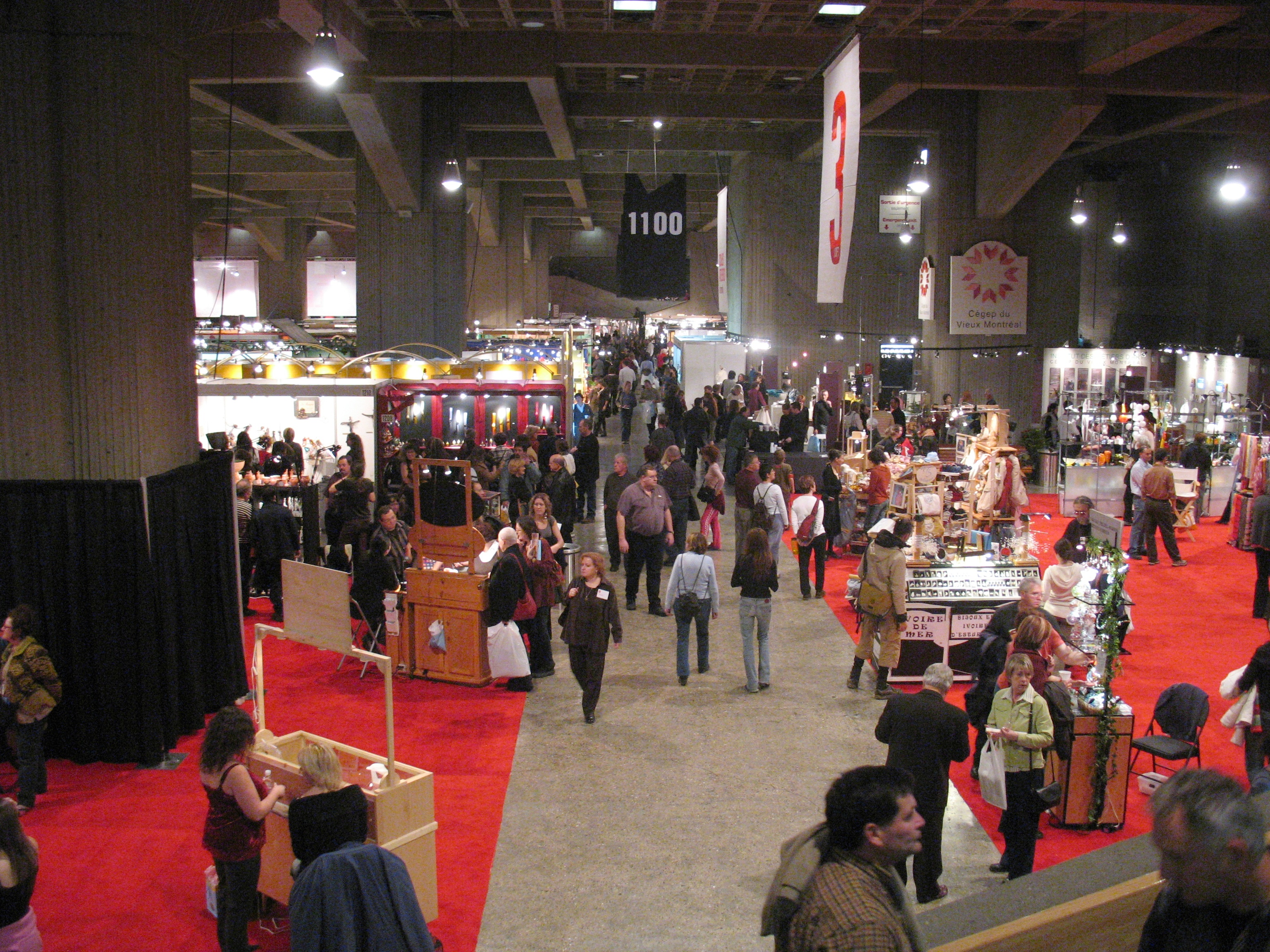
The exhibition halls closed permanently in 2020, and the building's identity continues to shift. But the bones remain extraordinary, and the rooftop Hotel Bonaventure Montreal still operates its open-air pool year-round, steam rising into the winter air like a signal from a world that believed concrete could solve anything.
What to See
The Brutalist Exterior
When Place Bonaventure opened in 1967, it was the largest poured-concrete building on Earth — 3.1 million square feet, roughly the area of 54 football fields stacked into a single block. The architects at Affleck, Desbarats, Dimakopoulos, Lebensold, Sise didn't try to make it pretty. They made it honest. The facades are ribbed concrete slabs, sand-blasted to a rough, almost geological texture, folded at angles that articulate the load-bearing skeleton beneath. Run your hand along the surface and you'll feel the grit of béton brut — raw concrete that wears its construction process like a scar. Walk along De La Gauchetière and look up: the building doesn't rise so much as loom, a fortress built not against invaders but above 18 active railway tracks. Construction crews poured this colossus without stopping a single train. Eva Vecsei, the associate in charge of design and one of the few women leading a project of this scale in 1960s Canada, helped shape a structure that treats concrete the way Gothic builders treated stone — as both material and meaning.

The Rooftop Hotel and Gardens
The confession Place Bonaventure has been keeping since 1967 sits on its roof. Hôtel Bonaventure Montréal perches 17 stories above the railway tracks, and its 2.5-acre rooftop garden — waterfalls, koi ponds, mature trees — feels like someone airlifted a Japanese retreat onto the back of a concrete whale. The heated outdoor pool operates year-round, which means you can float in warm water at minus-twenty Celsius while snow accumulates on the surrounding concrete parapets. That contrast is the whole point: brutalism below, something almost tender above. The gardens offer a mid-level vantage point over downtown Montreal that most visitors miss entirely because they never think to look up from the street. You don't need to be a hotel guest to visit the lobby level, but the pool and terrace are reserved for those who book a room. Worth it in January, when the steam rising off the water blurs the skyline into something dreamlike.
From Underworld to Rooftop: A Vertical Walk
Place Bonaventure rewards those who treat it as a vertical experience rather than a destination. Start underground at Bonaventure Metro station, where the building plugs directly into the RÉSO — Montreal's 33-kilometer subterranean network. Listen for the muffled percussion of trains beneath your feet; this building was literally raised over active rail lines, and the infrastructure still hums. Ride the escalators up through the commercial levels, where the 1998 renovation punched windows into all four walls — a $60-million admission that even brutalists sometimes need sunlight. The old exhibition halls, closed permanently in 2020, now host rotating immersive installations that fill the cavernous concrete voids with light and sound. If you spot panels in the lower structure that look oddly provisional, you're seeing the "knock-out panels" — sections of wall designed in the 1960s for future expansions that never came. Ghosts of ambitions that outgrew even a building this size. End on the rooftop terrace, where the whole mood shifts from infrastructure to intimacy, and the downtown towers frame a sky that feels earned after all that concrete.
Photo Gallery
Explore Place Bonaventure in Pictures

A clean, modern interior view of the RBC ATM station located within the Place Bonaventure complex in Montreal, Canada.
Jeangagnon · cc by-sa 4.0

A directory sign for Place Bonaventure in Montreal, Canada, showcasing the building's signature brutalist concrete architecture.
One of Many Tims · cc by-sa 4.0

A snowy winter day at Place Bonaventure in Montreal, featuring a shuttle bus stop sign for the REM transit system.
One of Many Tims · cc by-sa 4.0

The entrance to the Place Bonaventure transit hub in Montreal, Canada, featuring clear signage for the REM light rail and the Metro system.
One of Many Tims · cc by-sa 4.0

A convenient Desjardins ATM station located within the underground network of Place Bonaventure in Montreal, Canada.
Jeangagnon · cc by-sa 4.0

A view of the iconic brutalist architecture of Place Bonaventure in downtown Montreal, Canada, framed by surrounding city buildings and street traffic.
Jeangagnon · cc by-sa 3.0

A woman and a young child stand in front of a row of RBC bank machines inside the Place Bonaventure complex in Montreal, Canada.
Jeangagnon · cc by-sa 3.0

A view of the iconic Place Bonaventure complex and the surrounding Montreal skyline during a clear afternoon.
Matias Garabedian from Montreal, Canada · cc by-sa 2.0

The massive, brutalist-style Place Bonaventure complex stands prominently in downtown Montreal, Canada.
Jeangagnon · cc by-sa 3.0

A police cruiser parked in front of the distinctive brutalist concrete facade of Place Bonaventure in downtown Montreal.
Mtlfiredude · cc by-sa 4.0

The massive concrete structure of Place Bonaventure dominates the skyline in downtown Montreal, Canada.
Jeangagnon · cc by-sa 3.0

The iconic brutalist architecture of Place Bonaventure stands prominently in downtown Montreal, Canada, adjacent to a passing train.
Daderot · cc0
Standing at street level on De La Gauchetière, look up at the raw poured-in-place concrete facade and note where large glass windows have been punched through in recent renovations — the contrast between the original fortress-like solidity and the new openings tells the whole story of the building's identity crisis in a single glance.
Visitor Logistics
Getting There
Bonaventure Metro station (Orange Line) deposits you directly beneath the building — no surface-level navigation required. The complex connects to Gare Centrale and the RÉSO underground network, so you can walk from much of downtown Montreal without ever stepping outside. If driving, indoor parking is accessed via Mansfield Street, managed by Indigo.
Opening Hours
As of 2025, Place Bonaventure functions as a private office and hotel complex — the exhibition halls closed permanently in 2020. There are no public visiting hours or ticketed attractions. The building's ground-level corridors and RÉSO connections remain accessible during standard business hours on weekdays.
Time Needed
For architecture enthusiasts wanting to photograph the exterior from multiple angles — the imposing De La Gauchetière facade, the Saint-Antoine side — allow 20 to 30 minutes. If you're passing through the RÉSO corridors en route to the Metro or Gare Centrale, you'll spend 5 to 10 minutes inside without realizing you've been inside one of the largest concrete structures ever built.
Accessibility
Universal access ramps are located at the corner of De La Gauchetière and Robert-Bourassa, and at Saint-Antoine and Mansfield. Free wheelchairs are available at the information booth on a first-come, first-served basis. The RÉSO connections and Metro station have elevator access, making the entire approach step-free.
Cost / Parking
No admission fees — there's nothing to be admitted to. If you drive, Indigo parking rates as of 2025 run $6 for 30 minutes, $24 for 10 hours, and $29 for a full day. An early-bird rate of $15.75 applies if you enter between 4:00 AM and 8:30 AM.
Tips for Visitors
Photograph From Outside
Exterior shots from public sidewalks are unrestricted and frankly more interesting than anything inside. Interior photography is discouraged — it's a private office building — and professional setups with tripods or lighting need prior approval from building management (Kevric).
After-Dark Awareness
The streets around the train tracks and parking garage entrances on the south side feel deserted once offices empty out. Stick to the well-lit RÉSO corridors or the De La Gauchetière side if you're passing through after 8 PM.
Eat Nearby Instead
Skip the limited options inside the complex. The food court at Gare Centrale covers budget needs, restaurants along Rue de la Gauchetière offer solid mid-range meals, and the Hôtel Bonaventure's rooftop restaurant — with its heated outdoor pool and gardens perched atop this concrete fortress — is the splurge-worthy oddity.
Combine With RÉSO
Place Bonaventure is best experienced as part of a walk through Montreal's underground city rather than as a standalone destination. Connect it with a stroll through Gare Centrale, the Bell Centre corridor, and the shops beneath Place Ville Marie — you'll cover 2 km without seeing the sky.
Best Light for Photos
The raw concrete facade photographs best in late-afternoon winter light, when long shadows carve out the geometric brutality of the design. Overcast summer days flatten the whole thing into a grey slab — which, to be fair, is how most Montrealers already see it.
Where to Eat
Don't Leave Without Trying
Vie & Nam
local favoriteOrder: Fresh Vietnamese pho and banh mi sandwiches—authentic, no-fuss flavors that locals actually crave when they're rushing through the train station.
Tucked inside Gare Centrale, this is where downtown workers grab real Vietnamese food without pretense. It's quick, honest, and genuinely good.
Brioche Dorée
cafeOrder: Croissants and pain au chocolat—these are the real deal, made with French technique and the kind of butter that makes you understand why Parisians care so much about their pastries.
This is a proper French bakery, not a chain café poseur. Early mornings here smell like butter and yeast, and the pastries are gone by mid-morning because locals know.
Sushi Shop Gare Centrale
quick biteOrder: Fresh sushi rolls and nigiri—reliable, consistent quality that beats the sad desk lunch every time.
Located right in the central train station, this is convenient without being a compromise. Clean, fresh, and exactly what you need when you're on the move.
Comedyville Comedy Club
local favoriteOrder: Cocktails and bar snacks—come for the comedy, stay for drinks in a space that actually knows how to have fun.
This isn't just a bar; it's Montreal's comedy institution with a stellar 4.9 rating. The energy is infectious, and it's the kind of place where locals actually spend their evenings, not just tourists.
Dining Tips
- check Place Bonaventure sits at the heart of downtown with underground access to multiple dining hubs—you can eat without stepping outside in winter.
- check Time Out Market Montréal (accessible via the underground city) features 15 of the city's top chefs under one roof for high-quality food court dining.
- check Le Cathcart food hall offers a market-style dining experience with various kiosks in an architectural setting.
- check Downtown cafés like Crew Collective, Kréma, and Myriade are top-rated for coffee and pastries—locals have standards.
- check For authentic poutine and smoked meat, venture beyond downtown to neighborhood spots—the iconic places are worth the trip.
Restaurant data powered by Google
Historical Context
A Platform That Never Stopped Moving
Since 1967, Place Bonaventure has served as a transit point — for goods, for people, for ideas about what a building can be. The trains that ran beneath it before construction still run beneath it now. The underground corridors that connected it to Montreal's pedestrian network on opening day still carry commuters past its ground-floor shops. The building's purpose has shape-shifted from wholesale marketplace to exhibition center to office complex, but its fundamental role as a node in the city's circulatory system has never wavered.
That continuity is baked into the structure itself. The massive concrete platform that spans those 18 railway tracks was engineered to outlast any single commercial use. Records show that Canadian National Railways issued the original proposal call in February 1963 specifically to develop the air rights above its downtown tracks — not to freeze the site in amber, but to keep the trains moving while layering new life on top. The building was designed to change. And it has, again and again.
Eva Vecsei and the World's Largest Concrete Bet
Eva Hollo Vecsei was in her thirties when the firm of Affleck, Desbarats, Dimakopoulos, Lebensold, Sise named her associate in charge of design for Place Bonaventure. The year was 1964. She was a Hungarian-born architect in a profession that barely acknowledged women existed, and she had just been handed responsibility for what would become the largest concrete building on the planet. The stakes were not abstract: Montreal was racing toward Expo 67, the world was watching, and the project had to be finished on an almost impossible timeline.
Vecsei's design challenge was unlike anything attempted in Canada. The building had to sit on a platform above 18 live rail lines — trains passing underneath throughout the entire three-year construction — while housing exhibition halls, a wholesale merchandise mart, a hotel, and rooftop gardens. "We were new; we saw no limits," Vecsei later said, a line that captures both the audacity and the naïveté of the moment. The team pioneered a design-build delivery model, collapsing the usual sequence of design-then-construct into parallel tracks, which shaved years off the schedule.
The turning point came when the first trade show was hosted in the still-unfinished Concordia Hall in 1966 — proof that the building could function before it was even complete. By 1967, Place Bonaventure opened as a 3.1-million-square-foot monument to postwar confidence. Vecsei went on to become one of Canada's most respected architects, a Fellow of the Royal Architectural Institute of Canada. But Place Bonaventure remains her most visible legacy: a building so large it changed the skyline, designed by a woman whose name most visitors have never heard.
What Changed: From Marketplace to Office Tower
The original vision was radical: a permanent wholesale mart where international buyers could browse goods from hundreds of vendors under one roof, eliminating the need for seasonal trade fairs. That model faltered within decades. By 1998, a $60 million renovation stripped away sections of the raw concrete facade to add windows and convert exhibition space into offices — a transformation that altered the building's Brutalist aesthetic and effectively ended its life as a merchandise center. The exhibition halls held on until 2020, when they closed for good. Today, most of the interior square footage serves as conventional office and commercial space, a far cry from the bustling trading floor the architects imagined.
What Endured: The Concrete Platform and the Underground City
Beneath the shifting tenants and renovated facades, two things have remained constant since 1967: the railway platform and the RÉSO connection. Trains still pass under Place Bonaventure on the same tracks that were active during construction. Pedestrians still flow through the building's lower levels on their way between the Bonaventure Métro station and the rest of downtown, exactly as the original designers intended. The building was conceived as infrastructure first and architecture second — a piece of the city's connective tissue rather than a standalone monument. That infrastructure has outlasted every commercial use stacked on top of it.
Listen to the full story in the app
Your Personal Curator, in Your Pocket.
Audio guides for 1,100+ cities across 96 countries. History, stories, and local insight — offline ready.
Audiala App
Available on iOS & Android
Join 50k+ Curators
Frequently Asked
Is Place Bonaventure worth visiting? add
It depends on what you're after. If you're an architecture enthusiast, the exterior alone — 3.1 million square feet of raw Brutalist concrete, once the largest concrete building on Earth — rewards a walk around the perimeter. But the exhibition halls closed permanently in 2020, so there's no public attraction inside. The real surprise is the Hôtel Bonaventure Montréal on the roof, where a 2.5-acre garden with waterfalls and a heated outdoor pool sits 17 stories above the railway tracks.
Can you visit Place Bonaventure for free? add
You can walk through the public lobby and admire the exterior without paying anything. The building connects directly to the RÉSO underground network, so you'll likely pass through it anyway if you're moving between Bonaventure Metro and Gare Centrale. The rooftop gardens and pool, however, are reserved for hotel guests.
How do I get to Place Bonaventure from downtown Montreal? add
Take the Orange Line to Bonaventure Metro station — the building sits directly above it. You can also reach it on foot through the RÉSO underground city from virtually anywhere in the downtown core, following signs for "Place Bonaventure" or "Gare Centrale." The address is 800 De La Gauchetière Street West, and if you're driving, indoor parking is accessible via Mansfield Street at around $24 for 10 hours.
What is Place Bonaventure used for now? add
Since the exhibition halls closed in 2020, Place Bonaventure functions primarily as a commercial office complex. The Hôtel Bonaventure Montréal still operates on the roof, and the lower levels house some retail and food options connected to the underground city. Occasionally the former exhibition spaces host immersive pop-up events, but the days of the Montreal Boat Show and Salon du livre here are over.
What should I not miss at Place Bonaventure? add
The rooftop of the Hôtel Bonaventure Montréal is the thing most people walk right past. Seventeen stories above the street, a 2.5-acre garden with waterfalls, koi ponds, and a year-round heated outdoor pool hides on top of what looks like a concrete fortress — swimming outdoors in a Montreal January, surrounded by Brutalist walls, is genuinely surreal. From the street, look for the deeply textured, sand-blasted concrete ribbing on the facades; it's a tactile record of 1960s ambition you can literally run your fingers across.
Who designed Place Bonaventure? add
The firm Affleck, Desbarats, Dimakopoulos, Lebensold, Sise — later known as ARCOP — designed it, with Raymond T. Affleck as lead architect. The associate in charge of design was Eva Vecsei, a rare example of female leadership on a mega-project in 1960s Canada. Her quote about the era captures the mood: "We were new; we saw no limits."
How big is Place Bonaventure in Montreal? add
The complex spans 3.1 million square feet — roughly the area of 54 American football fields stacked together. When it opened in 1967, it was the largest concrete building in the world and the second-largest commercial building after Chicago's Merchandise Mart. The entire structure was built on a platform over 18 active railway tracks, without ever stopping train service below.
Is there parking at Place Bonaventure? add
Yes, there's an indoor parking garage managed by Indigo, accessible from Mansfield Street. As of 2025, rates run $6 for 30 minutes, $12 for an hour, and $24 for up to 10 hours. An early bird rate of $15.75 applies if you enter between 4:00 AM and 8:30 AM. But the Metro station directly beneath the building makes driving unnecessary for most visitors to Montreal.
Sources
-
verified
Place Bonaventure Official Website — History
Official timeline of the building's development, construction dates, 1998 renovation details, and 2020 exhibition hall closure announcement.
-
verified
The Canadian Encyclopedia — Place Bonaventure
Architectural history, design firm details, construction over active railway tracks, and the building's role in Montreal's urban development.
-
verified
Grokipedia — Place Bonaventure
Detailed architectural specifications including the 75x50-foot column grid, building dimensions, rooftop hotel features, and Eva Vecsei's role.
-
verified
Canadian Architect — Looking Back at Place Bonaventure
Analysis of the design-build delivery model, Brutalist design philosophy, and the building's significance in Canadian architectural history.
-
verified
Wikipedia — Place Bonaventure
General overview, 1966 first trade show date, 1998 renovation scope, and confirmation of the 2020 permanent exhibition hall closure.
-
verified
MTL.org — Brutalist Architecture in Montreal
Context for Place Bonaventure within Montreal's broader Brutalist architectural heritage and rooftop hotel description.
-
verified
MTL City Weblog — Closure Announcement
Reporting on the permanent closure of Place Bonaventure's exhibition halls in 2020.
-
verified
Place Bonaventure Official Website — Parking
Current parking rates, access points, and early bird pricing information.
-
verified
Place Bonaventure Official Website — Universal Access
Accessibility ramp locations, wheelchair availability, and entrance details.
Last reviewed: