Introduction
Delorimier Stadium, once a cornerstone of Montreal’s vibrant sports scene, remains a symbol of the city’s cultural and social progress. Most notable as the site where Jackie Robinson broke baseball’s color barrier in 1946, the stadium played a pivotal role in both North American sports history and the advancement of civil rights. Though demolished in the late 1960s, its enduring legacy is honored through memorials and public spaces at its original location. This detailed guide provides an in-depth look at Delorimier Stadium’s history, cultural impact, and practical information for visitors seeking to connect with Montreal’s rich sporting heritage.
For additional historical context, see resources such as the Montreal Baseball Project and SABR Montreal Royals Team Ownership History.
Delorimier Stadium, established in 1928 at 2101 Ontario Street East, was more than a sports venue; it was a unifying force in Montreal’s East End, bridging linguistic and cultural divides through a shared love of baseball. The stadium’s intimate 20,000-seat design fostered a vibrant atmosphere for both sporting events and community gatherings. Its legacy is most powerfully marked by Jackie Robinson’s tenure with the Montreal Royals, signifying a watershed moment in the integration of professional baseball (Montreal Baseball Project).
Photo Gallery
Explore Delorimier Stadium in Pictures

Historic image of French singer Charles Trenet giving a live show with musicians at a rodeo held at Delorimier Stadium in Montreal, Quebec, Canada.

French singer Charles Trenet gives a live show with musicians during a rodeo event held at Delorimier Stadium in Montreal, Québec, Canada.

A wild horse delivers a powerful kick to its rider during a rodeo event held at Delorimier Stadium in Montreal, with a Grover Mills Ltd. Knit to Fit advertisement visible in the background.

A motorcyclist crashes his vehicle into a wooden wall during a rodeo event at Delorimier Stadium in Montreal, featuring multiple billboards in the background.

A tightrope walker with a bag covering their face holding a balance pole, walking on a suspended rope above the rodeo stage at Delorimier Stadium in Montreal.

Historic image showing cars being catapulted during a rodeo event at Delorimier Stadium in Montreal, with the Grover Mills Ltd. Knit to Fit factory visible in the background.

Dynamic moment captured at a rodeo event held at Delorimier Stadium in Montreal featuring cars being catapulted with the Grover Mills Ltd. Knit to Fit advertisement visible in the background

A rodeo rider showcasing acrobatic skills by holding onto a horse's saddle during a rodeo event at Delorimier Stadium in Montreal.

Historical photograph of Charles Trenet at Stade Delorimier in Montreal on July 24, 1946, captured by photographer Conrad Poirier, preserved at BAnQ Vieux-Montréal.

Historic image of Leo Durocher, a Brooklyn Dodgers baseball player, captured during a game.

Vintage photograph of baseball players Hugh Casey of the Brooklyn Dodgers and Jean-Pierre Roy of the Montreal Royals in classic baseball uniforms.

Historic image of Harry Smyth throwing the ball in a baseball game at Delorimier field in Montreal
Origins and Construction
Originally named Delorimier Downs, the stadium’s development was spearheaded by George Stallings, Athanase David, and Ernest Savard, with support from influential Montrealers such as Lucien Beauregard and Charles E. Trudeau. The grand opening in May 1928 was celebrated with a citywide parade, cementing Montreal’s status as a burgeoning North American sports hub (Step by Step).
Architectural Features
Delorimier Stadium’s classic ballpark design featured a close proximity between spectators and the playing field, creating an energetic yet communal environment. The 1935 addition of stadium lighting for night games—innovative for its time—expanded access and attendance, reflecting the city’s evolving urban culture (SABR Montreal Royals Team Ownership History).
Montreal Royals and Jackie Robinson
From 1928 to 1960, Delorimier Stadium was home to the Montreal Royals, the International League affiliate of the Brooklyn Dodgers. The Royals achieved significant success, claiming multiple pennants and Little World Series titles. The stadium’s most enduring legacy is its association with Jackie Robinson, who, in 1946, shattered baseball’s color barrier while playing for the Royals. His warm reception by Montreal fans stood in stark contrast to the adversity he faced elsewhere, and his time at Delorimier is widely recognized as a turning point for civil rights in sports. Other Hall of Famers such as Don Drysdale, Roberto Clemente, Duke Snider, and Roy Campanella also played here (Montreal Baseball Project).
Other Events and Community Role
Beyond baseball, Delorimier Stadium hosted the Montreal Alouettes (CFL) from 1946-1953 and served as a venue for boxing, wrestling, and community celebrations. The facility was a catalyst for local economic growth, providing employment and inspiring youth sports leagues, further embedding itself in the East End’s identity (Step by Step).
Decline, Demolition, and Commemorative Sites
The departure of the Brooklyn Dodgers in 1958 and the closure of the Royals in 1960 led to the stadium’s gradual decline. After limited use and temporary conversion into classrooms, Delorimier Stadium was demolished in 1969. The site is now occupied by Pierre Dupuy Secondary School and École des Métiers des Faubourgs-de-Montréal (Wikipedia), but its legacy endures through memorials, most notably the Jackie Robinson Memorial at Place des Royaux.
How to Visit: Hours, Access, and Tips
Location
- Address: 2101 Ontario Street East, Montreal (corner of Ontario and De Lorimier)
- Landmark: Place des Royaux, where the memorial stands
Getting There
- Public Transit: Papineau Metro Station (Green Line), 10-min walk; Bus routes 125 (Ontario) and 45 (Papineau) (STM Transit Planner)
- Cycling: Nearby BIXI stations; Ontario Street is bike-friendly
- Driving: Limited street parking, especially during school hours; check signage
Visiting Hours and Admission
- Hours: The memorial is outdoors and open 24/7, year-round. For the best experience, visit during daylight hours and outside school operating times.
- Admission: Free; no ticket required
On-Site Memorials
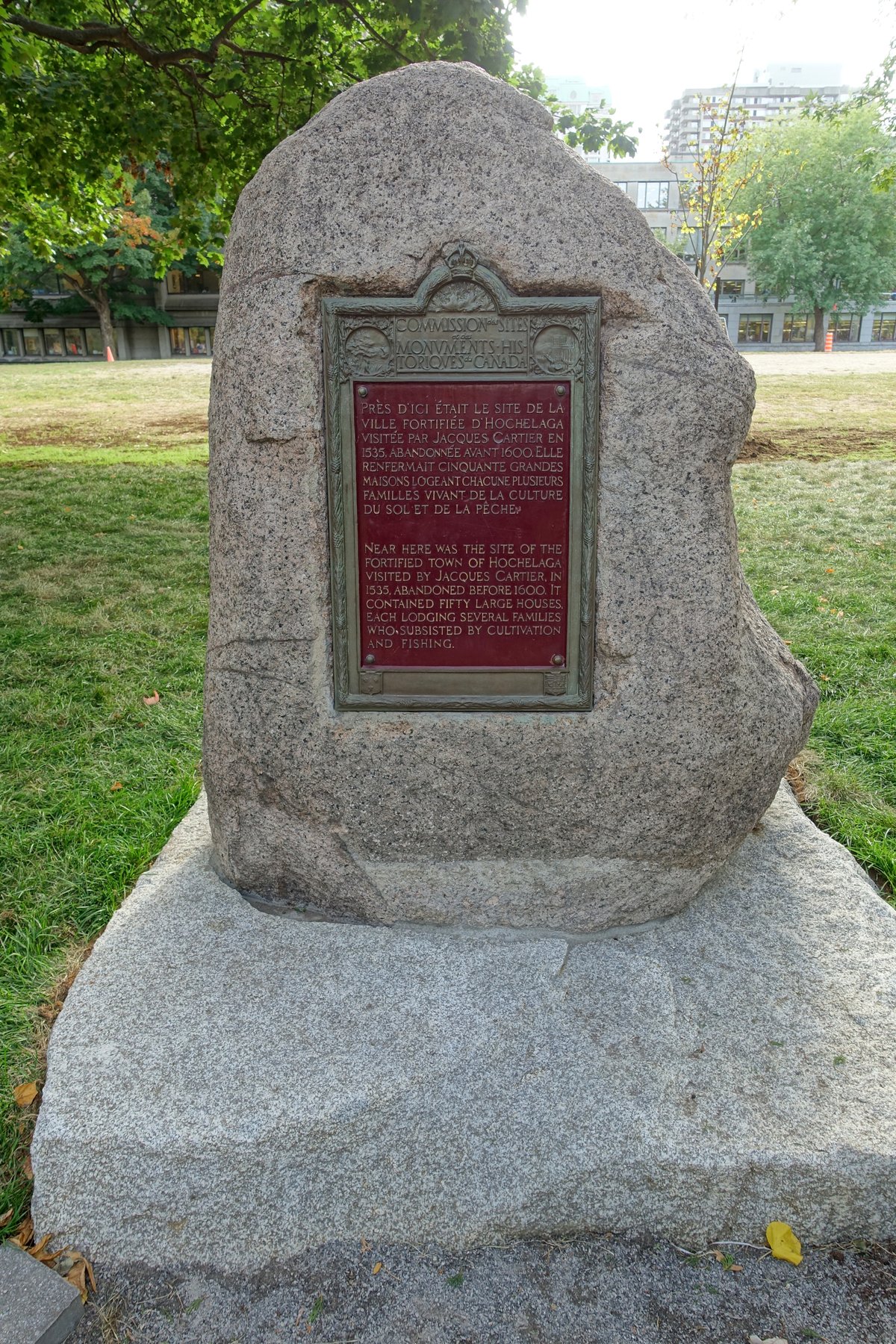
At Place des Royaux stands a stone memorial with a bronze plaque, surrounded by a symbolic red batting cage, commemorating the stadium’s history and Jackie Robinson’s achievements (MTL.org). Parc des Royaux, adjacent to the memorial, features green spaces that subtly mirror the stadium’s former layout (Deadball Baseball).
Nearby Attractions and Activities
- Parc Lafontaine: Popular for picnics and urban strolls (Lonely Planet)
- Grover Knitting Mill: Historic building now housing artist studios—a nod to the area’s industrial past (Deadball Baseball)
- Olympic Stadium: Tours and city views just 3 km east (Timeout Montreal)
- Le Plateau-Mont-Royal: Trendy neighborhood for cafés, murals, and authentic Montreal bagels
- Old Montreal: Explore historic streets, architecture, and the Old Port
Accessibility and Amenities
- Physical Accessibility: The memorial is at street level, with well-maintained sidewalks (seasonally affected in winter).
- Restrooms: None on-site; available at nearby cafés and Parc Lafontaine.
- Language: French is predominant, but English is widely spoken. Polite greetings in French ("Bonjour", "Merci") are appreciated (Lonely Planet).
- Safety: The area is generally safe; exercise standard urban caution.
Special Events and Guided Tours
- Events: Occasional commemorative events and local festivals, particularly around Jackie Robinson anniversaries.
- Tours: No dedicated guided tours, but some local sports heritage or walking tours include the site (Walk Montreal). Self-guided options are enhanced by mobile apps and online resources.
Photography and Media
- Photo Opportunities: Capture the memorial, red batting cage, Parc des Royaux’s layout, and the Grover Knitting Mill. Morning and late afternoon offer the best natural light.
- Virtual Content: Check museum and sports history websites for virtual tours and archival images.
Frequently Asked Questions (FAQ)
Q: Can I visit Delorimier Stadium today?
A: The stadium is gone, but the memorial at Place des Royaux is open to the public year-round.
Q: Is there an entrance fee or ticket required?
A: No. Access to the memorial and park is free.
Q: Are guided tours available?
A: No regular tours are offered, but some local walking tours include the memorial.
Q: Is the site wheelchair accessible?
A: Yes, the memorial is at street level and accessible, though outdoor conditions may vary.
Q: Are there nearby restrooms or amenities?
A: None on-site; use facilities at local cafés or parks.
Summary and Visitor Recommendations
Delorimier Stadium’s spirit lives on at Place des Royaux, where visitors can reflect on Montreal’s contributions to baseball and civil rights. The memorial and adjacent Parc des Royaux provide free, year-round access, making it an easy and meaningful stop for sports fans and history enthusiasts. Enhance your visit by exploring nearby attractions, supporting local businesses, and engaging with the neighborhood’s artistic and historical character.
To deepen your exploration, consult additional resources or join local walking tours (Walk Montreal). For more stories about Montreal’s rich sports heritage, download the Audiala app and follow our social media channels for updates on events and new content.
Listen to the full story in the app
Your Personal Curator, in Your Pocket.
Audio guides for 1,100+ cities across 96 countries. History, stories, and local insight — offline ready.
Audiala App
Available on iOS & Android
Join 50k+ Curators
Sources
- verified
- verified
- verified
- verified
- verified
- verified
- verified
- verified
Last reviewed: