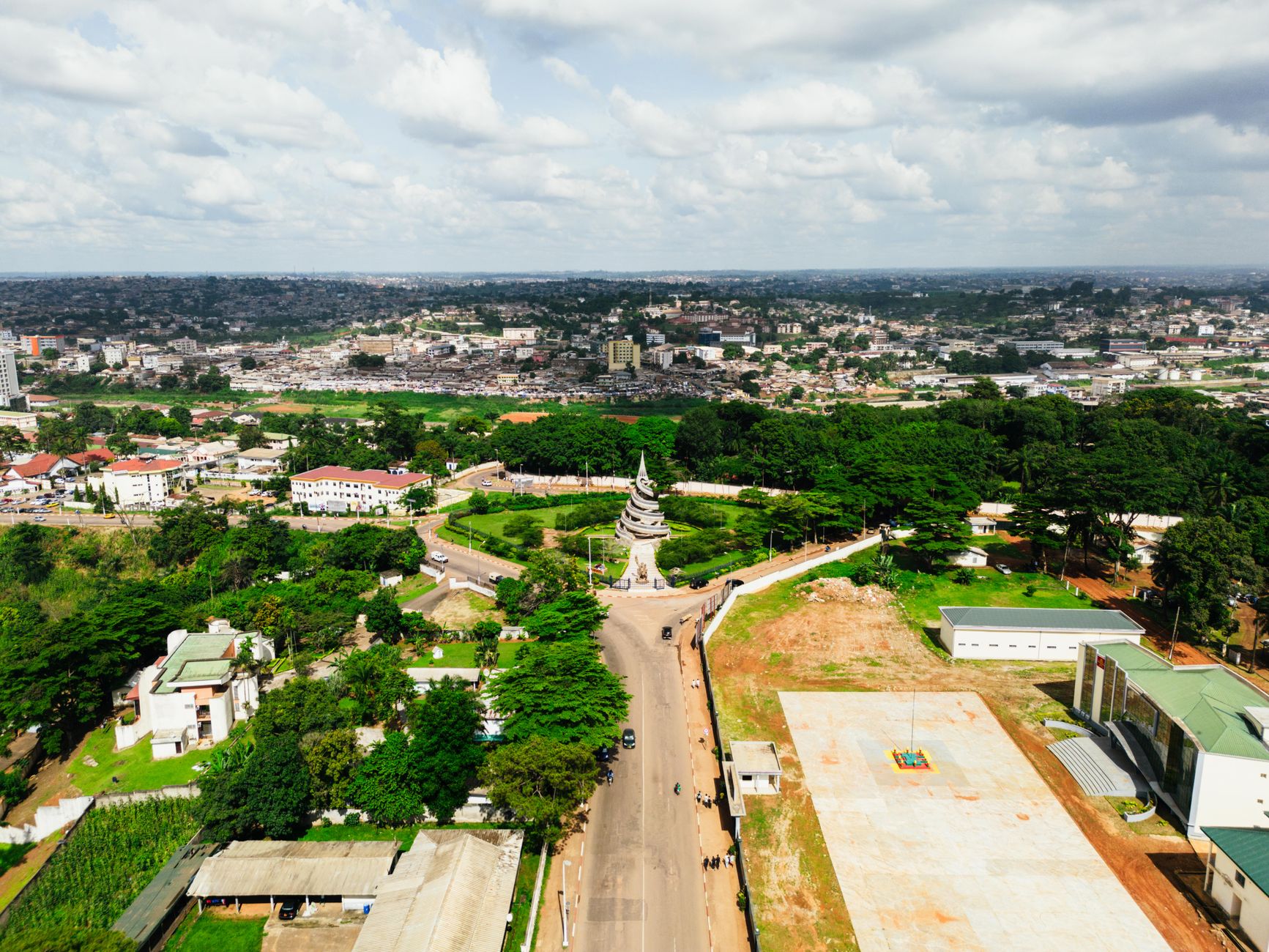
Yaoundé

Cameroon

Yaoundé

Yaoundé serves up presidential palaces turned museums, midnight soya skewers and sunset views from Mont Fébé—all reachable in a weekend without a beach in sight.

location_on 13 attractions
calendar_month Dec–Feb (dry & sunny)
schedule 2-3 days

Introduction

At 4 a.m. the air still carries the scent of wood smoke from last night's street-side soya stalls, and the first call to prayer rolls down the hills like liquid brass. Yaoundé, Cameroon’s capital, wakes up tasting of peanuts and palm oil, not politics. That’s the surprise: a city founded for colonial administration now defines itself by what’s simmering in the pot.

The city sits on seven hills, but the one that matters to locals is Mont Fébé. From the monastery balcony at 1,037 meters you can watch cell-phone towers blink in sync with lightning over the Mfoundi Valley. Down below, presidential motorcades still use the German-built ring road completed in 1914; the asphalt is original, patched so often it resembles quilt work.

Neighborhoods shift language every three blocks. French gives way to Eton, then Bamileké, then pidgin thick enough to chew. Taxi drivers argue fares in Sawa hand signs while university students debate politics over 200-franc beignets that arrive still sizzling. Ignore the guidebooks that call this place “administrative.” Yaoundé runs on gossip, grilled meat, and the certainty that tomorrow’s traffic will be worse.

What Makes This City Special

Museums in a Palace

The National Museum occupies the 1930s presidential palace; for 5,000 XAF you walk past leopard stools and electric sanzas under chandeliers still wired for 110 V. The Cameroon Art Museum, one hill east, keeps its masks spot-lit like suspects in a lineup.

Two Cathedrals, One Skyline

Notre-Dame des Victoires (1906) squats on a ridge of red basalt; the 2006 basilica next door borrows its curves from the nearby Nsimalen hills. Between them they hold every wedding, state funeral and school choir recital the city can produce.

Sunset from Mont Fébé

At 1,037 m this is Yaoundé’s rooftop; order a cold Castel at the hilltop bar and watch the city’s tin roofs turn bronze while the call to prayer drifts up from Briqueterie.

Historical Timeline

A Capital Carved from Hills and History

From Ewondo villages to independence speeches, Yaoundé's story rises with the equatorial mist

castle
c. 200 BCE

Ewondo Settlements

The Ewondo people establish farming villages on the seven hills where Yaoundé now sprawls. They call the area 'Ongola', meaning 'hunting ground' in their Bantu tongue. Archaeological digs at Mvog-Betsi uncovered pottery shards and iron tools dating to this period. The soil here was rich, the river valleys generous.

public
1889

German Flag Raised

Captain Richard Kund plants the German flag at the base of modern-day Boulevard du 20 Mai. The colonial outpost begins as a trading post for rubber and ivory. Within three years, 42 German administrators and 200 African soldiers occupy the hilltop. They rename the settlement 'Jaunde' after the local Ewondo pronunciation.

church
1895

First Church Founded

Missionaries of the Holy Spirit erect a modest bamboo chapel where Cathédrale Notre-Dame des Victoires now stands. The structure measures just 12 by 8 meters. Ewondo converts carve pews from local mahogany. The church bell, cast in Hamburg, arrives after a 14-month journey upriver from the coast.

factory
1901

Railway Reaches the Hills

The first train whistle echoes through the valley as the Douala-Yaoundé railway reaches the settlement. Construction claimed 1,800 lives, mostly forced laborers from the coastal regions. The station building, still standing today, was built from volcanic stone quarried at nearby Nkol-Nyada. Journey time from the coast: 36 hours.

castle
1906

German Governor's Palace

Governor Otto Gleim moves the colonial capital from Douala to Yaoundé, citing healthier highland air. The new Residenz occupies the hill where the National Museum now stands. The building features 47 rooms, electric lighting, and running water — luxuries unknown to most Europeans back home. Terraced gardens descend the slope in precise German symmetry.

person
1932

Mongo Beti Born

Alexandre Biyidi Awala enters the world in Akométam, 15 kilometers south of Yaoundé. The village boy who becomes Mongo Beti will write 'The Poor Christ of Bomba', scandalizing colonial authorities with its portrayal of missionary hypocrisy. His novels, written in exile, give international voice to Cameroon's struggle for independence. He returns to Yaoundé in 1974 after 23 years abroad.

swords
1940

Vichy vs. Free French

French administrators in Yaoundé declare loyalty to Marshal Pétain's Vichy regime. British forces from Nigeria occupy the city on August 27 after a 48-hour standoff. The German-built post office becomes temporary British headquarters. Local chiefs watch from Fébé Hill as white colonial powers argue over their city.

person
1954

Théophile Abega Born

A future football genius takes his first breath in Yaoundé's Biyem-Assi neighborhood. Théophile Abega will earn the nickname 'The Doctor' for his surgical midfield play. He leads Canon Yaoundé to three African Champions Cups between 1971 and 1980. His vision and passing inspire a generation of Cameroonian players who transform African football.

gavel
1955

UPC Banned

French authorities ban the Union des Populations du Cameroun, forcing its leaders underground. Party secretary-general Félix-Roland Moumié addresses 5,000 supporters at the Marché de Mokolo before fleeing to British Cameroon. The crackdown transforms Yaoundé's political cafés into whisper networks. Independence activists hide pamphlets in bread baskets and charcoal sacks.

church
1957

Mosquée Centrale Opens

The green dome of Yaoundé's Central Mosque rises above Briqueterie neighborhood. Built with Algerian architectural assistance, it serves the city's growing Muslim population of northern traders and civil servants. The minaret stands 27 meters tall, visible from most hilltops. Friday prayers draw 2,000 worshippers who spread prayer mats onto adjacent streets.

public
1960

Independence Declared

At midnight on January 1, Ahmadou Ahidjo proclaims independence from the balcony of the Palais du Gouverneur. The French flag descends as the green-red-yellow tricolor rises to 21-gun salutes. 30,000 citizens pack the May 20 Boulevard despite torrential rain. Independence day celebrations last three days, with traditional dancers performing on car hoods.

gavel
1961

Federal Capital

Yaoundé becomes capital of the Federal Republic of Cameroon following reunification with British Southern Cameroons. The city doubles overnight as Anglophone civil servants arrive from Buea. Temporary offices sprout in school buildings and private homes. Traffic circles designed for 50,000 vehicles suddenly handle 200,000 daily.

palette
1972

Reunification Monument Unveiled

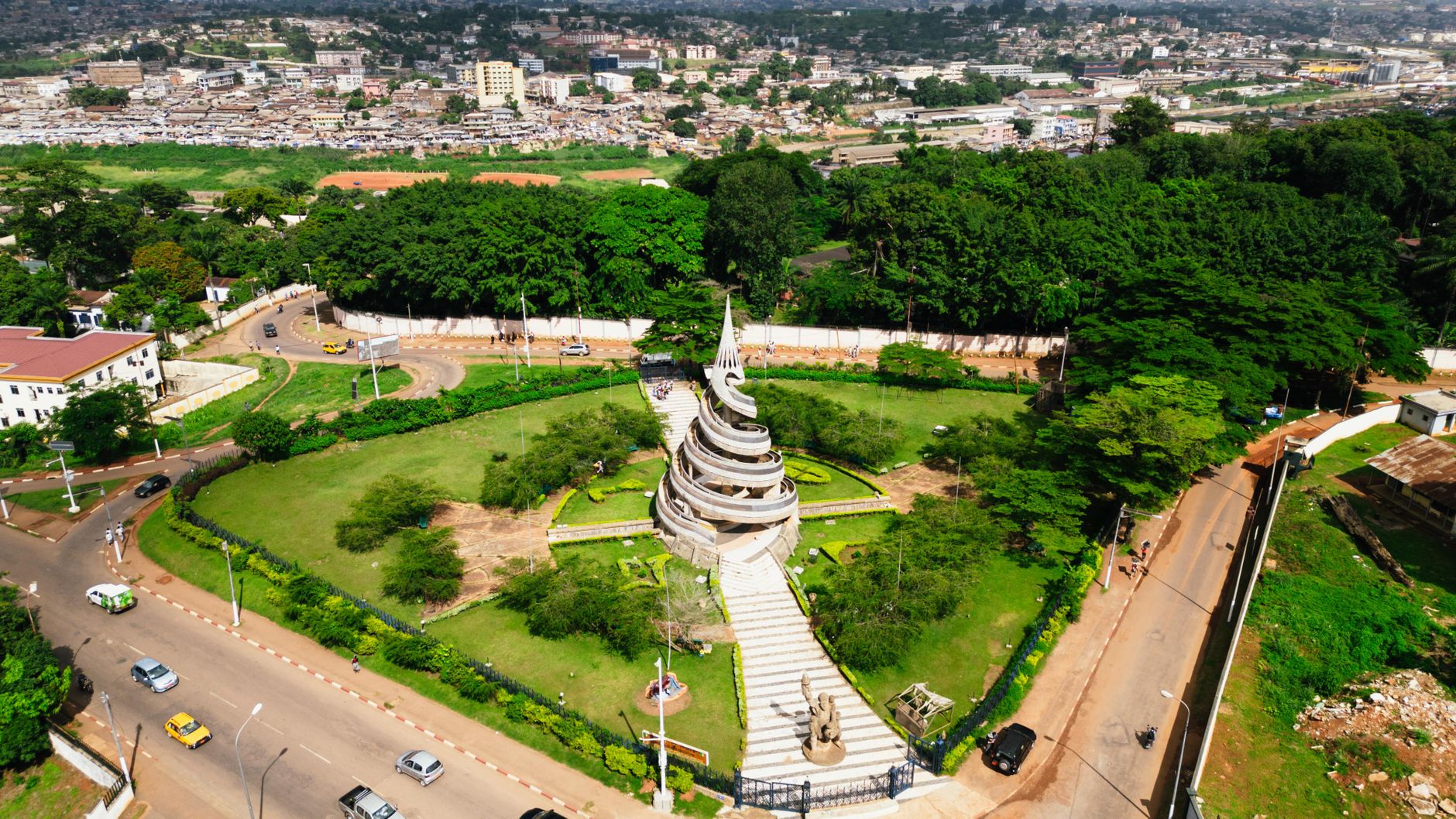
The white concrete hands of reunification clasp above Boulevard du 20 Mai. Sculptor Gédéon Mpando carves the 7-meter monument from 47 tons of local limestone. The structure represents the merger of French and British Cameroons. Critics call it 'the concrete handshake that nobody asked for'.

gavel
1982

Ahidjo Resigns

President Ahmadou Ahidjo surprises the nation by resigning in favor of Prime Minister Paul Biya. The transfer of power takes place in the marble hall of the Etoudi Palace. Biya, a former philosophy teacher from Mvila, enters office promising 'rigor and moralization'. The peaceful transition masks deep tensions within the ruling party.

swords
1984

Palace Guard Coup

Republican Guard soldiers loyal to Ahidjo storm the presidential palace at dawn on April 6. The fighting lasts four days, leaving 71 dead in the streets around Etoudi. Tanks roll down Avenue Kennedy as civilians shelter in basements. Biya's survival cements his grip on power for decades to come.

church
2006

Basilique Marie-Reine Opens

The copper dome of Cameroon's largest church rises 36 meters above the original 1906 mission site. Built to accommodate 5,000 worshippers, the basilica features 52 stained-glass panels depicting local saints. Italian craftsmen spent three years installing the marble imported from Carrara. Sunday mass echoes across the valley in French, English, and Ewondo.

public
2022

UNESCO Convention Anniversary

Delegates from 193 countries gather at the Palais des Congrès to celebrate 50 years of World Heritage protection. The convention center's glass facade reflects the surrounding eucalyptus trees planted during German rule. Yaoundé hosts its largest international event since independence. Traffic jams stretch 15 kilometers as 3,000 delegates navigate roundabouts designed for colonial carriages.
schedule
Present Day

Notable Figures

Théophile Abega

1954–2012 · Footballer
Born here

He ran the midfield for Canon Yaoundé and the Indomitable Lions, turning Boulevard de la Réunification into a carnival after every cup win. Fans still call the old stadium corner ‘Petit Théo’—if he saw today’s traffic he’d probably dribble through it just the same.

Mongo Beti

1932–2001 · Novelist
Raised nearby, studied in Yaoundé

His sarcastic wit sliced through colonial hypocrisy; the city’s bookstalls still hide dog-eared copies of ‘Poor Christ of Bomba’ under French school manuals. Beti would laugh that the same potholed road to Akométam now carries NGO Land-Cruisers instead of Catholic lorries.

Ephraïm Inoni

born 1947 · Prime Minister
Governed from Yaoundé 2004-09

He chaired cabinet meetings in the Unity Palace overlooking Mont Fébé, signing oil-exploration decrees while taxi drivers outside argued over 100-franc coins. Return today and he’d find the same view—but the palace roof now catches glare from new glass ministries built for the next generation of deals.

Practical Information

flight

Getting There

Fly into Yaoundé Nsimalen International Airport (NSI), 22 km south. No rail link; pre-book a private transfer (15,000–25,000 XAF) or haggle a taxi to 12,000 XAF. Inter-city coaches terminate at Gare Routière du Mfoundi; the N3 highway connects Douala–Yaoundé in 3–4 h.

directions_transit

Getting Around

No metro or tram exists. Shared taxis follow fixed routes for 300–500 XAF; say your destination and squeeze in. Motorcycle taxis (benskin) weave the hills. Download Yango for up-front ride-hail fares—no negotiation required.

thermostat

Climate & Best Time

Tropical highland air keeps highs 26–31 °C year-round. Dry season (Dec–Feb) brings 3 rain days a month; October peaks at 295 mm and floods lower streets. Visit late December for clearest skies or July for hotel discounts during the short dry break.

translate

Language & Currency

French runs the city; English appears in hotels and museums. CFA franc (XAF) is the currency—cash rules taxis and markets, so land with small notes. ATMs inside the city work; the airport ones sometimes refuse foreign cards.

Tips for Visitors

payments
Carry Cash

ATMs at the airport often run dry. Bring CFA francs or use the bureau inside baggage claim before exiting. Most street food stalls and shared taxis are cash-only.

directions_car
Set Taxi Price First

No meters in Yaoundé. Agree on the fare before you get in; 1,000–2,000 XAF covers most inner-city hops after dark. Say ‘combien?’ and hold up fingers to bargain fast.

restaurant
Follow the Smoke

The best soya skewers appear after sunset on the main arteries. Look for a tin-drum grill surrounded by standing locals—join the queue and you’ll pay half the restaurant price.

wb_sunny
Beat the Rains

October dumps 295 mm in 23 days. Plan museum mornings and hilltop sunsets for the drier window of July–August; carry a compact umbrella even in ‘dry’ December.

photo_camera
Sunset on Mont Fébé

Be on the upper terrace by 17:45—city lights flick on while the last light catches the cathedral’s spire. Taxi up, walk the monastery path down to save 2,000 XAF.

Explore the city with a personal guide in your pocket

Your Personal Curator, in Your Pocket.

Audio guides for 1,100+ cities across 96 countries. History, stories, and local insight — offline ready.

smartphone

Audiala App

Available on iOS & Android

download Download Now

Join 50k+ Curators

Frequently Asked

Is Yaoundé worth visiting? add

Yes—if you want Cameroon’s political heartbeat rather than postcard beaches. The National Museum’s palace rooms and Mont Fébé’s dusk skyline give you layered history in 48 hours, plus day-trip canoe forests on the Nyong River.

How many days do I need in Yaoundé? add

Two full days covers the reunification monument, both cathedrals, the national museum and a sunset over the city. Add a third for Ebogo’s dugout canals or Mefou’s primate sanctuary.

Is Yaoundé safe for solo travellers? add

Daylight centre is fine; stick to busy streets around Marché Central and Bastos bars after dark. Use Yango ride-hail instead of hailing random taxis and leave valuables in your hotel—petty theft spikes in crowded markets.

How do I get from the airport to downtown? add

Nsimalen is 22 km south. A pre-booked private car costs 15,000–25,000 XAF and takes 30–45 min. Shared taxis wait outside departures but only leave when full and make multiple stops—budget an hour.

What’s the cheapest way to move around the city? add

Shared taxi-ville: 200–500 XAF per hop, flag anywhere. Motorcycle benskins beat rush-hour hills for 300–700 XAF. Download Yango to lock in car fares and skip negotiation.

When is the best weather window? add

December–February brings 30 °C days and barely three rainy days a month. July and August give cooler 26 °C highs and lighter showers—good for forest excursions without October’s torrential soak.

Sources

Last reviewed: