Introduction
Ouagadougou smells of charcoal and shea butter at dawn, then switches to diesel and grilling chicken by noon. The capital of Burkina Faso moves to a rhythm of clanging metal workshops and evening djembe solos that make taxi dashboards rattle. You come for the cinemas carved out of former railway depots, stay for the sculptors chipping granite under baobabs 30 km away, and leave realizing you never learned to pronounce the name properly—yet the city answered anyway.
Locals call it Ouaga, and the city behaves like it has only one name to remember. Wide laterite boulevards dissolve suddenly into red-dust footpaths where cattle still get right of way. Between those extremes you'll find brutalist ministries painted the color of desert roses, a cathedral cast from banco mud that has survived every coup since 1936, and nightclubs where DJs drop coupé-décalé at 2 a.m. while the power grid flickers in protest.
The Mossi emperor still holds court here, arriving each Friday morning under a parasol of ostrich feathers to settle disputes in front of anyone who cares to watch. Artisans hand-stitch leather pouches two streets away, using patterns older than the palace walls, then sell them to festival-goers who will trade the same pouches for phone numbers at FESPACO film parties. Cinema, music, mud architecture, and motorcycle taxis—Ouaga stitches them together without asking permission.
Expect to get lost at least once; street signs are decorative. But the grid is forgiving: every wrong turn ends at a maquis patio where someone will insist you taste riz gras spiced just hot enough to make the evening air feel cool. Bring small CFA notes, a tolerance for dust in your lenses, and an appetite for conversations that start in French, switch to Dioula, and finish in laughter loud enough to drown out the generator next door.
What Makes This City Special
Africa’s Living Craft Workshop
Inside Village Artisanal, 500 artisans hammer bronze, carve djembes and weave bogolan under the same acacia shade their teachers used. You buy from the bench where the object was born—prices are inked on tags, haggling feels almost rude.
A Zoo Inside a City-Size Forest
Bangr-Weogo Park swallows 240 hectares of Ouaga’s heart: crocodiles nap beside the botanical path, and the small zoo lets you lock eyes with hippos before you’ve finished your morning coffee. Entry is 200 XOF—less than the price of the coffee.
Music You Can Touch
The National Museum of Music keeps 200 instruments you’re invited to play—squeeze a Mossi flute, slap a talking drum, hear the room answer back. The building itself hums: domed Sahelian roofs bounce sound like a natural amplifier.
Historical Timeline
Where Empires Collide and Revolutions Are Born
From Mossi kingdom to pan-African capital in five turbulent centuries
Nyonyonse Found Kombem-Tenga
The first settlers call it Kombem-Tenga — 'land of princes.' They build in mud and thatch where the Red and White Volta rivers nearly meet. Their descendants will still sell onions here a thousand years later.
Mossi Victory Renames City
After a decisive battle, the conquering Mossi rename their prize Wogodogo — 'where people receive respect.' The name will bend but never break under French tongues. A kingdom is proclaimed; the palace drums begin their Friday calling that still summons crowds.
Capital of Wagadugu Crowned
The Moro-Naba — 'great lord' — makes Wogodogo his permanent seat. From here he rules a cavalry state that will raid Timbuktu and defy both Mali and Songhai. The palace compound, rebuilt endlessly, still houses his successors.
Princess Yennenga Rides North
Legend places the Mossi founding mother on her stallion, galloping north to found new kingdoms. Her bronze likeness will crown the top prize at Africa's biggest film festival five centuries on. The Étalon de Yennenga is still the most coveted statue in African cinema.
French Troops Occupy Palace
Captain Jean-Baptiste Tournier's column marches through the kapok-tree gate. The Moro-Naba slips away rather than sign. France keeps the title, not the man — indirect rule begins. Wogodogo becomes Ouagadougou on colonial maps.
Upper Volta Created
Paris carves out a new colony from the scraps of Ivory Coast, Niger, and Sudan. Ouagadougou, population 8,000, suddenly governs a territory larger than Italy. The first governor plants eucalyptus along avenues that still scent the evening air.
Colony Erased from Maps
France dissolves Upper Volta to cut costs. Ouagadougou is demoted, its civil servants scattered to Abidjan and Niamey. Market women keep the city alive selling millet beer and kola nuts. The railway terminus rusts.
Mud Cathedral Consecrated
Brothers lay the last courses of banco brick. The twin towers rise 24 meters, orange against the Sahel sky. Inside, the grotto smells of wet clay and beeswax. Photography is still politely refused.
Upper Volta Reborn
Paris restores the colony after protests. The governor returns to find streets widened, cinemas open, and a football team wearing the new colors. Ouagadougou resumes its upward arc.
Thomas Sankara Born
A policeman's son enters the world in Yako, 150 km north. He will grow up on military bases, learn guitar riffs from Cuban records, and ride a bicycle through these same streets he will one day rename. Ouagadougou remembers him every 15 October with marches and red berets.
Independence at Stadium
Maurice Yaméogo raises the flag before 20,000. The brass band plays the new anthem; women let their white wrappers catch the wind. Upper Volta keeps its colonial borders — and its colonial capital.
General Lamizana Takes Power
Striking postal workers pour into the streets. The army sides with them. By nightfall Yaméogo is in prison and a general in a crisp kepi addresses the nation. Ouagadougou learns the rhythm of coups.
FESPACO Projects First Frames
In a tin-roofed cinema, directors from Senegal and Niger screen grainy 16 mm prints. The prize is a sack of local millet. Within a decade the festival will turn Ouagadougou into Africa's Hollywood every odd February.
Sankara Leads Revolution
A captain in paratrooper beret storms the radio station. He promises vaccines, trees, and women's rights. The city wakes to murals of Che and local griots. Government ministers trade their Peugeots for bikes.
Country Renamed Burkina Faso
At the Stade du 4-Août, Sankara proclaims the new name: 'land of upright people.' Upper Volta dies in a single sentence. The crowd chants 'La patrie ou la mort!' The currency changes color overnight.
Sankara Assassinated
Gunfire echoes inside the Conseil de l'Entente palace. Twelve bodies hit the courtyard. A captain orders quicklime. By dawn the man who banned imperial suits is wrapped in a plastic sheet and dumped in an unmarked grave. The city still whispers his name.
Music Museum Opens
A domed building of Sahelian brick welcomes visitors with a balafon's wooden clack. Inside: koras, talking drums, and the guitar Sankara played at rallies. You can strike the iron bells yourself; the sound rattles the glass cases.
Artisan Village Inaugurated
Luxembourg funds 50 workshops under mango trees. Bronze-casters pour molten metal, Tuareg silversmiths solder tiny boxes, djembe skins are stretched while the scent of goat hide hangs thick. Prices are fixed; haggling is half a smile.
Protesters Torch Parliament
A million people wear red cards around their necks. They climb the fence, smash marble, and set the chamber alight. Smoke drifts over Ouaga 2000's embassies. Compaoré flees by convoy; the spell of 27 years breaks.
Hotel Siege Horror
Gunmen spray the Cappuccino café at dusk. Guests hide under hotel beds while explosions shake the Splendid's poolside. Thirty die; survivors escape through laundry chutes. The first major terror strike in the capital leaves balconies pockmarked.
Captain Traoré Seizes Power
A 34-year-old in fatigues appears on state TV, the youngest leader on Earth. Outside the radio station, supporters wave Russian flags. French troops pack up; a Wagner logo appears on a downtown wall. The city holds its breath again.
Capital Absorbs 600,000 Displaced
Jihadist raids empty northern villages. Makeshift camps sprout along the road to Pô. The population swells past three million; water trucks queue before dawn. Ouagadougou becomes a city of the uprooted, searching for safe ground.
Notable Figures
Blaise Compaoré
born 1951 · Former PresidentHe grew up in the same mud-brick streets he later ruled for 27 years. Drive past his childhood lycée and you’ll still see cadets in khaki—history looping like the traffic circles he built.
Jean-Baptiste Ouédraogo
born 1942 · Physician & ex-PresidentThe pediatrician who briefly ran the country now sees babies in Somgandé clinic; ask nicely and he’ll point to the bed where he once treated soldiers who later guarded his palace.
Joseph Ki-Zerbo
1922-2006 · Historian & ActivistHis history classes spilled onto street corners, arguing that Burkina’s future lay in remembering its pre-colonial villages. The university building named after him still smells of chalk and kinkeliba tea.
Photo Gallery
Explore Ouagadougou in Pictures
A high-angle view of modern residential apartment complexes and a school building surrounded by lush greenery in Ouagadougou, Burkina Faso.
TUBARONES PHOTOGRAPHY on Pexels · Pexels License
A colorful street scene in Ouagadougou, Burkina Faso, capturing the daily rhythm of life amidst distinctive architecture and a rain-soaked, unpaved road.
Faruk Tokluoğlu on Pexels · Pexels License
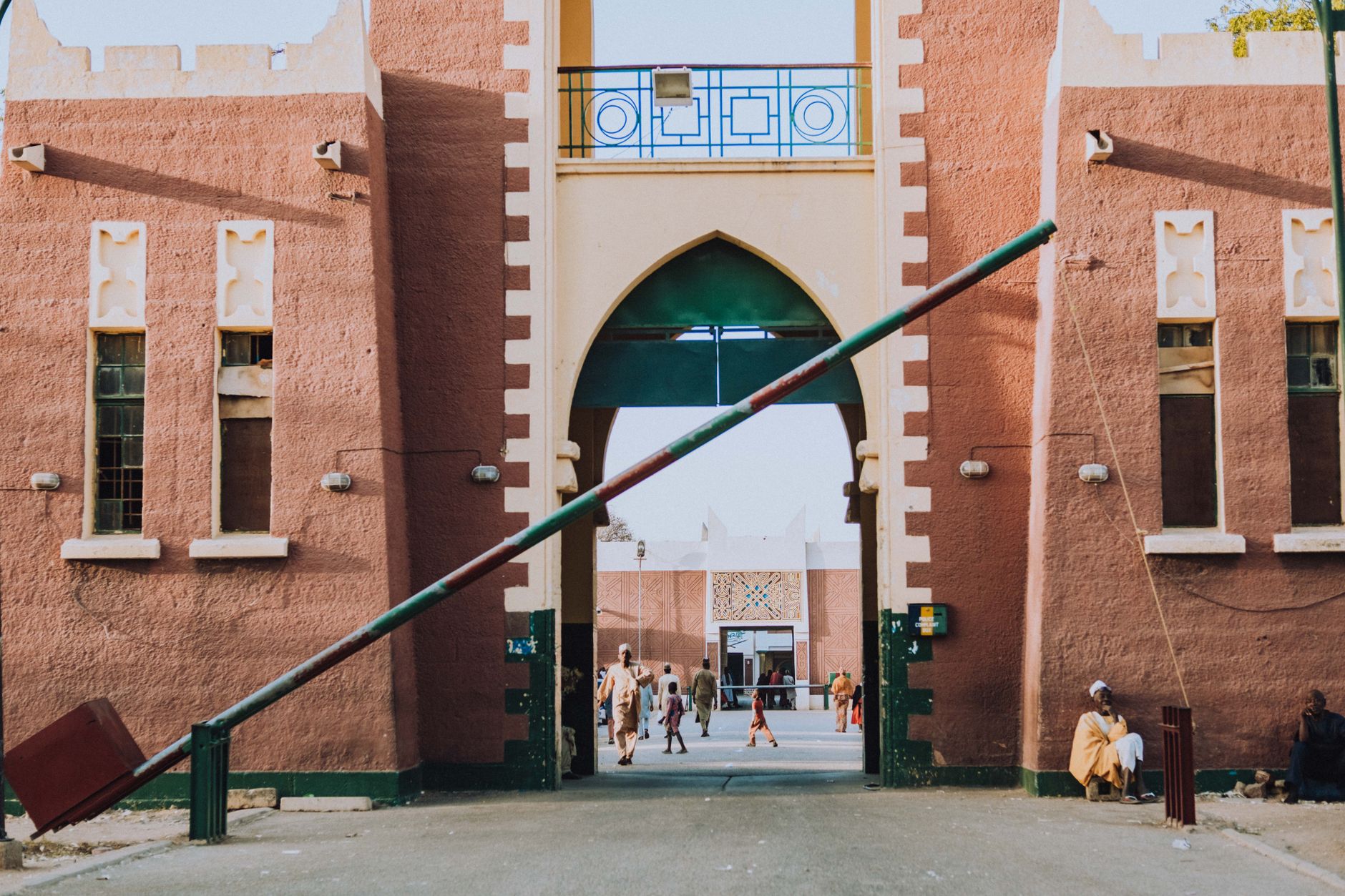
The striking arched gateway of a historic building in Ouagadougou, Burkina Faso, serves as a bustling entry point for locals.
Iklima Babangida on Pexels · Pexels License
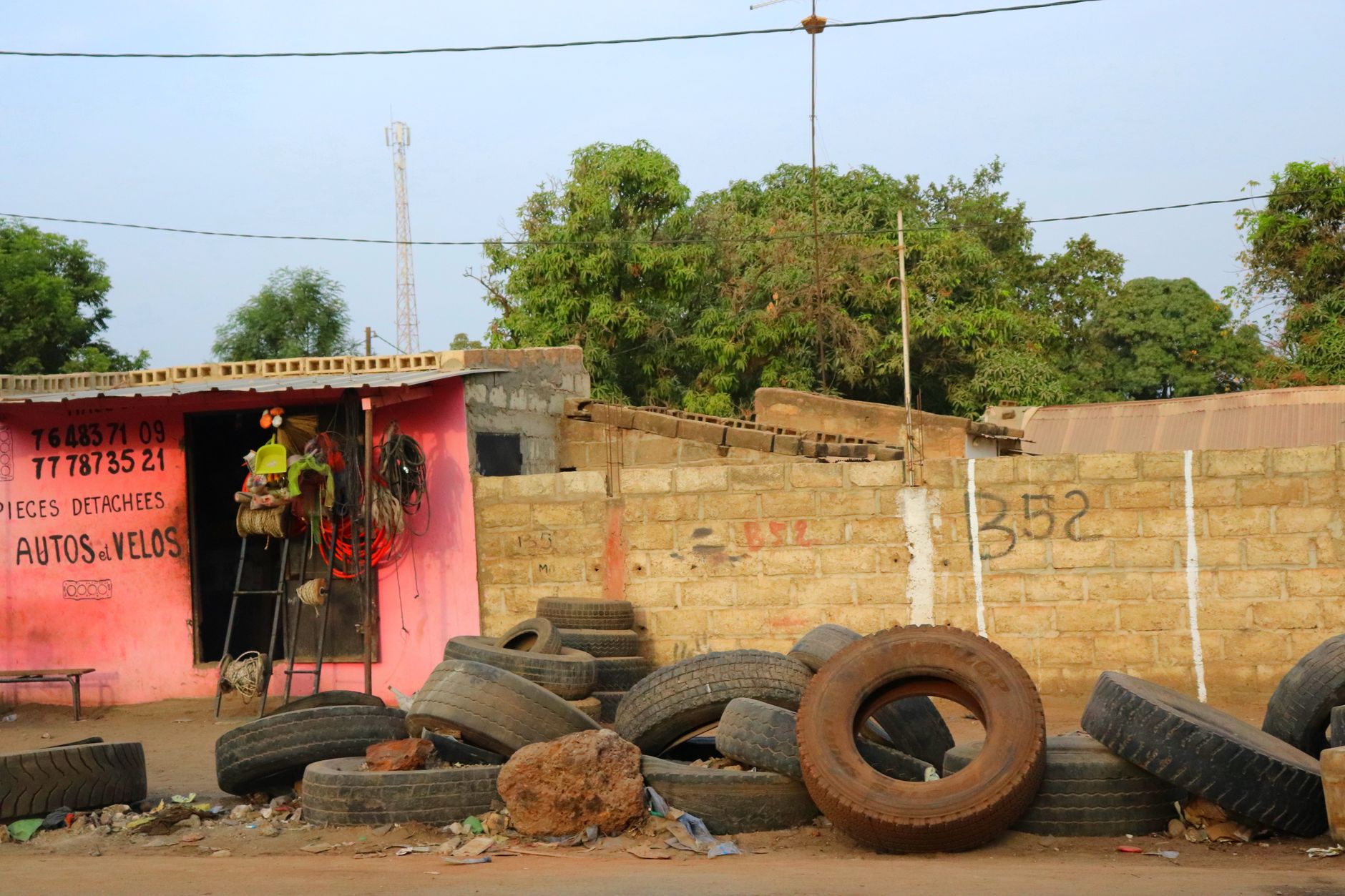
A local auto and bicycle parts shop in Ouagadougou, Burkina Faso, surrounded by a collection of discarded tires.
Emilie Leenaerts on Pexels · Pexels License
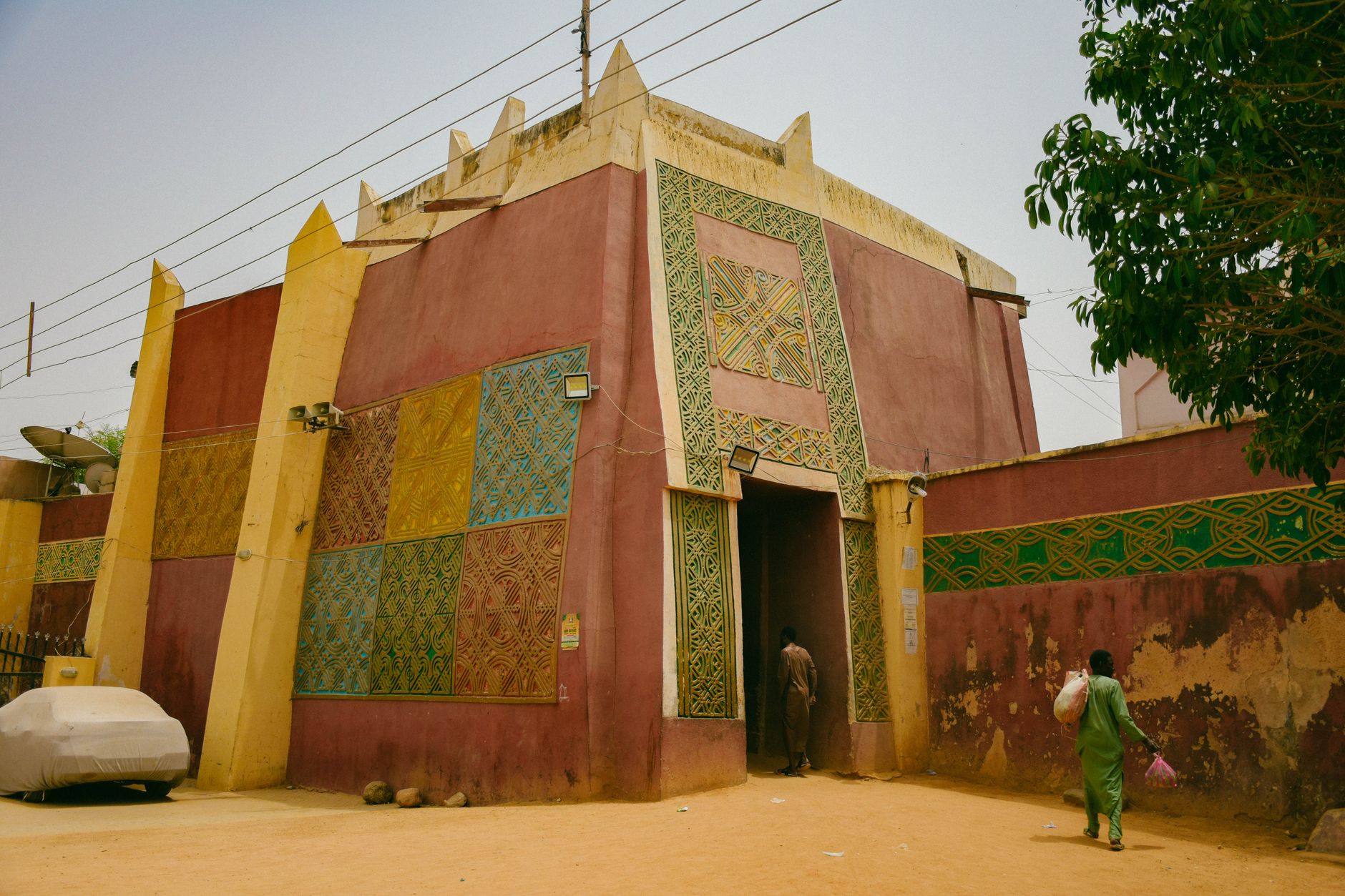
A striking example of traditional architecture in Ouagadougou, Burkina Faso, showcasing intricate geometric wall carvings and earthy tones.
Abubakar Ogaji on Pexels · Pexels License
Practical Information
Getting There
Thomas Sankara International Airport (OUA) sits 4 km south of downtown. No railway serves the city; long-distance buses terminate at Gare de l’Est near the Grand Marché. The N1 highway links Ouaga to Bobo-Dioulasso (356 km) and the Ghana border at Pô.
Getting Around
No metro or tram exists. SOTRACO runs 18 bus routes with 329 stops, cash fare paid on board. Green shared taxis cruise set routes for 300–500 XOF per seat; white taxis offer private rides—negotiate, no meters. Zemidjan moto-taxis weave fastest through traffic.
Climate & Best Time
Dry season nights drop to 17 °C in January; April peaks near 40 °C before the June–September rains (August can dump 230 mm). Visit November–February: 34 °C afternoons, zero rainfall, dust-free skies—ideal for open-air craft markets and park walks.
Language & Currency
French is official; Moore is the daily tongue of 60 % of residents. CFA Franc (XOF) is fixed to the euro at 655.96:1—cash only, cards accepted almost nowhere outside hotels. Carry small notes for taxis and market stalls.
Safety
Street crime is low, yet Burkina Faso’s wider security map has deteriorated since 2022. Check your government’s advisory before booking. In town, avoid photographing military buildings and travel with a known taxi driver after dark.
Tips for Visitors
Carry Small CFA
Grand Marché stalls close early if you hand over a 10 000-franc note for a 200-franc cup of bissap. Keep a pocket of coins and 500s; vendors will drop the price just to avoid making change.
Monday Shutdown
Bangr-Weoogo zoo, the National Museum and most government offices lock their gates on Monday. Plan your nature break or history fix for Tuesday onward.
No Inside Shots
The 1934 mud-brick cathedral and the Grande Mosquée both forbid interior photography. Ask anyway—caretakers sometimes allow a quick phone shot after prayer time for a small tip.
Riz Gras Lunch Hour
Riz gras sells out fast. Reach Le Verdoyant or the market women behind the cloth section before 13:00 or you’ll get the scorched bottom-of-pot portion.
Green Taxi Bargain
Green-banded taxis have no meter—set the price before you sit. A cross-town ride should be 500-700 CFA in daylight; after 22:00 double it.
FESPACO February
Hotel prices triple during Africa’s biggest film festival (22 Feb-1 Mar 2025). Book rooms in December, then barter your spare festival pass for guides and craft discounts.
Explore the city with a personal guide in your pocket
Your Personal Curator, in Your Pocket.
Audio guides for 1,100+ cities across 96 countries. History, stories, and local insight — offline ready.
Audiala App
Available on iOS & Android
Join 50k+ Curators
Frequently Asked
Is Ouagadougou worth visiting? add
Yes, if you want live music, mud-brick architecture and a market that smells of onions and shea butter at dawn. It’s not postcard-pretty; it’s a working capital where bronze casters hammer beside traffic jams and nightclubs spin coupé-décalé until 03:00.
How many days do I need in Ouagadougou? add
Three full days cover the core: Day 1—Grand Marché, cathedral, Grande Mosquée; Day 2—National Museums, Village Artisanal, Bangr-Weoogo at sunset; Day 3—Laongo Sculpture Park and a FESPACO screening or jazz night if dates align.
Is Ouagadougou safe for tourists? add
Daytime is generally calm, but leave jewellery at the hotel and use registered taxis after dark. Check your embassy before heading north or east of the city—flare-ups near the Mali and Niger borders can spill over.
How much does a meal cost in Ouagadougou? add
Street plate of tô and sauce: 250-400 CFA. Maquis lunch with riz gras and chicken: 1 500 CFA. Mid-range restaurant (Le Verdoyant) main course: 4 500-6 000 CFA. A 33cl Brakina beer adds 600 CFA.
What’s the cheapest way to get from the airport to downtown? add
Walk past the taxi touts to the main road and flag a green taxi; 1 500-2 000 CFA to the central market instead of the 5 000 CFA ‘airport price’. Buses exist but run unpredictably after 19:00.
Can I drink the tap water? add
No. Stick to sealed bottles or the 10 CFA sachets street sellers keep in ice buckets. Hotel kettles work for brushing teeth, but stomach bugs are merciless here.
When is the best time to visit? add
November to February: cool, dry harmattan winds, 30 °C days and 15 °C nights—perfect for open-air concerts. March-May hits 42 °C; June-September brings torrential evening storms and slick red roads.
Sources
- verified Discover Burkina Faso – Official tourism site — Operating hours for Bangr-Weoogo, background on Village Artisanal, museum collections and Laongo park logistics.
- verified FESPACO 2025 official programme — Confirmed festival dates 22 Feb-1 Mar 2025, ticket prices and venue list.
- verified Silly Suitcase – Ouagadougou street-food guide — Price ranges for riz gras, tô, café spots; nightlife bar hours in Koulouba and Ouaga 2000.
- verified Things to Do in Burkina Faso – Food & culture — Meal times, shared-eating etiquette, tipping habits and seasonal food shifts.
Last reviewed: