Introduction: Complex Bulgaria’s History and Significance in Sofia
Sofia, the vibrant capital of Bulgaria, seamlessly weaves together history, culture, and urban energy. Among its standout landmarks is Complex "Bulgaria"—a multifaceted hub that embodies Bulgaria’s journey from ancient times through periods of Ottoman and socialist influence to its current role as a modern European city. Home to the renowned National Palace of Culture (NDK), Bulgaria Hall, and Hotel Bulgaria, this complex is a focal point for arts, performances, conferences, and social gatherings, symbolizing Sofia’s evolving identity and cultural ambitions (Eupedia; sofiaplan.bg).
Sofia’s roots date back over 7,000 years, beginning with the Thracian Serdi tribe. Known as Serdica in Roman times, the city has flourished as a crossroads of civilizations. The architecture of Complex Bulgaria mirrors this layered history, blending Byzantine, Ottoman, and socialist influences with modernist and functionalist design. Today, its accessible central location and rich cultural programming make it a must-visit for travelers seeking to experience Sofia’s dynamic spirit (adventurebackpack.com; Urban Wanders).
- Introduction
- Historical Evolution of Sofia
- Complex Bulgaria: Historical and Cultural Significance
- Architectural Features of Complex Bulgaria
- Urban Significance and Spatial Integration
- Cultural and Social Impact
- Integration with Sofia’s Contemporary Urban Life
- Visitor Information: Visiting Hours, Tickets, Accessibility
- Nearby Attractions
- Practical Tips for Visitors
- Cultural Etiquette and Local Insights
- Events and Activities
- Food and Refreshments
- Shopping and Souvenirs
- Connectivity and Communication
- Sustainability and Visitor Conduct
- Emergency Information
- Frequently Asked Questions (FAQ)
- Conclusion
- References
1. Discovering Sofia’s Layers: Complex Bulgaria in Historical Context
Ancient and Medieval Roots
Sofia’s history stretches back millennia. The Thracian Serdi tribe established the settlement in the 8th century BCE, later transformed into the Roman Serdica, a flourishing city under Emperor Constantine. Through Byzantine, Bulgarian, and Ottoman rule, the city’s role as a cultural and religious hub grew, symbolized by sites such as the Basilica of St. Sofia, from which the modern city takes its name (Eupedia; Aithor).
Ottoman Rule and Modernization
During nearly five centuries under Ottoman rule, Sofia remained a center for crafts, trade, and religious diversity. Landmarks like the Banya Bashi Mosque and the multicultural neighborhoods reflect this era. Following liberation in 1878 and its designation as the national capital, Sofia rapidly modernized, adopting European urban planning and architecture (Eupedia; SueWhereWhyWhat).
Twentieth Century Transformations
The 20th century brought wars, communist governance, and sweeping changes. Sofia’s cityscape was reshaped by socialist modernization, most notably in monumental projects like Complex Bulgaria and the National Palace of Culture. Since the 1990s, restoration and modernization have further defined Sofia’s architectural identity (Nomadic Matt).
2. Complex Bulgaria: Origins, Architecture, and Cultural Role
Origins and Architectural Context
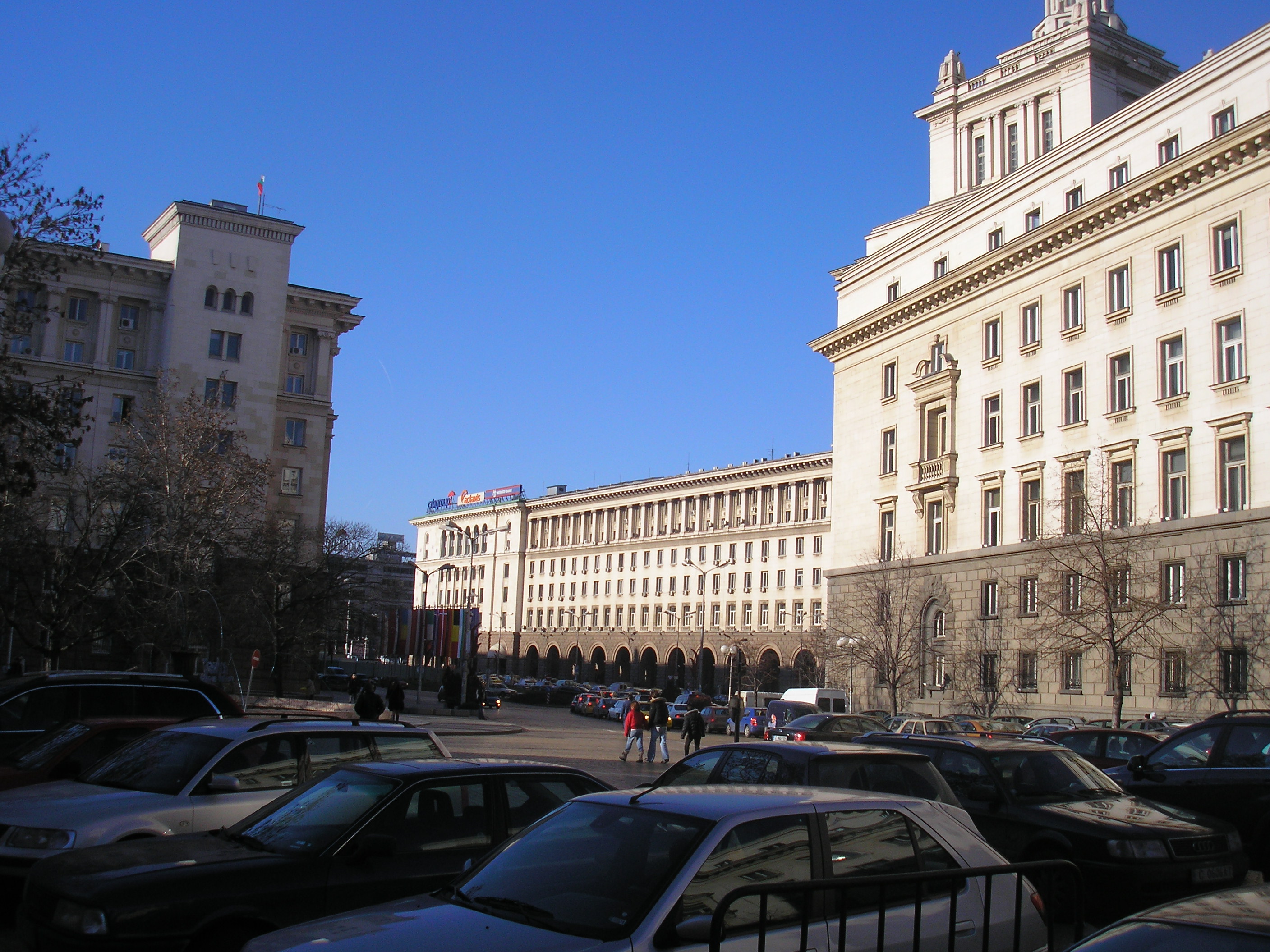
Complex Bulgaria, situated on Bulgaria Boulevard, is a hallmark of mid-20th-century Bulgarian architecture. The ensemble includes Bulgaria Hall (opened 1937, famed for acoustics and as home to the Sofia Philharmonic), Hotel Bulgaria (a historic accommodation), and adjacent office and residential buildings. The architectural style is functionalist and monumental, integrating Bulgarian folklore motifs with European modernism (Urban Wanders).
Role in Sofia’s Cultural Life
Complex Bulgaria serves as a cultural nucleus, hosting concerts, festivals, international conferences, and exhibitions. Its central location, surrounded by parks and cafes with views of Vitosha mountain, makes it a vibrant gathering place for locals and visitors alike (Aithor; Go World Travel).
Symbolism and Urban Development
Designed to reflect both Bulgaria’s heritage and its modern aspirations, Complex Bulgaria’s blend of traditional and modernist elements embodies Sofia’s layered identity. Revitalization projects continue to update its surroundings, reinforcing its status as both a historical and forward-looking urban node (Eupedia).
3. Architectural Features: The National Palace of Culture (NDK) and Beyond
National Palace of Culture (NDK)
The NDK, centerpiece of the complex, was inaugurated in 1981 to mark Bulgaria’s 1300th anniversary. Designed by Alexander Barov, it’s a monumental example of socialist modernism and brutalism, with geometric concrete forms, large glass panels, and expansive interiors. The main hall seats over 3,000 and hosts international conferences, concerts, and exhibitions (e-a-a.com; adventurebackpack.com).
Integration with Urban Landscape
Set within Borisova Gradina park, the NDK’s landscaped surroundings offer fountains, sculptures, and green spaces—ideal for relaxation and recreation. This architectural integration enhances the complex’s role as a bridge between built environment and nature (adventurebackpack.com).
Artistic Integration
Throughout the complex, visitors encounter murals, sculptures, and decorative art by Bulgarian artists, reinforcing its status as both a cultural and architectural landmark (mexicohistorico.com).
4. Urban Significance and Cultural Impact
Strategic Location and Multifunctionality
Complex Bulgaria’s location along major boulevards and public transport lines was deliberate, ensuring accessibility and anchoring new city districts. Its multifunctional design—combining hotel, conference, retail, and cultural spaces—remains central to its enduring appeal (sofiaplan.bg; balkantrails.com).
Symbol of Modernization and Civic Life
For generations, Complex Bulgaria has symbolized Sofia’s drive towards modernity and internationalism. Its public spaces foster community, creativity, and cultural exchange, while its venues host a diverse calendar of civic and artistic events (explorecity.life; sofiaplan.bg).
Heritage at Risk
Like many socialist-era buildings, Complex Bulgaria faces preservation challenges. Efforts are underway to safeguard its architectural and cultural value amid pressures for redevelopment (sofiaplan.bg).
5. Integration with Contemporary Sofia
Urban Regeneration and Adaptive Reuse
Recent regeneration initiatives have revitalized Complex Bulgaria, introducing new uses such as co-working spaces and galleries, while respecting its historic character (sofiaplan.bg).
Connectivity
The complex is well-served by Sofia’s metro, trams, and buses. The Sofia city card and modern fare system make navigation easy for visitors. Its central location means many of Sofia’s top attractions are within walking distance (balkantrails.com; toursbulgaria.com).
6. Visitor Information: Hours, Tickets, Accessibility
Visiting Hours
- NDK and Bulgaria Hall: Generally open 9:00 AM–9:00 PM, with concerts and events typically from 6:00 PM–10:00 PM. Box office hours are 10:00 AM–6:00 PM. Check the official NDK website for current schedules.
Tickets
- Public Areas: Free access.
- Events/Performances: Tickets (10–40 BGN) available online or at onsite ticket offices. Advance booking recommended for popular events.
Guided Tours and Special Events
- Guided tours (by appointment) offer insights into the complex’s architecture, art, and history. The calendar includes international festivals, exhibitions, and workshops (adventurebackpack.com).
Accessibility
- Ramps, elevators, accessible restrooms, and clear signage are available. Contact the venue for specific needs.
Facilities and Amenities
- Restrooms, Wi-Fi, cafes, restaurants, gift shops, and parking (fees apply) are available. Visitor information desks provide assistance in Bulgarian and English.
7. Nearby Attractions
- Alexander Nevsky Cathedral (Neo-Byzantine masterpiece)
- Rotunda of St. George (oldest preserved building in Sofia)
- National Palace of Culture (NDK)
- Vitosha Boulevard (main shopping street)
- Ancient Serdica Archaeological Complex
- Central Mineral Baths
All are within walking distance or a short public transport ride (Urban Wanders).
8. Practical Tips for Visitors
Getting There
- By Metro: Closest station—NDK.
- By Tram/Bus: Multiple lines serve the area.
- By Taxi: Affordable and widely available.
- On Foot/Bike: Sofia’s center is pedestrian- and bike-friendly.
Accommodation and Dining
- Hotel Bulgaria: Onsite accommodation.
- Dining: Bulgarian taverns, international restaurants, and cafes. Meals typically 15–30 BGN (Nomadic Matt).
Safety and Language
- Generally safe; standard precautions advised.
- English widely spoken in tourist areas; basic Bulgarian phrases appreciated (SueWhereWhyWhat).
Best Time to Visit
- Spring (April–June) and autumn (September–November): Pleasant weather.
- Summer: Lively cultural events.
- Winter: Nearby skiing on Vitosha mountain (The Sunrise Dreamers).
Currency
- Bulgarian Lev (BGN): Both cash and cards accepted.
9. Cultural Etiquette and Local Insights
- Dress modestly for cultural events.
- Bulgarians are hospitable—engage with locals for a richer experience.
- Unique head gestures: shake for “yes,” nod for “no” (Go World Travel).
10. Events, Food, Shopping, and Connectivity
Events and Activities
- Regular concerts, performances, art exhibitions, workshops, and festivals.
Food and Refreshments
- Enjoy Bulgarian specialties: banitsa, Shopska salad, tarator. Vegetarian and vegan options available.
Shopping and Souvenirs
- Local crafts, wines, brandy, books, and art prints available at onsite shops.
Connectivity
- Free Wi-Fi throughout the complex; local SIM cards widely available.
11. Sustainability and Visitor Conduct
- Respect local customs and event etiquette.
- Dispose of waste properly; photography allowed except during performances.
12. Emergency Information
- Dial 112 for police, fire, or medical emergencies.
- Staff can assist with directions to medical facilities if needed.
13. Frequently Asked Questions (FAQ)
Q: What are the visiting hours?
A: NDK and Bulgaria Hall are generally open 9:00 AM–9:00 PM; check official schedules for events.
Q: Is there an entry fee?
A: Public areas are free; tickets required for concerts and exhibitions.
Q: How do I buy tickets?
A: Online via the NDK website or at onsite ticket offices.
Q: Is the complex accessible?
A: Yes, with ramps, elevators, and accessible restrooms.
Q: Are guided tours available?
A: Yes, by appointment, in multiple languages.
Q: What attractions are nearby?
A: Alexander Nevsky Cathedral, St. George Rotunda, Central Mineral Baths, and more.
14. Visuals and Media
Include high-quality images of:
- NDK exterior and interior
- Artistic murals and sculptures
- Borisova Gradina park
- Nearby landmarks
Use descriptive alt text such as “Complex Bulgaria Sofia facade,” “Hotel Bulgaria lobby interior,” and “NDK concert hall.”
15. Internal Links
- Sofia’s Postwar Modernist Buildings
- Top Historical Sites in Sofia
- National Palace of Culture
- Alexander Nevsky Cathedral
Discover More
Plan your visit to Complex Bulgaria today!
Download the Audiala app for guided tours, event updates, and travel tips. Follow us on social media for news and special offers about Sofia’s landmarks.
Listen to the full story in the app
Your Personal Curator, in Your Pocket.
Audio guides for 1,100+ cities across 96 countries. History, stories, and local insight — offline ready.
Audiala App
Available on iOS & Android
Join 50k+ Curators
Sources
- verified
- verified
- verified
- verified
- verified
- verified
- verified
- verified
- verified
- verified
- verified
- verified
- verified
- verified
- verified
- verified
- verified
- verified
Last reviewed: