An introduction.
Researched by the Audiala editorial team from historical records, architectural archives, and local expertise.
WWhy does Sofia’s grandest church carry a Russian saint’s name when the building before you feels so insistently Bulgarian? Alexander Nevsky Cathedral in Sofia, Bulgaria, is worth visiting because it turns that contradiction into stone: a liberation memorial, a state project, a working patriarchal church, and one of the few places in the city where politics, grief, and faith still share the same air. Today the copper-gold domes catch the light above the broad square, bells roll across central Sofia, and the interior answers with cool marble, candle smoke, and the low shimmer of chant.
Most visitors read the cathedral in one glance. Big domes, Russian style, built to thank Russia for the 1877-1878 war. That version is tidy, and wrong in the most interesting way.
Documented records show Bulgarian politicians argued fiercely over where this memorial should stand and what kind of country it would represent. Old capital or new one. Medieval continuity or a modern Sofia announcing itself to the world.
Stand here long enough and the building starts to split open. The icon sellers outside, the crypt below, the donor mosaics inside, the memory of war dead overhead: each piece belongs to a different Bulgaria, and all of them ended up under the same roof.
01 What to see.
The West Facade and the Square
The Nave Under the Dome
The Crypt and a Short Sacred Walk
02 In pictures.


Plan and listen to Alexander Nevsky Cathedral with Audiala.
Audio guide in your pocket, itinerary in your browser. Built for the way you actually visit.
03 Visitor logistics.
The practical scaffolding for a good visit — kept short.
Getting There
Sofia University “St. Kliment Ohridski” is the easiest arrival point: the cathedral stands about 284-419 meters away, a 4-6 minute walk across the center. Trolleybuses 1, 2, 3, 4, 6 and buses 94 and 280 stop by Sofia University, while drivers should expect central Blue Zone parking with short-stay rules that make a long visit more trouble than it is worth.
Opening Hours
As of 2026, the main cathedral is open daily from 07:00 to 19:00 with no weekly closing day. The crypt museum keeps separate hours, Tuesday-Sunday 10:00-18:00 with the ticket desk closing at 17:30, and shuts on Mondays, official Bulgarian holidays, Christmas, New Year’s Day, and Easter.
Time Needed
Give the main church 20-30 minutes for a quick look, or 30-45 minutes if you want time to stand under the great dome and let the light settle on the marble. Add the crypt and you are at 60-90 minutes; pair it with nearby churches and a pause in the square, and the visit expands to 1.5-3 hours.
Accessibility
The broad square is mostly flat, and the main entrance appears manageable for many wheelchair users, especially if you arrive from Sofia University station, which has elevators. The weak point is the crypt: I found no official confirmation of lift access, and traveler reports describe stairs, so call ahead if that part matters.
Cost & Tickets
As of 2026, entry to the main cathedral appears free. The crypt museum charges 8 BGN for adults, 4 BGN reduced, 3 BGN on Thursdays, and 14 BGN for a family ticket; combined tickets with The Palace or Kvadrat 500 are also available, but general entry is still a buy-on-site affair rather than an online booking ritual.
04 Tips for visitors.
Small things that change the day.
Dress Respectfully
This is a working Orthodox cathedral, so cover shoulders and knees even if you are only stopping in for ten minutes. The square feels open and civic; the interior asks for a lower voice and slower pace.
Ask Before Shooting
Exterior photos are fine, but inside the rules seem inconsistent and staff may stop you even if another visitor is taking pictures. Treat interior photography as restricted unless a staff member clearly says yes that day, and do not assume the crypt has looser rules.
Skip Service Times
Aim for mid-morning or early afternoon if you want space to look up at the dome instead of around other worshippers. Avoid 08:00 and 17:00 services, Friday at 17:30, Saturday at 18:00, and Sunday liturgy at 09:30 unless you are coming for the service itself.
Eat Nearby
For a meal after the visit, NOMO del Arte and DaliArte are both about 5 minutes away and sit in the mid-range bracket; Club Restaurant at BAS is a slightly longer 10-minute walk. If you want something easier on the wallet, recent listings also place SKAPTO and Izbata Tavern within a short walk.
Pair Nearby Churches
The cathedral works best as part of a compact church circuit: cross to St. Sofia, then continue toward Saint Nicholas Church or down into the center toward St Nedelya Church. In Sofia, few places show the city’s split personality—imperial ambition, Orthodox devotion, and state ceremony—so clearly.
Save On Thursday
The cathedral itself already costs nothing, so the only real money choice is the crypt. Go on Thursday and the ticket drops to 3 BGN, which is barely the price of a coffee and a good excuse to see the icon collection without talking yourself out of it.
Where to Eat
Don't Leave Without Trying
Staria Chinar
local favoriteOrder: Pork shank, lamb shank, sarma, Bulgarian salad / Shopska-style salad, kachamak, and local wine.
Best nearby pick for traditional Bulgarian food; people mention the garden, vintage decor, and strong value.
Skapto - Shishman 20
quick biteOrder: House burgers, fries, beer. Current menu pages highlight Back to Basics, Cheesus, Satoshi, and the pulled pork 1312 burger.
One of Sofia’s most reliable casual favorites; good choice if you want something quick but still very well regarded.
La Cattedrale
quick biteOrder: Pizza, pasta, salads, and general European dishes.
The draw is the cathedral view and terrace. Best thought of as a view stop rather than a destination meal.
Gelateria Naturale
cafeOrder: Seasonal sorbets, natural gelato, especially fruit flavors.
One of Sofia’s best-known gelato spots; they emphasize natural ingredients, no preservatives, no palm oil.
Dining Tips
- check Staria Chinar is the strongest nearby bet for traditional Bulgarian food.
- check La Cattedrale is best for its view of the cathedral rather than its menu.
Restaurant data powered by Google
05 The Cathedral That Chose a Capital
Alexander Nevsky Cathedral looks settled now, as if Sofia had always been waiting for it. Documented records show the opposite: the idea was born in 1879 in Veliko Tarnovo, where Bulgaria’s Constituent National Assembly voted for a memorial cathedral to honor the Russian soldiers who died in the war of liberation.
The argument was never just about architecture. It was about the symbolic map of the new state, and who got to draw it.
The Russian Memorial That Was Really a Bulgarian Power Move
At first glance, the story seems simple. A grateful Bulgaria builds a grand cathedral to thank Russia, names it for Saint Alexander Nevsky, and plants it in the heart of Sofia as a permanent gesture of thanks.
Then the dates start misbehaving. The memorial was first voted for in 1879 in Tarnovo, not Sofia, and the man who pushed that original vision, Petko Karavelov, had a personal stake in it: he wanted the newborn state anchored to the authority of the old capital. When Prince Alexander Battenberg backed moving the project to Sofia in 1880, Stefan Stambolov objected publicly because the shift rewrote the meaning of the building before a single wall had risen.
That is the revelation. This cathedral was documented as a Bulgarian political project from the start, funded by donations, state money, and even the sale of 40,000 printed copies of the Bulgarian Constitution, a fundraising scheme so pointed it almost reads like satire. The turning point came with the foundation ceremony on 19 February 1882 Old Style, 3 March 1882 New Style, when the new capital claimed the memorial in public and made Sofia, not Tarnovo, the stage for national memory.
Once you know that, the cathedral changes in front of you. The domes stop looking like a simple Russian imprint and start reading as Bulgaria arguing with itself in marble and mosaic: gratitude toward Russia, yes, but also monarchy, capital-city ambition, and a young state teaching everyone where to look.
A Building Delayed by History
War, Renaming, and the Crypt Below
Listen to the full story in the app
The whole Alexander Nevsky Cathedral,
told well.
Audio guides for 1,100+ cities across 96 countries. History, stories, and local insight — offline ready.
06 Frequently asked.
The questions travellers send us most about Alexander Nevsky Cathedral.
Is Alexander Nevsky Cathedral worth visiting?
Yes, especially if you want one building that explains Sofia in stone. The cathedral is Bulgaria's great memorial to the 1877-1878 liberation war, but the surprise is how political it is: proposed in 1879, shifted from Veliko Tarnovo to Sofia in 1880, finished in 1912, and consecrated in September 1924. Go for the gold domes, stay for the dim interior, the smell of wax and incense, and the sense that this place is still used rather than staged.
How long do you need at Alexander Nevsky Cathedral?
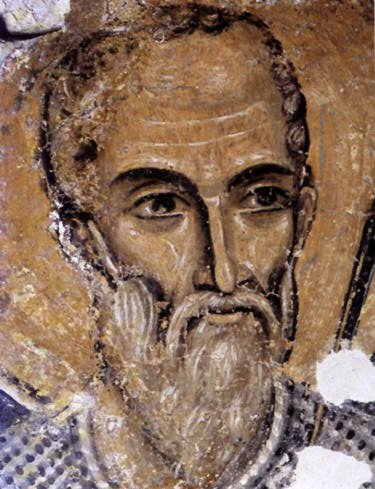
Give the main cathedral 30 to 45 minutes, or 60 to 90 minutes if you also visit the crypt museum. The church itself works well as a short stop, but the crypt changes the pace completely, with medieval icons and the surviving Vitosha granite monolith from the 1882 foundation ceremony. Add more time if you also cross to nearby Saint Nicholas Church or linger around the square.
How do I get to Alexander Nevsky Cathedral from Sofia?
The easiest route is the metro to Sofia University "St. Kliment Ohridski," then a 4 to 6 minute walk. The cathedral stands on Alexander Nevsky Square in central Sofia, close to the National Assembly and just across from St. Sofia Church, so it also fits well into a walk from the Sofia center or from St Nedelya Church. If you come by car, the Blue Zone makes parking more nuisance than convenience.
What is the best time to visit Alexander Nevsky Cathedral?
Early morning or late afternoon outside service times works best. Official hours are daily 07:00-19:00, with regular services around 08:00 and 17:00, plus Sunday liturgy at 09:30, so a mid-morning visit often gives you quieter floor space and better time to look up at the gold-lettered Lord's Prayer around the dome. For atmosphere, though, nothing beats hearing the choir when the building starts sounding larger than it looks.
Can you visit Alexander Nevsky Cathedral for free?
Yes, the main cathedral appears to be free to enter. The crypt museum is separate and ticketed: adults pay 8 BGN, reduced tickets are 4 BGN, and Thursday entry drops to 3 BGN. Treat interior photography as restricted unless staff clearly permits it that day.
What should I not miss at Alexander Nevsky Cathedral?
Look up before you do anything else. The west-entrance mosaic of St. Alexander Nevsky, the dark central nave, the donor imagery of Tsar Ferdinand I and Queen Eleonore, and the lions with agate eyes at the royal throne are the details that stick. If the crypt is open, don't skip the icon collection and the huge granite foundation stone from Vitosha, a boulder turned into national memory.
Verified, and shown.
Researched and written by the Audiala editorial team from historical records, architectural archives, and local expertise.
Historical chronology, political debate over the site, fundraising, construction timeline, bells, wartime damage, and details such as the Vitosha granite monolith and agate-eyed lions.
Current institutional overview of the cathedral, its status as the patriarchal cathedral, and general historical framing.
Architectural style, materials, layout, mosaics, throne details, and decorative features inside and outside the cathedral.
Official opening hours, worship schedule, visitor access, and practical information for planning a visit.
Crypt museum opening hours, ticket prices, guided tour information, and confirmation that the crypt functions as a separate museum space.
Municipal summary of the cathedral's history, construction period, and civic significance in Sofia.
Metro stop information used for the recommended arrival route on foot to the cathedral.
Walking distance estimates and nearby public transport connections from Sofia University and surrounding stops.
Recent traveler observations on timing, interior photography restrictions, and practical visitor experience.
Evidence for the September 1924 consecration ceremonies and the cathedral's centenary framing.
Information on the bells, their 1911 arrival, and the cathedral's acoustic presence in the city.
On-site visual details including the west entrance mosaic, nave arrangement, and what visitors notice in sequence.
Construction dates, material details, and city-level interpretation of the cathedral as a landmark.
Practical visit duration estimates, accessibility impressions, and nearby resting options around the cathedral square.
Researched from Wikidata, Wikipedia & official sources · fact-checked · How we make our guides →