history_edu
Empires in Layers
Thracian tombs, Roman streets, Byzantine churches, and Ottoman traces sit close enough to compare in one trip. Nessebar, Sofia, and Veliko Tarnovo make that history visible without much effort from you.
Bulgaria packs Roman cities, Orthodox monasteries, Thracian tombs, mountain trails, and Black Sea towns into one of the most affordable trips in the EU. It feels less like a single destination than a whole region compressed into a workable itinerary.
EntrySchengen rules apply
BA Bulgaria travel guide starts with two facts older advice misses: the country now uses the euro, and one of Europe's richest histories still feels oddly underpriced.
Bulgaria rewards travelers who like layers, not slogans. In Sofia, you can move from Roman ruins to onion domes to late-socialist boulevards in a single afternoon, then eat a flaky banitsa before the stones have settled in your mind. Plovdiv does something different: a Roman theater, National Revival mansions, and bars cut into one of Europe's oldest continuously inhabited cities. This is the country's trick. The distances are manageable, the costs are still gentle by EU standards, and the historical range is absurd for a nation you can cross in a day by car.
The map keeps changing character. Rila Monastery sits deep in the mountains with striped arcades and a history tied to Bulgaria's survival under Ottoman rule, while Veliko Tarnovo climbs above the Yantra River like a medieval argument turned into a skyline. On the Black Sea, Nessebar stacks Thracian, Greek, Byzantine, and Ottoman traces on one narrow peninsula, and Varna gives you beaches, a stone forest nearby, and the world's oldest worked gold in its archaeology museum. Few countries this compact move so fast between capitals, monasteries, tombs, cliffs, and coast.
Thracian and Late Antique Bulgaria, c. 1200 BCE-681 CE
A gold cup comes first. Not a crown, not a throne, but a drinking vessel lifted in firelight by a Thracian prince somewhere in the hills near modern Kazanlak, its surface worked so delicately that even now the Panagyurishte Treasure looks less like archaeology than like a dinner service ordered from the gods. Ce que l'on ignore souvent, c'est que these pieces were not made for display in a glass case. They were used, passed from hand to hand in rites where kings, wine, and divinity were never far apart.
Then the Greeks arrived on the Black Sea and founded trading cities on rocks that had already known older loyalties. Nessebar, ancient Mesembria, is the great survivor: Thracian underlayer, Greek colony, Roman town, Byzantine bishopric, Bulgarian prize, Ottoman port, all pressed onto one small peninsula. Stand there long enough and the centuries stop behaving in a tidy line. They pile up around you.
Rome brought roads, baths, law, and a taste for urban order, but it never erased the older strangeness of the land. In the interior, Orpheus remained a Thracian before he became a Greek myth, and the Rhodope Mountains still make that legend feel embarrassingly plausible. A bagpipe at dawn in those valleys does not sound decorative. It sounds prehistoric.
By late antiquity, the eastern empire ruled from Constantinople, fortifying cities such as Sofia and Plovdiv while fighting to hold the Balkans together against raids, migrations, and their own administrative fatigue. The stage was set for something new. When the Bulgars crossed the Danube in the seventh century, they did not enter an empty country. They stepped into a land already thick with memory, ports, shrines, and exhausted imperial borders.
Orpheus, mythical though he is, tells you something true about this land: music here was never mere entertainment but a way of speaking to the dead, the mountains, and oneself.
The Panagyurishte Treasure was found in 1949 by three brothers working at a tile factory, who quite literally tripped over one of Europe's great ceremonial gold hoards.
First Bulgarian Empire, 681-1018
Statehood in Bulgaria begins with an imperial humiliation. In 681, after a failed campaign north of the Balkan range, Byzantine Emperor Constantine IV recognized the new Bulgar polity south of the Danube, a concession dragged out of him by defeat rather than diplomacy. The empire, which preferred to name itself eternal, had been forced to acknowledge a neighbor it had hoped to crush.
The early rulers were not gentle men. Khan Krum, who broke the Byzantine army at Pliska in 811 and killed Emperor Nicephorus I, entered history with a flourish so savage that chroniclers never forgot it: he had the emperor's skull lined with silver and used it as a cup at court banquets. One sees the scene too clearly, the polished bone, the nobles raising their drink, the warning to every envoy from Constantinople. Bulgaria, from the start, meant to be feared.
And yet the decisive revolution was not military. It was spiritual, political, and deeply domestic. Boris I accepted Christianity in 864 or 865, then faced a revolt from boyars who preferred the old gods; he answered by wiping out 52 noble families. His letters to Pope Nicholas I are among the most touching documents in medieval Europe, because beneath the theology one feels a ruler asking practical questions on behalf of a rough new Christian people: what should warriors wear, how should they fast, how does one govern after renouncing the gods of one's fathers?
His son Simeon I gave that Christian kingdom a magnificent ambition. Educated in Constantinople, trained in Greek rhetoric, almost destined for the cloister, Simeon returned with a dangerous idea: that Bulgaria need not merely resist Byzantium but rival it. He turned trade disputes into war, war into imperial theater, and imperial theater into a claim to be "Tsar of the Bulgarians and the Greeks." He never took Constantinople. But by the time he died in 927, reportedly dictating orders to the last, Bulgaria had become one of medieval Europe's great powers, and the road toward a Slavic literary and Orthodox civilization ran through Preslav, Ohrid, and the world that rulers in Sofia would later inherit.
Boris I is the rare saint who feels like a hard statesman first: a convert, a father, and a ruler perfectly capable of blinding one son to save the work of his reign.
In his 106 questions to the pope, Boris asked whether Bulgarian men could attend church in trousers rather than robes; even conversion, he understood, fails if it ignores the wardrobe.
Second Bulgarian Empire, 1185-1396
Picture a hill above the Yantra River, walls rising from the rock, church domes catching a hard northern light, and boyars climbing toward court in boots still muddy from the provinces. This was Veliko Tarnovo after the uprising of 1185, when the brothers Asen and Peter threw off Byzantine rule and built a new Bulgarian state with its capital at Tsarevets. It was not merely a military recovery. It was a return of confidence.
The court that grew there loved ceremony, titles, and the visible language of sovereignty. Tarnovo called itself a new Constantinople when it suited, a guardian of Orthodoxy when that sounded grander, and a fortress when the steppe or the Bosporus sent danger north. Ce que l'on ignore souvent, c'est que this brilliance stood on a knife-edge. Dynastic quarrels, noble rivalries, foreign alliances, and assassination lurked behind the frescoes.
Under Ivan Asen II, especially after the victory at Klokotnitsa in 1230, Bulgaria seemed to have achieved the old dream at last: territorial reach, diplomatic prestige, and a court culture that could look Byzantium in the eye without blinking. Trade moved through the empire, monasteries flourished, manuscripts multiplied, and the artistic world that still glimmers in churches from Nessebar to the inland valleys took on a distinctly Bulgarian self-possession. The state had style. That matters more than one thinks.
But Balkan grandeur has always been expensive. By the fourteenth century, the country was divided, pressured, and increasingly vulnerable as the Ottomans advanced through Thrace. Patriarch Evtimiy tried to defend more than a capital; he tried to defend language, liturgy, and a civilization of books. When Tarnovo fell in 1393 after a long siege, and Vidin followed in 1396, the end of the medieval kingdom did not erase Bulgaria. It drove Bulgarian memory into monasteries, songs, village churches, and the stubborn conviction that one day the hill above the Yantra would speak again.
Ivan Asen II had the instinct every successful ruler needs: he knew when victory should be followed by display, inscription, and a message carved in stone for future generations.
The famous inscription after Klokotnitsa is pure royal theater: Ivan Asen II boasts that he captured enemy kings yet spared common soldiers, a line meant to advertise both power and magnificence.
Ottoman Rule and the National Revival, 1396-1908
History does not stop under conquest; it changes rooms. After the Ottoman victory, power moved into imperial offices, garrison towns, tax registers, and local bargains, while Bulgarian continuity retreated into places less easy to conquer: a schoolroom, a monastery cell, a merchant's ledger, a church feast, a mother's songs. Rila Monastery, hidden in the mountains with the theatrical confidence of a place that knows it will outlive ministers, became one of those great storehouses of endurance.
The Ottoman centuries were not a single block of darkness, and one should resist melodrama here. Bulgarians traded, prospered, served, rebelled, adapted, and argued among themselves. In towns such as Plovdiv, Koprivshtitsa, Melnik, and along the Black Sea routes toward Varna and Sozopol, wealth accumulated in houses with painted facades and carved ceilings, evidence that memory can wear silk as well as sackcloth.
What changed in the eighteenth and nineteenth centuries was the tone. Paisius of Hilendar, writing in 1762, scolded his compatriots for forgetting who they were, and that rebuke landed because a Bulgarian merchant class, school network, and urban society were ready to hear it. Ce que l'on ignore souvent, c'est que nations are often rebuilt by teachers before they are freed by generals. Grammar comes first. Flags come later.
Then came the revolutionaries, always more fragile in life than in bronze. Vasil Levski moved through the empire in disguise, setting up clandestine committees with the patience of a parish priest and the nerves of a conspirator. In April 1876, the uprising broke out too early and too unevenly, but the Ottoman repression was brutal enough to shock Europe; Victor Hugo thundered, Gladstone fumed, and the Bulgarian cause entered the chancelleries. The Russo-Turkish War of 1877-78 followed, and with it liberation, partial, compromised, and immediately entangled in great-power politics. The nation returned, but not yet whole, and that incompleteness would define the next chapter.
Vasil Levski remains beloved because he imagined a free Bulgaria not as revenge but as a republic of equal citizens, which was a daring thought in a century drunk on blood and flags.
Rayna Knyaginya, still in her early twenties, sewed the main banner for the Panagyurishte rebels in 1876 and carried it herself, an act of courage that later cost her prison, beating, and exile.
Kingdom, People's Republic, and European Bulgaria, 1908-present
The modern Bulgarian state announced itself with ceremony because ceremony mattered. In 1908, at Veliko Tarnovo, Ferdinand proclaimed full independence from the Ottoman Empire in the Church of the Forty Martyrs, choosing a site already heavy with medieval echoes. It was an operatic setting for a ruler who adored uniforms, orchids, protocol, and dynastic drama. One can almost hear the rustle of silk and the scrape of sabers on stone.
Yet the twentieth century refused to behave like a coronation. The Balkan Wars and the First World War brought territorial dreams and then bitter disappointment; the interwar kingdom lived with wounded ambition, social unrest, and a monarchy that could never quite stabilize the country it symbolized. During the Second World War, Bulgaria aligned with the Axis, occupied neighboring territories, and participated in persecution, but the story contains one of those moral knots history prefers not to simplify: the country's Jews within pre-war Bulgaria were largely saved from deportation after pressure from deputies, clergy, and citizens, while Jews in occupied lands were not. A nation can be both guilty and courageous in the same decade.
After 1944, the monarchy vanished, communism arrived with Soviet backing, and Bulgaria entered a new age of ministries, apartment blocks, secret police, and carefully staged certainties. Sofia became a socialist capital of broad boulevards and monumental gestures, while industry expanded and dissent learned to speak in murmurs. The regime of Todor Zhivkov lasted so long that many people mistook durability for inevitability. Then 1989 proved otherwise.
Post-communist Bulgaria has been less theatrical and more difficult: privatization, emigration, corruption, reinvention, European Union membership in 2007, Schengen in full by 2025, and the euro from 2026. That sounds administrative. It is, in fact, historical. The country that once stood between empires now writes its future through law, mobility, memory, and argument, while old places such as Sofia, Plovdiv, Veliko Tarnovo, Rila Monastery, and Nessebar keep reminding visitors that Bulgaria's real genius lies in surviving every final act and turning it into a prologue.
Ferdinand I, vain and cultivated in equal measure, treated monarchy as theater but understood perfectly that symbols, churches, and anniversaries could still move a nation.
When Ferdinand declared independence in 1908, he chose medieval Tarnovo quite deliberately, borrowing the aura of old tsars to legitimize a very modern political gamble.
Bulgarian begins in the mouth before it reaches the page. Cyrillic here does not feel like decoration or state furniture. It feels inhabited, as if each letter had slept in a monastery cell and woken with opinions. In Sofia, on tram signs and bakery windows, the script gives even ordinary errands a liturgical air.
Then comes the shock of directness. People say what they mean, often fast, often with a firm gaze that would count as a challenge elsewhere and counts here as respect. Formal speech still matters. You do not earn intimacy by lunging at it.
And then the head starts lying to you. A nod may mean no, a shake may mean yes, or not exactly, or yes with reluctance, which is a whole philosophy disguised as neck movement. Language in Bulgaria is never only verbal. It lives in the face, in the pause, in the magnificent little word hayde, which can invite, urge, surrender, dismiss, and bless within the space of two syllables.
Bulgarian food has the good manners to arrive without seduction and then conquer you anyway. A bowl of tarator looks almost monkish: yogurt, cucumber, dill, walnuts, garlic. One spoonful, and summer acquires grammar. Cold, sour, green, alive.
The country understands that white cheese can organize a civilization. Shopska salata is not a salad in the apologetic sense. It is a creed of tomatoes, cucumbers, peppers, onion, and a snowfall of sirene so generous it becomes an argument. In Plovdiv, under a vine or a striped awning, you begin with this and only then admit you are hungry.
Then the clay pots arrive. Kavarma. Gyuvetch. Steam and patience. Food that has spent time becoming itself. Bulgaria cooks as if speed were a vulgar rumor, and in Melnik, where wine darkens the table and the hills look half-baked by some distracted god, you understand a private truth: a country is what it does with milk, fire, and waiting.
Bulgaria is polite in a manner that can frighten frivolous people. The handshake is firm. The eye contact holds. Nobody performs syrupy charm to spare your nerves, and this is one of the country’s graces. Courtesy here is not sugar. It is structure.
You will feel it at the table first. Someone pours rakiya before the meal has properly begun, and the glass is not an accessory. It is a threshold. To accept it is to admit that the meeting is real. To refuse it is possible, of course, but a reason helps. Honesty helps more.
Even the apparent severity has warmth inside it. Bulgarians do not waste gestures. That is all. When a host presses more bread on you, or tells you to eat while pretending not to insist, the affection is exact. It does not flutter. It lands.
Orthodoxy in Bulgaria does not shout. It glows. Gold catches candlelight, icons watch with that grave frontal patience, and the air inside many churches carries wax, wood, old smoke, damp stone, and human petitions ground fine by centuries. Faith here has texture.
At Rila Monastery, the mountains perform half the liturgy. You arrive through forest and altitude, then enter painted arcades where black, red, blue, and gold seem almost too intense for the eye, which is precisely the point. Religion in Bulgaria has always understood theater. Not cheap theater. Metaphysical theater.
What moves me most is the coexistence of ferocity and retreat. Tsars converted kingdoms with blood on their hands. Hermits like John of Rila fled upward into caves and roots and weather. Between power and renunciation, Bulgaria chose both. The result is a spiritual style that feels stern, wounded, and strangely hospitable.
Bulgarian literature has a special intimacy with sorrow. Not decorative sorrow. Not salon sorrow. Something denser. The kind that sits at the table and is offered soup. Even the untranslatable word taga seems less like sadness than like a room one enters and learns to furnish.
Ivan Vazov gave the nation its great narrative spine, but the modern temperament often feels closer to a quieter disturbance. Georgi Gospodinov writes as if memory were a corridor full of open doors, each one leading to childhood, history, loss, jokes, dust, and another corridor. The Bulgarians appear to know that absurdity is never the opposite of grief. It is one of grief’s dialects.
This suits the country. In Veliko Tarnovo, where hills fold around the old capital like drapery around a throat, history itself behaves like a novel with too many narrators and all of them reliable in different ways. Bulgarian writing does not beg to be admired. It does something better. It lingers.
Bulgarian architecture does not belong to one dynasty of taste. It is a stack of occupations, revivals, devotions, repairs, improvisations, and stubborn survivals. A Thracian foundation here, a Byzantine brick curve there, an Ottoman house around the corner, socialist mass behind it. The eye never gets to become lazy.
Nessebar is the purest lesson in this. The little peninsula sits in the Black Sea with the serenity of a creature that has outlived every owner. Churches rise in red brick and pale stone, narrow streets tilt toward the water, and the whole place seems to understand that continuity is not neat. It is layered. One century leaves; another keeps the keys.
Elsewhere the drama turns vertical. In Sofia, domes and apartment blocks and stern ministries negotiate without tenderness. In Koprivshtitsa, painted facades and timber houses turn the National Revival into domestic color and defiance. Bulgaria builds the way it remembers: by accumulation, by damage, by refusal to start from zero.
Thracian tombs, Roman streets, Byzantine churches, and Ottoman traces sit close enough to compare in one trip. Nessebar, Sofia, and Veliko Tarnovo make that history visible without much effort from you.
Rila Monastery is the headline, but the deeper appeal is how Bulgarian faith shaped architecture, painting, and political survival. Expect dark timber, striped arcades, incense, and murals painted to be read from a distance.
Rila, Pirin, and the Rhodopes give Bulgaria real altitude, not decorative hills. You can hike glacial lakes, ski around Bansko, or spend a day driving through passes that keep changing weather and mood.
Bulgarian food lands somewhere between Balkan, Ottoman, and village practical. Shopska salad, banitsa, grilled meat, cold tarator, and the red wines around Melnik make eating here feel rooted rather than staged.
The coast isn't one thing. Varna brings city energy, Nessebar carries 3,000 years of history on a small peninsula, and Sozopol still knows how to look weathered in the right way.
Bulgaria remains one of the better-value trips in the EU, especially for travelers balancing culture, food, and movement. The euro switch removed one layer of hassle; the prices still haven't caught up with the experience.
12 cities — start with the ones we'd send you to first.
By noon, Sofia has you walking above Roman streets under glass; by sunset, Vitosha wind carries pine and cold stone into the city. Few capitals change era and altitude this fast.
The old town perches on three hills above a Roman amphitheatre that still hosts opera in summer, while the street below it is lined with National Revival houses leaning so far over the cobblestones they nearly touch.
The medieval capital of the Second Bulgarian Empire cascades down a gorge above the Yantra River, its fortress walls and the ruins of the Tsarevets palace visible from nearly every café terrace in town.
A Byzantine basilica on Thracian foundations, an Ottoman fountain thirty metres away, and the Black Sea on three sides — 3,000 years of occupation compressed onto a single rocky peninsula.
Bulgaria's third city keeps a Roman thermal bath complex in its city centre and a gold-treasure museum holding the oldest worked gold in the world, dated to 4,600 BC.
Founded in the 10th century and rebuilt in the 19th, this monastery hidden in a Rila Mountain gorge is covered in frescoes so densely painted that the walls seem to breathe — it is not a ruin but a living institution.
A single town of 19th-century merchant houses, each more elaborately painted than the last, where the April Uprising of 1876 against Ottoman rule began with a pistol shot that changed Bulgarian history.
Bulgaria's smallest town — 200-odd residents — sits beneath sandstone pyramids and produces a dense red wine from Shiroka Melnishka Loza grapes that has been exported to England since the time of Winston Churchill.
The oldest Greek colony on the Bulgarian Black Sea coast, its southern old town still built on wooden-balconied houses over the water, quieter and sharper-edged than Nessebar's tourist circuit.
Southwest Bulgaria is where the country feels most layered in a single day: Roman ruins under the capital, monastery frescoes in the mountains, ski lifts, hot springs, and wine valleys that tip toward Greece. Sofia gives you the urban rhythm, but the real character of the region appears once you drive south toward Rila Monastery, Melnik, and Bansko.
This is Bulgaria at its most sensuous: Roman stone in Plovdiv, rose fields around Kazanlak, and a lowland landscape that still carries Thracian ghosts. The distances are manageable, the food is strong, and the history is unusually physical, from tomb frescoes to communist monuments and National Revival facades.
Northern Bulgaria trades drama for depth. Veliko Tarnovo climbs over the Yantra River like a stage set built for dynasties and sieges, while farther west Belogradchik turns sandstone cliffs into a fortress wall so strange it barely looks planned by humans.
The Black Sea coast is not one thing. Varna is the practical urban base with museums, beaches, and transport links, while Nessebar and Sozopol offer older, tighter places where Byzantine churches and wooden houses sit above the waterline like they have outlasted several bad ideas already.
Called Sveti Kral by older Sofians, this working cathedral holds a king's relics and the memory of Bulgaria's darkest 1925 attack in central Sofia.
Gold onion domes draw the eye, but Sofia's Russian Church lives underground too, where locals still leave letters to St.
Born as a memorial voted for Tarnovo, then moved to Sofia by royal decree, Alexander Nevsky turns liberation politics into a vast gold-domed cathedral.
Sofia's main bus hub opened in 2004 and spans 7,000 sq m.
From Thracian gold to the euro era
Greek settlers establish and expand coastal cities such as Mesembria, today's Nessebar, on older Thracian foundations. Trade, coinage, and urban life arrive by sea, but the local past never disappears beneath the harbor stones.
The ritual vessels later known as the Panagyurishte Treasure are crafted for elite feasting and libation. They show a world of warrior aristocrats whose taste for gold was matched by their appetite for spectacle.
The Roman Empire absorbs the Thracian kingdom and folds much of present-day Bulgaria into its provincial order. Roads, baths, forts, and city plans begin to stitch the region into a wider imperial system.
After a failed campaign, Emperor Constantine IV accepts the new Bulgar state south of the Danube. Bulgaria enters recorded European politics not as a petitioning province but as a power acknowledged after defeat.
Khan Tervel intervenes in Byzantine dynastic struggles and is rewarded with the title Caesar, a startling elevation for a foreign ruler. The new Bulgarian state proves it can influence Constantinople, not merely survive beside it.
Emperor Nicephorus I dies in battle against Khan Krum, the first Byzantine emperor killed in combat in centuries. The victory gives Bulgaria prestige and a macabre legend that Europe would never quite forget.
Boris accepts baptism and forces a religious revolution through a still-pagan elite. The choice ties Bulgaria to Christian Europe and sets the foundation for church institutions, literacy, and a new political identity.
Scholars expelled from Great Moravia are welcomed in Bulgaria, where they help build literary schools at Pliska, Preslav, and Ohrid. Bulgaria becomes the great workshop of Slavic Christian letters.
Simeon, educated in Constantinople, begins the reign that will give Bulgaria military prestige and cultural brilliance. His court dreams on an imperial scale and writes in a language newly made its own.
Simeon dies after decades of war and ambition, leaving behind a state admired and feared across the region. Peace follows, but the strain of greatness has already left its mark.
After long campaigns, Emperor Basil II absorbs Bulgaria into the Byzantine Empire. Political independence vanishes, but memory, liturgy, and local identity remain stubbornly alive.
A revolt led by Asen and Peter breaks Byzantine control and founds the Second Bulgarian Empire. Veliko Tarnovo rises as a capital of formidable confidence above the bends of the Yantra.
The victory over Epirus turns Bulgaria into the dominant Balkan power of its day. Inscriptions, diplomacy, and church patronage follow the battle, because medieval success always demanded an audience.
After a long siege, the medieval capital is taken, and Patriarch Evtimiy becomes the tragic face of a collapsing kingdom. The blow is political, cultural, and emotional all at once.
Paisius of Hilendar completes his Slavo-Bulgarian History, urging Bulgarians to remember their rulers, saints, and language. It is less a book than a rebuke, and that is why it works.
Captured by the Ottomans, Levski is hanged near Sofia, turning a meticulous organizer into a national martyr. His moral authority would only grow after death.
The revolt is fragmented and doomed militarily, but the repression that follows horrifies European opinion. Bulgarian suffering becomes an international political question.
The Russo-Turkish War ends Ottoman rule over much of Bulgaria, but the settlement at Berlin cuts back the larger Bulgaria imagined at San Stefano. Freedom arrives together with frustration.
At Veliko Tarnovo, Ferdinand declares Bulgaria fully independent and assumes the title tsar. Medieval symbolism is summoned to bless a modern act of sovereignty.
Soviet influence and a domestic coup overturn the old regime. The monarchy's days are numbered, and Bulgaria enters the orbit that will define it for the next four decades.
The long communist chapter cracks open as Todor Zhivkov falls from power. What follows is not instant liberation but a hard renegotiation of politics, property, and belonging.
EU accession marks the country's formal return to a political family from which geography had never really excluded it. Expectations are high, arguments higher.
After years of preparation, Bulgaria adopts the euro, a practical change with symbolic weight. The country that spent centuries on imperial fault lines enters yet another European chapter through law, money, and movement.
Thracian and Late Antique Bulgaria
Orpheus, mythical though he is, tells you something true about this land: music here was never mere entertainment but a way of speaking to the dead, the mountains, and oneself.
A gold cup comes first. Not a crown, not a throne, but a drinking vessel lifted in firelight by a Thracian prince somewhere in the hills near modern Kazanlak, its surface worked so delicately that even now the Panagyurishte Treasure looks less like archaeology than like a dinner service ordered from the gods. Ce que l'on ignore souvent, c'est que these pieces were not made for display in a glass case. They were used, passed from hand to hand in rites where kings, wine, and divinity were never far apart.
Then the Greeks arrived on the Black Sea and founded trading cities on rocks that had already known older loyalties. Nessebar, ancient Mesembria, is the great survivor: Thracian underlayer, Greek colony, Roman town, Byzantine bishopric, Bulgarian prize, Ottoman port, all pressed onto one small peninsula. Stand there long enough and the centuries stop behaving in a tidy line. They pile up around you.
Rome brought roads, baths, law, and a taste for urban order, but it never erased the older strangeness of the land. In the interior, Orpheus remained a Thracian before he became a Greek myth, and the Rhodope Mountains still make that legend feel embarrassingly plausible. A bagpipe at dawn in those valleys does not sound decorative. It sounds prehistoric.
By late antiquity, the eastern empire ruled from Constantinople, fortifying cities such as Sofia and Plovdiv while fighting to hold the Balkans together against raids, migrations, and their own administrative fatigue. The stage was set for something new. When the Bulgars crossed the Danube in the seventh century, they did not enter an empty country. They stepped into a land already thick with memory, ports, shrines, and exhausted imperial borders.
The Panagyurishte Treasure was found in 1949 by three brothers working at a tile factory, who quite literally tripped over one of Europe's great ceremonial gold hoards.
First Bulgarian Empire
Boris I is the rare saint who feels like a hard statesman first: a convert, a father, and a ruler perfectly capable of blinding one son to save the work of his reign.
Statehood in Bulgaria begins with an imperial humiliation. In 681, after a failed campaign north of the Balkan range, Byzantine Emperor Constantine IV recognized the new Bulgar polity south of the Danube, a concession dragged out of him by defeat rather than diplomacy. The empire, which preferred to name itself eternal, had been forced to acknowledge a neighbor it had hoped to crush.
The early rulers were not gentle men. Khan Krum, who broke the Byzantine army at Pliska in 811 and killed Emperor Nicephorus I, entered history with a flourish so savage that chroniclers never forgot it: he had the emperor's skull lined with silver and used it as a cup at court banquets. One sees the scene too clearly, the polished bone, the nobles raising their drink, the warning to every envoy from Constantinople. Bulgaria, from the start, meant to be feared.
And yet the decisive revolution was not military. It was spiritual, political, and deeply domestic. Boris I accepted Christianity in 864 or 865, then faced a revolt from boyars who preferred the old gods; he answered by wiping out 52 noble families. His letters to Pope Nicholas I are among the most touching documents in medieval Europe, because beneath the theology one feels a ruler asking practical questions on behalf of a rough new Christian people: what should warriors wear, how should they fast, how does one govern after renouncing the gods of one's fathers?
His son Simeon I gave that Christian kingdom a magnificent ambition. Educated in Constantinople, trained in Greek rhetoric, almost destined for the cloister, Simeon returned with a dangerous idea: that Bulgaria need not merely resist Byzantium but rival it. He turned trade disputes into war, war into imperial theater, and imperial theater into a claim to be "Tsar of the Bulgarians and the Greeks." He never took Constantinople. But by the time he died in 927, reportedly dictating orders to the last, Bulgaria had become one of medieval Europe's great powers, and the road toward a Slavic literary and Orthodox civilization ran through Preslav, Ohrid, and the world that rulers in Sofia would later inherit.
In his 106 questions to the pope, Boris asked whether Bulgarian men could attend church in trousers rather than robes; even conversion, he understood, fails if it ignores the wardrobe.
Second Bulgarian Empire
Ivan Asen II had the instinct every successful ruler needs: he knew when victory should be followed by display, inscription, and a message carved in stone for future generations.
Picture a hill above the Yantra River, walls rising from the rock, church domes catching a hard northern light, and boyars climbing toward court in boots still muddy from the provinces. This was Veliko Tarnovo after the uprising of 1185, when the brothers Asen and Peter threw off Byzantine rule and built a new Bulgarian state with its capital at Tsarevets. It was not merely a military recovery. It was a return of confidence.
The court that grew there loved ceremony, titles, and the visible language of sovereignty. Tarnovo called itself a new Constantinople when it suited, a guardian of Orthodoxy when that sounded grander, and a fortress when the steppe or the Bosporus sent danger north. Ce que l'on ignore souvent, c'est que this brilliance stood on a knife-edge. Dynastic quarrels, noble rivalries, foreign alliances, and assassination lurked behind the frescoes.
Under Ivan Asen II, especially after the victory at Klokotnitsa in 1230, Bulgaria seemed to have achieved the old dream at last: territorial reach, diplomatic prestige, and a court culture that could look Byzantium in the eye without blinking. Trade moved through the empire, monasteries flourished, manuscripts multiplied, and the artistic world that still glimmers in churches from Nessebar to the inland valleys took on a distinctly Bulgarian self-possession. The state had style. That matters more than one thinks.
But Balkan grandeur has always been expensive. By the fourteenth century, the country was divided, pressured, and increasingly vulnerable as the Ottomans advanced through Thrace. Patriarch Evtimiy tried to defend more than a capital; he tried to defend language, liturgy, and a civilization of books. When Tarnovo fell in 1393 after a long siege, and Vidin followed in 1396, the end of the medieval kingdom did not erase Bulgaria. It drove Bulgarian memory into monasteries, songs, village churches, and the stubborn conviction that one day the hill above the Yantra would speak again.
The famous inscription after Klokotnitsa is pure royal theater: Ivan Asen II boasts that he captured enemy kings yet spared common soldiers, a line meant to advertise both power and magnificence.
Ottoman Rule and the National Revival
Vasil Levski remains beloved because he imagined a free Bulgaria not as revenge but as a republic of equal citizens, which was a daring thought in a century drunk on blood and flags.
History does not stop under conquest; it changes rooms. After the Ottoman victory, power moved into imperial offices, garrison towns, tax registers, and local bargains, while Bulgarian continuity retreated into places less easy to conquer: a schoolroom, a monastery cell, a merchant's ledger, a church feast, a mother's songs. Rila Monastery, hidden in the mountains with the theatrical confidence of a place that knows it will outlive ministers, became one of those great storehouses of endurance.
The Ottoman centuries were not a single block of darkness, and one should resist melodrama here. Bulgarians traded, prospered, served, rebelled, adapted, and argued among themselves. In towns such as Plovdiv, Koprivshtitsa, Melnik, and along the Black Sea routes toward Varna and Sozopol, wealth accumulated in houses with painted facades and carved ceilings, evidence that memory can wear silk as well as sackcloth.
What changed in the eighteenth and nineteenth centuries was the tone. Paisius of Hilendar, writing in 1762, scolded his compatriots for forgetting who they were, and that rebuke landed because a Bulgarian merchant class, school network, and urban society were ready to hear it. Ce que l'on ignore souvent, c'est que nations are often rebuilt by teachers before they are freed by generals. Grammar comes first. Flags come later.
Then came the revolutionaries, always more fragile in life than in bronze. Vasil Levski moved through the empire in disguise, setting up clandestine committees with the patience of a parish priest and the nerves of a conspirator. In April 1876, the uprising broke out too early and too unevenly, but the Ottoman repression was brutal enough to shock Europe; Victor Hugo thundered, Gladstone fumed, and the Bulgarian cause entered the chancelleries. The Russo-Turkish War of 1877-78 followed, and with it liberation, partial, compromised, and immediately entangled in great-power politics. The nation returned, but not yet whole, and that incompleteness would define the next chapter.
Rayna Knyaginya, still in her early twenties, sewed the main banner for the Panagyurishte rebels in 1876 and carried it herself, an act of courage that later cost her prison, beating, and exile.
Kingdom, People's Republic, and European Bulgaria
Ferdinand I, vain and cultivated in equal measure, treated monarchy as theater but understood perfectly that symbols, churches, and anniversaries could still move a nation.
The modern Bulgarian state announced itself with ceremony because ceremony mattered. In 1908, at Veliko Tarnovo, Ferdinand proclaimed full independence from the Ottoman Empire in the Church of the Forty Martyrs, choosing a site already heavy with medieval echoes. It was an operatic setting for a ruler who adored uniforms, orchids, protocol, and dynastic drama. One can almost hear the rustle of silk and the scrape of sabers on stone.
Yet the twentieth century refused to behave like a coronation. The Balkan Wars and the First World War brought territorial dreams and then bitter disappointment; the interwar kingdom lived with wounded ambition, social unrest, and a monarchy that could never quite stabilize the country it symbolized. During the Second World War, Bulgaria aligned with the Axis, occupied neighboring territories, and participated in persecution, but the story contains one of those moral knots history prefers not to simplify: the country's Jews within pre-war Bulgaria were largely saved from deportation after pressure from deputies, clergy, and citizens, while Jews in occupied lands were not. A nation can be both guilty and courageous in the same decade.
After 1944, the monarchy vanished, communism arrived with Soviet backing, and Bulgaria entered a new age of ministries, apartment blocks, secret police, and carefully staged certainties. Sofia became a socialist capital of broad boulevards and monumental gestures, while industry expanded and dissent learned to speak in murmurs. The regime of Todor Zhivkov lasted so long that many people mistook durability for inevitability. Then 1989 proved otherwise.
Post-communist Bulgaria has been less theatrical and more difficult: privatization, emigration, corruption, reinvention, European Union membership in 2007, Schengen in full by 2025, and the euro from 2026. That sounds administrative. It is, in fact, historical. The country that once stood between empires now writes its future through law, mobility, memory, and argument, while old places such as Sofia, Plovdiv, Veliko Tarnovo, Rila Monastery, and Nessebar keep reminding visitors that Bulgaria's real genius lies in surviving every final act and turning it into a prologue.
When Ferdinand declared independence in 1908, he chose medieval Tarnovo quite deliberately, borrowing the aura of old tsars to legitimize a very modern political gamble.
Bulgarian begins in the mouth before it reaches the page. Cyrillic here does not feel like decoration or state furniture. It feels inhabited, as if each letter had slept in a monastery cell and woken with opinions. In Sofia, on tram signs and bakery windows, the script gives even ordinary errands a liturgical air.
Then comes the shock of directness. People say what they mean, often fast, often with a firm gaze that would count as a challenge elsewhere and counts here as respect. Formal speech still matters. You do not earn intimacy by lunging at it.
And then the head starts lying to you. A nod may mean no, a shake may mean yes, or not exactly, or yes with reluctance, which is a whole philosophy disguised as neck movement. Language in Bulgaria is never only verbal. It lives in the face, in the pause, in the magnificent little word hayde, which can invite, urge, surrender, dismiss, and bless within the space of two syllables.
Bulgarian food has the good manners to arrive without seduction and then conquer you anyway. A bowl of tarator looks almost monkish: yogurt, cucumber, dill, walnuts, garlic. One spoonful, and summer acquires grammar. Cold, sour, green, alive.
The country understands that white cheese can organize a civilization. Shopska salata is not a salad in the apologetic sense. It is a creed of tomatoes, cucumbers, peppers, onion, and a snowfall of sirene so generous it becomes an argument. In Plovdiv, under a vine or a striped awning, you begin with this and only then admit you are hungry.
Then the clay pots arrive. Kavarma. Gyuvetch. Steam and patience. Food that has spent time becoming itself. Bulgaria cooks as if speed were a vulgar rumor, and in Melnik, where wine darkens the table and the hills look half-baked by some distracted god, you understand a private truth: a country is what it does with milk, fire, and waiting.
Bulgaria is polite in a manner that can frighten frivolous people. The handshake is firm. The eye contact holds. Nobody performs syrupy charm to spare your nerves, and this is one of the country’s graces. Courtesy here is not sugar. It is structure.
You will feel it at the table first. Someone pours rakiya before the meal has properly begun, and the glass is not an accessory. It is a threshold. To accept it is to admit that the meeting is real. To refuse it is possible, of course, but a reason helps. Honesty helps more.
Even the apparent severity has warmth inside it. Bulgarians do not waste gestures. That is all. When a host presses more bread on you, or tells you to eat while pretending not to insist, the affection is exact. It does not flutter. It lands.
Orthodoxy in Bulgaria does not shout. It glows. Gold catches candlelight, icons watch with that grave frontal patience, and the air inside many churches carries wax, wood, old smoke, damp stone, and human petitions ground fine by centuries. Faith here has texture.
At Rila Monastery, the mountains perform half the liturgy. You arrive through forest and altitude, then enter painted arcades where black, red, blue, and gold seem almost too intense for the eye, which is precisely the point. Religion in Bulgaria has always understood theater. Not cheap theater. Metaphysical theater.
What moves me most is the coexistence of ferocity and retreat. Tsars converted kingdoms with blood on their hands. Hermits like John of Rila fled upward into caves and roots and weather. Between power and renunciation, Bulgaria chose both. The result is a spiritual style that feels stern, wounded, and strangely hospitable.
Bulgarian literature has a special intimacy with sorrow. Not decorative sorrow. Not salon sorrow. Something denser. The kind that sits at the table and is offered soup. Even the untranslatable word taga seems less like sadness than like a room one enters and learns to furnish.
Ivan Vazov gave the nation its great narrative spine, but the modern temperament often feels closer to a quieter disturbance. Georgi Gospodinov writes as if memory were a corridor full of open doors, each one leading to childhood, history, loss, jokes, dust, and another corridor. The Bulgarians appear to know that absurdity is never the opposite of grief. It is one of grief’s dialects.
This suits the country. In Veliko Tarnovo, where hills fold around the old capital like drapery around a throat, history itself behaves like a novel with too many narrators and all of them reliable in different ways. Bulgarian writing does not beg to be admired. It does something better. It lingers.
Bulgarian architecture does not belong to one dynasty of taste. It is a stack of occupations, revivals, devotions, repairs, improvisations, and stubborn survivals. A Thracian foundation here, a Byzantine brick curve there, an Ottoman house around the corner, socialist mass behind it. The eye never gets to become lazy.
Nessebar is the purest lesson in this. The little peninsula sits in the Black Sea with the serenity of a creature that has outlived every owner. Churches rise in red brick and pale stone, narrow streets tilt toward the water, and the whole place seems to understand that continuity is not neat. It is layered. One century leaves; another keeps the keys.
Elsewhere the drama turns vertical. In Sofia, domes and apartment blocks and stern ministries negotiate without tenderness. In Koprivshtitsa, painted facades and timber houses turn the National Revival into domestic color and defiance. Bulgaria builds the way it remembers: by accumulation, by damage, by refusal to start from zero.
Krum gave early Bulgaria its reputation for iron nerves and theatrical brutality. After defeating Emperor Nicephorus I in 811, he turned the emperor's skull into a silver-lined drinking cup, an act so shocking that Byzantium preserved the memory for him.
Boris changed Bulgaria more deeply than any battlefield victory ever could. He accepted Christianity, crushed the pagan backlash with terrifying resolve, and opened the door to a Bulgarian church and literary culture that would shape the Slavic world.
Educated in Constantinople, Simeon understood the glamour and weakness of Byzantium from the inside. He spent three decades trying to outthink and outshine the empire, turning Bulgaria into a cultural and political rival rather than a provincial nuisance.
John of Rila withdrew into the mountains to live on roots, prayer, and silence, which only made the world seek him out more eagerly. Even Tsar Peter I came to pay his respects and, according to tradition, was denied a proper audience; sanctity in Bulgaria has always had a stubborn streak.
Evtimiy appears at the end of medieval Bulgaria like a candle burning brightest just before the room goes dark. He reformed liturgical language, defended Tarnovo during the Ottoman siege, and turned the preservation of words into a final act of statecraft.
Levski was not the loudest patriot of his century, which is precisely why he endures. Moving from town to town in disguise, he built secret committees with clerical patience and imagined a Bulgaria based on equal citizenship rather than dynastic revenge.
Rayna Popgeorgieva became Rayna Knyaginya when she sewed and carried the uprising banner at Panagyurishte in 1876. She was young, educated, and entirely aware of the danger, which makes the image of her riding beneath that flag all the more arresting.
Botev wrote with a lyricism so fierce that even his melancholy sounds armed. Then he stepped off the page, crossed the Danube with his detachment in 1876, and died in the mountains, leaving Bulgaria the rare inheritance of a poet who made his own legend impossible to dismiss.
Ferdinand loved display, botany, genealogy, and the choreography of power, sometimes in that order. Yet behind the vanity stood a shrewd instinct for historical symbols, which is why he staged independence in Veliko Tarnovo and wrapped a modern state in medieval memory.
This is the compact southwest loop for travelers with little time and no interest in pretending a whole country fits into one weekend. Start in Sofia for churches, markets, and Roman layers, then head south to Rila Monastery and finish in Bansko, where stone houses and Pirin air change the pace completely.
This eastbound route follows one of Bulgaria's most natural travel lines, from Roman Plovdiv through the rose country around Kazanlak to the old peninsula of Nessebar and the port city of Varna. It works well by a mix of train and bus, and it shows how quickly Bulgaria shifts from amphitheaters and tombs to sea wind and Byzantine brickwork.
This route stays away from the coast and leans into Bulgaria's older interior: painted wooden houses in Koprivshtitsa, the fortress skyline of Veliko Tarnovo, and the surreal red cliffs of Belogradchik. It suits travelers who like train stations, hill towns, and the sense that the Ottoman and Bulgarian centuries are still arguing in the street plan.
This is the slower southern Bulgaria trip, built for travelers who prefer sea mornings, old town walls, and long lunches with local reds. Begin in Melnik for sandstone ridges and broad-shouldered wines, then continue east to Sozopol and finish in Sofia, which makes the return flight easy without sending you back over the same ground every day.
Breakfast after bakery opening. Banitsa in paper. Ayran in hand. Street corner, station platform, office desk.
First order at lunch or dinner. Tomatoes, cucumbers, peppers, onion, sirene. Rakia before talk, then bread, then more talk.
Midday heat. Bowl or glass. Cucumber, yogurt, dill, walnuts, garlic. Family table, seaside lunch, garden shade near Varna.
Night end, dawn start. Tripe soup with garlic water, vinegar, chili. Friends, taxi drivers, singers, survivors.
Cold evening food. Meat, onion, pepper, mushroom, wine, clay, oven. Shared at taverns in Plovdiv or Sofia.
Midnight bells, red eggs, candle smoke. Sweet bread torn by hand. Family kitchen, grandparents, silence, then coffee.
Late lunch, long table. Melnik red, kebapche, lyutenitsa, bread. Conversation slows, bottles empty, hills turn gold.
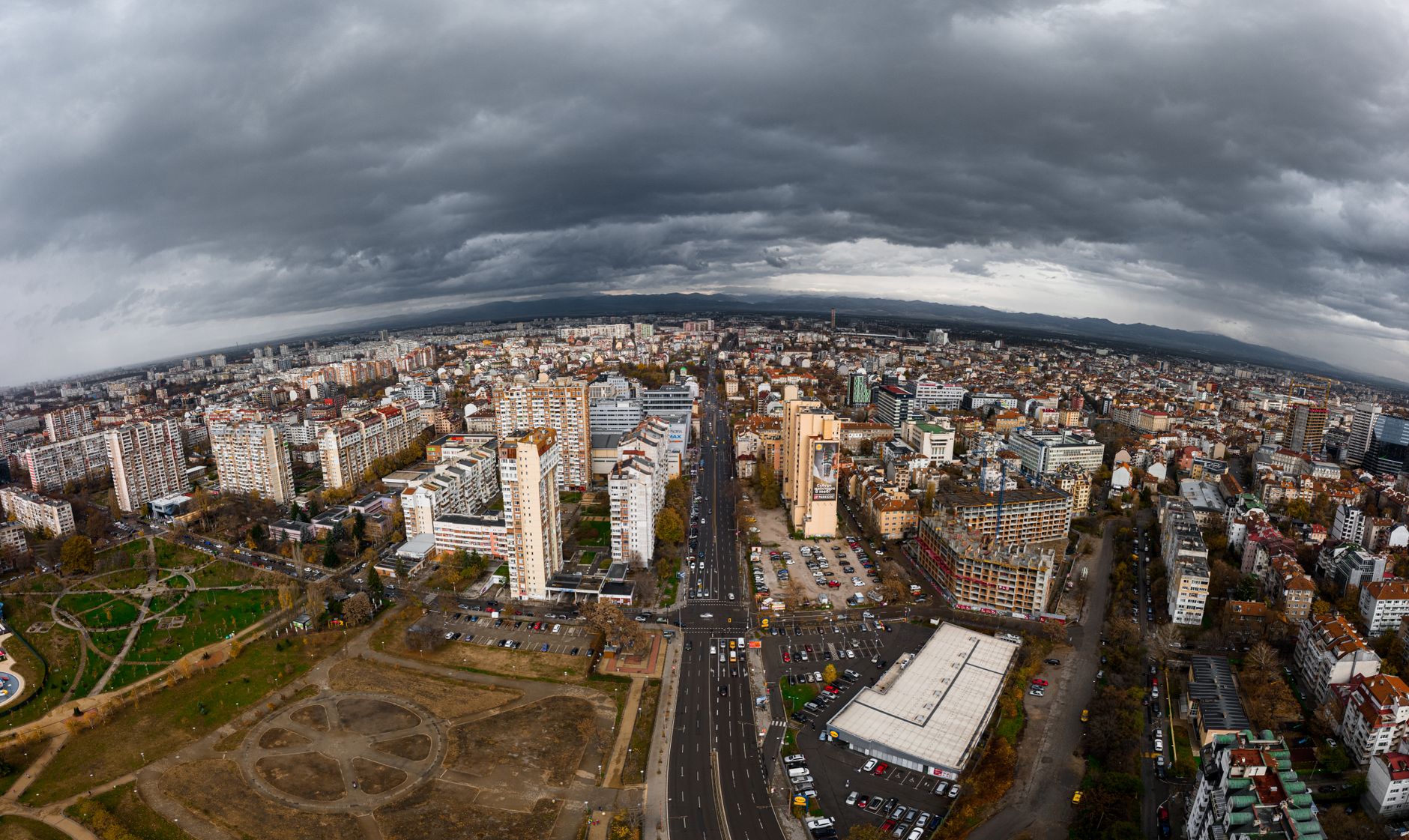

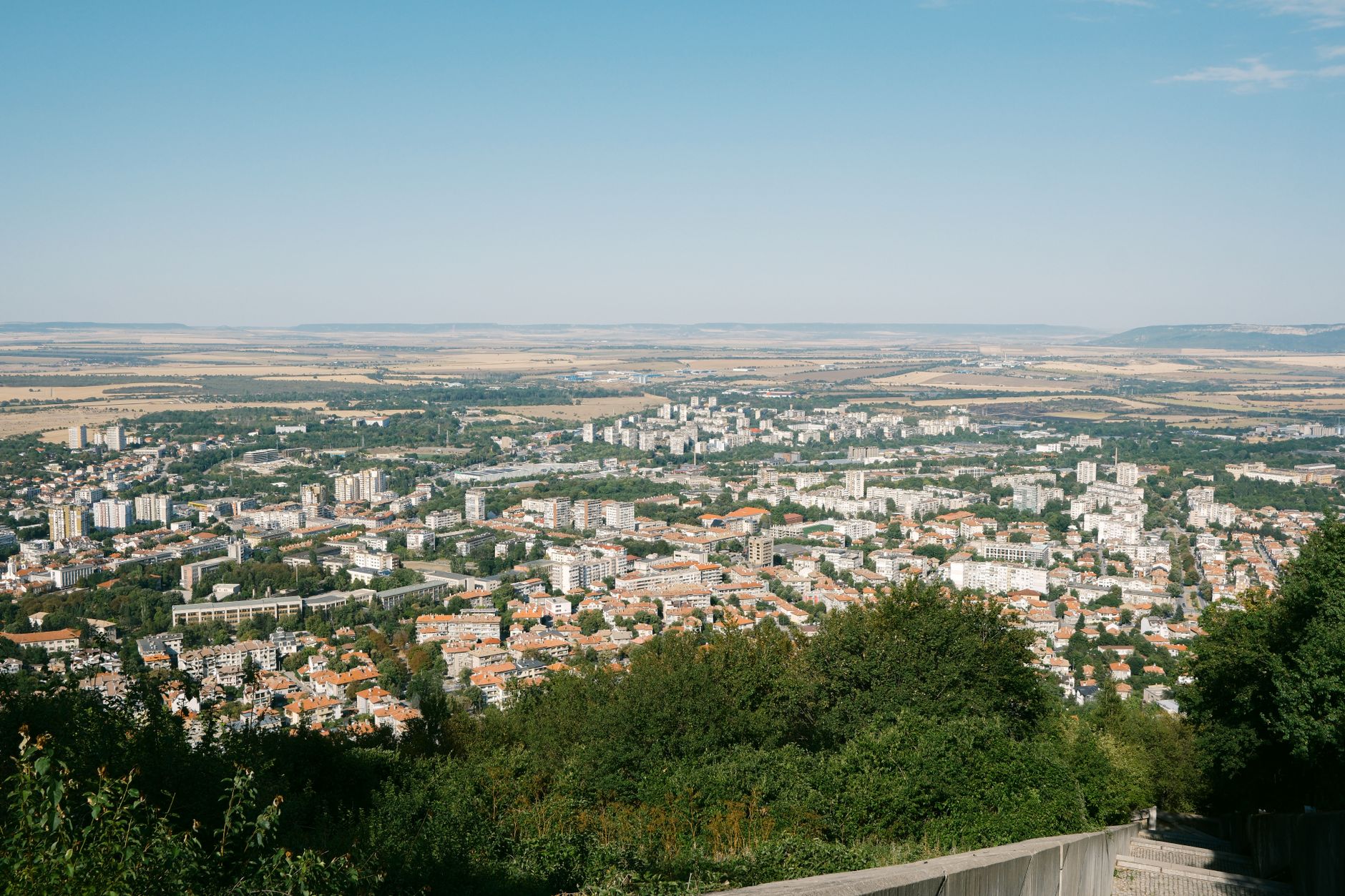


Bulgaria is now fully in Schengen, so the old separate-entry advice is outdated. EU travelers can enter with a valid passport or national ID card, while US, UK, Canadian, and Australian passport holders can usually stay up to 90 days in any 180-day period under standard Schengen rules.
Bulgaria adopted the euro on 1 January 2026, with the former lev fixed at €1 = 1.95583 BGN during the changeover. Sofia is easy by card, but cash still matters in village guesthouses, mountain huts, small bakeries, and some taxis, so keep €20 to €40 in small notes.
Sofia Airport is the main gateway, and its Terminal 2 metro link gets you into the center in about 20 minutes. Varna and Burgas are the practical coastal airports, while Plovdiv picks up seasonal and low-cost traffic that can make sense for southern Bulgaria.
Trains work well on the long east-west spine between Sofia, Plovdiv, and the Black Sea, but they are slower than the map suggests. Buses are often faster for places like Veliko Tarnovo, Melnik, and Bansko, and a rental car pays off once you want monasteries, wine country, or mountain villages.
Expect four distinct seasons rather than a single Balkan weather pattern. June to September suits the Black Sea coast around Varna, Sozopol, and Nessebar, December to March is ski season in Bansko, and May to June is the sweet spot for the Rose Valley around Kazanlak.
Mobile coverage is strong in cities and on main rail routes, and most hotels, cafes, and apartments offer reliable Wi-Fi. The weak spots are mountain roads, hiking areas in Rila and Pirin, and a few remote villages, so download maps before heading out of Sofia or Plovdiv.
For most travelers, Bulgaria is more annoying than dangerous: the main everyday risk is the road, not street crime. Use licensed taxis, watch for potholes and aggressive overtaking outside the cities, and carry layers if you are going into the mountains because weather turns fast above Rila Monastery and Bansko.
Cards are normal in Sofia and Plovdiv, but not universal once you get into smaller towns or rural stops. Keep coins and low-value euro notes for station kiosks, market snacks, and family-run guesthouses.
For many routes, the bus is the time-saver even if the train looks more romantic on paper. Check both before you commit, especially for Veliko Tarnovo, Bansko, Melnik, and coastal transfers.
The best-value meal in Bulgaria is often lunch, not dinner. Look for weekday set menus and local taverns serving shopska salad, bean soup, grilled meat, or banitsa before the evening crowd pushes prices up.
Nessebar, Sozopol, and Varna fill fast in July and August, especially on weekends. If you want a room inside an old town rather than a generic resort block, book well ahead.
Road quality changes fast once you leave the motorways. Slow down on rural roads, expect poor markings after dark, and do not assume the other driver shares your appetite for caution.
Learning a few Cyrillic letters helps more than memorizing whole phrases. Station boards, bakery signs, and bus platforms become much easier once you can sound out basic names.
May and June are ideal for Kazanlak and the Rose Valley, while December through March suits Bansko and the higher mountains. The coast works best from June to September; outside that window, many beach businesses shut or run at half speed.
Explore Bulgaria with a personal guide in your pocket
Audio guides for 1,100+ cities across 96 countries. History, stories, and local insight — offline ready.

Yes. Bulgaria adopted the euro on 1 January 2026, though many businesses still show dual prices during the transition period. If you see both currencies on a menu or receipt, that is normal rather than a scam.
Yes, fully. Bulgaria joined Schengen for air and sea borders on 31 March 2024 and for land borders on 1 January 2025, so in 2026 travelers follow standard Schengen entry and stay rules.
Seven to ten days is the sweet spot for a first trip. That gives you enough time for Sofia or Plovdiv, one inland region such as Kazanlak or Veliko Tarnovo, and either the Black Sea coast or the southwest around Rila Monastery and Bansko.
Yes, especially for food, domestic transport, and mid-range accommodation. Sofia costs more than the rest of the country, but Bulgaria still undercuts much of Central and Western Europe once you move beyond the capital.
Usually by bus if speed matters, by train if you care more about price and comfort on major corridors. Rail works best between Sofia and Plovdiv and on some eastbound routes, but buses are often more direct for smaller cities and mountain towns.
Late May to late June and September are the most balanced months for most travelers. You get milder temperatures, fewer crowds than high summer, and better conditions for both city walking and mountain day trips.
You still need some cash. Cards work in most hotels, supermarkets, and restaurants in Sofia, Varna, and Plovdiv, but taxis, village cafes, market stalls, and remote guesthouses can still be cash-first.
Yes, in normal travel terms, Bulgaria is generally manageable for solo travelers. The bigger problem is transport risk, especially driving at night or on rural roads, so use licensed taxis, keep an eye on your route, and do not underestimate mountain weather.
Last reviewed