
Mosque Like No Other
Sultan Omar Ali Saifuddien Mosque floats on its own lagoon, white marble walls catching the last light while a 24-carat gold dome burns above the water. Built in 1958, it’s the postcard and the pulse of the city in one shot.
The call to prayer drifts across a lagoon where a gold-domed mosque appears to float, while less than 200 m away a water-taxi driver guns his bright-blue outboard and sends you skimming toward a village that predates Venice. Bandar Seri Begawan, capital of pint-sized Brunei, feels like someone hit fast-forward on a history tape: 1,300-year-old stilt houses share the same river bend as a 29-domed mosque finished in 1994 and a palace that contains 1,788 rooms yet opens its doors exactly three days each year.
Researched from Wikidata, Wikipedia & official sources · fact-checked · How we make our guides →
BThe call to prayer drifts across a lagoon where a gold-domed mosque appears to float, while less than 200 m away a water-taxi driver guns his bright-blue outboard and sends you skimming toward a village that predates Venice. Bandar Seri Begawan, capital of pint-sized Brunei, feels like someone hit fast-forward on a history tape: 1,300-year-old stilt houses share the same river bend as a 29-domed mosque finished in 1994 and a palace that contains 1,788 rooms yet opens its doors exactly three days each year.
BSB runs on two speeds. Before 10 a.m. the city is lubricated with sweet pulled tea and gossip at 75-year-old kopitiams; after dusk the sidewalks roll up so completely you can hear your footsteps echo between the gold-on-white facades of government ministries. In the quiet hours, proboscis monkeys reclaim the mangrove fringe and the Sultan’s 17-gold Rolls collection sits locked beneath the palace, waiting for a parade that may or may not happen.
What keeps travellers longer than the planned overnight is the dissonance: a nation floating on oil wealth where dinner still costs BND 2 from a riverside hawker, where the same water taxis that shuffle kids to school will, for the price of a canned drink, detour into jungle creeks to show you crocodile eyes glowing like cigarette tips. Come for the mosques, stay for the moment the boat engine cuts and you realise the loudest sound in the capital is a heron’s wings.
What makes this place worth slowing down for.
Sultan Omar Ali Saifuddien Mosque floats on its own lagoon, white marble walls catching the last light while a 24-carat gold dome burns above the water. Built in 1958, it’s the postcard and the pulse of the city in one shot.
Kampong Ayer houses 30 000 people on stilts across eight kilometres of river; wooden walkways creak, kids bike to school above the tide, and a BND 1 boat delivers you into living rooms.
Tasek Lama Recreational Park sits ten minutes from the mosque, a pocket of primary forest with a 15-metre waterfall and macaques that will steal your takeaway if you blink.
Royal Regalia Museum keeps the Sultan’s golden chariot and 3-metre coronation crown on floor-to-ceiling mirrors. Free entry, no photos inside—memory only.
Where to wander, by quarter — each with its own rhythm.
A spiderweb of 28 water villages stitched together by 8 km of wooden planks and 36 school boats that double as Uber. Step off a BND 1 taxi at any jetty and you’ll find living rooms open to the breeze, a gallery demonstrating how to spin brass gongs, and grandmothers selling pandan kuih for 20 cents a piece. Stay after sunset to watch the mosque’s lights ripple across the river like liquid gold.
The only square kilometre where Brunei’s three power architectures line up in postcard alignment: Omar Ali Saifuddien Mosque (1958), the Royal Regalia Museum (free, shoes off), and the whitewashed colonial post office that still frank stamps with a 1950s date stamp. Coffee shops here open at 6 a.m. and close by 4 p.m.; between those hours the scent of burnt caramel from kaya toast drifts across the lagoon louder than traffic ever could.
The closest thing BSB has to a neon strip. The Mall’s cineplex shows Hollywood films with a two-week delay, but locals come for the basement food court where nasi katok (rice+fried chicken+sambal) is portioned by someone who knows you’re hungry after 9 p.m. Across the street, Gadong Night Market ignites at 4 p.m.: 120 stalls, BND 1 sugarcane juice, and the best chance to eat your body weight in grilled squid before the city sleeps.
A five-minute hop from the centre where embassy flags replace mosque domes on the skyline. Hardware stores sit beside Korean barbecue joints, and Aminah Arif restaurant serves ambuyat—the sticky sago glob that Bruneians wield like edible chopsticks—until the trays run out around 8:30 p.m. Come here when you need ATMs, craft beer (in private hotel bars), or a reminder that Brunei’s middle-class shops at H&M too.
The city’s wet-lung market wakes at dawn with boat-fresh prawns laid on banana leaves and aunties haggling over wild ferns. By 10 a.m. the riverfront steps turn into an informal dock: water taxis idle, fishermen mend nets, and if you ask quietly someone will run you upriver to the mangroves for BND 15 and a shared pack of cigarettes.
Twenty minutes west, the palace gates shimmer behind security cameras while Jerudong Park’s 1994 amusement rides squeak in the sea breeze. Weekends see families picnic beside the free concert hall where Michael Jackson once performed for the Sultan’s birthday; nowadays local indie bands plug guitars into the same PA system. Stay past closing and you’ll hear the Atlantic surf replace the call to prayer.
How a water village became Asia's last Malay Islamic monarchy
Chinese logbooks record the first Bruneians as "water people" who lived on stilts above the crocodile-dark Brunei River. They traded camphor and birds-of-paradise feathers for Javanese bronze mirrors. The settlement had no walls, only the rhythm of tides and the smell of durian smoke drifting across bamboo roofs.
Legend says Awang Alak Betatar—later Sultan Muhammad Shah—awoke from a dream in which Prophet Muhammad appeared above the mangroves. By sunrise he'd adopted Islam and renamed the river settlement Brunei Darussalam, "abode of peace." The muezzin's first call echoed across water so still it reflected both mosque and sky.
Pigafetta's diary describes houses "raised high on posts like herons' legs" and a sultan who served arrack in golden cups. The Spanish departed with cloves and a warning: this river kingdom commanded the trade winds between Java and China. The encounter cost Brunei three cannons but gained its first mention in European maps.
Spanish raiders torched three-quarters of the water village. Survivors rebuilt within months—same stilts, deeper foundations. Charred timber posts still lie beneath modern walkways; children sometimes find melted Spanish silver coins wedged between river stones. The attack convinced Bruneians their floating city was safer than any fortress.
When the Sultan ceded Labuan Island, Brunei Town shrank to its riverine core. British gunboats sat so low in the water that sailors could see their reflections in the sultan's palace windows. The treaty stole half the coastline in twelve clauses; it would take 138 years to regain sovereignty.
The Treaty of Protection made Brunei a British protectorate in theory. In practice, Resident Malcolm McArthur controlled customs, telegraphs, and taxes from a veranda overlooking the river. He noted in his diary: "The Sultan signs what I place before him, then returns to his kris collection with visible relief."
At Seria, 100 kilometers west, drillers struck oil at 974 feet. The first royalty check—£300,000—reached the Sultan as his palace roof leaked monsoon rain. Within a decade, kerosene lamps gave way to electric bulbs in Kampong Ayer; children learned to read by the glow of Shell's refinery flames.
Japanese troops arrived in river barges flying red sun flags. They confiscated rubber-soled shoes for aircraft fuel; barefoot Bruneians learned to distinguish patrol routes by the squeak of leather boots on wet planks. The occupation lasted 1,277 days—long enough for three monsoon seasons and one generation's childhood.
Allied planes flattened Brunei Town's wooden shopfronts. When Australian soldiers marched through knee-deep ash, they found the Sultan's ceremonial cannon still trained seaward—loaded but never fired. Reconstruction began immediately: new concrete replaced charred timber, though the river still carried blackened roof tiles to sea.
Sultan Omar Ali Saifuddien Mosque opened with Italian marble walls and a 3.5-million-piece Venetian glass mosaic. The 171-foot minaret became the city's compass point; even water taxi drivers navigate by its shadow. At sunset, the dome catches light like molten metal—the first permanent gold most Bruneians had ever seen.
The written constitution declared Islam the state religion while Britain retained defense control. Signed beneath crystal chandeliers in the lapau throne room, the document balanced sovereignty with survival. Kampong Ayer residents watched from their verandas as uniformed clerks ferried copies between palace and residency launches.
The Brunei People's Party won 54% of votes campaigning for union with Malaysia. Within 48 hours, the Sultan annulled results and declared emergency rule that persists today. British Gurkhas patrolled the river in flat-bottomed boats; their .303 rifles glinted against water reflecting burning ballot papers.
At 21, the Oxford-educated prince became the world's youngest monarch. His coronation regalia included a 15-pound crown and shoes made from skin of an unborn calf. The new Sultan's first decree: build a palace larger than any residence on earth. Construction began before the monsoon ended.
Brunei Town became Bandar Seri Begawan—"City of the Blessed One" honoring the retired Sultan. Street signs changed overnight; old men still called it Bandar for years. The name cost nothing but meant everything: independence wasn't just possible, it was being rehearsed in daily conversation.
At midnight on January 1st, the Union Jack lowered for the last time. The 28-year-old Sultan wept openly as the new flag—yellow, white, black, red—rose above his palace. Fireworks reflected in the lagoon where Kampong Ayer's children paddled makeshift rafts, their parents singing a national anthem they'd practiced in secret.
The world's largest residential palace opened with 1,788 rooms and a throne room ceiling painted with 24-karat gold leaf. Built for $400 million—enough to buy every Bruneian a new fishing boat. From the water village, residents counted 44 domes and 7,000 windows catching sunrise like scattered diamonds.
The Sultan formalized Melayu Islam Beraja (MIB) as state ideology. In Kampong Ayer, imams began Friday sermons discussing civic duty alongside spiritual guidance. The river itself became metaphor: traditional navigation routes protected by modern embankments, faith steering prosperity's current.
The Sultan announced Southeast Asia's first full Sharia implementation since colonialism. In Kampong Ayer's coffee shops, elders debated while teens livestreamed reactions. The water taxis kept running—same engines, new navigation lights in shades of green and white reflecting mosque domes above.
The people who shaped the city — and were shaped by it.
He turned oil money into marble and gold, commissioning the mosque that now bears his name. Locals say he walked the Kampong Ayer planks at dawn, counting stilt houses by lamplight; today his mausoleum overlooks the same water he refused to pave over.
He ordered 1,788 rooms, air-conditioned stables and a mosque within the palace gates—then lost the keys in a BND 40 billion court battle. The lights still switch on every evening; guides whisper that no one knows which switches work because the blueprints vanished with him.
He sailed up the Brunei River, bargained for Sarawak and left the Sultan with only today’s tiny sliver of coastline. If he returned, he’d recognise the same river mouth—still dotted with wooden houses on stilts, still refusing to behave like a proper colonial port.
Where locals actually book dinner — not the tourist menus.
Sticky sago starch eaten with a twirl of the bamboo fork and dipped into cacah—fiery sambal belacan or sour tamarind broth. A texture you remember even if the taste is mild.
Plain rice, fried chicken, sambal, wrapped in brown paper. Costs BND 1 at roadside stalls; the national late-night snack.
Open 06:00–11:00 under a corrugated roof. Look for kuih cincin (honey-ring biscuits) and fresh pisang goreng still dripping oil.
Rows of grilled squid, satay, and roti john from 17:00 until sold out. Locals queue at stall #7 for ayam penyet that shatters under a spoon.
Bruneian butter cookies rolled in powdered sugar, sold by the tin in Kampong Ayer’s floating souvenir boats.
Small things that change how the city treats you.
The Sultan Omar Ali Saifuddien Mosque shuts 12:00–14:00 every Friday. Arrive at 10:30 for quiet interiors and stay until the first call to prayer drifts over the lagoon.
Skip the tour desks; flag a shared water taxi from the concrete steps beside the food stalls for BND 1–2. Ask for “Kampong Ayer Cultural Gallery” and you’ll get a free walking map from the caretaker.
The mosque’s gold domes catch pure amber 15 minutes before the sun dips behind the mangroves. A metal photo-frame stand is bolted to the lagoon path—line your lens with it for a reflection that looks like liquid fire.
Royal Regalia, Brunei Museum and Malay Technology Museum all waive admission. Leave shoes at the door and pocket the BND 10 you just saved for iced kopi at the night market.
Public buses thin out after 18:00. Book your ride back from Tasek Lama or Gadong before 17:00, or negotiate a flat BND 10 with any hotel taxi—meters stay off after dusk.
The city, as it actually looks.
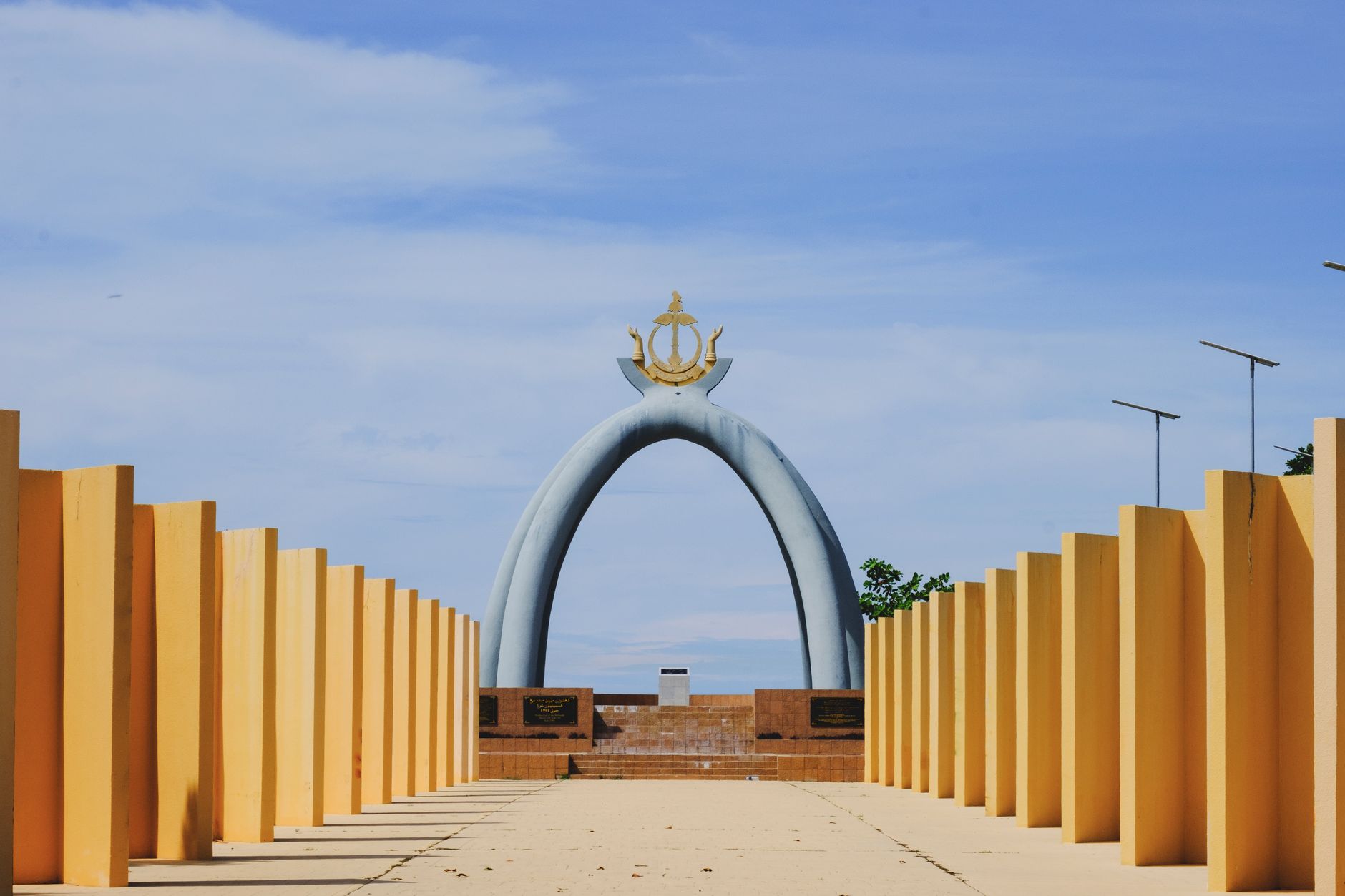
The iconic Billionth Barrel Monument stands as a striking architectural landmark in Bandar Seri Begawan, Brunei.
Dian is Light on Pexels
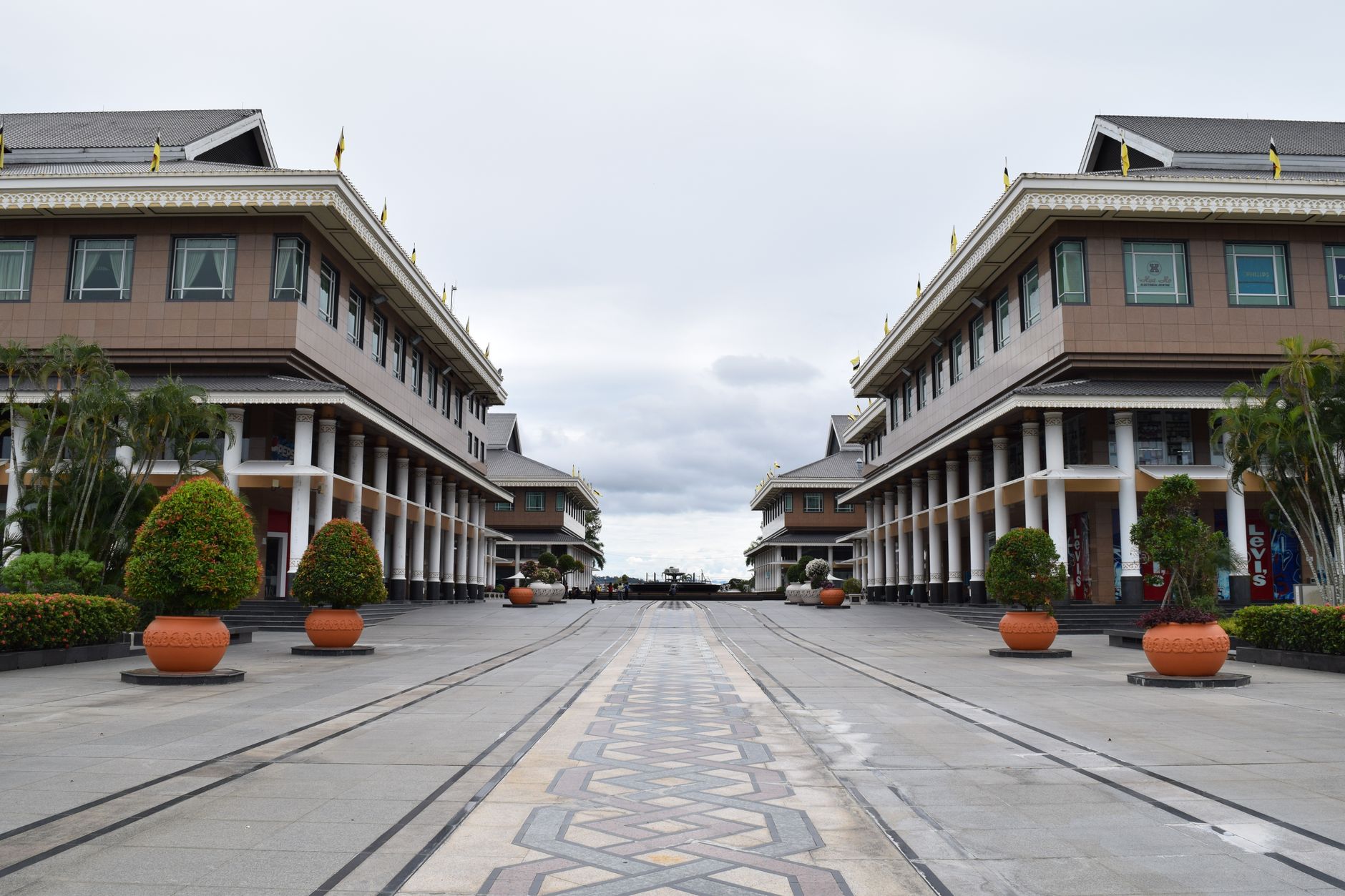
The symmetrical, modern architecture of this public plaza in Bandar Seri Begawan, Brunei, creates a striking corridor leading toward the horizon.
Random Freeloader on Pexels

A stunning ceremonial barge sits peacefully on the water in Bandar Seri Begawan, Brunei, illuminated by the soft hues of a dramatic sunset.
Bojána Noémi Molnár on Pexels
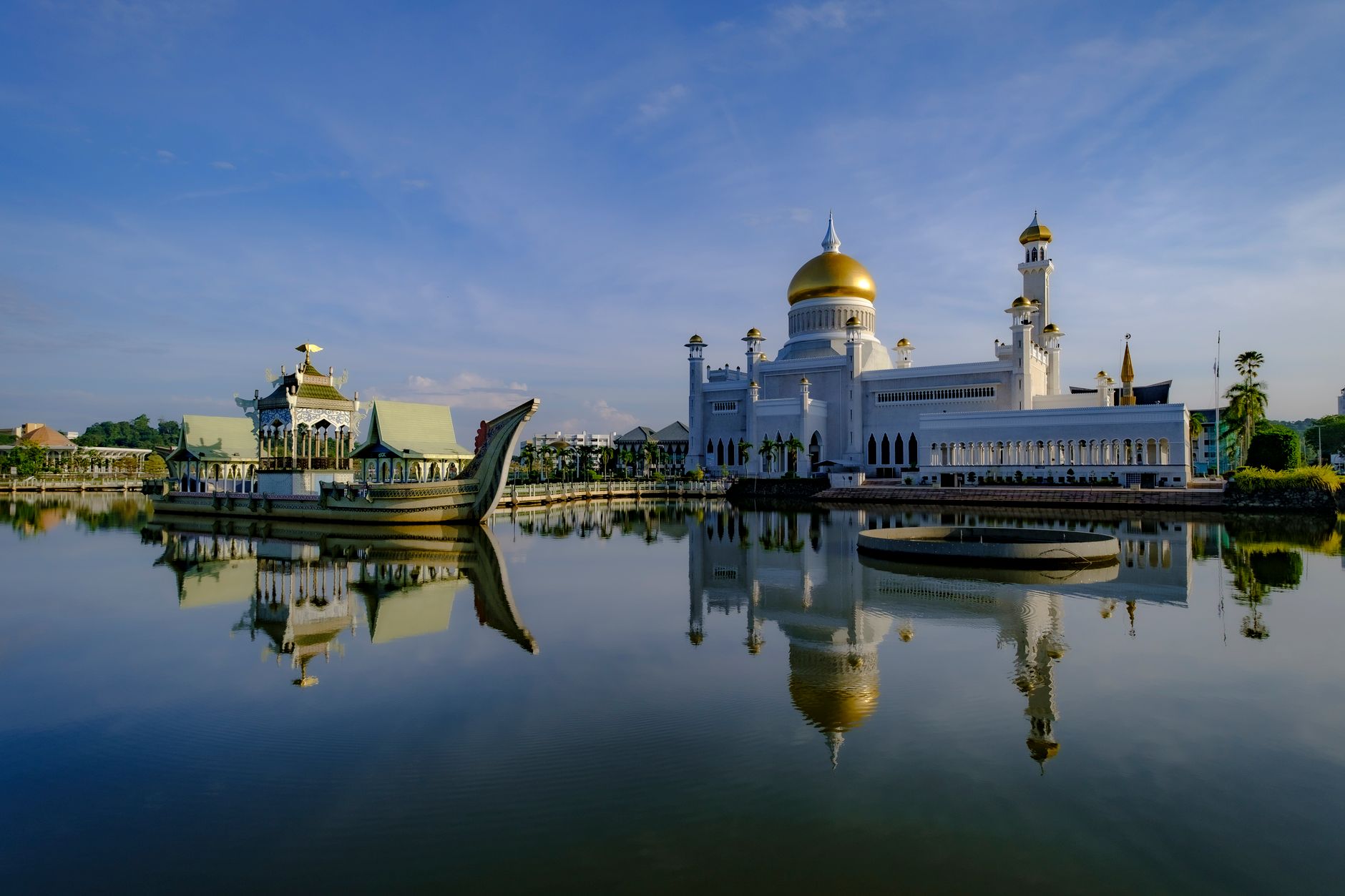
The stunning Sultan Omar Ali Saifuddien Mosque reflects beautifully in the calm lagoon waters of Bandar Seri Begawan, Brunei.
Dian is Light on Pexels

The iconic Sultan Omar Ali Saifuddien Mosque stands majestically in Bandar Seri Begawan, Brunei, with its golden dome reflected in the tranquil lagoon.
Random Freeloader on Pexels

The stunning Omar Ali Saifuddien Mosque stands as a landmark of Islamic architecture in the heart of Bandar Seri Begawan, Brunei.
vitalina on Pexels
Yes, if you’re curious about living history. You can walk from a 24-karat gold-domed mosque to a 1,000-year-old water village in ten minutes, then share a BND 2 boat with schoolkids who still commute on stilts.
Two full days covers the mosques, Royal Regalia, Kampong Ayer and a mangrove sunset cruise. Add a third day for Ulu Temburong rainforest if you want canopy walkways and zero phone signal.
January–May brings the least rain and the clearest lagoon reflections. October–December is cheaper but plan around sudden 4 p.m. downpours that turn wooden walkways into mirrors.
Extremely. Crime rates are among the world’s lowest; hijabs and loose clothing are supplied at mosque entrances. After 20:00 the waterfront is quiet—take a registered taxi rather than waiting for buses.
Taxis are fixed at BND 25 for the 15-minute ride. Bus 11 runs hourly until 18:00 for BND 2 but terminates at the main bus station, still a ten-minute walk to the mosque—fine with light luggage.
Only during the three-day Hari Raya festival when the doors swing open and the Sultan personally shakes hands with thousands. The rest of the year you’ll have to settle for a river view of its 1,788-room silhouette.
Ready to book?
Brunei International Airport (BWN) is 8 km north of the centre. Metered taxis charge ~BND 34 and take 10 min. Public buses 23, 24, 34, 36, 38 run 06:00–20:00 for BND 1 cash only.
No metro exists. Franchise buses cost BND 1 per ride until 20:00. Grab is the reliable ride-hailing app. Water taxis to Kampong Ayer cost BND 1–2 from the waterfront steps. A 2.5 km riverside cycling lane opened in 2026.
Year-round 26–30 °C with 85 % humidity. Feb–March is driest (102 mm rain). Oct–Dec brings afternoon storms and 257 mm in October. Visit February–March 2026 for clear skies and the least chance of rain.
Malay is official; English is standard in hotels, menus and signage. Brunei Dollar (BND) equals Singapore Dollar (SGD) at par. Cash dominates—carry small notes for buses and markets.
Brunei is one of Southeast Asia’s safest states. Alcohol is illegal to sell publicly; possession rules are strict. Dress covers shoulders and knees at mosques; women are loaned robes at entrances.
0 places, one continuous walking route. Free with your first city.