Introduction
São Paulo, Brazil’s largest city, is renowned for its vibrant culture, economic dynamism, and complex urban environment. Amid these bustling streets and iconic landmarks, the Civil Guard of São Paulo (Guarda Civil Metropolitana, GCM) stands as a cornerstone of municipal security. Although not a typical tourist attraction, the GCM’s visible presence and unique history offer valuable insights into how São Paulo maintains public safety, manages community challenges, and adapts to modern urban needs. This comprehensive guide explores the Civil Guard’s historical evolution, organizational structure, visitor interaction opportunities, and essential travel advice for those navigating São Paulo.
Photo Gallery
Explore Civil Guard of the State of São Paulo in Pictures

Detailed coat of arms of the Civil Guard of São Paulo State, Brazil symbolizing law enforcement authority and heritage

Historic image showing the organizational chart of the São Paulo Civil Guard, part of the Museum Paulista collection at USP. The chart details the structure under the Sub Commander office, from the João Baptista de Campos Aguirra collection.
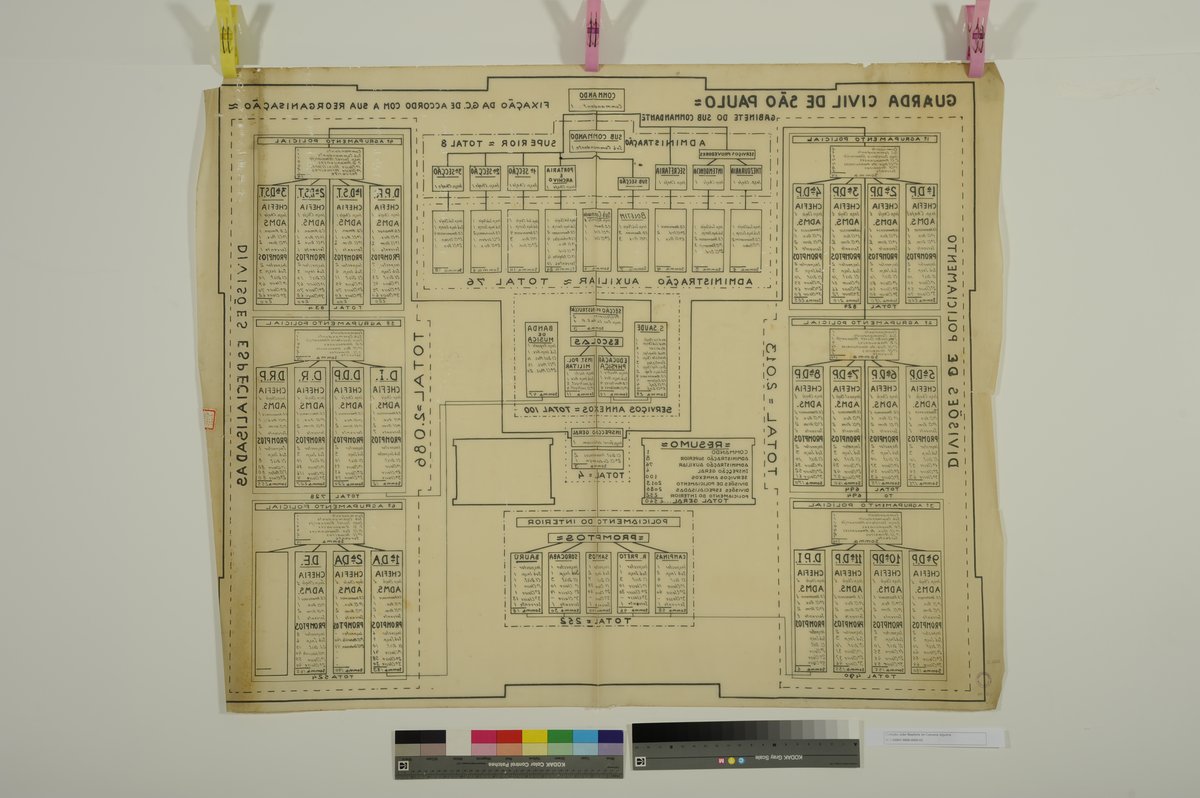
Historical organizational chart depicting the fixation of the São Paulo Civil Guard according to its reorganization. Part of the collection at Museu Paulista da USP, from the João Baptista de Campos Aguirra collection, referencing the Civil Guard of São Paulo under the Sub Commander’s Office.
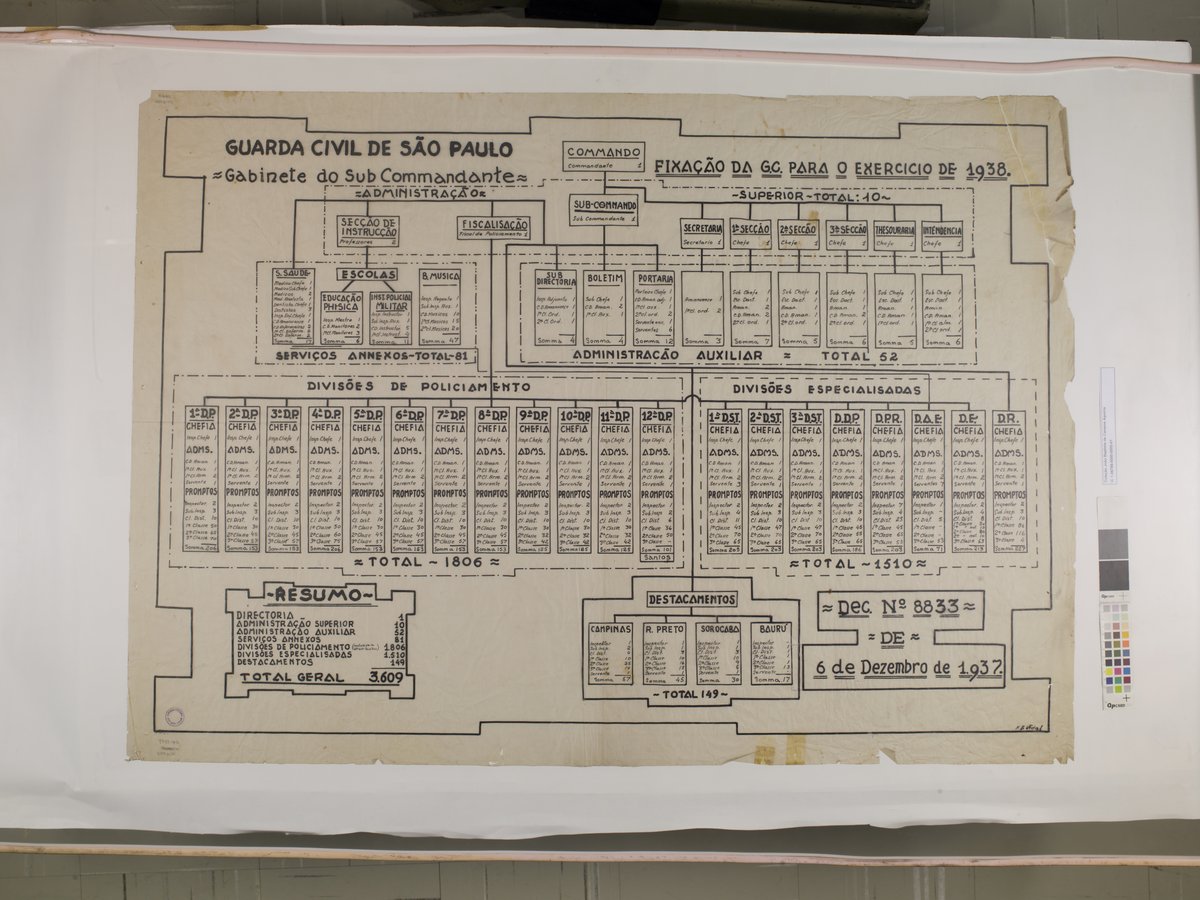
Historical organization chart of the Civil Guard of São Paulo for the year 1938, according to Decree No. 8833 dated December 6, 1937. Part of the João Baptista de Campos Aguirra collection, housed at Museu Paulista da USP.

Historical chart depicting the assignments of various policing and specialized divisions of the Civil Guard of São Paulo, part of the João Baptista de Campos Aguirra collection at the Museu Paulista of USP.
Historical Evolution of São Paulo’s Civil Guard
Early Beginnings: Roots in the 19th Century
The GCM traces its lineage to early municipal security forces, beginning with the São Paulo Municipal Imperial Guard established in 1831. This original body was responsible for maintaining order in a rapidly growing urban center during Brazil’s imperial era (Wikipedia: Military Police of São Paulo State). Over time, and especially following the transition from empire to republic in the late 19th century, São Paulo’s public security forces grew increasingly militarized, reflecting broader trends in Brazilian society (Wikipedia: Military Police (Brazil)).
Modernization and the Rise of the Civil Guard
Responding to concerns about militarization and the need for more community-oriented approaches, the modern GCM was established in the early 2000s as a civilian alternative to state police. The Federal Constitution of Brazil allows municipalities to form their own security forces, and São Paulo’s GCM was developed with a focus on preventive patrols, protection of municipal assets, and community engagement (Springer: São Paulo’s Metropolitan Municipal Civilian Guard).
Recent Legal Developments
Legislation such as the General Statute of Municipal Guards (2014) expanded the GCM’s powers, enabling more robust responses to urban crime, including the authority to intervene in certain criminal acts and to use progressive force. In 2018, the GCM was recognized as a key element of Brazil’s Unified Public Security System, further solidifying its mandate (Folha de S.Paulo).
Organizational Structure and Functions
Hierarchy and Leadership
The GCM operates under São Paulo’s municipal government, specifically the Secretariat for Urban Security. Its leadership structure includes a municipal secretary, superintendent, and regional commanders. The force is organized into battalions and specialized units focusing on environmental protection, traffic control, and public event security (Springer: São Paulo’s Metropolitan Municipal Civilian Guard).
Training and Personnel
Officers undergo rigorous training that covers technical skills, legal frameworks, human rights, and community policing. Ongoing professional development ensures that the GCM adapts to evolving urban challenges.
Core Mandate
The GCM is responsible for:
- Safeguarding municipal property and infrastructure
- Patrolling parks, markets, schools, and cultural sites
- Managing municipal traffic and enforcing local bylaws
- Supporting environmental protection initiatives
- Assisting during public events and emergencies
While the GCM does not conduct criminal investigations, it coordinates closely with state and federal police forces to deliver comprehensive public safety.
Civil Guard and the Public: Visitor Information
Can Tourists Visit the Civil Guard?
The GCM is not a tourist attraction and does not offer regular public tours or ticketed visits. However, GCM officers are frequently seen patrolling key public spaces, ensuring the safety of both residents and visitors. Their approachable presence is particularly noticeable in places like Ibirapuera Park, Avenida Paulista, and the Municipal Market.
If you are interested in municipal security or civic education, special visits may occasionally be arranged for educational groups or during civic events. These visits require advance coordination with the Civil Guard or São Paulo’s tourism office (SPTuris).
Interacting with GCM Officers
- Public Assistance: Officers are generally approachable and can assist with directions, lost property, or emergencies.
- Language: Portuguese is the primary language, but some officers may speak basic English or Spanish. For in-depth engagement, consider hiring a guide or translator.
- Respectful Conduct: Treat officers with respect, follow local customs, and comply with instructions during public events or emergencies.
Security Protocols for Visitors
- ID Required: Bring valid photo identification.
- Security Checks: Expect bag checks and screenings at government buildings.
- Photography: Prohibited inside GCM facilities unless authorized during special events.
- Dress Code: Business-casual or formal attire is recommended for official visits.
Accessibility, Transportation, and Nearby Attractions
Location and Getting There
The Civil Guard’s headquarters are centrally located and accessible by public transport, including the São Paulo Metro and city buses. Ride-sharing services like Uber and 99 are widely used.
Accessibility
Most government buildings are equipped for people with disabilities, with ramps, elevators, and accessible restrooms, though older structures may have some limitations.
Nearby Sites of Interest
- Bandeirantes Palace: São Paulo’s state government seat (Wikipedia)
- Legislative Assembly of São Paulo
- Museum of Art of São Paulo (MASP)
- Júlio Prestes Station
Safety Tips for Tourists
- Stay vigilant in crowded areas and avoid displaying valuables.
- Use official transportation and avoid walking alone at night.
- In emergencies, contact the Military Police (190) or the Civil Guard for incidents in public spaces.
- Follow officer instructions during demonstrations or large gatherings.
(Travel Safe Abroad; Travel.State.Gov)
Community Engagement and Reform
Community Policing Initiatives
The GCM invests in community outreach, educational programs, and partnerships with local organizations to foster trust and enhance public safety. Initiatives include traffic safety campaigns, youth engagement programs, and school visits.
Ongoing Challenges
Despite modernization efforts, the GCM continues to balance civilian and militarized traditions. Recent reforms aim to increase diversity, accountability, and the use of technology such as body cameras (Springer: São Paulo’s Metropolitan Municipal Civilian Guard; Folha de S.Paulo).
Frequently Asked Questions (FAQ)
Q: Can tourists visit or tour the Civil Guard?
A: Visits to GCM facilities are restricted and generally require advance arrangement for educational or official groups.
Q: What are the typical hours for GCM facilities?
A: Administrative offices are open 8:00 AM–6:00 PM, Monday–Friday, but public tours are not standard.
Q: Are GCM officers armed?
A: Yes. Many GCM officers are authorized to carry firearms for public safety.
Q: How can tourists interact with the GCM?
A: Officers can be approached in public spaces for assistance, but official facility visits are by appointment only.
Q: What should I do in an emergency?
A: Dial 190 for police emergencies, or seek out a GCM officer in public spaces for help.
Summary and Visitor Recommendations
The Civil Guard of São Paulo stands as a pivotal institution in the city’s layered security system, combining preventive policing with community outreach. While not a standard tourist site, its officers are central to the safe and orderly atmosphere in São Paulo’s parks, markets, and cultural venues. For travelers, understanding the GCM’s role enhances both appreciation of São Paulo’s urban landscape and personal safety. Always follow safety recommendations, respect local customs, and make use of official resources for up-to-date visitor information.
Listen to the full story in the app
Your Personal Curator, in Your Pocket.
Audio guides for 1,100+ cities across 96 countries. History, stories, and local insight — offline ready.
Audiala App
Available on iOS & Android
Join 50k+ Curators
Sources
-
verified
Wikipedia: Military Police of São Paulo State
Retrieved from https://en.wikipedia.org/wiki/Military_Police_of_S%C3%A3o_Paulo_State
-
verified
Springer: São Paulo’s Metropolitan Municipal Civilian Guard
(2024). In _Urban Security and Policing in Brazil_. Retrieved from https://link.springer.com/chapter/10.1007/978-3-031-45812-5_6
-
verified
Folha de S.Paulo
(2024). Brazilian municipal guards strengthen, even use rifles, and seek recognition as municipal police. Retrieved from https://www1.folha.uol.com.br/internacional/en/brazil/2024/07/brazilian-guards-strengthen-even-use-rifles-and-want-to-become-municipal-police.shtml
Last reviewed: