Plan and listen to Church Of Our Lady Of The Rosary Of The Black Men with Audiala.
Audio guide in your pocket, itinerary in your browser. Built for the way you actually visit.
Introduction
Nestled in São Paulo’s historic center, the Church of Our Lady of the Rosary of the Black Men (Igreja Nossa Senhora do Rosário dos Homens Pretos) stands as a living testament to Afro-Brazilian faith, resilience, and cultural identity. Established in the early 18th century by Black lay Catholic brotherhoods—comprised of both enslaved and freed Africans—this church has served as a spiritual sanctuary and a hub for preserving African heritage amid Brazil’s colonial and social challenges. Today, it remains a vibrant cultural landmark, drawing visitors with its rich history, architectural beauty, and ongoing role in the city’s diverse spiritual and cultural life (pt.wikipedia).
This detailed guide explores the church’s origins, architectural features, cultural significance, and practical information for visitors, ensuring an enriching and respectful experience at one of São Paulo’s most important historical sites.

Origins and Foundation
The church originated in 1721, when the Brotherhood of Our Lady of the Rosary of the Black Men petitioned Portuguese royalty to establish a place of worship. Although official royal approval was not granted, the brotherhood built a modest chapel near the Anhangabaú stream. This chapel became a spiritual and cultural refuge for São Paulo’s Black community, who were often excluded from other churches (pt.wikipedia).
Evolution and Urbanization
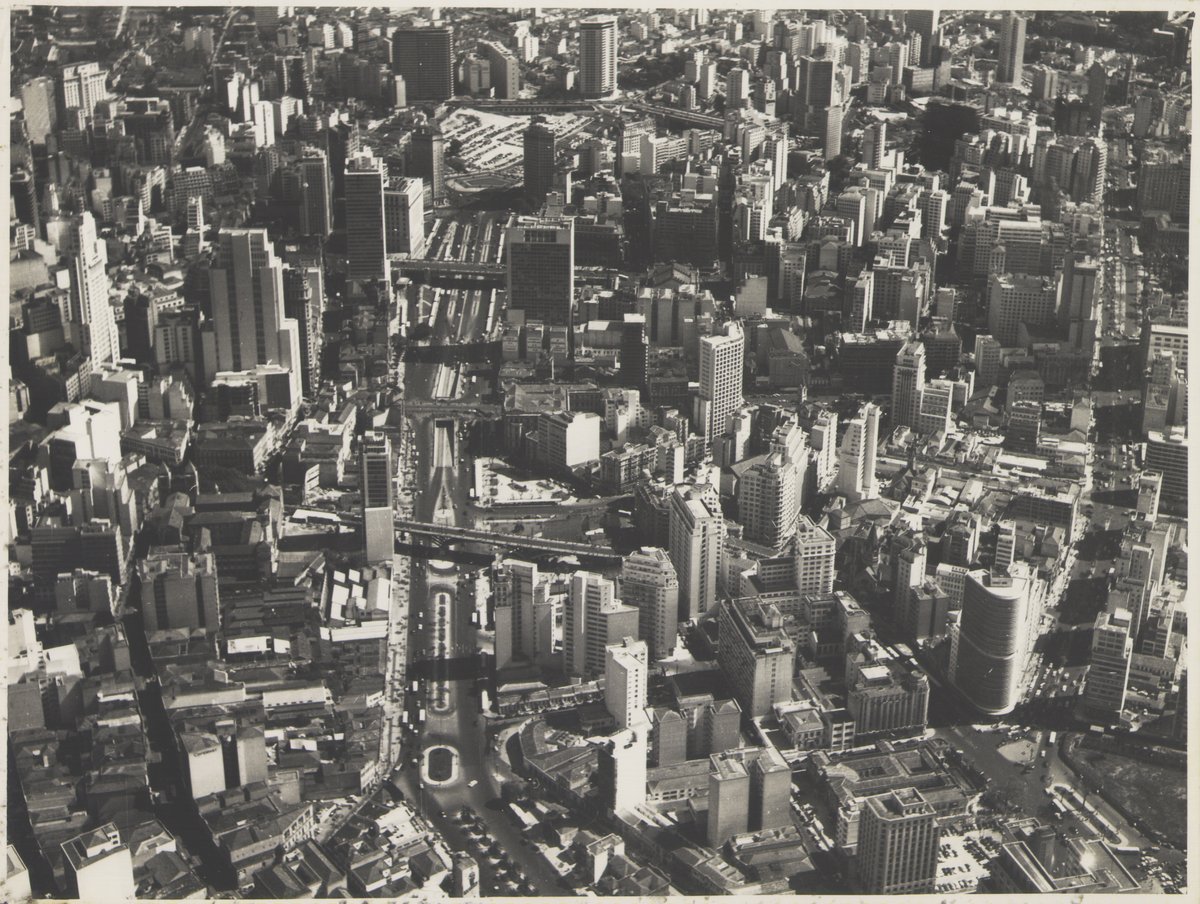
The original church and its cemetery were demolished during late 19th-century urban reforms. In 1906, the current building was inaugurated at Largo do Paissandú, reflecting early 20th-century architectural trends while maintaining its symbolic importance for the Black community (saopauloantiga.com.br).
The Role of Black Lay Brotherhoods
Black lay brotherhoods (irmandades) founded and maintained the church. These brotherhoods provided mutual aid, organized religious festivals, and preserved African traditions. They also played a crucial role in the abolitionist movement by supporting the manumission of enslaved members and offering community support (NCR Online).
Religious Syncretism
The church is a unique site of religious syncretism, blending Catholicism with African spiritual traditions such as Candomblé and Umbanda. Rituals, festivals, and iconography reflect this fusion, honoring both Catholic saints and African orixás (Híbridos).
Cultural Significance
Throughout its history, the church has been a center for political, cultural, and social activism. It remains a symbol of Black resilience and community solidarity, hosting festivals and events that celebrate São Paulo’s Afro-Brazilian heritage (apecc.com.br).
Architectural Features
Exterior
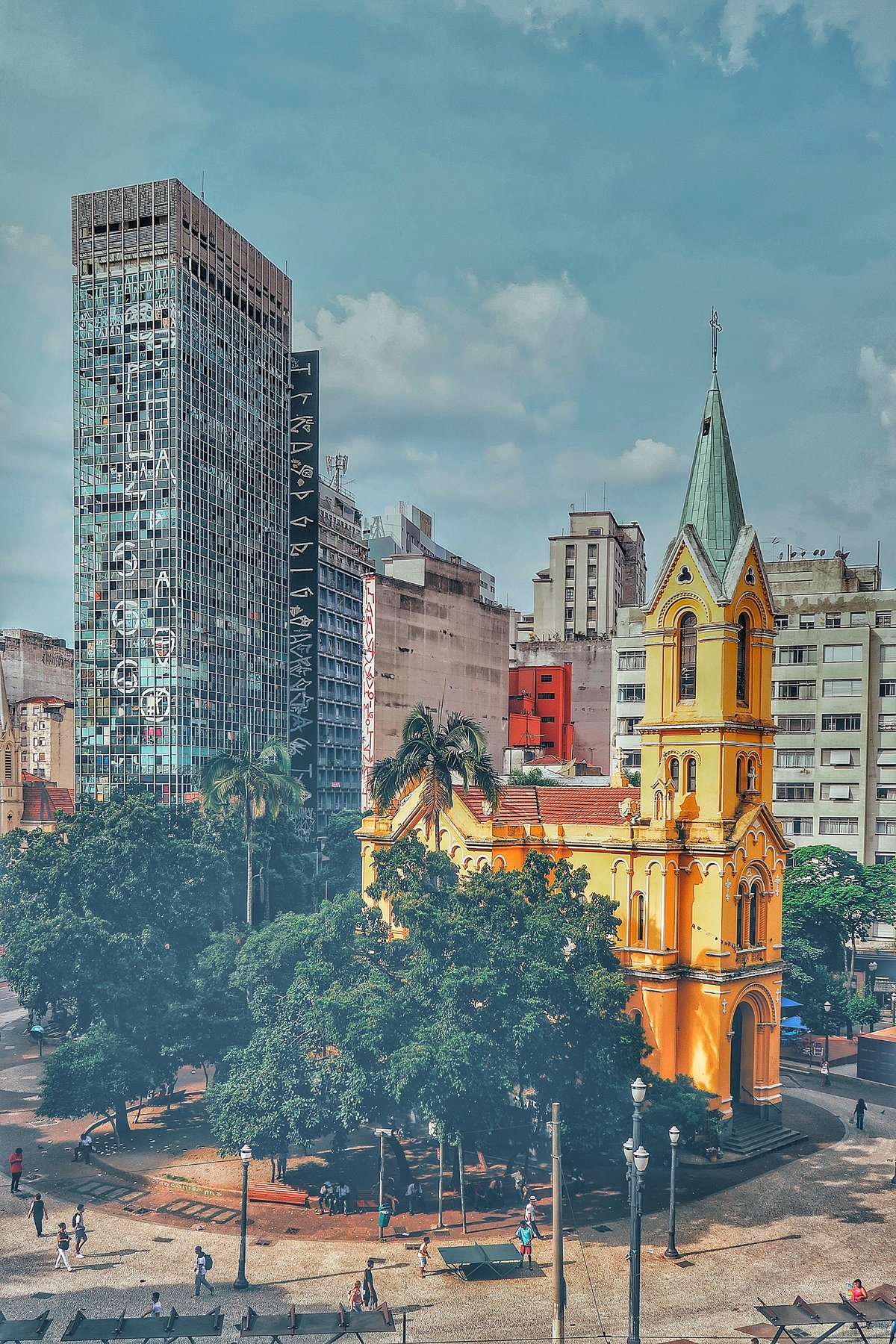
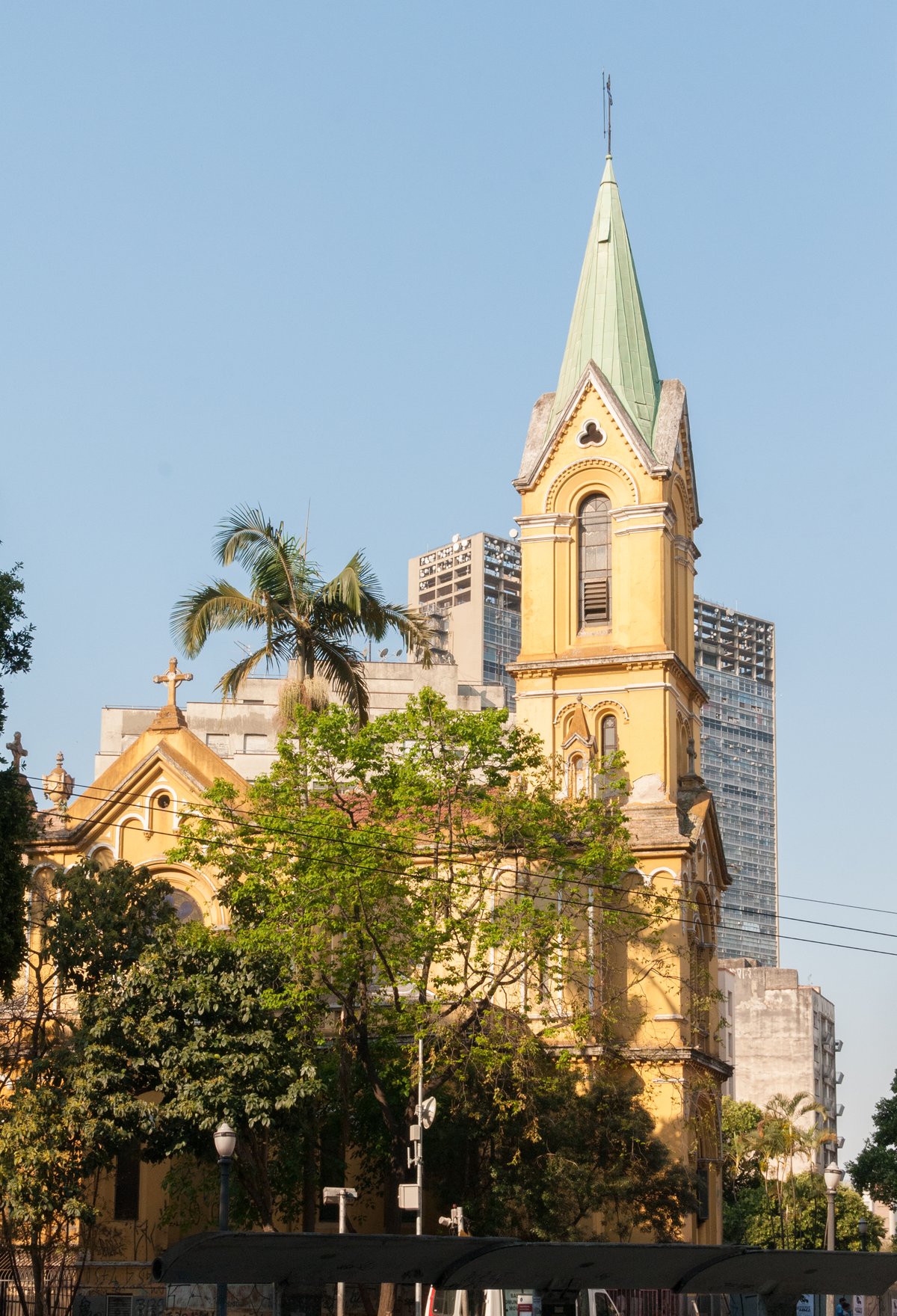
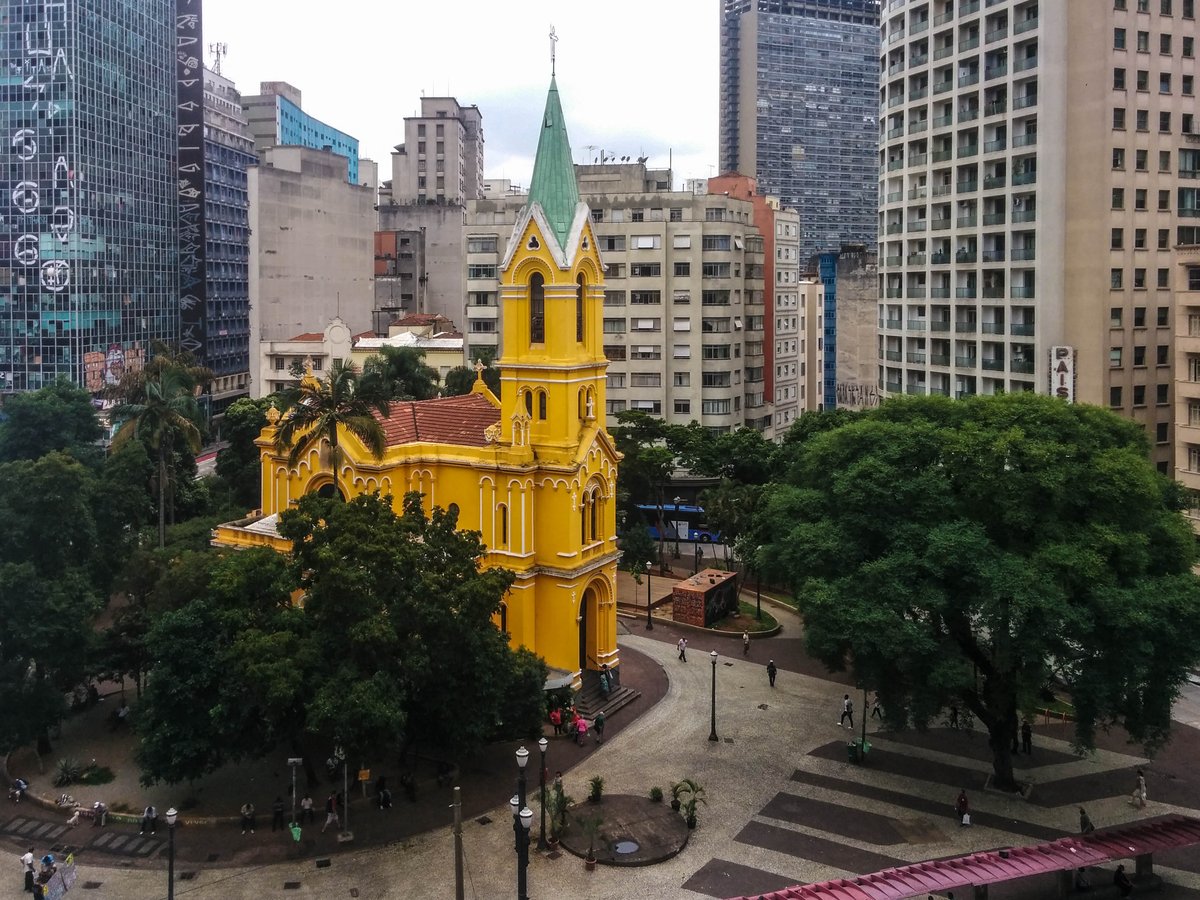
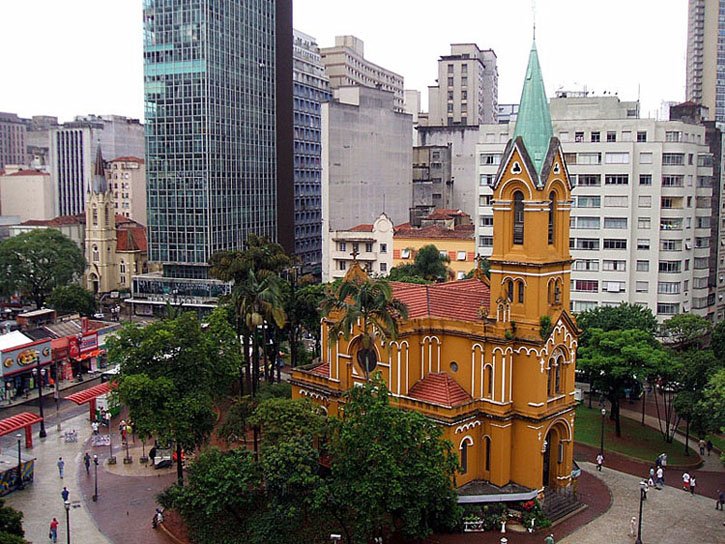
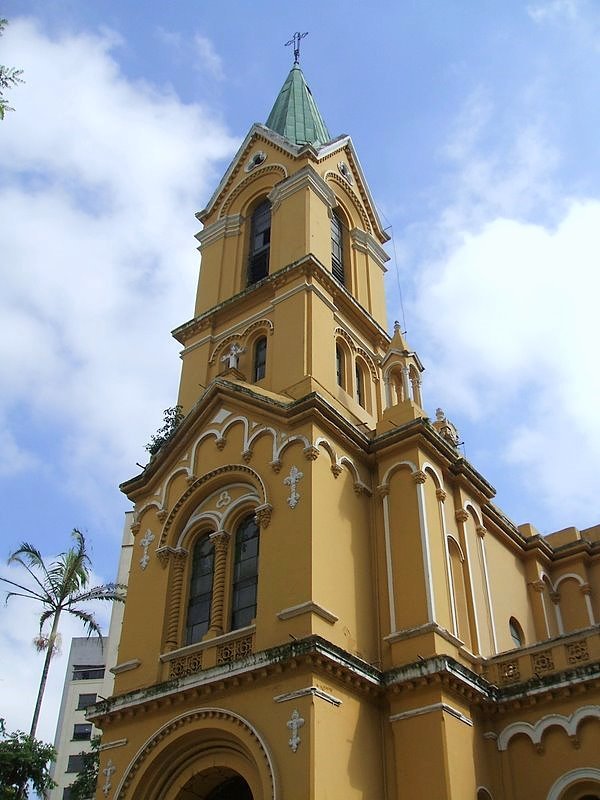
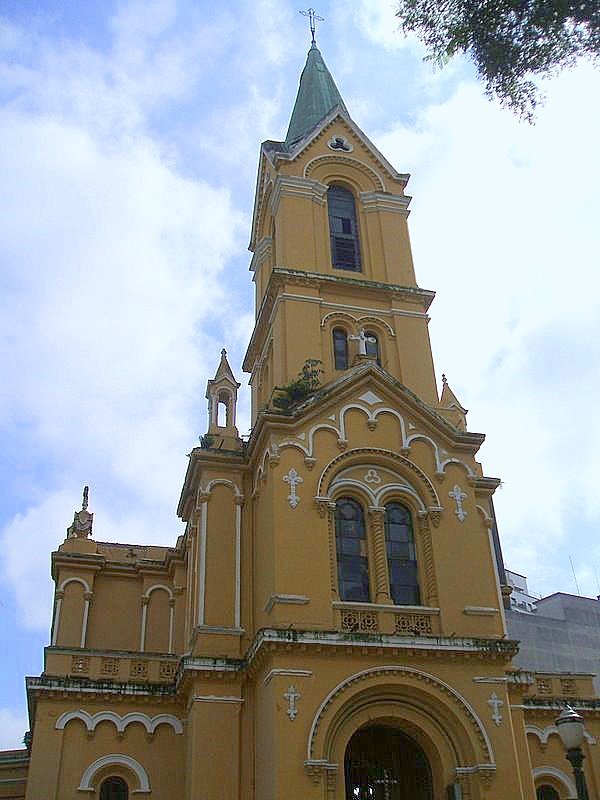
The current building, completed in 1906, features a striking yellow façade with Baroque and Rococo influences. The symmetrical design, twin towers, and ornate entrance welcome visitors, while mature trees provide a tranquil atmosphere in the bustling Largo do Paissandú (apecc.com.br).
Interior
Inside, the church showcases richly decorated altars, detailed wall paintings, and statues of saints significant to the Afro-Brazilian community, such as St. Benedict the Moor and St. Iphigenia. Artistic elements combine Catholic and African-Brazilian motifs, reflecting the cultural hybridity that defines the church (revistaraca.com.br).
Symbolism
The church’s layout and iconography celebrate Afro-Brazilian identity, with side chapels, religious artworks, and musical traditions underscoring the enduring connection to African heritage. Its acoustics and lighting enhance the spiritual experience, especially during festivals and choral performances.
Visiting Information
Location
Largo do Paissandú, s/n, República, São Paulo, SP, Brazil
Located in the city center, the church is surrounded by shopping streets like Rua Santa Ifigênia, Rua 24 de Maio, and attractions such as Galeria do Rock (apecc.com.br).
Opening Hours
- Monday to Friday: 7:00 AM – 7:00 PM
- Sundays: 7:00 AM – 12:00 PM
- Closed on Saturdays (except for special events) (refugiosnointerior.com.br)
Admission
- Entry is free.
- Donations are welcome to support preservation and community programs.
Accessibility
- The church is wheelchair accessible, with ramps at the main entrance.
- Some surrounding sidewalks may be uneven; assistance is available upon request.
Mass and Religious Services
- Monday to Friday: Masses at 7:30 AM, 8:30 AM, and 6:00 PM
- Sundays: Masses at 7:30 AM, 9:00 AM, and 10:30 AM
Guided Tours
- Guided tours are not held on a regular schedule but can sometimes be arranged for groups by contacting the church directly.
Events and Festivals
- The annual Festa de Nossa Senhora do Rosário in October features processions, music, and dance, attracting large crowds.
- The Congadas, an Afro-Brazilian cultural festival rooted in Catholic and African traditions, is another highlight (bibliotecacatolica.com.br).
Practical Travel Tips
- Dress Code: Modest dress is recommended, especially during religious services.
- Photography: Permitted, but please be discreet and avoid using flash during services.
- Public Transport: Easily accessible via República metro station and numerous bus routes.
- Safety: As with any busy urban center, remain aware of your surroundings and secure personal belongings.
- Nearby Attractions: Galeria do Rock, Rua Santa Ifigênia, Rua 24 de Maio, São Bento Monastery, Pátio do Colégio, and the Municipal Market are all within walking distance.
Cultural and Educational Opportunities
The church serves as a center for religious, cultural, and social activities. The Irmandade de Nossa Senhora do Rosário dos Homens Pretos organizes events blending Catholic and African traditions, including music, dance, and communal meals (apecc.com.br). Researchers and students interested in Afro-Brazilian history can inquire about access to archives and artifacts (revistaraca.com.br).
Frequently Asked Questions (FAQ)
Q: What are the visiting hours of the church?
A: Monday to Friday, 7:00 AM–7:00 PM; Sundays, 7:00 AM–12:00 PM.
Q: Is there an admission fee?
A: No, admission is free.
Q: Are guided tours available?
A: Not regularly, but group tours can sometimes be arranged by contacting the church.
Q: Is the church accessible for people with disabilities?
A: Yes, with ramps at the entrance; note that surrounding sidewalks may be uneven.
Q: What nearby attractions can I visit?
A: Galeria do Rock, Rua Santa Ifigênia, Rua 24 de Maio, São Bento Monastery, and Pátio do Colégio.
Contact Information
For group visits or event information, call (11) 3223-3611 (refugiosnointerior.com.br).
Summary
The Church of Our Lady of the Rosary of the Black Men is a vital landmark in São Paulo, encapsulating centuries of Afro-Brazilian faith, culture, and social solidarity. As a living center for worship, cultural celebration, and community support, it offers visitors an opportunity to engage with Brazil’s diverse heritage. Its unique blend of Catholic and African traditions, vibrant festivals, and historical significance make it a must-visit for anyone interested in the city’s rich cultural tapestry. For up-to-date information, consult the church’s official channels or São Paulo’s tourism platforms (pt.wikipedia; NCR Online; apecc.com.br).
Listen to the full story in the app
The whole Church Of Our Lady Of The Rosary Of The Black Men,
told well.
Audio guides for 1,100+ cities across 96 countries. History, stories, and local insight — offline ready.
Verified, and shown.
Researched and written by the Audiala editorial team from historical records, architectural archives, and local expertise.
Researched from Wikidata, Wikipedia & official sources · fact-checked · How we make our guides →