Introduction
Nestled atop the Holy Hill (Colina Santa da Penha) in São Paulo’s Penha neighborhood, the Basílica de Nossa Senhora da Penha stands as a testament to the city’s enduring faith, rich history, and vibrant culture. Since its founding in 1667, the basilica has evolved from a modest hermitage to a monumental sanctuary, becoming one of São Paulo’s most significant religious and historical landmarks. Declared the patroness of São Paulo by Pope John Paul II in 1985, Nossa Senhora da Penha continues to inspire devotion among thousands of pilgrims annually, while its neoclassical and modernist architecture attracts tourists and architecture enthusiasts alike. This comprehensive guide details everything you need to know for your visit: from historical context and cultural significance to practical information on visiting hours, accessibility, ticketing, and nearby attractions (A12.com, Basílica da Penha Official Site, Wikipedia).
Photo Gallery
Explore Basílica De Nossa Senhora Da Penha in Pictures
Origins and Early History
The history of the Basílica de Nossa Senhora da Penha is closely tied to the colonial development of São Paulo and the spread of Marian devotion in Brazil. The sanctuary’s origins date to 1667 when a French traveler, carrying a Marian image from Spain’s 15th-century Penha de França tradition, stopped on what is now Penha Hill. According to tradition, the image miraculously remained behind, prompting the traveler to build a hermitage that would become the nucleus for the Penha neighborhood (A12.com). Over time, reports of miracles and answered prayers drew increasing numbers of pilgrims, and the site’s reputation as a place of grace and intercession spread.
Architectural Evolution
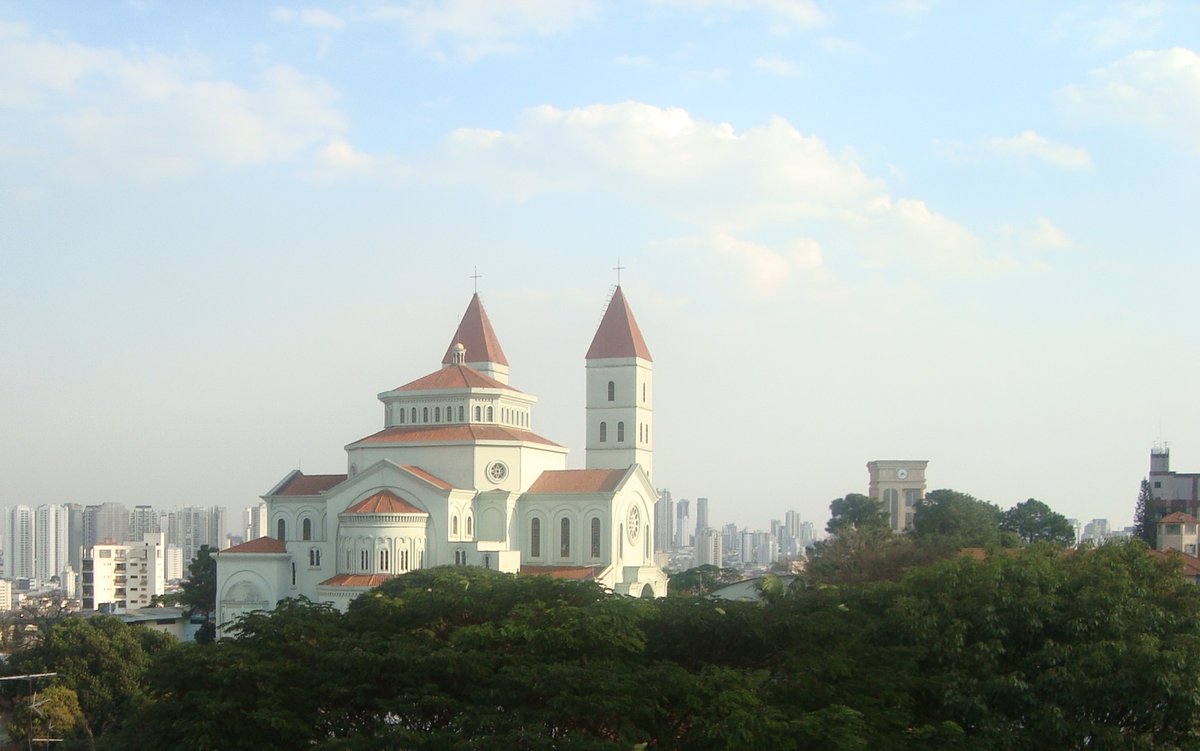
The original hermitage was gradually replaced by larger structures to accommodate growing devotion. The parish was established in 1796, and in the 20th century, the Redemptorist Fathers initiated the construction of the current basilica (cornerstone laid in 1957, first Mass in 1967), blending baroque influences from the original image with neoclassical and modernist architecture. The basilica’s grand dome and twin towers dominate the skyline, symbolizing both spiritual ascent and São Paulo’s architectural heritage. In 1985, the church was declared a Minor Basilica by Pope John Paul II, affirming its prominence (Basílica da Penha Official Site, Wikipedia).
Cultural and Religious Significance
Marian Devotion and Miraculous Traditions
Nossa Senhora da Penha is venerated as a source of protection and miraculous intervention, especially during epidemics and droughts. Throughout the 18th and 19th centuries, her image was carried in processions to the city’s cathedral during crises, with many attributing the resolution of calamities to her intercession. The basilica’s crypt, filled with ex-votos, attests to countless stories of gratitude and faith (A12.com).
Community Role and Pilgrimages
The basilica is the heart of the Penha neighborhood, shaping local identity and fostering solidarity. The annual Festa da Padroeira on September 8th (Nativity of Mary) is one of São Paulo’s most important religious events, attracting thousands of devotees. Historically, special transportation lines and pilgrimage routes were established to bring worshippers to the sanctuary (A12.com).
Social Justice and Resistance
The basilica’s legacy extends beyond spirituality. During Brazil’s military dictatorship, it served as a meeting point for human rights advocates and the families of political prisoners, hosting significant rallies for justice and peace (Memorial da Resistência). Today, social outreach remains central, with the Serviço de Assistência Social da Penha (SASP) providing aid to vulnerable populations (Basílica da Penha).
Visiting Information
Location and Directions
- Address: Rua Santo Afonso, 199, Penha, São Paulo, SP, 03632-020
- Metro: Line 3 (Red), Penha Station. From the station, a short bus or taxi ride takes you to the basilica (Canção Nova São Paulo).
- By Car: Access via Radial Leste and Viaduto Eng. Alberto Badra, following signs to Penha.
Visiting Hours and Admission
- Open Daily: 7:00 AM to 7:00 PM (some sources indicate opening as early as 6:00 AM; check official site for updates)
- Admission: Free. Donations are welcomed to support community services.
Mass Schedule
- Weekdays: 7:00 AM, 12:00 PM, 7:00 PM
- Saturdays: 7:00 AM, 5:00 PM
- Sundays: 7:00 AM, 9:00 AM, 11:00 AM, 5:00 PM, 7:00 PM
- Special Celebrations: Festa da Penha in April and September 8th (Nativity of Mary). Check the official website for updated schedules.
Accessibility
- Entrances: Main entrance on Rua Santo Afonso and a rear entrance (Rua Angela Zanchi), both with accessible ramps.
- Facilities: Accessible restrooms, designated seating, and ample space for wheelchairs.
Guided Tours
- Group Visits: Can be arranged in advance through the parish office. Tours include historical, architectural, and religious insights (G1 Globo).
Dress Code and Etiquette
- Modest clothing is required (shoulders and knees covered).
- Silence and reverence are requested during Mass or prayer.
- Photography is allowed, but refrain from flash and tripods.
Events and Special Celebrations
- Festa da Padroeira (September 8th): Major religious festival with processions, open-air Masses, music, and cultural events.
- Other Events: Novenas, healing services, and retreats. Some events require prior registration (Sympla).
Nearby Attractions
- Cultural Sites: Teatro Martins Penna, Centro Cultural da Penha
- Shopping: Penha Shopping Center
- Leisure: Praça 8 de Setembro
- Dining: Numerous local bakeries, cafes, and restaurants in the Penha district
Practical Travel Tips
- Arrive early on weekends and festivals to avoid crowds.
- Use public transport for convenience, especially during major events.
- Weather: São Paulo’s climate is mild but can be rainy from October to March.
- Safety: The district is generally safe during the day; exercise usual precautions.
Frequently Asked Questions (FAQ)
Q: What are the visiting hours?
A: Open daily, generally from 7:00 AM to 7:00 PM.
Q: Is there an entrance fee?
A: No, entry is free; donations are appreciated.
Q: Are guided tours available?
A: Yes, by prior arrangement via the parish office or official website.
Q: Is the basilica wheelchair accessible?
A: Yes, with ramps and accessible facilities at both entrances.
Q: How do I get there by public transport?
A: Take Metro Line 3 (Red) to Penha Station, then a short bus or taxi ride.
Q: When is the major festival?
A: Festa da Padroeira is celebrated on September 8th.
Summary
The Basílica de Nossa Senhora da Penha is a cornerstone of São Paulo’s religious, cultural, and architectural landscape. Its storied past, community role, and breathtaking design make it a must-visit destination for pilgrims and tourists alike. With free admission, accessible facilities, and a rich calendar of events, the basilica offers a profound connection to the city’s spiritual heart. Plan your visit with confidence, explore nearby cultural attractions, and immerse yourself in the living tradition of this iconic sanctuary. For guided tours, event updates, or detailed directions, consult the basilica’s official channels and consider using cultural apps like Audiala for curated experiences.
Listen to the full story in the app
Your Personal Curator, in Your Pocket.
Audio guides for 1,100+ cities across 96 countries. History, stories, and local insight — offline ready.
Audiala App
Available on iOS & Android
Join 50k+ Curators
Sources
- verified
- verified
- verified
- verified
- verified
Last reviewed: