Colonial Foundation
church
1554
Jesuits Found São Paulo de Piratininga
On 25 January, Manuel da Nóbrega and José de Anchieta established a small mission at what is now Pátio do Colégio. The air smelled of wet earth and smoke from Indigenous fires. This modest settlement on the Piratininga plateau was intended to convert the locals, but it would become the launchpad for centuries of inland expansion.
gavel
1560
Santo André's Population Transferred
Governor-General Mem de Sá ordered the entire population and municipal authority of Santo André da Borda do Campo to relocate to São Paulo. The fragile mission suddenly gained critical mass. This decision cemented São Paulo's role as the primary Portuguese foothold in the vast interior.
swords
1562
Siege of Piratininga
For four days in July, Indigenous forces hostile to the Jesuit-Portuguese alliance besieged the tiny settlement. Cacique Tibiriçá's alliance with the Portuguese proved decisive in repelling the attack. The siege revealed both the settlement's extreme vulnerability and its dependence on Indigenous political alliances.
church
1598
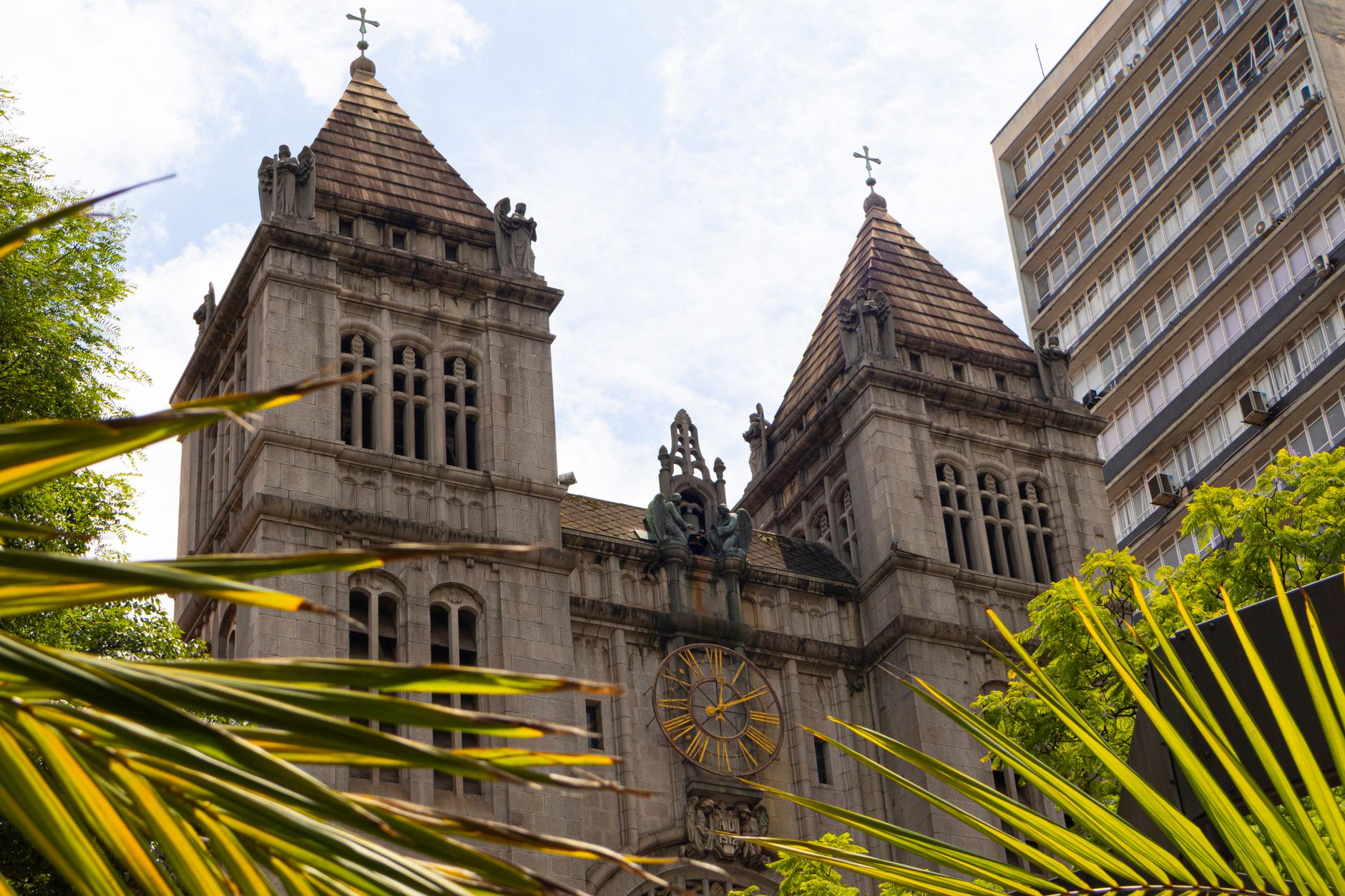
Mosteiro de São Bento Established
The Benedictines arrived and began construction of what would become one of the city's oldest enduring institutions. Their monastery and church would watch over São Paulo for more than four centuries, witnessing its transformation from frontier village to megalopolis.
Bandeirante & Captaincy Era
gavel
1711
Elevated to City Status
São Paulo officially received the legal rank of cidade. The poor, isolated town that once struggled to feed itself now held formal administrative status over a vast hinterland. The bandeirantes had already pushed Portuguese claims deep into the continent's interior.
Independence & Empire
gavel
1822
Independence Declared at Ipiranga
On 7 September, near the Ipiranga brook, Dom Pedro shouted "Independence or Death!" The air carried the scent of coffee plantations and damp grass. This single act in São Paulo territory transformed Brazil from colony to empire and gave the city its most potent national myth.
school
1827
Law School of Largo de São Francisco
The imperial government established Brazil's most prestigious law school in São Paulo. Generations of political elites would be formed here, their debates echoing through the courtyards. The institution helped turn the former backwater into the intellectual heart of the nation.
Coffee & Immigration Boom
factory
1867
São Paulo Railway Reaches the Sea
The railway linking the plateau to the port of Santos opened for business. Coffee poured down the Serra do Mar while immigrants and manufactured goods climbed up. Within decades, this iron artery turned São Paulo from provincial town into Brazil's economic engine.
factory
1888
Abolition Accelerates Immigration
The end of slavery created urgent demand for labor. The Hospedaria dos Imigrantes in Brás began receiving hundreds of thousands from Italy, Japan, Portugal, Spain and beyond. Between 1887 and the 1970s, over 2.5 million people would pass through its gates, fundamentally reshaping the city's character.
castle
1891
Avenida Paulista Laid Out
Coffee barons created a grand residential boulevard on the ridge separating the old center from the new west. What began as an elite address would evolve into the city's main cultural and financial spine, lined with museums, banks, and brutalist masterpieces.
Republic & Modernization
swords
1917
General Strike Shakes the City
Immigrant workers paralyzed São Paulo in Brazil's first major general strike. Factories fell silent, streets filled with marching crowds. The event revealed the explosive social tensions beneath the surface of coffee wealth and rapid urbanization.
palette
1922
Week of Modern Art
From 11 to 18 February at Theatro Municipal, Mário de Andrade, Oswald de Andrade, Tarsila do Amaral and others launched Brazilian Modernism. The scandalized elite hissed while a new generation declared artistic independence, devouring European forms and regurgitating them with Brazilian indigestion.
swords
1924
Tenente Revolt Bombs São Paulo
For 23 days the city became a battlefield. Rebel tenentes fought federal forces while roughly 2,000 buildings were destroyed and over 500 people killed. The trauma accelerated urban reform and left permanent scars on the collective memory.
Vargas Era & Metropolis
swords
1932
Constitutionalist Revolution
São Paulo rose against Getúlio Vargas demanding a new constitution. The state fought alone for nearly three months. Though militarily defeated, the movement forced Vargas to deliver a constitution in 1934 and cemented São Paulo's identity as Brazil's most stubborn political actor.
school
1934
University of São Paulo Founded
USP was established with a radical mission: bring European academic excellence to Brazil. French, Italian and German professors arrived to teach. The university would produce multiple Nobel candidates and help transform São Paulo into the country's intellectual capital.
castle
1954
400th Anniversary Transformation
The city celebrated its quadricentennial with two permanent gifts to itself: the completion of the Catedral da Sé and the inauguration of Parque Ibirapuera. The vast park with its modernist pavilions became São Paulo's green heart and cultural showcase.
Military Dictatorship & Cultural Resistance
castle
1968

MASP Opens on Avenida Paulista
Lina Bo Bardi's gravity-defying museum opened on 7 November. Suspended above a public plaza, its transparent ground floor invited the city inside. The building instantly became São Paulo's most radical architectural statement and a symbol of its cultural ambition.
local_fire_department
1972
Andraus Building Fire
On 24 February, fire tore through the 31-story Andraus Building in the city center. Sixteen died and hundreds were injured as flames and smoke engulfed the concrete tower. The disaster exposed the dangers of São Paulo's breakneck vertical growth.
flight
1974
Brazil's First Metro Opens
Line 1 of the Metrô began commercial operations on 14 September. São Paulo finally had a modern subway. The system would expand dramatically in coming decades, though never fast enough to keep pace with the city's insatiable growth.
Republic & Modernization
person
1893
Mário de Andrade Born
Born in São Paulo, Mário would become the city's greatest cultural cartographer. He organized the 1922 Semana de Arte Moderna, wrote Macunaíma, and later directed the Department of Culture. His restless intellect helped define what it meant to be both Brazilian and Paulistano.
person
1886
Tarsila do Amaral Born
Though born in the interior of São Paulo state, Tarsila became the visual genius of the São Paulo modernist movement. Her painting Abaporu triggered Oswald de Andrade's Anthropophagic Manifesto. She painted the city, its people, and its contradictions with revolutionary clarity.
Vargas Era & Metropolis
person
1914
Lina Bo Bardi Arrives in Brazil
The young Italian architect would make São Paulo her home and laboratory. She designed the iconic MASP, Sesc Pompeia, and Casa de Vidro. More than any other figure, Lina taught the city how to be modern without forgetting its humanity.
Military Dictatorship & Cultural Resistance
person
1960
Ayrton Senna Born
Born in São Paulo, Senna would become the city's most beloved sporting son. He learned to drive on the streets of Interlagos, which later hosted the Brazilian Grand Prix. His death in 1994 triggered an outpouring of grief that revealed how deeply the city had claimed him.
Global City Era
school
2006
Museu da Língua Portuguesa Opens
Housed in the restored Estação da Luz, the museum celebrated the Portuguese language as a living, immigrant-inflected organism. It was a rare institutional acknowledgment that São Paulo's identity is fundamentally shaped by the dozens of languages that echo through its streets.
castle
2025
MASP's New Tower Opens
On 28 March, the Pietro Maria Bardi Building opened, increasing the museum's exhibition space by 66%. Lina Bo Bardi's original vision received a bold 21st-century addition. Even in its eighth decade, São Paulo's most iconic museum continued to evolve.