Plan and listen to Teatro João Caetano with Audiala.
Audio guide in your pocket, itinerary in your browser. Built for the way you actually visit.
Introduction: A Pillar of Brazilian Theater
Teatro João Caetano, centrally located in Praça Tiradentes, is Rio de Janeiro’s oldest and most storied theater. Founded in 1813 as the Real Theatro de São João, it has stood witness to over two centuries of Brazil’s cultural, artistic, and political evolution. Its neoclassical façade and richly layered history make it not just a venue for performances, but a living monument to the city’s—and the nation’s—creative spirit (Wikipedia). The theater has hosted royal events, groundbreaking artistic premieres, and pivotal moments in Brazil’s democratic journey, making it a must-visit for anyone interested in the performing arts or the broader history of Brazil (Cultura RJ).
Recent renovations have ensured that Teatro João Caetano combines its historical charm with modern amenities: accessibility features, sustainable technologies, and comfortable facilities welcome contemporary audiences while preserving the theater’s legacy (Diário do Rio). This guide provides detailed information for visitors—covering the theater’s origins, architectural highlights, ticketing, visiting hours, accessibility, and nearby attractions.


Foundations and Early Years (1813–1830)
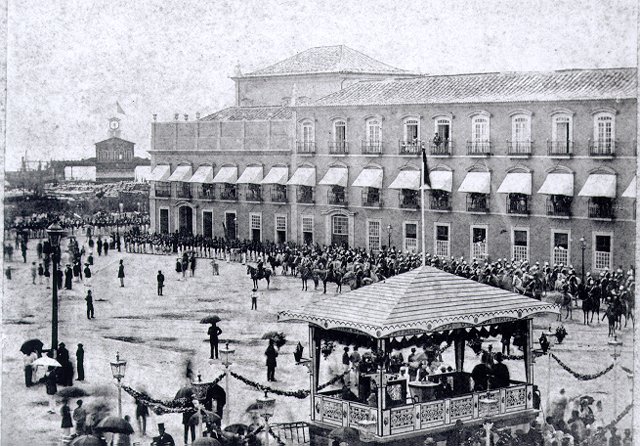
Inaugurated in 1813 by Dom João VI, the Real Theatro de São João marked Rio’s emergence as a cultural capital. Designed by Portuguese architect José da Costa e Silva, the theater’s neoclassical style was inspired by Lisbon’s Teatro Nacional São Carlos. Early performances included operas and dramas, and the theater quickly became a prestigious platform for Brazilian and international artists (Wikipedia).
Transformations and Renamings (1830–1923)
The theater’s name changed multiple times in line with Brazil’s shifting political tides, reflecting its place at the heart of national events—including the signing of Brazil’s first Constitution in 1824 (Cultura RJ). The venue hosted pioneering artists such as ballerina Maria Baderna and actress Maria Velluti, reinforcing its role as a site of both artistic and civic innovation.
The João Caetano Era and Artistic Flourishing
The mid-19th century saw the rise of João Caetano dos Santos, a transformative figure in Brazilian theater, after whom the theater was eventually named in 1923. Under his influence, the theater’s repertoire expanded, and it became a nurturing ground for Brazilian dramaturgy, including the debut of foundational works like Martins Pena’s “O juiz de paz da roça” (Wikipedia). International stars such as Sarah Bernhardt also graced its stage.
Destruction, Reconstruction, and Modernization
After suffering several fires, the theater was rebuilt in 1930, featuring a modernized design with a marble façade and improved acoustics (Rio Film Commission). A significant renovation in the late 1970s further enhanced both its technical and artistic capacities (Wikipedia).
Contemporary Role
Today, Teatro João Caetano presents a diverse program of theater, music, and dance, continually adapting to new artistic currents while preserving its historical and architectural integrity. Major restoration works—including the conservation of Di Cavalcanti’s modernist murals—have solidified its status as a protected cultural asset (Cultura RJ; Funarj). The theater is managed by the state’s Secretaria de Cultura and remains a vibrant center for both local and international productions.
Architectural Highlights
Neoclassical and Modernist Layers
- Initial Design: Stones originally meant for the city’s cathedral were used in construction. The neoclassical façade, with stately columns and grand entrance, was modeled after Lisbon’s São Carlos theater (Wikipedia; Rio Memórias).
- Transformations: After fires and reconstructions, decor shifted towards Brazilian themes, including a stage curtain by Jean-Baptiste Debret depicting allegories of Brazil.
- Modernist Interventions: In the 1960s, renovations modernized the structure while preserving its grandeur. Di Cavalcanti’s murals—Latin America’s first modernist theater panels—now adorn the foyer and have recently been restored (Funarj).
- Capacity: The theater seats 1,139 visitors, distributed across orchestra, noble balcony, and upper balcony. The auditorium’s horseshoe shape ensures excellent sightlines and acoustics (Funarj).
- Accessibility: Entrances and restrooms are wheelchair accessible, though balcony access requires stairs.
Exterior and Urban Context
The theater’s marble façade anchors Praça Tiradentes. A statue of João Caetano stands at the entrance, serving as a popular photo spot (Wikipedia). Its downtown location makes it easily reachable via metro, bus, or taxi.
Visiting Teatro João Caetano: Essential Information
Location
- Address: Praça Tiradentes, s/n - Centro, Rio de Janeiro - RJ, 20060-070, Brazil
- Nearest Metro: Uruguaiana or Carioca (Linha 1)
- Parking: Limited; public transport or ride-sharing is recommended
Visiting Hours
- Standard Hours: Tuesday to Sunday, 1:00 PM – 7:00 PM
- Performance Days: Box office opens two hours before showtime (usually evenings, Wednesday–Sunday)
- Closed: Mondays and public holidays
- Check the Funarj website for updates
Ticketing
- Purchase: At the box office or online via the official site. Online booking is strongly advised for popular shows.
- Prices: Generally R$30–R$120 (approx. USD 6–24), depending on the event.
- Discounts: Available for students, seniors, teachers, and sometimes local residents (with ID). Check for group rates and promotions.
Guided Tours and Educational Programs
- Tours: Guided tours are available on weekends (typically at 3:00 PM and 5:00 PM), highlighting the theater’s architecture, backstage areas, and historical milestones. Book in advance via the official website.
- Workshops: Educational activities and outreach programs are offered throughout the year; check schedules on Agenda Cultural Rio de Janeiro.
Accessibility
- Entrances: Ramps and wheelchair-friendly pathways lead to the main areas.
- Facilities: Accessible restrooms and designated seating are available. Note that balcony seating requires stairs.
- Assistance: Contact the theater in advance for special needs arrangements.
Facilities
- Seating: Spacious auditorium with orchestra, mezzanine, and balcony options.
- Restrooms: Available on all levels.
- Cloakroom: Near the main entrance.
- Concessions: Snacks and drinks sold before performances and during intermissions.
Dress Code and Etiquette
- Attire: Smart-casual or semi-formal is encouraged, especially for evening events.
- Behavior: Arrive on time, silence electronic devices, and respect no-photography policies during performances.
Nearby Historical Sites and Attractions
- Praça Tiradentes: Vibrant square with shops and cafes.
- Real Gabinete Português de Leitura: Breathtaking 19th-century library.
- Catedral de São Sebastião: Iconic modernist cathedral.
- Santa Teresa: Artistic neighborhood with studios and unique dining.
- Cinelândia Square: Home to the Municipal Theater and National Library.
- Museu Nacional de Belas Artes: Renowned art museum.
- Arcos da Lapa: Landmark aqueduct and nightlife hub.
Safety and Travel Tips
- Security: The theater is safe during events, with on-site staff.
- Street Safety: Stay alert at night; use official taxis/ride-sharing and avoid displaying valuables.
Frequently Asked Questions (FAQ)
Q: What are the Teatro João Caetano visiting hours?
A: Tuesday to Sunday, 1:00 PM–7:00 PM; performance nights may vary—check the official website.
Q: How can I purchase tickets?
A: Buy online via the official site or at the box office. Early booking is recommended.
Q: Is the theater accessible for visitors with disabilities?
A: Yes—main areas are accessible, but balconies require stairs. Contact staff for additional assistance.
Q: Are guided tours available?
A: Yes, on weekends with advance booking.
Q: What are some nearby historical attractions?
A: Praça Tiradentes, Real Gabinete Português de Leitura, Municipal Theater, Santa Teresa.
Q: Are performances in English?
A: Most are in Portuguese; some international shows may offer subtitles.
Enhance Your Visit
- Visuals: Visit the official site for photo galleries and virtual tours of the facade, murals, and auditorium.
- Interactive Maps: Online resources provide maps of Praça Tiradentes and nearby attractions.
- Videos: Explore video clips of past performances and the theater’s history.
Discover More
Teatro João Caetano is a living testament to Brazil’s theatrical history and a vibrant hub for contemporary culture. Whether you’re attending a show, joining a tour, or exploring Rio’s historical center, the theater offers a memorable cultural experience.
- For real-time event updates, ticket bookings, and exclusive content, download the Audiala app.
- Check the official Teatro João Caetano website for the latest schedules and visitor information.
- Explore more about Rio’s historic sites and cultural scene on Agenda Cultural Rio de Janeiro.
Listen to the full story in the app
The whole Teatro João Caetano,
told well.
Audio guides for 1,100+ cities across 96 countries. History, stories, and local insight — offline ready.
Verified, and shown.
Researched and written by the Audiala editorial team from historical records, architectural archives, and local expertise.
Researched from Wikidata, Wikipedia & official sources · fact-checked · How we make our guides →