Plan and listen to Fortaleza De São José Da Ponta Grossa with Audiala.
Audio guide in your pocket, itinerary in your browser. Built for the way you actually visit.
Introduction
Fortaleza de São José da Ponta Grossa, perched on the northern tip of Santa Catarina Island in Florianópolis, is a testament to Brazil’s colonial military ingenuity and cultural heritage. Constructed from 1740 under Brigadeiro José da Silva Paes, it formed a crucial part of a defensive triangle with neighboring forts, safeguarding the island from foreign invasions, especially by the Spanish during the 18th century. Today, the fortress offers visitors immersive historical experiences, panoramic views, and a variety of cultural activities, making it a must-see landmark for those interested in Brazil’s past and Florianópolis’s natural beauty (luxuryhomefloripa.com.br; fortalezas.ufsc.br).

Historical Background and Strategic Purpose
Colonial Foundations
The fortress was constructed between 1740 and 1744 as part of a “triângulo de fogo” (triangle of fire), a network of fortifications designed to secure the northern entrance to Ilha de Santa Catarina against colonial threats. This defensive system, overseen by Brigadeiro José da Silva Paes, reflected the intense rivalry between Portugal and Spain for control over the southern regions of Brazil and the Colônia do Sacramento (modern-day Uruguay) (fortalezas.ufsc.br; viagemeturismo.abril.com.br).
Labor and Location
Constructed with the labor of enslaved people, the fortress’s location atop Morro da Ponta Grossa allowed for surveillance over Baía Norte and direct communication with neighboring forts, forming an interconnected line of defense (guiafloripa.com.br).
Major Historical Events
Military Role and Notable Episodes
In the 18th century, the fortress played a pivotal defensive role. A notable event occurred in 1777 when Portuguese forces, stationed at the fort, surrendered to Spanish troops. This episode underscored the fortress's strategic importance and highlighted the volatility of colonial borders in southern Brazil (viagemeturismo.abril.com.br). The fort’s annexation by the Bateria de São Caetano in 1765 further reinforced its eastern defenses, especially near Jurerê and Canasvieiras (guiafloripa.com.br).
Architectural Features
Structural Design
The fortress boasts a polygonal plan adapted to the hillside, with three terraced levels connected by stone ramps. Its thick stone-and-lime walls, original cannons, and bastions exemplify 18th-century Portuguese military architecture (luxuryhomefloripa.com.br).
Notable Structures
- Casa do Comandante (Commander’s House): A two-story building housing the archaeological museum, with artifacts and historical displays (fortalezas.ufsc.br).
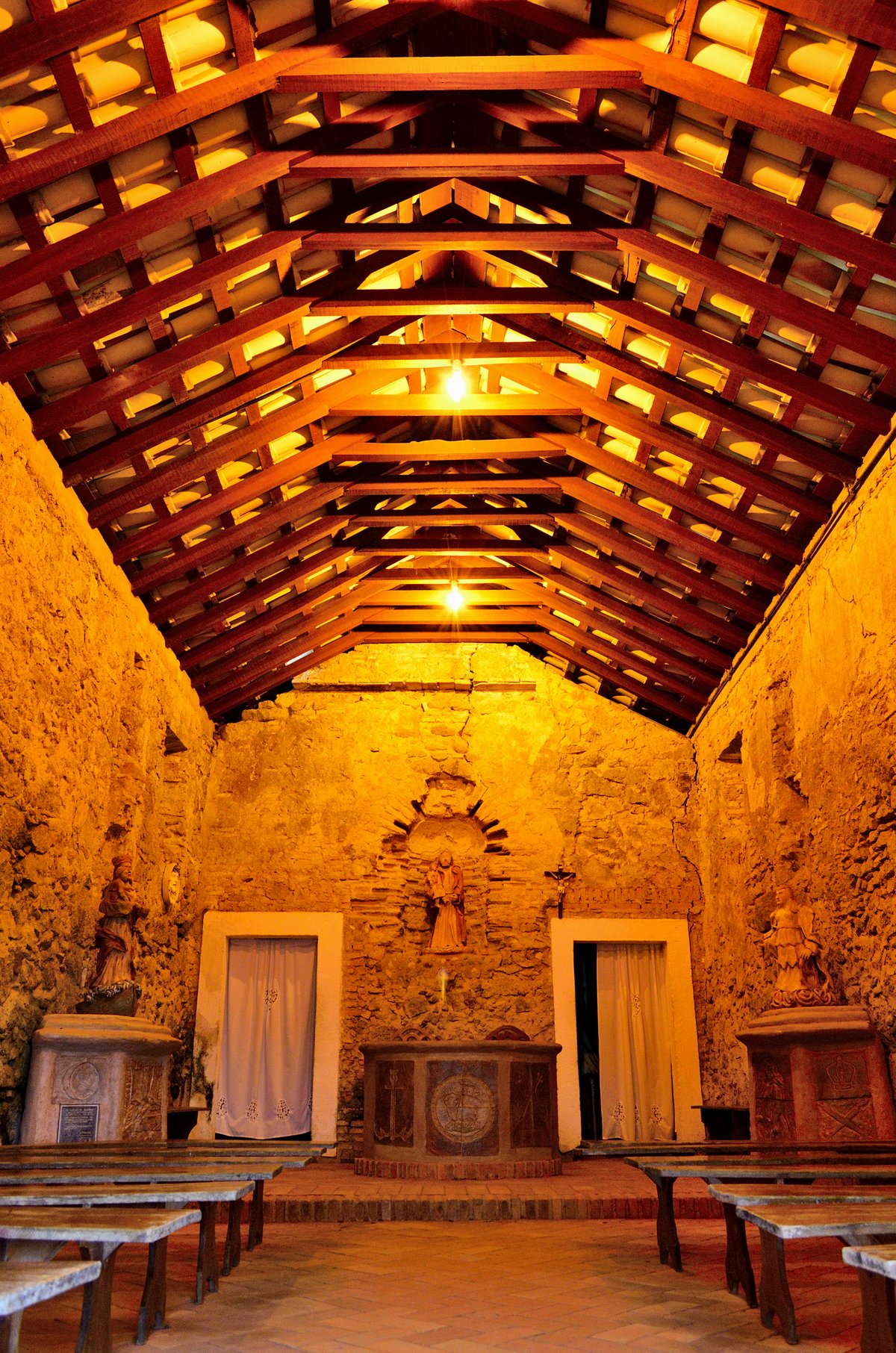
- Capela de São José (Chapel): The only chapel in the island’s defensive system still used for religious purposes, restored by IPHAN in the 1970s (viagemeturismo.abril.com.br).
- Original Cannons: Strategically placed and preserved, they evoke the site’s military past.
Preservation and Cultural Significance
Restoration Efforts
The fortress was among Brazil’s first monuments protected by IPHAN in 1938, acknowledging its national historical and cultural value (viagemeturismo.abril.com.br). Restoration works began in the 1970s, with major projects in 1991–1992. Managed by the Universidade Federal de Santa Catarina (UFSC) since 1992, the site now hosts educational activities, research, and community events (fortalezas.ufsc.br).
Cultural and Community Impact
The fortress serves as a center for cultural heritage education, tourism, and local events, integrating the community through exhibitions, workshops, and the continued use of the chapel (pointer.com.br). Its location adjacent to Praia do Forte and proximity to Jurerê enhances its appeal, supporting local tourism and economic development.
Visiting Information
Opening Hours
- January–February: 9:00–12:00 and 13:00–19:00
- March–December: 9:00–12:00 and 13:00–17:00
- Open daily, including weekends and holidays (Meus Roteiros de Viagem; Viagens e Caminhos).
Tickets
- Full Price: R$8.00–R$10.00 for adults
- Half Price: R$4.00–R$5.00 for students, seniors, and children
- Free Entry: First Sunday of each month (“Domingo da Gratuidade”), and for children under 7 (Santa Catarina com Crianças)
- Tickets are purchased at the entrance (cash preferred). Check the official website for updates (Fortalezas UFSC).
Facilities and Accessibility
- Access: The only UFSC fortress accessible by land. Approach is via a moderate uphill walk with some uneven terrain.
- Amenities: Restrooms, informational panels (Portuguese/English), picnic areas.
- Accessibility: Partial; some areas not suitable for wheelchairs due to stairs and ramparts.
- Parking: Limited paid parking near the entrance; street parking is available but fills quickly in high season.
Top Things to See and Do
- Tour the Casa do Comandante archaeological museum and the Capela de São José.
- Explore ramparts, cannons, and panoramic viewpoints with vistas over Baía Norte and Praia do Forte.
- Enjoy walking trails through Atlantic Forest vegetation; watch for birds and local wildlife.
- Participate in occasional cultural events and educational workshops.
- Combine your visit with nearby beaches (Jurerê, Praia do Forte) and other historic forts (Anhatomirim, Ratones).
Travel Tips
- Best Time to Visit: Late afternoon for sunset photography and cooler temperatures.
- What to Bring: Sun protection, water, comfortable shoes, and a camera.
- Guided Tours: Sometimes available in Portuguese; inquire at the entrance or check online for schedules or English-language options.
- Food: No restaurants inside; dining options are available at nearby beaches.
- Pets: Generally not allowed.
- Safety: Respect restoration areas and preservation rules; supervise children.
Frequently Asked Questions (FAQs)
Q: What are the opening hours?
A: 9:00 AM to 5:00 PM (seasonal variations apply).
Q: How much does admission cost?
A: R$8.00–R$10.00 for adults; discounts for eligible groups; free on first Sundays.
Q: Is the fortress accessible for people with disabilities?
A: Partial accessibility; main paths are accessible, but some areas require mobility.
Q: Are guided tours available?
A: Occasionally; check at the entrance or official website.
Q: Can I visit other nearby historical sites?
A: Yes, the fortress is part of a network including Anhatomirim and Ratones forts.
How to Get There
- By Car: From downtown Florianópolis, follow SC-401 north, then Avenida dos Búzios through Jurerê to Praia do Forte.
- By Public Transport: Take a bus to Jurerê, then a taxi or walk the remaining distance.
- By Boat: Less common, but possible via Praia do Forte’s pier (Encontra Florianópolis).
Summary and Visitor Encouragement
Fortaleza de São José da Ponta Grossa is a living symbol of Brazil’s colonial history and cultural resilience. Its well-preserved architecture, engaging exhibitions, and stunning natural setting provide a unique opportunity for visitors to connect with the past and enjoy Florianópolis’s scenic beauty. Plan your visit to take full advantage of guided tours, cultural programming, and the fortress’s picturesque surroundings. For up-to-date visiting hours, ticket information, and event schedules, consult the official UFSC website. Enhance your experience with the Audiala app and explore other regional attractions for a comprehensive cultural itinerary (luxuryhomefloripa.com.br; fortalezas.ufsc.br).
Listen to the full story in the app
The whole Fortaleza De São José Da Ponta Grossa,
told well.
Audio guides for 1,100+ cities across 96 countries. History, stories, and local insight — offline ready.
Verified, and shown.
Researched and written by the Audiala editorial team from historical records, architectural archives, and local expertise.
Researched from Wikidata, Wikipedia & official sources · fact-checked · How we make our guides →