Plan and listen to Edifício Da Alfândega with Audiala.
Audio guide in your pocket, itinerary in your browser. Built for the way you actually visit.
Introduction
The Edifício da Alfândega, located in the heart of Florianópolis, is a landmark that bridges the city’s maritime legacy with its vibrant cultural present. Originally built in 1876 as a customs house after the dramatic destruction of its predecessor, this neoclassical gem is now a bustling cultural center known as Casa da Alfândega. Visitors are drawn by its elegant architecture, rich history, artisan markets, and the dynamic atmosphere of the revitalized Largo da Alfândega. This comprehensive guide covers everything you need to know: visiting hours, ticketing, accessibility, historical significance, and insider tips for an enriching visit (cultura.sc.gov.br; guiafloripa.com.br; Tourb).


From Customs House to Cultural Treasure
Florianópolis, previously Desterro, thrived as a regional port in the 19th century. The original customs house, vital for trade and taxation, was destroyed in a catastrophic explosion in 1866 that left ten dead and the city shaken (cultura.sc.gov.br). In 1874, provincial authorities, led by João Tomé da Silva, initiated the construction of a new customs building. It was inaugurated on July 29, 1876, under the presidency of Alfredo D'Escragnolle Taunay, with plans by engineer Martinho Domiense Pinto Braga and construction by José Feliciano Alves de Brito (guiafloripa.com.br).
For nearly 90 years, the Edifício da Alfândega was central to Santa Catarina’s economic development, symbolizing resilience and prosperity as the city’s main customs post (Guia Melhores Destinos).
Architectural Highlights
Neoclassical Elegance
The building stands as a testament to 19th-century neoclassical design, featuring:
- Symmetrical façade with a central pediment
- Monumental Doric columns supporting a continuous balcony
- Large arched doors and oculi on the ground floor
- Over 1,300 square meters of interior space, including two lateral warehouses
Its architectural details not only reflect the era’s European influences but also contribute to the historical character of Florianópolis’s cityscape (cultura.sc.gov.br).
Transformation and Cultural Significance
Adaptive Reuse and Community Engagement
After customs operations ceased in 1964, the building was preserved for its heritage value. In 1998, it was transformed into Casa da Alfândega—now a vibrant center supporting over 120 local artisans, and hosting exhibitions, workshops, and cultural events that keep the city’s traditions alive (Cidade e Cultura).
The surrounding Largo da Alfândega, once waterfront, was reclaimed in the 1970s and revitalized in 2024. It now features landscaped gardens, water mirrors marking the historic shoreline, accessible pathways, public amenities, and a striking metal canopy inspired by Azorean lacework (Iphan).
Visiting Information
Hours & Admission
- Monday to Friday: 9:00 AM – 5:55 PM
- Saturday: 9:00 AM – 1:00 PM
- Closed Sundays
- Admission: Free; no tickets required (Visite Floripa).
Accessibility
- Main areas are wheelchair accessible, with ramps and wide doorways
- Accessible restrooms available
- Some upper floors may have restricted access due to preservation
Visitor Services
- On-site information desk for guidance
- Restrooms
- Nearby cafés and restaurants offering local cuisine
- Paid parking available within walking distance; public transit and taxis serve the area
Artisans & Events
- Galeria do Artesanato features local crafts: lacework, ceramics, textiles, woodwork, and more
- Artisans often present to demonstrate techniques and share stories
- Rotating exhibitions, workshops, and live performances—especially during festivals
- Check event calendars for special activities (Tourb)
Photography Tips
- Building façade and Largo’s metal canopy are excellent photo spots
- Interior galleries are well-lit for photography; respect signage regarding artwork and people
Nearby Attractions
- Mercado Público: Traditional market for local food and crafts
- Praça XV de Novembro: Historic square with colonial architecture
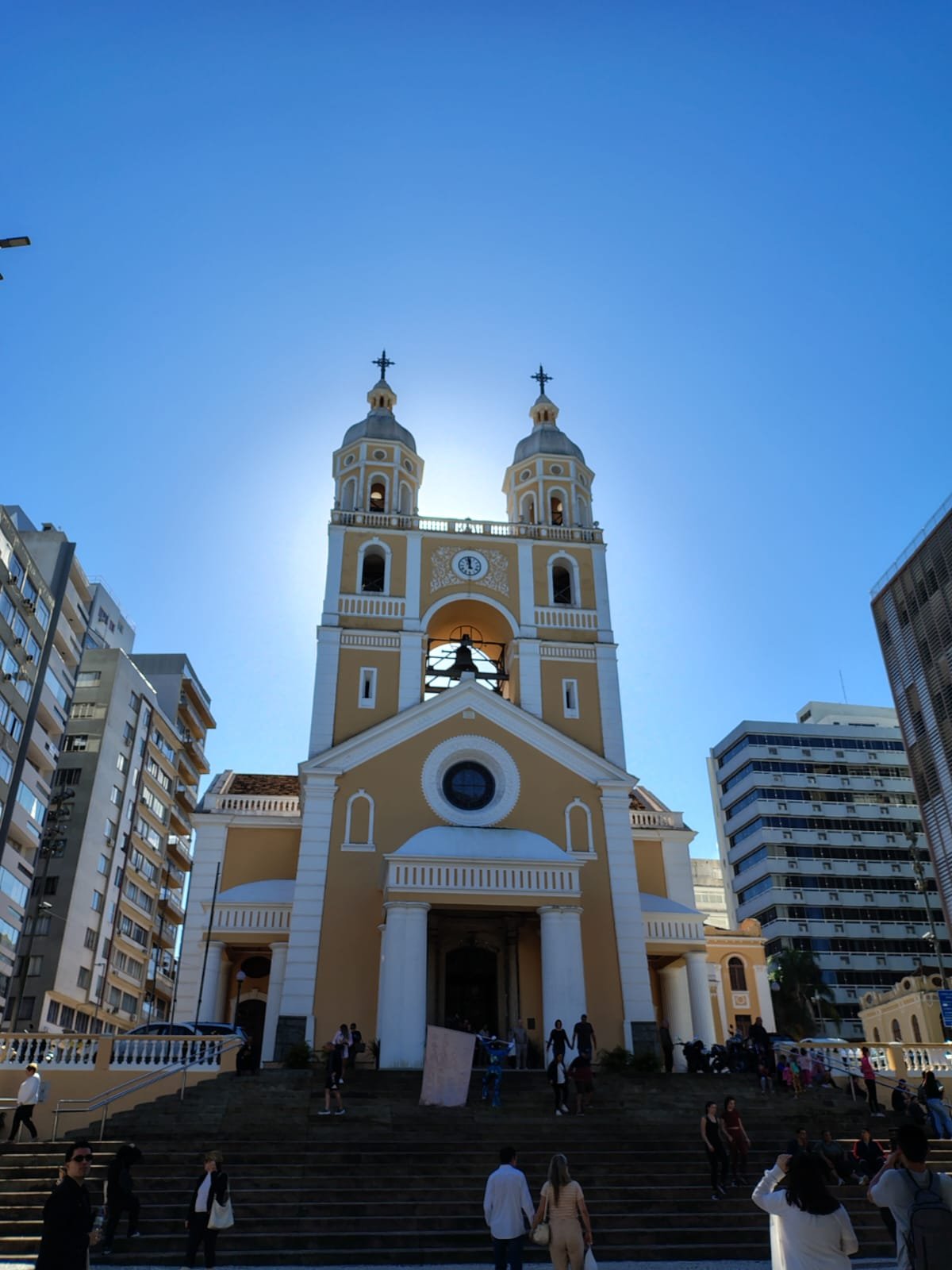
- Catedral Metropolitana: Neoclassical cathedral nearby
- Museu Histórico de Santa Catarina: Regional history museum at Palácio Cruz e Sousa
- Fortaleza de São José da Ponta Grossa: 18th-century fortress with panoramic views
Frequently Asked Questions (FAQ)
Q: What are the visiting hours?
A: Monday to Friday, 9:00 AM – 5:55 PM; Saturday, 9:00 AM – 1:00 PM; closed Sundays.
Q: Is admission free?
A: Yes, general access is free; some workshops or special exhibitions may charge a nominal fee.
Q: Is the site accessible for people with disabilities?
A: Yes, the main floors are accessible; some upper areas may be restricted.
Q: Are guided tours available?
A: Staff and artisans are available for information; check ahead for special guided tours.
Q: Can I buy local crafts?
A: Yes, the Galeria do Artesanato offers handmade goods from local artisans.
Q: What are the best times to visit?
A: Weekdays are quieter; Saturdays are lively with markets and events.
Listen to the full story in the app
The whole Edifício Da Alfândega,
told well.
Audio guides for 1,100+ cities across 96 countries. History, stories, and local insight — offline ready.
Verified, and shown.
Researched and written by the Audiala editorial team from historical records, architectural archives, and local expertise.
Researched from Wikidata, Wikipedia & official sources · fact-checked · How we make our guides →