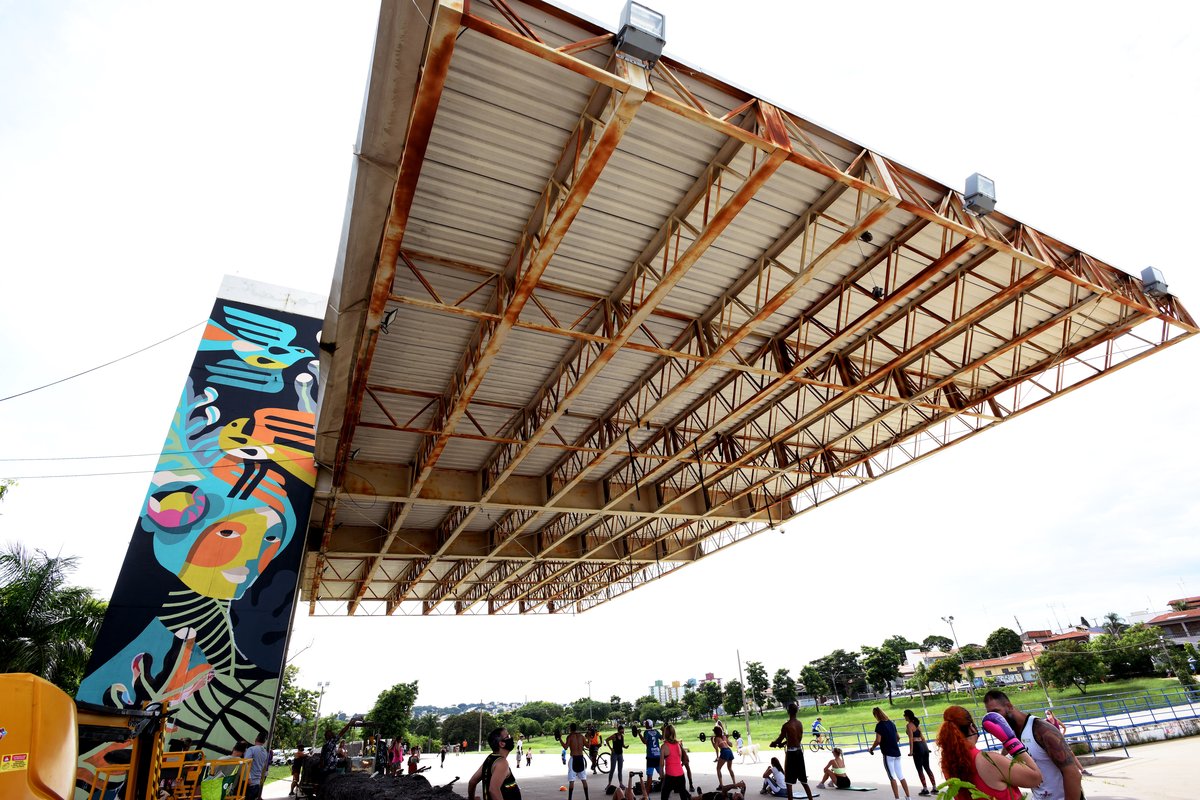
Plan and listen to Largo Do Rosário with Audiala.
Audio guide in your pocket, itinerary in your browser. Built for the way you actually visit.
Introduction
Largo do Rosário, officially named Praça Visconde de Indaiatuba, is a landmark public square in the heart of Campinas, São Paulo, Brazil. With over two centuries of history, it stands as a symbol of Afro-Brazilian heritage, civic activism, and urban transformation. From its origins as a gathering place for the Irmandade de Nossa Senhora do Rosário to its present status as a vibrant social and cultural hub, Largo do Rosário invites visitors to experience the layered narratives that define Campinas (Google Arts & Culture; ACidadeON).
This comprehensive guide details the square’s history, cultural significance, visitor information (including hours and accessibility), special events, and practical tips for exploring this emblematic site.
Origins and Foundation
Largo do Rosário traces its roots to the early 19th century, when the Irmandade de Nossa Senhora do Rosário—an Afro-Brazilian religious brotherhood—founded the Igreja do Rosário in 1817. The church and its surrounding square became central to the social and spiritual life of Campinas's Black community, serving as a venue for religious observances, fundraising for emancipation efforts, and celebrations blending African, Catholic, and local traditions (Google Arts & Culture; ACidadeON).
Urban Transformations
Throughout the 19th and 20th centuries, the square underwent numerous redesigns to accommodate public gatherings, feiras livres (open-air markets), and official ceremonies. Landmark reforms included landscaping, the installation of monuments, and the distinctive Portuguese stone pavement. Notably, the square was renamed Praça Visconde de Indaiatuba in 1887 (Wikipedia; Emdec).
Demolition and Urban Impact
In 1956, the original church was demolished to enable the expansion of Avenida Francisco Glicério, a move emblematic of mid-century urban modernization that also erased a vital Afro-Brazilian landmark. A new, smaller church was constructed in Jardim Chapadão, but the loss of the original site remains a point of cultural reflection (Wikipedia; ACidadeON; Campinas.com.br).
Social, Political, and Cultural Functions
Historically, Largo do Rosário served as a stage for social interaction, religious processions, political rallies, and the evolution of public transportation—from horse-drawn carriages to trams and buses (Emdec). The square also fostered Campinas’s gastronomy, with establishments like Restaurante Rosário becoming local icons.
Heritage and Contemporary Role
Despite urban changes, the square retained its popular identity. In 1996, it was designated a protected heritage site by the Conselho de Defesa do Patrimônio Cultural de Campinas (Condepacc), and subsequent renovations have preserved its historic paving, landscaping, and open layout (Wikipedia; Correio RAC).
Significance for Afro-Brazilian History
Largo do Rosário remains a cornerstone of Campinas’s Black heritage, commemorating the resilience and community-building efforts of the Irmandade do Rosário. Its history stands as a testament to the city’s complex legacies of resistance, faith, and cultural diversity (ACidadeON; Google Arts & Culture).
Visitor Information
Opening Hours
Largo do Rosário is a public square open 24 hours a day, seven days a week. While accessible at all times, visiting during daylight is recommended for safety and to best enjoy its features.
Admission & Tickets
No ticket is required—entry is free for all visitors.
Accessibility
The square is designed for accessibility, with paved walkways, benches, and ramps suitable for those with reduced mobility. Some cobblestone areas may require extra care.
Getting There
- Address: Intersection of Avenida Francisco Glicério, General Osório, and Barão de Jaguara, downtown Campinas.
- Public Transport: Multiple bus lines stop nearby (Emdec).
- By Car: Street and lot parking available, though traffic may be heavy at peak times.
- By Foot: Easily reachable from other central attractions.
Nearby Attractions
- Museu da Cidade de Campinas: Local history museum.
- Campinas Cathedral: Architectural and religious landmark.
- Restaurants & Cafés: Including the historic Restaurante Rosário.
- Carlos Gomes Theater: A short walk away.
Events & Cultural Programming
Largo do Rosário is a hub for major city events:
- Parada do Orgulho LGBT: Campinas’s Pride Parade, with the square as its traditional starting point (band.com.br).
- Virada Cultural Paulista: 24-hour arts and music festival (Concert Archives).
- Carnaval: Notably the “Bloco Tomá na Banda” parade (Campinas.com.br).
The square is also a venue for local markets, concerts, and artistic performances throughout the year.
Visuals & Media

Interactive Map of Largo do Rosário
Frequently Asked Questions (FAQ)
Q: What are the visiting hours?
A: The square is open 24/7.
Q: Is there an entrance fee?
A: No, access is free.
Q: Are guided tours available?
A: Local operators include the square in historical walking tours; check with Campinas’s tourism office.
Q: Is the site accessible for people with disabilities?
A: Yes, the square is accessible, though some cobblestones may be uneven.
Q: Is it safe to visit?
A: The area is generally safe during the day. Exercise caution at night and avoid displaying valuables.
Q: Are there public restrooms?
A: Not directly within the square, but nearby cafés and shops have facilities.
Summary & Recommendations
Largo do Rosário is a living testament to Campinas’s layered history—rooted in Afro-Brazilian resilience, marked by urban change, and continually renewed through civic life and cultural celebration. Its accessible, central location and rich programming make it a must-see for visitors. For the fullest experience, visit during daylight, explore the historic center on foot, attend a local event, and consider a guided tour to deepen your understanding of its heritage (ACidadeON; Wikipedia; Correio RAC; Campinas.com.br).
Listen to the full story in the app
The whole Largo Do Rosário,
told well.
Audio guides for 1,100+ cities across 96 countries. History, stories, and local insight — offline ready.

Verified, and shown.
Researched and written by the Audiala editorial team from historical records, architectural archives, and local expertise.
Last reviewed
Researched from Wikidata, Wikipedia & official sources · fact-checked · How we make our guides →