forest
Amazon, Properly Seen
Manaus and Belém open the door to a river world shaped by rain, ferries, açaí, and distances that make road-trip logic look naive. The Amazon is not backdrop here; it is infrastructure, cuisine, and daily life.
Brazil works because it refuses to be one thing: the same country gives you Amazon river towns, baroque churches, city beaches, and some of the best street food in the hemisphere.
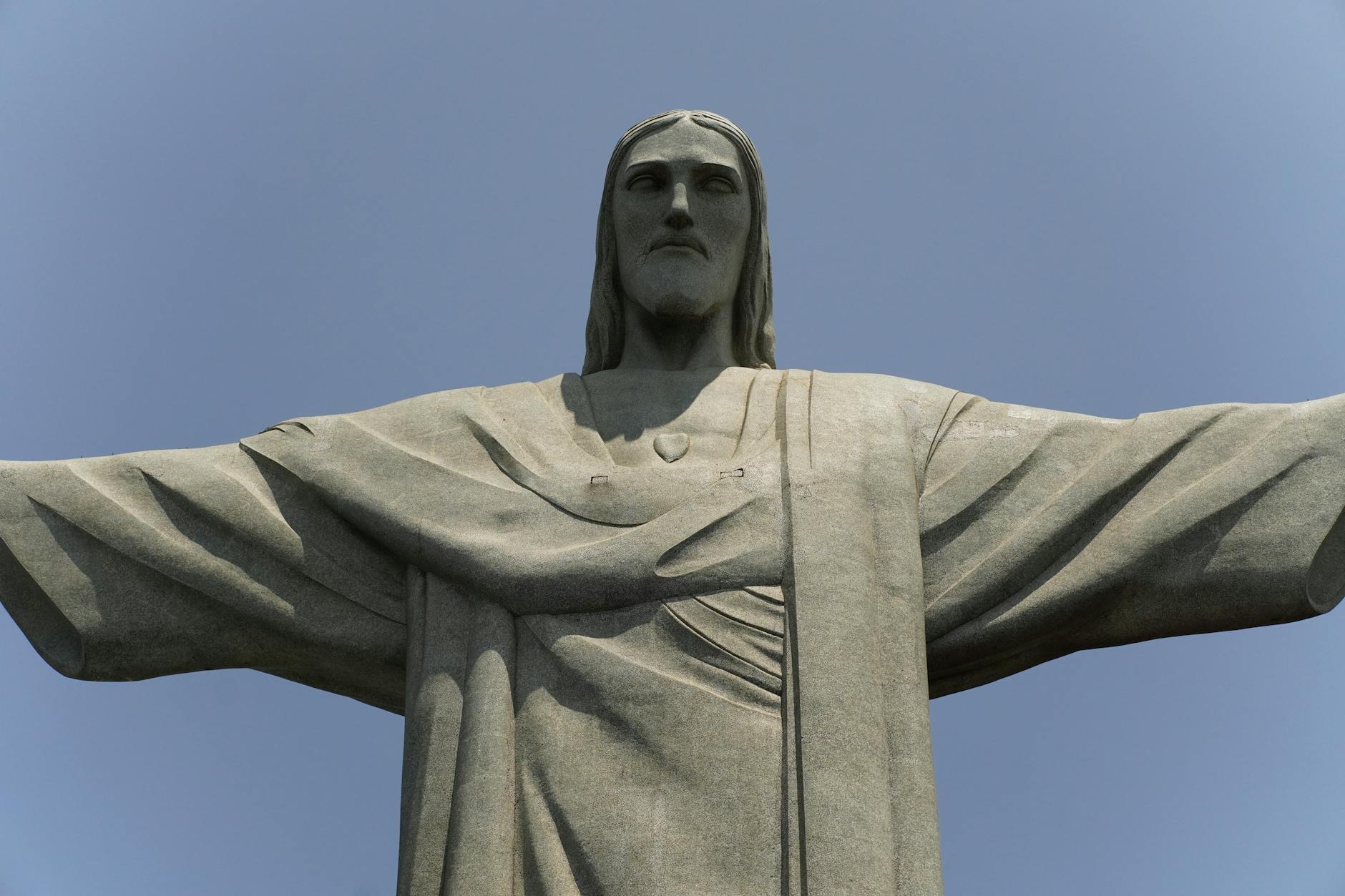 Brazil
EntryUS, Canadian, and Australian travelers need an eVisa; many EU and UK travelers do not for short stays.
BBrazil travel guide starts with a surprise: one country holds Amazon rivers, baroque hill towns, and Atlantic beaches longer than many continents.
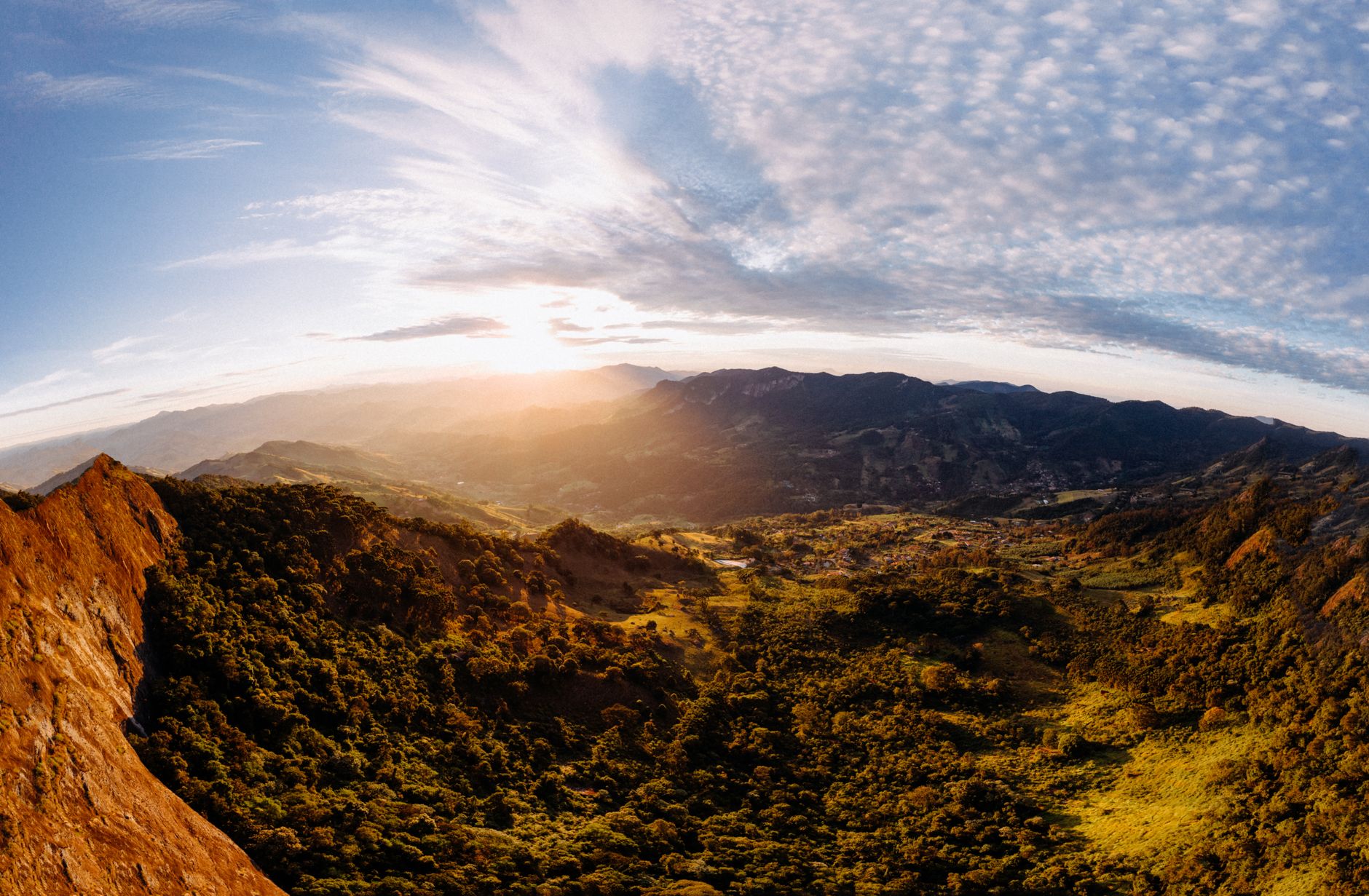
Brazil rewards travelers who stop treating it as a single destination. In one trip, you can wake to glass towers and Japanese lunch counters in São Paulo, spend the next day under granite peaks and salt air in Rio De Janeiro, then finish among the steep lanes and church facades of Ouro Preto. Geography does the heavy lifting here: rainforest in the north, dry backlands in parts of the Northeast, wetlands in the Pantanal, and cooler highlands in Minas Gerais and the south. Distances are huge, which means planning matters. So does focus. The best Brazil trips pick a rhythm, not a checklist.
Culture lands harder when you tie it to a place. Acarajé belongs to Salvador and its Afro-Brazilian street life, not to a generic "local cuisine" list. Tacacá makes sense in Belém and Manaus, where Amazon ingredients still shape the table. Feijoada tastes different after a Saturday afternoon in Rio De Janeiro, and pão de queijo is really a Minas habit before it is a national snack. Portuguese is the national language, but accents, slang, and manners shift by region. Brazil can feel like one country on paper and several countries in practice. That's part of the point.
Peoples Before Portugal, c. 11000 BCE-1500
Morning mist hangs over Lagoa Santa in Minas Gerais, and an archaeologist lifts a skull from the earth in 1975. She will be called Luzia, and she will trouble every tidy story people liked to tell about the peopling of the Americas. Ce que l'on ignore souvent, c'est que Brazil does not begin with Cabral's sails on the horizon; it begins with faces, fires, burials, and paths worn into the ground thousands of years earlier.
The Amazon too was no empty green curtain waiting for Europe to discover it. On Marajó Island near Belém, people raised immense earthen mounds between roughly 400 and 1300 CE, while across the basin they made terra preta, dark engineered soil richer than much of the jungle floor around it. That changes everything. A forest Europeans took for untouched nature had already been shaped by human hands, by cooks, farmers, potters, and chiefs whose names mostly vanished when disease arrived before the chroniclers did.
Along the Atlantic coast, Tupinambá-speaking peoples lived in a world of alliances, revenge, and ritual warfare that horrified Europeans because it refused European categories. Hans Staden, a German gunner captured in 1552, described prisoners kept for months, even years, before ceremonial death and cannibal feasts meant to absorb an enemy's strength. Montaigne read him closely. The supposed savages became a mirror in which Europe saw its own religious massacres more clearly.
This first Brazil had no single throne, no capital, no anthem, but it had politics, agriculture, cosmology, and trade routes that reached farther than the Portuguese guessed in 1500. And when those ships did arrive, they did not land in a void. They entered a crowded human world already old, already argued over, already full of the dead.
Luzia has no recorded title or dynasty, yet her reconstructed face remains the oldest known face of Brazil and the quiet rebuke to every history that starts with a European flag.
Hans Staden claimed the feared chief Cunhambebe laughed at his moral outrage and replied, simply, "I am a jaguar."
Conquest, Sugar, and Gold, 1500-1808
On 26 April 1500, Pêro Vaz de Caminha sits down to write to King Manuel I. His letter is practical, curious, and oddly intimate: naked bodies, red parrots, a first mass on the shore, and at the end a personal request that the king free his son-in-law from prison. Founding documents are rarely so human. Brazil enters written history with bureaucracy, wonder, and family lobbying in the same breath.
The coast did not become Portuguese at once. French traders came for brazilwood, Villegaignon founded France Antarctique in Guanabara Bay in 1555, and the struggle for the future Rio De Janeiro was fought with muskets, priests, and indigenous alliances. José de Anchieta, the Jesuit who learned Tupi and wrote verses in the sand while held during negotiations, belongs to that strange early chapter when catechism and diplomacy walked hand in hand.
Then sugar remade the map. In Pernambuco, around Olinda and what is now Recife, and in the bay of Salvador, engenhos multiplied, cane fields spread, and enslaved Africans were forced into the furnace of the plantation world. Ce que l'on ignore souvent, c'est que the grand baroque churches people admire today were paid for with terrifying arithmetic: bodies, lashes, ships, and credit. Sweetness at table. Horror in the mill yard.
The 18th century shifted the axis inland. Gold and diamonds discovered in Minas Gerais drew fortune-seekers toward Vila Rica, today's Ouro Preto, where churches rose like theatrical sets above steep streets and tax officials counted every grain they could. The crown demanded its fifth, the famous quinto, and when shortage met resentment the colony produced both splendor and conspiracy, culminating in the failed Inconfidência Mineira of 1789.
So Brazil entered the 19th century richer, larger, and more unequal than ever, with sugar on the coast and gold in the hills, but also with elites who had learned an unsettling lesson: Lisbon was far away, and empires can wobble. Napoleon would soon prove the point.
José de Anchieta, bent by illness and stubborn in faith, helped invent colonial Brazil in grammar books, peace talks, and missionary theater long before he became a saint in marble.
The letter that first described Brazil in such detail lay unnoticed in Lisbon's archives for 273 years before it was rediscovered in 1773.
A Tropical Court and an Unfinished Nation, 1808-1889
Imagine Rio De Janeiro in 1808: ships crowding the bay, crates on the docks, noblewomen in heavy dresses sweating in the heat, clerks hauling archives, silver, and etiquette across the Atlantic. The Portuguese royal court has fled Napoleon and brought the state with it. One can hardly invent a more extravagant scene. A colony wakes up one morning to find itself hosting a monarchy.
Dom João opens the ports, founds institutions, and turns Rio from imperial outpost into the working capital of the Portuguese world. Libraries, academies, a royal press, botanical ambitions, all arrive with him. But court life in the tropics keeps its comic edge. Chickens run through service corridors, protocol collides with mud, and European rank must adapt to a city still powered by enslaved labor.
Independence in 1822 comes not from a colonial mob storming palaces but from a prince of the House of Braganza deciding, by the Ipiranga River near São Paulo, that Brazil will separate under his own crown. "Independência ou Morte" enters legend in one stroke. The reality was slower, more negotiated, more aristocratic. Brazil becomes an empire before it becomes a republic, which tells you much about the country and even more about its taste for political improvisation.
Pedro II, crowned as a boy and ruling for decades, gave the throne a strange dignity: scholarly, restrained, almost republican in manner while remaining every inch an emperor. He loved photography, science, and conversation, and he traveled through Brazil as if trying to understand the immensity he nominally governed. Yet the great stain remained slavery. The Lei Áurea of 1888, signed by Princess Isabel, ended it at last, far later than it should have, and without land, compensation, or justice for the freed.
A year later the monarchy fell with astonishing quiet. No Bastille, no great trial, just a coup in 1889 and a tired imperial family sent into exile. That silence mattered. It left Brazil modernized in form but unresolved in soul, carrying into the republic the old habits of hierarchy, plantation power, and personal rule.
Pedro II looks serene in portraits, yet behind the beard stood a ruler who lost sons, buried an empire, and went into exile with more books than bitterness.
When the court arrived in Rio, houses needed for nobles were reportedly marked with the letters "PR" for príncipe regente; cariocas joked the initials meant "ponha-se na rua" — get out.
Republics, Dictators, and the Democratic Return, 1889-1988
The First Republic belonged less to the people than to regional oligarchs, especially the coffee interests of São Paulo and the dairy-political machines of Minas Gerais. Ballots existed, but power often sat where land, patronage, and rifles sat. Ce que l'on ignore souvent, c'est how personal the system remained: colonels, family names, backroom agreements, and local fear did as much governing as any constitution.
Getúlio Vargas arrived in 1930 as the man who would break that old order, and he did, though not always in ways democrats would admire. He could sound like a father, dress like a statesman, and rule like a conspirator. Under the Estado Novo from 1937, he centralized power, censored opponents, courted workers, and built a new national myth in which industry, labor law, radio, and samba all marched under the same flag. Brazil learned the modern art of being mass-mediated.
Then comes one of the great theatrical gestures in Brazilian history. In August 1954, cornered by scandal and pressure, Vargas shoots himself in the Catete Palace in Rio and leaves behind the famous line: "I leave life to enter history." He knew exactly what he was doing. A political crisis became a national drama, and the dead leader won more loyalty in a page of farewell than many living presidents manage in a decade.
Juscelino Kubitschek answered this mood with speed and concrete. Brasília rose from the plateau between 1956 and 1960, the capital as manifesto: modern, inland, aerodynamic, almost unreal. Meanwhile, older cities kept their own stubborn truths. Salvador carried Atlantic memory and African inheritance; Manaus remembered rubber wealth and collapse; Recife kept the sharp intelligence of a port that has seen too much to trust slogans.
The military coup of 1964 froze many of these arguments under censorship, prison, and fear. Yet music, church networks, students, labor movements, and ordinary families kept pressing against the silence until the democratic opening became irreversible. The Constitution of 1988 did not solve Brazil. It gave Brazilians a better language with which to fight over it.
Getúlio Vargas remains the unsettling uncle at the family table of Brazilian history: seductive, shrewd, paternal, and never to be trusted without reading the small print.
Brasília was built so fast that workers slept in provisional camps while Oscar Niemeyer and Lúcio Costa sketched a capital that looked, from above, like an aircraft or a cross depending on one's faith.
Democracy, Memory, and the Brazil Still Being Written, 1988-present
The democratic era opens not with serenity but with unfinished business. Inflation devours salaries, corruption scandals corrode trust, and each election seems to promise a new beginning before meeting the old obstacles: inequality, race, land, policing, patronage, and a state that can be both majestic and absent. Brazil in these decades is not a calm republic. It is a restless conversation held in congresses, favelas, television studios, and family kitchens.
The Plano Real of 1994 gave ordinary life a kind of relief historians sometimes underestimate. Prices stopped dissolving in the hand. People could plan. Such moments matter more than marble statues. A nation changes when mothers know what bread will cost next week, when wages can be counted without panic, when the future becomes measurable again.
Under Luiz Inácio Lula da Silva, millions rose through social programs and commodity-fueled growth, and Brazil briefly carried itself with the confidence of a country finally arriving at the center of the world stage. Then came recession, Lava Jato, Dilma Rousseff's impeachment, Jair Bolsonaro's polarizing presidency, and a level of civic fracture that entered homes as much as headlines. Even the pandemic became a political battlefield.
And yet the country keeps producing forms of life too inventive for simple decline stories. In Belém, Amazonian cuisine went from local habit to global fascination without losing its sting of tucupi and jambu. In Rio De Janeiro and São Paulo, artists, musicians, and activists kept remaking the national script. The old phrase Ordem e Progresso remains on the flag, but Brazil's true engine is argument, not order.
That is why its history does not end in closure. It ends, if one can call it an ending, in dispute over memory itself: slavery and its afterlives, dictatorship and accountability, indigenous land, the Amazon, and who gets to speak for the nation. A country this large does not settle its past. It stages it again, generation after generation.
Lula's biography still disorients the old hierarchies of the country: a metalworker from Pernambuco who reached the presidency and turned class mobility into a national drama.
During the inflation years before the Real Plan, some supermarkets in Brazil reportedly changed prices several times in a single day, turning grocery shopping into a race against the clock.
Brazilian Portuguese does not speak; it ripens. In São Paulo, a waiter says "pois nao" and the phrase lands with such velvet efficiency that even refusal sounds like a form of care. In Rio De Janeiro, the final s turns to sh, and the city seems to brush every word with sea salt before releasing it.
Then comes the national masterpiece: intimacy without permission. People call each other meu amor, querida, meu bem, sometimes after twelve seconds of acquaintance, and what would sound theatrical elsewhere becomes practical here, as if tenderness were the shortest route through traffic. A country can choose to make language a weapon. Brazil often prefers it as a hammock.
Listen harder and the grammar starts to confess regional loyalties. In Recife and Salvador, tu survives with verbs that schoolteachers would reject and life has already approved; in Belém, vowels darken and sweeten at once; in Manaus, river and forest seem to slow the sentence just enough for the air to enter it. Even saudade, that exported celebrity, means less on the dictionary page than in a voice note sent at 23:14, with a fan whirring in the background and someone missing not only a person, but a whole hour of their former life.
Brazilian cuisine behaves like geology. Indigenous cassava sits under Portuguese pork, under West African dendê, under Japanese precision in São Paulo, under German stubbornness in the South, and none of these layers cancels the one below. They remain visible. That is the appetite of a serious nation.
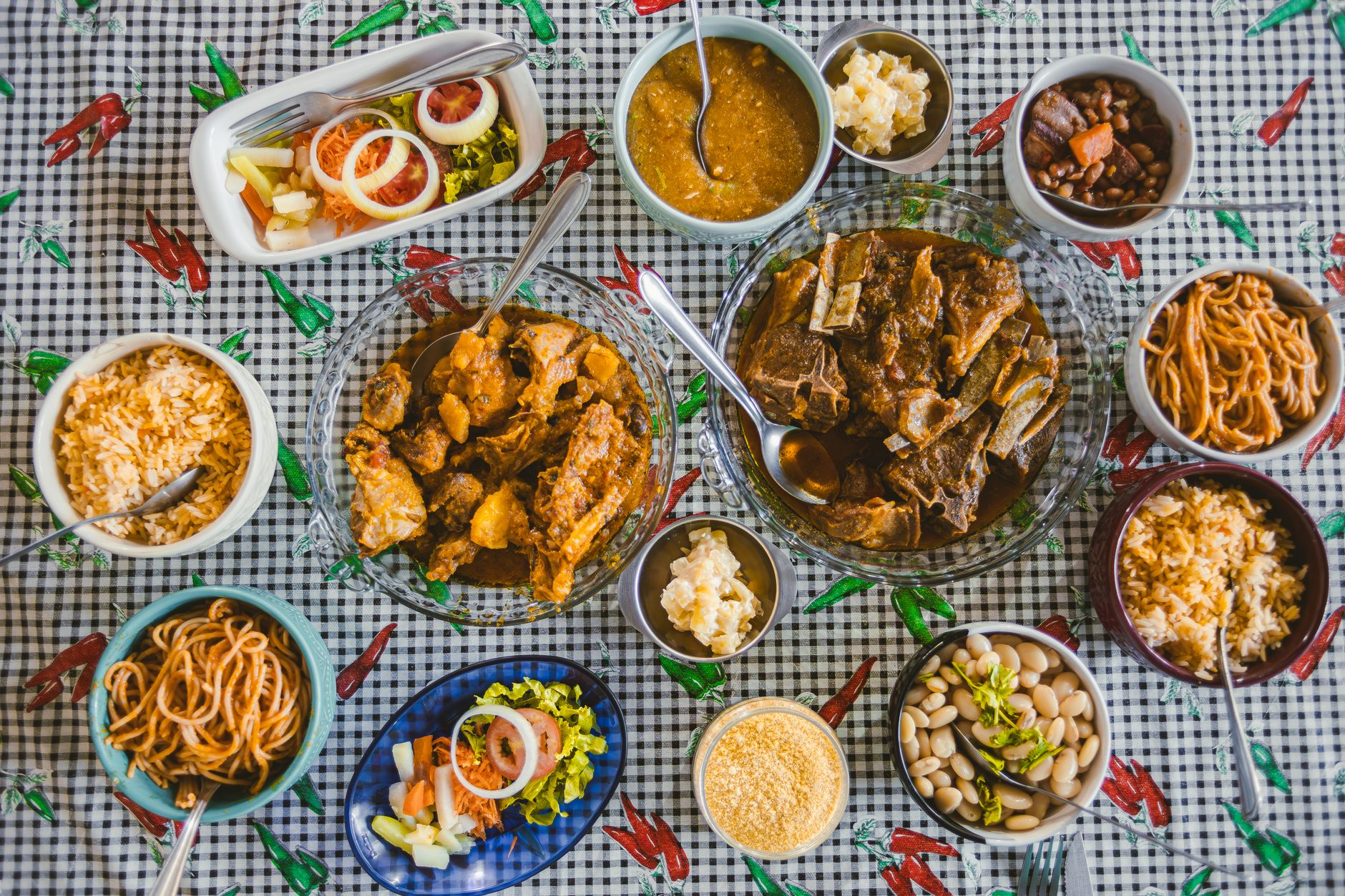
Feijoada arrives as a social verdict, not a lunch. Saturday, noon, friends, orange slices, farofa, couve, black beans carrying pig parts that once asked history to be less brutal and were ignored. After the first plate, conversation slows. After the second, honesty begins.
Then Brazil performs its favorite miracle: it turns the same ingredient into opposite philosophies. Açaí in Belém comes beside fish and farinha, dark, earthy, almost severe. The version in Rio De Janeiro and São Paulo appears as a frozen purple bowl with banana and guarana syrup, a fruit translated into gym culture and sold back as innocence. Both are Brazil. Contradiction is one of its staple foods.
The finest lesson may be pão de queijo in Minas country, especially on the road to Ouro Preto, still warm enough to burn the fingertips. It looks modest. That is its trick. Bite through the thin crust and the center stretches, fragrant with queijo minas and tapioca starch, and suddenly breakfast has become theology.
Brazilian music understands that rhythm is first a matter of the body. Samba in Rio De Janeiro does not ask whether you can dance; it asks whether your knees have accepted the terms of the evening. A surdo drum enters, a cavaquinho answers, and the entire street acquires an extra circulatory system.
Bossa nova, by contrast, behaves like a dangerous whisper. Apartment music, beach music, insomnia music. João Gilberto reduced performance to almost nothing and discovered that almost nothing, if done with absolute control, can reorder a century. The guitar does not accompany the voice. The guitar teaches the voice how to breathe.
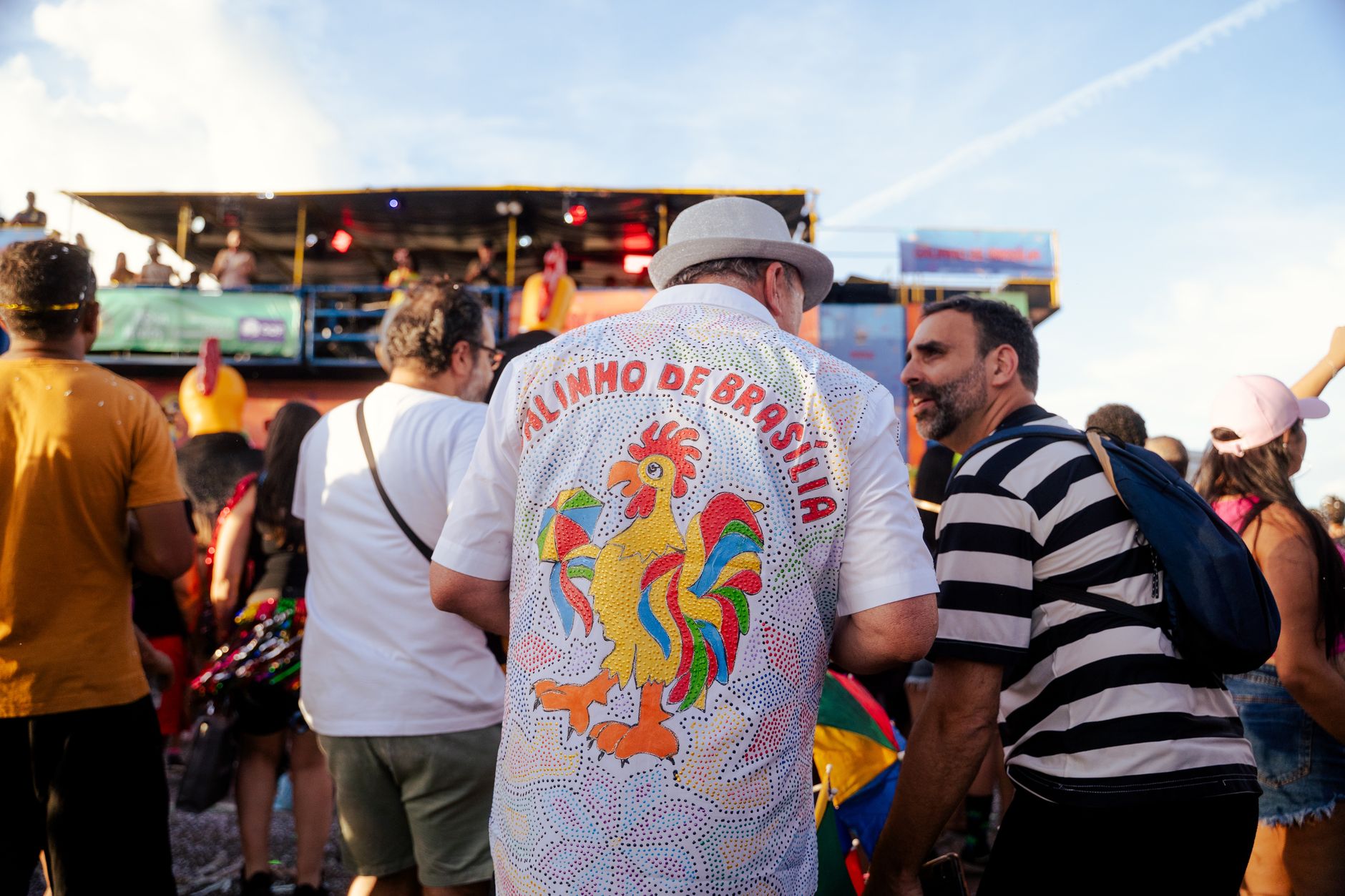
Travel north and the nation becomes more percussive, more public, less interested in polite restraint. In Salvador, bloco afro rhythms strike the chest before the ear; in Recife, frevo horns and impossible umbrellas create a kind of civic delirium performed at sprinting speed. One understands very quickly that carnival is not an escape from reality. It is one of reality's official forms.
And then there is forro, which deserves more foreign converts than it gets. In the Northeast, accordion, triangle, zabumba, and two people turning close enough to share the same weather. Courtship can be verbose. Forro has better manners.
Brazilian etiquette is warm, but it is not loose. This distinction matters. People kiss hello, touch your arm mid-sentence, ask where you are from before your coffee has arrived, and yet the whole exchange rests on invisible calibrations of age, class, region, and confidence that an outsider ignores at personal risk.
Titles still do serious work. Senhor and senhora can rescue a first encounter; first names come quickly, but not carelessly; waiting your turn is a flexible concept until the moment hierarchy enters the room, when everyone suddenly knows the score. Brazil looks improvisational from outside. Often it is choreography performed with a smile so natural you miss the discipline.
The table reveals everything. Refuse food too firmly and you may sound cold; accept without appetite and you may be fed past reason. In family houses and botecos alike, generosity arrives in seconds, then insists. More rice, more farofa, one more brigadeiro, a little more molho, and why are you pretending to be shy when life is already short.
A country is a table set for strangers. Brazil adds one clause: strangers do not remain strangers long, but they are expected to notice the ritual. Say good morning to the doorman. Thank the woman at the bakery. Learn to linger half a beat before leaving. The half-beat counts.
Brazilian religion rarely chooses a single register. In one church, gold leaf climbs the altar in obedient Catholic ecstasy; outside, someone ties a ribbon, makes a private bargain with a saint, and means every syllable literally. Faith here is often ceremonial, practical, and magnificently syncretic, which is another way of saying that doctrine has had to share the room.
In Salvador, the white clothes of the Baianas do not merely decorate the street. They carry Candomble memory, discipline, and cosmology into public daylight, with acaraje sold not as folklore but as a food bound to Iansa and to liturgical history that can still stain your fingertips orange with dendê. Brazil has perfected the art of making the sacred visible without simplifying it for visitors.
Catholicism built the façades, but Afro-Brazilian religions changed the temperature of the air. Candomble and Umbanda taught the nation to hear drums as invocation, to understand possession not as spectacle but as presence, and to accept that the body may sometimes know first. Outsiders often rush toward exoticism here. Better to arrive with modesty and eyes open.
Even in cities that advertise speed, private devotion interrupts the day. A driver touches the dashboard saint before starting. A woman crosses herself passing a church in Recife. Fitinhas flutter at church gates in Salvador. Heaven, in Brazil, is not remote administration. It is customer service with candles.
Brazilian architecture enjoys extremity. In Ouro Preto, churches rise from steep streets like arguments made in carved wood and gilded excess, Aleijadinho turning soapstone and devotion into a form of muscular suspense. Baroque here is not decorative fluff. It is religion sweating uphill.
Then the twentieth century arrives and decides that curves, pilotis, and white concrete might express the future better than any sermon. Brasilia is the official manifesto, yes, but the aftershocks travel everywhere; in São Paulo, modernism hardens into intellect and scale, while in Rio De Janeiro, buildings often seem to remember that mountains and sea were already doing half the design work. Oscar Niemeyer understood a fact many moralists dislike: elegance can be structural.
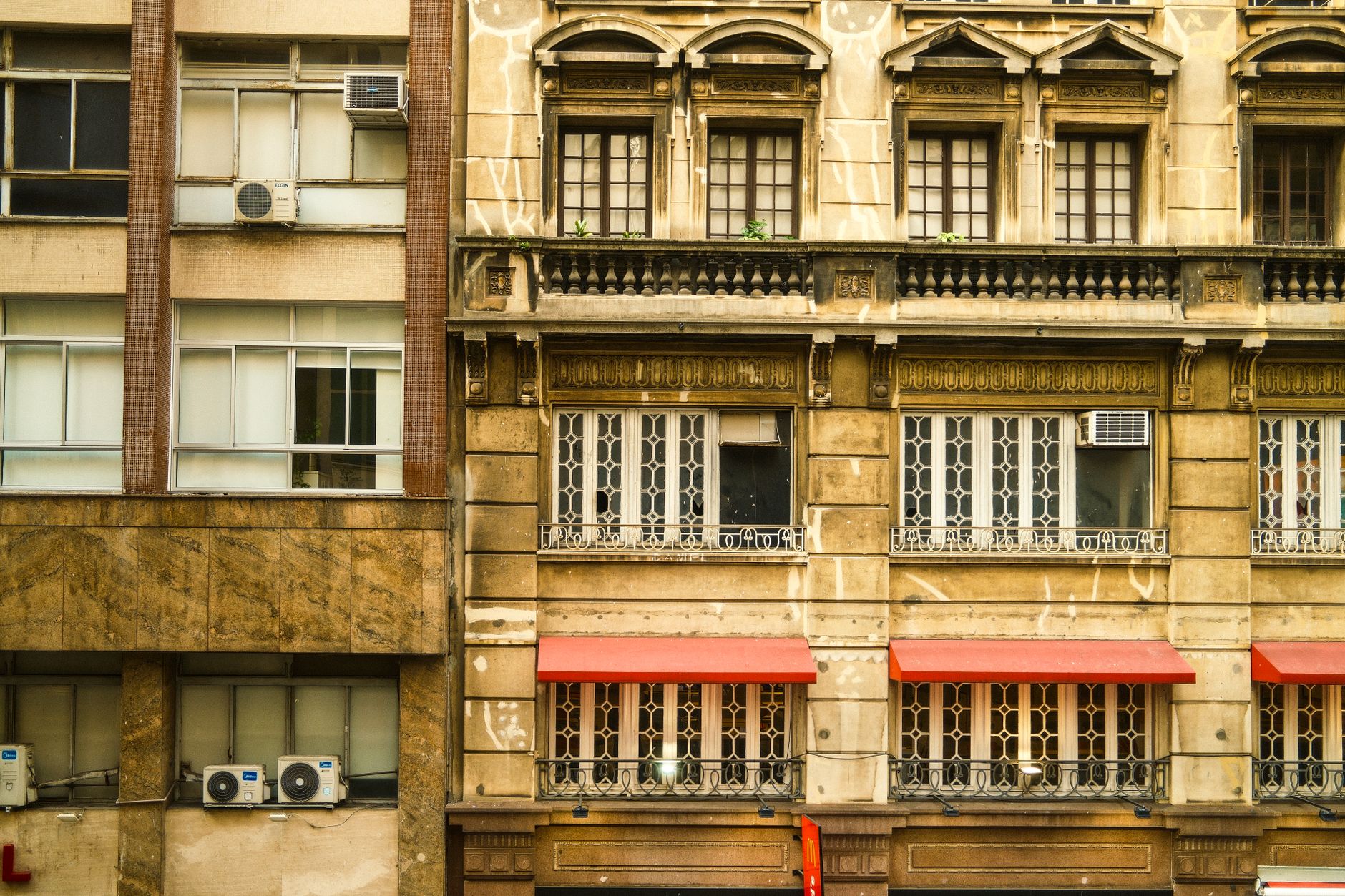
Brazil also excels at the unresolved city. Tiles, colonial balconies, unfinished brick, mirrored towers, beach-front apartment slabs, and sudden bursts of color coexist with the confidence of relatives forced into the same wedding photograph. In Recife and Salvador, the old centers show beauty without anesthesia. Plaster peels. Cables insist. Life goes on in the lower floors.
This is what makes the architecture persuasive. It never stays museum-clean for long. Rain marks the wall. Mango roots lift the pavement. Someone hangs laundry beside a masterpiece. Civilization, seen properly, is a domestic scene with ambition.
Manaus and Belém open the door to a river world shaped by rain, ferries, açaí, and distances that make road-trip logic look naive. The Amazon is not backdrop here; it is infrastructure, cuisine, and daily life.
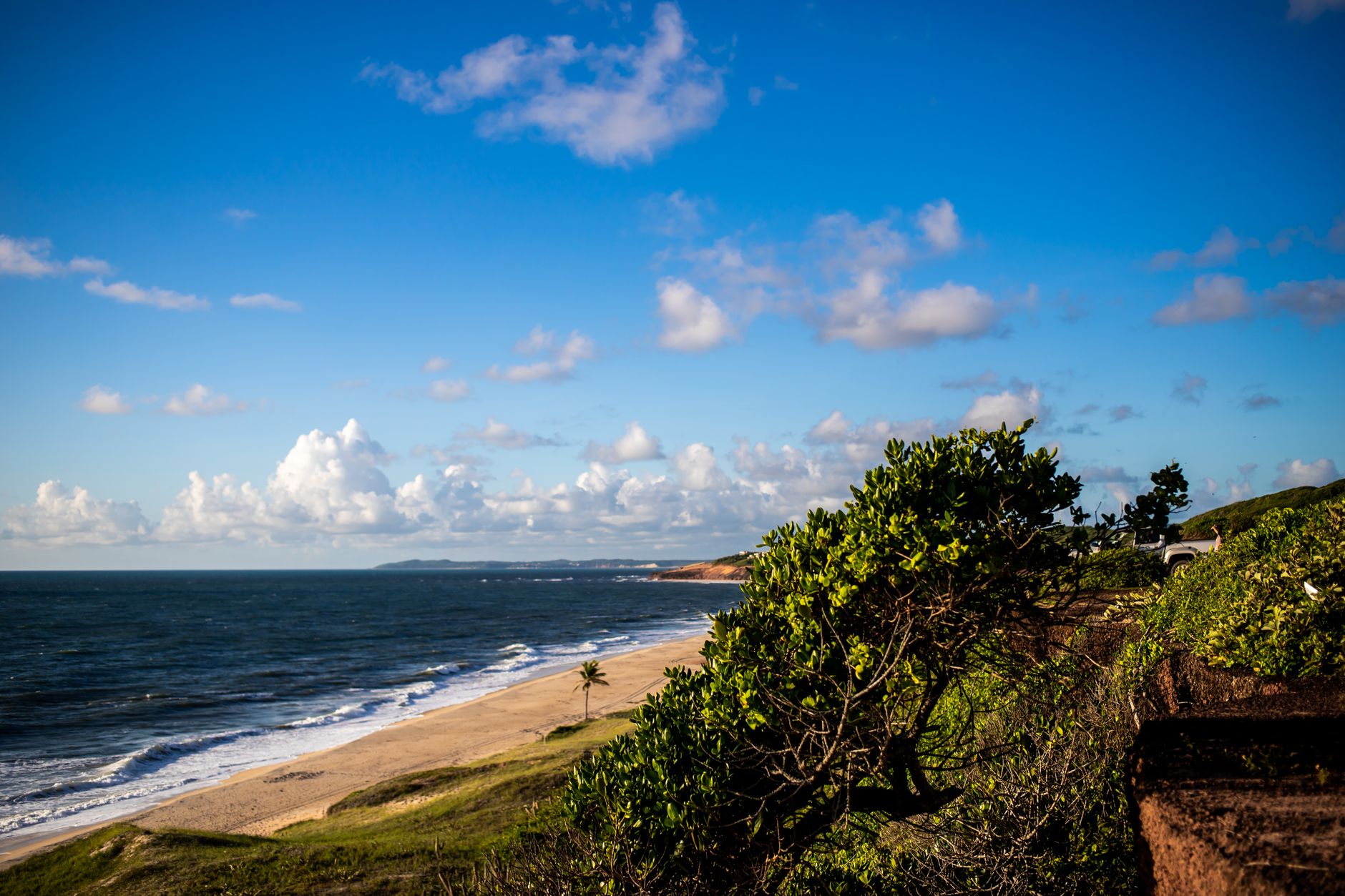
From Rio De Janeiro to Recife and Salvador, Brazil's coastline keeps changing character: urban beaches, mangroves, surf breaks, colonial ports, and long strands of sand where the wind does most of the talking.
Brazilian cuisine is regional to the bone. Eat acarajé in Salvador, tacacá in Belém, pão de queijo in Minas, and understand why one national menu would miss the point.
Ouro Preto turns Brazilian history into something physical: steep streets, gold-era churches, and facades built from extraction, faith, and political ambition. This is where colonial wealth stops being abstract.
Brazil is large enough to force choices, and that is useful. You build better trips when you pair one region with another instead of pretending the Amazon, São Paulo, and the Northeast fit neatly into the same week.
In Salvador, Rio De Janeiro, and Recife, public space carries rhythm, religion, and argument all at once. Carnival is the famous export, but the deeper story is how music and ritual organize ordinary days.
16 cities — start with the ones we'd send you to first.
Twenty-two million people, the best Japanese food outside Japan, and a street-art corridor on Avenida Paulista that changes faster than any museum can curate.
The jungle climbs right down to the apartment buildings and the bay curves like it’s trying to embrace the city. In late afternoon light, even the concrete looks like it’s breathing.
A city where the echoes of coffee barons' trains mingle with the hum of research labs, all watched over by a 19th-century water tower and, on clear nights, the telescopes of a public observatory.
The river arrives before the city does—brown water sliding past iron warehouses, carrying the smell of açaí and diesel into streets where buffalo cheese cools on marble counters from 1874.
A city built on sand — literally. Natal's dunes don't just frame the view; they walk into the sea, and the light here has an intensity that makes everything else feel dimly lit by comparison.
A city where capybaras wander urban parks, the night air smells of steaming sobá broth, and the shared gourd of tereré passes between friends without a word.
Dourados doesn't whisper its history; it layers it in the soil. The scent of grilled meat from a Paraguayan churrascaria mixes with the sawdust from a woodcarver's studio, all under the watchful gaze of a cathedral built…
The first capital of colonial Brazil, where 16th-century Portuguese churches sit above Afro-Brazilian terreiros and the smell of dendê oil from acarajé carts hangs over the Pelourinho cobblestones.
A Belle Époque opera house — the Teatro Amazonas — rising from the jungle 1,500 kilometres from the nearest major city, built on rubber money in 1896 and still staging performances.
Brazil's economic engine is also one of its best eating regions, and that matters more than the skyline first suggests. São Paulo gives you Japanese-Brazilian cooking, serious museums, and neighborhoods with their own weather systems of money and taste; Rio De Janeiro and Campinas sit close enough to shape the same broad trip without feeling remotely alike.
The Northeast is where Brazilian travel writing goes soft and starts speaking in cliches, which would be a mistake. Salvador, Recife, and natal earn their place with hard specifics: tiled churches, Afro-Brazilian ritual, reef-lined beaches, sugar history, and a music scene that rarely waits for your convenience.
The Amazon is not one green blur. Manaus is a river port with opera-house swagger and jungle logistics, while Belém faces the river's mouth and serves some of the country's most regionally specific food, including tacacá and market fish that make little sense once removed from this climate.
Southern Brazil feels more structured on the surface: cooler weather, better-defined seasons, and cities that reward walking instead of just enduring it. Curitiba is efficient without becoming sterile, and Florianópolis shifts the mood toward beaches, lagoons, and a summer crowd that knows exactly why it came.
This is the region for travelers who can tolerate logistics in exchange for space. Campo Grande and Dourados are practical rather than theatrical, and that is part of their usefulness: they lead into ranch country, borderland culture, and the Pantanal, where dawn drives and boat trips replace the usual city checklist.
Brasília can feel abstract until you see how aggressively it was imagined: monumental axes, white curves, state power poured into concrete between 1956 and 1960. It works best when paired with nearby interior routes, because the contrast between planned capital and older Brazilian cities explains more than either place can on its own.
Built to pull Avai out of downtown and into the island's south, Ressacada is where Florianopolis drops the beach mask and turns into football territory.
A Chilean artist turned a worn public staircase into Rio’s loudest mosaic postcard, linking bohemian Lapa to the hillside calm of Santa Teresa today.
One of São Paulo’s grandest monuments rises over its roughest square: a vast neo-Gothic cathedral where faith, protest, and the city’s memory meet.
Batman gave this São Paulo alley its name, but the original drawing is gone; what remains is a free, ever-changing wall of murals in Vila Madalena today.
Named after an 1821 execution gone wrong, Liberdade is home to the world's largest Japanese diaspora outside Japan — and São Paulo's best ramen.
Latin America's largest mall by continuous area was built to feel like a park, with themed corridors, tropical light, 15 cinemas, and room to roam.
From Indigenous civilizations to a republic still wrestling with empire, slavery, and modern power
Archaeological evidence from Lagoa Santa points to some of the earliest known human presence in what is now Brazil. Much later, the remains nicknamed Luzia would force scholars to rethink old certainties about the peopling of the Americas.
On Marajó Island near modern Belém, complex societies build monumental earthen mounds, produce sophisticated ceramics, and manage flooded environments with striking skill. The Amazon is not empty wilderness; it is inhabited, worked, and politically organized.
Pedro Álvares Cabral's fleet makes landfall on the Atlantic coast, bringing Portugal into direct possession of a territory it barely understands. The encounter opens a colonial era shaped by trade, mission work, violence, and disease.
Caminha sends King Manuel I a vivid account of the new land, its people, and the first Portuguese impressions of Brazil. His prose is observant, sensual, and unexpectedly personal, a state document with a human pulse.
Nicolas Durand de Villegaignon establishes a French colony in the bay where Rio De Janeiro will rise. For a brief moment, Brazil's future looks open to more than one European empire.
The Portuguese found Rio De Janeiro amid war with French forces and Indigenous allies. The city begins as a military answer to imperial competition, not as a leisurely port destined for postcards.
Plantation society hardens around Salvador, Olinda, and the port networks of what is now Recife. Enslaved Africans are forced into the mills and fields that make colonial Brazil profitable.
Dutch West India Company forces capture key sugar zones in Pernambuco, beginning a period of war, trade, and unusual cultural experiment. Colonial Brazil becomes a battleground for Atlantic capitalism as much as for crowns.
Discoveries in the interior draw settlers, officials, merchants, and adventurers toward the region of today's Ouro Preto. Wealth surges inland, churches multiply, and Lisbon tightens its grip on taxation.
Educated elites and local patriots in Minas plot against Portuguese rule, inspired in part by Atlantic revolutionary ideas. The revolt collapses before it begins, but its memory acquires martyrdom and myth.
The crown hangs Joaquim José da Silva Xavier, later known as Tiradentes, and dismembers his body as a warning. Republics are good at recycling failed men into national saints, and Brazil would do exactly that.
Fleeing Napoleon, Dom João and the royal court transfer the monarchy across the Atlantic. Rio De Janeiro becomes the operating capital of the Portuguese world, an imperial reversal almost too dramatic to believe.
Dom Pedro proclaims independence near the Ipiranga River by São Paulo, separating Brazil from Portugal while preserving monarchy. The country is born not as a republic but as an empire.
Still very young, Pedro II takes full imperial power and gives the monarchy a calmer, more intellectual tone. His long reign will coincide with expansion, modernization, and the unresolved atrocity of slavery.
Princess Isabel signs the Golden Law, ending slavery in Brazil at last. The act changes the moral standing of the monarchy but does little to repair the damage done to millions of freed people.
A military coup ends the Brazilian Empire with startling speed and little public bloodshed. Pedro II goes into exile, and the republic inherits the social inequalities the crown left behind.
Vargas rises after a political rupture that ends the old oligarchic order dominated by regional elites. Brazil enters a more centralized and modern age, though not a gentler one.
Vargas closes the political system and launches an authoritarian regime built on censorship, labor politics, nationalism, and image control. The modern Brazilian state grows stronger as public freedoms shrink.
Cornered by crisis, Vargas shoots himself in the Catete Palace in Rio and leaves the line, "I leave life to enter history." The sentence transforms a collapsing presidency into a national legend.
The new capital opens on the central plateau, a modernist wager meant to pull the country inland and announce a new future. Oscar Niemeyer and Lúcio Costa turn politics into architecture on a heroic scale.
The armed forces seize power and install a dictatorship that will last twenty-one years. Censorship, torture, and forced silence become part of the national fabric, even as the regime speaks the language of order and growth.
Brazil adopts a new constitution after the end of military rule, setting out civil rights, democratic guarantees, and a more expansive social vision. It becomes the charter of the contemporary republic, admired and contested in equal measure.
After years of punishing inflation, the Plano Real brings monetary stability and changes daily life in ways grand speeches rarely do. Citizens can count wages, compare prices, and plan again.
Luiz Inácio Lula da Silva, a former metalworker and union leader, reaches the presidency and reshapes the social imagination of the republic. His rise makes class mobility itself part of Brazil's political drama.
The impeachment of Dilma Rousseff deepens already fierce national division and opens a new chapter of instability. Corruption probes, recession, and institutional mistrust now dominate political life.
Lula's return confirms both the resilience and the fracture of Brazilian democracy. The country enters another cycle of argument over memory, inequality, the Amazon, and the very meaning of the republic.
Peoples Before Portugal
Luzia has no recorded title or dynasty, yet her reconstructed face remains the oldest known face of Brazil and the quiet rebuke to every history that starts with a European flag.
Morning mist hangs over Lagoa Santa in Minas Gerais, and an archaeologist lifts a skull from the earth in 1975. She will be called Luzia, and she will trouble every tidy story people liked to tell about the peopling of the Americas. Ce que l'on ignore souvent, c'est que Brazil does not begin with Cabral's sails on the horizon; it begins with faces, fires, burials, and paths worn into the ground thousands of years earlier.
The Amazon too was no empty green curtain waiting for Europe to discover it. On Marajó Island near Belém, people raised immense earthen mounds between roughly 400 and 1300 CE, while across the basin they made terra preta, dark engineered soil richer than much of the jungle floor around it. That changes everything. A forest Europeans took for untouched nature had already been shaped by human hands, by cooks, farmers, potters, and chiefs whose names mostly vanished when disease arrived before the chroniclers did.
Along the Atlantic coast, Tupinambá-speaking peoples lived in a world of alliances, revenge, and ritual warfare that horrified Europeans because it refused European categories. Hans Staden, a German gunner captured in 1552, described prisoners kept for months, even years, before ceremonial death and cannibal feasts meant to absorb an enemy's strength. Montaigne read him closely. The supposed savages became a mirror in which Europe saw its own religious massacres more clearly.
This first Brazil had no single throne, no capital, no anthem, but it had politics, agriculture, cosmology, and trade routes that reached farther than the Portuguese guessed in 1500. And when those ships did arrive, they did not land in a void. They entered a crowded human world already old, already argued over, already full of the dead.
Hans Staden claimed the feared chief Cunhambebe laughed at his moral outrage and replied, simply, "I am a jaguar."
Conquest, Sugar, and Gold
José de Anchieta, bent by illness and stubborn in faith, helped invent colonial Brazil in grammar books, peace talks, and missionary theater long before he became a saint in marble.
On 26 April 1500, Pêro Vaz de Caminha sits down to write to King Manuel I. His letter is practical, curious, and oddly intimate: naked bodies, red parrots, a first mass on the shore, and at the end a personal request that the king free his son-in-law from prison. Founding documents are rarely so human. Brazil enters written history with bureaucracy, wonder, and family lobbying in the same breath.
The coast did not become Portuguese at once. French traders came for brazilwood, Villegaignon founded France Antarctique in Guanabara Bay in 1555, and the struggle for the future Rio De Janeiro was fought with muskets, priests, and indigenous alliances. José de Anchieta, the Jesuit who learned Tupi and wrote verses in the sand while held during negotiations, belongs to that strange early chapter when catechism and diplomacy walked hand in hand.
Then sugar remade the map. In Pernambuco, around Olinda and what is now Recife, and in the bay of Salvador, engenhos multiplied, cane fields spread, and enslaved Africans were forced into the furnace of the plantation world. Ce que l'on ignore souvent, c'est que the grand baroque churches people admire today were paid for with terrifying arithmetic: bodies, lashes, ships, and credit. Sweetness at table. Horror in the mill yard.
The 18th century shifted the axis inland. Gold and diamonds discovered in Minas Gerais drew fortune-seekers toward Vila Rica, today's Ouro Preto, where churches rose like theatrical sets above steep streets and tax officials counted every grain they could. The crown demanded its fifth, the famous quinto, and when shortage met resentment the colony produced both splendor and conspiracy, culminating in the failed Inconfidência Mineira of 1789.
So Brazil entered the 19th century richer, larger, and more unequal than ever, with sugar on the coast and gold in the hills, but also with elites who had learned an unsettling lesson: Lisbon was far away, and empires can wobble. Napoleon would soon prove the point.
The letter that first described Brazil in such detail lay unnoticed in Lisbon's archives for 273 years before it was rediscovered in 1773.
A Tropical Court and an Unfinished Nation
Pedro II looks serene in portraits, yet behind the beard stood a ruler who lost sons, buried an empire, and went into exile with more books than bitterness.
Imagine Rio De Janeiro in 1808: ships crowding the bay, crates on the docks, noblewomen in heavy dresses sweating in the heat, clerks hauling archives, silver, and etiquette across the Atlantic. The Portuguese royal court has fled Napoleon and brought the state with it. One can hardly invent a more extravagant scene. A colony wakes up one morning to find itself hosting a monarchy.
Dom João opens the ports, founds institutions, and turns Rio from imperial outpost into the working capital of the Portuguese world. Libraries, academies, a royal press, botanical ambitions, all arrive with him. But court life in the tropics keeps its comic edge. Chickens run through service corridors, protocol collides with mud, and European rank must adapt to a city still powered by enslaved labor.
Independence in 1822 comes not from a colonial mob storming palaces but from a prince of the House of Braganza deciding, by the Ipiranga River near São Paulo, that Brazil will separate under his own crown. "Independência ou Morte" enters legend in one stroke. The reality was slower, more negotiated, more aristocratic. Brazil becomes an empire before it becomes a republic, which tells you much about the country and even more about its taste for political improvisation.
Pedro II, crowned as a boy and ruling for decades, gave the throne a strange dignity: scholarly, restrained, almost republican in manner while remaining every inch an emperor. He loved photography, science, and conversation, and he traveled through Brazil as if trying to understand the immensity he nominally governed. Yet the great stain remained slavery. The Lei Áurea of 1888, signed by Princess Isabel, ended it at last, far later than it should have, and without land, compensation, or justice for the freed.
A year later the monarchy fell with astonishing quiet. No Bastille, no great trial, just a coup in 1889 and a tired imperial family sent into exile. That silence mattered. It left Brazil modernized in form but unresolved in soul, carrying into the republic the old habits of hierarchy, plantation power, and personal rule.
When the court arrived in Rio, houses needed for nobles were reportedly marked with the letters "PR" for príncipe regente; cariocas joked the initials meant "ponha-se na rua" — get out.
Republics, Dictators, and the Democratic Return
Getúlio Vargas remains the unsettling uncle at the family table of Brazilian history: seductive, shrewd, paternal, and never to be trusted without reading the small print.
The First Republic belonged less to the people than to regional oligarchs, especially the coffee interests of São Paulo and the dairy-political machines of Minas Gerais. Ballots existed, but power often sat where land, patronage, and rifles sat. Ce que l'on ignore souvent, c'est how personal the system remained: colonels, family names, backroom agreements, and local fear did as much governing as any constitution.
Getúlio Vargas arrived in 1930 as the man who would break that old order, and he did, though not always in ways democrats would admire. He could sound like a father, dress like a statesman, and rule like a conspirator. Under the Estado Novo from 1937, he centralized power, censored opponents, courted workers, and built a new national myth in which industry, labor law, radio, and samba all marched under the same flag. Brazil learned the modern art of being mass-mediated.
Then comes one of the great theatrical gestures in Brazilian history. In August 1954, cornered by scandal and pressure, Vargas shoots himself in the Catete Palace in Rio and leaves behind the famous line: "I leave life to enter history." He knew exactly what he was doing. A political crisis became a national drama, and the dead leader won more loyalty in a page of farewell than many living presidents manage in a decade.
Juscelino Kubitschek answered this mood with speed and concrete. Brasília rose from the plateau between 1956 and 1960, the capital as manifesto: modern, inland, aerodynamic, almost unreal. Meanwhile, older cities kept their own stubborn truths. Salvador carried Atlantic memory and African inheritance; Manaus remembered rubber wealth and collapse; Recife kept the sharp intelligence of a port that has seen too much to trust slogans.
The military coup of 1964 froze many of these arguments under censorship, prison, and fear. Yet music, church networks, students, labor movements, and ordinary families kept pressing against the silence until the democratic opening became irreversible. The Constitution of 1988 did not solve Brazil. It gave Brazilians a better language with which to fight over it.
Brasília was built so fast that workers slept in provisional camps while Oscar Niemeyer and Lúcio Costa sketched a capital that looked, from above, like an aircraft or a cross depending on one's faith.
Democracy, Memory, and the Brazil Still Being Written
Lula's biography still disorients the old hierarchies of the country: a metalworker from Pernambuco who reached the presidency and turned class mobility into a national drama.
The democratic era opens not with serenity but with unfinished business. Inflation devours salaries, corruption scandals corrode trust, and each election seems to promise a new beginning before meeting the old obstacles: inequality, race, land, policing, patronage, and a state that can be both majestic and absent. Brazil in these decades is not a calm republic. It is a restless conversation held in congresses, favelas, television studios, and family kitchens.
The Plano Real of 1994 gave ordinary life a kind of relief historians sometimes underestimate. Prices stopped dissolving in the hand. People could plan. Such moments matter more than marble statues. A nation changes when mothers know what bread will cost next week, when wages can be counted without panic, when the future becomes measurable again.
Under Luiz Inácio Lula da Silva, millions rose through social programs and commodity-fueled growth, and Brazil briefly carried itself with the confidence of a country finally arriving at the center of the world stage. Then came recession, Lava Jato, Dilma Rousseff's impeachment, Jair Bolsonaro's polarizing presidency, and a level of civic fracture that entered homes as much as headlines. Even the pandemic became a political battlefield.
And yet the country keeps producing forms of life too inventive for simple decline stories. In Belém, Amazonian cuisine went from local habit to global fascination without losing its sting of tucupi and jambu. In Rio De Janeiro and São Paulo, artists, musicians, and activists kept remaking the national script. The old phrase Ordem e Progresso remains on the flag, but Brazil's true engine is argument, not order.
That is why its history does not end in closure. It ends, if one can call it an ending, in dispute over memory itself: slavery and its afterlives, dictatorship and accountability, indigenous land, the Amazon, and who gets to speak for the nation. A country this large does not settle its past. It stages it again, generation after generation.
During the inflation years before the Real Plan, some supermarkets in Brazil reportedly changed prices several times in a single day, turning grocery shopping into a race against the clock.
Brazilian Portuguese does not speak; it ripens. In São Paulo, a waiter says "pois nao" and the phrase lands with such velvet efficiency that even refusal sounds like a form of care. In Rio De Janeiro, the final s turns to sh, and the city seems to brush every word with sea salt before releasing it.
Then comes the national masterpiece: intimacy without permission. People call each other meu amor, querida, meu bem, sometimes after twelve seconds of acquaintance, and what would sound theatrical elsewhere becomes practical here, as if tenderness were the shortest route through traffic. A country can choose to make language a weapon. Brazil often prefers it as a hammock.
Listen harder and the grammar starts to confess regional loyalties. In Recife and Salvador, tu survives with verbs that schoolteachers would reject and life has already approved; in Belém, vowels darken and sweeten at once; in Manaus, river and forest seem to slow the sentence just enough for the air to enter it. Even saudade, that exported celebrity, means less on the dictionary page than in a voice note sent at 23:14, with a fan whirring in the background and someone missing not only a person, but a whole hour of their former life.
Brazilian cuisine behaves like geology. Indigenous cassava sits under Portuguese pork, under West African dendê, under Japanese precision in São Paulo, under German stubbornness in the South, and none of these layers cancels the one below. They remain visible. That is the appetite of a serious nation.
Feijoada arrives as a social verdict, not a lunch. Saturday, noon, friends, orange slices, farofa, couve, black beans carrying pig parts that once asked history to be less brutal and were ignored. After the first plate, conversation slows. After the second, honesty begins.
Then Brazil performs its favorite miracle: it turns the same ingredient into opposite philosophies. Açaí in Belém comes beside fish and farinha, dark, earthy, almost severe. The version in Rio De Janeiro and São Paulo appears as a frozen purple bowl with banana and guarana syrup, a fruit translated into gym culture and sold back as innocence. Both are Brazil. Contradiction is one of its staple foods.
The finest lesson may be pão de queijo in Minas country, especially on the road to Ouro Preto, still warm enough to burn the fingertips. It looks modest. That is its trick. Bite through the thin crust and the center stretches, fragrant with queijo minas and tapioca starch, and suddenly breakfast has become theology.
Brazilian music understands that rhythm is first a matter of the body. Samba in Rio De Janeiro does not ask whether you can dance; it asks whether your knees have accepted the terms of the evening. A surdo drum enters, a cavaquinho answers, and the entire street acquires an extra circulatory system.
Bossa nova, by contrast, behaves like a dangerous whisper. Apartment music, beach music, insomnia music. João Gilberto reduced performance to almost nothing and discovered that almost nothing, if done with absolute control, can reorder a century. The guitar does not accompany the voice. The guitar teaches the voice how to breathe.
Travel north and the nation becomes more percussive, more public, less interested in polite restraint. In Salvador, bloco afro rhythms strike the chest before the ear; in Recife, frevo horns and impossible umbrellas create a kind of civic delirium performed at sprinting speed. One understands very quickly that carnival is not an escape from reality. It is one of reality's official forms.
And then there is forro, which deserves more foreign converts than it gets. In the Northeast, accordion, triangle, zabumba, and two people turning close enough to share the same weather. Courtship can be verbose. Forro has better manners.
Brazilian etiquette is warm, but it is not loose. This distinction matters. People kiss hello, touch your arm mid-sentence, ask where you are from before your coffee has arrived, and yet the whole exchange rests on invisible calibrations of age, class, region, and confidence that an outsider ignores at personal risk.
Titles still do serious work. Senhor and senhora can rescue a first encounter; first names come quickly, but not carelessly; waiting your turn is a flexible concept until the moment hierarchy enters the room, when everyone suddenly knows the score. Brazil looks improvisational from outside. Often it is choreography performed with a smile so natural you miss the discipline.
The table reveals everything. Refuse food too firmly and you may sound cold; accept without appetite and you may be fed past reason. In family houses and botecos alike, generosity arrives in seconds, then insists. More rice, more farofa, one more brigadeiro, a little more molho, and why are you pretending to be shy when life is already short.
A country is a table set for strangers. Brazil adds one clause: strangers do not remain strangers long, but they are expected to notice the ritual. Say good morning to the doorman. Thank the woman at the bakery. Learn to linger half a beat before leaving. The half-beat counts.
Brazilian religion rarely chooses a single register. In one church, gold leaf climbs the altar in obedient Catholic ecstasy; outside, someone ties a ribbon, makes a private bargain with a saint, and means every syllable literally. Faith here is often ceremonial, practical, and magnificently syncretic, which is another way of saying that doctrine has had to share the room.
In Salvador, the white clothes of the Baianas do not merely decorate the street. They carry Candomble memory, discipline, and cosmology into public daylight, with acaraje sold not as folklore but as a food bound to Iansa and to liturgical history that can still stain your fingertips orange with dendê. Brazil has perfected the art of making the sacred visible without simplifying it for visitors.
Catholicism built the façades, but Afro-Brazilian religions changed the temperature of the air. Candomble and Umbanda taught the nation to hear drums as invocation, to understand possession not as spectacle but as presence, and to accept that the body may sometimes know first. Outsiders often rush toward exoticism here. Better to arrive with modesty and eyes open.
Even in cities that advertise speed, private devotion interrupts the day. A driver touches the dashboard saint before starting. A woman crosses herself passing a church in Recife. Fitinhas flutter at church gates in Salvador. Heaven, in Brazil, is not remote administration. It is customer service with candles.
Brazilian architecture enjoys extremity. In Ouro Preto, churches rise from steep streets like arguments made in carved wood and gilded excess, Aleijadinho turning soapstone and devotion into a form of muscular suspense. Baroque here is not decorative fluff. It is religion sweating uphill.
Then the twentieth century arrives and decides that curves, pilotis, and white concrete might express the future better than any sermon. Brasilia is the official manifesto, yes, but the aftershocks travel everywhere; in São Paulo, modernism hardens into intellect and scale, while in Rio De Janeiro, buildings often seem to remember that mountains and sea were already doing half the design work. Oscar Niemeyer understood a fact many moralists dislike: elegance can be structural.
Brazil also excels at the unresolved city. Tiles, colonial balconies, unfinished brick, mirrored towers, beach-front apartment slabs, and sudden bursts of color coexist with the confidence of relatives forced into the same wedding photograph. In Recife and Salvador, the old centers show beauty without anesthesia. Plaster peels. Cables insist. Life goes on in the lower floors.
This is what makes the architecture persuasive. It never stays museum-clean for long. Rain marks the wall. Mango roots lift the pavement. Someone hangs laundry beside a masterpiece. Civilization, seen properly, is a domestic scene with ambition.
He did not mean to become a founding witness. His letter from April 1500, addressed to King Manuel I, moves from naked bodies and red parrots to a private plea for his jailed son-in-law, which is precisely why it feels alive five centuries later.
Anchieta was sickly, stubborn, and absurdly productive. He preached, negotiated with Indigenous groups, wrote religious verse, and gave the colony one of its first serious linguistic tools by studying Tupi instead of merely condemning those who spoke it.
Joaquim José da Silva Xavier was not the grandest man in the conspiracy at Ouro Preto, merely the one who paid most publicly. Hanged and quartered by the crown, he later returned in republican memory as a secular saint, beard and all.
He was impulsive, theatrical, and rarely dull. The prince who cried "Independência ou Morte" near São Paulo separated Brazil from Portugal while keeping a crown on his own head, which was either political genius or dynastic vanity, perhaps both.
Pedro II gave imperial Brazil a face of learning rather than swagger. He loved astronomy, telegraphs, books, and photography, and he carried himself with a melancholy gravity that made exile after the coup feel less like punishment than the closing of a long, tired chapter.
Brazilian memory often reduces her to a pen stroke, but that pen mattered. By signing the Golden Law while acting as regent, she secured moral prestige for the dynasty and, in the same gesture, alienated slaveholding elites who had once upheld the throne.
Vargas understood radio, symbolism, and paternal politics before many of his rivals understood the century they were living in. His suicide note, ending with "I leave life to enter history," was less farewell than final political move, and it worked.
Niemeyer drew curves where others offered bureaucratic rectangles. In Brasília he helped turn a national gamble into architecture so elegant that one almost forgets the dust, labor camps, and political ambition required to force a capital out of the cerrado.
Lula's route from factory floor to Planalto Palace altered the emotional grammar of Brazilian politics. Admirers see social inclusion and working-class dignity; enemies see another chapter in Brazil's endless cycle of charisma, coalition, and disillusion.
This is the cleanest first trip if you want Brazil's biggest contrasts without burning whole days in transit. Start with São Paulo for food and museums, move to Rio De Janeiro for the coastline and big-ticket views, then finish in Ouro Preto where the baroque churches and steep streets slow the whole tempo down.
This route trades megacity intensity for churches, music, and long beach light. Recife, natal, and Salvador each tell a different story about the Atlantic coast, from sugar-era wealth and Afro-Brazilian religion to urban beaches where the practical question is less what to see than how long to stay out after dinner.
Few countries let you make a route this geographically strange and still call it one nation. Begin in Manaus for rainforest logistics and river culture, continue to Belém for Amazonian food that actually tastes of the region, then end in São Luís where the Portuguese street grid and tidal north coast push the trip into another register entirely.
This is a sharp, practical route for travelers who want cooler southern cities before moving into wetland country. Curitiba and Florianópolis cover design, markets, and sea air; Campo Grande is the staging ground for Pantanal departures, where distances get longer, roads rougher, and wildlife suddenly becomes the point of the day.
Saturday. Friends gather. Beans simmer, pork arrives, orange cuts, cachaca pours, afternoon stops.
Baiana fries, splits, fills, hands over. Dende drips, shrimp crackles, fingers stain, silence follows the first bite.
Morning ritual. Coffee steams, cheese bread burns the fingertips, conversation wakes, appetite smiles.
Family circles the grill. Picanha slices, fat hisses, beer opens, the fire decides the tempo.
Cup in hand, sidewalk stool, night air. Tucupi warms, jambu numbs, lips tingle, the city keeps moving.
Bowl beside fish, farinha, no granola. Spoon lifts, tongue darkens, river logic wins.
Birthdays, offices, farewells, nothing occasions. Condensed milk cooks, cocoa binds, sprinkles cling, one becomes four.
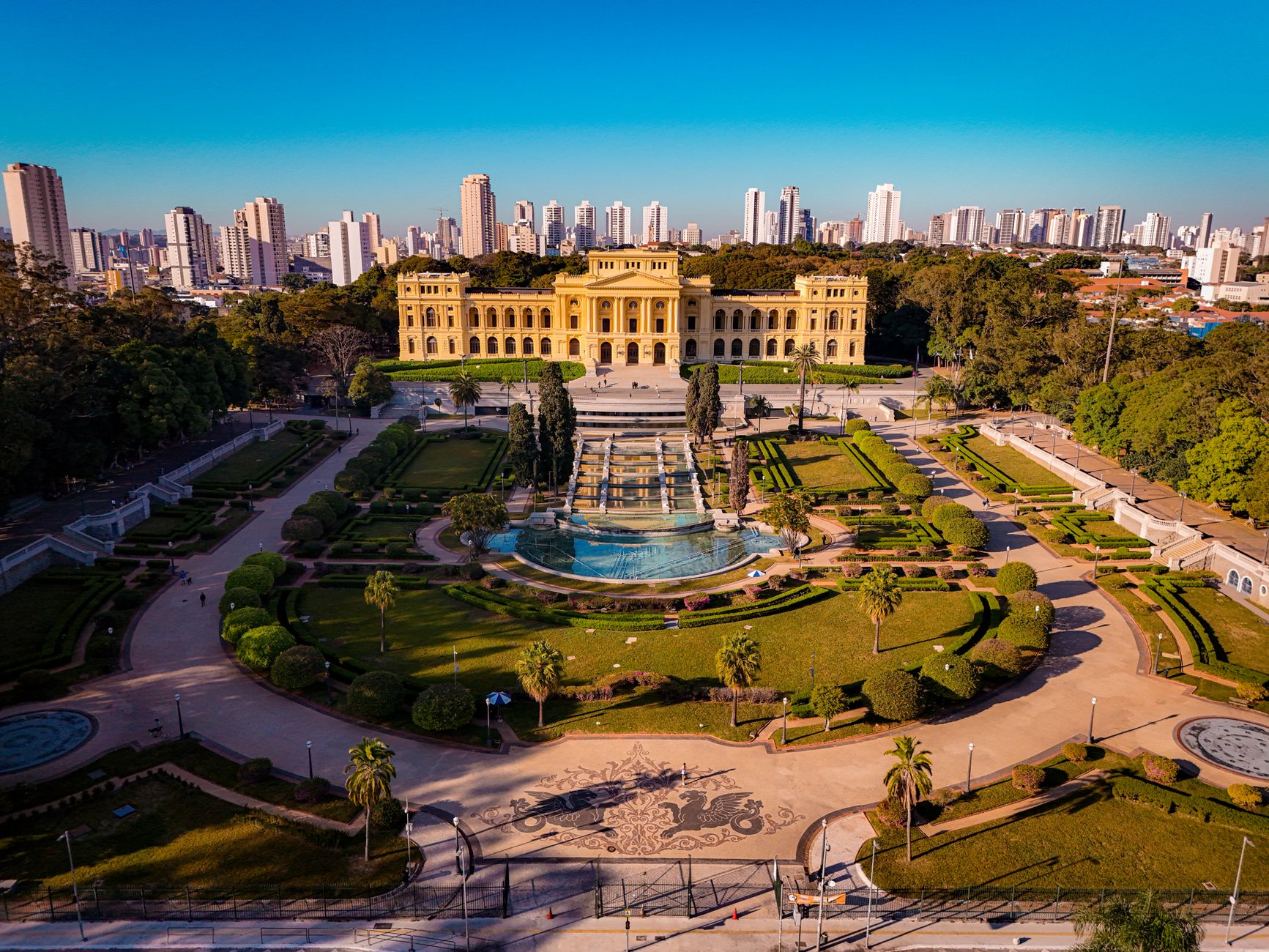
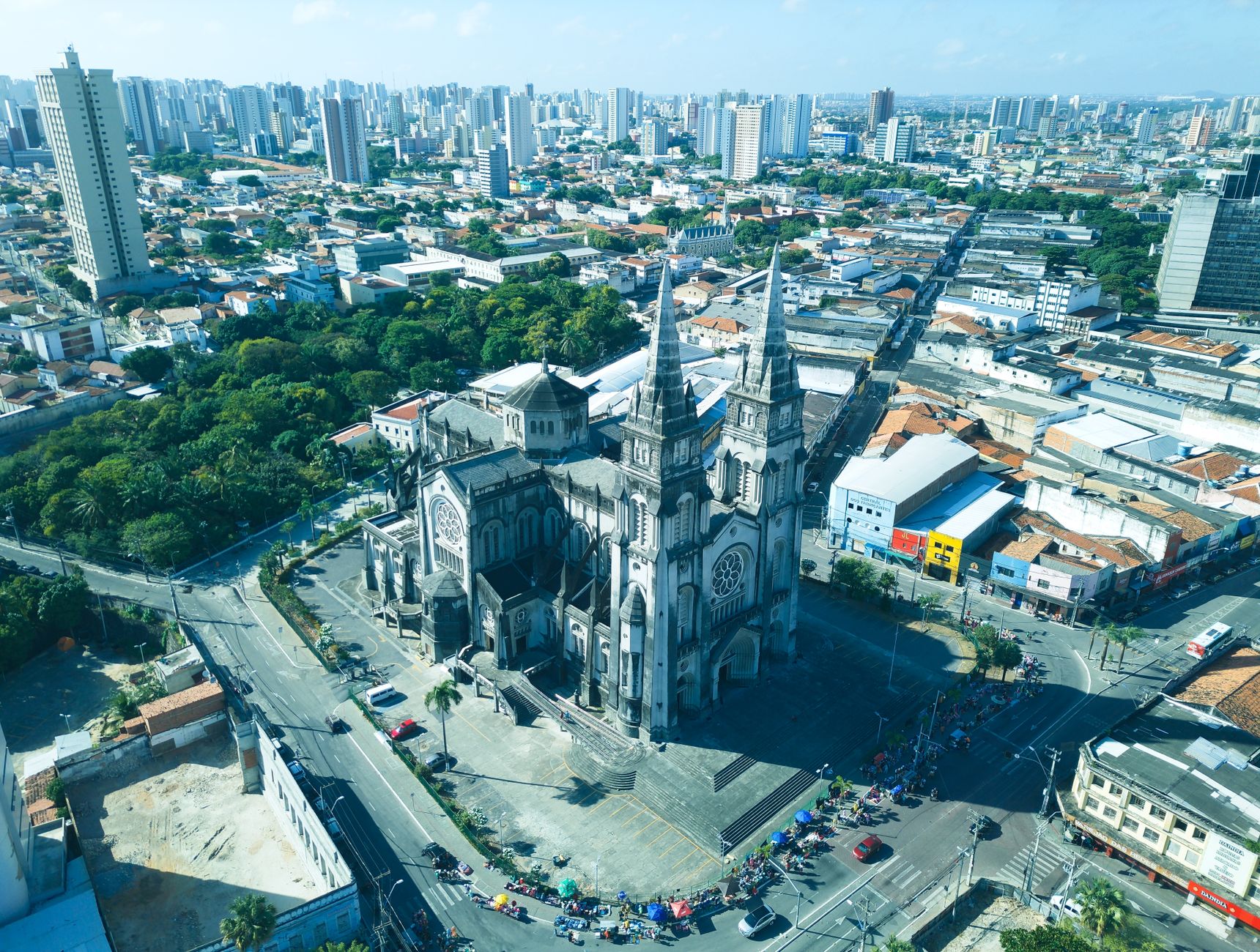


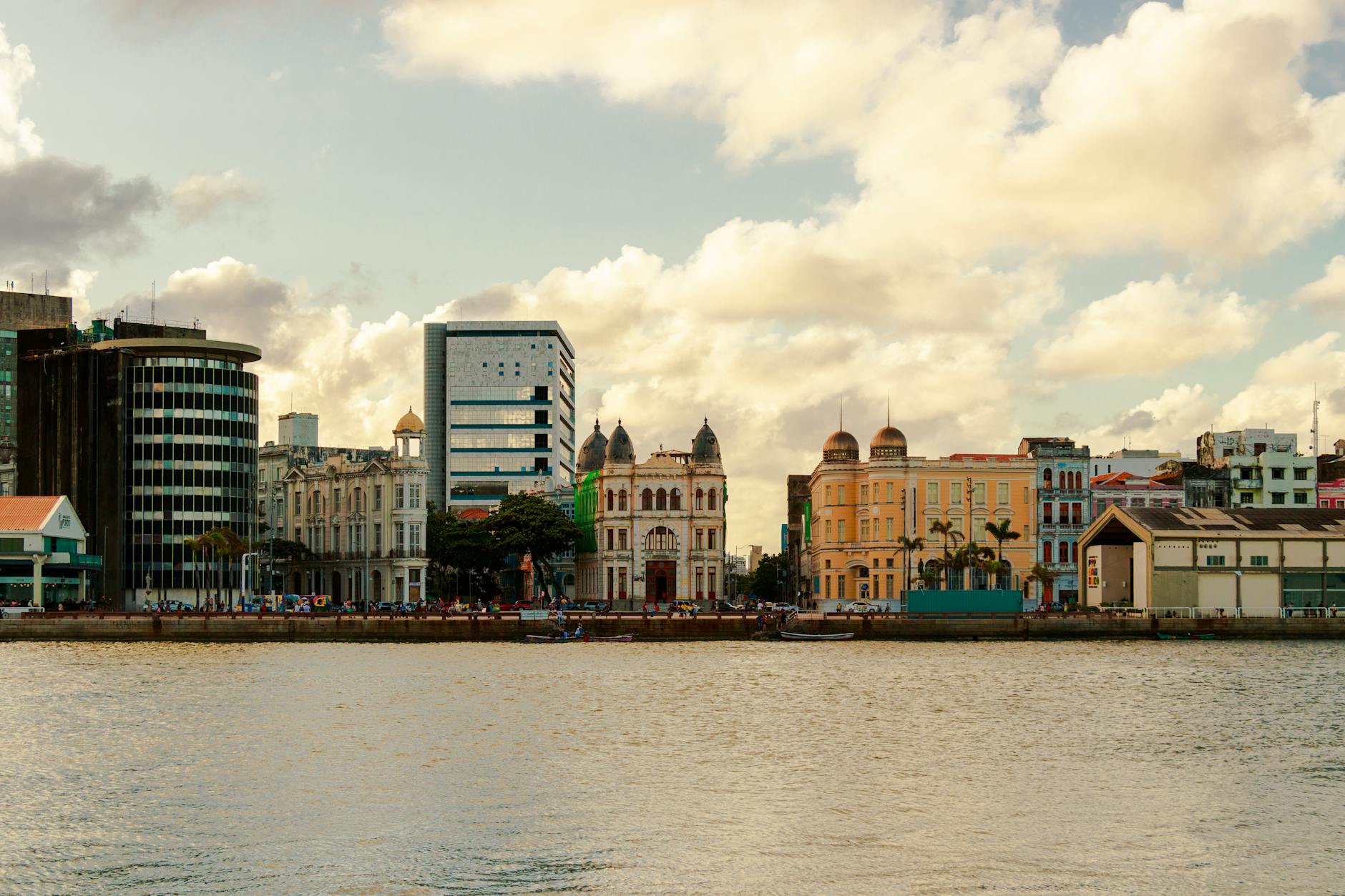






Brazil runs its own entry rules; Schengen has nothing to do with it. EU and UK travelers can generally enter visa-free for short stays, while U.S., Canadian, and Australian passport holders need an eVisa for tourism and business; a passport with at least six months left is the safer rule even when one source states less.
Brazil uses the Brazilian real, written R$ and coded BRL. Cards work well in São Paulo, Rio De Janeiro, Salvador, Recife, and most mid-sized cities, but small cash still helps at beach kiosks, markets, and bus stations; if a restaurant adds a 10% service charge, that usually covers the tip.
Most international arrivals still come through São Paulo and Rio De Janeiro, with GRU and GIG doing the heavy lifting. Recife, Salvador, Manaus, and Florianópolis make better entry points when your trip starts in the Northeast, the Amazon, or the far south and you do not want to waste a day backtracking.
Brazil is continental in scale, so domestic flights are often the sensible move between regions. Buses remain the budget backbone for medium-distance routes such as Rio De Janeiro to Ouro Preto or Recife to natal, while long-distance passenger trains are so limited that most travelers can ignore them.
Do not plan Brazil as if it had one weather pattern. Manaus and Belém stay hot and wet for much of the year, the Northeast coast mixes sun with sharper rainy windows, Rio De Janeiro and São Paulo can feel humid and stormy in summer, and Curitiba and Florianópolis get noticeably cooler in winter.
Mobile coverage is solid in big cities and along the main intercity corridors, but it thins out fast in the Amazon, the Pantanal, and parts of the interior. Hotel and cafe Wi-Fi is common, contactless payment is routine, and PIX is everywhere in daily Brazilian life, though short-term foreign visitors usually cannot use it without a local banking setup.
Petty theft is the daily risk most travelers actually face, especially on city beaches, buses, and crowded nightlife streets. Use the same discipline locals use: keep phones out of sight when you can, call a rideshare late at night instead of walking empty stretches, and ask your hotel which blocks to avoid rather than trusting broad citywide reputations.
Rio De Janeiro, São Paulo, and peak-season beach towns cost more than travelers often assume. If you want better value, look at Recife, natal, Campo Grande, or inland Minas Gerais before you decide Brazil is expensive everywhere.
Restaurants often add a 10% service charge called taxa de serviço. Pay it if the service was normal and skip the extra tip; this is not a U.S.-style culture where every bill needs another percentage layered on top.
Domestic flights save enormous time, but last-minute fares on popular routes can turn ugly fast. Buy early for hops such as São Paulo to Manaus or Rio De Janeiro to Salvador, especially around school holidays and Carnival.
Brazil does not have a Europe-style passenger rail network. Plan with flights, long-distance buses, and the occasional rental car instead of assuming you can improvise by rail between major regions.
Reserve popular coastal stays early for December through February and major holiday weekends. Good small hotels in Florianópolis, Salvador, and natal disappear before the cheapest flights do.
An eSIM or roaming plan is worth paying for in Brazil's big urban areas, where maps, rideshares, and payment confirmations matter all day. In remote Amazon and Pantanal trips, download what you need before leaving town because signal can drop to nothing.
Leave jewelry, passports, and your second bank card locked away when you head out. Brazilians often carry only what they need for the next few hours, which is less paranoia than practical urban technique.
Explore Brazil with a personal guide in your pocket
Audio guides for 1,100+ cities across 96 countries. History, stories, and local insight — offline ready.
Yes. U.S. passport holders need a Brazilian eVisa for tourism and business stays, and the current requirement has been in force since 10 April 2025. Apply before you fly, because airline staff are more likely than immigration officers to stop you if your paperwork is missing.
It can be, depending on where you go. A careful budget traveler can still manage around R$220 to R$350 a day, but Rio De Janeiro, São Paulo, and high-season beach destinations regularly push mid-range costs much higher.
Flights are the best choice between distant regions, and buses are the practical option for shorter intercity routes. Brazil is simply too large to treat overland travel as a default unless your route stays within one region.
Usually yes, with normal urban precautions and a realistic sense of where you are. The main issue is theft rather than dramatic crime, so avoid flashing phones on the street, use rideshares late at night, and ask locals which areas are fine by day but poor bets after dark.
Usually no, not in the way locals do. PIX dominates daily payments inside Brazil, but it generally requires a Brazilian banking relationship, so foreign visitors should plan around cards and some cash instead.
The best time depends on the region, not the country as a whole. Rio De Janeiro and São Paulo are hot and stormy in summer, the Northeast often works well for beach trips outside its rainier windows, and the south gets cooler enough in winter that packing changes matter.
Seven days is enough for one region, but not for the whole country. Treat Brazil like a continent with one passport check: one week for the Southeast or Northeast, ten to fourteen days if you want to combine the Amazon, the coast, or the deep interior without rushing every transfer.
You can pay by card in most cities, hotels, restaurants, and chain stores. Carry some cash anyway for beach vendors, local markets, small-town purchases, and the occasional moment when the card machine stops cooperating.
Last reviewed