Sucre

Bolivia

Sucre

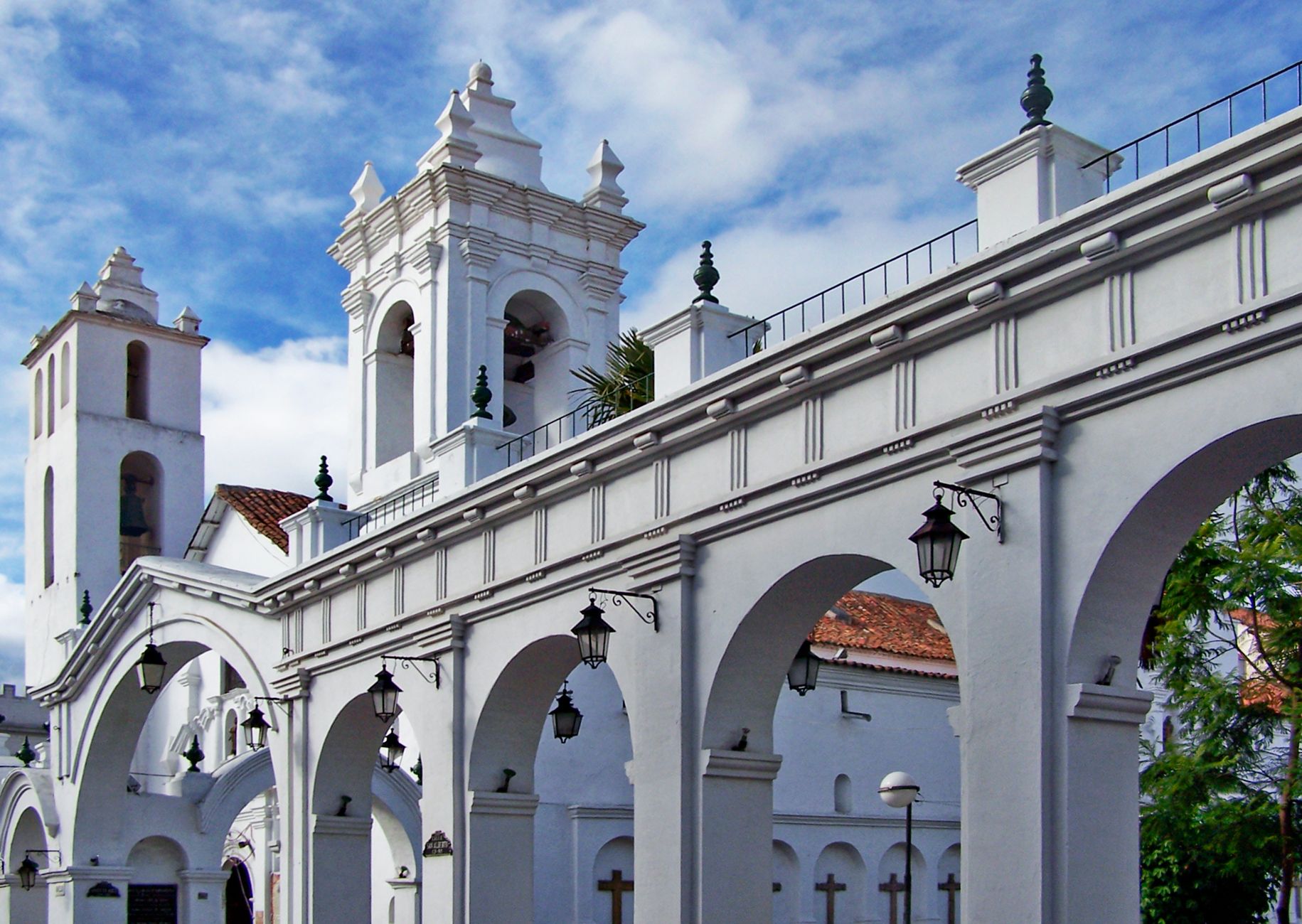
Sucre holds Bolivia's first capital status and the planet's largest accessible dinosaur track wall, all framed by blinding white colonial limestone.

location_on 11 attractions
calendar_month April–October (dry, sunny)
schedule 3–4 days

Introduction

The first thing that catches you off-guard in Sucre is the light—so sharp at 2,800 m that the white-washed walls seem to hum against a cobalt sky. One minute you’re dodging a salteña vendor on a cobbled lane; the next you’re staring up at a near-vertical cliff stamped with 68-million-year-old dinosaur tracks, the city’s cathedral bells echoing behind you like an anachronistic soundtrack. Bolivia’s constitutional capital is small enough to cross on foot in twenty minutes, yet it keeps slipping you these postcards from completely different centuries.

Locals call it La Ciudad Blanca, but the paint is only half the story. Behind every carved balcony there’s a merger of European stone-cutting and Yampara geometry, a visual argument worked out in cedar, volcanic rock and sun-baked brick since 1538. You’ll taste it too: cinnamon-laced api poured from dented aluminum pots at 7 a.m., followed—three hours later—by a bowl of mondongo spicy enough to make a Castilian friar weep.

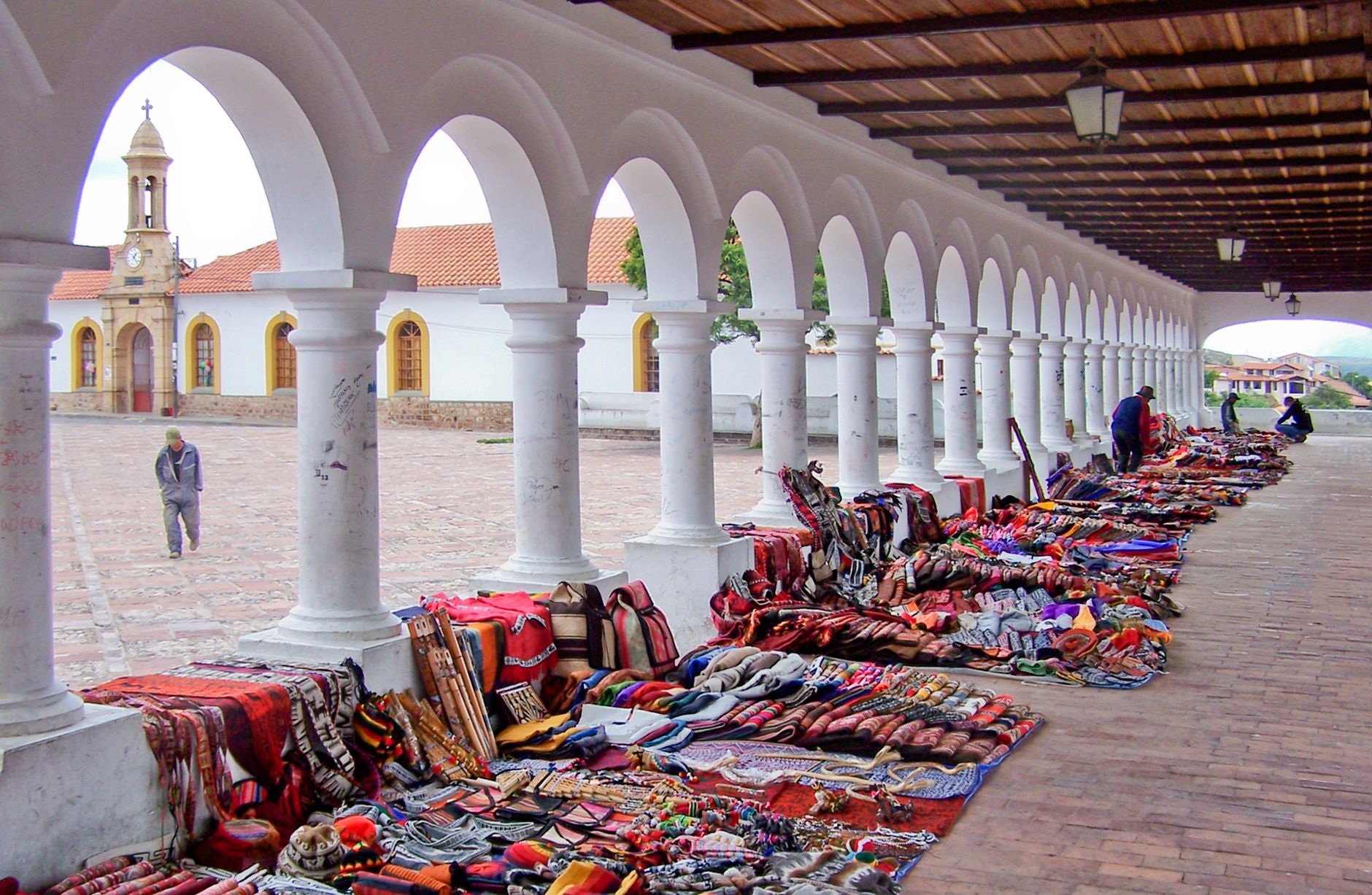
UNESCO stamped the centre in 1991, yet students from the Universidad Mayor still argue politics under the same porticos where Bolivia’s independence charter was signed in 1825. The effect is a living museum where no one bothers to shush you; guides simply point at the door and say “entra, mira, toca”. Even the rooftop terraces keep democratic hours—climb San Felipe Neri’s bell tower for two bolivianos and you’ll share the view with shoe-shine kids on lunch break.

Stay longer than a day and Sucre tilts. Afternoon rain drums on tin roofs like loose change. Quarry trucks rumble out to Cal Orck’o, revealing fresh dinosaur footprints the way other towns unveil murals. You start measuring time in layers—Cretaceous limestone, colonial stucco, modern asphalt—and realise the city isn’t frozen; it’s just patient, letting each era speak before the next one clears its throat.

What Makes This City Special

White-Washed Independence Core

Every limestone façade in the 113-hectare UNESCO grid was scrubbed for the 200-year anniversary of the 1825 signing inside Casa de la Libertad. Stand in the courtyard at 09:00 sharp and you’ll hear the same bell that rang when Bolívar’s name was first cheered—then climb San Felipe Neri’s roof for a 360° sweep of terra-cotta tiles that still follow the 16th-century street plan.

Dinosaur Wall at Cal Orck’o

A 70-degree limestone quarry face holds 6,000 Cretaceous footprints—Tyrannosaurus stride lengths you can measure with your arm-span. The noon tour lets you walk the quarry floor while the sun throws 30-metre shadows that make the tracks look freshly pressed into wet cement.

Student-City Nights

With 30,000 university students, the grid hums after dark: jazz trios slip into 18th-century patios on Calle Junín, and the new Sombrerería arts complex screens indie films under its retractable roof for 20 BOB. Order a singani sour at La Vieja Bodega and you’ll be debating politics with future supreme-court clerks by the second round.

Historical Timeline

The White City That Refused to Fade

From silver aristocrats to Supreme Court judges, Sucre keeps rewriting its own epitaph

castle
30 November 1538

Spanish Grid Cuts Into Yampara Valley

Pedro de Anzures rides up the Cachimayo valley, chooses a 2,750 m shelf where the wind smells of thyme, and lays out 144 square blocks. He calls it Ciudad de la Plata de la Nueva Toledo; the Yampara call it another layer on top of older footpaths. The quarries on Churuquella hill open the same week; their pale stone will coat every future wall.

gavel
1559

Philip II Plants the Audiencia

A sealed box arrives from Madrid: inside, a royal decree creating the Real Audiencia de Charcas. Overnight the frontier town becomes the supreme court for a territory larger than modern-day Argentina, Paraguay, Uruguay and half of Chile. Scribes work by candle-smoke; appeals from as far as Buenos Aires now end on this plaza.

church
1559

Cathedral Work Begins

Masons mark the cornerstone on the east side of Plaza Mayor. It will take two and a half centuries, six architects, three earthquakes and at least one bankruptcy before the last tower is capped. While Potosí eats silver, Sucre spends it on stone.

church
1601

Recoleta Monastery Rises

Franciscans climb the eastern ridge at dawn and claim the windiest hill for God. Their monastery becomes the city’s first skyline, visible to anyone approaching from the valleys. At sunset the stone glows pink; locals start timing their walks to catch the light.

school
1621

Jesuits Build What Will Be Freedom

A chapel for the new Jesuit college goes up on the south side of the square. No one imagines that two hundred years later its echoing nave will host the signing of South America’s second republic. For now it smells of wet plaster and incense, and freshmen rehearse Latin under the ribbed vaults.

school
1624

University of San Francisco Xavier Opens

Classes begin in a borrowed cloister. Within a decade law students are arguing Locke by candlelight while Potosí mercury vapours drift over the mountains. The printer brought in 1628 is the first press south of Cuzco; ink smells like hot metal and revolution.

person
1795

Antonio José de Sucre

Born in the Venezuelan wind, he will ride into Chuquisaca at the head of the liberating cavalry and accept the sword of the last Spanish general at Ayacucho. The city renames itself after him in 1839, forever binding its identity to a man who spent less than a month within its walls.

swords
25 May 1809

First Cry of Rebellion

At 9 a.m. the bell of San Francisco tolls thirteen times. Armed students and creole officers surge into the cabildo, arrest the governor, and proclaim a junta. The revolt lasts 81 days before royalist troops break through the barricades, but the idea is out: independence can start here, not only in Buenos Aires.

gavel
6 August 1825

Bolivia Is Signed Into Existence

Inside the Jesuit chapel—now renamed Casa de la Libertad—delegates sign the act that creates the Republic of Bolivia. The ink is still wet when someone adds Simón Bolívar’s name without asking him. Outside, the plaza fills with torchlight and the smell of gunpowder from celebratory rockets.

public
1839

City Reborn as Sucre

A congressional vote erases ‘La Plata’ from the maps and stamps the liberator’s name on every letter posted from the valley. Stationers burn old letterheads; mapmakers scratch out ink. The change is meant to heal civil-war wounds; instead it reminds everyone how fragile names—and capitals—can be.

palette
1891

Adolfo Costa du Rels

Born in a house on Calle Nicolás Ortiz, he will grow up to write novels that smell of parchment and thunderstorms, serve as president of the League of Nations council, and still return to Sucre every dry season to sit on the Recoleta wall and watch the valley turn violet.

gavel
1898

Capital Strips to La Paz

Federalist troops occupy the railway junction at Oruro; Sucre’s conservatives capitulate. Congress packs its archives onto mule carts and climbs toward the altiplano. The Supreme Court stays behind, a single marble building asserting constitutional continuity while the rest of government drifts west.

science
c. 1940

Dinosaur Tracks Spotted in Quarry

Quarrymen at Cal Orck’o notice odd depressions in the limestone wall tilted at 70 degrees. They blame clumsy dynamite until a local teacher suggests footprints. The cliff holds 6,000 prints from 68 species—an entire Cretaceous highway frozen mid-stride, now hanging like a stone movie reel.

public
1952

Revolution Reaches the Colleges

University students march down Calle Calvo shouting for universal suffrage; some carry the same 1809 flag kept in the Casa de la Libertad. When the MNR wins, land reform breaks the great estates surrounding the city. For the first time Quechua and Aymara voters elect councillors beneath the white porticoes.

person
1975

Geovana Irusta

She starts racing around the university track at dawn, outrunning boys from the law faculty. By 1996 she’s walking for Bolivia in the Atlanta Olympics, still returning to train on Sucre’s thin air and cobblestones, footsteps echoing like slow applause.

castle
1991

UNESCO Seals the Stone

The World Heritage committee cites ‘the most complete and well-preserved example of South American baroque architecture’. Overnight every facade owner must ask permission to repaint. Scaffolding blooms like metal ivy; the city learns to live under perpetual restoration.

gavel
2009

New Constitution, Old Dispute

Evo Morales signs the plurinational charter in the Casa de la Libertad itself, but refuses to return full capital status. Outside, protesters wave white handkerchiefs; inside, the ink dries on a clause that keeps Sucre’s title purely symbolic. The building smells of fresh paint and old frustration.

science
2025

Cal Orck’o Park Opens Night Tours

LED strips illuminate the cliff so visitors can watch 68-million-year-old footprints glow like ghostly road signs. The quarry still blasts twice a week; guides time tours to end before dynamite echoes. The past and the present share the same dust cloud.
schedule
Present Day

Notable Figures

Antonio José de Sucre y Alcalá

1795–1830 · Liberator
City renamed in his honor, 1839

After signing Bolivia’s birth certificate at Casa de la Libertad, Sucre rode out toward Peru and never returned. His statue on the plaza now faces the balcony where he once waved goodbye to a city that still speaks his name on every street corner.

Santiago Vaca Guzmán

1847–1896 · Writer & Journalist
Born and founded newspaper in Sucre

He started La Patria in 1871 with a hand-cranked press in a courtyard two blocks from the cathedral. Today the same alley smells of printer’s ink every dawn—someone still publishes broadsheets on his original press for tourists to crumple into souvenir pockets.

Fidel Torricos Cors

1917–2002 · Composer & Pianist
Born, trained, and collected folk music in Sucre

He turned Chuquisaca folk tunes into symphonies played at Teatro Gran Mariscal. Walk past the music conservatory at dusk and you’ll hear students practicing his waltzes on balconies that overlook the same red-tiled roofs he once called his playground.

Roberto Guardia Berdecio

1910–1996 · Muralist
Born in Sucre

Left for Mexico City at 20, but every year mailed home sketches of Sucre’s baroque portals. His childhood bedroom is now a gallery where kids trace his charcoal lines and wonder how far one drawing can travel.

Practical Information

flight

Getting There

Alcantarí Airport (SRE) replaced the old strip in 2025; count on 45 min / 30 km into town on the new autopista. No international flights—connect via El Alto (La Paz, LPB) or Viru Viru (Santa Cruz, VVI). Overnight flota buses run La Paz–Sucre (12 h) on the Ruta 1 trunk highway.

directions_transit

Getting Around

No metro, no trams: the historic core is a 1 km-wide pedestrian chessboard. Micros charge 2.50 BOB flat—look for the route number painted on the windshield, not displayed on stops. Taxis have no meters; agree on 8–12 BOB for intra-centre hops. Cycling lanes don’t exist; rent a mountain bike only if you’re heading to Maragua crater.

thermostat

Climate & Best Time

Dry-season May–October gives 21 °C days, 7 °C nights and zero rain—perfect for roof-top sunsets. November–March peaks at 22 °C but dumps 110 mm in January; stone streets turn slick and Parque Cretácico closes quarry floor tours in heavy rain. Come June–July for the Constitution Day parades and clearest light on church cupolas.

translate

Language & Currency

Spanish is standard; Quechua heard in markets. English is patchy—museum labels are bilingual, but micro drivers won’t. Currency is Boliviano (BOB); carry small notes—many shops refuse 200 BOB. No contactless culture; cash only for buses, juices, church-entry tithes.

shield

Safety

Sucre ranks safest among Bolivia’s big cities, but altitude (2,750 m) can floor newcomers the first afternoon. Pickpockets work Sunday craft market on Plaza 25 de Mayo—keep phone off café tables. After midnight stick to lit streets around the university; side alleys north of Arce drop into un-patrolled residential dark.

Tips for Visitors

schedule
Wall Visit 12:00

The noon tour at Parque Cretácico is the only one that lets you walk right up to the dinosaur track wall—arrive by 11:30 to buy tickets.

wb_sunny
Recoleta Sunset

Head to La Recoleta 90 minutes before sunset; the tree line now blocks the lower café, so climb to the arch level for unobstructed city light.

wallet
Menu del Dia

Lunch sets in Mercado Central cost 20–25 BOB and feed you like a king—follow the office workers, not the tour-group tables.

volume_off
Sunday Calm

Plaza 25 de Mayo goes car-free on Sunday mornings; streets echo with church bells—perfect for tripod photography.

local_taxi
Shared Taxi Hack

To reach Cal Orck’o, grab a shared trufi (white minivan) marked "Cretácico" from Av. Hernando Siles—2 BOB vs. 25 BOB for a private cab.

Explore the city with a personal guide in your pocket

Your Personal Curator, in Your Pocket.

Audio guides for 1,100+ cities across 96 countries. History, stories, and local insight — offline ready.

smartphone

Audiala App

Available on iOS & Android

download Download Now

Join 50k+ Curators

Frequently Asked

Is Sucre worth visiting? add

Absolutely. It’s Bolivia’s constitutional capital with the best-preserved colonial core in South America and the world’s largest accessible dinosaur tracksite 15 minutes away.

How many days should I spend in Sucre? add

Three days hits the sweet spot: one for the historic center and rooftops, one for dinosaur tracks plus Maragua trek, one for markets, museums, and a slow lunch at Proyecto Nativa.

Is Sucre safe for tourists? add

Yes, by Bolivian standards. Violent crime is rare; pickpocketing happens around markets and bus terminals. Walk the lit center after dark—taxis are cheap when you feel unsure.

What’s the cheapest way to get from the bus terminal to the center? add

Walk three blocks north to Av. Hernando Siles and flag any micro labeled "Centro"—2 BOB drops you two minutes from Plaza 25 de Mayo.

Can I drink the tap water? add

No. Bottled water is everywhere and costs 5 BOB for 2.5 L. Most hostels and cafés have refill stations—ask before buying single-use plastic.

Sources

Last reviewed: