Introduction
A Bolivia travel guide has to start with altitude: this is a country where the capital splits in two, and the landscape changes faster than your breathing.
Bolivia works on a bigger scale than most travelers expect. In a single trip, you can ride the cable cars over La Paz, watch the white facades of Sucre catch the late sun, and stand in Potosí beneath Cerro Rico, the silver mountain that helped finance an empire and buried generations of miners in the process. Then the country tilts again. Uyuni opens into 10,582 square kilometers of salt, so bright it erases the horizon, while Copacabana and Tiwanaku pull you back toward Lake Titicaca, where ritual, archaeology, and daily life still share the same shore.
The surprise is how little Bolivia smooths itself for outsiders. Markets in La Paz sell coca leaves, cell-phone cases, and herbs for ch'alla within the same few meters. Cochabamba takes food seriously enough to turn lunch into a test of stamina. Santa Cruz de la Sierra feels warmer in every sense: flatter, faster, more tropical, with routes east to Samaipata and north toward Trinidad. If you want jungle instead of stone, Rurrenabaque is the pivot point, where riverboats, pampas wildlife, and Amazon humidity replace the thin, cold air of the altiplano.
A History Told Through Its Eras
Stone, drought, and the silence after the priests
World of Tiwanaku and the Aymara Lordships, 200 BCE-1470 CE
Morning frost still clings to the grass around Tiwanaku when the first sun reaches the carved stone. The blocks look too large for ceremony and too deliberate for ruin, which is why Spanish chroniclers later muttered about giants rather than engineers. Ce que l'on ignore souvent, c'est que this city near Lake Titicaca was not some lonely shrine: by around 800 CE, it stood at the center of a political and ritual world whose reach extended far beyond the altiplano.
Its rulers built in a language of authority that needed no paper. Sunken courts, monoliths, precise stone joints, and feasting plazas told subjects exactly who commanded labor, tribute, and belief. Then the order failed not with a dramatic conquest but with something more merciless: decades of drought that starved the raised-field agriculture on which the whole system depended.
After Tiwanaku thinned into memory, the high plateau did not become empty. Aymara lordships such as the Lupaca, Colla, and Pacajes filled the political vacuum, and they governed in the company of their ancestors. Mummified nobles, the mallkus, were brought out, dressed, consulted, and fed, as if government required the dead to keep voting.
When the Inca advanced into the region in the 15th century, they encountered not a blank frontier but a landscape already thick with sacred geography and old claims. Tiwanaku remained a place of gravity, and the islands of Lake Titicaca, especially near Copacabana, gained even more prestige under Inca rule. That matters, because Bolivia's later history keeps repeating the same lesson: power here belongs to whoever can speak to the mountain, the plateau, and the ancestors at once.
The unnamed elites of Tiwanaku ruled so completely that even their diet became a signal of rank: isotope studies suggest they barely ate fish, though the lake lay only a few kilometers away.
The famous Gateway of the Sun was found half-buried and broken, yet still upright enough to convince early Spaniards that only giants could have raised it.
Potosí, where silver paid for empires and devoured men
The Silver Mountain and the Colonial Furnace, 1545-1780
A cold night on Cerro Rico, a lost llama, a small fire in the dark: that is how the founding legend begins. In January 1545, according to the canonical account, the herder Diego Huallpa noticed silver exposed by flame and earth, and within months the slope above Potosí had become a human avalanche of prospectors, priests, merchants, gamblers, and officials. One mountain changed the price of everything.
By the 17th century, Potosí was larger than Madrid could comfortably imagine, a city of churches, taverns, brothels, and coin presses at over 4,000 meters. Silver from Cerro Rico crossed the Atlantic, funded Habsburg wars, and slipped onward into Asian trade, while the men who cut it from the mountain died in galleries thick with dust, collapse, and mercury poison. The phrase "vale un Potosí" entered Spanish to describe impossible wealth, though the people creating that wealth rarely saw any of it.
Ce que l'on ignore souvent, c'est que the true machine had two jaws. Ore from Potosí required mercury from Huancavelica in Peru, so one colonial killing field fed the other, and Viceroy Francisco de Toledo made the arrangement efficient in 1573 by systematizing the mita, the forced labor draft that stripped Andean communities of their adult men. Villages mourned the departure of miners almost as if they were already dead.
And yet colonial Potosí was never merely a mine. It was also theater. Chronicler Bartolomé Arzáns de Orsúa y Vela filled page after page with duels, scandals, women in disguise, miraculous escapes, and fortunes gambled away between Mass and dawn, while in Sucre the legal and ecclesiastical order of Upper Peru tried, with mixed success, to impose decorum on a society drunk on silver. That tension between splendid facades and human cost would one day explode into revolt.
Bartolomé Arzáns, Potosí's baroque gossip and witness, wrote one of the great colonial chronicles of the Americas without ever escaping the city's spell.
When auditors uncovered systematic coin debasement in the Casa de la Moneda in 1649, the chief assayer Francisco Gómez de la Rocha was garroted and his head displayed outside the mint for three years.
From the siege of La Paz to the wound on the Pacific
Rebellion, Republic, and the Lost Sea, 1781-1904
A city under siege is always a room without enough air. In 1781, La Paz found itself ringed by the forces of Julián Apaza Nina, who renamed himself Túpac Katari, and by the political will of Bartolina Sisa, his indispensable partner in strategy and supply. They nearly broke Spanish control, not with courtly rhetoric but with roads cut, hunger imposed, and terror returned to empire in its own language.
The rebellion failed, and its leaders paid in the old imperial style: public execution, dismemberment, spectacle. Katari is said to have declared, "I will return and I will be millions," a line that became prophecy because it described not one body but a continuing grievance. Ce que l'on ignore souvent, c'est que Bartolina Sisa, hanged the same year, was no mere companion in the story; she was a commander, organizer, and symbol in her own right, later claimed by generations who refused to let her vanish behind his name.
Independence came in 1825, and with it a republic named for Simón Bolívar, though its internal fractures did not politely retire. Sucre became the constitutional capital, the city of legal ceremony and white facades, while La Paz gathered the rougher energy of politics, commerce, and conspiracy. Marshals, caudillos, lawyers, and creditors all took turns pretending the new state was settled.
Then came the national amputation. Bolivia lost its Pacific coast to Chile in the War of the Pacific, fought between 1879 and 1884, and the formal settlement of 1904 sealed the landlocked condition that still shapes the national imagination. The result was not just economic. It was emotional, almost dynastic, a wound transmitted across generations, which is why even today a navy survives on Lake Titicaca and river systems, turning absence itself into ceremony.
Bartolina Sisa emerges from the archives not as an accessory to rebellion but as one of the most formidable anti-colonial leaders in the Andes.
Bolivia still maintains a navy despite having no coastline, a living institution built around memory, training, and an unfinished claim to the sea.
Palaces of tin, ballots in the highlands, and a state renamed from below
Tin Barons, Revolution, and the Indigenous Republic Reclaimed, 1904-2009
The 20th century opened with gentlemen in dark wool suits signing away the coastline and tin magnates building fortunes large enough to imitate royalty. Men such as Simón I. Patiño turned Bolivian ore into global influence, while workers in Oruro and miners from the heights above Potosí endured the old bargain in modern dress: wealth above ground, sacrifice below it. Bolivia looked republican on paper and feudal in practice.
Then the social order cracked. The Chaco War against Paraguay, fought from 1932 to 1935 in a blistering, thirsty wilderness, killed tens of thousands and stripped the elite of its authority. Veterans returned asking the simplest and most dangerous question in politics: if the poor had died for the nation, why did they not truly belong to it?
The National Revolution of 1952 answered with force and improvisation. Universal suffrage arrived, the mines were nationalized, agrarian reform shook the hacienda world, and the old oligarchic script no longer held. Yet the following decades lurched through coups, uniforms, debt crises, and coca politics, while Cochabamba became the stage for the 2000 Water War and a new grammar of protest spread from street to ballot box.
That long cycle culminated in 2006 with the election of Evo Morales, Bolivia's first Indigenous president, and in 2009 with a new constitution declaring the Plurinational State of Bolivia. Santa Cruz de la Sierra argued for autonomy, La Paz remained the theater of state power, and the country did what Bolivia usually does when history arrives: it argued in public, at high volume, with the past standing in the room. The republic had not become simple. It had become more honest about who was inside it.
Evo Morales, a coca-growers' union leader from the highlands, turned the language of exclusion into the language of state power.
The Chaco War killed so many men for so little visible gain that one of its deepest effects was political: it convinced ordinary Bolivians that the old ruling class had exhausted its right to rule.
The Cultural Soul
A Country Spoken in Layers
Bolivia speaks the way high mountains cast shadows: in strata. In La Paz, a vendor can call you "caserita" while weighing potatoes, switch to formal Spanish for the police officer behind you, then fold an Aymara cadence back into the bargain as if grammar itself were a shawl adjusted against the cold. A country is a table set for strangers.
Names do social work here. "Licenciado," "doña," "jefa," "don": each title places a person in the air correctly, like setting a glass where the hand expects it. Foreigners who begin with "usted" usually do well; intimacy in Bolivia is not grabbed, it is granted, and the reward can be a smile, a softer price, or the small miracle called yapa.
Listen in Cochabamba and requests seem to bend rather than push. Listen in Santa Cruz de la Sierra and vos arrives warm, domestic, alive. Spanish never rules alone. Quechua and Aymara breathe through it, changing its temperature, and the result is less a language than a house with many kitchens.
The Ethics of Broth and Fire
Bolivian food distrusts restraint. A salteña in Sucre or Potosí asks you to bite from the top corner, lean forward, and accept that breakfast may run down your wrist; elegance survives, but only after a small struggle, which is as it should be. Forks exist. They are beside the point.
Cochabamba treats appetite as evidence of character. Silpancho spreads rice, potato, pounded meat, egg, onion, locoto in disciplined layers, then invites your fork to destroy the order with one decisive cut. Pique macho pretends to be a shared plate and then reveals the truth: civilization is thin, fries are eternal.
Night changes the menu. In La Paz, anticucho smoke hangs in the dark like a second weather, and beef heart on a skewer acquires the grandeur of a rite performed beside traffic. Morning repairs the damage with fricasé, chairo, api con pastel. Bolivia understands what many countries forget: eating is not fuel. Eating is social theology.
Ceremony in the Market Aisle
Bolivia has exquisite manners and almost no patience for performance. A greeting matters. A title matters. The extra half-second before asking a price matters. Walk into a market in La Paz or Oruro as if human contact were an inconvenience and you will pay for the lesson, perhaps in money, certainly in atmosphere.
Good conduct here looks practical rather than polished. You greet the stallholder before touching the fruit. You ask before photographing a woman in pollera. You accept the tiny plastic stool, the sample, the story about a cousin in El Alto, because the transaction begins long before the coins change hands. Commerce without relation feels crude.
Then comes the grace note: yapa, the little extra. A peach, a spoonful, one more bread roll, a coriander sprig. That final gift changes the purchase into a bond, however brief. Europe invented the receipt; Bolivia perfected the afterthought.
White Walls, Red Mountains, Hanging Cities
Bolivia builds as if altitude and memory were permanent building materials. Sucre covers itself in whitewashed facades and convent walls that catch the afternoon light with almost indecent calm, while Potosí rises beneath Cerro Rico like a city still listening for the next collapse underground. Stone keeps score.
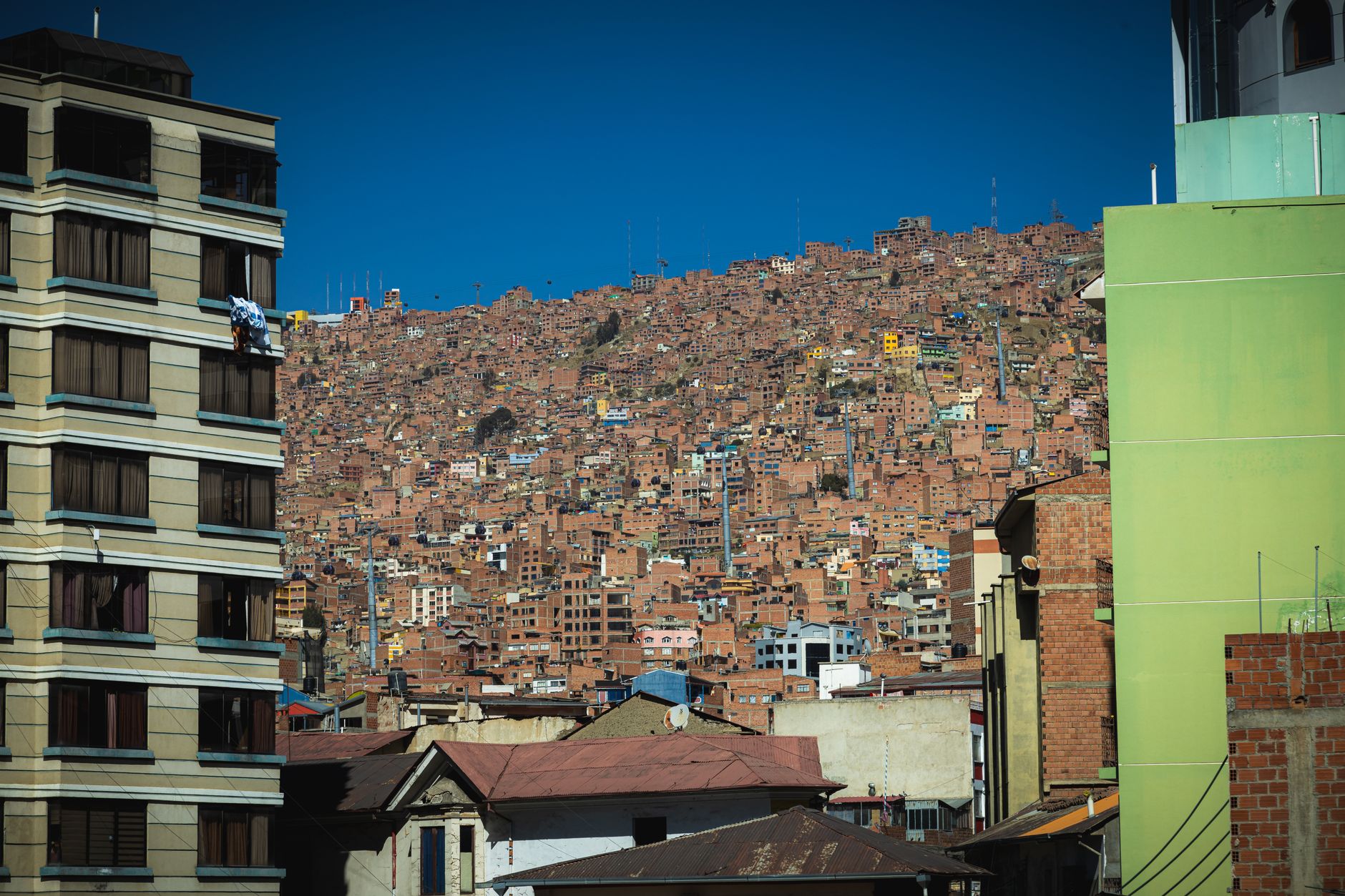
La Paz refuses serenity. Houses climb the basin walls in brick and concrete, cable cars cross the void overhead, and the whole city appears to have been assembled by gravity's enemies, which may be the finest definition of urban ambition. One long ride on Mi Teleférico explains more than a lecture: wealth, wind, topography, fatigue, invention, all visible at once and none politely separated.
Then the older astonishments return. Tiwanaku places cut stone beside the Titicaca plain with such authority that modern cement begins to look nervous. Bolivia's architecture rarely flatters power. It records pressure: colonial silver, Indigenous endurance, migration, cold, rain, worship, shortage, improvisation.
Confetti for the Saints, Beer for the Earth
Bolivian devotion likes mixture and sees no reason to apologize. A church in Copacabana fills with candles, flowers, polished brass, and Catholic names, while outside the older pact with the earth continues through smoke, alcohol, petals, and murmured requests. Ch'alla does not ask theology for permission.
This country blesses things Europeans would never think to bless. Cars. Shops. Market stalls. New buildings. A truck can receive beer on its hood and garlands on its mirrors while a priest offers one formula and the family supplies another. Practical mysticism is the prevailing style: gratitude first, petition second, confetti throughout.
Oruro makes the synthesis impossible to miss. Carnival parades honor the Virgen del Socavón, yet the Devil, the miner, the ancient underworld, and the brass band all insist on their place in the frame. Bolivia understands a secret many empires never learned: religions do not replace one another cleanly. They stack.
Brass Against Thin Air
Bolivian music does not retreat from altitude; it challenges it. In Oruro, a brass band can sound less like accompaniment than like weather arriving down the street, all trumpets, drums, tubas, and collective stamina, while dancers continue in masks and embroidered weight that would make a lesser nation lie down. Breath becomes spectacle.
The highlands favor repetition with consequence. A melody circles, returns, tightens, and what looked simple begins to feel ceremonial. Panpipes, charangos, drums, voices, then the full assault of morenada or diablada brass: the effect is not delicacy but insistence, a sonic architecture built to survive open plazas and cold nights.
And then the east answers differently. Santa Cruz de la Sierra moves with other rhythms, warmer and looser, less hammered by the mountains, while festival music in villages can turn a square into a temporary republic of dancing bodies. Bolivia never offers one soundtrack. It offers argument, and the arguments are excellent.
What Makes Bolivia Unmissable
Salar and Altiplano
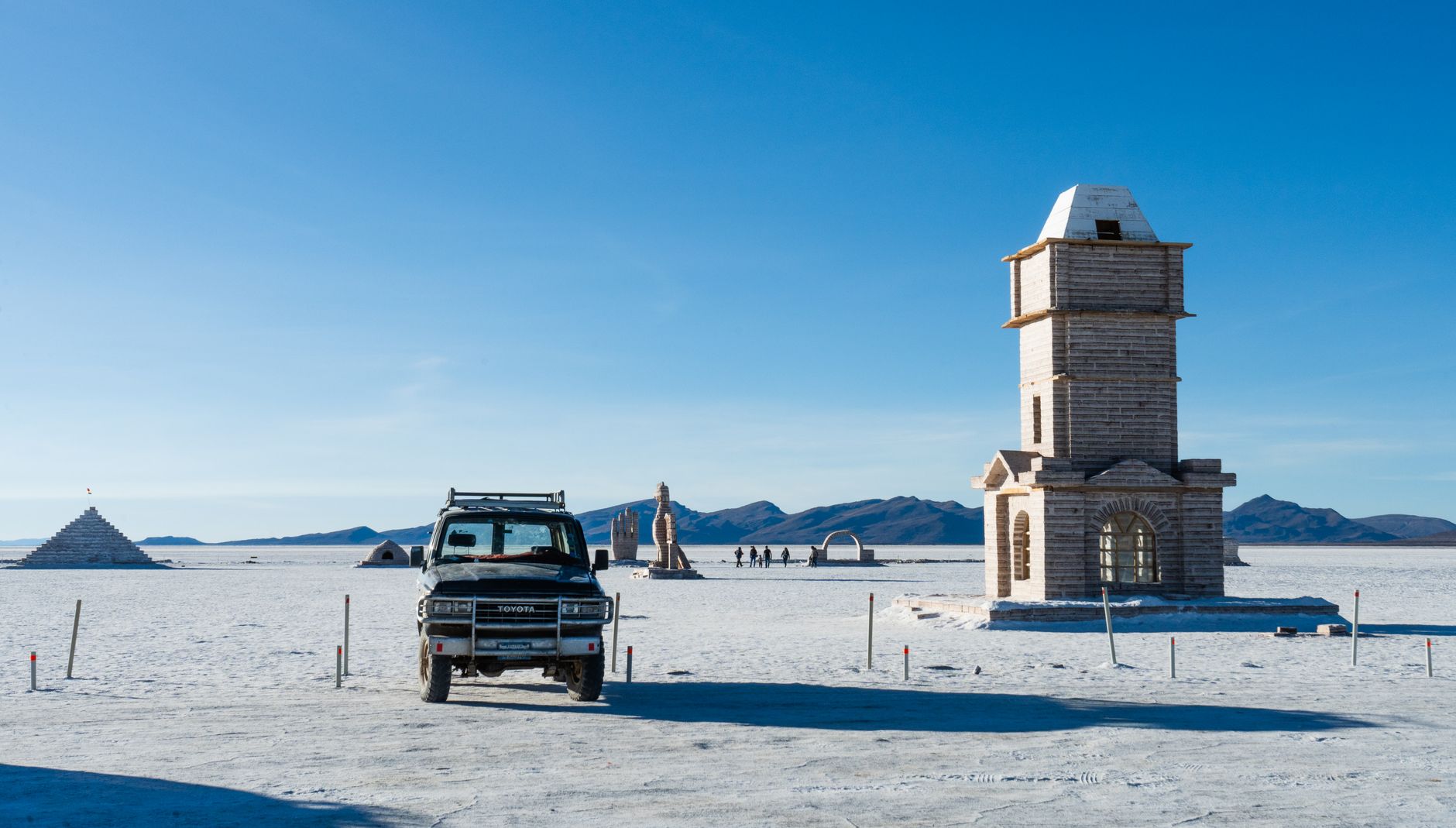
Uyuni is the headline, but the real drama is the whole high plateau: salt flats, red lagoons, volcanoes, and light so sharp it feels metallic. Come in the dry season for clean crossings, or after rain for the mirror effect that made the Salar famous.
Silver and Empire
Potosí and Sucre explain Bolivia's place in world history better than any museum panel. One city minted imperial wealth; the other wrote independence into law, and both still carry the architecture of those arguments.
Lake Titicaca Worlds
Copacabana and Tiwanaku sit near one of South America's oldest sacred landscapes. This is where pre-Columbian ceremonial centers, Catholic pilgrimage, island myths, and everyday lake life still overlap without much ceremony.
Ritual Still Matters
Bolivia's calendar runs on more than public holidays. Oruro's carnival, market blessings, patron-saint feasts, and everyday offerings keep ritual in public view, not tucked behind museum glass.
Amazon Gateways
Rurrenabaque gives Bolivia a second identity entirely: pink river dolphins, capybaras, muddy riverbanks, and heat that feels almost theatrical after La Paz. Santa Cruz de la Sierra opens the lowlands from the other side, with easier flights and a very different rhythm.
Serious Market Food
Bolivia eats with conviction. Salteñas at breakfast, anticuchos after dark, fricasé before noon, and the vast plates of Cochabamba make this one of South America's most satisfying countries for travelers who pay attention to lunch.
Cities
Cities in Bolivia
La Paz
"The world's highest seat of government sprawls across a canyon at 3,600 metres, where cholita wrestlers perform on Sunday mornings and a cable-car network doubles as public transit above the rooftops."
Uyuni
"Gateway to 10,582 square kilometres of salt crust that, after rain, becomes a mirror so precise it erases the horizon entirely."
Potosí
"A UNESCO-listed colonial city built on the back of Cerro Rico, the silver mountain that bankrolled the Spanish Empire and killed an estimated eight million miners between 1545 and 1825."
Sucre
"Bolivia's constitutional capital wears its whitewashed colonial centre with quiet authority, and its markets still sell the salteña that may have originated here when a poet fled Salta in the 1820s."
Copacabana
"A small lakeside town on Lake Titicaca at 3,812 metres where Inca pilgrimage routes, Catholic processions, and trout grilled on the shore occupy the same afternoon."
Oruro
"An old mining city that sheds its rust-belt skin every February for Carnival, when 28,000 costumed dancers perform the diablada for four consecutive days on streets that smell of beer and incense."
Cochabamba
"Sitting in a temperate valley at 2,558 metres, this is the city where silpancho and pique macho were codified and where eating is treated, without irony, as a civic responsibility."
Santa Cruz De La Sierra
"Bolivia's largest and fastest-growing city runs on lowland heat, agribusiness money, and a social confidence that feels nothing like the Andean west — the Jesuit mission circuit begins here."
Rurrenabaque
"A small jungle town on the Beni River that serves as the last comfortable stop before the Amazon pampas, where capybara and pink river dolphins move through flooded grassland at dawn."
Samaipata
"A village in the eastern Andean foothills where a pre-Inca ceremonial rock carved with feline figures and channels sits on a hillside, and the afternoon light turns the surrounding valleys amber."
Tiwanaku
"The ceremonial core of a civilization that collapsed around 1000 CE from drought, not conquest — the Gateway of the Sun was still standing, half-buried in silt, when Spanish soldiers arrived and assumed giants had built "
Trinidad
"The overlooked capital of the Beni department sits inside a ring road built on a pre-Columbian earthwork causeway, surrounded by seasonally flooded savannah that hides one of South America's least-visited river ecosystem"
Regions
La Paz
Altiplano Core
Western Bolivia feels vertical before it feels national. La Paz drops through a bowl of brick and cable cars at 3,600 meters, Tiwanaku sits out on the plateau with the patience of a place older than the republic, and Copacabana softens the whole region with blue water and pilgrim traffic on Lake Titicaca.
Potosí
Silver Highlands
This is the Bolivia that made empires rich and miners poor. Potosí still lives in the shadow of Cerro Rico, while Sucre offers white facades, courtyards, and a more measured altitude; together they explain how colonial power looked, prayed, and extracted.
Uyuni
Southwest Salt and Rail Country
Uyuni is less a town than a staging ground for immensities: salt, sky, wind, and distances that swallow scale whole. The old rail logic still matters here, which is why Oruro remains more useful than glamorous, a practical hinge between plateau cities and the southwest desert routes.
Cochabamba
Valleys and Food Country
Cochabamba sits in the middle of Bolivia and behaves as if appetite were a civic principle. The climate is easier, the plates are bigger, and the surrounding valleys pull the country away from harsh altiplano light toward orchards, corn, and slower afternoons.
Santa Cruz de la Sierra
Eastern Lowlands
Eastern Bolivia runs on heat, trade, and a different tempo of speech. Santa Cruz de la Sierra is the country's commercial engine, Samaipata gives you cooler hills and a pre-Hispanic hilltop site, and Trinidad begins the waterlogged plains where roads yield to rivers whenever the season decides.
Rurrenabaque
Amazon Gateway
Rurrenabaque is where Bolivia stops pretending the Andes explain everything. Boats replace buses, humidity replaces dry cold, and wildlife tours into the pampas or jungle become the main reason to linger rather than the side trip you thought you were booking.
Suggested Itineraries
3 days
3 Days: Lake Titicaca and Ancient Stone
This short route keeps the distances sane and gives you Bolivia's western highland essentials without pretending three days can do everything. Start in La Paz, continue to Tiwanaku for the country's deepest pre-Columbian site, then sleep by the water in Copacabana where the light off Lake Titicaca changes by the hour.
Best for: first-timers, short breaks, travelers testing altitude carefully
7 days
7 Days: White City to the Salt Flats
This is Bolivia's strongest one-week historical arc: constitutional capital, silver boom, then the blank white shock of the altiplano. Sucre gives you graceful colonial streets and a softer altitude, Potosí adds the hard truth of Cerro Rico, and Uyuni finishes with the country's most unnatural-looking landscape.
Best for: history-focused travelers, photographers, overland routes through the southwest
10 days
10 Days: Eastern Bolivia Without the Rush
This route shows the country most travelers skip, which is exactly why it works. Santa Cruz de la Sierra gives you the transport base, Samaipata slows the pace with valleys and pre-Hispanic ruins, and Trinidad opens the humid lowlands where roads, rivers, and weather still set the terms.
Best for: repeat visitors, warm-weather travelers, people who prefer food and landscapes over checklist sights
14 days
14 Days: Central Bolivia by Road and Rail
Two weeks gives you room to move through the country's middle spine instead of hopping airport to airport. Cochabamba starts in the valleys with serious food, Oruro adds festival memory and rail logic, and Uyuni turns the final stretch into open-distance travel where timetables matter less than weather and light.
Best for: slow travelers, bus-and-train planners, travelers who want variety without backtracking
Notable Figures
Bartolina Sisa
1750-1782 · Aymara rebel leaderBartolina Sisa belongs to the history of La Paz not as a footnote to Túpac Katari but as a strategist who organized fighters, supplies, and pressure on the besieged city. The Spanish executed her publicly in 1782; the state later had to admit that the woman it tried to erase had become one of Bolivia's clearest political ancestors.
Túpac Katari
1750-1781 · Aymara insurgent leaderBorn Julián Apaza Nina, he understood that cutting roads and food could wound empire more deeply than grand speeches. His reported final words, promising to return as millions, still haunt Bolivian politics because they turned defeat into demographic certainty.
Diego Huallpa
16th century · Aymara herder in colonial legendWhether every detail of the story is documented hardly matters now: in Bolivian memory, Diego Huallpa is the man whose fire revealed Cerro Rico's fortune. A lost llama and a cold night above Potosí become, in one instant, the beginning of a global silver age and a local catastrophe.
Bartolomé Arzáns de Orsúa y Vela
1676-1736 · ChroniclerArzáns never left Potosí, which may be why he captured it so well: not as an abstraction of empire, but as a feverish city of debt, duels, holy days, and absurd wealth. His manuscript preserves the human theater behind the silver statistics.
Antonio José de Sucre
1795-1830 · Marshal and statesmanSucre entered Bolivian history wearing the prestige of liberation, but governing proved less glorious than winning battles. The city that bears his name still feels like his paradox: elegant, constitutional, and shadowed by the fragility of the republic he helped launch.
Simón I. Patiño
1860-1947 · Tin magnatePatiño rose from modest origins to become one of the world's great tin barons, a man so rich that Bolivia could seem, at moments, like an annex to his balance sheet. His palaces and business empire revealed the same old national truth: minerals create courts as surely as they create holes in mountains.
Jaime Escalante
1930-2010 · TeacherLong before Hollywood borrowed his name, Jaime Escalante was a son of La Paz shaped by rigor, ambition, and the social seriousness of education. His later fame in the United States never erased that Andean origin story: discipline as dignity, mathematics as social ascent.
Che Guevara
1928-1967 · RevolutionaryChe did not belong to Bolivia by birth, which is precisely why his Bolivian end matters. In the ravines and villages east of the Andes, his grand continental script met local realities, poor logistics, and isolation; the martyrdom came, but the revolution did not.
Evo Morales
born 1959 · Politician and union leaderMorales changed Bolivia less by appearing from nowhere than by making visible constituencies the state had long treated as background. His ascent from union organizing to the Palacio Quemado in La Paz marked a transfer of symbolic ownership as much as a change of government.
Photo Gallery
Explore Bolivia in Pictures
A solitary traveler approaches the Dakar Rally Monument in the vast Salar de Uyuni, Bolivia.
Photo by Willian Justen de Vasconcellos on Pexels · Pexels License
Explore Toyota SUV standing majestically on Bolivia's iconic Salar de Uyuni salt flats under a clear blue sky.
Photo by Robert Acevedo on Pexels · Pexels License
Stunning geological rock formations under a clear blue sky in La Paz, Bolivia.
Photo by Jose Luis Vanasco on Pexels · Pexels License
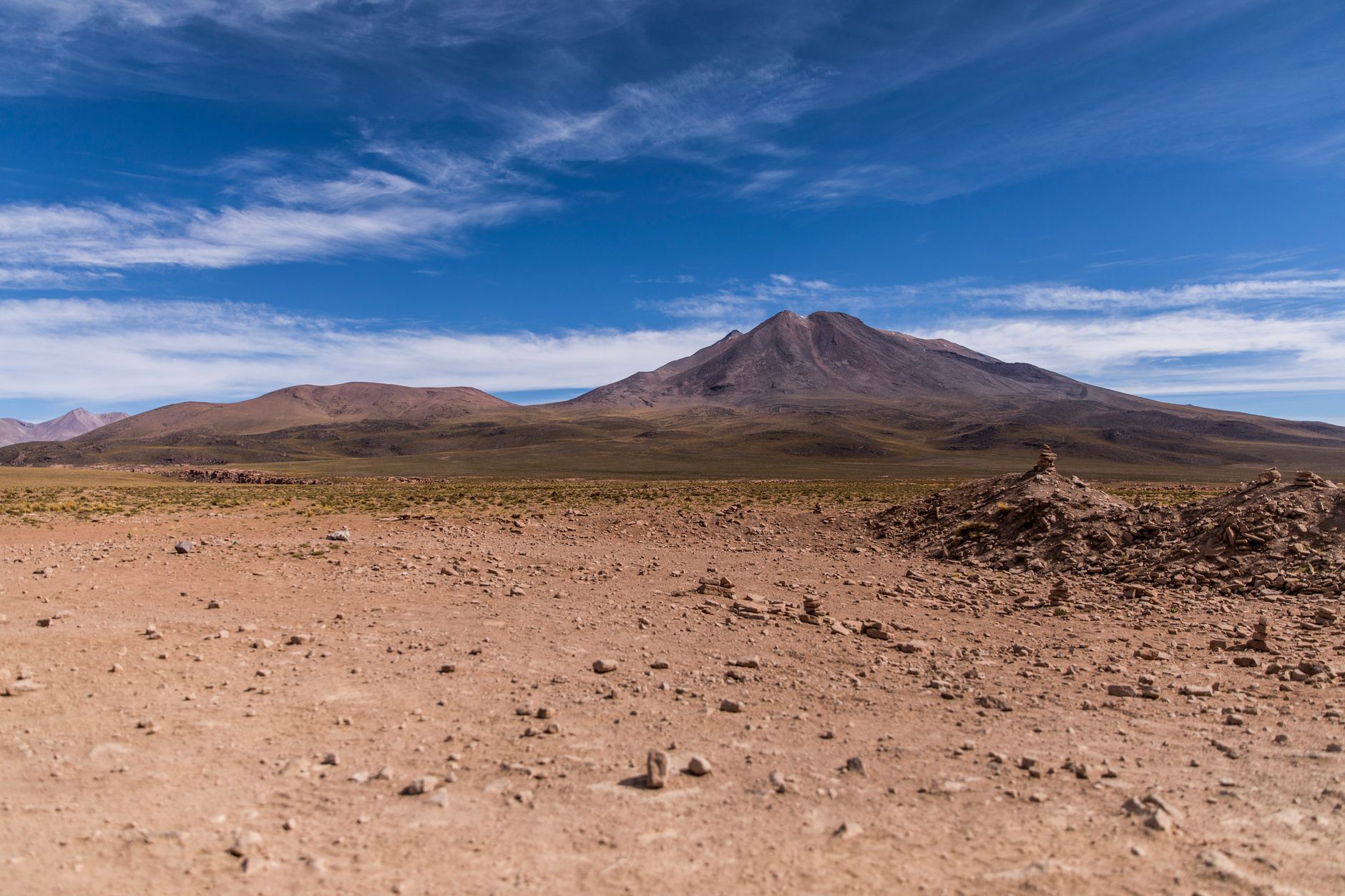
Vast desert terrain under a clear blue sky with mountains in Uyuni, Bolivia.
Photo by Maria Camila Castaño on Pexels · Pexels License
Intricate carnival mask glowing in vibrant colors during a night parade in Bolivia.
Photo by rodwy cazon on Pexels · Pexels License
A vibrant view of densely packed hillside houses in La Paz, showcasing urban architecture.
Photo by Gabriel Ramos on Pexels · Pexels License
Beautiful panoramic view of Cusco, Peru's historical rooftops and hillside houses under a bright sky.
Photo by Marcelo Mora on Pexels · Pexels License
Practical Information
Visa
Bolivia is outside Schengen, so time here does not count toward Schengen limits. EU, UK, Canadian, and Australian passport holders usually enter visa-free for tourism, while U.S. citizens still need a tourist visa that costs about USD 160 and is typically issued for 30 days per trip, extendable up to 90 days per year. Keep six months of passport validity, an onward ticket, and your hotel address handy.
Currency
Bolivia uses the boliviano, shown as Bs, and official exchange rates on 19 April 2026 were roughly Bs 6.86 buy and Bs 6.96 sell per USD 1. Card payments and ATM withdrawals usually track the official rate, while cash exchange can vary because of the continuing dollar shortage. Budget around USD 25-40 a day for simple travel, but Uyuni and Amazon tours raise the bill fast.
Getting There
Santa Cruz de la Sierra is the easiest international gateway and the gentlest place to land physically, because Viru Viru sits in the lowlands rather than above 4,000 meters. La Paz is efficient for an altiplano-heavy trip, but El Alto airport can hit you with altitude before you even reach your hotel. Cochabamba and Sucre work better as onward domestic links than as first arrivals for most travelers.
Getting Around
Domestic flights save serious time on long jumps such as La Paz to Rurrenabaque, La Paz to Uyuni, or Santa Cruz de la Sierra to Sucre. Overnight buses remain the backbone on classic routes including La Paz to Copacabana, Sucre to Potosí, and La Paz to Uyuni. Passenger rail is limited, with the most useful line running through Oruro, Uyuni, Tupiza, and Villazón.
Climate
May to October is the safest broad-window season, with dry weather on the altiplano and more manageable roads across much of the country. La Paz, Oruro, and Potosí stay cold at night all year, even when afternoons look mild on paper. The mirror effect at Uyuni usually appears after rains, while the dry salt surface is easier for standard overland tours from roughly June onward.
Connectivity
Mobile data works well in major cities such as La Paz, Sucre, Cochabamba, and Santa Cruz de la Sierra, but coverage drops fast once you move into the salt flats, high plateau, or jungle river systems. Hotel Wi-Fi is common, not always fast, and often weakest where you most want to upload photos. Download maps and bus tickets before heading to Uyuni, Rurrenabaque, or remote stretches near Copacabana and Tiwanaku.
Safety
The main practical risk is not crime but altitude, especially if you land in La Paz and charge straight into sightseeing at 3,600 meters. Take the first day slowly, drink water, and do not treat coca tea as a magic shield. In cities, use radio taxis or app-booked rides at night, keep cash split between pockets, and check current road-block reports before long bus journeys.
Taste the Country
restaurantSalteña
Morning queue, standing, both hands. Bite the top corner first, sip the broth, laugh at the sleeve. Coffee, conversation, napkins, no dignity.
restaurantAnticucho
Night street, smoke, skewer, potato, peanut-chili sauce. Friends gather, drivers stop, fingers burn, coats keep the fire smell.
restaurantFricasé paceño
Late morning, bowl, spoon, silence. Pork, white corn, broth, hangover, family table, market counter.
restaurantApi con pastel
Dawn chill, paper cup, fried pastry, market bench. Corn drink warms the mouth, sugar lands, day begins.
restaurantSilpancho
Lunch in Cochabamba, large table, hungry company. Fork breaks yolk, yolk floods rice, locoto wakes everyone.
restaurantMajadito
Midday in Santa Cruz de la Sierra, rice, dried meat, egg, plantain. Family shares bowls, stories move, plates empty.
restaurantChairo
Cold noon in La Paz or Potosí, deep bowl, slow spoon. Chuño, meat, steam, altitude, patience.
Tips for Visitors
Carry small bills
ATMs exist in major cities, but cash still makes daily travel easier. Keep Bs 10, 20, and 50 notes for taxis, market lunches, and bus terminals, because change for larger notes becomes oddly difficult at exactly the wrong moment.
Do not plan on trains
Bolivia is not a rail country in the European sense. Use trains only on the few working corridors, especially around Oruro, Uyuni, Tupiza, Villazón, and the reactivated eastern line from Santa Cruz de la Sierra toward Puerto Quijarro.
Book tours, not every bed
Reserve Uyuni salt-flat trips, Oruro Carnival dates, and Amazon lodges ahead of time, because those sell first and shape the rest of the trip. Regular city hotels in La Paz, Sucre, and Cochabamba usually give you more flexibility if left open until a few days before arrival.
Download before departure
Signal weakens quickly once you leave urban Bolivia. Save offline maps, hotel confirmations, and bus screenshots before heading out from La Paz to Copacabana, from Uyuni into the salt flats, or from Rurrenabaque into the jungle.
Eat lunch early
The best-value meal is often the midday almuerzo menu, not dinner. Go between noon and 2 pm, especially in Cochabamba, Sucre, and Potosí, when kitchens are working hardest and portions are least symbolic.
Respect the altitude
If you land in La Paz or go straight to Uyuni, keep your first day boring. Heavy meals, alcohol, and immediate stair-climbing are a poor combination above 3,500 meters, no matter how fit you are at sea level.
Politeness pays
Start public interactions with "buenos días" and use "usted" until invited downward. In markets, words like "casera" or "caserita" are part courtesy, part commerce, and the extra yapa sometimes appears only after that bit of social work is done.
Build around weather
Dry season saves time, not just comfort. Road conditions, salt-flat access, and jungle transport all become more predictable from May to October, while the wet months can turn a neat route into a long lesson in patience.
Explore Bolivia with a personal guide in your pocket
Your Personal Curator, in Your Pocket.
Audio guides for 1,100+ cities across 96 countries. History, stories, and local insight — offline ready.
Audiala App
Available on iOS & Android
Join 50k+ Curators
Frequently Asked
Do U.S. citizens need a visa for Bolivia? add
Yes. U.S. passport holders still need a Bolivian tourist visa, which costs about USD 160 and is generally valid for 30 days per trip, with extensions possible up to 90 days per year. Other common Western passports, including most EU, UK, Canadian, and Australian ones, usually enter visa-free for tourism.
Is Bolivia expensive for tourists? add
No, not by South American standards. A careful traveler can manage on roughly USD 25-40 a day at official-rate math, but organized trips in Uyuni and the Amazon can raise that quickly. Mid-range comfort usually lands closer to USD 50-90 a day.
What is the best month to visit Bolivia? add
June to September is the safest answer for most travelers. Those months usually bring dry weather on the altiplano, clearer logistics for overland travel, and easier conditions in places such as La Paz, Potosí, Copacabana, and Uyuni. If you want the mirror effect on the Salar, late wet season can be better, but access becomes less predictable.
How bad is the altitude in La Paz and Uyuni? add
It is real, and it can flatten even experienced travelers. La Paz sits around 3,625 meters and Uyuni around 3,650 meters, so headaches, shortness of breath, and poor sleep are common on day one. The practical fix is simple: arrive rested, drink water, eat lightly, and keep the first 24 hours quiet.
Can you use credit cards in Bolivia? add
Yes, in larger hotels, better restaurants, and urban businesses, especially in La Paz, Santa Cruz de la Sierra, Sucre, and Cochabamba. No, not reliably enough to travel cash-free. Small towns, markets, transport terminals, and many tour operators still prefer cash, and card transactions usually follow the official exchange-rate track.
Is Bolivia safe to travel right now? add
Usually yes for ordinary independent travel, but conditions can change quickly because of protests, roadblocks, and transport stoppages. The bigger day-to-day risk is often altitude, long road travel, or choosing the wrong taxi rather than violent crime. Check local transport news before intercity moves and avoid arriving at unfamiliar terminals late at night.
Do I need a yellow fever certificate for Bolivia? add
Possibly, and it is smart to carry it if you have one. Rules are applied unevenly, but proof becomes more relevant if you are heading into lowland and jungle areas such as Santa Cruz de la Sierra, Trinidad, or Rurrenabaque. It is much easier to have the certificate and never show it than to need it at a border or airport desk.
Are trains useful in Bolivia? add
Only on a few specific routes. The western corridor through Oruro, Uyuni, Tupiza, and Villazón can be useful, and the Santa Cruz de la Sierra to Puerto Quijarro passenger service returned in 2026, but Bolivia is still mainly a bus-and-flight country. Build your itinerary around roads and planes first, then add rail where it genuinely fits.
Should I fly into Santa Cruz or La Paz? add
Santa Cruz de la Sierra is the easier first landing for most people. It gives you better acclimatization, broad international connections, and a lowland start before you climb toward La Paz, Sucre, or Uyuni. Fly straight into La Paz only if your route is heavily focused on the western highlands and you are willing to take the first day slowly.
Sources
- verified Ministerio de Relaciones Exteriores de Bolivia — Official Bolivian foreign ministry and consular information, including visa group rules and entry requirements.
- verified Banco Central de Bolivia — Official exchange-rate reference for the boliviano and current monetary data.
- verified ATT Bolivia — Bolivia's transport and telecommunications regulator, used for current domestic airfare and transport rule checks.
- verified CDC Traveler's Health: Bolivia — Health guidance for travelers, including yellow fever recommendations and vaccination notes.
- verified Ferroviaria Andina — Official source for Bolivia's main western passenger rail corridor and service information.
Last reviewed: