Introduction
The first thing that strikes you is the silence. At 7,600 feet, Thimphu, Bhutan's capital, feels like a city holding its breath—traffic lights don't exist because no one thought to install them, and prayer flags make more noise than cars. This is a place where the national animal looks like a goat-cow hybrid, where the king's face appears on the currency but you'll meet him at the archery grounds on Saturday, and where the highest restaurant serves chili cheese with a view that makes you question why you live at sea level.
Built within a valley so narrow that the runway at Paro airport requires pilots to bank between mountains at 45 degrees, Thimphu refuses to play by normal city rules. The Tashichho Dzong—part fortress, part monastery, part government headquarters—turns golden at dusk and contains the throne room where the fourth king voluntarily abdicated power in 2006, establishing democracy because 'it's what the people want.' The same king also created Gross National Happiness as a measurement of progress, which explains why the traffic jam you're stuck behind involves 47 monks in crimson robes rather than 47 cars.
But don't mistake quiet for sleepy. Behind the whitewashed walls of rammed-earth buildings, you'll find Cloud 9 serving burgers with Bhutanese cheese, and the Centenary Market where grandmothers sell organic vegetables alongside teenagers trading traditional masks. The city stretches just three miles along the Wang Chhu river, making it possible to walk from a 1690 monastery to a craft brewery in twenty minutes, passing the world's largest seated Buddha statue—51.5 meters of bronze plated in gold, watching over a city where modern carbon fiber bows meet traditional bamboo ones on the archery field.
What Makes This City Special
A Fortress That Still Runs the Country
Tashichho Dzong houses both the king’s throne room and government ministries—an active seat of power since 1641. Tourists are only allowed after 5 p.m. on weekdays, when the last bureaucrat locks up and the monks take over the courtyards.
Buddha You Can Spot from Space
The 51.5-metre bronze Buddha Dordenma looms above the valley, plated in gold and filled with 125,000 smaller statues. Locals time their evening walks to reach the hilltop just as the floodlights snap on and the city lights start to mimic the constellations inside the statue.
Nightlife Where Metal Meets Momos
Thimphu’s only late-night strip packs cover bands, heavy-metal devotees and the national dish—ema datse chillies—into one neon lane off Clock Tower Square. Order cassava-flour momos at Chuniding first, then follow the sound of distorted guitars upstairs.
Historical Timeline
Where Prayer Flags Meet Parliament
From hermit ridge to Himalayan capital in one lifetime
Stone Tools on the Ridge
Polished axes surface every spring when yak calves kick away the topsoil above Thimphu. The valley’s first people camped where the Wang Chuu bends, 2300 m above worry, leaving behind microliths that still slice fingers when farmers plant potatoes.
Lhanangpa Builds a Hermitage
Lama Gyalwa Lhanangpa drives the first wooden stake into Do-Ngön ridge. He names the spot Tashichho—‘the glorious religion’—and settles for a view that swallows the entire valley. Monks still argue whether he chose the site for the sunrise or the silence.
Shabdrung Claims the Valley
Ngawang Namgyal arrives, fresh from defeating Tibetan generals, and decides the valley needs a fortress that prays. He keeps Lhanangpa’s name but redesigns the ridge: thicker walls, inward-sloping windows, a courtyard that echoes with masked dances every autumn.
Simtokha Dzong Rises
The Shabdrung’s first model dzong goes up in fourteen frantic months. Its murals teach grammar to warriors and swordplay to scribes—an early Bhutanese compromise. When the paint dries, the valley finally has a scriptorium, armoury and courtroom under one sweeping roof.
Tashichho Dzong Reborn
Timbers from the old hermitage are salvaged and hoisted uphill. The rebuilt dzong becomes the valley’s hinge: winter seat of the dratshang, summer refuge of the penlop. From here, decrees ride out on mules to every corner of the dragon kingdom.
Treaty of Sinchula Signed
Bhutan surrenders the southern Duars and, with them, easy rice supply. Thimphu’s markets feel the pinch within weeks; prices of red rice triple. The dzong’s storehouses empty for the first time in memory, and the valley learns the cost of geography.
First King Crowned
Ugyen Wangchuck trades his raven crown for a silk scarf at Punakha, but the ceremony is broadcast from Thimphu’s telegraph pole. The valley gains a palace and loses a patchwork of feuding fiefdoms. Power now arrives by motor road instead of mule train.
Jigme Singye Born
A prince cries at Dechencholing Palace while rain drums on corrugated zinc. He will grow up to invent Gross National Happiness, draft the constitution, and force Thimphu to grow without losing its smell of pine smoke and butter tea.
Capital Moves North
Government files clatter into Thimphu on Indian Army trucks. Overnight the village of 5,000 inherits ministries, typewriters and a single petrol pump. Tashichho Dzong sheds its seasonal status; the king’s secretariat sets up where monks once debated metaphysics.
First Hydro Plant Hums
A 360 kW turbine on the Wang Chuu turns prayer-wheel water into kilowatts. Streetlights blink on for thirty seconds, then off for ten—the engineers are learning. Thimphu’s nights will never again be lit only by butter lamps and phosphorescent stars.
Memorial Chorten Rises
White concrete circles replace the third king’s funeral pyre. Grandmothers shuffle clockwise, clicking rosaries, while children race the kora on roller skates imported from Delhi. The stupa becomes the valley’s heartbeat—steady, white, impossible to ignore.
Druk Air Touches Down
A 737 wobbles onto Paro’s 1,964 m strip, carrying journalists, development officers and the smell of jet fuel. Thimphu is now only two days from Bangkok instead of two weeks. The first duty-free shop opens, selling imported scotch to diplomats who still toast in Dzongkha.
Jetsun Pema Born
A future queen takes her first breath at the national referral hospital. She will grow up cycling past chortens, studying in London, and returning to marry a king who proposes on the Changlimithang archery range. The valley’s fairy tale gets a local heroine.
Television Arrives
The king lifts his ban on screens the same week the World Cup airs. Crowds pack Changlimithang Stadium to watch a 21-inch Sony powered by a car battery. Thimphu discovers commercials, Bollywood and—most addictive—images of itself.
Constitution Drafted
Monks, farmers and taxi drivers debate commas in a tent beside the dzong. The final parchment limits royal power and invents the National Council. For the first time, Thimphu’s laws are not handwritten in a monk’s ledger but uploaded to a server humming in a basement.
First Elections Held
Voters queue before dawn, thumbs stained purple like miniature thangkas. The DPT wins 45 of 47 seats; the capital’s only traffic light blinks green in celebration. Thimphu trades absolute monarchy for parliamentary drama without breaking a single shop window.
Buddha Dordenma Completed
125,000 miniature Buddhas rattle inside a 51.5 m steel statue as cranes detach. At dusk the gilded face catches the last sun and throws it across the valley, reminding everyone that Thimphu still measures progress in metres of compassion, not metres of glass.
Notable Figures
Jigme Dorji Wangchuck
1928–1972 · Third King of BhutanHe moved the capital to Thimphu in 1962, built the Memorial Chorten, and let the first tourists in. Today he’d recognise the same pine-scented air and the Friday archery matches below Tashichho Dzong.
Lama Gyalwa Lhanapa
12th century · Buddhist masterIn 1216 he chose the ridge above the Wang Chhu for a hermitage; the valley’s political heart still beats there. He’d smile at selfie-sticks outside walls he built for meditation.
Photo Gallery
Explore Thimphu in Pictures
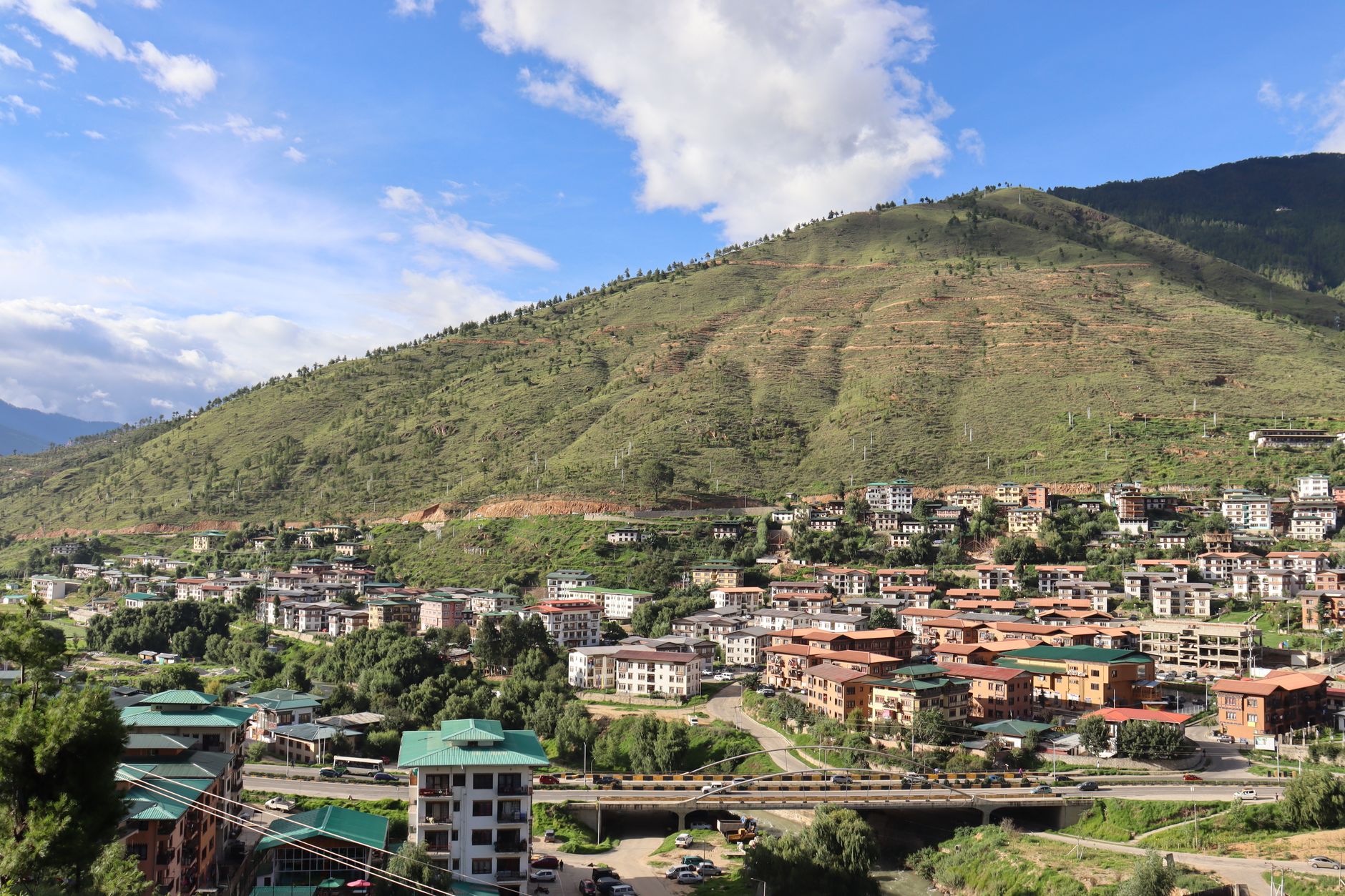
An elevated view of Thimphu, Bhutan, capturing the unique blend of traditional architecture and modern urban development nestled in the Himalayas.
Thinho 7 on Pexels · Pexels License
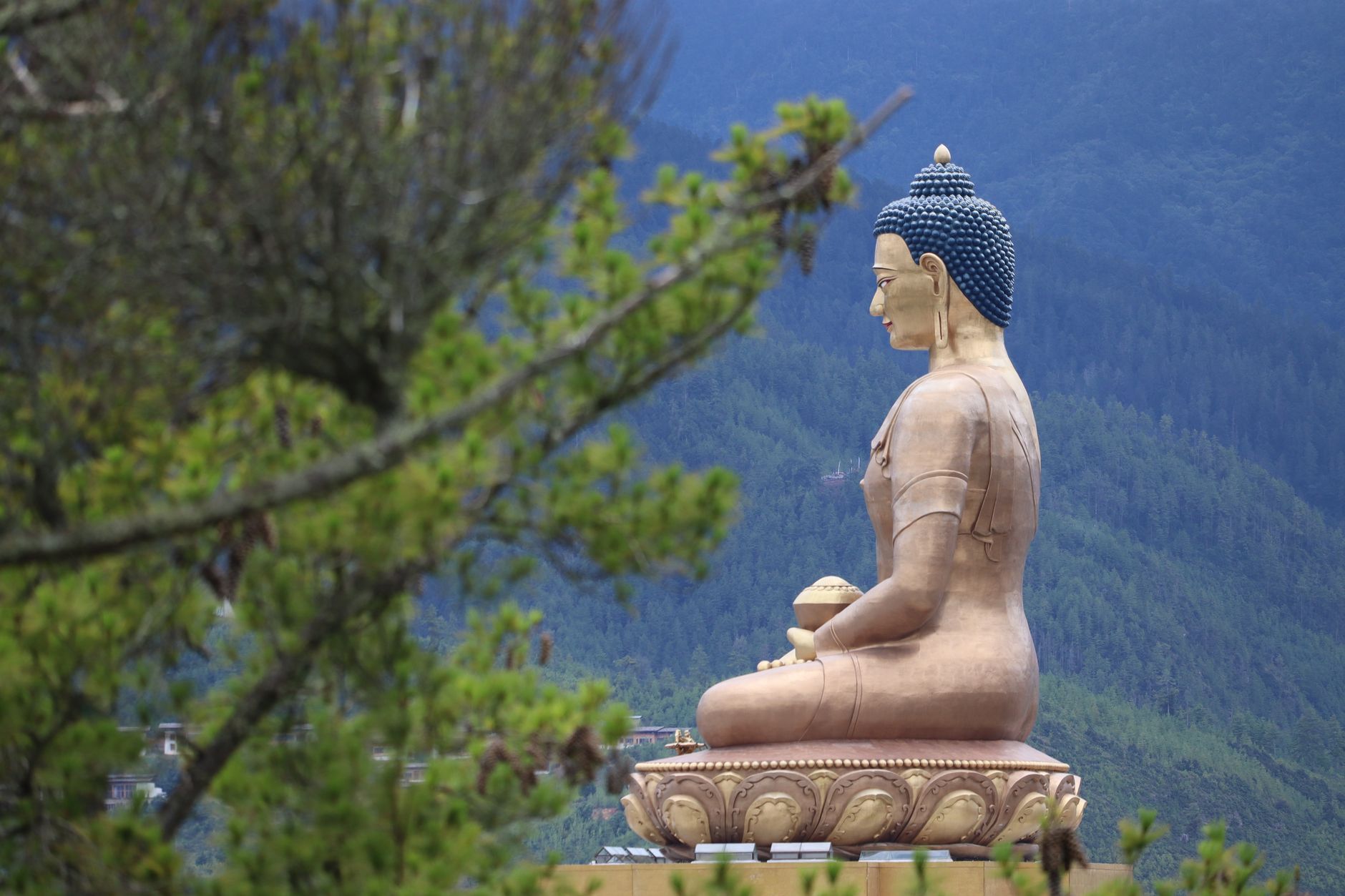
The majestic Buddha Dordenma statue overlooks the valley of Thimphu, Bhutan, serving as a prominent symbol of peace and spiritual devotion.
Anil Sharma on Pexels · Pexels License
The capital city of Thimphu, Bhutan, nestled in a valley with traditional architecture and dramatic mountain backdrops.
Soonam Wooeser on Pexels · Pexels License
A serene golden statue stands prominently against the misty, mountainous backdrop of Thimphu, Bhutan.
Pema Gyamtsho on Pexels · Pexels License
The majestic Buddha Dordenma statue stands as a peaceful guardian overlooking the valley in Thimphu, Bhutan.
Prateek Katyal on Pexels · Pexels License
The capital city of Thimphu, Bhutan, nestled in a valley with traditional architecture set against a sprawling pine-covered mountain range.
Thinho 7 on Pexels · Pexels License
A high-angle view captures the unique blend of traditional Bhutanese architecture and modern urban development in the capital city of Thimphu.
Harsh Suthar on Pexels · Pexels License
The majestic Buddha Dordenma statue sits serenely above the forested landscape of Thimphu, Bhutan.
Soonam Wooeser on Pexels · Pexels License
A high-angle view of the residential districts in Thimphu, Bhutan, highlighting the unique blend of traditional Himalayan architecture and modern urban development.
Harsh Suthar on Pexels · Pexels License
The intricate, traditional architecture of a building in Thimphu, Bhutan, glows with vibrant red light against the dark night sky.
Setu Chhaya on Pexels · Pexels License
A high-angle view captures the unique, traditional architectural style of residential buildings in Thimphu, the capital city of Bhutan.
Thinho 7 on Pexels · Pexels License
Practical Information
Getting There
Fly into Paro International Airport (PBH), Bhutan’s only international gateway, 54 km southwest. No rail lines exist; the capital is reached via the two-lane National Highway 1 that snakes along cliff edges and takes 60–90 minutes by taxi or airport shuttle.
Getting Around
Thimphu has no metro; rely on the orange City Bus fleet (Nu 5 base fare plus Nu 1 per stop) with 15 day and 5 night routes. Smart-cards cut fares and are recharged at kiosks city-wide; taxis cruise main roads but agree the fare before you board—meters are still rare.
Climate & Best Time
Spring (Mar–May) brings 10–22 °C and blooming apple orchards; monsoon summer peaks at 27 °C with 150 mm monthly rain. Autumn (Sep–Nov) is dry, clear and 8–20 °C—ideal for festivals; winter nights drop to –2 °C but skies stay cobalt blue and tourist numbers plummet.
Language & Currency
Dzongkha is the official tongue, yet English is the working language of schools and signage. Currency is the ngultrum (Nu), pegged 1:1 to the Indian rupee; ATMs and card payments work in town, but carry cash for remote monasteries and rural bus stops.
Tips for Visitors
Order Mild First
Ask restaurants for 'mild' ema datshi; you can always add heat, but locals treat chili as a vegetable, not garnish.
Dzong After 4 pm
Tashichho Dzong opens afternoons and weekends only; walk the perimeter first, then join locals circling the chorten at dusk.
Hit Weekend Market Early
Centenary Market peaks 8-11 am Saturday; arrive with an empty stomach and a 100-Ngultrum note for hot momos and butter tea.
Buddha at Golden Hour
The 51.5-m Buddha Dordenma glows 30 minutes before sunset; taxi drivers know the ridge pull-off for valley-wide shots.
Tango Hike, No Guide Needed
The 45-minute climb to Tango Monastery starts 7 km north of town; shared taxis drop at the trailhead before 9 am, saving guide fees.
Explore the city with a personal guide in your pocket
Your Personal Curator, in Your Pocket.
Audio guides for 1,100+ cities across 96 countries. History, stories, and local insight — offline ready.
Audiala App
Available on iOS & Android
Join 50k+ Curators
Frequently Asked
Is Thimphu worth visiting? add
Yes—Bhutan’s only capital without traffic lights delivers Himalayan culture straight from the oven: incense at 12th-century temples, chili-laden markets, and a 51-m golden Buddha watching over the valley like a quiet referee.
How many days in Thimphu? add
Plan 3 full days: one for Buddha-Dzong-chorten loop, one for Tango or Phajoding hikes, one for museums, markets and a home-cooked lunch that ruins Indian take-out forever.
How do I get to Thimphu from Paro airport? add
Shared taxis leave Paro terminal hourly, 1.5 hrs, 600-800 Nu. Private drivers negotiate USD 25-30 and stop at river viewpoints your Instagram will thank you for.
Is Thimphu safe for solo travellers? add
Violent crime is vanishingly rare; the biggest risk is spicy food and altitude yawns. Locals still return lost wallets—try that in most capitals.
What does it cost per day? add
Government’s USD 100-200 SDF plus USD 50-80 for clean 3-star rooms and meals. Street momos cost 30 Nu; a set-lunch ema datshi at Folk Heritage Museum runs 400 Nu.
Sources
- verified Silverpine Bhutan Food Guide — Restaurant names, street-food stalls and local etiquette verified by Bhutanese staff writers.
- verified UNESCO Tentative List for Bhutan — UNESCO documentation on Tango, Phajoding and Changangkha Lhakhang significance.
Last reviewed: