Bhutan

Bhutan

Bhutan

Bhutan travel guide: plan visas, costs, best seasons, and where to go from Paro to Punakha for monasteries, hikes, food, and mountain roads.

location_city

Capital

Thimphu

translate

Language

Dzongkha

payments

Currency

Bhutanese ngultrum (BTN)

calendar_month

Best season

Spring (March-May) and autumn (October-November)

schedule

Trip length

7-10 days

badge

EntryVisa required for most visitors; SDF applies

Introduction

A Bhutan travel guide starts with one fact most travelers miss: this Himalayan kingdom runs on monasteries, mountain roads, and rules that shape every day of the trip.

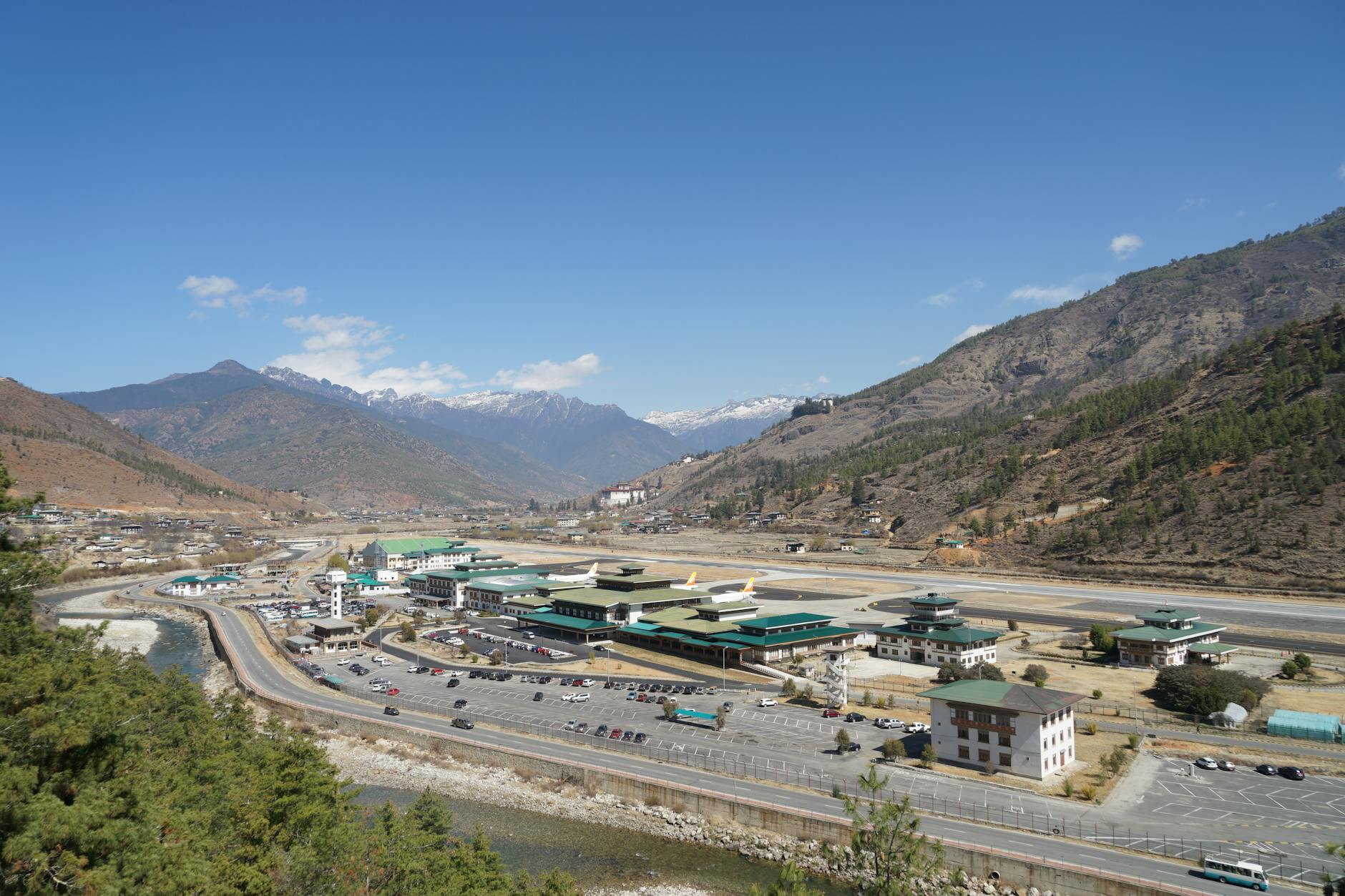
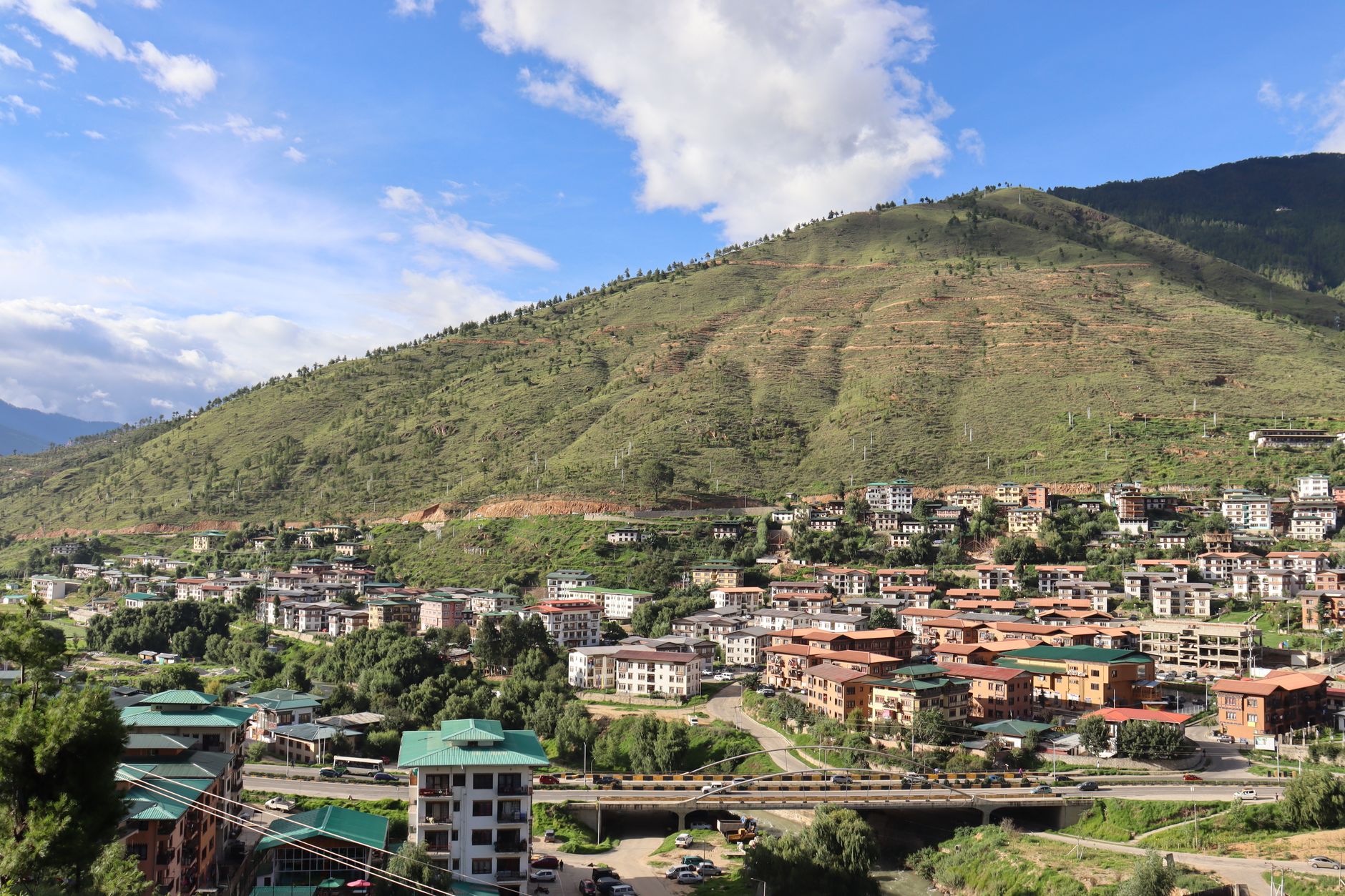
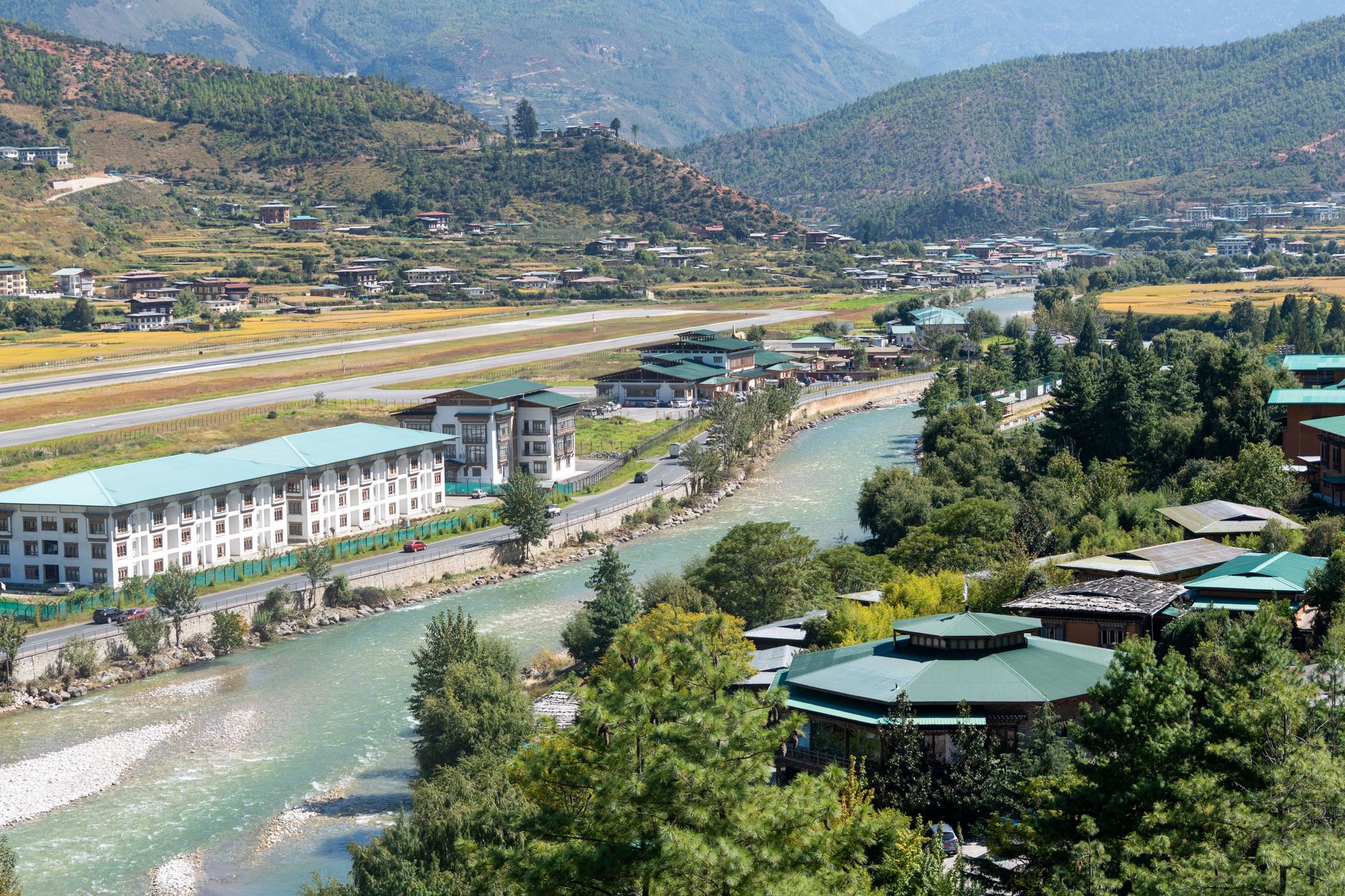
Bhutan feels less like a place built for tourism than a country that kept its own pace and let visitors adjust. In Thimphu, monks pass traffic lights that do not exist, office workers step out for butter tea, and government buildings still follow a visual code of painted timber, sloped roofs, and whitewashed walls. Then Paro shifts the frame again: one narrow valley, one runway famous for its approach, and cliffs where monasteries look pinned to the rock. That contrast is the point. You are not coming for a checklist. You are coming to see how a modern state still gives ritual, architecture, and public life room to breathe.

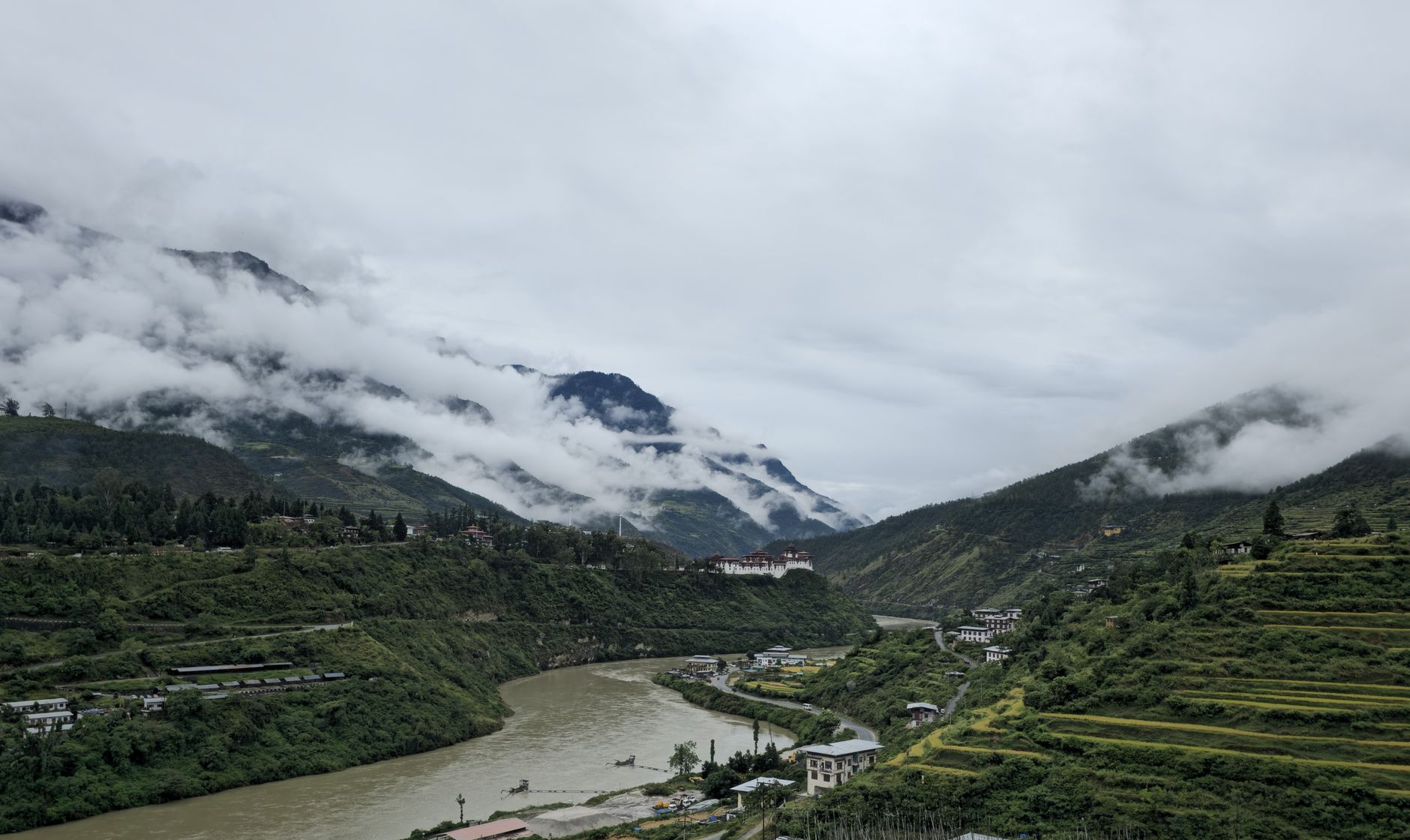
The best trips in Bhutan work by valley, not by city count. Punakha trades alpine air for jacaranda trees, river confluences, and a dzong stretched between water and farmland. Bumthang feels older, quieter, and more intimate, with buckwheat fields, temple clusters, and stories tied to Guru Rinpoche that still shape the landscape. Haa, Trongsa, and Phobjikha pull you farther from the easy postcard version of the country: fewer crowds, longer drives, stronger weather, and a clearer sense of how geography rules the day. Distances look short on a map. Hairpin roads say otherwise.

That is why a Bhutan travel guide has to do more than praise the scenery. You need the practical rhythm as much as the romance: visa rules, the Sustainable Development Fee, road times, altitude shifts, and the fact that Paro is still the only international airport. But once the logistics are in place, Bhutan gives back in texture. Red rice with ema datshi at lunch. Prayer flags snapping above a pass. Schoolchildren in kira and gho outside a monastery courtyard. A farmhouse dinner in Wangdue Phodrang after a day on the road. Small things, remembered for years.

A History Told Through Its Eras

Caves, Valleys, and the First Whisper of the Dharma

Sacred Beginnings, c. 2000 BCE-1600 CE

A cliff above a valley, a cave blackened by smoke, a path that disappears into cloud: Bhutan begins in places like that. Archaeology here is fragmentary rather than triumphant, a few tools, a few megalithic traces, hints of settlement long before any court chronicler thought to write a line. The mountains kept their secrets badly catalogued and fiercely guarded.

What survives first in memory is not a king with a dated charter, but a sacred arrival. According to tradition, Guru Padmasambhava reached Bhutan in the 8th century, leaving marks on the spiritual imagination of places such as Bumthang and Paro that still feel less like museum sites than like episodes one can walk into. Ce que l'on ignore souvent, c'est que these stories were never mere piety. They gave valleys a pedigree, shrines a legitimacy, and communities a way of saying: we belong to a larger Buddhist world, but on our own terms.

For centuries, Bhutan was not a single kingdom but a mosaic of valleys, lineages, monasteries, and local rulers. Different dialects, different ritual traditions, different loyalties. One ridge could separate not just villages, but worlds. Religion moved with politics and politics dressed itself as religion; in the Himalayas, the robe and the sword have long known one another.

That is why the early story matters. Before there was a court in Thimphu or a royal lineage enthroned for the whole country, Bhutan already possessed what many states spend centuries trying to invent: a sense that the landscape itself had memory. That sacred geography would become the raw material of power in the 17th century.

Guru Padmasambhava hovers over Bhutanese history like a founder who never needed a throne, because caves and cliffs did the work of a palace.

In Bumthang, local tradition ties the saint to the healing of a ruler, a reminder that in the Bhutanese imagination, conversion often begins with the body before it reaches doctrine.

The Monk Who Built a State Out of Fortresses

Unification Under the Zhabdrung, 1616-1651

Picture a man in exile crossing the mountains from Tibet, pursued by enemies, carrying not a crown but a claim. Ngawang Namgyal arrived in Bhutan in 1616, and what he found was not a kingdom waiting politely for its sovereign. It was a fractured land of rival lords and competing religious interests, each valley convinced of its own importance. He understood the problem at once. To rule Bhutan, one had to master both devotion and geography.

So he built in stone. The great dzongs rose at strategic points, not as picturesque monasteries for postcards, but as fortresses, granaries, monasteries, and administrative headquarters all at once. Simtokha, Punakha, Trongsa: each one was a political sentence written across a valley. When you stand in Punakha today, where two rivers meet under white walls and red bands of ochre, you are looking at architecture used as argument.

Ce que l'on ignore souvent, c'est que the Zhabdrung did not simply preach unity; he staged it. He created the dual system of governance, balancing religious and civil authority, so that sanctity and administration could reinforce rather than devour each other. It was elegant on paper and often untidy in life, which is usually how durable political inventions begin.

Then came the first great mystery of Bhutanese statehood. Ngawang Namgyal died in 1651, but his death was reportedly concealed for years to preserve stability while the state machinery settled into place. One almost sees the closed doors, the whispered instructions, the officials carrying on as if the great man had merely withdrawn into meditation. A kingdom was being taught not to panic. And that discipline, born of secrecy, would shape Bhutan long after the founder was gone.

Ngawang Namgyal was not a dreamer in a hermitage; he was a hard political mind who knew a monastery wall could stop an army.

His death was reportedly hidden from the public for years, which gives Bhutan one of the strangest founding scenes in Asia: a state consolidated in the name of a ruler who was already gone.

Civil Wars, British Pressure, and One Family's Ascent

Rival Valleys and the Road to Monarchy, 1651-1907

After the founder's death, Bhutan did not glide serenely into order. It splintered, argued, fought, and improvised. Regional governors, religious dignitaries, and powerful dzongpon competed for influence, while the dual system that looked so balanced in theory became, in practice, a theatre of rival ambitions. This is the less embroidered side of Bhutanese history: not incense and trumpets, but faction, delay, and local strongmen measuring one another across mountain passes.

Outside pressure made everything harder. Conflicts with Cooch Behar and later the British East India Company pulled Bhutan into a harsher diplomatic world, one in which frontiers had to be defended against an empire that drew maps with unnerving confidence. The Duar War of 1864-1865 ended badly for Bhutan, which lost territory in the south under the Treaty of Sinchula. For a Himalayan court, humiliation rarely arrives with a trumpet. It comes in clauses.

Yet these decades also produced the man who would turn exhaustion into dynasty. Ugyen Wangchuck, the powerful Penlop of Trongsa, outmaneuvered rivals with patience rather than theatrical cruelty, and he proved useful to the British at exactly the right moment. Ce que l'on ignore souvent, c'est que his rise was not just a military success. It was a performance of reliability in an age when Bhutan had seen too much volatility.

By 1907, the country was ready to exchange chronic internal rivalry for hereditary monarchy. The decision was backed by leading officials, monks, and regional elites, which tells you everything: even in a land of fortresses, legitimacy still needed consensus. The Raven Crown did not emerge from pure romance. It emerged because too many people had grown tired of uncertainty.

Ugyen Wangchuck made himself indispensable before he made himself king, which is often the smarter route to a throne.

When the British knighted Ugyen Wangchuck, Bhutan gained a ruler who could speak to empire without mistaking empire for friendship.

From the Raven Crown to Gross National Happiness

The Wangchuck Kingdom, 1907-Present

A ceremonial hall, brocade flashing in butter-lamp light, senior monks in attendance, regional leaders watching closely: that was the atmosphere in 1907 when Ugyen Wangchuck became the first hereditary king of Bhutan. The monarchy promised continuity where the old order had offered contest. It also gave the country a single family whose private temperament would matter greatly to public destiny, as it so often does in mountain kingdoms.

The third king, Jigme Dorji Wangchuck, changed the scale of Bhutan's future. Between the 1950s and early 1970s, he reduced some of the older feudal structures, opened the country cautiously to the outside world, created the National Assembly, and pushed Bhutan onto the international stage, including membership in the United Nations in 1971. Modernization here did not arrive as a reckless demolition of the past. It arrived in measured steps, with one eye always on the cliffs.

Then came the phrase that made the world look up: Gross National Happiness. Jigme Singye Wangchuck used it to signal that Bhutan would not judge itself by economic output alone, and for once a state slogan was not entirely empty. It reflected a genuine anxiety that roads, schools, hydropower, television, and global markets might enrich the country while thinning out the cultural fabric that made Bhutan recognizable to itself. Idealism, yes. Also statecraft.

Bhutan's most delicate modern act was the democratic transition under the fourth and fifth kings, culminating in the Constitution of 2008 and the first parliamentary elections that same year. Monarchs elsewhere have waited to be forced into retreat. Bhutan's kings stepped back by design, which may be the most aristocratic gesture of all: to surrender power in order to preserve the institution. Today, in Thimphu, Paro, Punakha, and far beyond, the country still lives inside that compromise between reverence and reform. The next chapter will be written under the same question that has stalked Bhutan for centuries: how much change can a small kingdom absorb without losing its soul?

Jigme Khesar Namgyel Wangchuck inherited not an absolute throne but a carefully narrowed one, and that is part of his legitimacy.

Television was only introduced in Bhutan in 1999, a date so late that many adults remember modern broadcast media arriving not as background noise, but as an event.

The Cultural Soul

A Particle Softer Than Silk

Dzongkha does not strike the ear like a trumpet. It lands like folded cloth. In Thimphu, you hear it beside English in offices, taxi ranks, schoolyards, and the effect is not conflict but layering, as if one country had decided that two registers were more elegant than one.

Then comes the small syllable that changes the weather: "la." Kuzuzangpo la. Kaadinchey la. It is a particle, yes, but also a bow hidden inside grammar, a way of placing respect on the table before the rest of the sentence arrives.

Travel east toward Trashigang and the soundscape shifts; in the south, Nepali enters; in valleys beyond the main road, other languages keep their own counsel. Bhutan speaks in ridgelines. A mountain here is not only a mountain. It is an accent.

A country is a table set for strangers. Bhutan sets it with honorifics. Even when someone refuses you, the refusal often arrives disguised as gentleness, which is not evasiveness so much as civilization carried to an exquisite degree.

The Chili Is Not Garnish

Foreigners say Bhutanese food is spicy. This is like saying snow is cold. The statement is true and useless. In Bhutan, the chili stopped being seasoning long ago and claimed the higher office of vegetable.

A bowl of ema datshi in Paro or Punakha looks innocent for three seconds, then declares itself with cheese, heat, and a moral seriousness that few national dishes can match. Red rice waits underneath, nutty and firm, doing the work of ballast while the chilies conduct their theology.

Altitude explains part of this appetite: cold mornings, hard climbs, damp valleys, winter stores of dried meat and buckwheat. But appetite is never only practical. Sikam phaksha tastes of preservation, smoke, and the old mountain intelligence that knows pleasure must also keep until February.

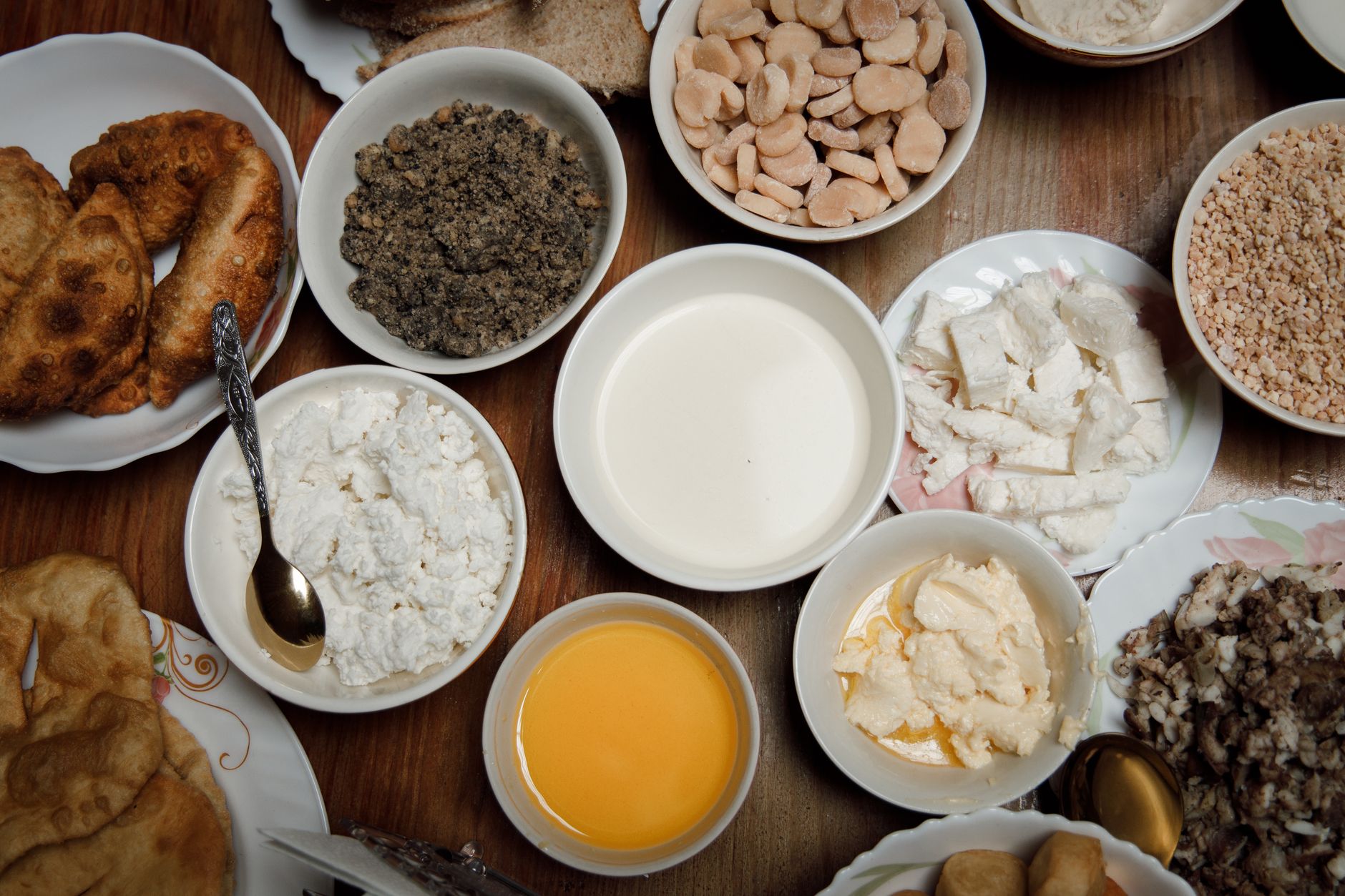
And then the table turns tender. Hoentay in Haa, folded buckwheat dumplings filled with greens and cheese, have the domestic authority of something made by hands that never hurry. Suja follows, salted and buttery, a tea that refuses dessert logic and is right to do so.

Grace With a Lowered Voice

Bhutanese politeness does not glitter. It cools. You notice it first in the absence of public collision, the way disagreement is softened, delayed, or redirected until nobody has lost face in front of anyone else.

This is where driglam namzha enters, though "etiquette" is too thin a word for it. Dress, posture, ceremonial order, the correct way to offer or receive, the intelligence of not thrusting yourself at the center of a room: all of that belongs to it. Manners here are choreography.

Watch a formal occasion in Thimphu or a festival day in Trongsa and the body tells the story before the mouth does. Sleeves fall correctly. Scarves carry rank. A gesture with both hands can say more than a speech in a louder country.

Nothing about this feels antique. Teenagers in gho and kira check their phones; civil servants move from ritual to fluorescent office light without apparent contradiction. Good manners, Bhutan seems to say, are not the enemy of modern life. They are its best chance at dignity.

Where Mountains Keep Their Vows

Buddhism in Bhutan is not tucked behind museum glass. It breathes in the street, on the ridge, in the painted eye of a chorten you pass without ceremony because the sacred here does not demand a spotlight. It prefers continuance.

In Paro, the ascent toward Taktsang Monastery turns devotion into lung capacity, which is one of the better ideas religion has had. By the time you reach the cliff, prayer has moved from abstraction into calf muscle, cold air, and the smell of pine and butter lamps.

Guru Rinpoche is not a remote historical figure in this landscape. He remains an active presence in story, image, and geography, especially in Bumthang, where narrative and terrain seem to have signed a pact. Legend holds. Stone agrees.

Yet Bhutanese religion is not all serenity and lotus petals for export brochures. The walls teem with wrathful deities, protective terrors, fierce colors meant to discipline the mind rather than soothe it. Enlightenment, these paintings suggest, may require better nerves than most of us possess.

Fortresses That Learned Ceremony

A dzong does not behave like a building. It behaves like a verdict. Whitewashed walls rise from the valley floor with the mass of something that expects both weather and history to make an attempt, then fail.

In Punakha Dzong, set where the Pho Chhu and Mo Chhu meet, power becomes almost indecently photogenic: timber cornices painted in red ochre and black, courtyards of carved wood, monastic stillness inside what is also an administrative machine. Fortress and monastery. Office and cosmos.

Trongsa Dzong takes a harsher line. It sprawls along the ridge like a creature that understands strategy, each level answering the mountain rather than defying it. You look at it and understand, in one flash, why geography governed Bhutan before any minister did.

Even ordinary houses obey the same old grammar with more charm than nostalgia. Painted window frames, rammed earth, sloped roofs, bright bands of ornament under the eaves. Bhutan’s genius is not that it preserves the past untouched. It teaches new concrete to bow before old form.

Oral Fires, Printed Pages

Bhutanese literature in print is young enough that you can still feel the warmth of the oral world behind it. Folktales, monastic memory, family histories, jokes, ghosts, village cautionary tales: none of this vanished when books arrived. It merely changed furniture.

Kunzang Choden matters because she writes with the authority of someone who has watched women’s lives bear the full weight of custom and change without turning them into slogans. Her work gives Bhutanese society what all serious literature gives a country: not praise, not accusation, but recognition.

Read Bhutanese writing after spending time in Bumthang or Haa and the pages make new sense. The valleys teach you the tempo first. People do not speak as if auditioning for quotation, yet a sentence will suddenly open and reveal an entire code of kinship, class, ritual, or longing.

A book is another kind of monastery. It stores voice against disappearance. In Bhutan, where modernity arrived fast but not carelessly, literature records the exact moment when oral memory put on shoes and stepped into print.
What Makes Bhutan Unmissable

temple_buddhist

Dzongs and monasteries

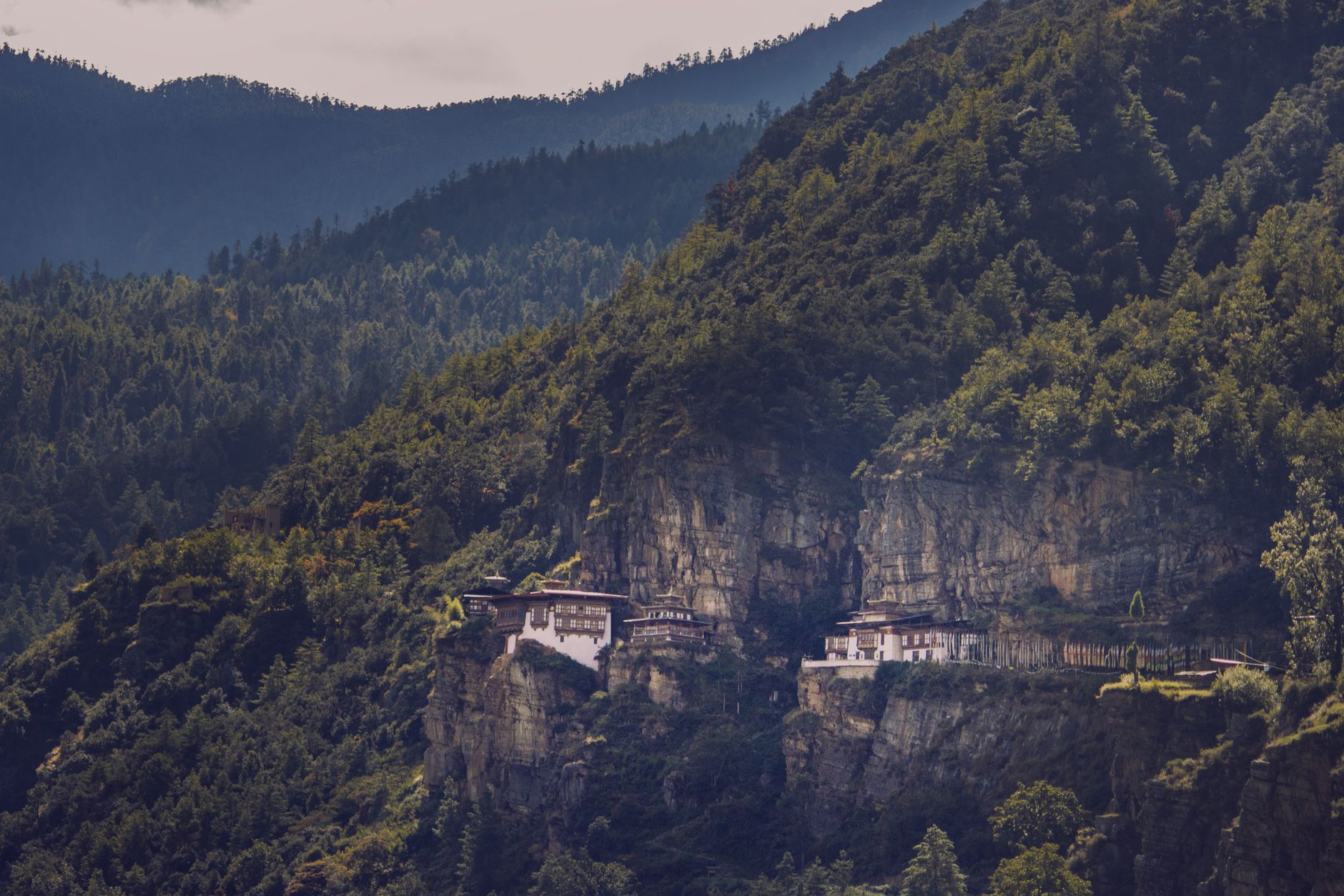
Bhutan’s big monuments are still part of daily life, not sealed museum pieces. From Paro Taktsang above Paro to the riverside fortress at Punakha, religion and government share the same walls, courtyards, and view lines.

mountain_flag

Roads through the Himalayas

This is a country where the drive is often the story: forested passes, prayer flags, landslide-prone bends, and valleys that open late. Routes from Thimphu to Trongsa or Phobjikha teach you quickly that 120 kilometers can take most of a day.

restaurant

Chili, cheese, buckwheat

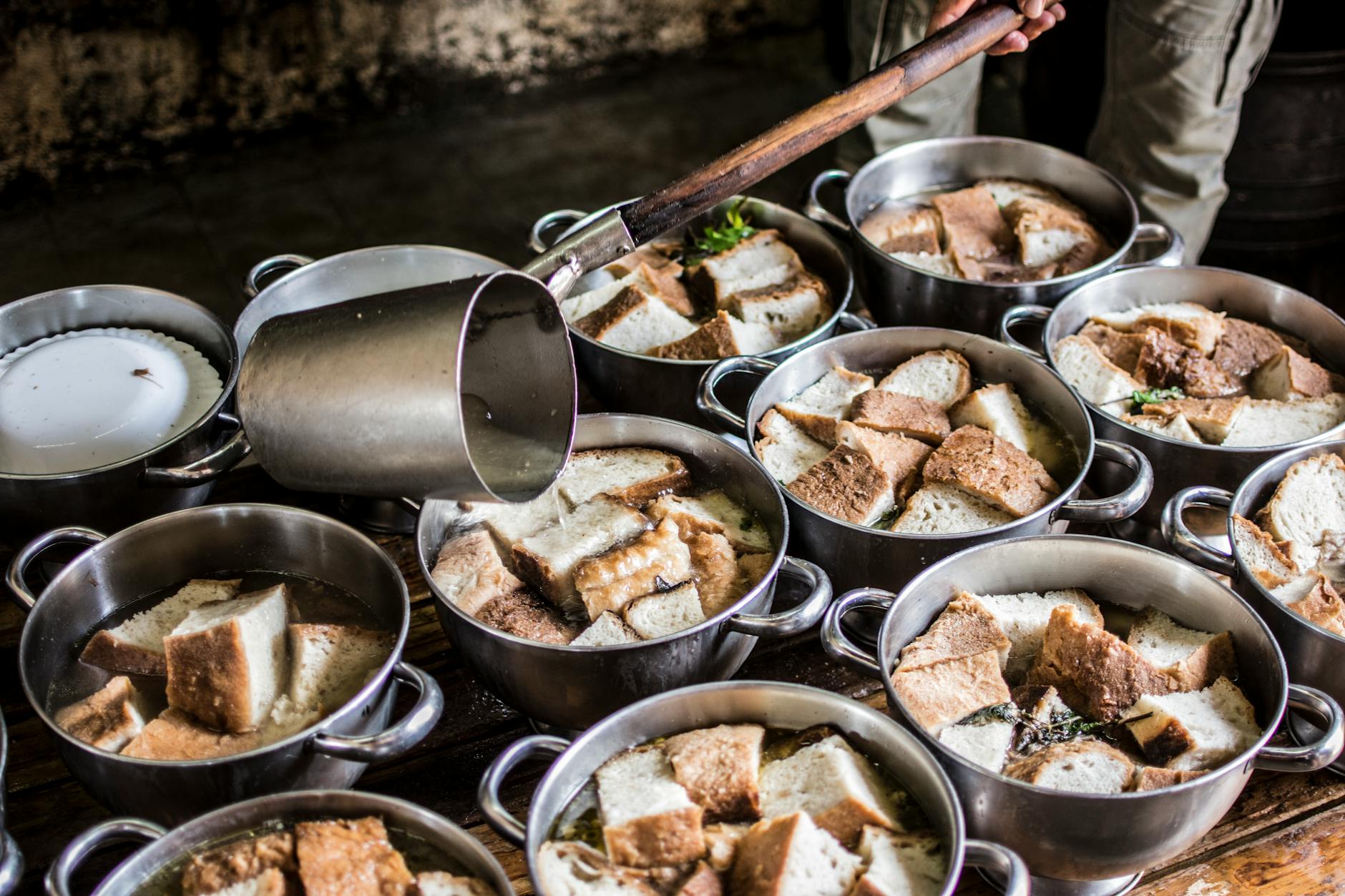
Bhutanese food is built for altitude and cold, with chilies treated as vegetables and dairy used with real conviction. Try ema datshi, red rice, hoentay in Haa, and buckwheat noodles in Bumthang before you decide you understand Himalayan cooking.

imagesmode

Light worth chasing

Bhutan rewards photographers who wake early and stay out late. Morning mist in Phobjikha, whitewashed walls in Punakha, and the severe geometry of monasteries against dark ridgelines do half the work for you.

hiking

High trails, quiet valleys

You can come for short monastery walks or commit to serious trekking, but either way the altitude matters. Even outside the big routes, places like Haa and Gasa offer a rarer kind of mountain travel: slower, colder, and far less crowded than Nepal’s headline trails.

diamond

Controlled, not crowded

Bhutan’s visa and fee system changes the mood of travel on the ground. Fewer people, more planning, and a higher cost floor mean the country often feels calmer than other Himalayan destinations with similar scenery.

Cities

Cities in Bhutan

Thimphu

"The world's only capital without a traffic light, where monks and civil servants share the same narrow streets and the National Memorial Chorten draws elderly worshippers in slow clockwise circuits every morning."

Paro

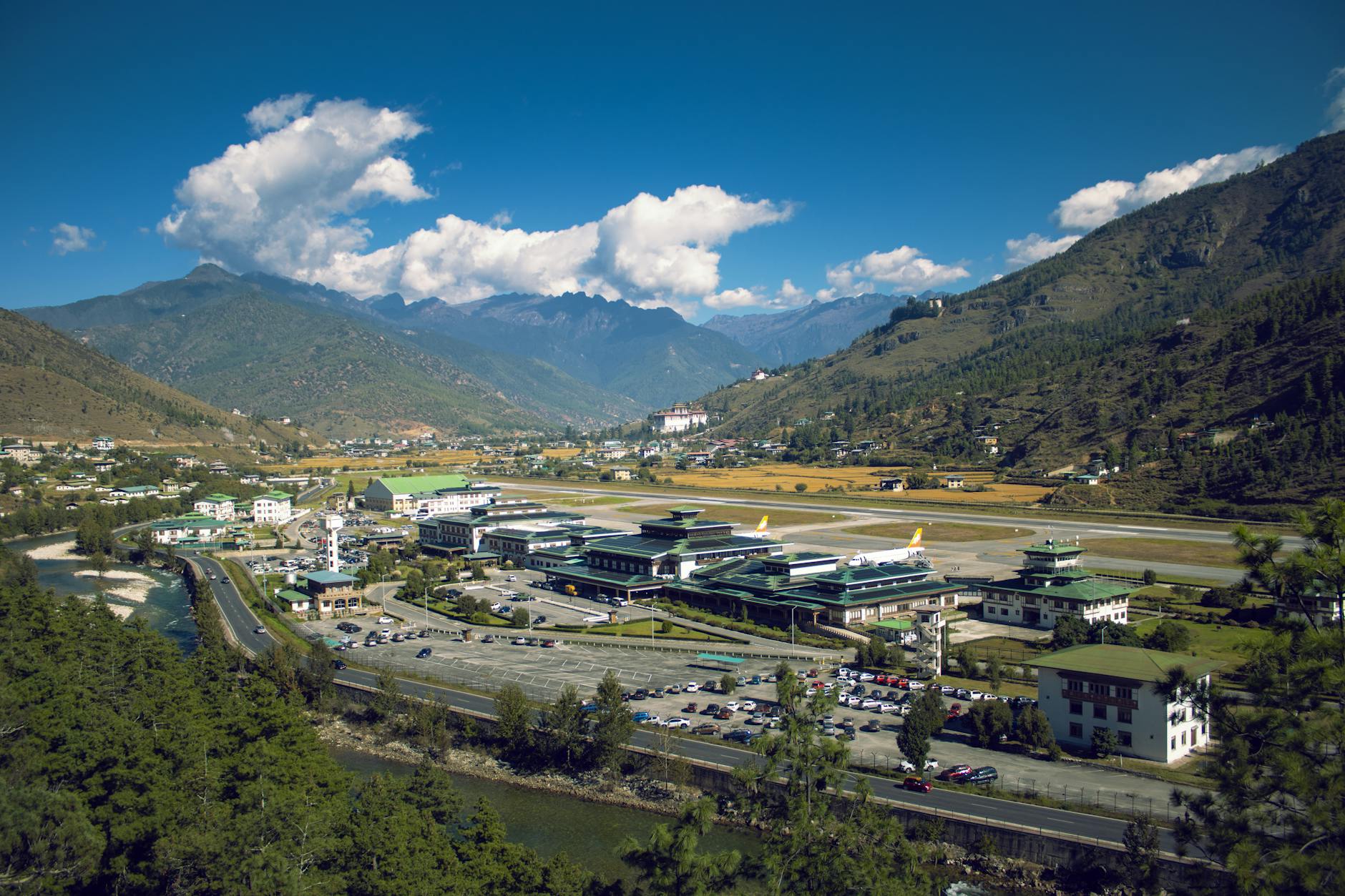
"Every international flight into Bhutan lands here, threading between 5,000-metre peaks, and the valley holds both the country's only international airport and Rinpung Dzong, a 17th-century fortress that doubles as a dist"

Punakha

"The old winter capital sits at the confluence of the Pho Chhu and Mo Chhu rivers, and Punakha Dzong — built in 1637 — floods partially each monsoon yet has never been abandoned."

Bumthang

"Four valleys at roughly 2,600 metres that together function as Bhutan's spiritual heartland, home to Jambay Lhakhang, one of the 108 temples Songtsen Gampo is said to have built in a single day to pin a demoness to the e"

Haa

"The westernmost inhabited valley, only opened to foreign visitors in 2002, where hoentay — buckwheat dumplings stuffed with turnip greens and soft cheese — is still made for Lomba festival the way it was before the road "

Trongsa

"Perched on a spur above a gorge so steep the dzong's upper and lower courtyards are connected by a covered staircase of 147 steps, and every king of Bhutan has held the title Trongsa Penlop before coronation."

Wangdue Phodrang

"A market town at a hot, windy river junction that most itineraries treat as a lunch stop, yet its hilltop dzong — burned in 2012 and methodically rebuilt — shows exactly how Bhutanese architectural memory works in practi"

Phobjikha

"A glacial valley at 2,900 metres that drains slowly enough to stay marshy all winter, which is why black-necked cranes fly in from Tibet every November and local farmers have agreed, generation by generation, not to use "

Trashigang

"The administrative hub of eastern Bhutan sits six to eight hours of mountain road from Bumthang and operates at a different pace entirely — the market mixes Sharchop traders, Brokpa nomads down from Merak, and monks from"

Lhuentse

"A near-vertical dzong above the Kuri Chhu gorge that the Wangchuck dynasty claims as its ancestral home, reachable only by a road that clings to the cliff face and is rarely on any itinerary that isn't specifically built"

Gasa

"A hot-spring district at the foot of the Snowman Trek corridor, where the dzong sits at 2,900 metres and the geothermal pools below it are used by villagers, trekkers, and — in spring — yak herders coming down from the h"

Samdrup Jongkhar

"The southeastern land border with Assam, rarely visited for its own sake, but the overland entry here is how eastern Bhutan has always connected to the subcontinent, and the transition from Indian plains heat to Himalaya"

Regions

Paro

Western Valleys

Western Bhutan is where many trips begin, but it is not one place wearing different costumes. Paro carries the airport, old fort valley, and monastery drama; Thimphu gives you ministries, cafés, and the country's administrative pulse; Haa feels quieter, more agricultural, and far less arranged for passing visitors.

placeParo placeThimphu placeHaa

Punakha

Punakha and the Central-West River Valleys

Punakha and Wangdue Phodrang sit lower than the high passes and feel warmer, greener, and more open than the tighter mountain valleys to the east. This is the part of Bhutan where road trips make sense: river confluences, old corridors of power, then the high, wide turn into Phobjikha and the road north toward Gasa.

placePunakha placeWangdue Phodrang placePhobjikha placeGasa

Bumthang

Central Bhutan

Central Bhutan slows the pace and deepens the texture. Trongsa still makes strategic sense the moment you see its position above the gorge, while Bumthang opens into a cluster of valleys where temples, buckwheat fields, and winter food traditions sit close together and feel lived in rather than staged.

placeTrongsa placeBumthang

Trashigang

Eastern Highlands

Eastern Bhutan asks more of your schedule and rewards you for it. Trashigang works as the practical hub, but the real appeal is the sense of distance: longer drives, fewer outside visitors, and a mountain world in which Lhuentse still feels tied to craft, lineage, and road access that arrived late by comparison with the west.

placeTrashigang placeLhuentse

Samdrup Jongkhar

Southern Gateways

Southern Bhutan runs on a different register from the high valleys, with warmer air, border trade, and road links that matter as much as monasteries. Samdrup Jongkhar is useful not because it is picturesque, but because it shows how Bhutan connects to India on the ground, through freight, checkpoints, and practical movement rather than fantasy.

Suggested Itineraries

3 days

3 Days: Paro and Thimphu First Look

This is the shortest Bhutan trip that still feels like a trip rather than a transit exercise. Start in Paro for the airport valley and monastery country, then continue to Thimphu for markets, government Bhutan, and a sharper sense of how the kingdom actually works day to day.

ParoThimphu

Best for: first-timers with limited time

7 days

7 Days: Punakha, Wangdue Phodrang, Phobjikha, Gasa

This route keeps you in central-western Bhutan but swaps capital-city mileage for river valleys, old administrative heartlands, and the broad glacial bowl of Phobjikha. It suits travelers who want road scenery, fewer hotel changes, and a better sense of how rural Bhutan shifts from warm low valleys to high pasture country.

PunakhaWangdue PhodrangPhobjikhaGasa

Best for: scenic road trippers and slow travelers

10 days

10 Days: Trongsa to Bumthang to the Eastern Highlands

This is the historian's route, moving from Trongsa's strategic choke point into Bumthang's temple country and then on to the long eastern run. The reward is a Bhutan that feels less polished for visitors and more rooted in working valleys, local markets, and distances that still matter.

TrongsaBumthangTrashigangLhuentse

Best for: repeat visitors and culture-focused travelers

14 days

14 Days: Haa Valley and the Eastern Border Arc

This two-week trip is built for travelers who do not mind committing to the road. Haa gives you one of western Bhutan's quieter valleys, while Samdrup Jongkhar opens the southeastern border world where Bhutan feels less monastic postcard, more trading frontier with tropical air and very different rhythms.

HaaSamdrup Jongkhar

Best for: travelers who want uncommon corners rather than the classic circuit

Notable Figures

Guru Padmasambhava

8th century · Buddhist master
Sacred traditions in Paro and Bumthang

In Bhutan, he is less a distant saint than a presence stamped onto the map. Caves in Paro and sanctuaries in Bumthang keep his memory alive because local tradition says he did not merely pass through; he transformed the spiritual rank of the valleys themselves.

Ngawang Namgyal

1594-1651 · Religious leader and state-builder
Unified Bhutan from Punakha and a network of dzongs

He arrived as a Tibetan exile and behaved like a founder. The dzongs he commissioned at Punakha, Trongsa, and elsewhere were not decorative monasteries but instruments of rule, built to hold grain, monks, records, and soldiers under one roof.

Pema Lingpa

1450-1521 · Treasure revealer and religious master
Born in Bumthang

Pema Lingpa gave Bhutan one of its most beloved saintly lineages, rooted in Bumthang and wrapped in miracle stories that people still tell with straight faces. The famous tale of his diving into a lake with a burning lamp is precisely the kind of scene Bhutanese memory adores: theatrical, devout, impossible to forget.

Ugyen Wangchuck

1862-1926 · First Druk Gyalpo
Rose from Trongsa to become Bhutan's first hereditary king

Before he wore the Raven Crown, he spent years proving he could quiet a quarrelsome country. His strength lay in timing: he presented himself as the one man capable of steadying Bhutan after decades of internal rivalry and external pressure.

Jigme Wangchuck

1905-1952 · Second King of Bhutan
Consolidated the early monarchy

He inherited a young dynasty that still needed to convince the country it was more than an elegant solution to a temporary crisis. His reign was quieter than his father's, but that was the point: dynasties survive when stability begins to feel ordinary.

Jigme Dorji Wangchuck

1929-1972 · Third King of Bhutan
Architect of Bhutan's modern opening

If Bhutan has a royal reformer in the grand style, it is him. He pushed legal and administrative change, widened Bhutan's diplomatic horizon, and made room for modern institutions without treating the older order as rubbish to be cleared away.

Jigme Singye Wangchuck

born 1955 · Fourth King of Bhutan
Shaped late 20th-century Bhutan and introduced Gross National Happiness

He became king very young, after his father's sudden death, and spent decades trying to modernize a mountain kingdom without letting it dissolve into imitation. Gross National Happiness made him famous abroad, but inside Bhutan his deeper mark was the controlled pace of change.

Ashi Kesang Choden Wangchuck

1930-2020 · Queen Grandmother
A central royal figure in 20th-century Bhutan

Bhutanese history is full of powerful women hidden behind ceremonial titles, and she was one of them. As consort of the third king and mother of the fourth, she stood at the hinge between the old royal court and the modern state it was becoming.

Jigme Khesar Namgyel Wangchuck

born 1980 · Fifth King of Bhutan
Constitutional monarch in the democratic era

He came to the throne after the monarchy had already chosen to limit itself, which gives his reign a different texture from that of his ancestors. Much of his role has been to embody continuity while the actual machinery of government grows more parliamentary, urban, and impatient.

Practical Information

description

Visa

Most foreign visitors, including travelers from the EU, US, Canada, UK, and Australia, need a Bhutan visa before arrival. The current official charges are a one-off US$40 visa fee plus a Sustainable Development Fee of US$100 per adult per night, and standard applications are usually processed within 5 working days if the file is complete.

payments

Currency

Bhutan uses the ngultrum, written as BTN or Nu., and it is pegged 1:1 to the Indian rupee. Cards work in better hotels and larger businesses in Thimphu and Paro, but cash still matters in Punakha, Bumthang, Trashigang, and smaller valleys, so withdraw before long road legs.

flight_takeoff

Getting There

Paro is Bhutan's only international airport, with direct flights from hubs such as Bangkok, Delhi, Kolkata, Kathmandu, Dhaka, and Singapore. Overland entry from India is possible through border towns including Samdrup Jongkhar and Phuentsholing, but for most first-time visitors the cleanest route is still to fly into Paro.

directions_car

Getting Around

Road travel, not distance on the map, sets the pace in Bhutan. A car with driver is the practical default, domestic flights help on long jumps to Bumthang or the east when weather cooperates, and night driving is a bad idea on mountain roads that can close after rain or landslides.

wb_sunny

Climate

Bhutan changes fast with altitude: the south is humid and subtropical, the central valleys are temperate, and the far north is alpine. March to May and late September to November are the easiest windows for clear views and stable road conditions, while monsoon months can bring washouts and winter nights in high valleys drop well below freezing.

wifi

Connectivity

Hotel Wi-Fi is common in Thimphu and Paro and decent in many mid-range properties elsewhere, but it weakens once you move into smaller valleys. Bhutan Telecom and TashiCell both sell tourist SIMs, and Bhutan Telecom's tourist eSIM is the simplest option if your phone supports it.

health_and_safety

Safety

Bhutan is generally a low-crime destination, but the real risks are practical: altitude, road fatigue, and weather delays. Build slack into any route that includes Gasa, Phobjikha, Bumthang, or Trashigang, carry any personal medication with you, and treat winter and monsoon road reports as operational facts rather than suggestions.

Taste the Country

restaurantEma datshi

Lunch. Red rice. Family table. Chilies first, cheese after, silence then laughter.

restaurantSikam phaksha

Winter evenings. Small bites. Rice between mouthfuls. Ara nearby.

restaurantHoentay

Haa valley. Lomba season. Steamed baskets, many hands, chili dip, gossip.

restaurantPuta

Bumthang mornings. Buckwheat noodles, butter, dried meat. Fast eating before the cold returns.

restaurantSuja with zaw

Guest arrives. Butter tea poured hot. Puffed rice pinched, soaked, chewed slowly.

restaurantDoma

After meals. Shared in conversation. Areca nut, leaf, lime, red lips, longer talk.

restaurantJasha maru

Dinner in rain. Broth, chicken, ginger, green chili. Spoon over rice, no ceremony.

Tips for Visitors

payments
Budget the floor

Bhutan is expensive before you even start choosing hotels because the SDF sets the floor. Price the trip with the US$100 nightly SDF, the US$40 visa, transport, and guide costs first, then decide where to spend up.

train
No trains

Bhutan has no railway network, so do not build an itinerary around rail assumptions. If you enter overland from India, the useful railheads are on the Indian side, then the trip turns into a road transfer.

calendar_month
Book flights early

Paro has limited flight capacity and weather can tighten schedules further. If you are traveling in spring or autumn, lock international and domestic flights early, then leave buffer days before your onward long-haul connection.

temple_buddhist
Dress quietly

For monasteries and dzongs, cover shoulders and knees and keep the tone low. Ask before photographing interiors, and follow local movement patterns around shrines instead of improvising.

wifi
Get a local SIM

Do not trust hotel Wi-Fi alone once you leave Thimphu and Paro. A Bhutan Telecom or TashiCell tourist SIM makes road days, hotel check-ins, and route changes much easier.

euro
Carry cash outside cities

ATMs and card terminals exist, but they thin out fast beyond the main western centers. Carry enough ngultrum for tips, small meals, fuel stops, and backup payments in Punakha, Bumthang, Trashigang, and smaller settlements.

health_and_safety
Respect road time

A short line between two valleys can still mean half a day in the car. Keep the plan light, avoid same-day heroics after landing in Paro, and assume weather can make any mountain transfer slower than expected.

Explore Bhutan with a personal guide in your pocket

Your Personal Curator, in Your Pocket.

Audio guides for 1,100+ cities across 96 countries. History, stories, and local insight — offline ready.

smartphone

Audiala App

Available on iOS & Android

download Download Now

Join 50k+ Curators

Frequently Asked

Do I need a visa for Bhutan as a US or UK citizen? add

Yes. US, UK, EU, Canadian, and Australian passport holders need a Bhutan visa in advance, with a US$40 visa fee and the nightly Sustainable Development Fee added on top.

How expensive is Bhutan for tourists in 2026? add

More expensive than most of Asia, even before you start upgrading hotels. For many travelers the realistic starting point is roughly US$230 to US$320 per person per day once the SDF, transport, meals, and basic lodging are included.

Can you travel Bhutan without a tour guide? add

Only in a limited sense. Official messaging has loosened compared with older package-tour rules, but in practice travel beyond the core west still often requires or strongly favors an accredited guide and driver.

What is the best month to visit Bhutan? add

October is the safest all-round answer for clear skies and stable conditions, with April also strong for spring travel. Monsoon months can disrupt roads, and winter is beautiful but much colder in high valleys such as Phobjikha, Bumthang, and Gasa.

Is Bhutan safe for solo female travelers? add

Generally yes, in the sense that violent crime and harassment levels are low by regional standards. The real solo-travel challenges are logistics, long road legs, altitude, and the fact that Bhutan is not set up as an improvising backpacker destination.

Can I use credit cards and ATMs in Bhutan? add

Yes, but not everywhere. You can usually use cards and ATMs in Thimphu and Paro, while smaller towns and rural areas still work better with cash.

How many days do you need in Bhutan? add

Seven days is the minimum that lets the country breathe. Three days works for Paro and Thimphu, but once you add Punakha, Bumthang, or the east, road time starts eating short itineraries alive.

Can you enter Bhutan overland from India? add

Yes. Official land entry points include Samdrup Jongkhar in the southeast and other crossings on the Indian border, but you still need the right Bhutan entry clearance and should confirm the current operating point before travel.

Sources

Last reviewed: