जूनागढ़
भारत Verified Apr 2026
जूनागढ़ wakes you before dawn with the clang of 10,000 steel bells and the smell of woodsmoke drifting up 1,117 m of black basalt. One hour later you’re bumping past a 257 BC rock still shouting Ashoka’s laws at the morning traffic, while a ropeway capsule swings above your head carrying pilgrims to a peak where 866 temples glow like frost in the first light. This is भारत doing what it does best: stacking centuries so tightly you can touch three eras before breakfast.
 Photo: Abhishek Navlakha / Pexels
- Attractions
- 12
- Audio
- 56 min
- Trip length
- 3-4 days
- Best season
- November–February
Why जूनागढ़
Built from cited sources · see the method · How we make our guides →
The city keeps its stories underground. Duck into Uparkot Fort and you descend 123 ft through Adi-Kadi Vav, a stepwell so deep your voice doubles back as echo. Next door, Baba Pyara caves thread 45 m into the hill—Buddhist cells on the upper floor, Jain symbols scratched below—proof that monks and merchants argued over real estate long before Airbnb.
Above ground, the Nawabs left a different signature. Mahabat Maqbara’s silver doors and Gothic windows catch the late sun like a mirage from another continent; locals swear the spiral minarets sway a millimetre in high wind. Circle the building at 6 p.m. and you’ll hear qawwali rehearsal bleeding out of a first-floor grille—an unpaid caretaker keeping the acoustics alive.
Even the lions play along. Seventy-five kilometres west, Sasan Gir hides the last 600 wild Asiatic lions on earth. Back in town, the 1863 zoo still breeds them in case the forest vanishes; you can stand eye-to-eye with a three-year-old male who has never learned to fear a jeep. जूनागढ़ doesn’t shout about any of this. It just piles miracle on miracle and lets you decide where to look first.
A Fort Older Than the Colosseum
Uparkot’s 20-metre walls were first raised by Chandragupta Maurya in 319 BC—two centuries before Rome’s arena. Inside, you’ll descend a nine-storey stepwell so deep your voice doubles back.10,000 Steps to Heaven
Girnar mountain starts at Bhavnath Taleti and climbs 1,117 m past 866 temples. If your knees object, Asia’s longest temple ropeway (2.3 km) whisks you to Ambaji in ten minutes.A Mausoleum That Can’t Pick a Style
Mahabat Maqbara fuses French Gothic windows, Islamic domes and Hindu swirls into one hallucination of sandstone. Arrive at golden hour—the stone lacework throws lace on the pavement.Lions Live Next Door
Sasan Gir, 75 km away, is the only place on earth where 600-odd wild Asiatic lions still rule the forest. Morning safari slots start at 6 AM; book online two weeks ahead.
Neighborhoods
Where to wander, by quarter — each with its own rhythm.
Girnar Taleti
The mountain’s ground floor smells of marigold and sweat. Damodar Kund’s steps fill with pilgrims at 4 a.m.; stalls sell cane juice and cheap canvas shoes for the 10,000-step climb. After the ropeway station opened, the lane doubles as taxi rank and open-air locker room—saris hung on parked motorbikes while owners change into trekking shorts.Uparkot Fort Quarter
A 319 BC wall looms 20 m over auto-rickshaw alleys. Inside, goats graze between cannon emplacements and schoolboys use the Buddhist caves as cricket wickets. Sunset turns the stone peach; the only ticket booth closes at six, so guards often let you linger for a quiet tip of ₹50.Mahabat Maqbara Lane
One traffic circle, four minarets, zero neon signs. Tailors work treadle machines under the arches; evening smells of cardamom chai drift through Gothic windows. Photographers arrive at 5:45 p.m.—the moment when the stone flares gold and pigeons explode from the domes like shrapnel.Chhakda Bazaar
Narrow enough that two laden scooters cannot pass without choreography. Spice sacks leak turmeric onto cobblestones; a 1934 clock tower chimes above cellphone repair stalls. Look for the pushcart frying sev khamani at ₹20 a plate—crushed steamed lentils tossed with pomegranate, eaten on yesterday’s newspaper.Sakkarbaug Strip
Named for India’s oldest zoo across the road. Ice-cream parlours and medical stores share pavement with vendors selling plastic lion masks that roar when squeezed. After 9 p.m. the street becomes an open-air biology class—families discussing Asiatic lion breeding stats over kulfi.Kalwa Gate
Medieval stone arch leading straight into 1990s concrete. Sweet shops stack ghee-soaked sutarfeni in metre-high piles; neighbouring shutters display Chinese laser pointers and Gir safari hats. The gate itself is a popular meeting point—if you’re lost, say “Kalwa Gate” and any rickshaw driver will nod.Datar Hill Base
Where the city thins into scrub. Willingdon Dam’s water glints below 3,000 stone steps leading to a shrine shared by Hindu sadhus and Muslim fakirs. Weekends echo with drums from both communities; weeknights you hear only frogs and the occasional leopard cough from the forest behind.
Plan your trip
Before you go
- Getting There
- Fly into Rajkot Airport (RAJ) 100 km away—daily flights from Delhi and Mumbai—then hire a taxi (₹1,500–2,500). Junagadh Junction railway station sits on the Western Railway with overnight trains from Ahmedabad and Mumbai. National Highway 8D links the city to the state highway network.
- Getting Around
- No metro, no city buses. Shared auto-rickshaws run set routes (₹10–20 per seat); flag one at Kalwa Gate. For Girnar base, a private auto from the centre costs ₹80–120. Ola exists but coverage is patchy—hotel-arranged cabs are more reliable for day trips to Sasan Gir.
- Climate & Best Time
- Winters (Nov–Feb) are dry and cool: 11 °C at night, 29 °C by day. March turns hot; May hits 39 °C. Monsoon arrives mid-June and dumps 500 mm through August, making the 10,000-step climb slippery. Visit between November and January for clear summit views and zero mud.
- Language & Currency
- Gujarati is the default; Hindi works in shops. English is limited—download offline Gujarati on Google Translate. India uses the rupee (₹); ATMs are plentiful on MG Road. UPI payments (PhonePe, Paytm) are accepted even at tea stalls—foreign tourists can load the UPI One World wallet at the airport.
Where Empires Climbed the Same 10,000 Steps
From Ashoka's whispers to a Bollywood star's ashes — Junagadh keeps every footprint
- 319 BCE
Chandragupta Raises Uparkot
The Mauryan emperor orders a basalt fort on the plateau that commands the trade route between the ports of the Arabian Sea and the interior of Saurashtra. Workers haul 20-meter walls from the quarry below; the same stones will later echo with Gujarati bhajans and cannon fire. Uparkot will never fall to direct assault — only to thirst, treachery, and finally tourism.
- 257 BCE
Ashoka Carves the Girnar Edicts
On a black granite boulder still flecked with monsoon moss, the emperor has 14 edicts cut in crisp Brahmi. The words forbid animal sacrifice, urge religious tolerance, and promise efficient government — a public-service announcement that has outlasted every dynasty since. Travellers on the way to the mountain temples still pause here first, reading the same shadows of light that merchants saw 2,300 years ago.
- c. 1414
Narsinh Mehta Is Born Nearby
In the village of Talaja, a boy who will become Gujarat’s first poet sings Krishna’s name so fervently that legend says the god himself joins the chorus. His bhajan “Vaishnav Jana To” will travel from these hills to Gandhi’s ashram to the lips of millions. Junagadh keeps his memory in lane names and morning ragas; the steps to Girnar echo with his lines.
- 1472
Mandavgarh Fort Falls to Gujarat Sultanate
Mahmud Begada’s army breaches Uparkot after a twelve-year siege — the garrison finally surrenders when the stepwells run dry. The sultan adds new gates and a mosque inside, but keeps the older Mauryan walls; you can still trace the seam between Hindu masons and Islamic arches. Coins minted here now bear both Sanskrit and Arabic legends.
- 1545
Jain Temples Crown Girnar
Stone-cutters finish the Neminath temple, 3,800 feet above the plain, where the 22nd Tirthankar attained moksha. They carve 1,500 statues from bluish-grey granite that turns silver at dusk. Pilgrims climb barefoot; merchants fund rest-houses every 500 steps. The mountain becomes a vertical city of faith, still growing upward.
- 1730
Babi Nawabs Make Junagadh Capital
Sher Khan Babi declares independence from the Mughal governor and moves his court from Vanthali to the fortified plateau. The city sheds its old name “Mustafabad” and becomes simply “Junagadh” — old fort, new throne. Nawabi coins now feature both the kalima and the trident of the regional goddess, a diplomatic hedge that will last two centuries.
Show the full timeline (17 moments)
- 1838
Mahabat Khan II Born
In the palace courtyard where peacocks scream at dawn, a prince is born who will build the city’s most flamboyant mausoleum and import the first English governess. His reign will see railways, gas lamps, and a state band that plays both Chopin and garba. Junagadh’s skyline of onion domes and Gothic arches is essentially his autobiography in stone.
- 1877
Clock Tower Strikes for Victoria
Mahabat Khan II rides to Delhi and returns with an invitation to the Imperial Durbar plus a cast-iron clock tower shipped from Birmingham. Installed at Gandhi Gate, it strikes every quarter-hour loud enough to drown the call of the muezzin. The Nawab is late to his own inauguration; the clock, naturally, keeps perfect time.
- 1888
Bhagwan Lal Indraji Deciphers Ashoka
A boy from the narrow lanes behind the fort grows up to read the same Girnar rock the emperor carved. In London he publishes rubbings that prove the edicts are older than any Sanskrit inscription yet found. The city that once supplied lions to Ashoka now supplies scholars to the world.
- 1891
Mahabat Maqbara Finished
Blue-green minarets twist skyward, each wrapped in external spiral stairs so narrow that Victorian ladies must climb sideways. Inside, stained glass throws Persian colours onto Quranic verses carved in silver script. The Nawab’s own tomb sits empty — he will die in exile — but the doors remain open, letting pigeons wheel through Indo-Gothic lace.
- 1898
Last Nawab Born in Zanana Palace
Muhammad Mahabat Khan III enters the world beneath chandeliers of Belgian crystal and learns to walk on carpets from Isfahan. By age ten he owns a pet cheetah that rides beside him in a Pierce-Arrow. His signature will one day try to redraw the map of the subcontinent.
- 1932
Dhirubhai Ambani Born in Chorwad
Twenty kilometres west, in a one-classroom port town, a schoolteacher’s son sells bhajiyas to railway passengers. He will trade yarn in Aden, polyester in Mumbai, and eventually rename the Indian stock market after himself. Junagadh keeps his childhood home — a single-storey house with wooden balconies that smell of salt and ambition.
- 15 Aug 1947
Nawab Flees to Karachi
While Delhi celebrates independence, the Nawab signs an instrument of accession to Pakistan — 300 kilometres of hostile territory away. Within weeks Indian troops surround the state; Samaldas Gandhi sets up a parallel government in a borrowed schoolhouse. On 9 November the Nawab boards a DC-3 with his dogs and most of the treasury, never to return.
- 1954
Parveen Babi Enters M.G. Science College
A shy Babi princess registers for English literature classes and acts in college plays under banyan trees. Professors remember her reading Neruda during lunch break. Ten years later she will light up Bombay screens, but the accent she loses on camera never quite leaves her hometown tongue.
- 1965
Gir Lion Sanctuary Expands
After decades of princely shikars, the Nawab’s former hunting ground becomes a national park. Junagadh loses the right to issue lion-shooting invitations, gains safari jeeps instead. The last Asiatic lions on earth — 177 counted that year — survive because a ruler who fled to Pakistan once forbade their slaughter.
- Oct 2020
Ropeway Opens on Girnar
At 7 a.m. the first cable car lifts 8 passengers over mango orchards and medieval battlefield ridges. The 2.3-km ride short-circuits 3,800 steps in ten minutes; pilgrims cheer, porters who carried aunties on palanquins mutter. Junagadh’s mountain, once reachable only by blister and faith, now sells time-slots on an app.
- planned 2026
Laser Show Over Uparkot
State funds clear for projectors that will paint Mauryan sieges onto 20-meter walls already scarred by cannonballs. Engineers test speakers under the 11th-century stepwell; bats evacuate. The fort that never fell will now surrender nightly to technicolour history — admission ₹150, popcorn extra.
Who lived here
-
Poet-saint · c. 1414–1481
Narsinh Mehta
Born and lived here
He composed 'Vaishnava Jana To' in Junagadh's narrow lanes, the bhajan Gandhi later sang while spinning. Today, pilgrims still gather at Narsinh Mehta No Choro where he supposedly witnessed Krishna's divine dance.
-
Industrialist · 1932–2002
Dhirubhai Ambani
Born in Chorwad village
The Reliance founder started as a petrol pump attendant in Junagadh district. His childhood village now has a memorial—locals still tell stories of the boy who sold pakoras to train passengers.
-
Bollywood icon · 1954–2005
Parveen Babi
Born here, royal family
The 1970s superstar grew up in Junagadh's Babi palace, playing hide-and-seek in Mahabat Maqbara's spiral minarets. She later became TIME's first Indian cover star, but never forgot the city's sunset views.
-
Last Nawab · 1898–1959
Muhammad Mahabat Khan III
Ruled 1911–1947
He built Willingdon Dam and tried to join Pakistan in 1947, triggering a political crisis that ended with Indian tanks outside his palace. His conservation efforts saved the Gir lions from extinction.
Where to Eat
Where locals actually book dinner — not the tourist menus.
Insider tips
Small things that change how the city treats you.
Start Before Dawn
Begin the Girnar climb at 5 AM to beat the heat and the crowds. You'll reach the summit before noon, when temperatures hit 35°C in spring.Negotiate Autos First
Junagadh's auto-rickshaws rarely use meters. Agree on ₹50-80 for short city hops before you board. Shared autos to Girnar base cost ₹20 per person.Try Kathiawadi Heat
Order sev tameta or lasania bataka at a dhabha near Chhakda Bazaar. Saurashtra cuisine is noticeably spicier than standard Gujarati food most tourists know.Golden Hour Maqbara
Photograph Mahabat Maqbara at 6:30 PM when the sandstone turns amber. The Gothic windows and spiral minarets photograph best in side-light.Skip Summer
April-June temperatures reach 40°C, making Girnar's 10,000 steps dangerous. Visit November-February instead when nights drop to 11°C.Dry State Rules
Gujarat enforces prohibition. Tourists caught with alcohol face up to 5 years jail. Apply online for a liquor permit if you must drink.
Gallery
The city, as it actually looks.


Watch
-
India To Bharat A Day in Junagadh | Junagadh Tourist places | Junagadh Food Tour | Gujarat Tourism

-
Tour guide with negi ji जूनागढ़ में घूमने के 10 सबसे प्रसिद्ध स्थान, junagadh Top 10 Tourist places

-
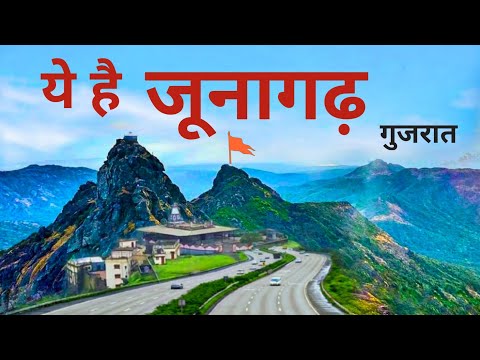
Explore KRC Junagadh city | girnar | junagadh city tour | जूनागढ़ शहर गुजरात @explorekrc
-
VISIT MY INDIA गिरनार यात्रा गाईड | ગિરનાર | Girnar tour guide | Girnar hills Gujarat | girnar ropeway | Junagarh

Frequently asked
Is जूनागढ़ worth visiting?
Yes. Junagadh offers India's longest temple ropeway, 3rd-century Buddhist caves, and the world's only wild Asiatic lions an hour away. It's authentic Gujarat without tourist crowds.
How many days do I need in जूनागढ़?
Plan 3-4 days: one for Girnar trek or ropeway, one for Uparkot Fort and Maqbara, one for Sakkarbaug Zoo and Buddhist caves, plus a day trip to Gir National Park for lion safaris.
How do I reach जूनागढ़ by air?
Fly to Rajkot Airport (100 km, 2 hours) with daily flights from Mumbai and Delhi. Keshod Airport is closer (39 km) but has only 3 flights weekly to Ahmedabad.
Is जूनागढ़ safe for solo female travelers?
Generally safe. Gujarat has low crime rates and Junagadh is mostly domestic tourists. Avoid starting the Girnar trek alone before dawn—join the pilgrim groups or hire a guide.
What does जूनागढ़ mean?
Junagadh literally means 'Old Fort'—referring to the 319 BC Uparkot Fort built by Chandragupta Maurya. The name predates the current city by over two millennia.
Can I see lions near जूनागढ़?
Yes. Gir National Park, 75 km away, is the world's only habitat of wild Asiatic lions. Book safari permits 10-20 days ahead online; morning slots (6 AM) offer best sightings.
Is the Girnar ropeway scary?
It's Asia's longest temple ropeway (2.3 km) but feels stable. The 10-minute ride saves you 5,000 stone steps. Heights are dramatic but the cabins are enclosed and staff are professional.
Pick up where you left off
Saved and recently read places — kept on this device only.
Photo credits (8)
- Abhishek Navlakha — Pexels License (https://www.pexels.com/license/) — Source: https://www.pexels.com/photo/30588229/
- 3 Mahabat Maqbara and Bahauddin Maqbra are mausoleums in Junagadh, Gujarat, India — Sneha G Gupta — CC BY-SA 4.0 (https://creativecommons.org/licenses/by-sa/4.0/) — Source: https://commons.wikimedia.org/wiki/File:3_Mahabat_Maqbara_and_Bahauddin_Maqbra_are_mausoleums_in_Junagadh,_Gujarat,_India.jpg
- Cistern at Buddhist caves, Uper kot, Junagadh 03 — Prof Ranga Sai — CC BY-SA 4.0 (https://creativecommons.org/licenses/by-sa/4.0/) — Source: https://commons.wikimedia.org/wiki/File:Cistern_at_Buddhist_caves,_Uper_kot,_Junagadh_03.jpg
- Cistern at Buddhist caves, Uper kot, Junagadh 02 — Prof Ranga Sai — CC BY-SA 4.0 (https://creativecommons.org/licenses/by-sa/4.0/) — Source: https://commons.wikimedia.org/wiki/File:Cistern_at_Buddhist_caves,_Uper_kot,_Junagadh_02.jpg
- Cistern at Buddhist caves, Uper kot, Junagadh 04 — Prof Ranga Sai — CC BY-SA 4.0 (https://creativecommons.org/licenses/by-sa/4.0/) — Source: https://commons.wikimedia.org/wiki/File:Cistern_at_Buddhist_caves,_Uper_kot,_Junagadh_04.jpg
- Cistern at Buddhist caves, Uper kot, Junagadh 01 — Prof Ranga Sai — CC BY-SA 4.0 (https://creativecommons.org/licenses/by-sa/4.0/) — Source: https://commons.wikimedia.org/wiki/File:Cistern_at_Buddhist_caves,_Uper_kot,_Junagadh_01.jpg
- Cistern at Buddhist caves, Uper kot, Junagadh 05 — Prof Ranga Sai — CC BY-SA 4.0 (https://creativecommons.org/licenses/by-sa/4.0/) — Source: https://commons.wikimedia.org/wiki/File:Cistern_at_Buddhist_caves,_Uper_kot,_Junagadh_05.jpg
- Gate of Junagadh — Bernard Gagnon — CC BY-SA 3.0 (https://creativecommons.org/licenses/by-sa/3.0/) — Source: https://commons.wikimedia.org/wiki/File:Gate_of_Junagadh.jpg
Photos may have been resized or cropped.