हरिद्वार

भारत

हरिद्वार

Haridwar is 100% vegetarian with no meat, eggs or alcohol sold anywhere in the city. Watch the mesmerising Ganga Aarti at Har Ki Pauri, ride ropeways to hilltop temples

location_on 12 attractions
calendar_month October–November & February–March
schedule 3-4 days

Introduction

The first thing that hits you in हरिद्वार is the silence around meat, eggs, and alcohol. Nothing. Not even a whisper of them anywhere in this Indian city. Instead the air carries the smell of hot ghee jalebis frying at dawn and the low chant of “Har Har Mahadev” drifting across the Ganges.

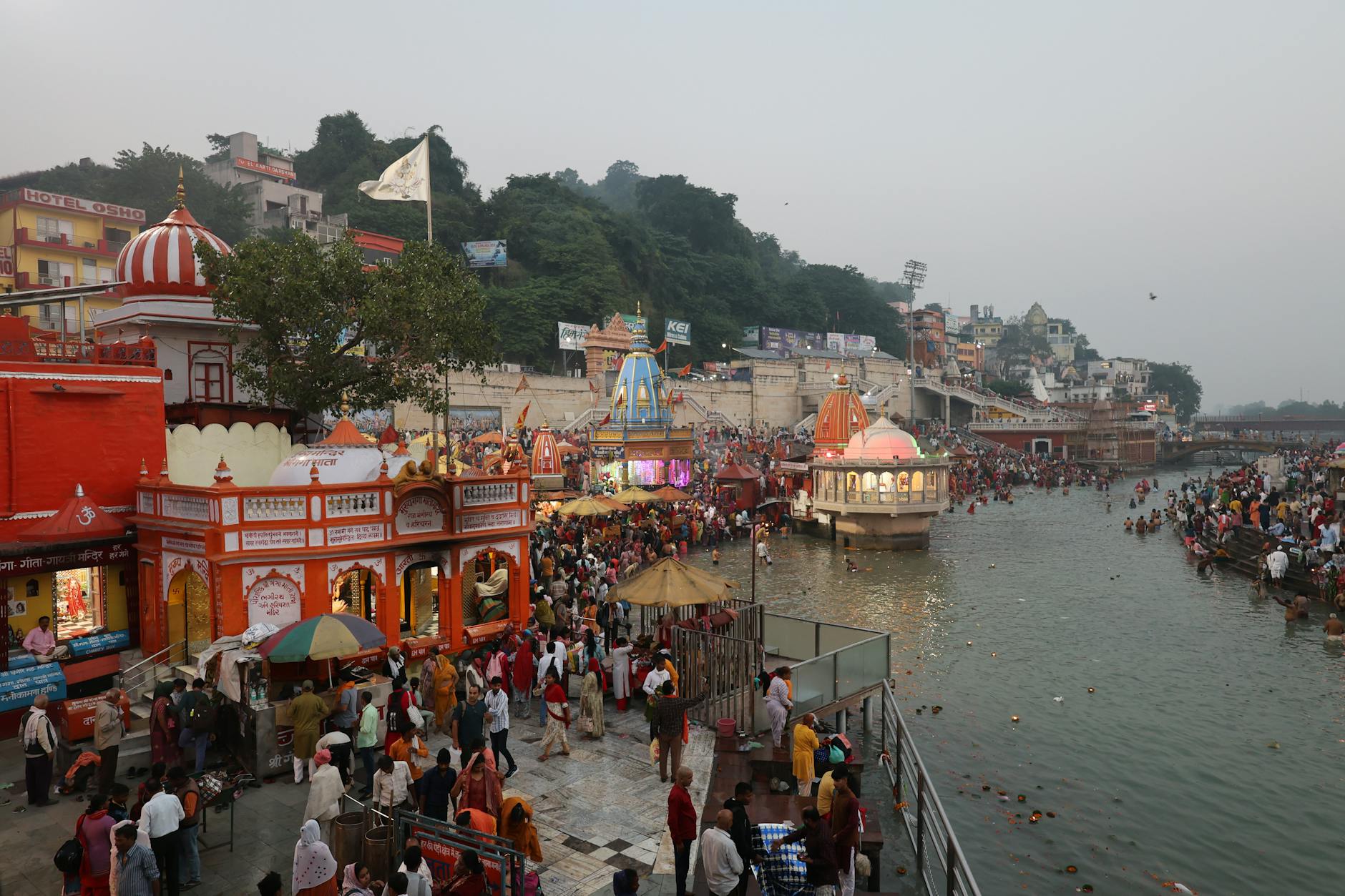
This is one of Hinduism’s seven sacred cities, the precise spot where the river leaves the Himalayas and flattens into the plains. Every evening thousands gather at Har Ki Pauri for the Ganga Aarti, where priests swing giant brass lamps while the water reflects fire and marigolds. The scene feels theatrical yet completely sincere.

Pilgrims, sadhus, and the occasional curious outsider move between 11th-century temples, ashram langars serving free dal-chawal, and shops selling pedas wrapped in newspaper. The city runs on sattvic logic: pure food, early mornings, and the steady rhythm of bells and conch shells. Even if you don’t share the faith, the place rearranges your sense of what a city can be.

Come for the aarti, stay for the 5:30 a.m. kulhar of buffalo milk in Moti Bazaar. By the time you finish the last sweet drop you’ll understand why people keep returning.

What Makes This City Special

Gateway to the Gods

Haridwar sits exactly where the Ganges spills out of the Himalayas onto the plains. The footprint of Vishnu at Har Ki Pauri marks the precise spot, and every evening the aarti turns the river into a moving carpet of fire and marigolds.

Strictly Sattvic

The entire city bans meat, eggs, alcohol and even onions in many places. This creates an atmosphere you feel immediately: quieter streets, clearer heads, and restaurants that serve nothing but pure vegetarian food.

The Evening Aarti

At sunset priests swing massive brass lamps filled with flaming ghee while bells and conch shells echo off the ghats. Thousands stand in silence. Even skeptics leave changed.

Ropeways & Rishis

Two ropeways lift you above the noise to Mansa Devi and Chandi Devi. Below, the Sapt Rishi Ashram still marks the spot where seven sages once meditated. The contrast between cable cars and 3000-year-old legend is pure Haridwar.

Historical Timeline

Where the Ganges First Touches the Plains

From ancient ashrams to the world's largest human gathering

church
c. 1500 BCE

The First Sages Arrive

Seven rishis settled on the riverbank at what became Sapt Rishi Ashram. They meditated where the Ganges slows after its Himalayan plunge. Legend holds their presence turned the spot into Mayapuri. The air still carries their quiet.

church
c. 800 BCE

Maya Devi Temple Founded

The oldest temple in Haridwar rose on the spot where Sati's heart and navel are said to have fallen. Open to the sky, its stones absorbed centuries of incense before any roof was added. Pilgrims still circle the same flame.

church
c. 400 CE

Haridwar Gains Its Name

The city shifted from Mayapuri to Haridwar, Gateway to God. By then it already drew ascetics from across the subcontinent. The name stuck because it described exactly what every visitor felt.

public
629 CE

Xuanzang Records the Sacred Spot

The Chinese monk described a thriving city of temples beside a river locals considered divine. His account remains one of the earliest outsider descriptions. The ghats he saw would later host millions.

church
c. 1200

Daksh Mahadev Temple Rebuilt

After destruction during earlier raids, the temple at Kankhal rose again on the site of Daksha's disastrous yagna. The air here still feels heavy with old grief. Locals say even the stones remember Sati's anger.

castle
1391

Har Ki Pauri Steps Constructed

King Vikramaditya built the famous steps at Brahma Kund. The precise spot where Vishnu's footprint is enshrined became the focal point for every future aarti. Footfall has worn the stone smooth over six centuries.

person
1504

Guru Nanak Challenges Ritual

During his first udasi, Guru Nanak stood at Har Ki Pauri and threw water westward toward his fields instead of offering it to the rising sun. The simple act questioned mechanical piety. Two gurdwaras still mark where he stood.

gavel
1526

Mughal Influence Reaches Haridwar

After Babur's victory at Panipat, Haridwar came under loose Mughal oversight. The emperors largely left the holy city alone. Its strict vegetarian code and alcohol ban survived every regime.

church
c. 1700

Chandi Devi Temple Rebuilt

The temple on the Neel Parvat was reconstructed in its current form. According to tradition Adi Shankaracharya had installed the main idol nine centuries earlier. The ropeway came much later. The climb still tests pilgrims.

gavel
1804

British Annex Haridwar

After the Anglo-Gurkha War the East India Company took direct control. They immediately noticed the city's absolute ban on meat, fish, eggs and alcohol. The rules were left untouched. Even the British respected this line.

factory
1854

Ganges Canal Opens

Sir Proby Thomas Cautley's monumental canal began releasing Himalayan water near Haridwar. At 560 kilometers long it was then the largest irrigation canal on earth. The headworks still roar with the same force today.

person
1888

Swami Vivekananda First Visits

During his years of wandering the future world-teacher came to Haridwar. He walked the same ghats and sat in the same ashrams that still operate today. A statue near Har Ki Pauri now watches the evening aarti he once witnessed.

church
1901

Ramakrishna Mission Sevashrama Founded

Vivekananda's disciples established the mission in Kankhal. It quietly served the poor and sick for decades. The same buildings still provide medical care beside the river that inspired their founder.

person
1929

Anandamayi Ma Settles in Kankhal

The mystic who needed no guru made her principal ashram here. She lived, taught and finally left her body in Kankhal. Her samadhi draws silent crowds who sit exactly where she once sat.

local_fire_department
1939

Gurukul Kangri Destroyed by Fire

The Arya Samaj institution that had educated generations burned to the ground. Within years it was rebuilt. The phoenix-like recovery mirrored the city's own stubborn refusal to disappear.

person
1972

Shantikunj Ashram Established

Pandit Shriram Sharma Acharya founded the All World Gayatri Pariwar headquarters on the outskirts. The campus grew into a living laboratory for his ideas. Today it still offers short courses to anyone who shows up.

school
1995

Patanjali Yogpeeth Founded

Baba Ramdev and Acharya Balkrishna established their yoga and Ayurveda empire on 100 acres outside the city. What began as a small trust became a corporate giant that changed how India thinks about both medicine and television.

gavel
2000

Uttarakhand State Created

Haridwar found itself in a new hill state carved from Uttar Pradesh. The city that launches every Char Dham Yatra suddenly became the gateway to an entire Himalayan region. Its importance only grew.

public
2010

Maha Kumbh Draws 100 Million

The 2010 Kumbh saw the largest recorded gathering of humanity. On the most auspicious day 10 million people bathed in the river within 24 hours. The logistics were staggering. The faith was larger.

person
2021

Vandana Katariya's Olympic Hat-trick

The field hockey star from Roshnabad village near Haridwar became the first Indian woman to score three goals in a single Olympic match. She learned her first strokes on the dusty grounds outside the city that once banned all violence.

schedule
Present Day

Notable Figures

Anandamayi Ma

1896–1982 · Hindu Mystic
Lived and died here

She settled in Kankhal after decades of wandering. Locals still speak of her refusing to call the body 'mine' and treating every visitor as family. Her samadhi in the ashram draws people who sit silently for hours. The city feels quieter near her shrine.

Pandit Shriram Sharma Acharya

1911–1990 · Spiritual Reformer
Founded Shantikunj in 1972

He chose a patch of land on the Ganges bank and built an ashram that now feeds thousands daily through langar. His simple room remains exactly as he left it. Millions worldwide still chant the Gayatri mantra he revived here.

Swami Ramdev

born 1965 · Yoga Teacher
Established Patanjali Yogpeeth in 1995

Arrived in Haridwar in 1992 with little money and began teaching yoga on the riverbank. Two decades later his campus sprawls across acres with an Ayurvedic research lab and herb museum. Early students still point out the exact banyan tree where he first demonstrated asanas.

Guru Nanak Dev Ji

1469–1539 · Founder of Sikhism
Visited in 1504

At Har Ki Pauri he watched pilgrims throwing water toward the rising sun and instead tossed a handful westward toward his fields in Punjab. The act became legend. Two gurdwaras mark the spot where he questioned ritual without purpose.

Practical Information

flight

Getting There

Fly into Jolly Grant Airport (DED) in Dehradun, 45 km away. Pre-paid taxis cost ₹900–1400 in 2026. Most visitors arrive by train at Haridwar Junction (HW). The Shatabdi Express from New Delhi takes 4.5 hours. Overnight buses from Delhi’s ISBT Anand Vihar reach the Haridwar bus stand opposite the station in six hours.

directions_transit

Getting Around

Haridwar has no metro or tram system. Shared e-rickshaws ply fixed routes for ₹10–30. Auto-rickshaws and cycle rickshaws are the practical choices near the ghats; always agree on the fare first. The central area from Har Ki Pauri to Moti Bazar is entirely walkable. During Shravan and Kumbh, vehicles are banned near the river and you walk.

thermostat

Climate & Best Time

October and November bring clear skies with daytime highs around 29°C and nights at 16°C. February–March is equally pleasant at 23–29°C. Avoid July and August when monsoon rains hit 375 mm and flooding is common. Peak crowds arrive during Kanwar Yatra in July–August and full Kumbh years.

shield

Safety

Petty theft spikes at Har Ki Pauri during aarti and at the railway station. The flower-and-prasad scam remains the most common trick: strangers thrust offerings into your hands then demand payment. Say “mujhe nahin chahiye” firmly and walk on. The river has strong currents; hold the chains at bathing ghats.

Where to Eat

local_dining

Don't Leave Without Trying

Aloo puri — fried bread with spiced potato curry, a breakfast staple Kachori — deep-fried pastry with spiced lentil or potato filling Chikhalwali — local snack unique to Haridwar region Ghat-side chaat — street snacks sold near the ghats, especially pani puri Laddu and barfi — Indian sweets popular for temple offerings Bedmi puri — puri stuffed with urad dal, traditional breakfast Local jaggery and sesame sweets — seasonal specialties Ganga-side fresh produce — vegetables and fruits from local markets

Shri Ram Balaji Foods

local favorite
Cafe €€ star 5.0 (65)

Order: The fresh chai and local snacks are consistently excellent — this is where locals grab their morning tea before heading to the ghats.

With 65 reviews and a perfect rating, this is the real deal. It's a neighborhood fixture on Railway Road where you'll find authentic Haridwar hospitality and no tourist markup.

Babloo Tea Stall

quick bite
Cafe €€ star 5.0 (3)

Order: The early-morning chai is perfect for catching sunrise at Birla Ghat — arrive before 6 AM for the best experience with locals and pilgrims.

Located right at Birla Ghat, this is where the spiritual energy of Haridwar meets a simple, perfect cup of tea. Opens at 4:30 AM for the pre-dawn crowd.

schedule

Opening Hours

Babloo Tea Stall

Monday 4:30 AM – 9:00 PM
Tuesday 4:30 AM – 9:00 PM
Wednesday 4:30 AM – 9:00 PM
map Maps

Om Vaishnavi Confectioners

local favorite
Bakery €€ star 5.0 (6)

Order: Fresh Indian sweets and baked goods made daily — the laddoos and barfis are popular with locals for temple offerings and family celebrations.

A proper neighborhood bakery and confectionery near Shivmurti Chowk, this is where Haridwar residents source their sweets for auspicious occasions.

schedule

Opening Hours

Om Vaishnavi Confectioners

Monday 8:00 AM – 11:00 PM
Tuesday 8:00 AM – 11:00 PM
Wednesday 8:00 AM – 11:00 PM
map Maps

Shivansh Confectioner's & Baker's (A Super General Store)

quick bite
Bakery €€ star 5.0 (2)

Order: The freshly baked bread and traditional Indian sweets — grab something for your ghat visit or as a gift to take back.

Positioned right at Birla Ghat near the famous Chotiwala, this is a one-stop for both bakery items and general supplies, perfect for pilgrims and locals alike.

schedule

Opening Hours

Shivansh Confectioner's & Baker's (A Super General Store)

Monday 9:00 AM – 11:30 PM
Tuesday 9:00 AM – 11:30 PM
Wednesday 9:00 AM – 11:30 PM
map Maps

Gupta Traders

local favorite
Cafe €€ star 5.0 (2)

Order: Simple, honest chai and light snacks — this is a proper local spot in Devpura where you'll blend in with the neighborhood crowd.

A no-frills neighborhood cafe in Devpura that serves the community with straightforward hospitality and authentic local flavors.

CHOCOBAKE HUB

cafe
Bakery €€ star 5.0 (3)

Order: Chocolate-focused baked goods and pastries — a modern take on traditional Indian bakery items if you want something a bit different.

Located in Mayapur's Main Market, this spot brings contemporary baking sensibilities to Haridwar while keeping prices accessible.

STANDARD CONFECTIONERS

local favorite
Cafe €€ star 5.0 (1)

Order: Traditional Indian sweets and chai — a solid neighborhood option near the historic Niranjani Akhada.

Positioned near the Niranjani Akhada on Kankhal Road, this cafe serves both pilgrims and locals with dependable quality and authentic flavors.

Chai of wasseypur

quick bite
Cafe €€ star 5.0 (1)

Order: Chai with character and local snacks — the name suggests a personality-driven spot that doesn't take itself too seriously.

A quirky neighborhood cafe in Mayapur with a distinctive name and solid ratings, perfect for authentic local chai culture without pretension.

info

Dining Tips

  • check Most small cafes and stalls are cash-only — carry rupees
  • check Breakfast and chai culture dominates early mornings (5-8 AM) — arrive early to experience the real Haridwar
  • check Lunch is typically 12-2 PM; dinner service can be brief at smaller establishments
  • check Many neighborhood spots close by 9-10 PM, especially away from main tourist areas
  • check Temple prasad (blessed food offerings) is often distributed free at major ghats — don't miss this authentic experience
Food districts: Birla Ghat — home to early-morning tea stalls and bakeries, spiritual energy meets local dining Railway Road — traditional neighborhood cafes and confectioners serving locals Mayapur Main Market — mix of modern and traditional bakeries and cafes Kankhal Road — historic area with akhadas and neighborhood sweet shops Devpura — residential area with authentic local cafes and traders

Restaurant data powered by Google

Tips for Visitors

no_food
Strictly Vegetarian

Haridwar bans meat, eggs, and alcohol citywide. Even street vendors and hotel kitchens follow this; don't ask for exceptions.

wb_sunny
Best Visit Months

Come in October–November or February–March. Temperatures stay pleasant between 16–29 °C and monsoon flooding risk disappears.

volunteer_activism
Decline Flower Scam

Strangers at Har Ki Pauri will press marigold garlands into your hands then demand ₹200–1000. Say 'Mujhe nahin chahiye' firmly before they touch you.

directions_walk
Walk the Ghats

Central area from Har Ki Pauri to Moti Bazaar and Maya Devi Temple spans just 3 km. Skip autos and experience the morning aarti crowd at 5:30 am.

currency_rupee
Carry Small Notes

Use ₹10–100 notes for autos, chai in kulhars, and temple donations. UPI works almost everywhere but many stalls still run cash-only.

restaurant
Eat Where Locals Eat

Skip Chotiwala at Har Ki Pauri. Head to Kashyap Kachori Bhandar or Mohan Ji Puri Wale in Moti Bazaar before 10 am for fresh kachori-sabzi.

photo_camera
Morning Aarti Light

The sunrise Ganga Aarti draws mostly sadhus and locals. Arrive 30 minutes early, light is softer, crowds thinner, and photography feels less intrusive.

Explore the city with a personal guide in your pocket

Your Personal Curator, in Your Pocket.

Audio guides for 1,100+ cities across 96 countries. History, stories, and local insight — offline ready.

smartphone

Audiala App

Available on iOS & Android

download Download Now

Join 50k+ Curators

Frequently Asked

Is Haridwar worth visiting? add

Yes, if you want to see Hinduism's daily machinery in motion. The evening fire aarti at Har Ki Pauri with thousands chanting under oil lamps changes how you see the Ganges. The total absence of non-vegetarian food and alcohol creates a rare sattvic bubble found nowhere else in India.

How many days do you need in Haridwar? add

Three days works for most visitors. One for Har Ki Pauri and evening aarti, one for ropeways to Mansa Devi and Chandi Devi plus Kankhal temples, and one for ashrams and local food walks. Add a fourth if you plan to attend morning aarti at multiple ghats.

How to get from Delhi to Haridwar? add

Take the Shatabdi Express from New Delhi station; it takes 4.5 hours and drops you at Haridwar Junction in the city center. Trains run multiple times daily and are more comfortable than the 5–6 hour road journey.

Is Haridwar safe for solo female travelers? add

Safe during daylight in temple and ghat areas if you dress modestly with covered shoulders and knees. Avoid poorly lit spots after dark and the heaviest Kanwar Yatra crowds in July–August. Solo women report few issues compared with larger Indian cities.

Can you drink alcohol or eat meat in Haridwar? add

No. The entire city enforces a ban on meat, fish, eggs, and alcohol. No restaurant or shop inside municipal limits will sell them. Most visitors treat this as part of the experience rather than an inconvenience.

What is the best time for Ganga Aarti in Haridwar? add

The main evening aarti begins around 6:30–7:00 pm at Har Ki Pauri, varying with sunset. Arrive 45 minutes early for a decent spot. The smaller sunrise aarti at 5:30–6:00 am has far fewer tourists and feels more intimate.

Sources

Last reviewed: