घरमपुर, गुजरात
भारत Verified Apr 2026
Dharampur, Gujarat, India, hides its secret in a river's name. The Swargavahini River means 'the one that flows to heaven,' and its banks are lined not with celestial gates but with the quiet, mossy remnants of Sisodia Rajput palaces. This town receives the highest rainfall in Gujarat, and the air smells of wet earth and old stone. It feels like a forgotten chapter from a history book, where Greek statues stand atop a ceremonial gate in the middle of a forest.
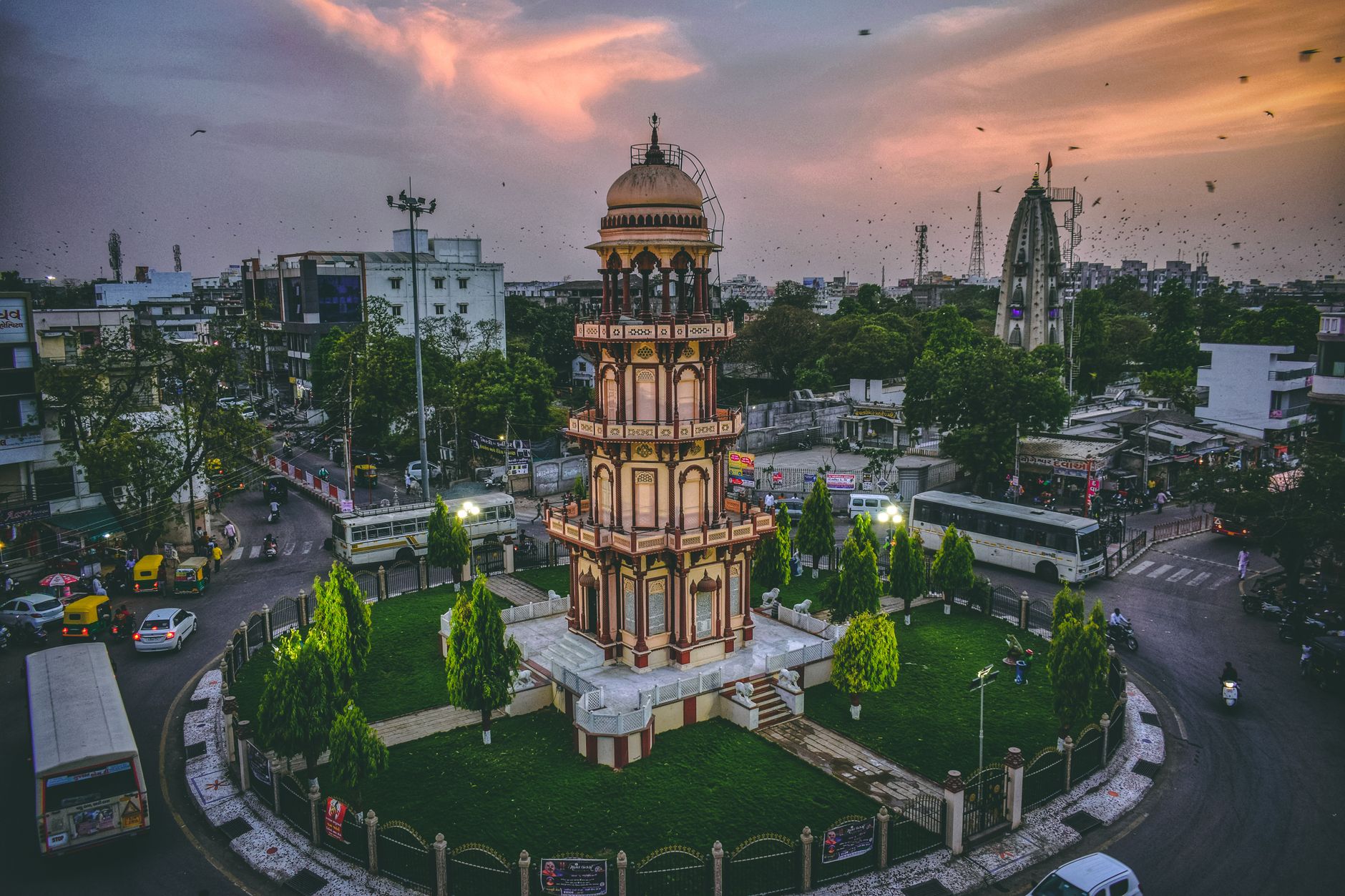 Photo: Mukund patel / Pexels
- Attractions
- 6
- Trip length
- 2 days
- Best season
- October to March
Why घरमपुर, गुजरात
Built from cited sources · see the method · How we make our guides →
For 686 years, it was the capital of a princely state that Muslim sultanates encircled but never attacked. The thick forests and seven strategic forts made it a puzzle no invader solved. That isolation preserved a peculiar pluralism. Parsis found political refuge here, and Jain philosopher Shrimad Rajchandra spent 35 days in contemplation in 1900, his silence now woven into the town's identity.
The architecture tells two stories. The late 18th century brought Rajput grandeur—the Raj Mahal and Mohan Vilas Palace. Then, in the late 19th century, the ruler built schools, a jail, and a hospital for Queen Victoria's Golden Jubilee. The Lady Wilson Museum was a trade: the ruler built it, and the British elevated his gun-salute from seven to nine. Its 5,220-square-foot hall holds tribal art, lacquer work, and postage stamps from thirty countries.
Today, Dharampur is a conversation between dripping forests, royal ghosts, and a museum full of curiosities. It’s not bustling. It’s listening. You come here to hear the rain and to understand how a small kingdom in the hills negotiated its own survival, piece by piece, statue by statue.
A Princely State's Stage
The ceremonial Rajya Rohan gate, topped with life-size Greek statues, feels like a stage set. It was the dramatic entrance for a Rajput kingdom that, thanks to its dense forests and seven strategic forts, managed to remain independent for seven centuries while surrounded by sultanates.The Ghats' Green Threshold
Dharampur sits in a bowl of the Sahyadri hills, earning its nickname as Gujarat's Kashmir. It receives the state's highest rainfall, turning the approach roads into tunnels of green long before you reach the town itself.A Museum's Diplomatic Bargain
The Lady Wilson Museum was built in 1928 as a direct trade. The ruler, Maharana Vijayadevji, exchanged this Indo-Saracenic hall of tribal art and curios for an official gun-salute upgrade from 7 to 9. Politics dressed as philanthropy.A Philosopher's Retreat
In 1900, the Jain philosopher Shrimad Rajchandra spent 35 days here in deep contemplation. His presence anchors the town's quieter spiritual identity, a counterpoint to the royal pomp found elsewhere.
Neighborhoods
Where to wander, by quarter — each with its own rhythm.
The Royal Core
This is the historic centre around the Rajya Rohan Gate. Life-size Greek-style statues crown this European-style entrance, a bizarre and photogenic statement of power. Walk from here to the Mohan Vilas Palace and Laxmi Vilas Palace, where Rajput and European styles blend under the shade of old trees. The air is still heavy with ceremony.Wilson Hills
Thirty kilometres from town, the elevation climbs to 750 meters. This is where Dharampur earns its nickname 'the Kashmir of Gujarat.' The road winds through the Sahyadri range, and the temperature drops. It’s a landscape of mist and deep green, a complete escape from the town's historical weight into pure, damp atmosphere.
Plan your trip
Before you go
- Getting There
- The nearest airport is Surat International Airport (STV), about 90 km north. The most practical railhead is Valsad station on the Mumbai-Surat line, a 30 km road journey from Dharampur. National Highway 48 connects Valsad to the town via a winding, scenic route through the hills.
- Getting Around
- The town itself is walkable, but to explore the surrounding hills and Wilson Hills (750m elevation), you'll need private transport. Auto-rickshaws serve local trips. No formal tourist passes exist; hire a car or taxi in Valsad for day trips into the Western Ghats.
- Climate & Best Time
- Summers (Mar-Jun) are warm and humid, 25-35°C, but the hills offer relief. The monsoon (Jun-Sep) brings the famous, drenching rainfall. The ideal window is October to February, with cool, dry days (15-28°C) and clear views of the lush, post-monsoon landscape.
- Language & Notes
- Gujarati is the primary language, with Hindi widely understood. The local currency is the Indian Rupee (INR). The town's layout dates to 1764, so expect narrow lanes in the older quarters around the palaces. It's a cash-centric economy; card facilities are limited.
Who lived here
-
Jain philosopher and poet · 1867–1901
Shrimad Rajchandra
Contemplated here for 35 days in 1900
He came to Dharampur seeking solitude and spent over a month in deep meditation. The town, cradled by the Sahyadris, offered the quiet he needed. Today, his presence lingers more in local memory than in monuments—a spiritual footnote in a royal history.
-
Sisodia Rajput ruler · 13th century
Maharana Ramsinh
Founded the town (as Ramnagar) in 1262
He marched from Udaipur, defeated a tribal chief, and claimed this forested valley. He chose the site for its defensive hills. His descendants would rule for nearly 700 years. He’d likely still recognize the lay of the land, if not the European statues on the city gate.
-
King of Dharampur · 18th century
Maharana Dharmdevji
Established the modern town layout in 1764
He gave the town its current name and shape. Under him, the Raj Mahal and public buildings rose. He transformed a hill fort into a planned capital. Walking the old quarters today, you’re following the street lines he laid down.
Where to Eat
Where locals actually book dinner — not the tourist menus.
Insider tips
Small things that change how the city treats you.
Pack for rain
Dharampur gets Gujarat’s highest rainfall. Carry waterproof gear and sturdy shoes even if the forecast looks clear—a sudden downpour is part of the charm.Hire local transport
The town is small, but attractions like Wilson Hills are a drive away. Hire a local auto or taxi for the day; they know the winding forest roads best.Visit the museum early
The Lady Wilson Museum opens at 10 AM. Go in the first hour to have the 5,220-square-foot hall to yourself before school groups arrive.Shoot the gate at dawn
For the best photo of the Rajya Rohan Gate, arrive at sunrise. The morning light catches the Greek-style statues and the street is quiet.Respect royal spaces
The palaces are still private residences or partially occupied. Admire the architecture from outside unless a guided tour is explicitly advertised.
Gallery
The city, as it actually looks.


Frequently asked
Is घरमपुर, गुजरात worth visiting?
Yes, if you like history without the crowds. This former princely capital has a 13th-century Rajput lineage, a museum built for a British vicerine, and receives more rain than anywhere else in Gujarat. You won’t find another town where Greek statues crown a city gate.
How many days in घरमपुर, गुजरात?
Two days is ideal. Spend one exploring the town’s gates, palaces, and museum. Use the second for a trip to the nearby Wilson Hills or a walk along the Swargavahini River.
How do I get to घरमपुर, गुजरात?
Valsad is the nearest major railhead, 30 km away. From there, take a state bus or hire a taxi for the hour-long drive east into the hills. The road climbs through dense forest.
Is घरमपुर safe for solo travelers?
Generally, yes. It’s a small, quiet town. Basic precautions apply: avoid isolated areas after dark and keep valuables secure. Locals are accustomed to visitors drawn by the Jain pilgrimage connection.
What is the best time to visit घरमपुर?
Visit between October and March. The monsoon (June–September) brings spectacular greenery but also impassable roads. Summer can be humid. Winter offers clear skies and cool nights.
Pick up where you left off
Saved and recently read places — kept on this device only.
Photo credits (3)
- Mukund patel — Pexels License (https://www.pexels.com/license/) — Source: https://www.pexels.com/photo/2409361/
- Lakshmi Temple Dharampur — Nsdesai — CC BY-SA 4.0 (https://creativecommons.org/licenses/by-sa/4.0/) — Source: https://commons.wikimedia.org/wiki/File:Lakshmi_Temple_Dharampur.jpg
- King of dharampur MohanDevji - By Rajendrakumar Pavar Dharampur. — Nsdesai — CC BY-SA 4.0 (https://creativecommons.org/licenses/by-sa/4.0/) — Source: https://commons.wikimedia.org/wiki/File:King_of_dharampur_MohanDevji_-_By_Rajendrakumar_Pavar_Dharampur..jpg
Photos may have been resized or cropped.