अलीपुर द्वार
भारत Verified Apr 2026
You can hear the difference in Alipurduar, भारत. The humid morning air in the Dooars is thick with the sound of a thousand unseen wings—the chatter of 284 bird species in the Buxa forest canopy, the rustle of a one-horned rhino in the elephant grass, the low rumble of a train heading towards Bhutan. This isn't a wilderness you merely visit; it's a living, breathing gateway you stand inside, where every path was once a thread in the ancient Silk Route.
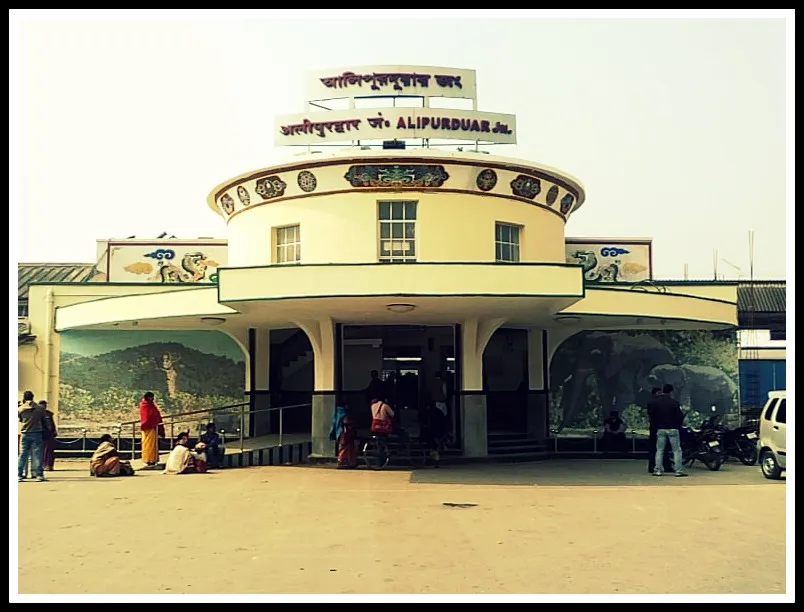 Photo: District map · CC BY-SA 4.0
- Attractions
- 8
- Trip length
- 3-5 days
- Best season
- October to March
Why अलीपुर द्वार
Built from cited sources · see the method · How we make our guides →
History here is a palimpsest of kingdoms. The name itself is a colonial graft: 'Ali' for Colonel Hedayat Ali Khan and 'Duar' meaning gateway, a label from the 1865 Treaty of Sinchula that ended Bhutanese rule. Beneath that, you find the ruins of a 5th-century Kamata Kingdom fort in the Chilapata Forest, and the crumbling Buxa Fort, a British prison at 867 meters that once held Subhash Chandra Bose. The past isn't archived; it's being slowly swallowed by strangler figs and remembered in the stories of over twenty distinct communities.
This cultural mosaic is what gives the region its texture. Drive twenty kilometers from the forest watchtower at Rajabhatkhawa and you're in Totopara, where the Toto tribe—one of India's smallest ethnic groups, with just over 1,600 people—maintains a language and culture found nowhere else. The shift is immediate. The scent changes from damp humus and river stone to woodsmoke and fermented grain. You move from a landscape governed by animal corridors to one defined by human resilience.
To travel through Alipurduar district is to understand a specific kind of border. It’s not a line but a gradient. The concrete Bhutan Gate in Jaigaon, 60 kilometers north, marks a political boundary. But the true transition is subtler, a slow climb from the floodplains into the Himalayan foothills, from the whistle of the Northeast Frontier Railway to the silence of a clouded leopard's territory. You come for the rhinoceros. You leave thinking about doors.
The Rhino's Front Door
Jaldapara National Park, a short drive away, is India's premier spot to see the greater one-horned rhinoceros. You'll ride an elephant through tall grasses, a method that's less intrusive and infinitely more atmospheric than a jeep.A Prison in the Clouds
The 13-kilometer trek to Buxa Fort leads to a ruined British colonial prison at 867 meters. This is where figures like Subhash Chandra Bose were held, the damp air still thick with the echoes of the independence movement.The Toto Tribe's Home
Totopara village shelters one of India's smallest indigenous groups, the Toto tribe. Their unique language, culture, and dress offer a direct encounter with a way of life that has persisted for centuries in these foothills.A Step into Bhutan
The Bhutan Gate at Jaigaon is a sudden, ornate slice of Himalayan architecture marking the border. For Indian nationals, it's a literal gateway for day trips into Phuentsholing, Bhutan's second-largest city.
Neighborhoods
Where to wander, by quarter — each with its own rhythm.
Rajabhatkhawa
This is the operational heart of the Buxa Tiger Reserve, all jeep engines and binocular straps. The air smells of diesel and damp leaves. Come at 6 AM to secure a safari into the 760-square-kilometer forest, but linger afterward at the Butterfly Garden and the Forest Interpretation Centre. The watchtower here offers your first real glimpse of the canopy, a green ocean stretching to Bhutan.Jayanti
They call it the Queen of the Dooars for a reason. A river village pressed against the Bhutan border, Jayanti feels like the world's edge. The Kaljani River runs cold and clear over smooth stones. This is the base for the 13-kilometer trek to Buxa Fort, a humid, uphill climb through sal forests to a ruin that held Indian revolutionaries. Locals will tell you the fort was Bhutanese before it was British. Sleep in a riverside camp and listen to the jungle at night.Madarihat
A functional town that exists almost entirely as the gateway to Jaldapara National Park. The rhythm of the day is set by the elephant-back safaris that depart at dawn to track the greater one-horned rhinoceros. The atmosphere is purposeful, less about lingering and more about gearing up. It’s all about the 216 square kilometers of grassland and riverine forest just beyond its periphery.Totopara
A world apart. The home of the Toto tribe feels like entering a different story. The architecture shifts, the language is unintelligible to outsiders, and the cultural weight is palpable. This isn't a 'show' village; it's a living community of roughly 1,600 people navigating modernity. Visit with respect, through a responsible tourism lens, and you witness a unique strand of human culture clinging to the hillside.Jaigaon / Bhutan Gate
Controlled chaos defines this border nexus. On the Indian side, Jaigaon is a pragmatic bustle of markets and logistics. The focal point is the Bhutan Gate—a sudden, elegant arch of traditional Bhutanese architecture standing as a photo-op and a literal portal. Indian nationals can walk through into Phuentsholing for a day. For everyone else, it’s a stark, tangible line where one world ends and another begins.Chilapata Forest
More than a forest, this is an ancient corridor. The 70-square-kilometer woodland connects Jaldapara and Buxa, used by elephants and bisected by the Kaljani River. Its secret isn't just wildlife, but the Nalrajar Garh fort ruins, slowly dissolving back into the earth. You come for a jeep safari hoping to see leopards. You stay for the quiet, haunting presence of a 5th-century kingdom reclaimed by roots and moss.South Khairbari
A place of second chances. The Rescue Centre here, about 15 kilometers from Madarihat, is an eco-park with a profound purpose: sheltering tigers and leopards rescued from circuses and the illegal pet trade. The experience is different from the wild reserves. It’s quieter, more contemplative, and carries the faint melancholy of animals that can never go home, viewed in a setting of deliberate, peaceful rehabilitation.
Plan your trip
Before you go
- Getting There
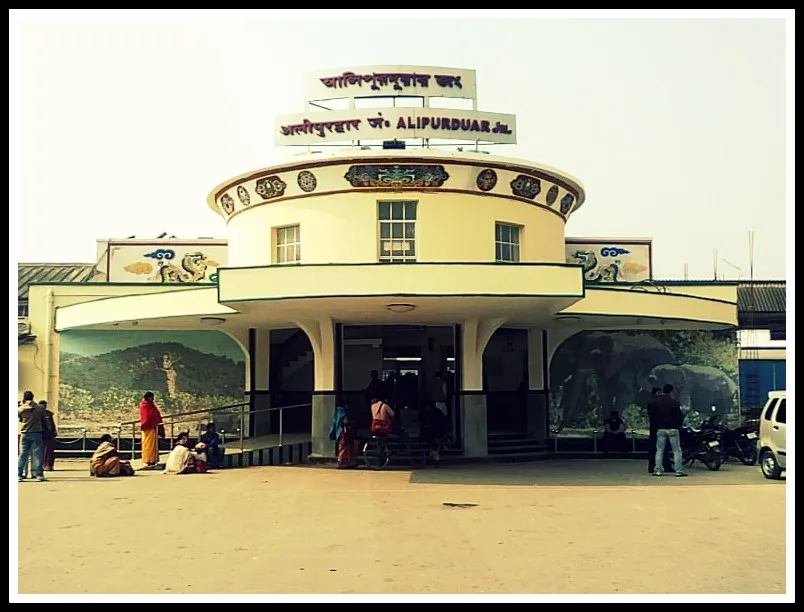
- The nearest airport is Bagdogra Airport (IXB), about 170 km and a 4-5 hour drive away. Alipurduar Junction (APDJ) and Alipurduar Court (APDC) are the main railway stations, well-connected by the Northeast Frontier Railway. National Highway 17 runs through the district.
- Getting Around
- Your own vehicle, or a hired car and driver, is essential. Distances between forest entry points and villages are significant, and public transport is infrequent. Within town, cycle-rickshaws and auto-rickshaws handle short hops.
- Climate & Best Time
- Winters (Nov-Feb) are cool (10-25°C), summers (Mar-Jun) hot (25-38°C). The monsoon (Jun-Sep) brings heavy rain and closes parks. Visit between October and April. The peak window is November to February for clear skies and comfortable safaris.
- Language & Currency
- Bengali is the official language, but Hindi and Nepali are widely understood. English works in hotels and at major tourist sites. The currency is the Indian Rupee (INR). ATMs are available in town, but carry cash for remote areas.
- Safety
- Respect the wildlife. Always follow your forest guide's instructions during safaris. For the Buxa Fort trek or jungle walks, a registered guide is non-negotiable. Road conditions can be rough, especially after rain.
Who lived here
-
Independence Movement Leader · 1897–1945
Subhash Chandra Bose
Imprisoned here
The British held him in the damp, isolated cells of Buxa Fort, hoping the Dooars jungle would silence his revolutionary fervor. He walked these forest paths under guard, plotting an escape that would eventually lead him to raise an army abroad. Today, the fort is a ruin reclaimed by vines, a monument to confinement that couldn't contain an idea.
-
British Army Officer · 19th Century
Colonel Hedayat Ali Khan
City namesake
He was the British officer tasked with securing this strategic 'duar' or gateway from the Bhutanese in 1865. The town literally carries his name—Ali's door. He'd likely be bewildered to see his frontier outpost now known not for military maps, but for tourist maps pointing to rhinos and river camps.
Where to Eat
Where locals actually book dinner — not the tourist menus.
Insider tips
Small things that change how the city treats you.
Avoid the monsoon
Plan your visit between October and March. Buxa Tiger Reserve closes from mid-June to mid-September, and heavy rains can make forest roads impassable.Book safaris early
Jeep safaris in Buxa and Jaldapara run from 6–11 AM and 2–6 PM. Reserve your spot a day ahead, especially for the elephant-back rhino safaris at Jaldapara.Pack for Bhutan
If you're an Indian citizen, carry your voter ID or passport to Jaigaon. You can walk through the Bhutan Gate into Phuentsholing for a day trip without a visa.Visit tribes respectfully
If you go to Totopara to meet the Toto tribe, hire a local guide. This ensures your visit supports the community and respects their cultural boundaries.Check palace hours
The Cooch Behar Palace museum closes on Fridays. Plan your 50 km excursion for any other day between 10 AM and 5 PM.
Gallery
The city, as it actually looks.


Frequently asked
Is Alipurduar worth visiting?
Absolutely, if wild elephants and rhinos at your doorstep sound appealing. This is the gateway to the Dooars, where the Himalayan foothills meet tea gardens and forests so dense they hide 5th-century forts. It's for travelers who prefer jungle jeeps over city streets.
How many days should I spend in Alipurduar?
Spend at least three days. One day for Jaldapara's rhinos, another for Buxa's forests and the trek to the colonial fort, and a third for cultural detours like Totopara or the Bhutan border. Five days lets you move at the region's slower, greener pace.
What is the best way to get around Alipurduar?
Hire a jeep and driver for the day. Public transport exists but is infrequent, and the key attractions—Buxa, Jaldapara, Jayanti—are 12 to 30 km from town on forest roads. A local driver knows the safari booking routines and the best river crossings.
Is Alipurduar safe for solo travelers?
Yes, but plan like you're going into the wilderness. Stick to guided safaris inside the reserves, don't wander into dense forest alone, and be mindful of wildlife—especially elephants—on the roads after dark. In town, it's as safe as any Indian district headquarters.
How expensive is a trip to Alipurduar?
Moderate. A decent hotel room starts around ₹1500 per night. A full-day jeep hire with driver costs ₹2500-3000. Safari fees are nominal, but guided treks and permits add up. You can manage on ₹2500 per person per day without luxury.
Pick up where you left off
Saved and recently read places — kept on this device only.
Photo credits (3)
- Alipurduar Railway Junction Station — District map — CC BY-SA 4.0 (https://creativecommons.org/licenses/by-sa/4.0/) — Source: https://commons.wikimedia.org/wiki/File:Alipurduar_Railway_Junction_Station.jpg
- PRESBYTERIAN INDEPENDENT CHURCH, MAHAKALGURI ( P.I.C ) — Awning Mochary — CC BY-SA 4.0 (https://creativecommons.org/licenses/by-sa/4.0/) — Source: https://commons.wikimedia.org/wiki/File:PRESBYTERIAN_INDEPENDENT_CHURCH,_MAHAKALGURI_(_P.I.C_).jpg
- Alipurduar Junction Railway Station — I Love Assam — CC BY-SA 4.0 (https://creativecommons.org/licenses/by-sa/4.0/) — Source: https://commons.wikimedia.org/wiki/File:Alipurduar_Junction_Railway_Station.jpg
Photos may have been resized or cropped.