Porto-Novo

Benin

Porto-Novo

Official capital Porto-Novo hides rainbow Afro-Brazilian mosques, royal palaces turned museums and Sunday hymns that bounce off 1920s stucco—quieter, cheaper and cooler

location_on 8 attractions
calendar_month November–February (dry, 28 °C)
schedule 1–2 days

Introduction

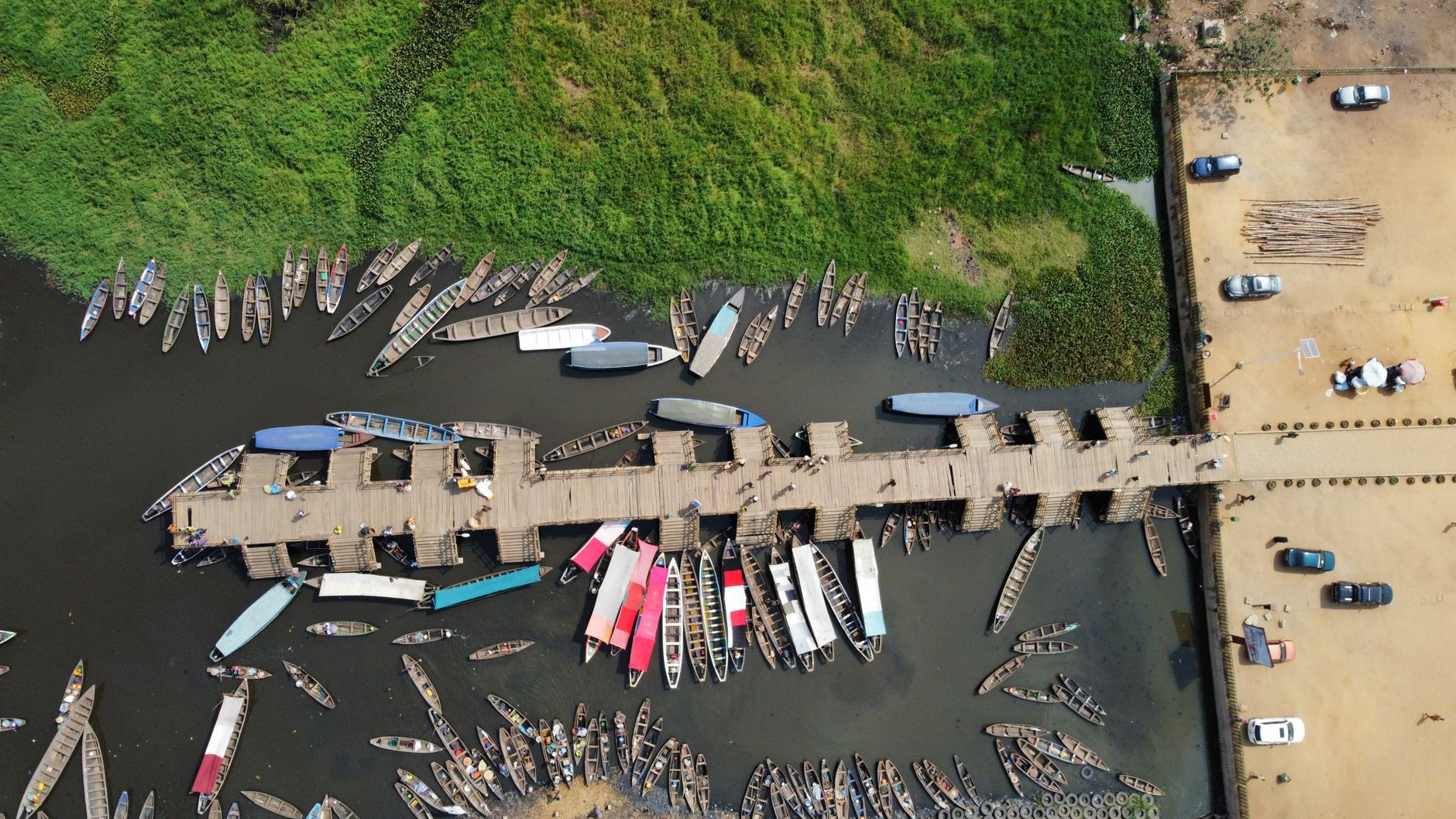
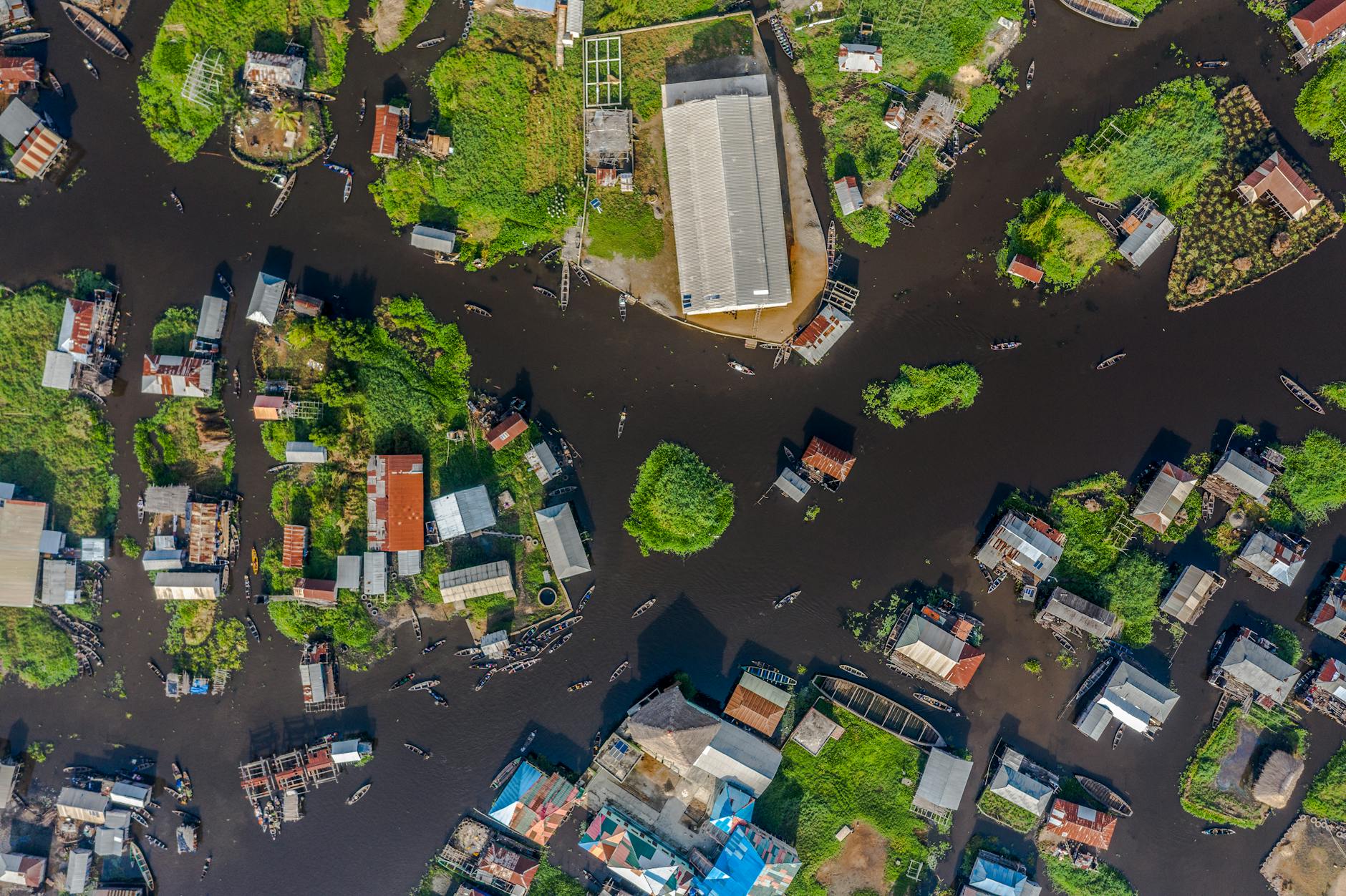
The morning call to prayer in Porto-Novo slips out of a 1912 mosque that used to be a church, drifts past 1950s Citroëns rusting in front of royal palaces, and lands on a lagoon where fishermen still speak Portuguese. Benin’s quiet capital isn’t trying to impress anyone—yet the city keeps handing you layers no one asked for, like the barista who insists you taste akassa in a plastic bag because "the spoon changes the sound."

Afro-Brazilian masons who sailed back from Bahia lined the streets with stucco pineapples and cast-iron verandas wide enough for evening gossip. Their heirs now run motorcycle-taxi fleets, but the proportions remain: every doorway is tall enough for a king’s parasol, every balcony deep enough for a samba step. Between the Grande Mosquée’s vegetable-shaped corbels and the royal Honmé palace—where Toffa signed away his kingdom for a railway—Porto-Novo keeps bargaining memory for motion, and usually wins.

Even the museums feel like someone’s living room. Da Silva’s private collection parks a 1983 Rolls beside his grandmother’s Yoruba masks; the guard at the ethnography museum will unlock the drum room if you arrive before ten. The city’s real exhibition is the soundscape: Koranic recitation from a loudspeaker nailed to a colonial lamppost, highlife leaking out of Ouadada cultural centre, the slap of corn dough being flipped into amiwo at midnight. Stay after dark and you’ll discover the capital’s best-kept secret: it functions perfectly without the rest of the country noticing.

What Makes This City Special

Afro-Brazilian Mosque

The 1912 Grande Mosquée was built by Agudá craftsmen—freed slaves back from Brazil—who grafted Catholic-vaulted ceilings onto Islamic prayer halls. Its pistachio-and-ochre stucco still drips with vegetable-shaped moldings, even while scaffolding climbs the walls for 2026 restoration.

Royal Palace Turned Museum

Musée Honmé lets you walk the 1883 compound King Toffa traded to the French, rooms intact down to the palm-wine calabashes. Court musicians sometimes rehearse in the courtyard; the 1,000 CFA ticket is paid to a keeper who knew the last royal descendants.

Living Vodun Galleries

Ouadada Cultural Center stages Yoruba drum circuits inside a repurposed colonial warehouse, while the tiny Ibugbé Isebayé museum lets you watch a bokono throw cowries for real divination. Both places keep the spirit economy visible—and audible—after dark.

Historical Timeline

Where Brazil Meets Benin in One Quiet Capital

From Yoruba lagoon town to Afro-Brazilian time-capsule

castle
c. 1550

King Te-Agdanlin Camps by the Lagoon

An exiled prince from Allada paddles up the Ouémé delta and pitches camp on a strip of firm ground the Gun people already call Hogbonu. His warriors plant palm-oil groves, fish the brackish creeks and start a market that will outlive every dynasty. The spot smells of smoked catfish and fresh raffia; it still does on market mornings.

swords
1730

Portuguese Traders Rename the Port

A Luso-Brazilian captain charts the sheltered inlet and scrawls "Porto-Novo" across his map—New Port to distinguish it from the older anchorage at Whydah. Within a decade, 4,000 captives a year march through here to waiting sloops. The town’s first stone warehouse goes up; its mortar is mixed with crushed oyster-shells that still glitter in the ruins.

public
1807

Brazilian Returnees Dock with Freedom Papers

The first ship of manumitted Yoruba-speakers arrives from Salvador da Bahia, clutching Portuguese baptism certificates and plans for two-storey houses. They bring cassava bread recipes, Catholic saints and stucco skills. The quarter they build still smells of coffee and cigar smoke on humid afternoons.

person
c. 1830

José Francisco dos Reis Lands

A freed tailor from Bahia steps onto the wharf, aged 29, with a wooden trunk of tailoring shears and rosary beads. Within fifteen years he owns a warehouse, funds the first Catholic chapel and keeps a diary that records every eclipse visible from Porto-Novo—still quoted by astronomers today.

swords
1861

British Cannonade Cracks the Palace Walls

HMS Bloodhound fires 32 broadsides to punish King Sáwu for trading with French rivals. The mud-brick ramparts dissolve into red soup; the market burns for two days. The bombardment persuades the king to sign a protection treaty with France instead—changing the colonial map of West Africa.

gavel
1883

King Toffa Cedes Land to France

Under a kapok tree outside the royal compound, Toffa I places his thumbprint on a treaty that hands customs revenue to Paris in exchange for rifles and a promise of protection against Dahomey’s Fon armies. The document is written on French blue paper; the ink still hasn’t faded in the national archives.

castle
1900

Porto-Novo Becomes Capital of Dahomey

Governor Jean Bayol moves the colonial administration from the malarial coast at Cotonou to the breezy hill above the lagoon. Administrators requisition the governor’s palace—a wooden house on stilts—and plant flame trees that still drop scarlet petals on the Avenue de la République every March.

school
1915

Lycée Béhanzin Opens its Iron Gates

The first secondary school in what will become Benin begins classes in a former cocoa warehouse. Students wear khaki shorts and recite Corneille by lantern because the generator fails nightly. Among the pioneer intake is the boy who will later draft the country’s independence speech.

church
1925

Afro-Brazilian Mosque Finished in Stucco

Returned slaves-turned-masons cap their pastel mosque with twin onion domes copied from Salvador’s Igreja da Ordem Terceira. Inside, the mihrab is framed by carved pineapples—no one remembers whether the motif was meant as sacred or simply fashionable in 1890s Bahia.

music_note
1946

Suzanne Métis Opens the First Jazz Cellar

A Martiniquaise singer fleeing Paris winters converts a former slave pen into a candle-lit club where Highlife saxophones duel with bebop trumpets until the police close at 3 a.m. Léopold Sédar Senghor drinks palm-wine here in 1948 and leaves a handwritten poem on the wall—still visible behind the bar.

public
1960

Midnight Flags Change on the Lagoon

At 00:15 the tricolor is lowered and the green-yellow-red of Dahomey snaps in the wind; drummers switch from La Marseillaise to a Agbadja rhythm without missing a beat. Fireworks reflect in the still water, and for the first time in a century the governor’s palace flies an African flag.

palette
1962

Romuald Hazoumè is Born

In a courtyard off Rua de São Paulo, a baby boy takes his first breath under a ceiling of recycled tomato-can metal. Forty years later he will turn those same cans into masks that hang in the British Museum, forcing the world to look again at the city’s slaving past.

swords
1972

Tanks Roll Past the Governor’s Palace

Lieutenant-Colonel Kérékou’s Soviet-supplied trucks splash through puddles at dawn, seizing the radio station before the morning news. By lunchtime the legislature building is occupied; by dusk the speaker’s gavel lies splintered on the marble. The coup ends civilian rule for the next seventeen years.

gavel
1975

Dahomey Renamed Benin

A presidential decree swaps the ancient kingdom’s name for the modernist-sounding “People’s Republic of Benin,” hoping to bury regional rivalries. Posters of Marx appear beside carved Yoruba doors; the currency keeps the CFA franc but now bears a buffalo instead of a schooner.

palette
1998

Da Silva Museum Inaugurates Its Cinema

Urbain Da Silva, a bank clerk turned collector, throws open the gates of his family compound to show off 3,000 Afro-Brazilian photos and a 1956 Citroën that still runs. On opening night the courtyard screen shows “Black Orpheus” while popcorn is served from brass pans once used on Bahia docks.

school
2015

Centennial of Lycée Béhanzin Lights the Sky

Alumni fly in from Montreal to Libreville, lighting 100 paper lanterns that drift over the lagoon. The headmaster quotes the same Racine lines his predecessor recited in 1915; students reply with a rap in Fon, Yoruba and French—three languages echoing off the same cracked stucco walls.

castle
2023

Afro-Brazilian Quarter Added to UNESCO Watch List

Carpenters replace termite-eaten balustrades while grandmothers sell bean fritters beneath. The listing doesn’t freeze the neighborhood; it keeps the paint peeling just slowly enough for visitors to notice the scent of coffee and cedar that has drifted here since 1807.

schedule
Present Day

Notable Figures

King Toffa I

died 1908 · Monarch
Ruled Porto-Novo, signed 1883 French treaty

Toffa traded land for protection, then watched colonial clerks move into his palace courtyard. Today his chambers are labelled in French; guides say he’d still recognise the carved door frames he commissioned in 1887.

Romuald Hazoumè

born 1962 · Contemporary artist
Born here

Hazoumè’s plastic-jerry-can masks started as street jokes in Porto-Novo’s markets. Walk the same stalls and you’ll see why—fuel cans still outnumber sculptures three to one.

Urbain Kareem Da Silva

born 1950s · Collector & museum founder
Opened Musée Da Silva 1998

Da Silva filled an old colonial house with motorbikes, family photos and a 1950s Citroën to prove returnee history isn’t a footnote. The museum ticket doubles as a bookmark—he wants the story to travel.

Practical Information

flight

Getting There

Fly into Cotonou Cadjehoun Airport (COO), 30 km west. No rail link; shared bush taxis depart Cotonou’s Dantokpa motor-park every 10 min, 600 CFA, 45 min. Private taxi pre-booked via Shuttle Africa costs 12,000 CFA one-way in 2026.

directions_transit

Getting Around

No metro, trams, or city bus cards. Porto-Novo is walkable; historic sites cluster within 1 km of the royal palace. Zémidjan moto-taxis rule: 200–400 CFA for inner-city hops, helmets scarce. No integrated transport pass—pay per ride, cash only.

thermostat

Climate & Best Time

Hot year-round (24–32 °C), 80 % humidity. Two wet seasons: April–July (peak 334 mm in June) and Sep–Oct. Visit Nov–Feb: < 60 mm rain, 7–8 h sunshine daily, but expect harmattan dust haze in January. August gives a short, cooler dry break.

translate

Language & Currency

French for menus, museums, and taxi haggling; Goun and Yoruba float in markets. CFA franc (XOF) only—ATMs scarce in Porto-Novo, so stock cash in Cotonou. Mobile-money (MTN) exists but tourists rarely get registered SIMs.

shield

Safety

Calmer than Cotonou; petty theft still hits open markets and zem rides. Walk central streets daylight, take agreed-price taxi after dark. No terrorist incidents in town, but northern-border warnings spill into national advisories—register with your embassy online.

Tips for Visitors

photo_camera
Mosque Exterior Only

Grande Mosquée is under restoration; you can photograph the 1915 Afro-Brazilian stucco but not enter. Go at 8 a.m. for soft side-light on the vegetable mouldings.

location_city
Walk Royal Mile

Link the three key museums—Honmé palace, Ethnographique, Da Silva—on foot in 25 minutes; the pavement is level and shade is frequent, so no need for a taxi.

payments
Bring CFA Cash

All museum entrances are CFA 1,000 exact; no cards, no change. The nearest working ATM is on the cathedral square—withdraw before you start.

hiking
Beat the Heat

Start at 7:30 a.m.; by 11 a.m. the brick lanes turn into ovens. Afternoons are for covered markets or the air-conditioned Da Silva cinema room.

church
Sunday Soundtrack

If you’re here on Sunday morning, stand outside the cathedral at 9 a.m.—the Afro-Brazilian hymn echo against stucco walls is free and unforgettable.

Explore the city with a personal guide in your pocket

Your Personal Curator, in Your Pocket.

Audio guides for 1,100+ cities across 96 countries. History, stories, and local insight — offline ready.

smartphone

Audiala App

Available on iOS &amp; Android

download Download Now

Join 50k+ Curators

Frequently Asked

Is Porto-Novo worth visiting compared with Cotonou? add

Yes—Porto-Novo gives you intact Afro-Brazilian architecture and three royal museums without Cotonou’s diesel fumes. Stay one night; you’ll hear drums from the palace courts instead of honking trucks.

How many days do I need in Porto-Novo? add

One full day covers the museums, mosque and cathedral; add a second day if you want the Ouadada centre workshops or a Sunday service with local choirs.

Can I use euros or dollars? add

No—only West African CFA francs are accepted. Change money at the airport or the cathedral-square bank; street rates are poor and ATMs sometimes empty by midday.

Is it safe to walk around? add

Daylight centre is calm—locals still greet strangers. After 9 p.m. take a zem (moto-taxi) even for short distances; street lighting is patchy.

What is the cheapest way from Cotonou airport? add

Shared bush-taxi to Dantokpa market (CFA 500), then another to Porto-Novo (CFA 700). Total 45 km, two hours with traffic—half the price of a private taxi.

Sources

Last reviewed: