castle
Royal Dahomey Legacy
Abomey carries one of West Africa's most formidable royal histories, shaped by conquest, court ritual, and palace architecture that turned memory into statecraft.
Benin works because it compresses centuries of power, belief, trade, and landscape into one narrow country you can actually travel overland. In a week, the story changes from Atlantic lagoons to royal capitals to safari plains, and each shift feels earned.
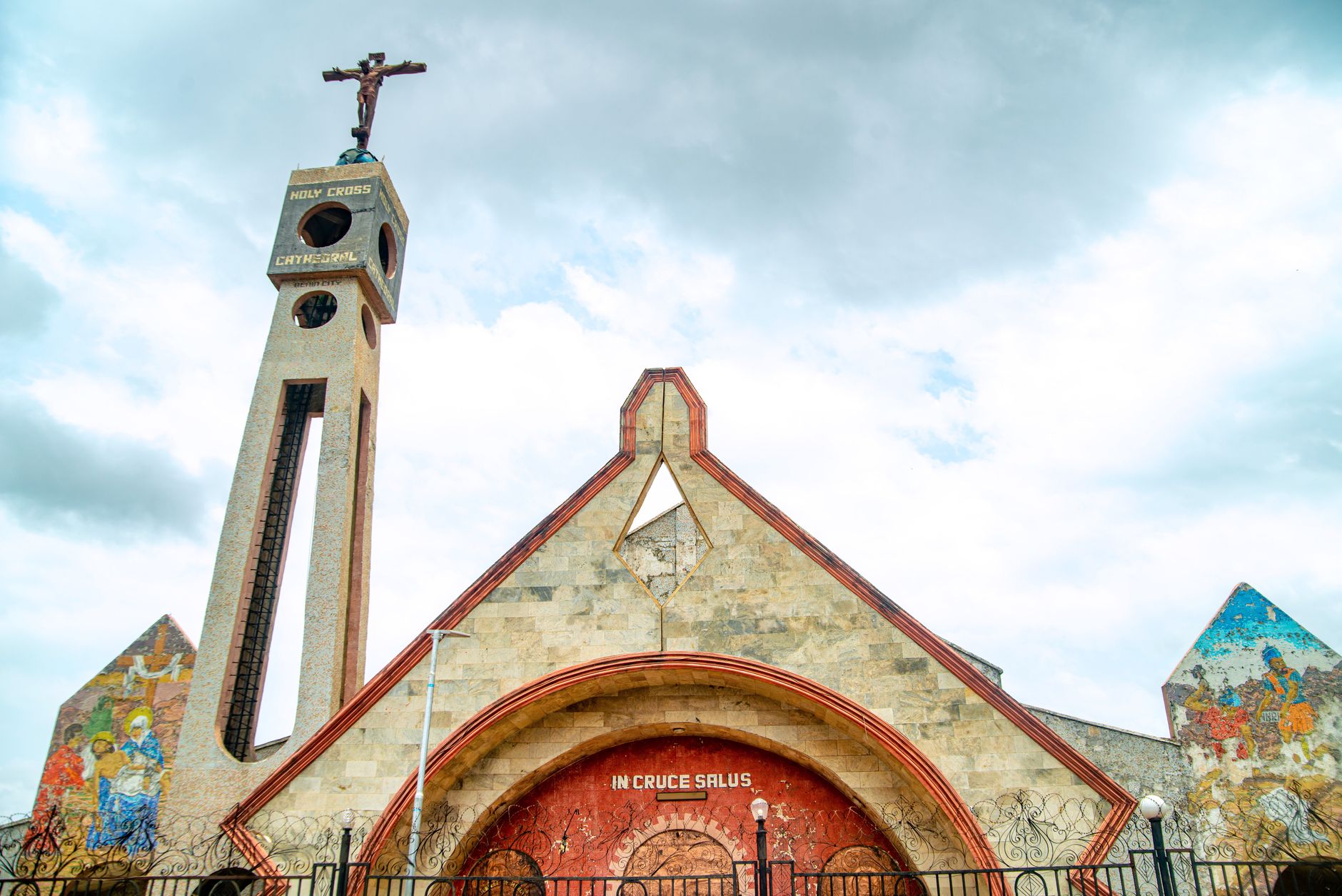 Benin
Benin
EntryeVisa required for many travelers; yellow fever certificate required
BThis Benin travel guide starts with a surprise: one slim West African country holds royal palaces, stilt villages, Atlantic surf, and safari in a single run.
Benin rewards travelers who like a country with a clear shape and no wasted miles. You can land in Cotonou, stand in the political capital of Porto-Novo the same day, then follow the coast west to Ouidah and Grand-Popo, where history sits close to the sea. The southern belt is all movement: moto taxis, market noise, lagoon light, grilled fish, palm-oil sauces, and a social code built around greeting properly before getting to the point. Nothing feels packaged. Even the places most visitors know first still carry the texture of ordinary life.
Then the country opens inland. Abomey gives you the old royal core of Dahomey, where power was staged in clay walls, courtyards, and symbols that still shape the national imagination. Ganvié shifts the picture completely: a lake settlement built on stilts, where daily life happens by canoe and the horizon is water. Farther north, the road runs toward Parakou, Natitingou, Nikki, and the Atakora country, where the air dries out, distances lengthen, and the architecture turns defensive, practical, and beautiful in a different way.
Kingdoms Before Dahomey, c. 1100-1625
Morning begins with red earth underfoot and salt in the air. Long before Abomey became the name everyone remembers, the coast and interior of present-day Benin were already divided among courts, markets, and sacred groves: Allada and Ouidah in the south, Nikki in the north, Kétou toward the Yoruba world. Horses mattered in the savanna, canoes mattered near the lagoons, and power moved along both routes.
What shaped this early history was not one kingdom but a chain of rival centers. Nikki grew into a Bariba royal seat with cavalry prestige and a code of warrior honor severe enough to frighten even its allies. Kétou looked east toward Ile-Ife, where dynastic memory and ritual authority carried as much weight as armies. On the coast, Allada and Ouidah dealt with merchants from across the Atlantic before Dahomey had fully taken form.
Ce que l'on ignore souvent, c'est que Ouidah was already transforming the wider Atlantic world before the palaces of Abomey reached their full grandeur. Men and women forced onto ships from this stretch of coast carried languages, gods, songs, and ritual knowledge that would reappear in Haiti, Cuba, and Brazil under other names. A port can look like a marketplace. It can also be an engine of world history.
And then there is the matter of memory. According to tradition, dynasties on this coast traced themselves to improbable unions, spirit bargains, and royal migrations that mixed politics with myth so thoroughly that you cannot separate one from the other without missing the point. That habit of turning statecraft into story would define Benin for centuries, and nowhere more dramatically than at Abomey.
The emblematic figure of this era is the unnamed Aja princess of oral tradition, less a documented person than the reminder that dynasties in this region guarded myth as carefully as they guarded land.
In Kétou, royal forests were treated as inhabited political space; cutting certain trees without permission was said to be an offense against both crown and ancestors.
The Rise of Dahomey, c. 1625-1818
A taunt became a foundation myth. Tradition says a local chief named Dan mocked the newcomer Do-Aklin by telling him to build in his belly if he wanted land; Dan was killed, and the new palace rose on his grave. From that story came Danxomè, later Dahomey, usually glossed as "in the belly of Dan". It is a brutal beginning, which is to say a royal one.
Under Houegbadja and his successors, Abomey became more than a fortified court on a plateau. It turned into a disciplined state with palaces, ceremonies, tribute networks, and a habit of recording power in walls of clay and bas-relief. Royal symbolism mattered enormously. So did counting: later accounts describe rulers keeping close watch on population, treasure, and captives with a precision that feels almost modern in its coldness.
Then came Agaja, and with him the coastal turn. In 1724 Allada fell; in 1727 Ouidah followed. European traders who had treated the coast as their commercial theater suddenly found themselves dealing with a stronger inland monarchy that could dictate terms more forcefully than before. Guns, captives, cloth, tobacco, and cowries all met at this terrible crossroads.
Ce que l'on ignore souvent, c'est qu the slave trade was not merely a European story imposed from outside, nor simply an African one from within. It was a bargain of violence in which Dahomey pursued military and political advantage while European merchants pursued profit with equal zeal and less excuse. The conquest of Ouidah made Abomey rich, but it also tied the kingdom to a commerce that would poison every generation that followed. From that compromise came the kingdom's greatness and its moral ruin.
King Agaja emerges here not as a cardboard conqueror but as a calculating ruler who understood that taking Ouidah meant taking hold of the coast's cash, weapons, and diplomatic leverage.
One tradition holds that Agaja explored trading agricultural goods instead of people with the English; whether the scheme was sincere or tactical, it failed, and the ships kept sailing.
The Court of Ghezo and the Age of Contradictions, 1818-1889
Picture the court at Abomey at dawn: parasols, drums, dust rising under bare feet, and a king who had taken the throne by removing his own brother from history. Ghezo's seizure of power around 1818 was not only a coup. It was an act of dynastic editing. Adandozan, the displaced ruler, was pushed out of the official line as though a king could be erased by ceremony alone. Courts adore this kind of fiction.
Ghezo's reign gave Dahomey its most famous image: the Agojie, the women soldiers who guarded and fought for the crown with a discipline that unsettled European visitors and became legend abroad. They were not a curiosity. They were a pillar of the state, trained, armed, feared, and used in campaigns whose objectives were brutally practical. Their fame, though deserved, sometimes hides the harsher truth: these years were also the high noon of slave-raiding and slave export.
A second figure stands in the doorway of this court, and he does not belong there by birth: Francisco Félix de Souza, the Brazilian-Portuguese trader who became Chacha of Ouidah. His story reads like a novel written by someone with little respect for virtue. Imprisoned, allied, restored, rewarded, he built a dynastic merchant house at Ouidah that linked Dahomey to Brazil through people, goods, and unspeakable commerce. Follow the genealogy of many Afro-Brazilian families along the coast and you still hear the echo.
Under Glele and then Béhanzin, the kingdom tried to hold its dignity while the Atlantic world changed around it. The abolitionist tide, French pressure, and the tightening noose of empire left Dahomey with fewer moves than its rhetoric suggested. One can admire the theatrical grandeur of Abomey and still hear, beneath the drums, the footsteps of captives and the panic of those who knew the old order could not last.
King Ghezo was brilliant, ceremonial, reform-minded in some matters, and utterly compromised in others: a sovereign who modernized his court while depending on the trade that would damn his name.
European visitors wrote in astonishment about palace women drilling with muskets, but one of the sharper shocks was ceremonial discipline: court ritual could take hours, and a misplaced gesture in the royal presence was not treated lightly.
French Conquest, Colonial Rule, and the Republic of Benin, 1890-1990
The last act of the kingdom opens in smoke. When French forces pushed inland in the 1890s, King Béhanzin resisted with determination and symbolism in equal measure, then retreated as defeat became unavoidable. Abomey burned during the conflict, whether as strategy, desperation, or both; royal power that had once terrified its neighbors ended in exile, paperwork, and imperial administration. It is always a drab ending for monarchies, even magnificent ones.
French Dahomey was folded into French West Africa, and the old courts were reduced, managed, or repurposed. Porto-Novo, already a significant royal and commercial center with deep Yoruba and Afro-Brazilian ties, became the official capital under colonial rule, while Cotonou grew into the economic hinge of the territory. Ce que l'on ignore souvent, c'est que colonial order did not erase older sovereignties so much as sit awkwardly on top of them. Royal lineages survived in memory, ritual, and local prestige even when Paris imagined the matter settled.
Independence came in 1960, but stability did not arrive with it. Dahomey passed through coups, rival factions, and political improvisations so frequent that the state seemed to change costume every few seasons. Then in 1975, under Mathieu Kérékou, the country was renamed Benin, borrowing the wider Gulf name rather than privileging one historic kingdom over another. That choice was political, elegant, and revealing: a new republic required a broader ancestry than Dahomey alone.
By 1990, after Marxist-Leninist experiment, economic strain, and public fatigue, Benin staged something rare in the region: a national conference that helped push the country toward pluralist democracy. The country that visitors encounter now, whether in Ouidah, Ganvié, Porto-Novo, or Cotonou, still carries every earlier layer at once: palace and port, shrine and barracks, royal memory and republican argument. One era never quite leaves before the next begins.
Béhanzin remains the tragic hero of the transition, proud enough to resist the French and human enough to lose, which is often the more revealing story.
The name 'Benin' adopted in 1975 did not come from the old kingdom of Benin in today's Nigeria alone, but from the Bight of Benin, a deliberate way to give the republic a wider historical frame than Dahomey.
In Benin, speech begins long before information. A morning in Cotonou starts with inquiry, not efficiency: have you woken well, are you strong, how is the house, how is the mother, how is the child you did not mention but who is understood to exist somewhere inside the sentence. Europeans call this verbosity when they are in a hurry. They are wrong.
French runs through the country like administrative thread, useful and visible, yet the cloth itself is woven elsewhere: Fon in the south, Yoruba around Porto-Novo and Kétou, Bariba toward Nikki, Gun along the water routes, plus dozens more that refuse reduction. In a market, one hears a sentence leave in Fon, borrow a French noun for paperwork or voltage, then return home by another door. Language here does not stand in lines. It trades places.
The effect on a visitor is immediate and rather healthy. You learn that a greeting is not a preface to the real exchange; the greeting is the exchange, the social proof that two human beings have recognized each other before business begins, and once you have felt that in Ouidah or heard it stretch across a courtyard in Porto-Novo, the clipped European hello starts to seem less like brevity than like malnutrition.
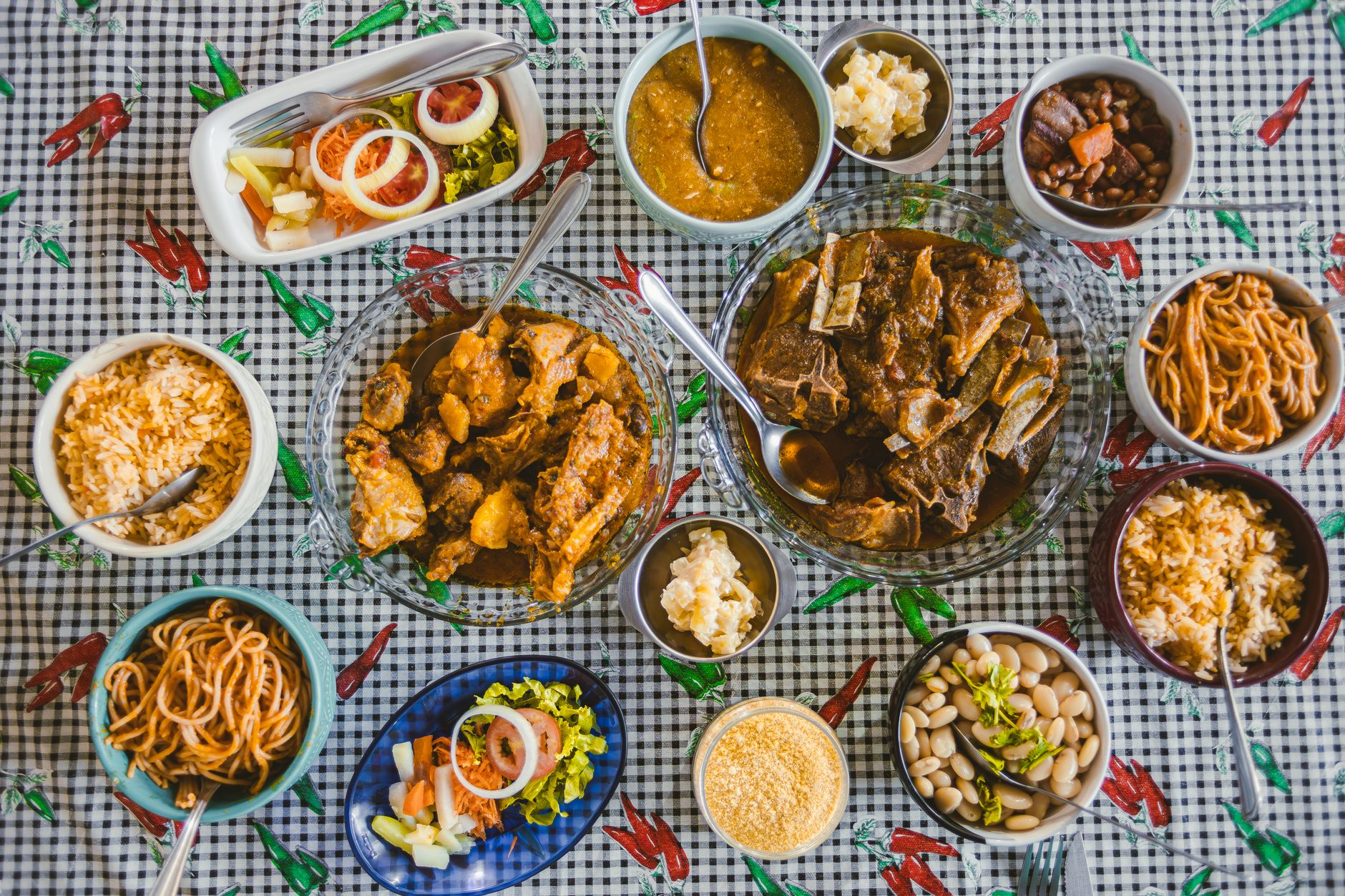
Beninese cooking has the seriousness of ritual and the appetite of a street. Palm oil stains the spoon red. Fermented corn brings its clean sour note. Smoked fish enters not as ornament but as command. A country is a table set for strangers.
Take akassa, that white fermented maize paste wrapped and steamed, then torn by hand and lowered into sauce with the gravity of communion. Or amiwo, red with tomato and oil, carrying shrimp, heat, and the slow patience of the pot. In Cotonou, atassi appears at breakfast with black-eyed peas and rice as if the day required ballast; in Grand-Popo, abolo and fish from the lagoon make lunch taste of tide, charcoal, and leaf. Benin does not confuse delicacy with timidity.
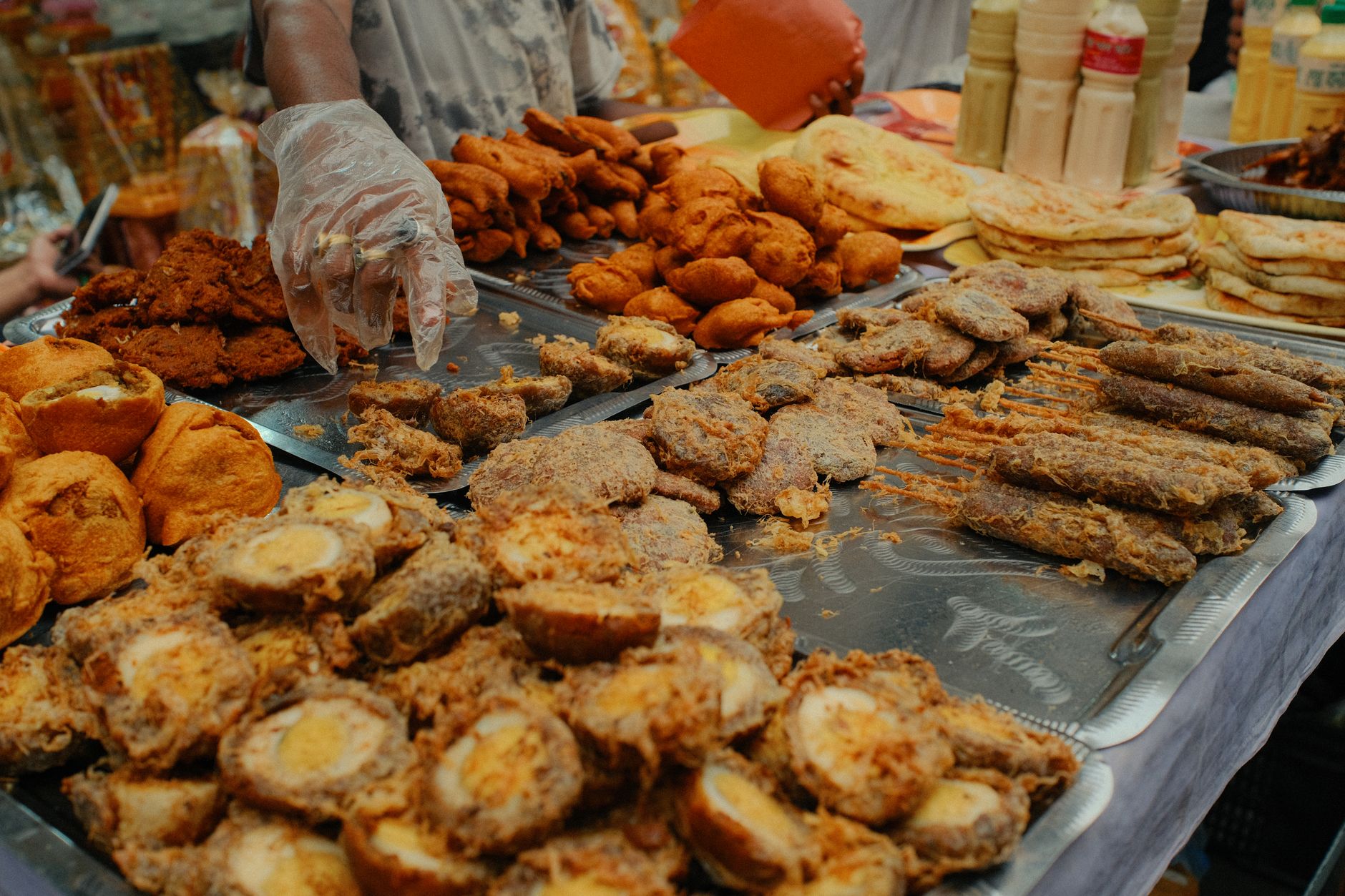
Then come the details that disturb lazy categories, which is always a pleasure. Wagasi, the fresh Fulani cheese of the north, arrives to remind you that West Africa owes nobody an explanation for dairy. Kluiklui crack between the teeth during the afternoon. Yovo doko, those fried dough balls whose name means "white man's fritter," keep colonial history in the snack bowl where it belongs: remembered, mocked, eaten. Cuisine here does what all great cuisines do. It turns survival, trade, weather, and theology into something your fingers can lift to your mouth.
Benin treats the border between visible and invisible life with less hypocrisy than most places. In Ouidah, Vodun is not staged as folklore for outsiders or hidden as embarrassment for moderns; it sits in the air beside traffic, salt, drums, church bells, white garments, and the old Atlantic wound. The lesson is severe and elegant: belief does not vanish because an empire disapproves of it.
Names matter here. Sakpata governs earth and illness. Heviosso throws thunder. Mami Wata glides in with mirrors, water, seduction, and danger, which is another way of saying she behaves like the sea itself. At the Python Temple in Ouidah, the serpent is not a metaphor invented for literary convenience but a housed presence with obligations, caretakers, rhythms, and prohibitions. One sees quickly that Vodun is not "animism," that lazy colonial drawer for everything Europeans failed to classify before lunch. It is a disciplined cosmology with priests, lineages, offerings, calendars, and memory.
Christianity and Islam are also fully present, especially in Porto-Novo and the north, and daily life makes room for this without the nervous need to tidy contradiction. Someone may attend Mass, greet an imam with respect, and still consult inherited ritual when the matter concerns ancestry, illness, or fate. This does not strike Benin as incoherent. Only a culture trained to worship categories would think so.
Benin builds with earth, timber, water, and authority. In Abomey, the Royal Palaces once turned sun-dried clay into political theater: courtyards, walls, reliefs, symbols of kings who understood perfectly that power must be seen to be believed. A leopard on a wall is never just a leopard. It is a sentence about dynasty.
The earthen architecture of the old kingdom carries an unsettling intimacy because clay remembers the hand that pressed it. Nothing here has the aloof finish of marble. History stays warm. In the north, around Natitingou, the tata compounds of the Betammaribe rise as fortification and biography at once, with granaries above, animals below, and family life organized inside a geometry shaped by danger, season, and inheritance. A house can be a fortress. It can also be a cosmology.
Then Benin performs its water trick. Ganvié, spread over Lake Nokoué on stilts and canoes, looks at first like improbability and then like logic, which is often the mark of true architecture. Settlement there answered slave raiding with amphibious intelligence. The village became defense through geography, and daily life still moves by paddle, plank, market boat, and tide. Few built environments explain a people's nerve so plainly.
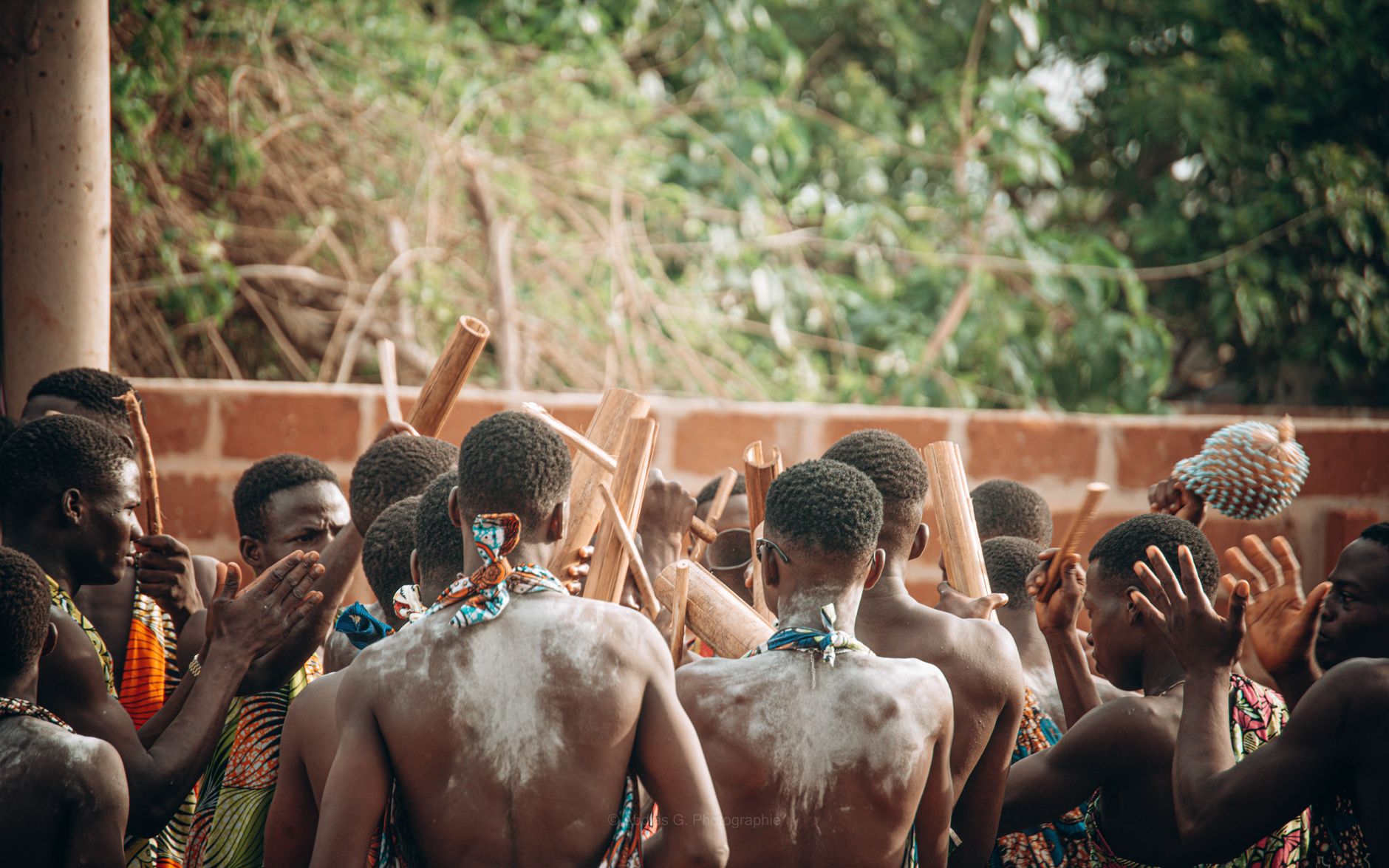
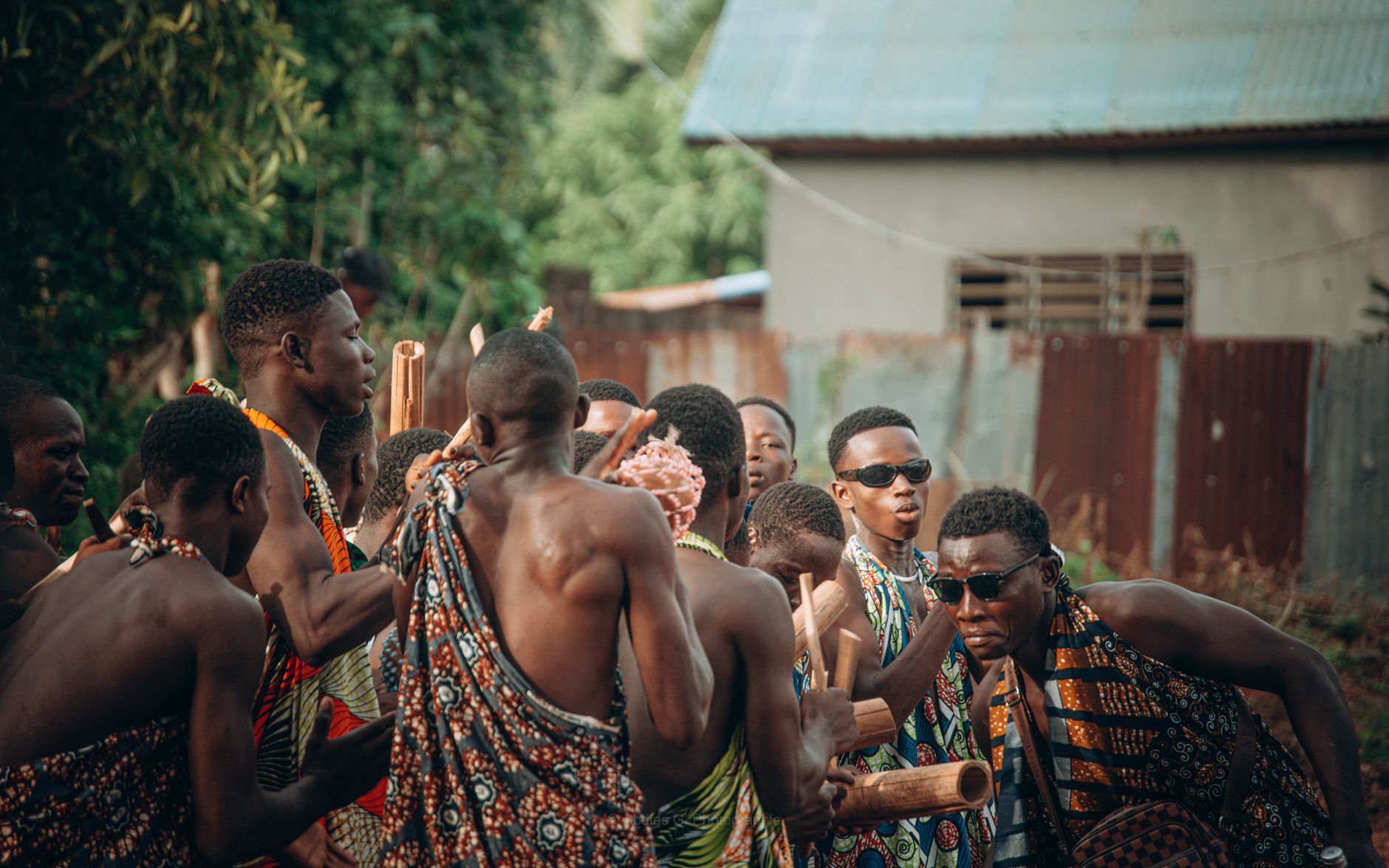
Beninese music does not ask the body for permission. It takes it. The first drum pattern arrives as pulse, the second as instruction, and by the third you understand that rhythm here is not accompaniment but architecture: it holds the ceremony up, marks rank, mocks hesitation, and tells the feet what pride would prefer not to hear.
In the south, especially around Ouidah and Porto-Novo, percussion traditions remain tied to Vodun practice, where specific rhythms belong to specific spirits and the line between music and invocation is thinner than outsiders expect. The drum speaks. The bell corrects. The chorus enters in a call-and-response structure that feels less like performance than like collective proof of life. One singer calls, the crowd answers, and an entire square in Cotonou suddenly resembles a legal argument conducted by joy.
Modern Benin has never abandoned this inheritance; it electrified it. Gnonnas Pedro bent rumba, highlife, and local cadence into something sly and urbane. Angélique Kidjo, born in Ouidah, carried Fon and Yoruba inflection onto world stages without sanding off their grain. That is the distinction that matters. Export without surrender. Music here keeps its passport and its accent.
Beninese etiquette is founded on a proposition both simple and severe: another person is not an obstacle between you and your objective. In practical terms, this means greetings first, requests later, and no public appetite for the kind of blunt refusal that some visitors mistake for honesty. "I will think about it" may be mercy. "It is a little difficult" may be the final answer wearing a velvet glove.
This softness has rules. You greet elders with care. You take time. In markets from Porto-Novo to Parakou, bargaining is not a duel between enemies but a conversation with choreography, tone, pauses, and face-saving exits for both parties, and the traveler who charges in with numerical aggression usually pays either too much money or too much dignity. Often both.
What I admire most is the moral intelligence inside these forms. Courtesy here is not decorative polish laid over indifference; it is a working system for keeping social life from becoming coarse. Benin understands something Europe once knew and then mislaid in its worship of speed: manners are not restraint imposed on feeling. They are one of feeling's highest forms.
Abomey carries one of West Africa's most formidable royal histories, shaped by conquest, court ritual, and palace architecture that turned memory into statecraft.
Ganvié is not a postcard invention but a working settlement on stilts, where boats replace streets and daily errands happen across open water.
Ouidah and the southern coast hold one of the most important chapters of the Atlantic slave trade, alongside living Vodun traditions that never left the region behind.
Beninese food is built on fermented corn, beans, fish, pepper, and palm fruit, with dishes that taste grounded rather than polished for visitors.
Pendjari brings a different Benin entirely: long dry-season roads, elephant country, and one of the strongest wildlife areas in West Africa.
From Cotonou's traffic and markets to Grand-Popo's surf line and Natitingou's drier northern light, the visual shift is constant and worth the miles.
12 cities — start with the ones we'd send you to first.
Benin's commercial capital runs on zémidjan motorcycle-taxis and palm wine at dusk, a city that never officially became the capital yet runs everything anyway.
The actual capital is a faded Afro-Brazilian colonial town where Yoruba shrines and Portuguese-style azulejo facades share the same crumbling street.
For three centuries, enslaved people walked the Route des Esclaves to the Door of No Return here — a beach portal between continents that the Atlantic still receives in silence.
Twelve successive Dahomey kings built their palaces side by side on this plateau, and the bas-relief walls still narrate wars, sacrifices, and the leopard dynasty in fired clay.
Built on stilts in Lake Nokoué by Tofinu people who knew slavers could not follow them onto water, this floating village of 20,000 has been continuously inhabited since the 17th century.
Gateway to the Atakora highlands, where the air drops ten degrees and the Betamaribe people still inhabit tata-somba fortified earthen compounds designed to outlast both raiders and centuries.
The north's main city is a crossroads of Bariba, Fulani, and Dendi cultures where the Wednesday livestock market draws cattle traders from three countries before dawn.
Founded by a Wasangari prince whose warrior code required burial alive for any soldier who retreated, this ancient Bariba capital hosts the Gaani festival — two days of cavalry charges that have not changed in 800 years.
A Yoruba sacred city whose dense forest grove was believed to house dead kings as trees, and whose 1883 sacking by Dahomey is still mourned in oral poetry sung at dawn.
This is the Benin most travelers meet first: humid air, motorcycle traffic, market noise, and a shoreline that never quite lets you forget the lagoons behind it. Cotonou is the commercial engine, but the region only makes sense once you add Ganvié on the water, Ouidah for historical gravity, and Grand-Popo for the long, sandy exhale at the western edge.
Porto-Novo feels more layered than loud, with Afro-Brazilian architecture, old administrative weight, and a Yoruba pulse that gets stronger as you head east. Kétou belongs in the same conversation, because this side of Benin has always looked as much toward the Yoruba world as toward the coast.
Central Benin is where the history stops being abstract and starts naming kings, palaces, and campaigns. Abomey anchors the region, but Possotomé adds a softer counterpoint near Lake Ahémé, useful if you want a break from museum chronology and palace symbolism.
Parakou is not built for postcard romance; it matters because everything moving north or south eventually passes through it. From here the country opens into larger distances, longer drives, and the cultural shift toward the Bariba world, with Nikki standing out as the historic court city of the plains.
The northwest is Benin at its most dramatic in travel terms: drier air, stronger relief, and roads that reward planning instead of spontaneity. Natitingou is the practical base, while Pendjari gives the region its pull, especially in the dry months when wildlife viewing and road conditions are both at their best.
From the courts of Nikki and Abomey to the democratic turn of 1990
By the medieval period, Nikki had become a major Bariba court in the north of present-day Benin. Its prestige rested on cavalry, aristocratic lineage, and the political weight of the savanna trade routes.
Kétou grew as a southeastern kingdom tied to the Yoruba world and to the ritual prestige of Ile-Ife. It stood at a cultural crossroads where dynastic memory mattered as much as military strength.
Portuguese traders were already dealing with the kingdom of Allada by the late 16th century. The coast that would later feed Dahomey's wealth was active before Dahomey itself reached full power.
Ouidah became one of the key ports of the Bight of Benin, linking local rulers, inland supply networks, and Atlantic merchants. It would later become one of the most important departure points in the slave trade.
Tradition places the founding of Dahomey in the early 17th century, tied to Do-Aklin and the violent story of Dan's grave. Myth and monarchy arrive together in the kingdom's first memory.
Under Houegbadja, Abomey became a functioning royal capital with palace ritual, administration, and a clearer dynastic frame. This was the moment the kingdom stopped being a fragile court and became a durable state.
Agaja inherited a kingdom with ambition and gave it reach. His reign would pull Dahomey toward the coast and make it a stronger actor in Atlantic trade and regional warfare.
The conquest of Allada was both strategic and symbolic, since Dahomey's own dynasty traced deep connections to that older kingdom. Expansion here was also a kind of family drama played with armies.
With Ouidah under Dahomean control, the kingdom gained far greater leverage over coastal trade and foreign merchants. The capture transformed Abomey's economy and sharpened its entanglement with slavery.
Ghezo's accession followed a palace coup that pushed his brother Adandozan out of power and later out of official memory. The reign that followed became the best-known, and most contradictory, chapter of Dahomey's monarchy.
The women soldiers of Dahomey, known today as the Agojie, became central to the court's military image in the 19th century. European accounts treated them as exotic; Dahomey treated them as state power.
The Chacha of Ouidah left behind a merchant dynasty and one of the most revealing Atlantic biographies on the coast. Through him, Brazil, slavery, and Dahomean politics became inseparable in local memory.
One of the last major slave-raiding campaigns in the region struck Kétou late in the 19th century. The attack showed how violently old political habits persisted even as European conquest drew near.
The French campaign against Dahomey broke the kingdom's military resistance and forced Béhanzin into retreat. Abomey's royal world did not vanish overnight, but sovereignty had changed hands.
After conquest, the territory was absorbed into the French colonial system and later integrated into French West Africa. Porto-Novo gained official importance, while Cotonou grew as the commercial hinge.
King Toffa I had ruled Porto-Novo in a world of uneasy alliances, where local survival often depended on bargaining with France against regional threats. His death closed one chapter in the city's royal diplomacy.
The colony became an independent republic in 1960, but the new state entered public life with fragile institutions and fierce competition among political factions. Independence arrived before stability did.
A military coup brought Mathieu Kérékou to power and opened a long chapter of centralized rule. The regime would later adopt Marxist-Leninist language and reshape the country's official identity.
The Republic of Dahomey became the People's Republic of Benin, taking a broader geographic name from the Gulf rather than one kingdom's inheritance. It was a symbolic attempt to widen the nation's historical frame.
Benin's National Conference became one of the most important political turning points in modern West Africa. It helped move the country away from one-party rule and toward pluralist constitutional life.
Kingdoms Before Dahomey
The emblematic figure of this era is the unnamed Aja princess of oral tradition, less a documented person than the reminder that dynasties in this region guarded myth as carefully as they guarded land.
Morning begins with red earth underfoot and salt in the air. Long before Abomey became the name everyone remembers, the coast and interior of present-day Benin were already divided among courts, markets, and sacred groves: Allada and Ouidah in the south, Nikki in the north, Kétou toward the Yoruba world. Horses mattered in the savanna, canoes mattered near the lagoons, and power moved along both routes.
What shaped this early history was not one kingdom but a chain of rival centers. Nikki grew into a Bariba royal seat with cavalry prestige and a code of warrior honor severe enough to frighten even its allies. Kétou looked east toward Ile-Ife, where dynastic memory and ritual authority carried as much weight as armies. On the coast, Allada and Ouidah dealt with merchants from across the Atlantic before Dahomey had fully taken form.
Ce que l'on ignore souvent, c'est que Ouidah was already transforming the wider Atlantic world before the palaces of Abomey reached their full grandeur. Men and women forced onto ships from this stretch of coast carried languages, gods, songs, and ritual knowledge that would reappear in Haiti, Cuba, and Brazil under other names. A port can look like a marketplace. It can also be an engine of world history.
And then there is the matter of memory. According to tradition, dynasties on this coast traced themselves to improbable unions, spirit bargains, and royal migrations that mixed politics with myth so thoroughly that you cannot separate one from the other without missing the point. That habit of turning statecraft into story would define Benin for centuries, and nowhere more dramatically than at Abomey.
In Kétou, royal forests were treated as inhabited political space; cutting certain trees without permission was said to be an offense against both crown and ancestors.
The Rise of Dahomey
King Agaja emerges here not as a cardboard conqueror but as a calculating ruler who understood that taking Ouidah meant taking hold of the coast's cash, weapons, and diplomatic leverage.
A taunt became a foundation myth. Tradition says a local chief named Dan mocked the newcomer Do-Aklin by telling him to build in his belly if he wanted land; Dan was killed, and the new palace rose on his grave. From that story came Danxomè, later Dahomey, usually glossed as "in the belly of Dan". It is a brutal beginning, which is to say a royal one.
Under Houegbadja and his successors, Abomey became more than a fortified court on a plateau. It turned into a disciplined state with palaces, ceremonies, tribute networks, and a habit of recording power in walls of clay and bas-relief. Royal symbolism mattered enormously. So did counting: later accounts describe rulers keeping close watch on population, treasure, and captives with a precision that feels almost modern in its coldness.
Then came Agaja, and with him the coastal turn. In 1724 Allada fell; in 1727 Ouidah followed. European traders who had treated the coast as their commercial theater suddenly found themselves dealing with a stronger inland monarchy that could dictate terms more forcefully than before. Guns, captives, cloth, tobacco, and cowries all met at this terrible crossroads.
Ce que l'on ignore souvent, c'est qu the slave trade was not merely a European story imposed from outside, nor simply an African one from within. It was a bargain of violence in which Dahomey pursued military and political advantage while European merchants pursued profit with equal zeal and less excuse. The conquest of Ouidah made Abomey rich, but it also tied the kingdom to a commerce that would poison every generation that followed. From that compromise came the kingdom's greatness and its moral ruin.
One tradition holds that Agaja explored trading agricultural goods instead of people with the English; whether the scheme was sincere or tactical, it failed, and the ships kept sailing.
The Court of Ghezo and the Age of Contradictions
King Ghezo was brilliant, ceremonial, reform-minded in some matters, and utterly compromised in others: a sovereign who modernized his court while depending on the trade that would damn his name.
Picture the court at Abomey at dawn: parasols, drums, dust rising under bare feet, and a king who had taken the throne by removing his own brother from history. Ghezo's seizure of power around 1818 was not only a coup. It was an act of dynastic editing. Adandozan, the displaced ruler, was pushed out of the official line as though a king could be erased by ceremony alone. Courts adore this kind of fiction.
Ghezo's reign gave Dahomey its most famous image: the Agojie, the women soldiers who guarded and fought for the crown with a discipline that unsettled European visitors and became legend abroad. They were not a curiosity. They were a pillar of the state, trained, armed, feared, and used in campaigns whose objectives were brutally practical. Their fame, though deserved, sometimes hides the harsher truth: these years were also the high noon of slave-raiding and slave export.
A second figure stands in the doorway of this court, and he does not belong there by birth: Francisco Félix de Souza, the Brazilian-Portuguese trader who became Chacha of Ouidah. His story reads like a novel written by someone with little respect for virtue. Imprisoned, allied, restored, rewarded, he built a dynastic merchant house at Ouidah that linked Dahomey to Brazil through people, goods, and unspeakable commerce. Follow the genealogy of many Afro-Brazilian families along the coast and you still hear the echo.
Under Glele and then Béhanzin, the kingdom tried to hold its dignity while the Atlantic world changed around it. The abolitionist tide, French pressure, and the tightening noose of empire left Dahomey with fewer moves than its rhetoric suggested. One can admire the theatrical grandeur of Abomey and still hear, beneath the drums, the footsteps of captives and the panic of those who knew the old order could not last.
European visitors wrote in astonishment about palace women drilling with muskets, but one of the sharper shocks was ceremonial discipline: court ritual could take hours, and a misplaced gesture in the royal presence was not treated lightly.
French Conquest, Colonial Rule, and the Republic of Benin
Béhanzin remains the tragic hero of the transition, proud enough to resist the French and human enough to lose, which is often the more revealing story.
The last act of the kingdom opens in smoke. When French forces pushed inland in the 1890s, King Béhanzin resisted with determination and symbolism in equal measure, then retreated as defeat became unavoidable. Abomey burned during the conflict, whether as strategy, desperation, or both; royal power that had once terrified its neighbors ended in exile, paperwork, and imperial administration. It is always a drab ending for monarchies, even magnificent ones.
French Dahomey was folded into French West Africa, and the old courts were reduced, managed, or repurposed. Porto-Novo, already a significant royal and commercial center with deep Yoruba and Afro-Brazilian ties, became the official capital under colonial rule, while Cotonou grew into the economic hinge of the territory. Ce que l'on ignore souvent, c'est que colonial order did not erase older sovereignties so much as sit awkwardly on top of them. Royal lineages survived in memory, ritual, and local prestige even when Paris imagined the matter settled.
Independence came in 1960, but stability did not arrive with it. Dahomey passed through coups, rival factions, and political improvisations so frequent that the state seemed to change costume every few seasons. Then in 1975, under Mathieu Kérékou, the country was renamed Benin, borrowing the wider Gulf name rather than privileging one historic kingdom over another. That choice was political, elegant, and revealing: a new republic required a broader ancestry than Dahomey alone.
By 1990, after Marxist-Leninist experiment, economic strain, and public fatigue, Benin staged something rare in the region: a national conference that helped push the country toward pluralist democracy. The country that visitors encounter now, whether in Ouidah, Ganvié, Porto-Novo, or Cotonou, still carries every earlier layer at once: palace and port, shrine and barracks, royal memory and republican argument. One era never quite leaves before the next begins.
The name 'Benin' adopted in 1975 did not come from the old kingdom of Benin in today's Nigeria alone, but from the Bight of Benin, a deliberate way to give the republic a wider historical frame than Dahomey.
In Benin, speech begins long before information. A morning in Cotonou starts with inquiry, not efficiency: have you woken well, are you strong, how is the house, how is the mother, how is the child you did not mention but who is understood to exist somewhere inside the sentence. Europeans call this verbosity when they are in a hurry. They are wrong.
French runs through the country like administrative thread, useful and visible, yet the cloth itself is woven elsewhere: Fon in the south, Yoruba around Porto-Novo and Kétou, Bariba toward Nikki, Gun along the water routes, plus dozens more that refuse reduction. In a market, one hears a sentence leave in Fon, borrow a French noun for paperwork or voltage, then return home by another door. Language here does not stand in lines. It trades places.
The effect on a visitor is immediate and rather healthy. You learn that a greeting is not a preface to the real exchange; the greeting is the exchange, the social proof that two human beings have recognized each other before business begins, and once you have felt that in Ouidah or heard it stretch across a courtyard in Porto-Novo, the clipped European hello starts to seem less like brevity than like malnutrition.
Beninese cooking has the seriousness of ritual and the appetite of a street. Palm oil stains the spoon red. Fermented corn brings its clean sour note. Smoked fish enters not as ornament but as command. A country is a table set for strangers.
Take akassa, that white fermented maize paste wrapped and steamed, then torn by hand and lowered into sauce with the gravity of communion. Or amiwo, red with tomato and oil, carrying shrimp, heat, and the slow patience of the pot. In Cotonou, atassi appears at breakfast with black-eyed peas and rice as if the day required ballast; in Grand-Popo, abolo and fish from the lagoon make lunch taste of tide, charcoal, and leaf. Benin does not confuse delicacy with timidity.
Then come the details that disturb lazy categories, which is always a pleasure. Wagasi, the fresh Fulani cheese of the north, arrives to remind you that West Africa owes nobody an explanation for dairy. Kluiklui crack between the teeth during the afternoon. Yovo doko, those fried dough balls whose name means "white man's fritter," keep colonial history in the snack bowl where it belongs: remembered, mocked, eaten. Cuisine here does what all great cuisines do. It turns survival, trade, weather, and theology into something your fingers can lift to your mouth.
Benin treats the border between visible and invisible life with less hypocrisy than most places. In Ouidah, Vodun is not staged as folklore for outsiders or hidden as embarrassment for moderns; it sits in the air beside traffic, salt, drums, church bells, white garments, and the old Atlantic wound. The lesson is severe and elegant: belief does not vanish because an empire disapproves of it.
Names matter here. Sakpata governs earth and illness. Heviosso throws thunder. Mami Wata glides in with mirrors, water, seduction, and danger, which is another way of saying she behaves like the sea itself. At the Python Temple in Ouidah, the serpent is not a metaphor invented for literary convenience but a housed presence with obligations, caretakers, rhythms, and prohibitions. One sees quickly that Vodun is not "animism," that lazy colonial drawer for everything Europeans failed to classify before lunch. It is a disciplined cosmology with priests, lineages, offerings, calendars, and memory.
Christianity and Islam are also fully present, especially in Porto-Novo and the north, and daily life makes room for this without the nervous need to tidy contradiction. Someone may attend Mass, greet an imam with respect, and still consult inherited ritual when the matter concerns ancestry, illness, or fate. This does not strike Benin as incoherent. Only a culture trained to worship categories would think so.
Benin builds with earth, timber, water, and authority. In Abomey, the Royal Palaces once turned sun-dried clay into political theater: courtyards, walls, reliefs, symbols of kings who understood perfectly that power must be seen to be believed. A leopard on a wall is never just a leopard. It is a sentence about dynasty.
The earthen architecture of the old kingdom carries an unsettling intimacy because clay remembers the hand that pressed it. Nothing here has the aloof finish of marble. History stays warm. In the north, around Natitingou, the tata compounds of the Betammaribe rise as fortification and biography at once, with granaries above, animals below, and family life organized inside a geometry shaped by danger, season, and inheritance. A house can be a fortress. It can also be a cosmology.
Then Benin performs its water trick. Ganvié, spread over Lake Nokoué on stilts and canoes, looks at first like improbability and then like logic, which is often the mark of true architecture. Settlement there answered slave raiding with amphibious intelligence. The village became defense through geography, and daily life still moves by paddle, plank, market boat, and tide. Few built environments explain a people's nerve so plainly.
Beninese music does not ask the body for permission. It takes it. The first drum pattern arrives as pulse, the second as instruction, and by the third you understand that rhythm here is not accompaniment but architecture: it holds the ceremony up, marks rank, mocks hesitation, and tells the feet what pride would prefer not to hear.
In the south, especially around Ouidah and Porto-Novo, percussion traditions remain tied to Vodun practice, where specific rhythms belong to specific spirits and the line between music and invocation is thinner than outsiders expect. The drum speaks. The bell corrects. The chorus enters in a call-and-response structure that feels less like performance than like collective proof of life. One singer calls, the crowd answers, and an entire square in Cotonou suddenly resembles a legal argument conducted by joy.
Modern Benin has never abandoned this inheritance; it electrified it. Gnonnas Pedro bent rumba, highlife, and local cadence into something sly and urbane. Angélique Kidjo, born in Ouidah, carried Fon and Yoruba inflection onto world stages without sanding off their grain. That is the distinction that matters. Export without surrender. Music here keeps its passport and its accent.
Beninese etiquette is founded on a proposition both simple and severe: another person is not an obstacle between you and your objective. In practical terms, this means greetings first, requests later, and no public appetite for the kind of blunt refusal that some visitors mistake for honesty. "I will think about it" may be mercy. "It is a little difficult" may be the final answer wearing a velvet glove.
This softness has rules. You greet elders with care. You take time. In markets from Porto-Novo to Parakou, bargaining is not a duel between enemies but a conversation with choreography, tone, pauses, and face-saving exits for both parties, and the traveler who charges in with numerical aggression usually pays either too much money or too much dignity. Often both.
What I admire most is the moral intelligence inside these forms. Courtesy here is not decorative polish laid over indifference; it is a working system for keeping social life from becoming coarse. Benin understands something Europe once knew and then mislaid in its worship of speed: manners are not restraint imposed on feeling. They are one of feeling's highest forms.
Houegbadja is the ruler who turned a precarious settlement at Abomey into a kingdom with ritual, administration, and royal imagery strong enough to outlive him by two centuries. Behind the grand title stands a hard organizer, the kind of man who understood that ceremony is not decoration but a tool of government.
Agaja changed the scale of the kingdom when he seized Allada and Ouidah, pulling Dahomey decisively toward the coast and the Atlantic trade. He is remembered as a victor, but his triumph bound the monarchy more tightly to the traffic in captives that enriched the court and disfigured the age.
Ghezo presided over the most theatrical and contradictory phase of Dahomey: military prestige, a disciplined court, the prominence of the Agojie, and continued dependence on slave-raiding and export. He has the profile of a great ruler and the moral burden of one too.
Béhanzin is the figure people reach for when they want a final royal blaze: proud, strategic, difficult to tame, and ultimately defeated by a stronger imperial machine. His exile matters as much as his resistance, because it marks the moment when Dahomey's sovereignty moved from palace reality into historical memory.
De Souza arrived as a foreign trader and became one of the most powerful men in Ouidah, bridging Brazil and the Dahomean court through money, kinship, and the slave trade. His descendants and mansion keep his shadow in place; few figures make the Atlantic world feel so intimate and so compromised.
Tassi Hangbé occupies that charged territory between documented history and suppressed memory. Later retellings credit her with ruling in her own right or holding power in transition, which tells you something important about Dahomey: women were never absent from sovereignty, even when later chronicles tried to tidy them away.
Kérékou first appears as the officer who seized power, wrapped the state in Marxist-Leninist language, and gave Dahomey its new name, Benin. He matters because he also belongs to the second act: the negotiated shift toward democratic politics after 1990, which made him more than a standard coup-maker.
Toffa I is one of those rulers who make empire look less simple than schoolbooks pretend. In Porto-Novo he balanced local legitimacy, Yoruba ties, French alliance, and the fear of Dahomean aggression, ruling in a world where survival often required choosing the least comfortable protector.
This is the short southern loop for travelers who want water, history, and easy logistics without spending half the trip in transit. Start in Cotonou, cross to Ganvié for the lake settlement, then continue west to Ouidah and Grand-Popo for the coast, where the pace slows and the roads finally stop pretending to be urgent.
This route cuts through the old political spine of southern and central Benin, where court history, market towns, and borderland culture sit closer together than the map suggests. Porto-Novo gives you the formal capital, Kétou adds the Yoruba world to the east, and Abomey brings the weight of Dahomey into sharp focus.
Take this one if you want to see how dramatically Benin changes once the coast drops away. The road from Possotomé to Parakou and on to Nikki trades lagoons for plateau, bus stations, cattle country, and the long northward rhythm that defines inland travel here.
Northern Benin deserves time, not a rushed add-on after the coast. Natitingou is the cultural hinge for the Atakora region, and Pendjari is the country’s strongest wildlife draw, where dry-season planning matters more than improvisation and dawn starts pay off better than any hotel upgrade.
Morning or noon. Fingers tear, dip, lift. Family table, sauce bowl, silence, talk.
Breakfast in Cotonou. Spoon, beans, rice, palm oil. Workers eat before taxis, offices, heat.
Lagoon lunch in Grand-Popo or Ganvié. Leaf unwraps, fish flakes, hands work. Friends share, bottles sweat, boats pass.
Street breakfast. Paper cone, dough, coffee, school run. Children grab, adults chew, day begins.
North country meal near Natitingou or Nikki. Cheese grills, beans follow, millet beer waits. Herdsmen, traders, travelers sit and eat.
Midday plate. Spinach, smoked fish, locust beans, corn paste. Thumb presses, scoop forms, sauce disappears.
Evening circle in the north. Calabash passes, millet beer foams, stories grow. Women brew, men talk, everyone listens.







Most travelers need a Benin eVisa before arrival, including passport holders from the US, UK, Canada, Australia, and EU countries. The current short-stay options are 30-day single-entry, 30-day multiple-entry, and 90-day multiple-entry; apply at least 7 days before travel, and carry proof of yellow fever vaccination if you are 9 months or older.
Benin uses the West African CFA franc (XOF), pegged to the euro at about 656 XOF to €1. Cash still runs the country outside larger hotels and restaurants in Cotonou and Porto-Novo, so use ATMs in major cities and keep small notes for taxis, market buys, and tips.
Nearly everyone arrives through Cotonou Cadjehoun Airport (COO), the country’s main international gateway. The most practical long-haul connections are usually one stop via Paris, Brussels, Istanbul, Casablanca, Addis Ababa, Accra, Abidjan, or Lomé.
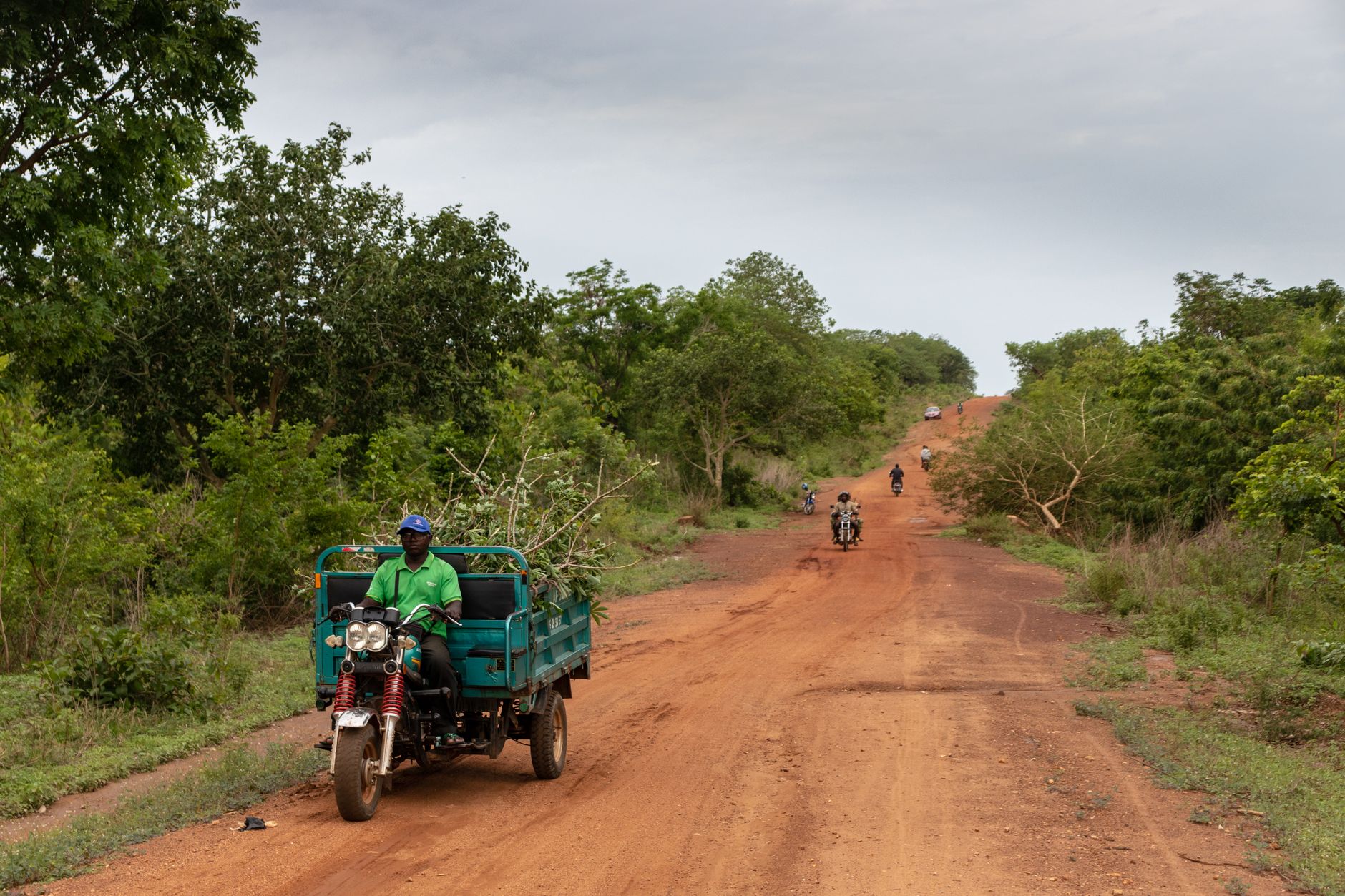
Benin works by road, not rail. Intercity buses, shared cars, yellow taxis, and zémidjans connect the main corridors from Cotonou through Porto-Novo, Abomey, and Parakou, while a car with driver makes the most sense for Pendjari, Natitingou, and longer cross-country runs.
The south around Cotonou, Ouidah, and Grand-Popo is humid and coastal, with the driest stretch usually from December to March. The north around Natitingou and Pendjari has a clearer dry season from roughly October to April, which is the easier window for parks, long drives, and dust-heavy but reliable road travel.
Mobile data is the practical default, and 4G is usable in the main cities, especially Cotonou and Porto-Novo. Coverage gets patchier on long inland drives and around protected areas, so download offline maps, keep hotel and driver contacts on WhatsApp, and do not count on fast Wi-Fi outside business hotels.
Benin is usually one of the easier West African countries to travel in, but road risk is the daily issue: avoid night driving, watch traffic around zémidjans, and agree taxi prices before setting off. Border areas in the far north need extra caution and up-to-date checks, while routine city common sense matters most in Cotonou markets, bus stations, and after dark.
Plan daily spending in cash, especially outside Cotonou and Porto-Novo. A reasonable working range is 25,000 to 40,000 XOF for budget travel and 55,000 to 95,000 XOF for mid-range days.
Do not build an itinerary around trains. Benin has no practical passenger rail network for normal travel, so buses, shared cars, and hired drivers are the real transport system.
Tipping is appreciated rather than fixed. Round up taxi fares, leave 5 to 10% in restaurants if service was good and not already included, and keep a few hundred XOF ready for porters or hotel staff.
Reserve transport and lodging ahead for Natitingou and Pendjari in the dry season, especially from December to February. Distances are long, options are fewer, and the good rooms go first.
Moto taxis save time in Cotonou, but traffic discipline is thin and helmets are inconsistent. Use them for short hops in daylight, and switch to a car when you have bags or arrive after dark.
French gets the transaction done, but greetings matter before the transaction starts. A polite hello and a little patience will carry you further than rushing straight to the question.
Coverage is decent in the south and weaker on inland routes and around parks. Download maps before leaving Cotonou, and confirm directions by phone with guesthouses instead of trusting one app blindly.
Explore Benin with a personal guide in your pocket
Audio guides for 1,100+ cities across 96 countries. History, stories, and local insight — offline ready.

Yes, in most cases you need a Benin eVisa before you travel. A Schengen visa does not replace it, and visas are generally not issued on arrival, so apply online in advance and travel with your approval and yellow fever certificate.
No, Benin is moderate to affordable by regional standards if you use local transport and simple hotels. Budget travelers can often manage on 25,000 to 40,000 XOF a day, while private drivers, air-conditioned rooms, and wildlife logistics in Pendjari raise costs fast.
The easiest overall window is the dry season, especially from December to March in the south and roughly October to April in the north. That is when roads are more reliable, wildlife viewing in Pendjari improves, and long overland routes between places like Abomey, Parakou, and Natitingou become less of a gamble.
You use buses, shared cars, yellow taxis, and zémidjans. That works well enough on the main southern and central corridors, but for places like Pendjari or more ambitious multi-stop northern routes, a hired driver saves time and reduces the usual transport improvisation.
Cotonou is the better practical base for arrivals, transport links, banking, and onward travel. Porto-Novo is quieter and more rewarding if you want architecture, museums, and easier day-trip logic toward Kétou and the eastern side of the country.
No, not realistically. Pendjari is deep in the northwest, and the drive is long enough that you should build at least a few days around Natitingou and the park instead of trying to force it into a rushed out-and-back.
Generally yes for standard routes, with the main everyday risks coming from road travel, petty theft, and bad transport decisions after dark. Night driving, especially on long inland stretches, is the thing to avoid first; border-zone security in the far north is the second point to check before you go.
Cards work in a limited way in larger hotels, supermarkets, and some restaurants in Cotonou and Porto-Novo, but cash is still the main system. ATMs are most dependable in major cities, so withdraw before heading to Ouidah, Grand-Popo, Natitingou, or smaller towns.
Yes, if you want a manageable introduction without giving up depth. The combination of Cotonou, Ouidah, Abomey, Porto-Novo, and a northern extension to Natitingou or Pendjari gives you a serious range of history, culture, and landscape in one country.
Last reviewed