Introduction: The Significance of Gruuthusebrug in Bruges
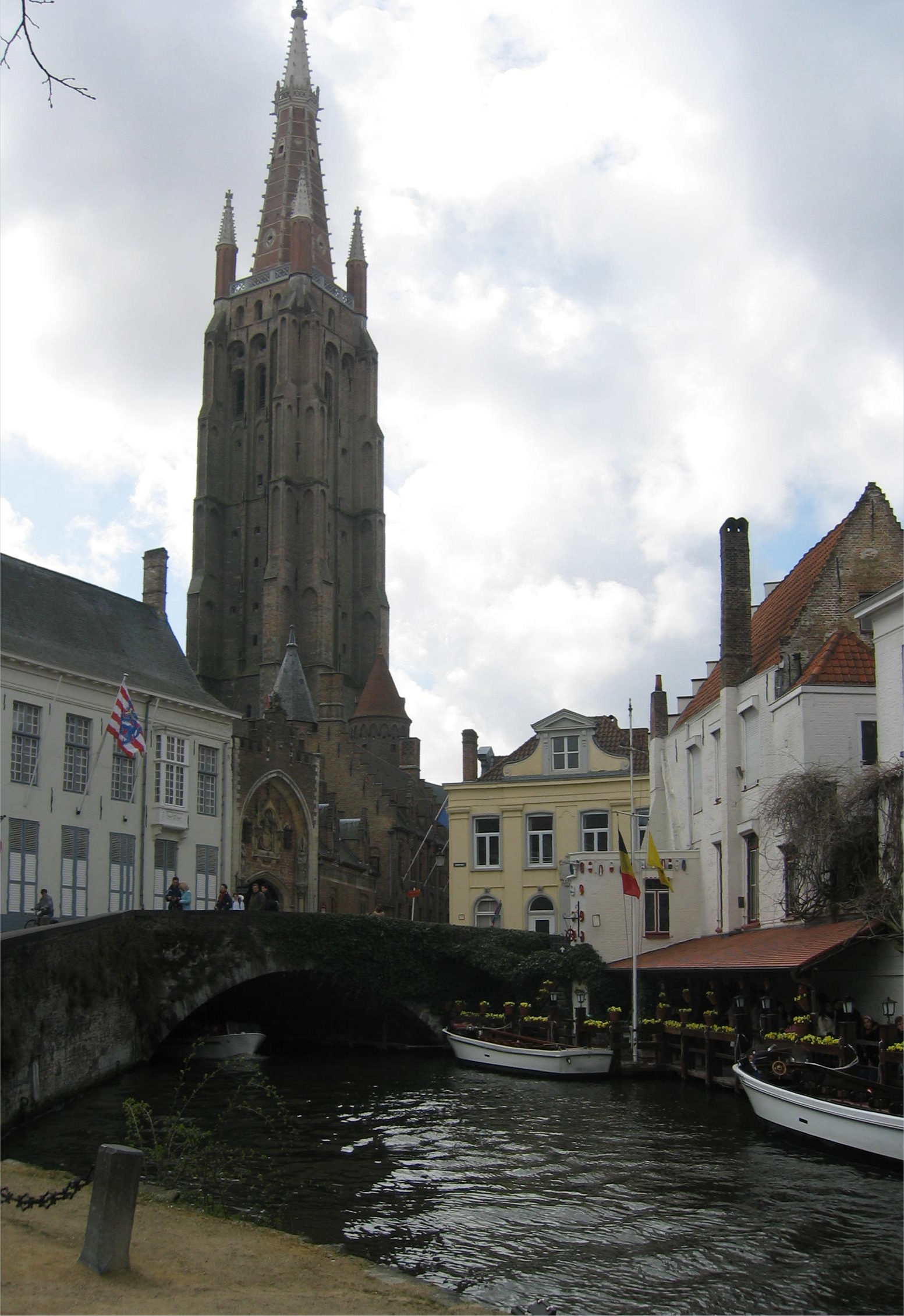
In the heart of Bruges, Belgium, the Gruuthusebrug stands as a testament to the city’s medieval past and architectural splendor. This iconic stone bridge, named for the influential Gruuthuse family—who once held a monopoly on “gruut,” the traditional herb mixture essential for brewing—serves as both a literal and symbolic gateway to Bruges’ golden age. Spanning the Dijver canal, the bridge offers picturesque views of the adjacent Gruuthuse Palace and the soaring Church of Our Lady, two pillars of Bruges’ cultural and historical landscape. Gruuthusebrug is accessible free of charge, at any time of day or year, making it an inviting destination for spontaneous exploration, reflective walks, and memorable photography. This guide provides an in-depth look at Gruuthusebrug’s history, architecture, visitor information, and its relationship to neighboring landmarks, including the renowned Gruuthusemuseum and the Church of Our Lady. Whether you're a history buff, art lover, or casual traveler, this resource will help you make the most of your Bruges experience.
For the latest visitor details, consult the Visit Bruges website and Musea Brugge.
Gruuthusebrug: History and Architectural Significance
A Bridge Through Bruges' Golden Age
The Gruuthuse Family and Medieval Bruges
Gruuthusebrug’s legacy is inseparable from the Gruuthuse family, whose fortune and status were linked to their monopoly over “gruut” in medieval Bruges. As Bruges flourished as a trade center in the 13th and 14th centuries, the city’s canals—including the one Gruuthusebrug spans—were vital arteries for commerce and daily life (Most Historic Buildings and Sites in Bruges). The bridge’s proximity to the Gruuthuse Palace and Church of Our Lady highlights its role as a connector between the city's religious, civic, and aristocratic centers.
The Evolution of Gruuthusebrug
The current stone bridge likely dates to the 15th or 16th century, a period marked by Bruges’ gradual decline as trade routes shifted. Despite changes, Gruuthusebrug retained its importance as a social and cultural landmark, adapting to the city’s evolving needs over the centuries (20 Historical Sites to Visit in Bruges).
Architectural Features and Preservation
Design and Construction
Built from local sandstone, Gruuthusebrug exemplifies late medieval Flemish bridge design. Its single-arch structure accommodates both the passage of boats and leisurely pedestrian crossings, with low, solid parapets that provide unimpeded canal views. The bridge’s modest dimensions suit Bruges’ pedestrian-focused city center, encouraging a relaxed exploration of its surroundings.
Integration with Historic Landmarks
Gruuthusebrug seamlessly links the Gruuthuse Palace—renowned for its ornate façade and turrets—and the Church of Our Lady, celebrated for its record-setting brick tower and artistic treasures (Most Historic Buildings and Sites in Bruges). The interplay of water, stone, and gothic architecture creates idyllic vistas that have inspired artists and photographers for centuries.
Preservation Efforts
As part of Bruges’ UNESCO World Heritage status, Gruuthusebrug has benefited from careful restoration and preservation, ensuring its continued structural integrity and historical authenticity (Travel Guide to Bruges). Restoration projects prioritize original materials and design elements, allowing modern visitors to experience the bridge much as it was centuries ago.
Practical Visitor Information
Visiting Hours and Tickets
- Access: Gruuthusebrug is open 24/7, year-round, and is free to visit.
- No Ticket Required: There are no entrance fees; simply stroll across and enjoy the views.
Guided Tours and Events
Guided walking tours of Bruges often include Gruuthusebrug, offering historical context and architectural insights. Seasonal city events sometimes feature activities near the bridge.
Accessibility
While the bridge’s cobbled surface is slightly uneven and may present challenges for visitors with limited mobility, the approaches are relatively gentle. The surrounding city center is mostly flat, with alternative accessible routes available (Gruuthusemuseum Accessibility).
Nearby Attractions
- Gruuthusemuseum: Medieval art and artifacts in the adjacent Gruuthuse Palace.
- Church of Our Lady: Home to Michelangelo’s Madonna and Child.
- Markt and Burg Squares: Central hubs for shopping, dining, and sightseeing.
For detailed planning, see the official Bruges tourism website.
Preservation Etiquette
To help preserve this historic site:
- Avoid littering or climbing on the structure.
- Be considerate of other visitors, especially during busy times.
- Photography is encouraged, but use of tripods may be restricted during peak hours.
Architectural Details
- Material: Local sandstone
- Design: Single-span arch, late medieval style
- Parapets: Low, robust stone
- Scale: Pedestrian-sized, with restrained ornamentation that harmonizes with the surrounding Gothic and Renaissance elements
Lighting and Atmosphere
Subtle nighttime lighting enhances the bridge’s contours and the canal’s reflections, creating a romantic ambiance that changes with the seasons.
Visual Suggestions
For striking photos:
- Capture the bridge at sunrise or sunset for soft, golden light.
- Frame the Church of Our Lady’s spire and Gruuthuse Palace in your shots.
- Explore virtual tours and interactive maps on the official tourism site.
Frequently Asked Questions (FAQ)
Q: What are Gruuthusebrug’s visiting hours?
A: Open 24/7, year-round.
Q: Is there an entrance fee?
A: No, access is free.
Q: Are guided tours available?
A: Yes, many walking tours feature Gruuthusebrug.
Q: Is the bridge wheelchair-accessible?
A: Accessibility is limited due to the cobbled surface.
Q: Can I take photos on the bridge?
A: Yes, photography is welcome.
Discover the Gruuthusemuseum: A Premier Historical Site
Historical Background
The Gruuthusemuseum resides in the former palace of the Gruuthuse family, whose wealth stemmed from their medieval brewing monopoly (Wikipedia; Musea Brugge). The building evolved from a 13th-century storage facility to a lavish residence, later restored in neo-Gothic style. Notable is a private oratory connecting directly to the Church of Our Lady.
Museum Highlights
The collection guides visitors through Bruges’ Burgundian golden age, the changing domestic life of the 17th–18th centuries, and the 19th-century neo-Gothic revival (Visit Bruges). Highlights include tapestries, stained glass, lace, manuscripts, and Chinese porcelain. The oratory offers a unique view into the church’s Gothic chancel (Lonely Planet).
Visiting Hours and Tickets
- Hours: Tuesday–Sunday, 9:30 AM – 5:00 PM (closed Mondays)
- Admission: Adults €14; youth up to 25 €12; children under 12 free; combination tickets available (Enchanting Bruges)
Accessibility and Facilities
The museum provides modern amenities and accessible features, though some historic areas may have limited access (Musea Brugge).
Visitor Tips
- Visit early or late in the day for fewer crowds and better light.
- Allocate 1.5–2 hours for a full visit.
- Guided tours or audio guides are recommended.
- Purchase tickets online in advance.
Awards
The Gruuthusemuseum has won awards including the “Portimão Museum Prize – Europe’s Most Welcoming Museum 2021” (Musea Brugge).
The Church of Our Lady: A Gothic Landmark
Historical and Artistic Significance
The Church of Our Lady features a 115-meter brick tower—one of the tallest worldwide (Visit Bruges). Completed in the 13th century, it houses Michelangelo’s Madonna and Child, elaborate tombs, and stunning stained glass (My Global Viewpoint).
Visiting Information
- Hours: Mon–Sat 9:30 AM–5:00 PM; Sun 1:00 PM–5:00 PM
- Tickets: Adults €6; seniors/students €4; children under 12 free (Visit Bruges)
Accessibility
The church is accessible, though nearby cobblestones may present minor challenges (Visit Bruges).
Location, Access, and Visitor Experience
Gruuthusebrug is centrally located near the Gruuthusemuseum and Church of Our Lady. It’s a short walk from the Markt square and easily reached by train or bus (Visit Bruges Practical Info). Bike rentals and parking are widely available.
Scenic Views and Photography
The bridge is a favorite for photographers, especially at sunrise and sunset. Musicians and artists often perform nearby, adding to the atmosphere (Visit Bruges Bridges Guide).
Facilities and Weather
Restrooms are available at the Gruuthusemuseum and throughout the city center. Bruges weather is mild but changeable; bring an umbrella and wear suitable shoes (Visit Bruges Weather Info).
Tips for a Memorable Visit
- Visit during early morning or late evening to avoid crowds.
- Combine your walk with museum and church visits.
- Consider a canal tour for unique views (Get Lost in Wanderlust).
- Respect the tranquil ambiance, especially during quieter hours.
Visuals and Media
View virtual tours and high-quality images on the Visit Bruges Bridges Guide.
Contact and Further Information
- Tourist Offices: Markt 1 (Historium) and Stationsplein 5
- Emergency Services: Dial 112
- Museum Inquiries: +32 50 44 87 43 or [email protected]
- Visit Bruges Practical Info
Discover More
Enjoyed this guide? Download the Audiala app for audio tours of Bruges’ historic sites, follow us on social media for travel inspiration, and explore our other posts to uncover more of Belgium’s hidden gems!
Listen to the full story in the app
Your Personal Curator, in Your Pocket.
Audio guides for 1,100+ cities across 96 countries. History, stories, and local insight — offline ready.
Audiala App
Available on iOS & Android
Join 50k+ Curators
Sources
- verified
- verified
- verified
- verified
- verified
- verified
- verified
- verified
- verified
- verified
- verified
- verified
- verified
- verified
- verified
Last reviewed:


