Introduction
A Belarus travel guide starts with a surprise: this flat, forested country holds medieval castles, 11,000 lakes, and one of Europe’s oldest surviving woodlands.
Belarus does not perform for visitors. That is part of the point. You come for brick fortresses, onion domes, birch forest, Soviet avenues, and a history that keeps changing shape depending on which street you stand on. Minsk gives you the big scale first: broad boulevards, postwar planning, polished metro stations, and a capital that can feel stern until it suddenly opens up over a riverbank or a market stall. Then the map starts to tighten. Brest carries border history in its bones. Grodno and Hrodna pull you west toward Catholic towers and old mercantile streets. Polotsk, first mentioned in 862, reminds you how old this land is.
The strongest case for Belarus is contrast. You can stand in Mir or Nyasvizh among UNESCO-listed castles shaped by noble dynasties, then head north to Vitebsk for Marc Chagall and a softer, river-bound cityscape, or out to Braslav for lake country that feels built for long summer light. Bialowieza brings the primeval forest and European bison; Khatyn strips away any romanticism with a memorial that is quiet, exact, and devastating. Practical reality matters here. Western governments continue to issue serious travel advisories, and visa rules depend heavily on nationality and route. For travelers who do go, Belarus rewards planning, patience, cash in hand, and a taste for places that speak in a lower voice.
A History Told Through Its Eras
Fur, river mist, and the dangerous court of Polotsk
River Principalities, 6th-13th centuries
Morning comes up slowly over the Western Dvina: wet reeds, trading boats nosing the bank, wax and fur packed beside iron and salt. Long before anyone spoke of Belarus as a state, these river routes tied the lands around Polotsk to Kyiv, Novgorod, and Constantinople. Trade made the towns rich. Marriage politics made them lethal.
Ce que l'on ignore souvent, c'est que the first great drama here begins not with a battle, but with an insult. In the late 10th century, Rogneda of Polotsk is said to have refused Vladimir of Novgorod; he answered by attacking Polotsk, killing her father Rogvolod and her brothers, and forcing her into marriage. A chronicle can be dry on the page. In a palace chamber, it is a family massacre.
By the 11th century, Polotsk had become one of the strongest eastern Slavic centers, and its rulers behaved like people who knew it. Vseslav, later nicknamed "the Seer," raided, bargained, vanished into legend, and left such a mark that chronicles wrapped him in rumor as much as fact. When you stand in Polotsk today, that is the first secret of the place: power here never arrived politely.
Then came faith, books, and stone. Euphrosyne of Polotsk, princess turned abbess, ordered churches, sponsored manuscripts, and gave the region one of its most enduring sacred objects, the jeweled Cross of Saint Euphrosyne in 1161. A court of warriors had produced a woman who understood that memory can outlast conquest. That idea would carry Belarus into the next age, when local princes had to make terms with a much larger Baltic power.
Rogneda of Polotsk is the human shock at the center of this era: a princess turned into a dynastic prize, then remembered precisely because she refused to behave like one.
The Battle on the Nemiga River in 1067 left such a scar that the river entered East Slavic literature as a place where "heads were laid like sheaves."
When Lithuanian dukes, Ruthenian scribes, and Radziwill princes remade the map
Grand Duchy and Commonwealth, 13th century-1795
A new order entered from the northwest after the Mongol blow to Kyiv shattered the old balance. Lithuanian rulers expanded into these lands not as vandals burning everything before them, but as practical dynasts who understood the value of existing towns, Orthodox elites, and Ruthenian legal culture. The result was not a clean replacement. It was a layered court world, half sword, half paperwork.
The palaces of Mir and Nyasvizh tell that story better than any slogan could. In those halls, magnate families such as the Radziwills collected titles, estates, chapels, debts, clients, and enemies with equal appetite. One marriage might secure a province. One quarrel could poison a generation.
Ce que l'on ignore souvent, c'est que one of the great state languages of this polity was a Ruthenian chancery language rooted in the region's eastern Slavic speech, not Polish alone and certainly not some modern national script. Law mattered here. The Statutes of the Grand Duchy of Lithuania, especially the great codification of 1588 associated with Lev Sapieha, tried to turn a sprawling aristocratic realm into something legible.
And then came the union with Poland, courtly brilliance, and the dangerous glamour of a noble republic. This was the age of printing too: Francysk Skaryna, born in Polotsk, brought East Slavic texts into print in the early 16th century and gave the region a humanist face. Yet splendor has a bill. By the late 18th century, a state of magnificent residences and jealous liberties had become too weak to defend itself, and neighboring empires were already reaching for the silver.
Lev Sapieha stands at the center of this chapter: a grand chancellor who knew that a realm survives not only by cavalry, but by the words in its law books.
The Radziwill court at Nyasvizh maintained its own theater, orchestra, and arsenal, which tells you nearly everything about magnate ambition in one sentence.
Empire arrives in boots, but memory keeps speaking
Partitions and National Awakening, 1772-1917
The partitions of the Polish-Lithuanian Commonwealth did not fall from the sky. They arrived as marching orders, decrees, censuses, new uniforms, and a new imperial center in Saint Petersburg deciding what these lands should be called. Noble estates remained, churches changed hands, and old loyalties learned to hide behind correct paperwork.
The local elite had choices, none of them clean. Tadeusz Kosciuszko, born in what is now Belarus, became the gentleman rebel of 1794, a man of measured manners and reckless courage who tried to save a collapsing political world. He failed. Empires are not sentimental.
Ce que l'on ignore souvent, c'est que the 19th century in Belarus is full of printers, priests, schoolrooms, police files, and whispered language as much as it is full of battles. Kastus Kalinowski, one of the fiercest voices of the 1863 uprising against Russian rule, wrote to peasants in their own tongue and understood something modern before many others did: if you want a people, you must address them as one. The tsar hanged him in Vilnius in 1864. His words outlived the rope.
Meanwhile, the old capitals of feeling did not disappear. Polotsk kept its sacred aura. Minsk grew as an administrative and commercial center. Vitebsk, still provincial on the map, gathered the textures of Jewish, Russian, Polish, and Belarusian life that would later feed Marc Chagall's imagination. By the eve of the First World War, Belarus was no longer merely a borderland administered by others. It had become a place where memory, language, and social anger were beginning to ask for a political form.
Kastus Kalinowski matters because he did not speak to Belarus as a museum piece, but as a people capable of action.
Kalinowski's clandestine newspaper, "Muzyckaja Prauda," spoke to peasants directly, which was precisely why the authorities feared it more than salon rhetoric.
A republic proclaimed, a country burned, a Soviet state built from ash
Revolution, Occupation, and Soviet Belarus, 1917-1991
In 1918, amid the wreckage of empires and the noise of armies moving in every direction, the Belarusian People's Republic was proclaimed. It was brief, fragile, and outmatched. But even a short-lived state can leave a long shadow, because once a nation has been named aloud, it becomes harder to tell its people they do not exist.
Then the Bolsheviks made their own map. Soviet Belarus emerged through civil war, border changes, and ideological discipline, and Minsk was rebuilt as a republican capital of broad avenues and official certainties. The Soviet project offered schools, industry, and a state frame. It also demanded obedience and taught citizens to live with silence.
Nothing, however, marks Belarus more deeply than the German occupation of 1941-1944. Village after village was burned; Jewish communities were annihilated; partisans fought from forests that had once sheltered traders and monks. Khatyn, now one of the country's starkest memorial sites, stands not for one isolated atrocity but for hundreds of destroyed villages. You hear the bells there. They do not sound like metaphor.
After 1945, Belarus was rebuilt with almost frightening determination. Factories rose, housing blocks multiplied, and the Belarusian Soviet Socialist Republic even held a seat at the United Nations, a strange honor for a republic that was not sovereign in the normal sense. Then came another wound without an army: Chernobyl in 1986. Much of the radioactive fallout fell on Belarusian land. By the time the Soviet Union began to crack, the country had endured enough catastrophe to make independence in 1991 feel less like a triumphal parade than a hard, wary inheritance.
This era has no single marble hero, but the partisan, the ghetto child, the village widow, and the Chernobyl evacuee together form the real Belarusian monument.
Belarus lost roughly a quarter of its population during the Second World War, which is one reason Soviet war memorials here feel less decorative and more like family archives in stone.
Independence without ease, and the voices that refused to lower themselves
Independent Belarus, 1991-present
The flag changed, the passports changed, the vocabulary of statehood changed. Yet much else did not. Independent Belarus inherited Soviet factories, Soviet streetscapes, Soviet habits of administration, and a society that knew how quickly history can punish public enthusiasm.
Alexander Lukashenko's election in 1994 began one of the longest personal rules in Europe. Stability was the promise; control was the method. Minsk became the showcase capital of that arrangement, unusually orderly, often severe, while the deeper argument over language, memory, and political freedom never went away.
Ce que l'on ignore souvent, c'est que Belarus has produced some of the most intimate writing about violence and truth in Europe. Svetlana Alexievich, Nobel laureate and one of the country's fiercest moral witnesses, built books from voices others preferred not to hear: soldiers, mothers, survivors, ordinary people crushed by grand systems. She writes like someone opening a drawer the state forgot to lock.
The protests of 2020 made the buried argument visible to the whole world. Women in white dresses, factory workers, students, pensioners, people who had spent years speaking carefully suddenly filled the streets. The repression that followed was brutal and familiar. But history had shifted again: the question was no longer whether Belarus had a civic voice of its own, but what price its citizens would keep paying to use it. That is where the story stands now, and it is why every earlier chapter still feels present.
Svetlana Alexievich gave Belarus one of its clearest mirrors by showing that history is not made only by rulers, but by the people who carry their consequences home.
The giant postwar avenues of Minsk were designed to project certainty, yet in 2020 those same spaces became the stage on which uncertainty finally spoke back.
The Cultural Soul
A Country Speaks Sideways
Belarus does not hand you its language in one piece. In Minsk, Russian often runs the table, the tram, the pharmacy queue, while Belarusian arrives like a silver spoon brought out for reasons of memory, pride, or grief. Two official tongues, one daily reality, and between them the mixed speech called Trasianka, which many people know, many people hear, and few people romanticize.
This makes conversation interesting in the best way. A person may answer you in Russian, switch to Belarusian for a proverb, then soften the whole exchange with kali laska, a phrase that feels less like etiquette than like a door opening inward. Language here is not a badge. It is a weather system.
Listen in Polotsk or Vitebsk and you begin to hear what history did to vowels. Borders moved, empires insisted, schools corrected, families remembered. The result is a speech culture in which what someone chooses to say can matter less than which word they rescue, and from where.
Potatoes, Cream, and Other Forms of Devotion
Belarusian food begins with a peasant fact and ends as ceremony. The potato is called the second bread, which sounds comic until the first plate of draniki arrives: hot, ragged, blistered at the edges, with sour cream cooling the burn by half a second and no more. Hunger here is treated seriously. So is pleasure.
The table likes starch, smoke, rye, dill, pork fat, mushroom, beet. It likes soups that taste of field work and January, dumplings that ask for silence, and sauces thick enough to cancel your plans for the afternoon. Machanka is not merely eaten. It receives pancakes and excuses.
You understand Belarus quickly through a bowl. Someone feeds you more than you requested. Someone else adds black bread without asking. Then tea appears, then preserves, then another opinion about the right way to make babka, and the whole country reveals a private theorem: thrift and generosity are not enemies, they are twins who learned to share one coat.
Reserve with a Spoon in Its Hand
Belarusian politeness has very little interest in sparkle. People do not rush to fill silence, and thank heaven for that. A first meeting can feel formal, almost frosted, until you notice the real signs of welcome: the chair shifted closer to the stove, the plate refilled, the exact instruction on which bus stop not to miss in Brest.
Forms matter. The respectful you matters. Volume matters. Boasting rarely flatters its owner. A person who speaks quietly may still be delivering judgment with surgical accuracy, which is one reason Belarus can feel so civilized and so dangerous to fools.
Hospitality prefers action to declaration. In Grodno or Hrodna, depending on whose alphabet is guiding the day, you may hear fewer affectionate words than in noisier countries and receive more actual care. A bag of apples from a dacha. Pickles decanted into proper glass. Advice given once, precisely, as if your survival depended on grammar.
Ink Kept Under the Floorboards
Belarusian literature has the smell of paper stored against bad times. Francysk Skaryna printed books in the early 16th century, which is one way of saying that Belarus entered European letters not as a pupil but as a printer. The gesture matters. To print is to insist that a language deserves furniture.
Later writers inherited a less comfortable task. They wrote under empire, under censorship, under occupation, under the long habit of someone else naming the room. This is why so much Belarusian writing carries moral pressure without losing delicacy. Svetlana Alexievich, born in what is now western Ukraine and raised in Belarus, built whole cathedrals from voices. She understood that testimony can cut deeper than rhetoric.
Read Belarus and you meet a country suspicious of slogans but attached to exact speech. A diary entry, a witness statement, a village memory, a poem learned by heart in school and then understood properly twenty years later: these are not small forms. In Belarus, literature often behaves like contraband and sacrament at once.
Domes over Concrete, Lace over Brick
Belarusian architecture is what happens when catastrophe acquires building permits. War erased too much. Empire rearranged too much. The Soviet period then covered immense parts of the country in apartment blocks, administrative slabs, heroic avenues, and the stubborn elegance of utility. Minsk knows this face well. It can look severe until late light strikes the facades and turns doctrine into theater.
Then the older layers interrupt. In Mir, a fortress of brick and white ornament stands with the confidence of something that survived because history never finished its meal. In Nyasvizh, aristocratic symmetry and parkland composure suggest Europe in silk gloves, though the century outside kept bringing mud on its boots. Belarus does contrast without raising its voice.
The churches are the real seducers. Onion domes, Baroque fronts, Catholic towers near Orthodox cupolas, a skyline arguing with itself in public and somehow producing harmony. In Polotsk, where memory sits very close to the surface, architecture feels less like style than sediment: each wall another answer to the same rude question of how to remain.
Candles in a Draft
Religion in Belarus is rarely theatrical, even when the churches shine. Orthodoxy shapes much of the country, Catholicism marks the west with equal persistence, and the old Jewish world, though shattered, still haunts streets and cemeteries with unbearable precision. Faith here has lived beside invasion too long to confuse itself with comfort.
Step into a church and the temperature changes first. Wax, stone, old timber, a scarf being adjusted, the click of someone crossing themselves with total concentration. The liturgy can feel less performed than inhabited. You are not being invited to admire belief. You are watching people use it.
That seriousness gives Belarusian religion its power. It does not ask to charm you. It asks whether you understand ritual as shelter. In Khatyn, where memory becomes almost physically hard to bear, even the secular memorial landscape borrows the grammar of mourning from religion: repetition, silence, names, bells, the refusal to let the dead dissolve into statistics.
Songs That Keep Their Coat On
Belarusian music does not always seduce at first hearing. Folk songs can sound narrow, nasal, almost severe, until the polyphony opens and the room changes shape. Then you hear what the village knew all along: restraint can carry enormous feeling, and a melody does not need to smile to stay with you for years.
The instruments tell their own story. Fiddle, cimbalom, accordion, voices braided rather than displayed. Dance comes in circles and lines, not for spectacle but for use, like bread. Even modern Belarusian music often keeps this inherited discipline, a refusal to overstate the emotion when the emotion is already present in the grain of the sound.
What survives in the ear is not grandeur but persistence. A tune from a harvest rite. A wartime song learned from a grandmother. A pop refrain carrying Belarusian words in a city where Russian fills the metro announcements. Music here behaves like a hidden seam in cloth. Pull it, and the whole garment of the country begins to move.
What Makes Belarus Unmissable
Castle Country
Mir and Nyasvizh hold the grandest architectural argument for Belarus: fortified residences shaped by war, dynastic ambition, and long Polish-Lithuanian afterlives. They look formal from a distance, then full of human intrigue once you step inside.
Primeval Forest
Bialowieza leads into Belovezhskaya Pushcha, the last great lowland forest left in Europe. This is where Belarus feels oldest: oak, marsh, dark trails, and European bison moving through the trees.
Hard History
Khatyn, Brest Fortress, and the layered streets of Minsk show how deeply the 20th century marked this country. Belarusian history is not packaged into easy uplift; it is presented in stone, archives, and absences.
Lakes And Marshes
Braslav and the wider northern lake district offer a side of Belarus many travelers miss: glacial lakes, pine edges, and long summer evenings. Farther south, Polesie turns into wetlands, floodplains, and bird-rich silence.
Cities With Texture
Vitebsk brings Chagall, church spires, and river views; Grodno and Hrodna lean Central European; Polotsk reaches back to the first chronicles. Even Minsk, often reduced to geopolitics, has real architectural drama once you slow down.
Potato, Rye, Dill
Belarusian food is built for weather and appetite: draniki, machanka, black bread, sour cream, mushrooms, beet soup. It is filling, regional, and far better than travelers expect from the stereotype.
Cities
Cities in Belarus
Minsk
"A Soviet capital rebuilt from rubble after 1944 with such ideological ambition that its boulevards, opera house, and metro stations function as an accidental open-air museum of Stalinist classicism."
Brest
"The fortress where Soviet soldiers held out for weeks after the German invasion began in June 1941 still carries the bullet scars, and the memorial flame has not been extinguished since 1957."
Grodno
"One of the few Belarusian cities to survive World War II largely intact, leaving behind a skyline of Catholic spires, a Renaissance castle, and a street grid that predates the Russian Empire."
Vitebsk
"Marc Chagall was born here in 1887 and painted its wooden houses, its bridge over the Dvina, and its Jewish quarter into a floating mythology that outlasted the city those paintings depicted."
Polotsk
"The oldest recorded city in Belarus, first mentioned in 862, where a medieval principality powerful enough to rival Kyiv and Novgorod left behind the 12th-century Saint Sophia Cathedral as its only standing argument."
Mir
"Mir Castle, a 16th-century Gothic-Renaissance fortress reflected in a still moat, was owned by the Radziwiłł dynasty, survived Napoleonic troops, and now sits in a village of 2,000 people as a UNESCO World Heritage Site."
Nyasvizh
"The Radziwiłł family burial vaults beneath Nyasvizh Castle hold 72 sarcophagi spanning four centuries of one of Europe's most powerful noble dynasties, and the baroque town they built around it is still largely theirs in"
Hrodna
"Paired here with Grodno because Belarusian-speakers know it as Hrodna — the name itself signals whose city this is and why the question of language in Belarus is never merely administrative."
Mahilyow
"A Dnieper river city whose 17th-century town hall survived Soviet replanning and whose Jewish history, once one of the largest communities in the region, is told almost entirely through absence."
Bialowieza
"Białowieża Forest — Białavieža Pushcha in Belarusian — is Europe's last primeval lowland forest, where European bison were hunted to extinction in the wild and then, improbably, brought back from twelve individuals."
Braslav
"The Braslav Lakes district in the far northwest packs 30 glacial lakes into a compact terrain of pine ridges and sandy shores that Belarusians treat as their own private archipelago."
Khatyn
"Khatyn is not Katyn — a confusion worth correcting immediately — but the site of a 1943 Nazi massacre of 149 villagers, now a memorial where 186 bells ring for 186 Belarusian villages burned with their inhabitants."
Regions
Minsk
Central Belarus
This is the administrative and transport core of the country, where broad Stalin-era avenues, late-Soviet housing districts, and polished metro stations create the first visual grammar of Belarus. Minsk gives the scale, while Khatyn, Mir, and Nyasvizh show how quickly the story turns from 20th-century trauma to Radziwill grandeur and back again.
Brest
Western Borderlands
Western Belarus sits closer to Poland in mood, architecture, and Catholic memory than the capital does. Brest is the obvious anchor, but the real pattern is movement between fortress history, border formalities, and the old woodland mass of Bialowieza, where the forest feels older than the states around it.
Hrodna
Neman West
Hrodna is the Belarusian city that most openly shows the Grand Duchy of Lithuania and the old Polish-Lithuanian Commonwealth under its skin. Churches, merchant facades, and hilltop views replace the monumental Soviet scale of Minsk, and the city rewards walking more than checklist sightseeing.
Vitebsk
Northern Lake District
The north is the most spacious part of Belarus: rivers, lakes, long roads through pine forest, and towns that carry very old names without much ceremony. Vitebsk brings the Chagall connection and festival culture, Polotsk supplies dynastic depth, and Braslav is where the country starts feeling more horizontal than urban.
Mahilyow
Eastern Dnieper Belt
Eastern Belarus is flatter, quieter, and less obviously staged for visitors. Mahilyow works as the regional key because it still feels lived-in rather than packaged, with riverfront views, Orthodox landmarks, and a stronger sense of industrial and provincial continuity than you get in the west.
Suggested Itineraries
3 days
3 Days: Minsk, Mir and Nyasvizh
This is the compact central Belarus route: Soviet-era boulevards and metro stations in Minsk, then two of the country's strongest aristocratic set pieces in Mir and Nyasvizh. It works well if you want one city base, short transfers, and enough time to add Khatyn as a sobering half-day detour rather than rushing through it.
Best for: first-timers with limited time
7 days
7 Days: Brest to Hrodna Along the Western Edge
Western Belarus feels different from the capital. Brest brings fortress history and a hard border-town mood, Bialowieza adds old forest and bison country, and Hrodna ends the week with Catholic spires, merchant streets, and the Polish-Lithuanian pull that still shapes the city's texture.
Best for: history-focused travelers and overlanders
10 days
10 Days: Vitebsk, Polotsk and the Braslav Lakes
Northern Belarus gives you the oldest urban layers and the most open landscape. Start in Vitebsk for art and river views, move to Polotsk for early East Slavic history, then slow down in Braslav where the pace finally drops to forests, water, and long summer light.
Best for: art lovers, slow travelers, and summer trips
14 days
14 Days: Mahilyow Across the Dnieper to Minsk
This route is for travelers who want the quieter east before the capital. Mahilyow shows a less polished, more workaday Belarus on the Dnieper, and finishing in Minsk gives you the broad avenues, museums, and transport links to tie the country together without having every day feel like the same city in a new hotel.
Best for: repeat visitors and travelers interested in contemporary Belarus
Notable Figures
Rogneda of Polotsk
c. 960-1002 · Princess of PolotskShe enters Belarusian memory in a blaze of dynastic violence: a princess whose reported refusal of Vladimir of Novgorod helped trigger the destruction of her father's court. That is why she still matters. Rogneda turns the first chapter of Belarusian history into something painfully human rather than merely genealogical.
Euphrosyne of Polotsk
c. 1110-1173 · Abbess, patron, saintEuphrosyne understood that books, relics, and churches could outlast princes. In Polotsk she sponsored monasteries and manuscripts, and her jeweled cross became one of the country's most cherished sacred symbols, part devotion, part state memory.
Francysk Skaryna
c. 1490-c. 1551 · Printer and humanistBorn in Polotsk, Skaryna brought East Slavic texts into print with the confidence of a Renaissance man who did not think his native culture belonged at the margins. He gave Belarus not just books, but a different posture: learned, urban, and very much part of Europe.
Lev Sapieha
1557-1633 · Statesman and grand chancellorSapieha is the kind of figure Stephane Bern would savor: elegant, ambitious, and fully aware that power likes good tailoring and better legal language. He was a chief architect of the 1588 Statute of the Grand Duchy of Lithuania, one of the most sophisticated law codes in the region.
Tadeusz Kosciuszko
1746-1817 · Military leader and revolutionaryKosciuszko belongs to several nations at once, which is often the fate of people born in borderlands with long memories. His Belarusian connection is not decorative: he came from this soil, and the estate near Brest still anchors the story of a man who fought empires on two continents.
Kastus Kalinowski
1838-1864 · Writer and insurgentKalinowski gave rebellion a local voice. Instead of speaking only to nobles, he wrote for peasants and treated Belarusian speech as a political instrument, which is why his execution by the Russian authorities made him a martyr of national awakening rather than a footnote to a failed revolt.
Marc Chagall
1887-1985 · PainterChagall carried Vitebsk with him all his life: wooden houses, market animals, Jewish ritual, provincial skies tilted toward dream. His canvases are not travel posters for Belarus. They are what happens when childhood refuses to stay in the past.
Svetlana Alexievich
born 1948 · Writer and Nobel laureateAlexievich did not write court history, and that is exactly why she is indispensable. She turned Belarus into a chorus of witnesses, gathering voices from war, Afghanistan, Chernobyl, and the Soviet collapse until the official version of events sounded thin beside the lived one.
Photo Gallery
Explore Belarus in Pictures
Statue of historical figure in boat at Gomel park, Belarus under a dramatic sky.
Photo by Siarhei Nester on Pexels · Pexels License
Scenic view of the historic Nesvizh Castle reflecting in water on a cloudy day.
Photo by Sun452 on Pexels · Pexels License
Capture of the historic Mir Castle in Belarus, a UNESCO World Heritage site, with clear skies.
Photo by Anton 🦋 Nekhaychik_PHTGRPH on Pexels · Pexels License
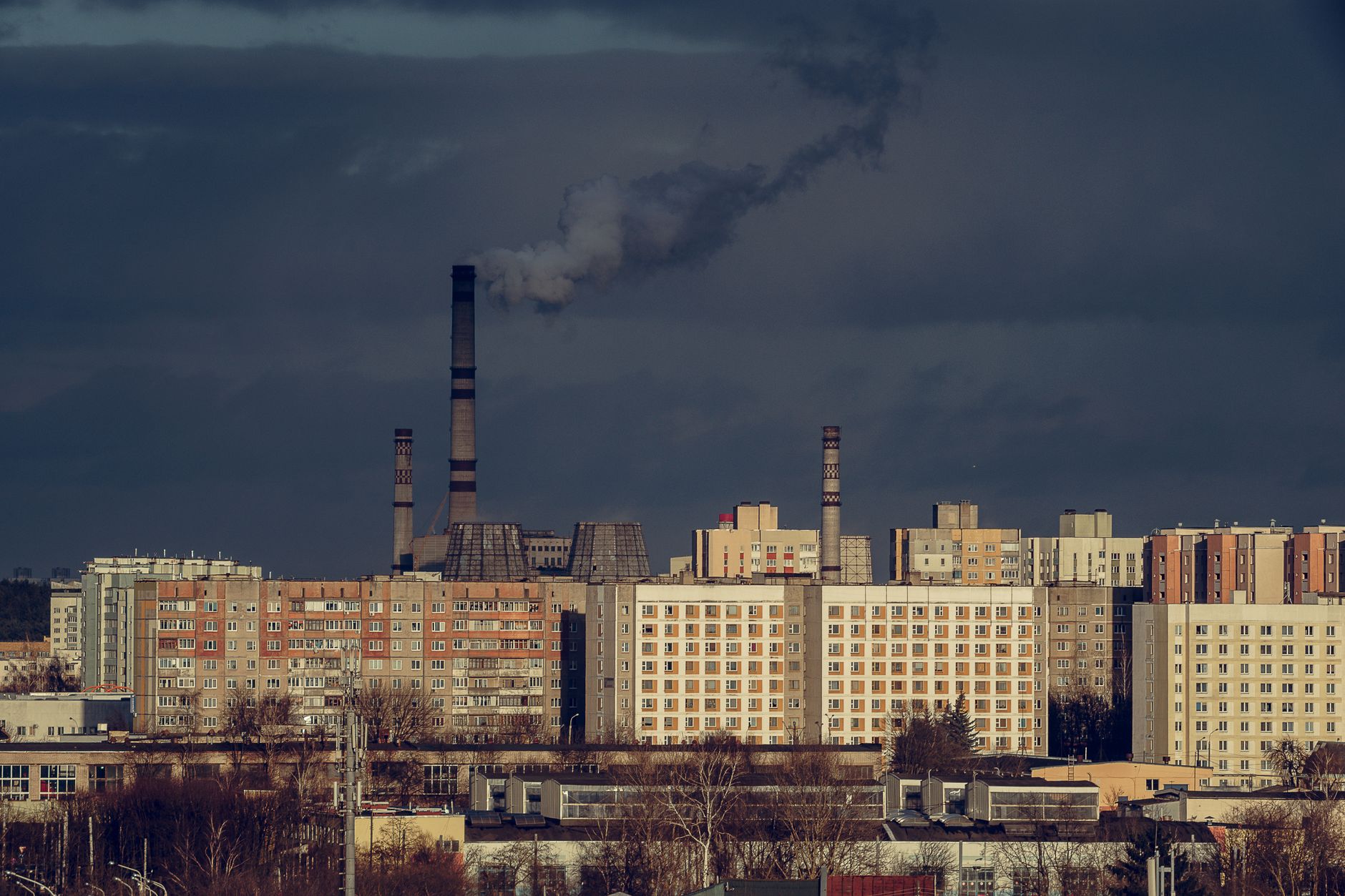
Aerial view of Minsk's urban skyline featuring industrial buildings and smokestacks.
Photo by Siarhei Nester on Pexels · Pexels License
Captivating twilight cityscape of Minsk with a full moon illuminating the skyline, creating a serene urban scene.
Photo by Siarhei Nester on Pexels · Pexels License
A stunning city skyline reflects in a river during sunset, capturing urban tranquility and beauty.
Photo by Alexander Fadeev on Pexels · Pexels License
A breathtaking view of a Belarusian field under a beautiful twilight sky.
Photo by Siarhei Nester on Pexels · Pexels License
A tranquil aerial shot of a green landscape with a winding river, surrounded by trees.
Photo by Siarhei Nester on Pexels · Pexels License
Beautiful birch forest in early autumn in Vitebsk, Belarus.
Photo by Artem Balashevsky on Pexels · Pexels License
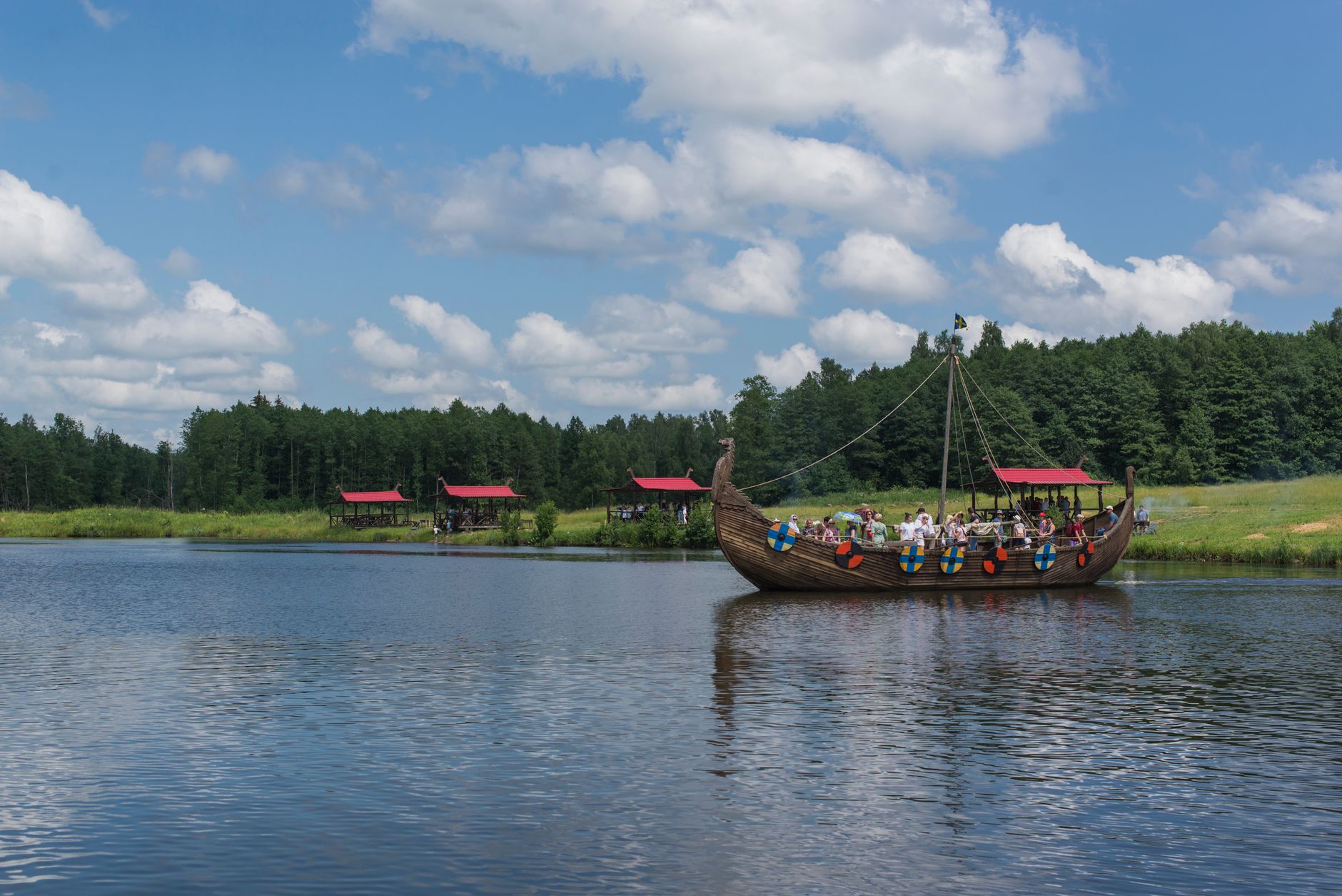
A Viking-style ship sailing on a tranquil lake with people enjoying the scenic summer view in Belarus.
Photo by Anastasia Lashkevich on Pexels · Pexels License
Vibrant street art mural depicting an elderly musician on a Minsk building wall.
Photo by Alexander Fadeev on Pexels · Pexels License
A close-up of the Belarusian flag showing its vibrant colors and intricate patterns.
Photo by Engin Akyurt on Pexels · Pexels License
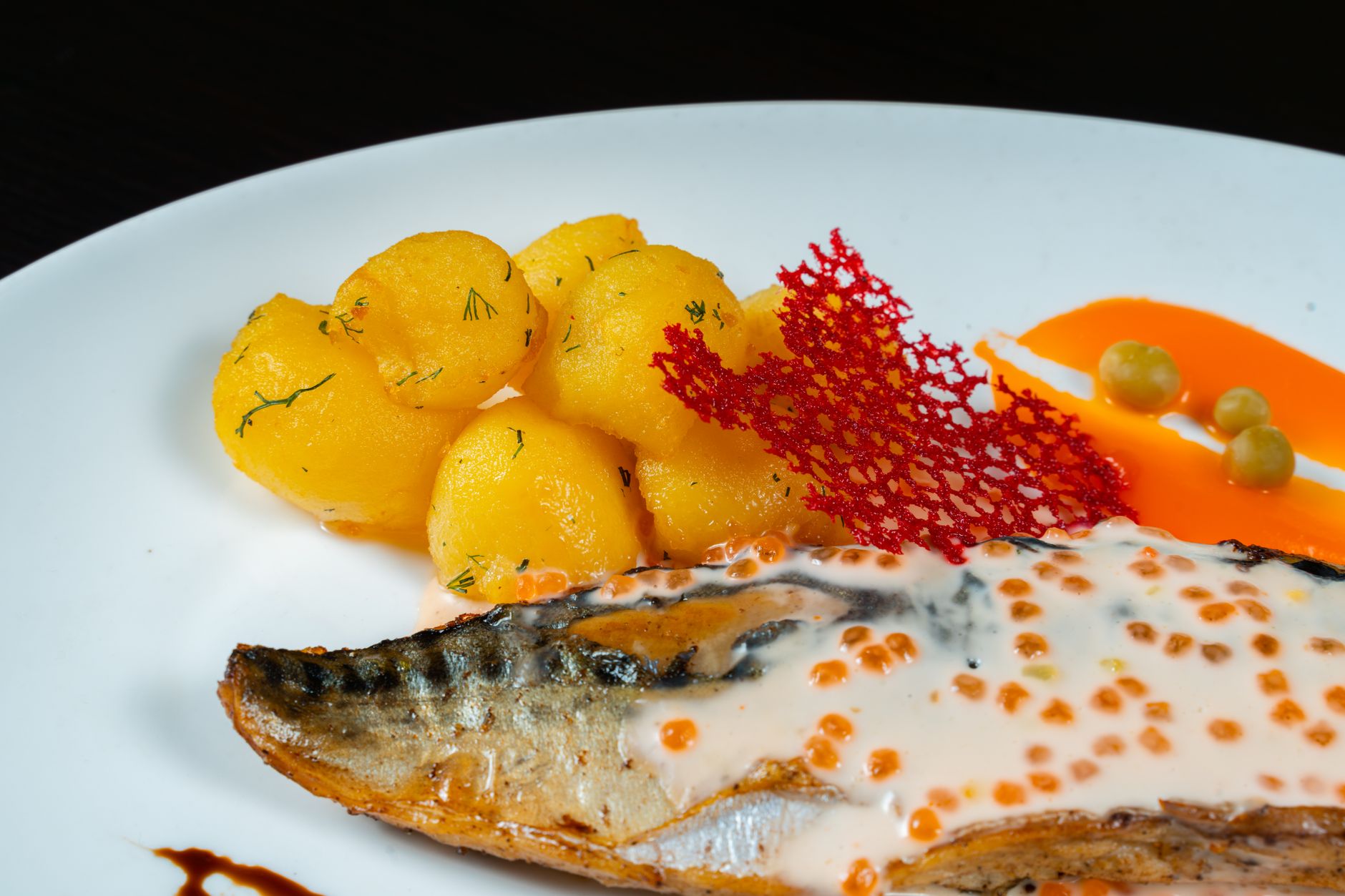
Close-up of gourmet fish dish with creamy sauce, potatoes, and red garnish.
Photo by Collab Media on Pexels · Pexels License
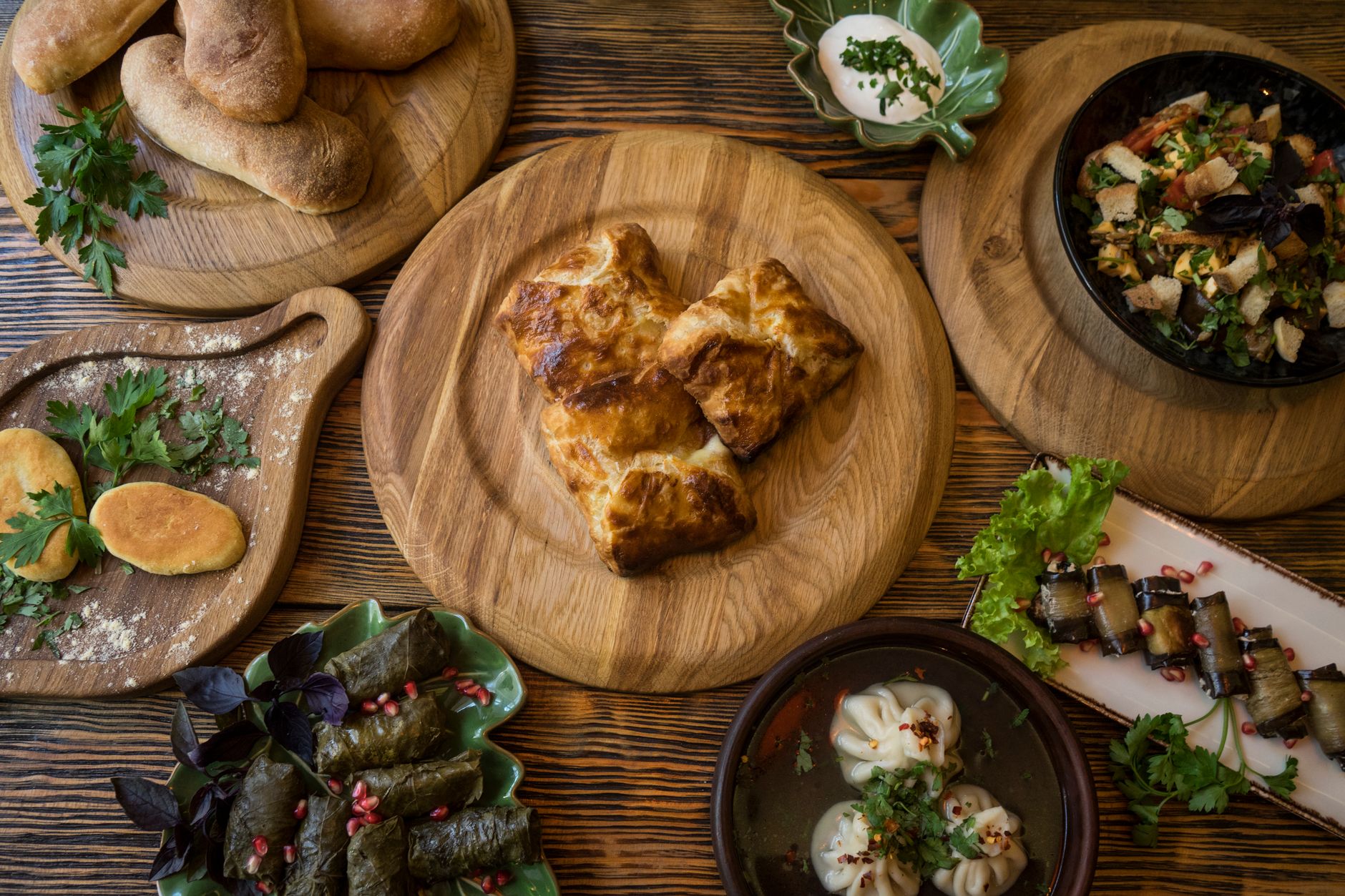
A variety of traditional Georgian dishes displayed on a wooden table with fresh herbs.
Photo by Галина Ласаева on Pexels · Pexels License
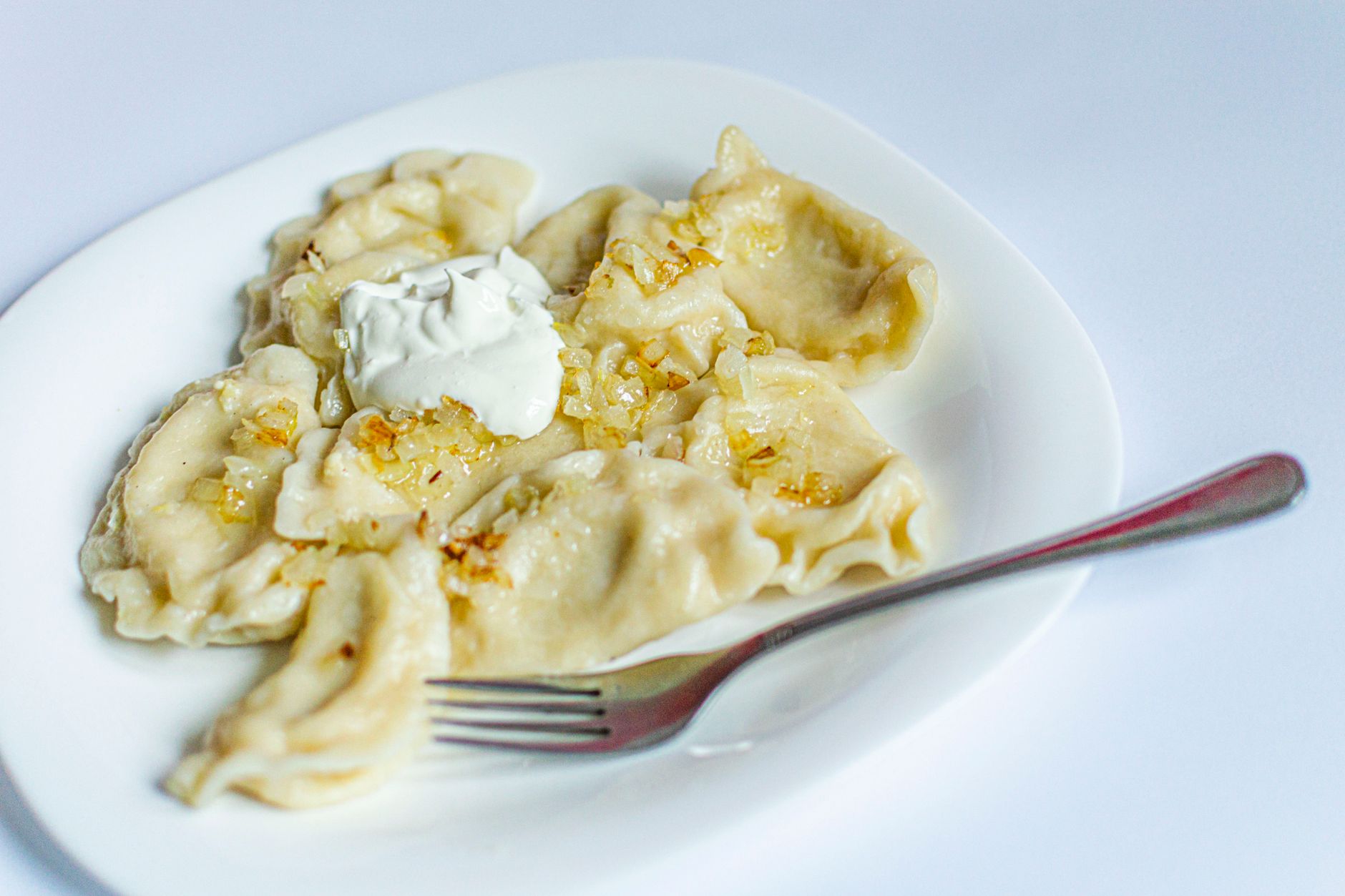
Plate of handmade dumplings with caramelized onions and sour cream on a white background.
Photo by SHOX ART on Pexels · Pexels License
A picturesque view of a historic building seen from an urban alley at twilight, featuring architectural columns.
Photo by Vitali Adutskevich on Pexels · Pexels License
A foggy view of a historic building in Minsk, Belarus with a river reflection.
Photo by Sergey Lobanok on Pexels · Pexels License
Imposing neoclassical building with columns under a bright blue sky, showcasing architectural grandeur.
Photo by Siarhei Nester on Pexels · Pexels License
Practical Information
Visa
Belarus has different entry rules by passport, and they are not interchangeable. EU and UK citizens currently get visa-free stays of up to 30 days, capped at 90 days per calendar year through 31 December 2026, while U.S. citizens generally need an e-visa for trips of 30 days or less; medical insurance valid in Belarus is a standard requirement.
Currency
The currency is the Belarusian ruble (BYN), and it is hard to exchange once you leave the country. Posted prices usually include 20% VAT, tips are modest at 5-10% in restaurants if service was good, and cash backup in EUR or USD still matters because some Western cards fail at sanctioned banks.
Getting There
Minsk National Airport is still the main air gateway, but most direct links now run through places like Istanbul, Dubai, Baku, Yerevan, Tbilisi, Tashkent, and Moscow rather than Western Europe. Land entry is possible through selected checkpoints with Poland, Lithuania, and Latvia, though closures shift fast and buses are usually simpler than driving yourself.
Getting Around
For moving between Minsk, Brest, Hrodna, Vitebsk, Polotsk, and Mahilyow, trains are usually the cleanest option. The state rail site pass.rw.by and the BČ My Train app handle most domestic bookings, while buses fill gaps to places like Mir, Nyasvizh, Braslav, Bialowieza, and Khatyn.
Climate
Expect a continental pattern: cold winters, warm summers, and brief spring and autumn. May to September is the easiest window for city trips and nature, Brest tends to be milder than Vitebsk in winter, and snow can linger from December into February or March.
Connectivity
Hotels, apartments, and city cafes in Minsk and other regional centers usually have usable Wi-Fi, and mobile coverage is solid on main transport corridors. What catches travelers out is payments rather than signal, so keep offline copies of bookings, visa documents, and rail tickets in case your banking apps or cards misbehave.
Safety
Belarus is not a low-friction leisure destination right now. The U.S., UK, Canada, and Australia all warn about arbitrary law enforcement, detention risk, and the wider security fallout from Russia's war against Ukraine, so this is a paperwork-first, cash-first, exit-plan-first trip.
Taste the Country
restaurantDraniki
Grate, fry, burn fingers, dip in sour cream. Lunch with family, late dinner after a train, morning repair after too much vodka.
restaurantMachanka with blini
Sausage, pork, gravy, pancakes, hands. Weekend table, many plates, one bowl doing the real work.
restaurantBabka
Potato, bacon, onion, oven, crust, spoon. Grandmother territory, Sunday territory, cold-weather territory.
restaurantKhaladnik
Beet, kefir, cucumber, dill, egg, cold bowl. Summer noon, city heat, bread on the side, silence at first spoon.
restaurantKolduny
Dumplings vanish fast. Meat filling, butter, sour cream, friends talking louder as the plate empties.
restaurantRye bread with salo and pickles
Slice, salt, bite, chase with tea or vodka. Kitchen table ritual, not restaurant theater.
restaurantTea with varenye
Tea pours, jam glows, spoons clink. Visit protocol, gossip fuel, truce offering after difficult conversation.
Tips for Visitors
Carry cash backup
Bring enough EUR or USD to exchange if your bank cards stop working. Belarus is one of those places where a failed card is not a small inconvenience but a transport problem.
Use trains first
For Minsk, Brest, Hrodna, Vitebsk, Polotsk, and Mahilyow, trains are usually cheaper and less tiring than piecing together minibuses. Book the obvious legs early on holiday weekends and summer Fridays.
Hotels save paperwork
If you stay more than 10 days, registration rules can apply. Hotels usually handle this automatically; apartment rentals are where travelers forget and then start asking anxious questions at checkout.
Download everything
Keep offline copies of insurance, visa approval, hotel addresses, and onward tickets on your phone. If mobile data works but payments do not, those screenshots become more useful than another travel app.
Budget by city
Minsk is the easiest place to spend money fast, especially on taxis and newer hotels. Smaller cities like Mahilyow, Polotsk, and Vitebsk usually stretch a mid-range budget further.
Read advisories closely
Do not treat official travel advisories as boilerplate. Border closures, detention risk, and the spillover from the war in Ukraine affect route planning, insurance, and how quickly you may need to leave.
Russian works best
Russian is the practical default in cities, even though Belarusian carries symbolic weight. Learn a few polite basics, keep addresses written in Cyrillic, and do not expect English once you leave the main hotels.
Explore Belarus with a personal guide in your pocket
Your Personal Curator, in Your Pocket.
Audio guides for 1,100+ cities across 96 countries. History, stories, and local insight — offline ready.
Audiala App
Available on iOS & Android
Join 50k+ Curators
Frequently Asked
Is Belarus safe for tourists in 2026? add
Not in the easy, low-risk sense most people mean. Western governments continue to warn about arbitrary law enforcement, detention risk, and regional security problems linked to Russia's war against Ukraine, so anyone going should travel with complete paperwork, cash reserves, and a clear exit plan.
Do EU citizens need a visa for Belarus? add
Usually not for short trips under the current regime, but the fine print matters. Citizens of 38 European countries, including EU states, can enter visa-free for up to 30 days per trip and 90 days per calendar year through 31 December 2026, provided they meet the insurance and passport rules and are not traveling directly to or from Russia.
Do U.S. citizens need an e-visa for Belarus? add
Yes, in most cases for trips of 30 days or less. The current U.S. guidance points to a single-entry e-visa, a fee of 66 EUR, mandatory medical insurance of at least 10,000 EUR, and extra restrictions if your route involves Russia.
Can I use Visa or Mastercard in Belarus? add
Sometimes, but you should not rely on one card. Sanctions affecting Belarusian banks mean some terminals reject Western cards, so travelers should arrive with cash backup and enough money to cover transport, meals, and at least a few nights of lodging.
Do I need to register in Belarus if I stay more than 10 days? add
Usually yes. Hotels often handle the registration automatically, but if you stay in an apartment or private rental the responsibility can fall on you, and that is where people get caught out.
What is the best way to travel between Minsk, Brest, Hrodna, and Vitebsk? add
Use trains for the major city-to-city legs whenever possible. Belarus has a workable domestic rail network, booking is relatively simple through pass.rw.by, and buses are best saved for side trips to places like Mir, Nyasvizh, Braslav, Bialowieza, and Khatyn.
When is the best time to visit Belarus? add
Late May to September is the easiest stretch for most travelers. Days are longer, forests and lake country around Braslav look their best, and city walking in Minsk, Brest, Hrodna, and Vitebsk is more pleasant than in the damp cold of late autumn or midwinter.
Is Belarus expensive for travelers? add
No by European capital standards, but it is not as cheap as people assume once you add transport uncertainty and hotel costs. A realistic working budget is about 90-150 BYN a day for budget travel, 180-320 BYN for mid-range, and 400-700+ BYN if you want better hotels and private transfers.
Sources
- verified Belarus Ministry of Foreign Affairs — Official visa-free entry rules, stay limits, and passport categories.
- verified U.S. Department of State Travel Advisory and Country Information — U.S. entry requirements, e-visa details, insurance thresholds, registration rules, and safety advisory.
- verified UK Foreign, Commonwealth & Development Office — UK entry rules, passport validity guidance, and current safety warnings.
- verified Government of Canada Travel Advice and Advisories — Border crossing information, airport entry notes, and practical safety guidance.
- verified Belarusian Railway — Official booking platform for domestic rail travel across Belarus.
Last reviewed: