A History Told Through Its Eras
Fur, river mist, and the dangerous court of Polotsk
River Principalities, 6th-13th centuries
Morning comes up slowly over the Western Dvina: wet reeds, trading boats nosing the bank, wax and fur packed beside iron and salt. Long before anyone spoke of Belarus as a state, these river routes tied the lands around Polotsk to Kyiv, Novgorod, and Constantinople. Trade made the towns rich. Marriage politics made them lethal.
Ce que l'on ignore souvent, c'est que the first great drama here begins not with a battle, but with an insult. In the late 10th century, Rogneda of Polotsk is said to have refused Vladimir of Novgorod; he answered by attacking Polotsk, killing her father Rogvolod and her brothers, and forcing her into marriage. A chronicle can be dry on the page. In a palace chamber, it is a family massacre.
By the 11th century, Polotsk had become one of the strongest eastern Slavic centers, and its rulers behaved like people who knew it. Vseslav, later nicknamed "the Seer," raided, bargained, vanished into legend, and left such a mark that chronicles wrapped him in rumor as much as fact. When you stand in Polotsk today, that is the first secret of the place: power here never arrived politely.
Then came faith, books, and stone. Euphrosyne of Polotsk, princess turned abbess, ordered churches, sponsored manuscripts, and gave the region one of its most enduring sacred objects, the jeweled Cross of Saint Euphrosyne in 1161. A court of warriors had produced a woman who understood that memory can outlast conquest. That idea would carry Belarus into the next age, when local princes had to make terms with a much larger Baltic power.
Rogneda of Polotsk is the human shock at the center of this era: a princess turned into a dynastic prize, then remembered precisely because she refused to behave like one.
The Battle on the Nemiga River in 1067 left such a scar that the river entered East Slavic literature as a place where "heads were laid like sheaves."
When Lithuanian dukes, Ruthenian scribes, and Radziwill princes remade the map
Grand Duchy and Commonwealth, 13th century-1795
A new order entered from the northwest after the Mongol blow to Kyiv shattered the old balance. Lithuanian rulers expanded into these lands not as vandals burning everything before them, but as practical dynasts who understood the value of existing towns, Orthodox elites, and Ruthenian legal culture. The result was not a clean replacement. It was a layered court world, half sword, half paperwork.
The palaces of Mir and Nyasvizh tell that story better than any slogan could. In those halls, magnate families such as the Radziwills collected titles, estates, chapels, debts, clients, and enemies with equal appetite. One marriage might secure a province. One quarrel could poison a generation.
Ce que l'on ignore souvent, c'est que one of the great state languages of this polity was a Ruthenian chancery language rooted in the region's eastern Slavic speech, not Polish alone and certainly not some modern national script. Law mattered here. The Statutes of the Grand Duchy of Lithuania, especially the great codification of 1588 associated with Lev Sapieha, tried to turn a sprawling aristocratic realm into something legible.
And then came the union with Poland, courtly brilliance, and the dangerous glamour of a noble republic. This was the age of printing too: Francysk Skaryna, born in Polotsk, brought East Slavic texts into print in the early 16th century and gave the region a humanist face. Yet splendor has a bill. By the late 18th century, a state of magnificent residences and jealous liberties had become too weak to defend itself, and neighboring empires were already reaching for the silver.
Lev Sapieha stands at the center of this chapter: a grand chancellor who knew that a realm survives not only by cavalry, but by the words in its law books.
The Radziwill court at Nyasvizh maintained its own theater, orchestra, and arsenal, which tells you nearly everything about magnate ambition in one sentence.
Empire arrives in boots, but memory keeps speaking
Partitions and National Awakening, 1772-1917
The partitions of the Polish-Lithuanian Commonwealth did not fall from the sky. They arrived as marching orders, decrees, censuses, new uniforms, and a new imperial center in Saint Petersburg deciding what these lands should be called. Noble estates remained, churches changed hands, and old loyalties learned to hide behind correct paperwork.
The local elite had choices, none of them clean. Tadeusz Kosciuszko, born in what is now Belarus, became the gentleman rebel of 1794, a man of measured manners and reckless courage who tried to save a collapsing political world. He failed. Empires are not sentimental.
Ce que l'on ignore souvent, c'est que the 19th century in Belarus is full of printers, priests, schoolrooms, police files, and whispered language as much as it is full of battles. Kastus Kalinowski, one of the fiercest voices of the 1863 uprising against Russian rule, wrote to peasants in their own tongue and understood something modern before many others did: if you want a people, you must address them as one. The tsar hanged him in Vilnius in 1864. His words outlived the rope.
Meanwhile, the old capitals of feeling did not disappear. Polotsk kept its sacred aura. Minsk grew as an administrative and commercial center. Vitebsk, still provincial on the map, gathered the textures of Jewish, Russian, Polish, and Belarusian life that would later feed Marc Chagall's imagination. By the eve of the First World War, Belarus was no longer merely a borderland administered by others. It had become a place where memory, language, and social anger were beginning to ask for a political form.
Kastus Kalinowski matters because he did not speak to Belarus as a museum piece, but as a people capable of action.
Kalinowski's clandestine newspaper, "Muzyckaja Prauda," spoke to peasants directly, which was precisely why the authorities feared it more than salon rhetoric.
A republic proclaimed, a country burned, a Soviet state built from ash
Revolution, Occupation, and Soviet Belarus, 1917-1991
In 1918, amid the wreckage of empires and the noise of armies moving in every direction, the Belarusian People's Republic was proclaimed. It was brief, fragile, and outmatched. But even a short-lived state can leave a long shadow, because once a nation has been named aloud, it becomes harder to tell its people they do not exist.
Then the Bolsheviks made their own map. Soviet Belarus emerged through civil war, border changes, and ideological discipline, and Minsk was rebuilt as a republican capital of broad avenues and official certainties. The Soviet project offered schools, industry, and a state frame. It also demanded obedience and taught citizens to live with silence.
Nothing, however, marks Belarus more deeply than the German occupation of 1941-1944. Village after village was burned; Jewish communities were annihilated; partisans fought from forests that had once sheltered traders and monks. Khatyn, now one of the country's starkest memorial sites, stands not for one isolated atrocity but for hundreds of destroyed villages. You hear the bells there. They do not sound like metaphor.
After 1945, Belarus was rebuilt with almost frightening determination. Factories rose, housing blocks multiplied, and the Belarusian Soviet Socialist Republic even held a seat at the United Nations, a strange honor for a republic that was not sovereign in the normal sense. Then came another wound without an army: Chernobyl in 1986. Much of the radioactive fallout fell on Belarusian land. By the time the Soviet Union began to crack, the country had endured enough catastrophe to make independence in 1991 feel less like a triumphal parade than a hard, wary inheritance.
This era has no single marble hero, but the partisan, the ghetto child, the village widow, and the Chernobyl evacuee together form the real Belarusian monument.
Belarus lost roughly a quarter of its population during the Second World War, which is one reason Soviet war memorials here feel less decorative and more like family archives in stone.
Independence without ease, and the voices that refused to lower themselves
Independent Belarus, 1991-present
The flag changed, the passports changed, the vocabulary of statehood changed. Yet much else did not. Independent Belarus inherited Soviet factories, Soviet streetscapes, Soviet habits of administration, and a society that knew how quickly history can punish public enthusiasm.
Alexander Lukashenko's election in 1994 began one of the longest personal rules in Europe. Stability was the promise; control was the method. Minsk became the showcase capital of that arrangement, unusually orderly, often severe, while the deeper argument over language, memory, and political freedom never went away.
Ce que l'on ignore souvent, c'est que Belarus has produced some of the most intimate writing about violence and truth in Europe. Svetlana Alexievich, Nobel laureate and one of the country's fiercest moral witnesses, built books from voices others preferred not to hear: soldiers, mothers, survivors, ordinary people crushed by grand systems. She writes like someone opening a drawer the state forgot to lock.
The protests of 2020 made the buried argument visible to the whole world. Women in white dresses, factory workers, students, pensioners, people who had spent years speaking carefully suddenly filled the streets. The repression that followed was brutal and familiar. But history had shifted again: the question was no longer whether Belarus had a civic voice of its own, but what price its citizens would keep paying to use it. That is where the story stands now, and it is why every earlier chapter still feels present.
Svetlana Alexievich gave Belarus one of its clearest mirrors by showing that history is not made only by rulers, but by the people who carry their consequences home.
The giant postwar avenues of Minsk were designed to project certainty, yet in 2020 those same spaces became the stage on which uncertainty finally spoke back.
The Cultural Soul
A Country Speaks Sideways
Belarus does not hand you its language in one piece. In Minsk, Russian often runs the table, the tram, the pharmacy queue, while Belarusian arrives like a silver spoon brought out for reasons of memory, pride, or grief. Two official tongues, one daily reality, and between them the mixed speech called Trasianka, which many people know, many people hear, and few people romanticize.
This makes conversation interesting in the best way. A person may answer you in Russian, switch to Belarusian for a proverb, then soften the whole exchange with kali laska, a phrase that feels less like etiquette than like a door opening inward. Language here is not a badge. It is a weather system.
Listen in Polotsk or Vitebsk and you begin to hear what history did to vowels. Borders moved, empires insisted, schools corrected, families remembered. The result is a speech culture in which what someone chooses to say can matter less than which word they rescue, and from where.
Belarusian food begins with a peasant fact and ends as ceremony. The potato is called the second bread, which sounds comic until the first plate of draniki arrives: hot, ragged, blistered at the edges, with sour cream cooling the burn by half a second and no more. Hunger here is treated seriously. So is pleasure.
The table likes starch, smoke, rye, dill, pork fat, mushroom, beet. It likes soups that taste of field work and January, dumplings that ask for silence, and sauces thick enough to cancel your plans for the afternoon. Machanka is not merely eaten. It receives pancakes and excuses.
You understand Belarus quickly through a bowl. Someone feeds you more than you requested. Someone else adds black bread without asking. Then tea appears, then preserves, then another opinion about the right way to make babka, and the whole country reveals a private theorem: thrift and generosity are not enemies, they are twins who learned to share one coat.
Reserve with a Spoon in Its Hand
Belarusian politeness has very little interest in sparkle. People do not rush to fill silence, and thank heaven for that. A first meeting can feel formal, almost frosted, until you notice the real signs of welcome: the chair shifted closer to the stove, the plate refilled, the exact instruction on which bus stop not to miss in Brest.
Forms matter. The respectful you matters. Volume matters. Boasting rarely flatters its owner. A person who speaks quietly may still be delivering judgment with surgical accuracy, which is one reason Belarus can feel so civilized and so dangerous to fools.
Hospitality prefers action to declaration. In Grodno or Hrodna, depending on whose alphabet is guiding the day, you may hear fewer affectionate words than in noisier countries and receive more actual care. A bag of apples from a dacha. Pickles decanted into proper glass. Advice given once, precisely, as if your survival depended on grammar.
Ink Kept Under the Floorboards
Belarusian literature has the smell of paper stored against bad times. Francysk Skaryna printed books in the early 16th century, which is one way of saying that Belarus entered European letters not as a pupil but as a printer. The gesture matters. To print is to insist that a language deserves furniture.
Later writers inherited a less comfortable task. They wrote under empire, under censorship, under occupation, under the long habit of someone else naming the room. This is why so much Belarusian writing carries moral pressure without losing delicacy. Svetlana Alexievich, born in what is now western Ukraine and raised in Belarus, built whole cathedrals from voices. She understood that testimony can cut deeper than rhetoric.
Read Belarus and you meet a country suspicious of slogans but attached to exact speech. A diary entry, a witness statement, a village memory, a poem learned by heart in school and then understood properly twenty years later: these are not small forms. In Belarus, literature often behaves like contraband and sacrament at once.
Domes over Concrete, Lace over Brick
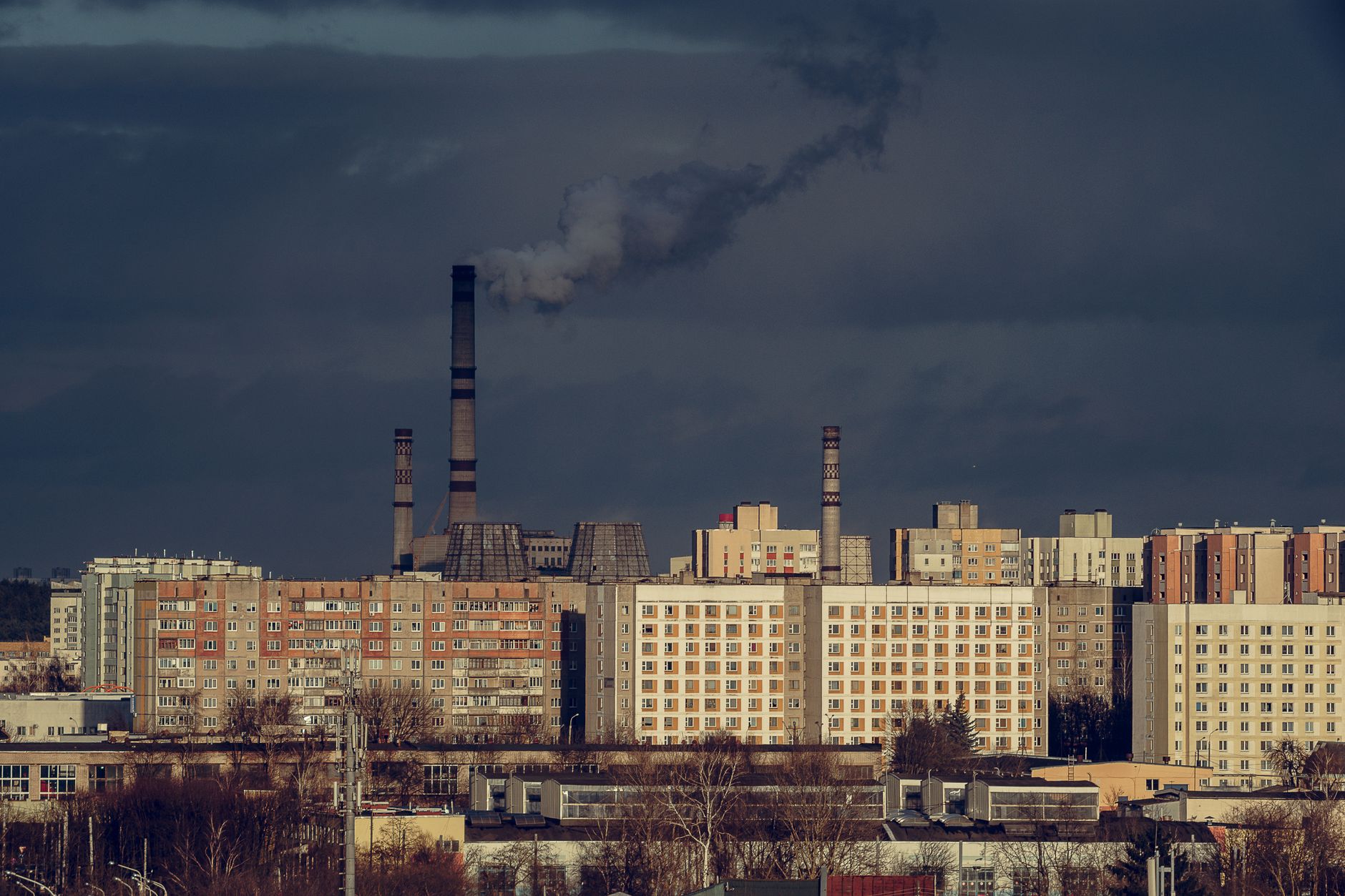
Belarusian architecture is what happens when catastrophe acquires building permits. War erased too much. Empire rearranged too much. The Soviet period then covered immense parts of the country in apartment blocks, administrative slabs, heroic avenues, and the stubborn elegance of utility. Minsk knows this face well. It can look severe until late light strikes the facades and turns doctrine into theater.
Then the older layers interrupt. In Mir, a fortress of brick and white ornament stands with the confidence of something that survived because history never finished its meal. In Nyasvizh, aristocratic symmetry and parkland composure suggest Europe in silk gloves, though the century outside kept bringing mud on its boots. Belarus does contrast without raising its voice.
The churches are the real seducers. Onion domes, Baroque fronts, Catholic towers near Orthodox cupolas, a skyline arguing with itself in public and somehow producing harmony. In Polotsk, where memory sits very close to the surface, architecture feels less like style than sediment: each wall another answer to the same rude question of how to remain.
Candles in a Draft
Religion in Belarus is rarely theatrical, even when the churches shine. Orthodoxy shapes much of the country, Catholicism marks the west with equal persistence, and the old Jewish world, though shattered, still haunts streets and cemeteries with unbearable precision. Faith here has lived beside invasion too long to confuse itself with comfort.
Step into a church and the temperature changes first. Wax, stone, old timber, a scarf being adjusted, the click of someone crossing themselves with total concentration. The liturgy can feel less performed than inhabited. You are not being invited to admire belief. You are watching people use it.
That seriousness gives Belarusian religion its power. It does not ask to charm you. It asks whether you understand ritual as shelter. In Khatyn, where memory becomes almost physically hard to bear, even the secular memorial landscape borrows the grammar of mourning from religion: repetition, silence, names, bells, the refusal to let the dead dissolve into statistics.
Songs That Keep Their Coat On
Belarusian music does not always seduce at first hearing. Folk songs can sound narrow, nasal, almost severe, until the polyphony opens and the room changes shape. Then you hear what the village knew all along: restraint can carry enormous feeling, and a melody does not need to smile to stay with you for years.
The instruments tell their own story. Fiddle, cimbalom, accordion, voices braided rather than displayed. Dance comes in circles and lines, not for spectacle but for use, like bread. Even modern Belarusian music often keeps this inherited discipline, a refusal to overstate the emotion when the emotion is already present in the grain of the sound.
What survives in the ear is not grandeur but persistence. A tune from a harvest rite. A wartime song learned from a grandmother. A pop refrain carrying Belarusian words in a city where Russian fills the metro announcements. Music here behaves like a hidden seam in cloth. Pull it, and the whole garment of the country begins to move.