Introduction
The first thing that hits you in Bridgetown, Barbados is the smell: diesel from the Careenage fishing boats mixing with cane-smoke from the rum docks and the sweet sting of over-ripe soursop left on a market crate. A statue of Horatio Nelson—older than London’s own—faces a KFC, while parliamentarians in white linen file past a 17th-century synagogue that still keeps its sand floors. The capital is small enough to cross in twenty minutes, but every block carries three centuries of Atlantic traffic—sugar, enslaved people, ideas, and now cruise-ship passengers—layered like coral.
Walk two streets inland and the grid kinks into the medieval tangle that UNESCO cites in its 2011 citation: no right angles, alleys wide enough for a donkey cart, coral-stone gutters cut by 19th-century storm water. You’ll pass chattel-house shops painted the colors of the flag—ultramarine, gold, ultramarine again—then step under the Independence Arch where flying fish are carved into limestone so hard it rings when you knock it.
The city keeps time by tide and race meet. At 5:30 the siren at the Garrison Savannah signals sunset workouts; thoroughbreds thunder past officers’ mansions now turned law schools and Airbnb flats. Come Friday, Baxter’s Road becomes a single open-air kitchen: smoke from snapper frames drifts above speakers playing soca at marrow-vibrating decibels while politicians queue for macaroni pie same as everyone else.
Bridgetown doesn’t try to charm you—it’s too busy loading boats with molasses and unloading arguments about republic budgets. Stay long enough and you’ll notice the broken trident everywhere: on manhole covers, bus shelters, even the foil caps of Banks beer. It’s a reminder the city already cut colonial ties once and is still deciding what comes next. That argument, carried out in Bajan cadence over rum-shop counters, is the real attraction.
What Makes This City Special
UNESCO Colonial Core
Bridgetown's 17th-century grid and coral-stone Parliament Buildings form the only surviving British colonial capital in the Caribbean. The 2011 inscription protects 115 structures, including the 1751 George Washington House where America's future first president once lodged.
Rum's Birthplace
Mount Gay has distilled rum continuously since 1703 at the world's oldest legal still. Their Bridgetown visitor centre pours 3-year and 10-year rums in a former 18th-century warehouse overlooking the Careenage where sugar ships once queued for barrels.
Living Heritage Markets
Cheapside Public Market erupts at dawn with vendors selling flying fish, breadfruit, and spice-scented sea moss next to the neo-Gothic Montefiore Fountain built after the 1854 cholera outbreak. The working market stands two blocks from where cruise passengers photograph Parliament's gargoyles.
Garrison Savannah
British troops paraded here until 1905; now thoroughbreds thunder down the same 1.8 km grass track every Saturday. The surrounding UNESCO military complex contains a synagogue from 1654 and a 1780 powder magazine built to withstand hurricanes and slave rebellions.
Historical Timeline
Where the Atlantic Trade Winds First Hit Stone
From indigenous bridge to UNESCO fortress-port
First Fishermen Land
Arawak families beach their dug-outs where the Careenage later narrows. They call the spot 'Indian Bridge' after a fallen mangrove that lets them cross the tidal creek dry-shod. Shell middens, still turning up in construction back-dirt, mark the first human footprint on what will be Bridgetown.
Spanish Raids Empty the Island
Slave-captains sweep through, chain every adult they find, and leave Barbados silent. By the time English eyes see the coast twenty years later, only charred posts of the old bridge remain. The clearing makes room for a future capital nobody has yet imagined.
Charles Wolverstone Plants a Town
Eighty English settlers row through the turquoise mouth of the Careenage and peg out house lots on the western ridge. They keep the old ‘Bridge Town’ name, but their first streets are nothing more than coral paths wide enough for two sugar hogsheads.
Third-Oldest Parliament Meets
In a cedar-plank chamber above the rum shops, twenty-four elected planters sit. The Speaker’s mace is still the same one used today—silver bought with profits from the first cane cut outside the town. Bridgetown becomes the beating political heart of England’s richest colony.
Sugar Boom Ignites
Ships queue four-deep off Carlisle Bay, their holds reeking of molasses. Within a decade, cane replaces food crops; African captives outnumber English ten to one. Bridgetown’s warehouses double in height, and the air tastes permanently of caramel steam.
Great Fire Turns Timber to Ash
A lantern tips in a waterfront tavern. By sunrise, two-thirds of Bridgetown is ember and cracked glass. The Assembly outlaws thatch overnight; stone quays, ballast-brick walls, and slate roofs rise in strict geometry that still frames today’s downtown.
Nelson Beats London to His Own Statue
Bronze Horatio, hatless and stern, is hoisted in what locals already call Trafalgar Square—twelve years before Britain’s capital manages the same. Sailors swear the admiral’s shadow points straight to the harbour mouth, guiding them through the reef.
Bussa’s Rebellion Flares
At Bayley’s Plantation, ten kilometres inland, an African-born driver named Bussa raises a flag of plantation bagging. The march toward Bridgetown is crushed within hours, but the smoke can be seen from the cathedral spire. Emancipation comes eighteen years later, the memory of Bussa etched into every future freedom speech.
Emancipation Day Songs
At midnight on 1 August, thousands gather outside St. Michael’s Cathedral. When the town clock strikes twelve, voices break into ‘Now we are free’—a hymn composed in the market square itself. Planters watch from balconies, rum glasses trembling as the harbour bell joins the chorus.
Dolphin Fountain Flows
Iron pipes finally bring fresh water from inland springs. The white-limestone dolphin, mouth agape, becomes the first public monument built for pleasure rather than power. Children climb its flukes; ship captains time their letters by the fountain’s jet—when the breeze carries spray west, mail bags leave with the tide.
Chamberlain Bridge Rebuilt in Iron
A double-leaf swing bridge replaces the worm-eaten wooden span. At dusk, deckhands still spin the gears by hand, halting traffic so tall-masted schooners can nose into the inner basin. The metallic clang becomes Bridgetown’s evening lullaby.
Labour Riots Ignite the Harbour
Cane-cutters, dockworkers, and market women overturn trams on Broad Street. Police bullets scar the base of the Nelson statue—bullet-pocks you can still feel with a fingertip. The British governor, watching from Government House, signals for naval marines; instead he gets a Royal Commission that seeds modern Barbadian self-rule.
Grantley Adams Speaks to the Crowd
From the steps of the Parliament Buildings, the barrister demands full internal self-government. His voice cracks, but the phrase ‘We must govern ourselves’ carries to the rum shops on Swan Street. Adams’ silhouette against the limestone arch becomes the emblem of the coming quiet revolution.
Midnight Flag-Raising at Garrison Savannah
The Union Jack slips down; the broken-trident flag climbs the same pole where British troops once saluted. Cannons that guarded empire now fire for independence. In the grandstand, a ten-year-old Robyn Fenty claps along, unaware she will one day carry this island’s voice to every corner of the planet.
Robyn ‘Rihanna’ Fenty Is Born
At Queen Elizabeth Hospital, just uphill from the Careenage, a girl arrives with green-grey eyes that will soon scan the world. She sells sweets to sailors on the waterfront, sings over the hum of outboard motors, and learns choreography on cracked concrete outside the Dolphin Fountain. Bridgetown’s alleys train the voice that will top charts and tilt fashion runways.
UNESCO Engraves Bridgetown in Stone
The wharves, the garrison parade ground, even the chattel-house verandas become world heritage overnight. Tour guides swap rum stories for UNESCO jargon, but the brickwork still smells of molasses when the sun heats it. The city wakes up global, yet the morning bread vans still honk at 5 a.m.
Barbados Becomes a Republic
At the same Garrison Savannah where independence was born, the island’s first president takes the oath. Prince Charles watches the crown’s last Caribbean jewel slip away, politely applauding. Bridgetown keeps its colonial street names, but schoolchildren now recite pledges to a Barbadian head of state—history’s circle closing in the salt wind off Carlisle Bay.
Photo Gallery
Explore Bridgetown in Pictures
A peaceful morning view of a vibrant, colorful shopping street in the heart of Bridgetown, Barbados.
Rashad Browne on Pexels · Pexels License
The historic Redbird House stands prominently along the scenic waterfront in Bridgetown, Barbados, featuring a statue of a national figure.
Rashad Browne on Pexels · Pexels License
A local tour kiosk offers water activities near the busy cruise ship terminal in Bridgetown, Barbados.
Dirk Schuneman on Pexels · Pexels License
A colorful bridge spans the water in Bridgetown, Barbados, framed by lush palm trees and a clear blue sky.
thiago japyassu on Pexels · Pexels License
The historic waterfront of Bridgetown, Barbados, showcases traditional stone architecture along the harbor under a bright, sunny sky.
Rashad Browne on Pexels · Pexels License
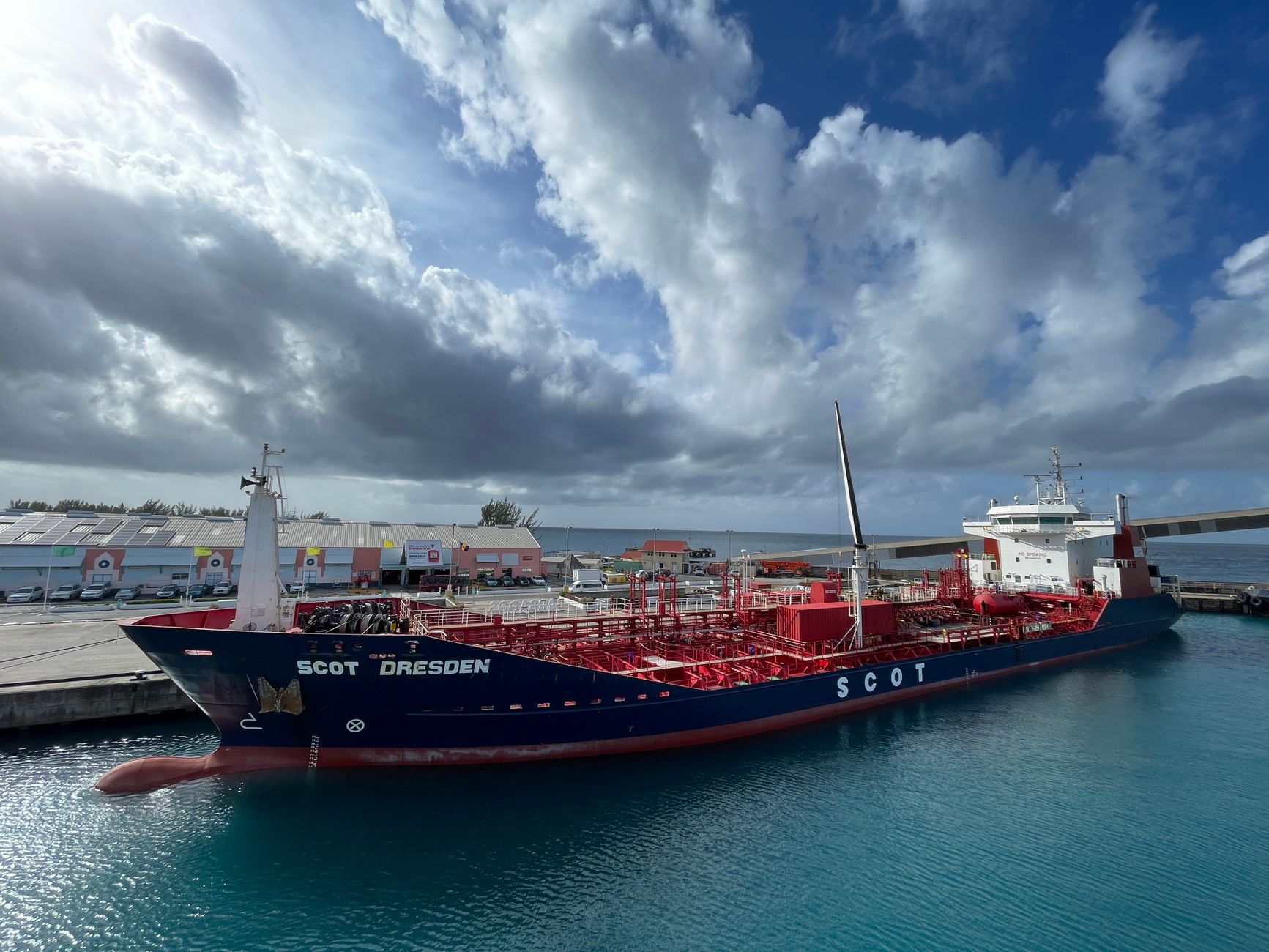
The Scot Dresden oil tanker moored at the Bridgetown Port in Barbados, set against a backdrop of dramatic clouds and clear turquoise Caribbean waters.
Sergii on Pexels · Pexels License
Practical Information
Getting There
Grantley Adams International Airport (BGI) sits 14 km southeast. Fixed-rate taxis charge BDS$46–50 to Bridgetown (25–30 min). Route #27 bus runs every 20 min for BDS$3.50 exact change.
Getting Around
No metro exists. Three bus systems operate: government Transport Board (BDS$3.50), yellow minibuses, and route taxis (ZR vans). All converge at Fairchild Street terminal opposite the cruise port. Cycling is limited—roads favor cars and buses.
Climate & Best Time
December–April brings 29°C highs and 65 mm monthly rain—peak season. June–November peaks at 31°C with 150 mm storms and hurricane risk. Aim for March shoulder season: dry, fewer cruise crowds, hotel rates drop 30%.
Language & Currency
English with Bajan creole inflections. Barbadian dollar (BBD) is sole legal tender; US$1 notes often refused. Banks exchange USD at 2:1 fixed rate. Most restaurants add 10–15% service; extra tipping is discretionary.
Safety
Petty theft spikes near cruise terminals and Nelson/Wellington Streets after dark. Use official airport taxis only—fake cabs operate from arrivals. Emergency: police 211, ambulance 511.
Tips for Visitors
Order flying fish early
Cou-cou with flying fish sells out at lunchtime stalls—get to Cuz’s Fish Shack before 11:30 a.m. or you’ll queue for 40 minutes.
Check the service charge
Most Bridgetown restaurants auto-add 10–15 % service; scan the bill before you tip twice.
Yellow bus = $1 ride
Government-regulated yellow buses anywhere in the city cost BBD $2 (USD $1) exact change only—cheaper than route taxis.
Golden hour at Careenage
Stand on Chamberlain Bridge at 5:45 p.m. when the pastel warehouses mirror in the still water—tripod not needed.
UNESCO loop on foot
The Garrison Savannah to National Heroes Square heritage circuit is 2.2 km; do it before 10 a.m. to dodge cruise crowds.
Explore the city with a personal guide in your pocket
Your Personal Curator, in Your Pocket.
Audio guides for 1,100+ cities across 96 countries. History, stories, and local insight — offline ready.
Audiala App
Available on iOS & Android
Join 50k+ Curators
Frequently Asked
Is Bridgetown worth visiting? add
Yes—Bridgetown is the Caribbean’s only UNESCO World Heritage capital. One morning lets you walk 400 years of British colonial streets, eat the national dish for under $5, and watch yachts glide through a 17th-century lift-bridge.
How many days in Bridgetown do you actually need? add
Two full days covers the UNESCO core, rum distillery, Friday Oistins Fish Fry and a beach afternoon. Add a third day if you want day-trip snorkel sails that leave from the Careenage.
Is Bridgetown safe to walk around? add
The downtown heritage zone is safe daylight till early evening; stick to main streets after dark and take registered taxis back from St Lawrence Gap. Standard city precautions—no flashy jewelry, empty pockets on crowded buses.
What’s the cheapest way from the airport to Bridgetown? add
Public route bus #27 or #28 runs every 20 min, costs BBD $2 (USD $1) and drops you by National Heroes Square in 35 min. Taxis charge a fixed USD $25—agree before you load bags.
Where do I buy local crafts instead of tourist tat? add
Cheapside Market (Mon-Sat till 4 p.m.) has wicker baskets, tamarind balls and handmade jewelry at islander prices. Avoid the cruise-terminal mall; same sarongs cost triple.
Can I drink the tap water in Bridgetown? add
Yes—Barbados water is filtered limestone coral and meets U.S. standards. Bring a reusable bottle; the 1861 Dolphin Fountain marks where piped water first reached the city.
Sources
- verified UNESCO World Heritage Centre – Historic Bridgetown and its Garrison — Official inscription details, boundary map and historical justification for the 2011 listing.
- verified Visit Barbados Official Site — Practical visitor info on dining, transport and attractions used for opening hours and bus routes.
- verified Barbados Museum & Historical Society Facebook page — Local founding date (5 July 1628) and Nelson statue trivia confirmed here.
- verified Etiquette Scholar – Barbadian Dining Customs — Tipping norms and hot-drink vocabulary (“tea” for any hot beverage).
Last reviewed: