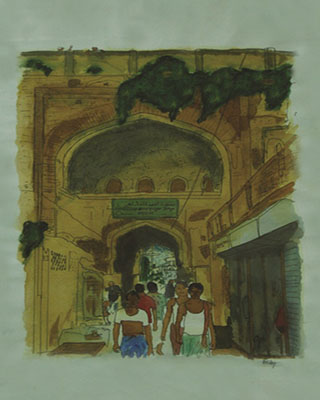
Introduction to Choto Katra: Dhaka’s Mughal-Era Landmark
Located in the heart of Old Dhaka, Choto Katra stands as a compelling symbol of the city’s Mughal legacy and its vibrant history as a center of trade, culture, and architecture. Built between 1663 and 1671 CE under the patronage of Subahdar Shaista Khan, this caravanserai was strategically positioned near the Buriganga River to serve merchants and travelers plying Bengal’s bustling trade routes. Its name, derived from the Arabic "qatara" (caravanserai), reflects its original role as a secure, spacious complex arranged around a central courtyard. Today, Choto Katra continues to draw historians, architecture enthusiasts, and visitors seeking to experience the layered story of Dhaka’s past (Archnet, TripJive, The Business Standard).
This guide provides a comprehensive overview of Choto Katra’s historical significance, visitor information—including hours and ticketing—architectural highlights, and its place in the city’s evolving urban landscape. Whether you’re a traveler, student, or local resident, the following sections will help you plan an enriching visit to one of Dhaka’s most important heritage sites.
Choto Katra was constructed during Dhaka’s transformation into a major Mughal provincial capital and trading hub. Serving as a caravanserai, it accommodated merchants, travelers, and officials, and functioned as a secure warehouse for their goods. Its rectangular enclosure (approximately 101 meters by 92 meters) was fortified with high walls and monumental gateways—one facing the city to the north and the other toward the Buriganga River to the south (Archnet).
Architectural Highlights
- Gateways: The southern gateway, in particular, is notable for its three-story façade, arched entrances, and decorative battlements. The gateways served both a defensive and ceremonial function.
- Central Courtyard: The complex is organized around a spacious central courtyard, facilitating ventilation, communal interaction, and commerce.
- Residential and Storage Rooms: Rooms lining the perimeter provided lodging and storage for travelers and their goods, reflecting the Mughal emphasis on hospitality and security.
- Religious Elements: The on-site mosque and the tomb believed to be that of Champa Bibi speak to the integration of religious life into everyday urban functions.
- Materials and Ornamentation: Choto Katra was built with brick masonry, lime mortar, and terracotta decorations—features typical of Mughal Bengal.
Despite subsequent encroachments and alterations, the surviving architectural elements offer a vivid glimpse into 17th-century craftsmanship and urban planning.
Visiting Information
Visiting Hours
- Opening Hours: Choto Katra is generally open daily from 9:00 AM to 5:00 PM, though some sources note it may close as late as 6:00 PM.
- Best Time to Visit: Early mornings and late afternoons (especially between October and March) offer the most comfortable weather and optimal lighting for photography (TripJive).
Tickets and Entry
- Ticket Price: Entry to Choto Katra is free for all visitors. Donations for preservation are appreciated and help support ongoing conservation efforts.
- Ticket Purchase: There is no formal ticketing system due to the site’s open nature.
Accessibility and Facilities
- Accessibility: Due to its age and partial ruin status, Choto Katra has uneven surfaces and limited accessibility features. Visitors with mobility issues should plan accordingly.
- Facilities: Restroom and refreshment facilities are limited in the immediate vicinity; carrying water and planning breaks is recommended.
Highlights of Choto Katra
- Photography: The southern gateway and the play of light in the central courtyard are especially photogenic.
- Guided Tours: Local tour operators offer heritage walks and guided tours that include Choto Katra, providing valuable historical context.
- Living Heritage: The site remains active in local religious and community life, and its integration with surrounding markets and residences gives visitors a sense of Old Dhaka’s enduring vibrancy.
Nearby Attractions and Suggested Itineraries
Enhance your exploration of Old Dhaka’s Mughal and colonial past by visiting other nearby historical sites:
- Bara Katra: The larger and older caravanserai, located a short walk west of Choto Katra.
- Lalbagh Fort: A 17th-century Mughal fort complex with gardens and museums.
- Ahsan Manzil: The iconic pink palace and former residence of Dhaka’s Nawabs.
A recommended itinerary includes Choto Katra, followed by Bara Katra and Lalbagh Fort, with time to explore Old Dhaka’s bustling markets and street food in between.
Preservation Status and Conservation Efforts
Choto Katra is recognized as a protected heritage site under Bangladesh’s Heritage Act of 2009. Despite this, the site faces ongoing threats from urban encroachment, unauthorized construction, and neglect. The Department of Archaeology, along with local heritage organizations, is involved in restoration and awareness initiatives. Community engagement—including guided walks, educational programs, and advocacy by residents—has been key to promoting conservation (The Business Standard).
Travel Tips for Visitors
- Footwear: Wear comfortable shoes due to uneven surfaces.
- Water and Sun Protection: Carry water and use sun protection, especially during warmer months.
- Local Guides: Hiring a guide enriches your visit with stories and historical details.
- Respect Residents: Some areas are still inhabited; maintain respect and privacy.
- Photography: Allowed, but be considerate of local residents and religious spaces.
Frequently Asked Questions (FAQ)
Q: What are the visiting hours for Choto Katra?
A: Open daily from 9:00 AM to 5:00 or 6:00 PM depending on the source.
Q: Is there an entry fee?
A: Entry is free; donations for preservation are welcome.
Q: How do I reach Choto Katra?
A: Easily accessible by rickshaw or taxi from central Dhaka. Public transport is available, but some walking through Old Dhaka’s narrow lanes is required.
Q: Are guided tours available?
A: Yes, local tour operators offer guided walks that include Choto Katra.
Q: Is Choto Katra accessible to visitors with disabilities?
A: Accessibility is limited due to uneven terrain.
Q: What nearby attractions should I visit?
A: Bara Katra, Lalbagh Fort, and Ahsan Manzil are highly recommended.
Listen to the full story in the app
Your Personal Curator, in Your Pocket.
Audio guides for 1,100+ cities across 96 countries. History, stories, and local insight — offline ready.
Audiala App
Available on iOS & Android
Join 50k+ Curators
Sources
- verified
- verified
- verified
- verified
- verified
Last reviewed:


