account_balance
Pala Buddhist Legacy
Paharpur and Mahasthangarh point to a medieval Bengal that taught, traded, and argued with the rest of Asia. This is the Bangladesh most travelers never expect.
Bangladesh is one of Asia's most underrated trips: a country where rivers shape the map, history sits close to the surface, and daily life still feels startlingly specific.
 Bangladesh
EntryVisa on arrival is possible for many Western passport holders, but it is discretionary.
BA Bangladesh travel guide starts with a correction: this country is not a side trip from India but a river-made world of mangroves, monasteries, and cities that never stay still.
Bangladesh works best when you stop looking for a single headline. The real draw is contrast at close range: Mughal-era lanes and biryani houses in Dhaka, ship horns and mezban beef in Chittagong, surf and long beaches near Cox's Bazar, tea gardens and shrine culture around Sylhet. This is one of the world's great delta landscapes, shaped by the Ganges, Brahmaputra, and Meghna, where water decides trade routes, cooking, architecture, and the pace of a day. You feel that geography everywhere, from ferries nosing through brown river light to the humid stillness of the Sundarbans edge near Khulna.
History lands hard here because it never feels sealed off. At Paharpur, the brick geometry of the Pala period still carries the outline of a Buddhist world that once connected Bengal to Tibet and Southeast Asia. In Dhaka, the story turns dense and urban: language politics, imperial leftovers, traffic, prayer calls, and food with real weight behind it. Then the country opens again in Rajshahi, Barisal, and Rangamati, where rivers, hills, and old trade routes pull the mood in different directions. Bangladesh rewards travelers who like detail, appetite, and a place that doesn't simplify itself for visitors.
Delta Kingdoms and Buddhist Bengal, 600 BCE-1204
A clerk stands over a stone at Mahasthangarh, in today's Bogra, counting out grain during a famine in the 3rd century BCE. That is how Bangladesh begins in the record: not with a trumpet blast, but with rice, anxiety, and administration. Before it was a country, this was Vanga, a delta so fertile that kingdoms rose from mud banks and trade routes, then vanished back into silt.
Ce que l'on ignore souvent, c'est que the earliest Bengal was already worldly. At Wari-Bateshwar, traders handled beads, semi-precious stones, and coins that had traveled from the Mediterranean. One can picture the riverfront: boats nudging the bank, brokers arguing over weight and color, goods leaving for places their owners would never see.
Then came the Pala age, one of the great hidden glories of South Asia. From the 8th century, Buddhist rulers such as Gopala and Dharmapala turned Bengal into an intellectual power, patronizing monasteries and universities while royal ambition traveled as far as Kanauj and Sumatra. The atmosphere changes completely here: less marketplace, more library, more bronze Buddha, more monastery courtyard after rain.
But splendor always attracts reaction. The Sena dynasty restored a stricter brahmanical order, and with Ballal Sena came social ranking sharpened into cruelty, especially for women trapped in the marriage politics of Kulinism. Lakshmanasena still surrounded himself with poets, yet when Bakhtiyar Khilji's cavalry arrived around 1203-1204, the old king fled his capital by boat, barefoot and half-finished with his meal. A civilization did not end in dignity. It ended in haste, and Bengal turned toward a new world.
Dharmapala emerges not as a remote emperor but as an astonishingly ambitious patron who wanted Bengal to command both learning and power.
Palm-leaf manuscripts rediscovered in Nepal in 1907 preserved Bengal's early Buddhist songs after they had been lost to the delta for roughly eight centuries.
Sultanate and Mughal Bengal, 1204-1757
A court robe rustles in Gaur, then later in Dhaka; outside, the air smells of wet earth, indigo, and river traffic. After the conquest came adaptation, and Bengal under its sultans became something far more interesting than a frontier outpost: an independent, Bengali-speaking Muslim court culture with its own taste, coinage, and confidence. This was no pale copy of Delhi.
The Bengal Sultanate, especially after the mid-14th century, built with brick because stone was scarce and rivers were everywhere. The result is one of the subcontinent's most distinctive architectural worlds: curved cornices, terracotta surfaces, prayer halls made for monsoon country rather than desert memory. In places such as Paharpur the deeper Buddhist past still haunted the landscape, while new capitals gave Islamic rule a resolutely Bengali face.
Then the Mughals folded Bengal into their empire, and Dhaka became one of the glittering cities of the east. Muslin, so fine it entered legend, moved through imperial and global markets; fortunes were made on cloth light enough to scandalize European imaginations. Ce que l'on ignore souvent, c'est que wealth in Bengal was never abstract. It sat in warehouses, in river fleets, in the bargaining power of merchants, zamindars, weavers, bankers.
And that wealth invited predators. By the 18th century, European companies had become political actors, not mere guests with ledgers. The courtly world of nawabs, rival factions, and merchant intrigue prepared the stage for the catastrophe to come in 1757, when the question ceased to be who would advise the throne and became who would own the province.
The nawabs of Bengal ruled a land so wealthy that every imperial center, from Delhi to London, wanted a hand on its purse.
Bengal's famous muslin became a legend precisely because it seemed almost impossible: cloth so delicate that foreign observers wrote about it as if it were sorcery.
Company Rule, Colonial Bengal, and Partition, 1757-1947
A mango grove near Plassey in 1757, a humid morning, nervous allies, and Siraj ud-Daulah facing men who had arrived to trade and stayed to conspire. That battle has the vulgar smallness of many world-changing events. Betrayal mattered as much as gunfire. Bengal, one of the richest regions in Asia, slid into the grip of the East India Company.
What followed was not just foreign rule but extraction on a terrifying scale. Revenue systems hardened, commercial crops expanded, and the old balance between river, harvest, and local authority broke under imperial appetite. Dhaka, once famed for muslin, declined brutally as British industrial priorities remade trade; the elegance of the fabric survived in memory longer than in workshops.
Yet Bengal also became a furnace of ideas. Reformers, writers, anti-colonial organizers, and religious thinkers argued over what modern life should mean in a Muslim-majority eastern Bengal tied uneasily to Calcutta's political orbit. Ce que l'on ignore souvent, c'est que the future Bangladesh was being imagined long before anyone used the name, in debates over language, peasant rights, representation, and dignity.
Partition in 1947 solved nothing neatly. Eastern Bengal became East Pakistan, separated from West Pakistan by more than 1,500 kilometers of Indian territory and by a profound difference of language, memory, and political weight. The map changed overnight. The grievance remained, waiting for its voice.
Siraj ud-Daulah is remembered as the doomed young nawab, but the tragedy lies less in his weakness than in the scale of the interests aligned against him.
The Battle of Plassey, which altered the fate of Bengal and eventually much of South Asia, took place in a mango grove rather than on some grand ceremonial plain.
Language, Liberation, and the Republic, 1948-present
A student falls in Dhaka on 21 February 1952, shot during protests over language. One can begin nowhere else for modern Bangladesh. Urdu had been imposed as the sole state language of Pakistan, and Bengalis answered with bodies, slogans, and a ferocious insistence that speech itself was worth dying for. Few modern nations can say their identity was sealed first by grammar, then by blood.
The decades that followed sharpened every contradiction. East Pakistan supplied population, labor, and cultural richness, yet power remained concentrated in the west. Elections, military rule, and economic imbalance pushed the crisis toward rupture. Ce que l'on ignore souvent, c'est que independence was not born from one grievance but from an accumulation: language, neglect, contempt, and the refusal to let a Bengali electoral mandate govern Pakistan.
In 1971 the break came. Sheikh Mujibur Rahman's call, the Pakistani army's crackdown, the flood of refugees into India, and a brutal war transformed East Pakistan into Bangladesh. Independence is dated to 16 December 1971, but the cost lies in the months before it: villages burned, women violated, intellectuals targeted, families split across borders and battle lines.
The republic that emerged has never been simple. Coups, assassinations, military regimes, democratic returns, garment-factory growth, riverine vulnerability, and a culture still marked by poetry and protest have all shaped the state. Walk in Dhaka today and you feel it at once: a young country with ancient reflexes, still arguing about justice in the shadow of a language martyr's grave. That argument is not a weakness. It is the inheritance.
Sheikh Mujibur Rahman remains the central father-figure of the nation: magnetic, thunderous, adored, and tragically mortal.
International Mother Language Day, now observed worldwide, grew from the bloodshed of the Bengali Language Movement in Dhaka.
Bangla does not merely communicate. It classifies affection with the accuracy of a jeweler weighing gold. In Bangladesh, one syllable can lift you into respect or drop you into intimacy: apni for distance and courtesy, tumi for the middle ground of ordinary warmth, tui for love, insolence, childhood, or all three in one breath. A language that keeps separate drawers for tenderness and hierarchy understands society with unnerving precision.
You feel this most quickly in Dhaka, where a shopkeeper may call you bhai or apa before learning your name. Family grammar arrives first. Identity comes later. The effect is both generous and faintly alarming, as if the country has adopted you before checking your papers.
Then February returns, and language stops being a tool and becomes memory with a pulse. The 21st is not an empty commemoration here. Bangla was defended with bodies in 1952, which explains why words in Bangladesh are handled with ceremony, pride, and a seriousness that can turn a simple greeting into a civic act.
Bangladesh eats as delta countries should: with wet fingers, quick appetite, and total faith in rice. Fish arrives as argument and inheritance. Mustard oil enters the room before the cook does. A plate here is rarely composed in the European sense; it is assembled mouthful by mouthful, rice touched to curry, rice pressed into bhorta, rice quieting the authority of chili. Civilization can be measured by how well it teaches the hand to think.
In Old Dhaka, kacchi biryani has the solemnity of a coronation. In Chittagong, mezban beef rejects solemnity and chooses force. One offers perfume and ceremony; the other gives spice and collective sweat. Both understand that feeding people is never just feeding people.
The dishes that stay with you are often the least theatrical. Bhapa pitha in winter, steam trapped inside rice flour and date-palm jaggery. Shorshe ilish, whose fine bones oblige humility. Bhuna khichuri on a rain-heavy afternoon, when weather and appetite sign a temporary peace treaty. A country is a table set for strangers.
Literature in Bangladesh does not sit politely on a shelf. It sings, argues, protests, and occasionally enters the room disguised as a national anthem. Rabindranath Tagore is part of the air, but Kazi Nazrul Islam brings the voltage: rebellion in meter, devotion with clenched teeth, lyricism that does not apologize for having a spine. The page here has public consequences.
What moves me most is the old habit of mixing the mystical with the bodily. The lost charyapada songs from the delta did this a thousand years ago, hiding spiritual instruction inside ferrymen, lotus flowers, hunger, and desire. Enlightenment, apparently, could wear muddy feet. Good. Otherwise it would be unbearable.
In Rajshahi or Dhaka, an educated conversation can turn from poetry to politics without warning because, in Bangladesh, the border between the two was never especially solid. Language was fought for. Songs became evidence. A line of verse may still carry more social temperature than a speech. That is not nostalgia. That is literary muscle.
Bangladeshi etiquette prefers indirection to collision. A blunt refusal can feel almost indecent, so agreement may arrive wearing the costume of delay: I will try sometimes means no, but a no too civilized to wound. Foreigners who listen only to grammar miss the plot. Tone does the heavier work.
The body observes rules as carefully as the tongue. The right hand offers food, receives change, performs the social act. The left hand carries, steadies, assists, but should not make the ceremonial entrance. This distinction sounds small until you realize how many daily rituals depend on it.
You notice the finer calibrations over tea. Elders first. Guests urged to eat again after they have plainly eaten enough. Men greeting softly. Women and men gauging the comfort of a handshake rather than assuming it. The code is not rigid everywhere, especially in Dhaka, but it remains legible. Manners here are less about display than about sparing the other person embarrassment, which is a form of grace and also, let us admit, a subtle national art.
Religion in Bangladesh is audible before it is visible. The call to prayer moves through city noise not as interruption but as a second weather system. A room can smell of cardamom tea, diesel, damp cloth, frying oil, and faith all at once. The combination is oddly persuasive.
What interests me is not piety as spectacle but ritual as daily architecture. Ramadan changes the hour of appetite. Iftar rearranges streets, tables, tempers, and hunger. A bowl of haleem or a paper packet of chola bhuna, beguni, and jilapi is not only food at sunset; it is the sound of restraint releasing itself.
Bangladesh has also inherited older layers that still murmur under the surface. The Buddhist memory of Paharpur remains in brick and plan, a reminder that belief changes kingdoms but rarely erases the ground beneath them. A country of rivers learns this early: new currents arrive, the old water stays.
Architecture in Bangladesh rarely behaves like stone certainty. The land is too wet, too fertile, too prone to swallowing certainty whole. Brick becomes the material of memory because brick accepts weather, staining, repair, and survival without pretending immortality. Buildings here often look as if they have negotiated with rain for centuries and consider the result acceptable.
Paharpur says this most clearly. The vast Buddhist monastery once belonged to the Pala world, when Bengal helped educate half of Asia; now its exposed geometry sits under an open sky, austere and patient, like an argument that lost its empire but kept its logic. Ruins can be vain. This one is not.
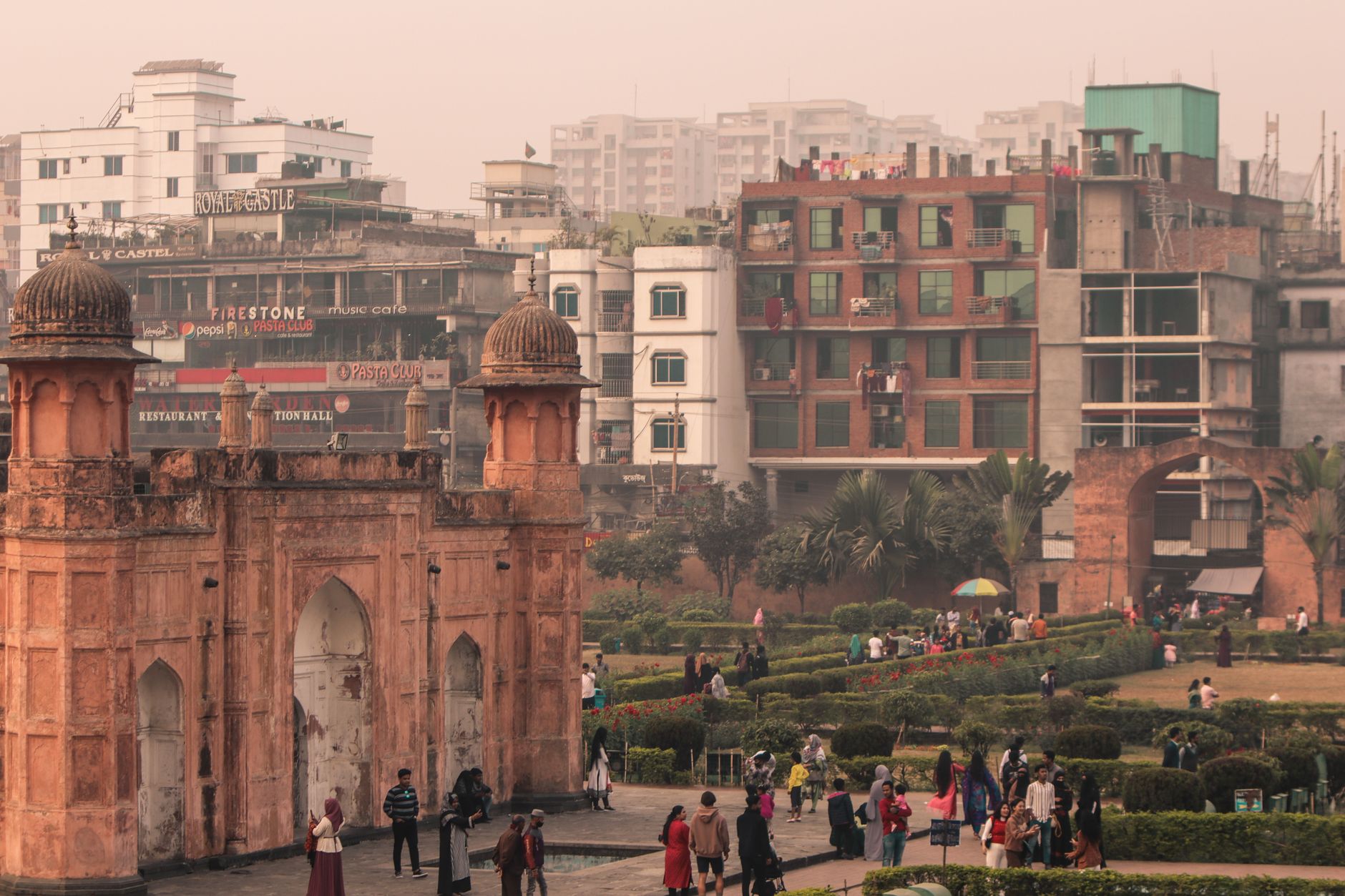
In Dhaka, architecture speaks another dialect entirely: compressed streets, Mughal inheritance, colonial leftovers, concrete improvisation, balconies watching traffic like minor aristocrats fallen on practical times. Beauty and fatigue share the same facade. That, too, feels truthful. Bangladesh builds under pressure, and the pressure shows.
Paharpur and Mahasthangarh point to a medieval Bengal that taught, traded, and argued with the rest of Asia. This is the Bangladesh most travelers never expect.
The world's largest mangrove forest gives Bangladesh its wildest scale. Mud, tide, tiger country, and river light do more than any brochure line ever could.
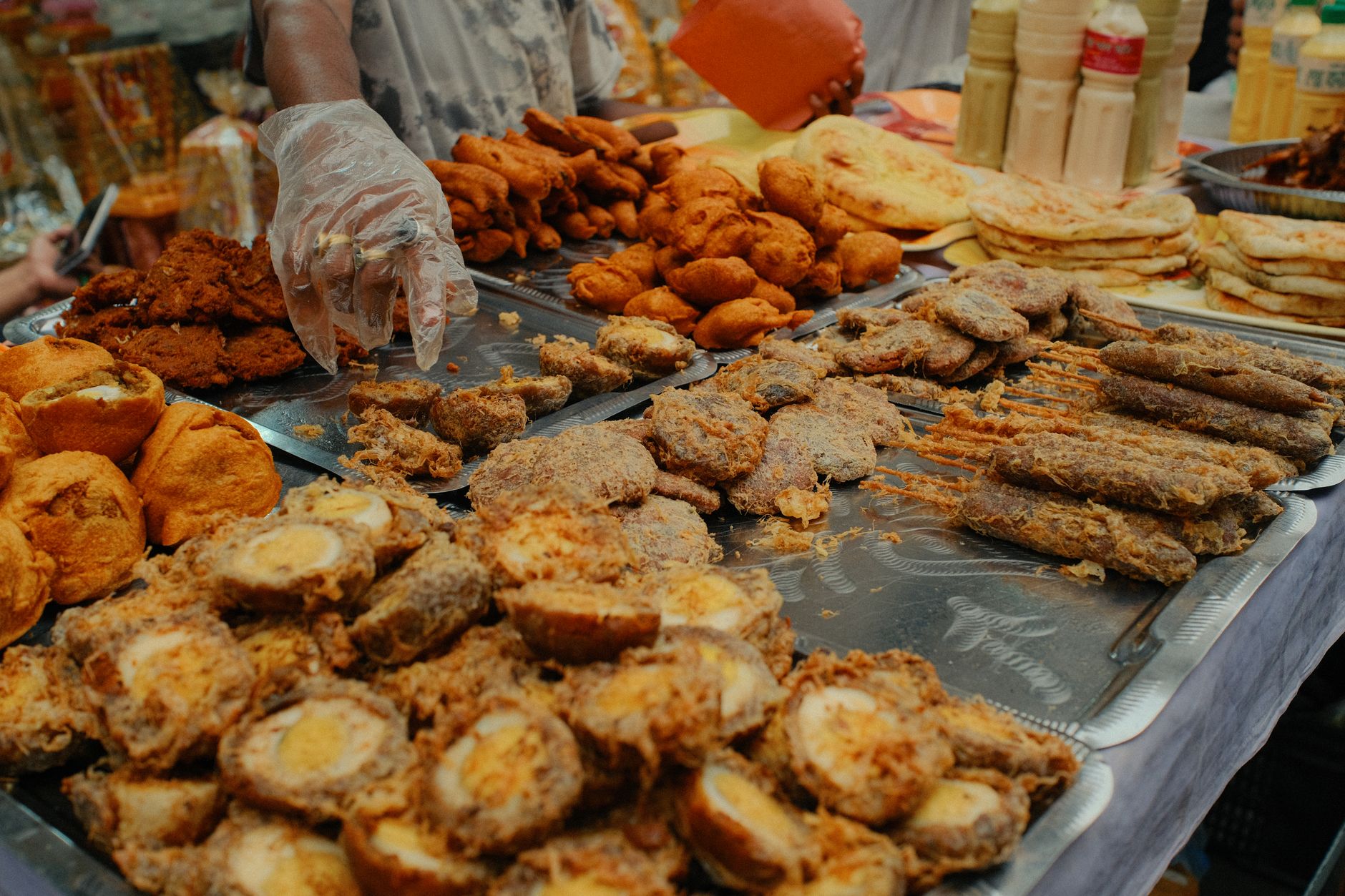
Kacchi biryani, bakarkhani, borhani, and nihari make Dhaka one of South Asia's most persuasive food cities. Come hungry and don't expect subtle portions.
Cox's Bazar brings the sea into a country better known for rivers. The appeal is not polish but sweep: long sand, salt air, and a very different rhythm from the inland cities.
Mosques, monasteries, shrines, and language memorials sit inside the same national story. Bangladesh makes religion and memory visible in everyday streets, not only in monuments.
Sylhet and Rangamati show another Bangladesh altogether: tea country, mist, hill roads, and a slower horizon. After the density of Dhaka, the change feels almost physical.
14 cities — start with the ones we'd send you to first.
Dhaka hits you first as noise and heat, then opens like a palimpsest: Mughal brick, concrete modernism, and biryani smoke sharing the same evening light. Stay patient, and the city starts speaking in layers.
Container cranes flicker like giraffes against the hill ridges, and the evening call to prayer drifts over rust-red freighters—Chittagong feels like a city permanently loading and unloading stories.
A place where Mughal ghosts crumble into the river mud, and the future of Dhaka piles up on the opposite bank. The air smells of diesel, wet earth, and something older, almost forgotten.
A district town where faith has a price tag—over nine crore taka in a day's donations—and the river divides the map but not the evening crowds seeking breeze and gossip.
The world's longest unbroken sea beach — 120 kilometres of it — backed not by resort sprawl but by fishing villages where wooden trawlers are painted the colour of turmeric.
A city that smells of tea and remittances, surrounded by the rolling green geometry of the world's largest tea gardens and fed by rivers that run cold even in April.
Silk and mangoes and a riverfront promenade on the Padma where the water is so wide in dry season it looks like a pale inland sea.
The gateway to the Sundarbans, a city of river ferries and jute warehouses that exists in productive tension with the largest mangrove forest on earth just downstream.
A town built on water, where the market arrives by boat at dawn and the surrounding beel wetlands fill with migratory birds from Siberia between November and February.
Dhaka is the country's pressure cooker: government, commerce, traffic, Mughal leftovers, and a street rhythm that never really turns off. Around it, Sonargaon and Keraniganj Upazila show the older and more workaday versions of the capital region, where river trade still explains more than any skyline does.
The northeast runs on shrine culture, tea estates, and a greener palette than much of the country. Sylhet has the urban weight, Srimangal brings the tea-country calm, and Kishoreganj Sadar Upazila opens a door toward the haor world that floods and reforms with the seasons.
This is Bangladesh at its most topographically surprising. Chittagong is a hard-working port with serious food, Rangamati pulls you into hill-country lake scenery, and Cox's Bazar stretches the coast into a very different idea of national geography.
Northwestern Bangladesh feels more spacious, more agricultural, and easier to read in historical layers. Rajshahi is the polished anchor, while Bogra and Paharpur hold some of the country's strongest evidence that Bengal's old centers of power and learning were far from the coast.
The southwest is where river travel starts to feel structural rather than scenic. Khulna is the practical gateway toward the Sundarbans, and Barisal gives you a more water-shaped urban life, with launches, ferries, and market traffic setting the daily tempo.
Dhaka’s famous Pink Palace was once the Nawabs’ riverside seat, and it still stands where grandeur, river trade, and Old Dhaka’s street chaos collide.
Bangladesh's most charged memorial began as a student-built structure that police demolished in three days, and still fills with flowers and protest.
Ships, runways, and the Bay of Bengal collide at Patenga, Chattogram's urban beach: come for sunset, street snacks, and the city at full volume daily.
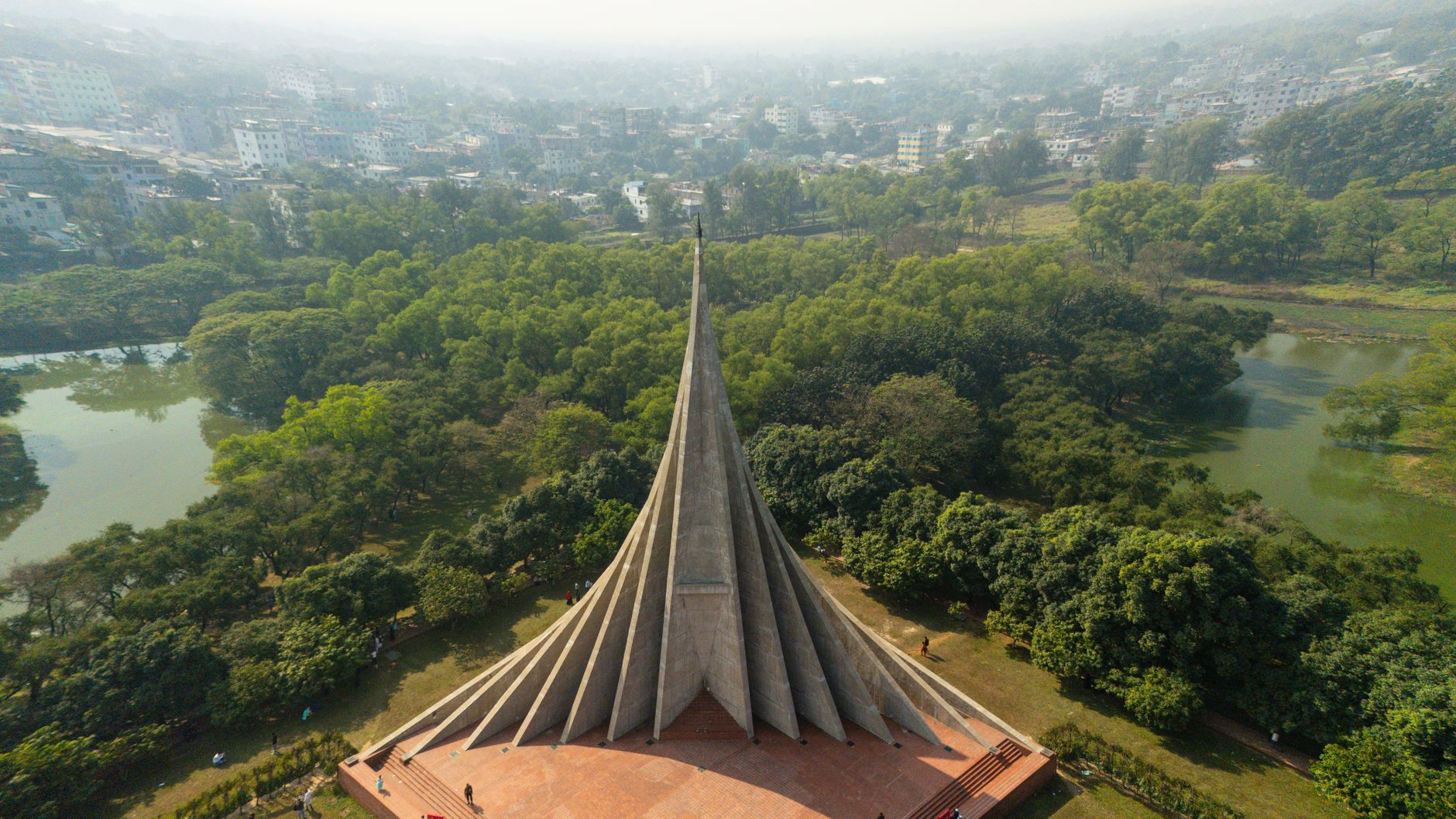
Seven concrete spires turn Bangladesh's war memory into a skyline.
From ancient river kingdoms to the language martyrs and the republic
The fortified city at Mahasthangarh, in today's Bogra region, emerges as one of the oldest urban sites in Bengal. A later Brahmi inscription about famine relief gives the place an unusually human beginning: officials counting grain while the delta worried about hunger.
Under Ashokan rule, the Pundra region is absorbed into a larger imperial system. Bengal is not remote here; it is already connected to one of South Asia's great political machines.
Archaeology at Wari-Bateshwar points to a merchant city tied into routes stretching toward the Mediterranean and Southeast Asia. Bengal's cosmopolitan life began much earlier than many visitors imagine.
Local chiefs elevate Gopala to kingship, beginning the Pala era. It is one of the more striking political moments in early South Asian history: a monarchy born from election rather than pure inheritance.
Dharmapala expands Pala influence and gives Bengal intellectual and political confidence. Monasteries, diplomacy, and royal ceremony turn the delta into a center rather than a margin.
Fishing communities in northern Bengal rise in a revolt so serious that the dynasty never fully regains its old assurance. Beneath imperial calm, social tensions have become impossible to ignore.
The Sena rulers replace the Palas and promote a stricter brahmanical order. Later memory associates Ballal Sena with Kulinism, a social ranking system that left many women stranded in prestige marriages without real married lives.
Lakshmanasena flees as Khilji's cavalry reaches his capital, and Bengal's political world turns sharply. The conquest does not merely replace one ruler with another; it begins a new civilizational alignment.
By the mid-14th century Bengal stands as an independent sultanate with its own courtly confidence. Islam in Bengal now speaks with a distinctly local accent, shaped by brick architecture, river geography, and Bengali culture.
Mughal power secures Bengal and folds its immense wealth into a larger imperial framework. Dhaka rises in importance as administration, trade, and textile production intensify.
Bengal's finest muslin reaches markets and courts far beyond the delta. The fabric is so delicate that it becomes part commerce, part myth, a symbol of the province's extraordinary prosperity.
Siraj ud-Daulah loses at Plassey in a contest shaped as much by betrayal as by combat. A trading company gains the leverage to dominate Bengal, and the colonial age begins in earnest.
The East India Company gains decisive fiscal control over Bengal. What had been a wealthy province of courts, merchants, and river towns becomes a revenue engine for empire.
The British partition Bengal, provoking fierce debate and mobilization across the region. Administrative lines expose deeper questions of religion, language, and representation that will not disappear.
With the end of British rule, eastern Bengal enters Pakistan as its eastern wing. The arrangement is geographically absurd and politically unstable, binding two wings separated by India and divided by language and power.
Students protesting for Bangla are shot in Dhaka on 21 February. The event transforms language from a cultural question into the emotional core of Bengali political identity.
The political will of East Pakistan becomes impossible to ignore, yet power is not transferred in a way Bengalis see as legitimate. The constitutional crisis turns grievance into impending rupture.
Military crackdown, mass violence, and war remake East Pakistan into Bangladesh. Independence comes on 16 December, but the nation's birth is inseparable from the civilian suffering that preceded it.
Bangladesh starts life as a sovereign state carrying the memory of language struggle and war. Its political future remains unsettled, but the national claim is now irreversible.
The killing of the country's founding leader shatters the emotional certainty of the early republic. Bangladesh enters a harder, more unstable chapter marked by coups and contested legacies.
Delta Kingdoms and Buddhist Bengal
Dharmapala emerges not as a remote emperor but as an astonishingly ambitious patron who wanted Bengal to command both learning and power.
A clerk stands over a stone at Mahasthangarh, in today's Bogra, counting out grain during a famine in the 3rd century BCE. That is how Bangladesh begins in the record: not with a trumpet blast, but with rice, anxiety, and administration. Before it was a country, this was Vanga, a delta so fertile that kingdoms rose from mud banks and trade routes, then vanished back into silt.
Ce que l'on ignore souvent, c'est que the earliest Bengal was already worldly. At Wari-Bateshwar, traders handled beads, semi-precious stones, and coins that had traveled from the Mediterranean. One can picture the riverfront: boats nudging the bank, brokers arguing over weight and color, goods leaving for places their owners would never see.
Then came the Pala age, one of the great hidden glories of South Asia. From the 8th century, Buddhist rulers such as Gopala and Dharmapala turned Bengal into an intellectual power, patronizing monasteries and universities while royal ambition traveled as far as Kanauj and Sumatra. The atmosphere changes completely here: less marketplace, more library, more bronze Buddha, more monastery courtyard after rain.
But splendor always attracts reaction. The Sena dynasty restored a stricter brahmanical order, and with Ballal Sena came social ranking sharpened into cruelty, especially for women trapped in the marriage politics of Kulinism. Lakshmanasena still surrounded himself with poets, yet when Bakhtiyar Khilji's cavalry arrived around 1203-1204, the old king fled his capital by boat, barefoot and half-finished with his meal. A civilization did not end in dignity. It ended in haste, and Bengal turned toward a new world.
Palm-leaf manuscripts rediscovered in Nepal in 1907 preserved Bengal's early Buddhist songs after they had been lost to the delta for roughly eight centuries.
Sultanate and Mughal Bengal
The nawabs of Bengal ruled a land so wealthy that every imperial center, from Delhi to London, wanted a hand on its purse.
A court robe rustles in Gaur, then later in Dhaka; outside, the air smells of wet earth, indigo, and river traffic. After the conquest came adaptation, and Bengal under its sultans became something far more interesting than a frontier outpost: an independent, Bengali-speaking Muslim court culture with its own taste, coinage, and confidence. This was no pale copy of Delhi.
The Bengal Sultanate, especially after the mid-14th century, built with brick because stone was scarce and rivers were everywhere. The result is one of the subcontinent's most distinctive architectural worlds: curved cornices, terracotta surfaces, prayer halls made for monsoon country rather than desert memory. In places such as Paharpur the deeper Buddhist past still haunted the landscape, while new capitals gave Islamic rule a resolutely Bengali face.
Then the Mughals folded Bengal into their empire, and Dhaka became one of the glittering cities of the east. Muslin, so fine it entered legend, moved through imperial and global markets; fortunes were made on cloth light enough to scandalize European imaginations. Ce que l'on ignore souvent, c'est que wealth in Bengal was never abstract. It sat in warehouses, in river fleets, in the bargaining power of merchants, zamindars, weavers, bankers.
And that wealth invited predators. By the 18th century, European companies had become political actors, not mere guests with ledgers. The courtly world of nawabs, rival factions, and merchant intrigue prepared the stage for the catastrophe to come in 1757, when the question ceased to be who would advise the throne and became who would own the province.
Bengal's famous muslin became a legend precisely because it seemed almost impossible: cloth so delicate that foreign observers wrote about it as if it were sorcery.
Company Rule, Colonial Bengal, and Partition
Siraj ud-Daulah is remembered as the doomed young nawab, but the tragedy lies less in his weakness than in the scale of the interests aligned against him.
A mango grove near Plassey in 1757, a humid morning, nervous allies, and Siraj ud-Daulah facing men who had arrived to trade and stayed to conspire. That battle has the vulgar smallness of many world-changing events. Betrayal mattered as much as gunfire. Bengal, one of the richest regions in Asia, slid into the grip of the East India Company.
What followed was not just foreign rule but extraction on a terrifying scale. Revenue systems hardened, commercial crops expanded, and the old balance between river, harvest, and local authority broke under imperial appetite. Dhaka, once famed for muslin, declined brutally as British industrial priorities remade trade; the elegance of the fabric survived in memory longer than in workshops.
Yet Bengal also became a furnace of ideas. Reformers, writers, anti-colonial organizers, and religious thinkers argued over what modern life should mean in a Muslim-majority eastern Bengal tied uneasily to Calcutta's political orbit. Ce que l'on ignore souvent, c'est que the future Bangladesh was being imagined long before anyone used the name, in debates over language, peasant rights, representation, and dignity.
Partition in 1947 solved nothing neatly. Eastern Bengal became East Pakistan, separated from West Pakistan by more than 1,500 kilometers of Indian territory and by a profound difference of language, memory, and political weight. The map changed overnight. The grievance remained, waiting for its voice.
The Battle of Plassey, which altered the fate of Bengal and eventually much of South Asia, took place in a mango grove rather than on some grand ceremonial plain.
Language, Liberation, and the Republic
Sheikh Mujibur Rahman remains the central father-figure of the nation: magnetic, thunderous, adored, and tragically mortal.
A student falls in Dhaka on 21 February 1952, shot during protests over language. One can begin nowhere else for modern Bangladesh. Urdu had been imposed as the sole state language of Pakistan, and Bengalis answered with bodies, slogans, and a ferocious insistence that speech itself was worth dying for. Few modern nations can say their identity was sealed first by grammar, then by blood.
The decades that followed sharpened every contradiction. East Pakistan supplied population, labor, and cultural richness, yet power remained concentrated in the west. Elections, military rule, and economic imbalance pushed the crisis toward rupture. Ce que l'on ignore souvent, c'est que independence was not born from one grievance but from an accumulation: language, neglect, contempt, and the refusal to let a Bengali electoral mandate govern Pakistan.
In 1971 the break came. Sheikh Mujibur Rahman's call, the Pakistani army's crackdown, the flood of refugees into India, and a brutal war transformed East Pakistan into Bangladesh. Independence is dated to 16 December 1971, but the cost lies in the months before it: villages burned, women violated, intellectuals targeted, families split across borders and battle lines.
The republic that emerged has never been simple. Coups, assassinations, military regimes, democratic returns, garment-factory growth, riverine vulnerability, and a culture still marked by poetry and protest have all shaped the state. Walk in Dhaka today and you feel it at once: a young country with ancient reflexes, still arguing about justice in the shadow of a language martyr's grave. That argument is not a weakness. It is the inheritance.
International Mother Language Day, now observed worldwide, grew from the bloodshed of the Bengali Language Movement in Dhaka.
Bangla does not merely communicate. It classifies affection with the accuracy of a jeweler weighing gold. In Bangladesh, one syllable can lift you into respect or drop you into intimacy: apni for distance and courtesy, tumi for the middle ground of ordinary warmth, tui for love, insolence, childhood, or all three in one breath. A language that keeps separate drawers for tenderness and hierarchy understands society with unnerving precision.
You feel this most quickly in Dhaka, where a shopkeeper may call you bhai or apa before learning your name. Family grammar arrives first. Identity comes later. The effect is both generous and faintly alarming, as if the country has adopted you before checking your papers.
Then February returns, and language stops being a tool and becomes memory with a pulse. The 21st is not an empty commemoration here. Bangla was defended with bodies in 1952, which explains why words in Bangladesh are handled with ceremony, pride, and a seriousness that can turn a simple greeting into a civic act.
Bangladesh eats as delta countries should: with wet fingers, quick appetite, and total faith in rice. Fish arrives as argument and inheritance. Mustard oil enters the room before the cook does. A plate here is rarely composed in the European sense; it is assembled mouthful by mouthful, rice touched to curry, rice pressed into bhorta, rice quieting the authority of chili. Civilization can be measured by how well it teaches the hand to think.
In Old Dhaka, kacchi biryani has the solemnity of a coronation. In Chittagong, mezban beef rejects solemnity and chooses force. One offers perfume and ceremony; the other gives spice and collective sweat. Both understand that feeding people is never just feeding people.
The dishes that stay with you are often the least theatrical. Bhapa pitha in winter, steam trapped inside rice flour and date-palm jaggery. Shorshe ilish, whose fine bones oblige humility. Bhuna khichuri on a rain-heavy afternoon, when weather and appetite sign a temporary peace treaty. A country is a table set for strangers.
Literature in Bangladesh does not sit politely on a shelf. It sings, argues, protests, and occasionally enters the room disguised as a national anthem. Rabindranath Tagore is part of the air, but Kazi Nazrul Islam brings the voltage: rebellion in meter, devotion with clenched teeth, lyricism that does not apologize for having a spine. The page here has public consequences.
What moves me most is the old habit of mixing the mystical with the bodily. The lost charyapada songs from the delta did this a thousand years ago, hiding spiritual instruction inside ferrymen, lotus flowers, hunger, and desire. Enlightenment, apparently, could wear muddy feet. Good. Otherwise it would be unbearable.
In Rajshahi or Dhaka, an educated conversation can turn from poetry to politics without warning because, in Bangladesh, the border between the two was never especially solid. Language was fought for. Songs became evidence. A line of verse may still carry more social temperature than a speech. That is not nostalgia. That is literary muscle.
Bangladeshi etiquette prefers indirection to collision. A blunt refusal can feel almost indecent, so agreement may arrive wearing the costume of delay: I will try sometimes means no, but a no too civilized to wound. Foreigners who listen only to grammar miss the plot. Tone does the heavier work.
The body observes rules as carefully as the tongue. The right hand offers food, receives change, performs the social act. The left hand carries, steadies, assists, but should not make the ceremonial entrance. This distinction sounds small until you realize how many daily rituals depend on it.
You notice the finer calibrations over tea. Elders first. Guests urged to eat again after they have plainly eaten enough. Men greeting softly. Women and men gauging the comfort of a handshake rather than assuming it. The code is not rigid everywhere, especially in Dhaka, but it remains legible. Manners here are less about display than about sparing the other person embarrassment, which is a form of grace and also, let us admit, a subtle national art.
Religion in Bangladesh is audible before it is visible. The call to prayer moves through city noise not as interruption but as a second weather system. A room can smell of cardamom tea, diesel, damp cloth, frying oil, and faith all at once. The combination is oddly persuasive.
What interests me is not piety as spectacle but ritual as daily architecture. Ramadan changes the hour of appetite. Iftar rearranges streets, tables, tempers, and hunger. A bowl of haleem or a paper packet of chola bhuna, beguni, and jilapi is not only food at sunset; it is the sound of restraint releasing itself.
Bangladesh has also inherited older layers that still murmur under the surface. The Buddhist memory of Paharpur remains in brick and plan, a reminder that belief changes kingdoms but rarely erases the ground beneath them. A country of rivers learns this early: new currents arrive, the old water stays.
Architecture in Bangladesh rarely behaves like stone certainty. The land is too wet, too fertile, too prone to swallowing certainty whole. Brick becomes the material of memory because brick accepts weather, staining, repair, and survival without pretending immortality. Buildings here often look as if they have negotiated with rain for centuries and consider the result acceptable.
Paharpur says this most clearly. The vast Buddhist monastery once belonged to the Pala world, when Bengal helped educate half of Asia; now its exposed geometry sits under an open sky, austere and patient, like an argument that lost its empire but kept its logic. Ruins can be vain. This one is not.
In Dhaka, architecture speaks another dialect entirely: compressed streets, Mughal inheritance, colonial leftovers, concrete improvisation, balconies watching traffic like minor aristocrats fallen on practical times. Beauty and fatigue share the same facade. That, too, feels truthful. Bangladesh builds under pressure, and the pressure shows.
Dharmapala helped make early Bengal a center of Buddhist learning rather than a provincial backwater. Behind the imperial grandeur one senses a ruler obsessed with legitimacy, assembling courts, monasteries, and alliances so that Bengal would no longer be spoken of as the edge of the world.
Ballal Sena is remembered less for conquest than for social engineering. Later tradition ties him to Kulinism, a ranking system whose polished ritual language concealed a great deal of private misery, especially for women traded into prestige marriages.
Lakshmanasena kept poets close and ruled a court of refinement, but history remembers the humiliating image of his flight when Bakhtiyar Khilji's cavalry arrived. It is one of those scenes that shrink a dynasty to a single human gesture: an old king escaping by boat before lunch was finished.
Bakhtiyar Khilji changed Bengal with startling speed, arriving with a cavalry force small enough to make the result seem almost theatrical. His victory was more than a military episode; it redirected the political and religious future of the delta.
Jayadeva gave the region one of its most sensuous literary masterpieces, the Gita Govinda. In Bengal's memory he stands at that exquisite late-courtly moment just before everything shifts, when devotion, eros, and royal patronage still seemed secure.
Siraj ud-Daulah became the tragic young prince of Bengal's colonial turning point. He is often judged for inexperience, but what matters is the scale of the trap around him: faction at court, mercantile intrigue, and an empire-in-waiting disguised as a company.
Tagore belongs to Bengal as a whole, yet Bangladesh claimed him with particular tenderness. The national anthem is his, which means the republic sings itself into being through the voice of a poet born before it existed.
Nazrul brought rebellion, love, Islam, Hindu imagery, and musical force into the same breath. Bangladesh honors him because he sounds like the country at its most restless: anti-tyrannical, lyrical, impatient with hierarchy, impossible to keep in one box.
Mujib turned political grievance into national destiny through sheer force of presence and language. His story is not marble-pedestal history; it is the story of a leader who became indispensable to millions and therefore fatally vulnerable in the republic he helped create.
This is the shortest route that still explains the country. Base yourself in Dhaka, cross into Keraniganj Upazila for a look at the city's working edge, then head to Sonargaon for the older political story that existed before the capital became a megacity.
Sylhet and Srimangal give you a greener, slower Bangladesh built around tea gardens, shrines, and heavy air after rain. Add Kishoreganj Sadar Upazila for a look at riverine central Bangladesh without falling back into the capital orbit.
Southeastern Bangladesh changes mood fast: port-city pressure in Chittagong, lake country and hill communities around Rangamati, then the long shore at Cox's Bazar. The route is compact enough to make sense by road, but varied enough that each stop feels like a different country chapter.
This longer route starts in the northwest at Bogra and Paharpur, where Bangladesh's deep past is easier to picture in brick and open sky, then shifts to Rajshahi for silk and mango country before dropping south to Khulna and Barisal. It works best for travelers who prefer layered history, river travel, and a trip that gets quieter as it goes on.
Pahela Baishakh morning. Cold soaked rice, fried hilsa, onion, green chili. Family tables, office groups, fingers, laughter.
Lunch, often with relatives. Rice, mustard, fish, bones, patience. Slow eating, quiet concentration.
Wedding halls, Eid tables, Old Dhaka feasts. Mutton, rice, potato, sealed pot, late appetite. Shared platters, long talk.
Rainy day food. Rice, lentils, egg fry or beef, pickle. Home kitchens, metal plates, windows full of water.
Chittagong gatherings, public meals, family ceremonies. Beef curry, white rice, crowds, heat, second helpings. Nobody leaves hungry.
Winter evening ritual. Steamed rice cake, coconut, date-palm jaggery. Street stalls, breath in the cold, sugar on the fingertips.
Ramadan sunset. Chickpeas, fried eggplant, syrup coils, water, prayer, release. Homes, mosque courtyards, shopfront counters.


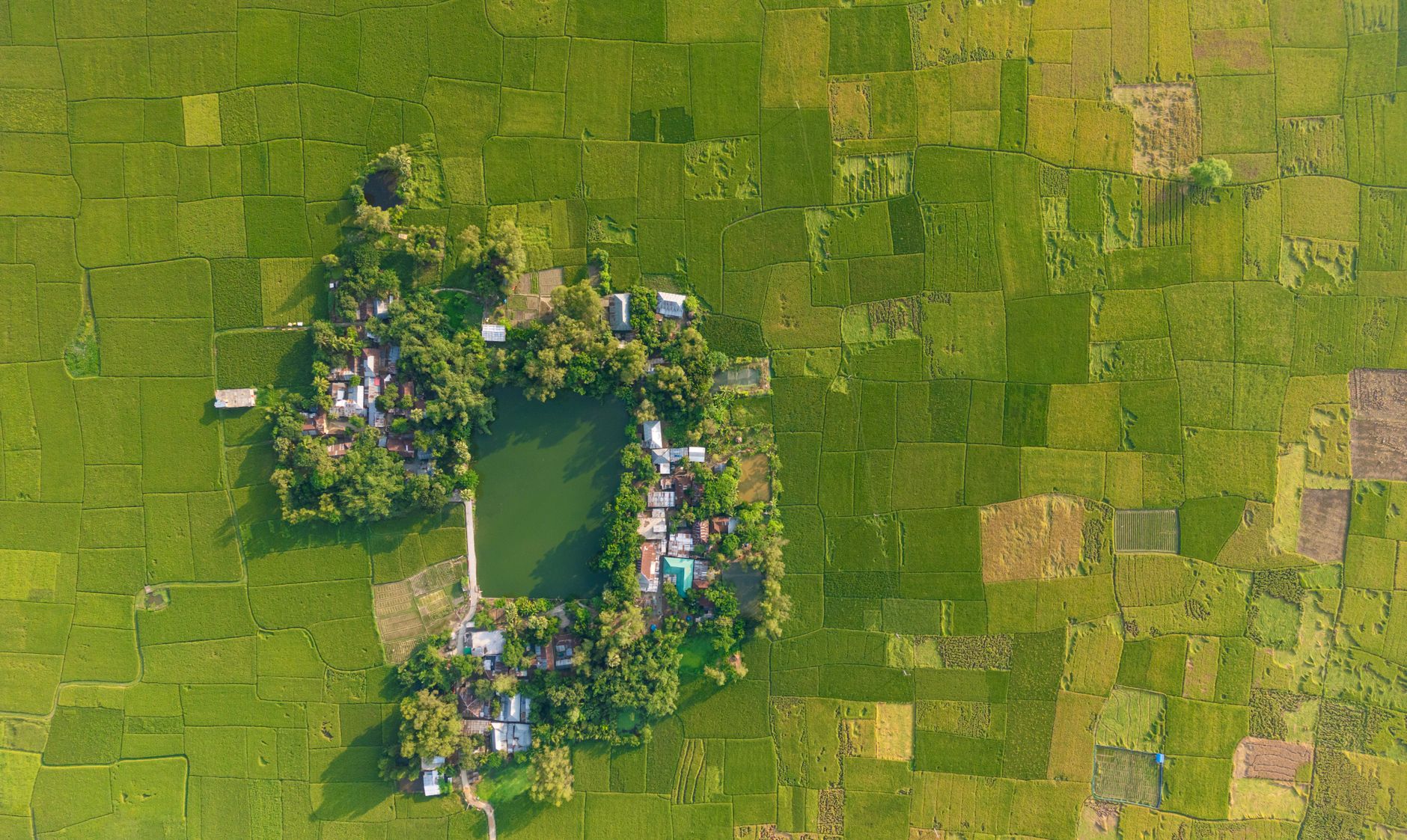




Bangladesh runs an official visa on arrival system for US, Canadian, UK, Australian, and many European passport holders, but the final decision still sits with the immigration officer. Bring a passport with validity left, printed hotel and return-flight proof, passport photos if you have them, and USD cash for the fee; the official visa on arrival is single-entry and usually issued for up to 30 days.
The local currency is the Bangladeshi taka, written as BDT, Tk, or the symbol ৳. Cash still does most of the work outside better hotels, malls, and formal restaurants, and it is smart to ask whether VAT or service is already included before you pay because quoted prices are not always final.
Most international travelers arrive through Dhaka at Hazrat Shahjalal International Airport, which has the widest route network and the most familiar visa-on-arrival setup. Chittagong and Sylhet also handle international flights, and overland travelers can use rail links with India such as the Maitree, Bandhan, and Mitali services when they are running.
For long distances, trains are usually the best choice when the route exists and tickets are available, especially on lines linking Dhaka with Chittagong, Sylhet, and Rajshahi. Roads can be slow and unpredictable, so book key train tickets early, use domestic flights when time matters, and keep day plans loose enough to absorb delays.
The easiest travel window is November to February, when the air is drier, temperatures are kinder, and moving around is less punishing. June to October is monsoon season, which means lush landscapes and dramatic skies but also heavy rain, humidity, and transport disruption.
Mobile data is the practical internet option for most travelers, especially once you leave big-city business districts. Hotels and cafes in Dhaka, Chittagong, and Sylhet often offer Wi-Fi, but speeds vary, outages happen, and a local SIM or eSIM is the safer choice if you need maps, ride-hailing, or ticket apps on the move.
Bangladesh rewards patient, planned travel more than improvisation. Keep an eye on local advice during monsoon periods, use registered transport late at night, carry small notes for routine payments, and build extra time around flights, ferries, and road journeys because disruption is common even when nothing is technically wrong.
Keep low-denomination taka on you for rickshaws, snacks, station tips, and ferries. Big notes are awkward in markets and can slow down simple transactions.
Good rail seats on popular routes do not sit around waiting for indecisive travelers. If you know your date for Dhaka, Chittagong, Sylhet, or Rajshahi, book as soon as the schedule opens.
Ask one direct question before paying for a room or meal: is VAT and service already included? The answer changes the real cost more often than it should.
Hotel Wi-Fi can be fine, then collapse without warning. A local SIM or eSIM is the more reliable setup for maps, ride-hailing, and train-ticket checks.
Roads clog, ferries wait, rain rewrites plans, and airport formalities can move at their own speed. Build slack into every transfer day, especially in monsoon months.
In many local settings, food is handled with the right hand and shared plates are normal. Follow the table's rhythm before you start photographing or asking for cutlery.
Tipping is not a theatrical performance here. Round up for rickshaws and CNGs, tip 5 to 10 percent in restaurants if service is not already added, and keep BDT 50 to 100 ready for porters or housekeeping.
Explore Bangladesh with a personal guide in your pocket
Audio guides for 1,100+ cities across 96 countries. History, stories, and local insight — offline ready.
Often, yes, but many US, UK, Canadian, Australian, and European passport holders can get a visa on arrival instead of arranging one in advance. That visa on arrival is discretionary, usually single-entry for up to 30 days, so carry printed onward proof, hotel details, and USD cash rather than assuming the desk will sort it out for you.
No, by regional standards Bangladesh is still a budget-friendly destination. A careful traveler can get by on about BDT 3,000 to 5,000 a day, while mid-range comfort with better hotels, AC transport, and some domestic travel lands closer to BDT 6,500 to 10,000.
January is usually the easiest single month for most travelers. More broadly, November through February gives you the driest and most comfortable conditions, while June through October brings monsoon rain, humidity, and more transport disruption.
Usually yes, if you travel with patience and plan the logistics properly. The main problems are more often transport delays, crowding, weather disruption, and inconsistent road safety than dramatic crime, so use registered transport, avoid careless late-night transfers, and keep your itinerary realistic.
Trains are usually the best long-distance option when they exist on your route and you can get tickets. Buses cover more places but are less comfortable and less predictable, while domestic flights make sense when you need to bridge long distances such as the southwest to the northeast without losing a full day.
Sometimes, but do not plan your trip as if Bangladesh were card-first. Cards work in upmarket hotels, better restaurants, airlines, and some malls in Dhaka, Chittagong, and Sylhet, while everyday transport, markets, and smaller businesses still expect cash.
Seven days is enough for a focused first trip, but 10 to 14 days gives the country room to make sense. Distances are not huge on a map, yet travel can be slow, so extra days buy you more than extra kilometers.
Yes, if you want coast and a different pace after cities or hill country. It works best when paired with Chittagong and Rangamati, not as a rushed add-on from Dhaka for a single night.
Last reviewed