Introduction
The first thing that hits you in Nassau isn’t the turquoise water—it’s the sound. Cowbells clanging from a Junkanoo practice session echo off pastel walls while a conch-shell horn blast drifts over from the docks. The Bahamian capital moves to its own syncopated rhythm, a place where 18th-century forts cast shadows over roadside fish shacks serving the fiercest cracked conch in the hemisphere.
New Providence is only 21 miles long, but Nassau crams more layers per square block than cities ten times its size. One minute you’re tracing the 65 steps of the Queen’s Staircase, hand-chopped by enslaved Africans into solid limestone in 1793. The next you’re inside Villa Doyle, an 1860s mansion turned National Art Gallery, staring down a contemporary canvas that reimagines those same limestone walls as a backdrop for Bahamian identity politics.
The city keeps its stories close. Ask a taxi driver about the flamingo parade at Ardastra Gardens and he’ll also tell you which back gate guard lets photographers in free after 3 pm. Mention Sky Juice to a bartender and she’ll nod, then quietly swap rum brands depending on whether you’re ordering the coconut-water version or the one spiked with sweet condensed milk that locals call “receding tide.”
Nassau rewards the curious. The Straw Market looks like tourist tat until you notice an elder weaving silver-palm straw into the same pattern her grandmother sold to Duke and Duchess of Windsor in 1941. Arawak Cay appears to be a single restaurant strip until you clock the difference between Potters Cay’s under-the-bridge shacks and the neon-lit fish-fry yards three blocks west.
What Makes This City Special
Limestone History Carved by Hand
The 66 steps of Queen's Staircase were hacked from solid rock by enslaved Africans in 1793-94, each blow echoing for six weeks. Climb to Fort Fincastle above and you can still trace the chisel scars against a backdrop of harbour panoramas.
Junkanoo Is Nassau's Heartbeat
Every Boxing Day and New Year's, 100-member brass bands storm Bay Street in feathered costumes that weigh 30 kg but float like paper. The rhythm is impossible to escape—visit Educulture Junkanoo Museum to see last year's winning suit up close and hear the cowbells ring.
Pigs That Paddle in Paradise
A 35-minute flight drops you on Big Major Cay where feral pigs have learned to swim out to incoming boats, snouts high above the electric blue Exuma shallows. The sight of 200-pound hogs dog-paddling like Labradors rewires your definition of island wildlife.
Fish Fry After Dark
When the cruise crowds retreat, Arawak Cay lights up with 20 shacks serving cracked conch and cold Kalik. Locals debate which stall reigns supreme while the smell of scotch-bonnet peppers drifts across the man-made island built from 1969 dredging spoils.
Historical Timeline
From Pirate Haven to Island Capital
Nassau's 300-year transformation through slavery, empire, and independence
British Settlers Arrive
Bermudian Puritans land on New Providence, planting the first permanent seeds of what becomes Nassau. They found Charles Town on the harbor's edge, naming it after the king who granted their charter. Within a decade, the settlement grows from tents to timber houses, the beginning of every Nassau story.
Charles Town Established
The settlement officially becomes Charles Town, seat of the Bahamian colony. Wooden docks stretch into the shallow harbor where sloops unload salted fish and molasses. The first Anglican services are held under a palm-thatched roof, the sound of hymns mixing with waves against limestone rocks.
Spanish Raid Destroys Town
Spanish ships burn Charles Town to the ground, leaving only charred foundations and the smell of gunpowder in the sea air. Survivors hide in the bush for days, eating sea grapes and raw conch. When they rebuild, they choose higher ground and thicker walls, learning the first hard lesson of Caribbean sovereignty.
Pirates Declare Republic
Henry Avery and Blackbeard's crews establish the 'Privateers' Republic' in Nassau's harbor. They fly black flags from every mast, turning Charles Town into a free port where stolen Spanish gold changes hands in taverns lit by whale oil lamps. The town becomes a magnet for every rogue sailor in the West Indies.
Woodes Rogers Cleans House
King George's governor sails into Nassau harbor with three warships and a royal pardon. Rogers offers pirates a choice: take the pardon or hang from the new gallows on Bay Street. Within months, the black flags disappear, replaced by Union Jacks, and Charles Town officially becomes Nassau.
Fort Montgu Rises
Governor Tinker completes Fort Montagu at the harbor's eastern mouth, mounting twelve-pound cannons that can sink any ship fool enough to attack. The fort's limestone walls are eighteen feet thick, quarried from the same coral rock that forms the island's spine. For the first time, Nassau can defend itself.
American Raiders Strike
Continental Navy ships under Esek Hopkins sail into Nassau harbor at dawn, their decks crowded with marines. They loot Fort Nassau's powder magazine, rolling 88 barrels of gunpowder onto their ships. The raid lasts eight hours and leaves Nassau's defenders firing their last rounds into empty water.
Spanish Occupation Begins
Spanish troops march up Bay Street under the hot April sun, their white uniforms already stained with red dust. They rename the town Puerto de Nuestra Señora de la Concepción, but everyone still calls it Nassau. Catholic priests take over Christ Church, turning the Anglican altar into a tabernacle.
British Retake Nassau
Loyalist Andrew Deveaux lands at night with 220 men, slipping past Spanish sentries in small boats. They retake Fort Montagu by dawn, the Union Jack rising again over Nassau's harbor. The Spanish surrender without a shot fired, ending eleven months of occupation.
Queen's Staircase Carved
Sixty-five enslaved Africans carve 66 steps into solid limestone, cutting through 102 feet of rock with hand tools. Each blow of the hammer echoes through the gorge for three years. They name it after Queen Victoria, but locals will always call it the 66 Steps, counting the buried first step.
Government House Completed
The pink Georgian mansion rises above Nassau's harbor, its colonnades casting long shadows across Government Hill. Inside, mahogany furniture shipped from London sits uncomfortably in rooms designed for cooler climates. The governor hosts tea parties while hurricanes batter the shutters outside.
Emancipation Reaches Bahamas
On August 1st, church bells ring across Nassau as 3,000 enslaved Bahamians walk free. The market at Pompey Square fills with formerly enslaved people selling fruits and fish, their laughter mixing with the sound of hammers rebuilding their lives. Bay Street merchants grumble, but the city begins to breathe differently.
Blockade Running Boom
Nassau becomes the Confederacy's lifeline, with fast sloops slipping past Union ships loaded with cotton bound for Liverpool. The harbor clogs with merchant vessels flying British flags, their holds stuffed with rifles and medical supplies. Bay Street counting houses handle more gold in a month than they used to see in a decade.
Sir Lynden Pindling Born
Born in Nassau's Bain Town, the boy who would lead the Bahamas to independence first learns politics watching his father organize dock workers. Young Pindling sells newspapers on Bay Street, hearing colonial officials dismiss Bahamians as 'children of empire.' He remembers every slight.
Steamship Tourism Begins
The first cruise ship from New York anchors in Nassau harbor, disgorging 200 Americans in white linen suits. They photograph 'quaint natives' and buy straw baskets from women who've been weaving the same patterns for generations. The Government House hosts a garden party where champagne flows despite the 85-degree heat.
Hurricane Destroys Government House
A Category 4 hurricane tears the roof off Government House and flattens half of downtown Nassau. Palm trees snap like matchsticks, their fronds whipping through the air like knives. When the storm clears, residents pick through rubble while yachts lie scattered across Bay Street like children's toys.
Duke of Windsor Arrives
The former King Edward VIII lands in Nassau as governor, bringing Wallis Simpson and their continental sophistication to the colonial capital. They install air conditioning in Government House and host cocktail parties where local elites learn to drink gin fizzes. Bahamians watch the royal couple drive around in a Buick convertible, wondering what this means for their future.
Independence at Midnight
At 11:59 PM on July 9th, the Union Jack flies over Government House for the last time. When the clock strikes twelve, the Bahamian flag rises to cheers from 50,000 people crowded into Rawson Square. Sir Lynden Pindling proclaims: 'Forward, upward, onward together,' as fireworks explode over a harbor that's finally, completely theirs.
Atlantis Opens Paradise
The $800 million Atlantis resort rises from Paradise Island's swamps, its pink towers visible from every Nassau hilltop. Tourists arrive by the thousands to slide through shark tanks and gamble in casinos where locals aren't allowed to play. Downtown's straw markets struggle against duty-free jewelry stores selling diamonds to cruise passengers.
UNESCO Crafts City
Nassau joins UNESCO's Creative Cities Network for Crafts and Folk Art, recognizing the straw weavers of Gambier Village and the wood carvers of Fox Hill. The government markets 'authentic Bahamian culture' while cruise ships dock three deep in the harbor. Traditional crafts sell for tourist prices in air-conditioned malls, but the old women still weave under almond trees.
Hurricane Dorian's Shadow
While Dorian devastates Grand Bahama, Nassau becomes a refuge for 5,000 displaced survivors sleeping in school gyms and church halls. The city feeds and clothes them while watching weather reports with new dread. Bay Street merchants donate proceeds, but everyone knows the next big storm could turn Nassau into what's left of Freeport.
Notable Figures
John Watling
d. 1681 · Pirate / Rum NamesakeWatling supposedly holed up on the estate that now bears his name; the distillery tour jokes he’d approve of the aged rum, though in his day it was raw cane juice cut with seawater.
Sir Roland Symonette
1898–1980 · First Premier of the BahamasHe steered the colony toward self-rule from an office overlooking Rawson Square; today Bahamians still argue over whether he’d toast Junkanoo with Sky Juice or champagne.
Photo Gallery
Explore Nassau in Pictures
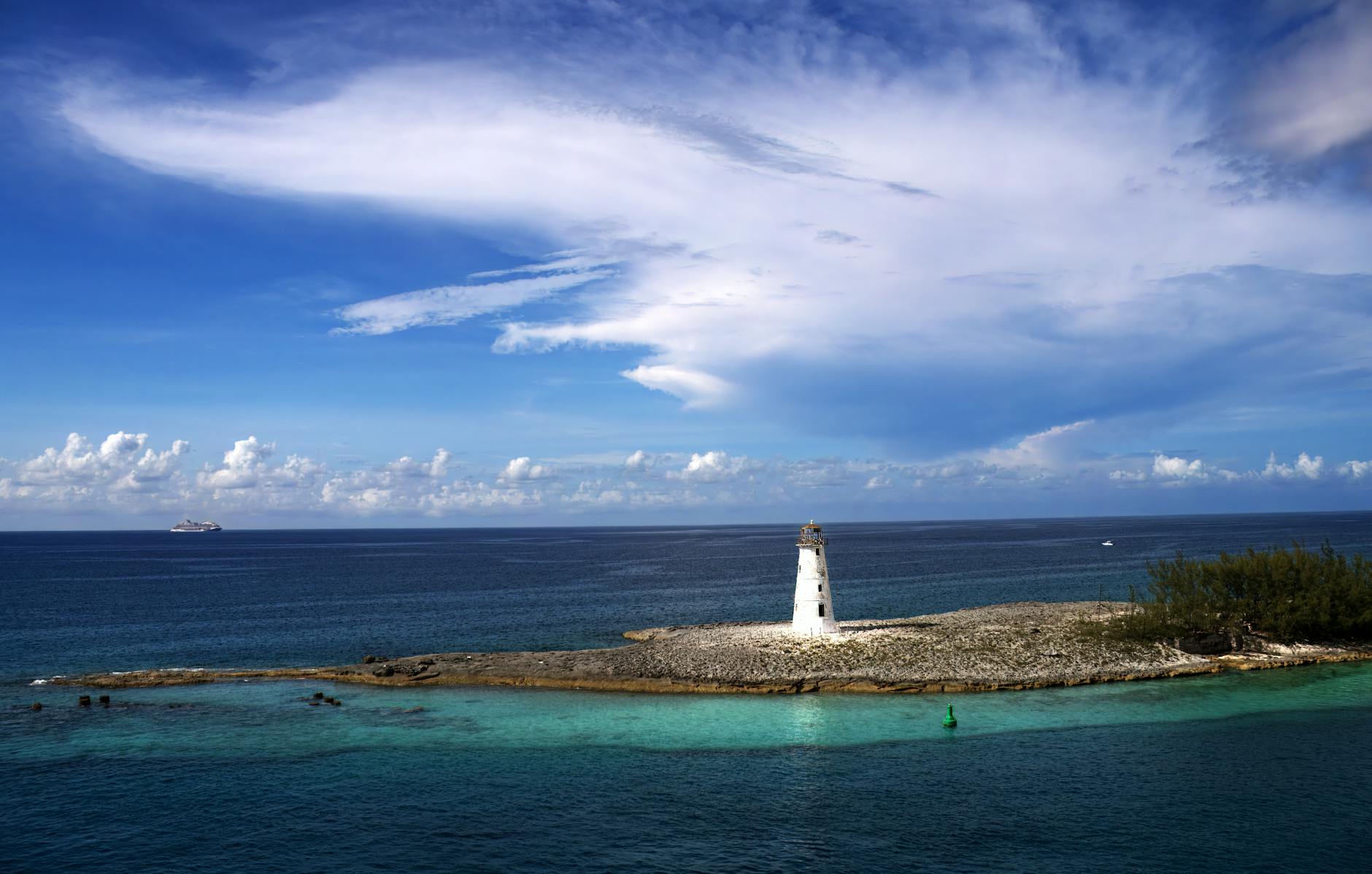
The historic Hog Island Lighthouse stands as a beacon on a rocky cay overlooking the vibrant turquoise waters of Nassau, Bahamas.
Simon Hurry on Pexels · Pexels License
A picturesque view of a historic lighthouse standing on a rocky cay in Nassau, Bahamas, with a tugboat resting in the vibrant turquoise waters.
Diego F. Parra on Pexels · Pexels License
The vibrant Norwegian Gem cruise ship sits docked at the sunny port of Nassau, Bahamas, showcasing its colorful hull art.
Abdel Achkouk on Pexels · Pexels License
An expansive aerial perspective of the luxurious Baha Mar resort complex in Nassau, Bahamas, showcasing its iconic architecture and tropical pool landscape.
Mikhail Nilov on Pexels · Pexels License
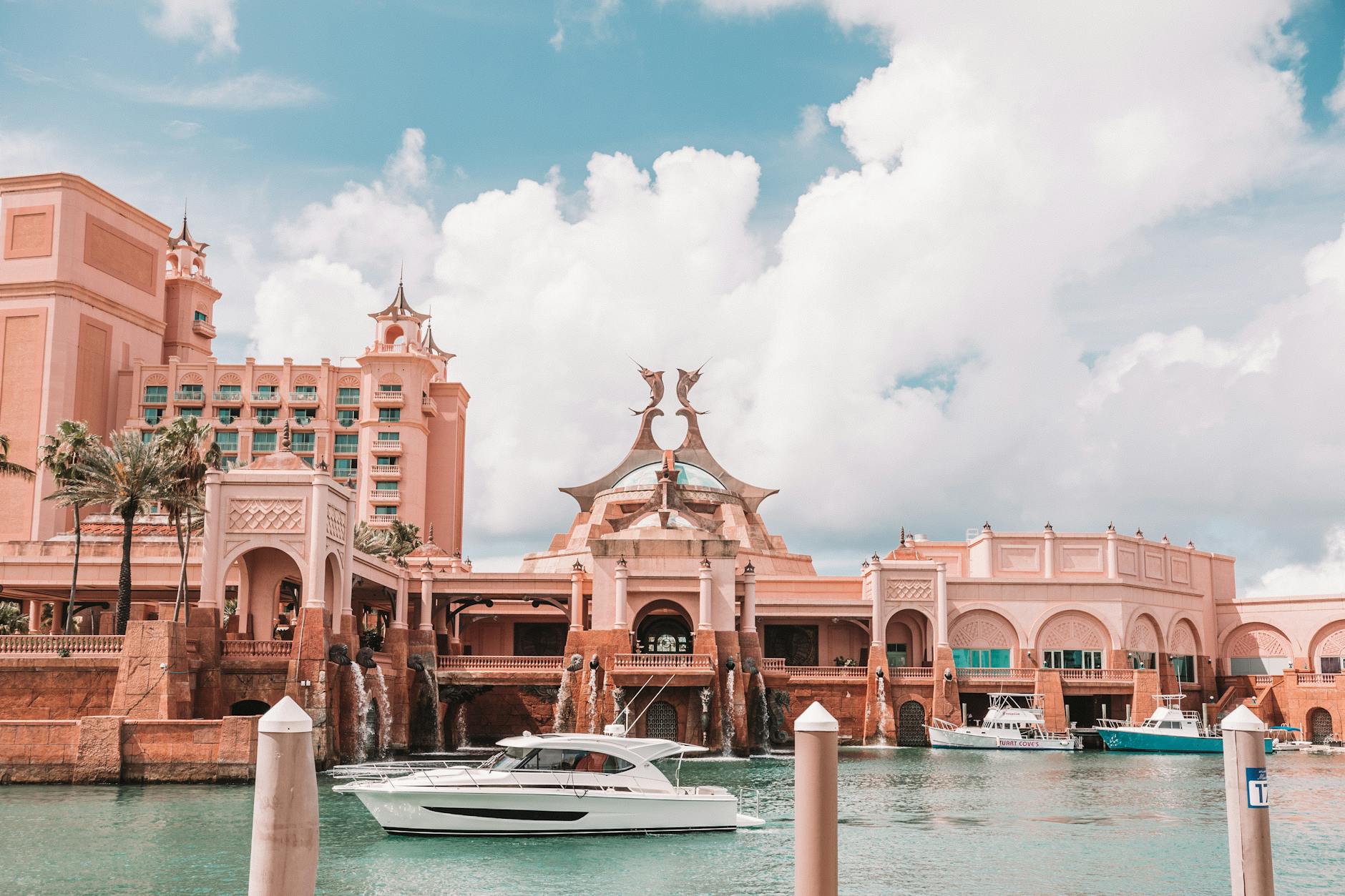
The majestic pink facade of the Atlantis resort stands out against the tropical sky in Nassau, Bahamas.
Leonardo Rossatti on Pexels · Pexels License
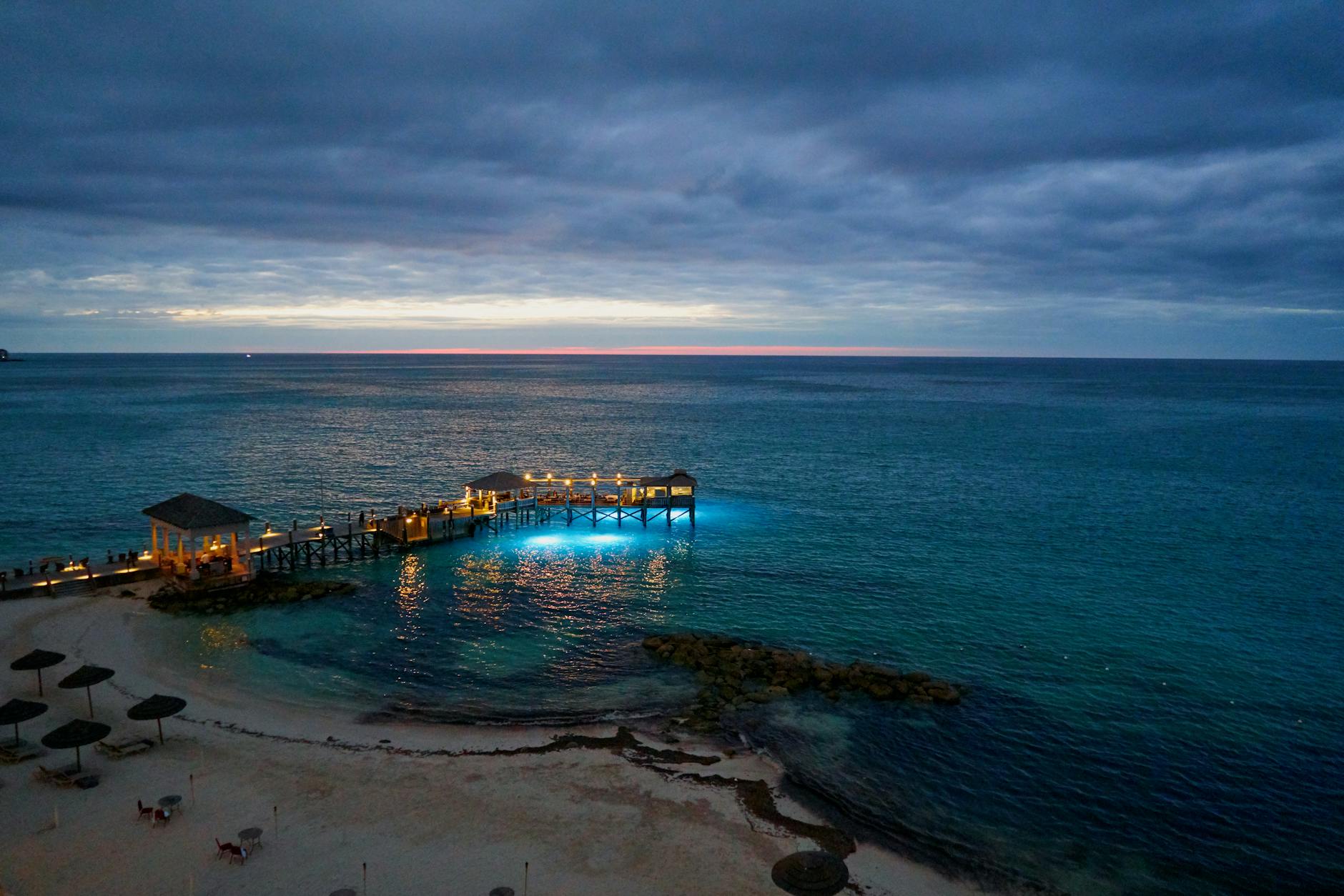
A stunning aerial view of a lit pier extending into the turquoise waters of Nassau, Bahamas at dusk.
Francisco Cornellana Castells on Pexels · Pexels License
The majestic pink towers of the Atlantis resort stand as a prominent landmark amidst the lush tropical landscape of Nassau, Bahamas.
ACkats Films on Pexels · Pexels License
Practical Information
Getting There
Lynden Pindling International Airport (NAS) sits 14 km west of downtown. Taxis charge a fixed $36 to the city centre; Bus #12 costs $1.50 but requires a 15-minute walk from the terminal to the JFK Drive stop.
Getting Around
There’s no metro—jitney minibuses cover 42 routes for $1.25–$1.50 cash per ride. Route #10 links downtown to Cable Beach; water taxis shuttle to Paradise Island for $7 and ten minutes of open-harbour breeze.
Climate & Best Time
Expect 21–27 °C in winter and 27–32 °C in summer. December–April is dry season, peak prices. May and November offer the sweet spot—good weather with 30 % fewer visitors and hotel rates that drop like the afternoon rain in August.
Language & Currency
English is universal, flavoured with Bahamian Creole. Both Bahamian and US dollars circulate at 1:1—no currency exchange needed. Taxis and jitneys still prefer cash, so keep small bills handy.
Safety
Downtown Nassau is safe by day; stick to Bay Street after dark. Only use taxis with yellow plates and black lettering—no Uber exists. Standard precautions apply: don’t flash jewellery and avoid empty side streets east of the library after 10 p.m.
Tips for Visitors
Cash at Fish Fry
Goldie’s, Oh Andros and most Arawak Cay shacks are cash-only; hit the ATM before you order that conch salad.
Junkanoo Beat
The Boxing Day and New Year’s Day parades start at 2 a.m. on Bay Street; arrive before midnight or you’ll watch shoulders instead of costumes.
Beat the Cruise Rush
Queen’s Staircase and Fort Fincastle are quiet 8-10 a.m.; after 11 the tour buses stack three-deep and the echo disappears.
Service-Charge Check
Restaurants often add 15 % automatically; still leave a little cash if the server made you feel like family, not cargo.
Explore the city with a personal guide in your pocket
Your Personal Curator, in Your Pocket.
Audio guides for 1,100+ cities across 96 countries. History, stories, and local insight — offline ready.
Audiala App
Available on iOS & Android
Join 50k+ Curators
Frequently Asked
Is Nassau worth visiting if I don’t stay in an all-inclusive resort? add
Yes—downtown forts, Fish Fry conch shacks, Junkanoo parades and the National Art Gallery are all outside the resort gates and easy to reach by jitney or foot.
How many days do I need in Nassau? add
Three full days covers one beach morning, one fort-and-museum circuit, one Fish Fry night and a day-trip to the Exuma pigs; add two more if you want slower beach time or a live-music deep dive.
Can I swim with pigs on a day trip from Nassau? add
Yes—high-speed boats and small planes leave Nassau at 8 a.m., reach Big Major Cay by 10:30, and have you back for dinner; book ahead in high season.
What’s the cheapest way to get from the airport to Cable Beach? add
The #10 jitney is $1.25 and drops you right outside Baha Mar; taxis want $25–30 and the fare board is non-negotiable.
Is Nassau safe after dark? add
Bay Street and Fish Fry are lively and patrolled until late; venture beyond downtown only with locals you trust, and skip unlit side streets east of the library.
Sources
- verified Bahamas.com Official Attractions — Opening hours, fort cannon schedules, Junkanoo dates and Fish Fry background.
- verified Tripadvisor Nassau Restaurant Reviews — Cash-only notices, service-charge habits and live-music timetables reported by recent diners.
- verified Condé Nast Traveler Nassau Guide — Details on Queen’s Staircase history, Junkanoo costume culture and Pompey Museum exhibits.
Last reviewed: