Plan and listen to The Declaration Of Independence Monument with Audiala.
Audio guide in your pocket, itinerary in your browser. Built for the way you actually visit.
Introduction
The Declaration of Independence Monument in Baku stands as one of Azerbaijan’s most revered symbols, commemorating the nation’s quest for sovereignty and its historic 1918 declaration of independence. Erected in honor of the Azerbaijan Democratic Republic (ADR)—the first secular, democratic republic in the Muslim East—the monument is a focal point of national remembrance, civic pride, and cultural identity. Its central location, architectural symbolism, and role in public life make it an essential site for both locals and visitors seeking to connect with Azerbaijan’s rich historical narrative (Wikipedia, tdbb.org.tr, DBpedia).

Historical Context: Azerbaijan’s Path to Independence
The 1918 Declaration and the ADR
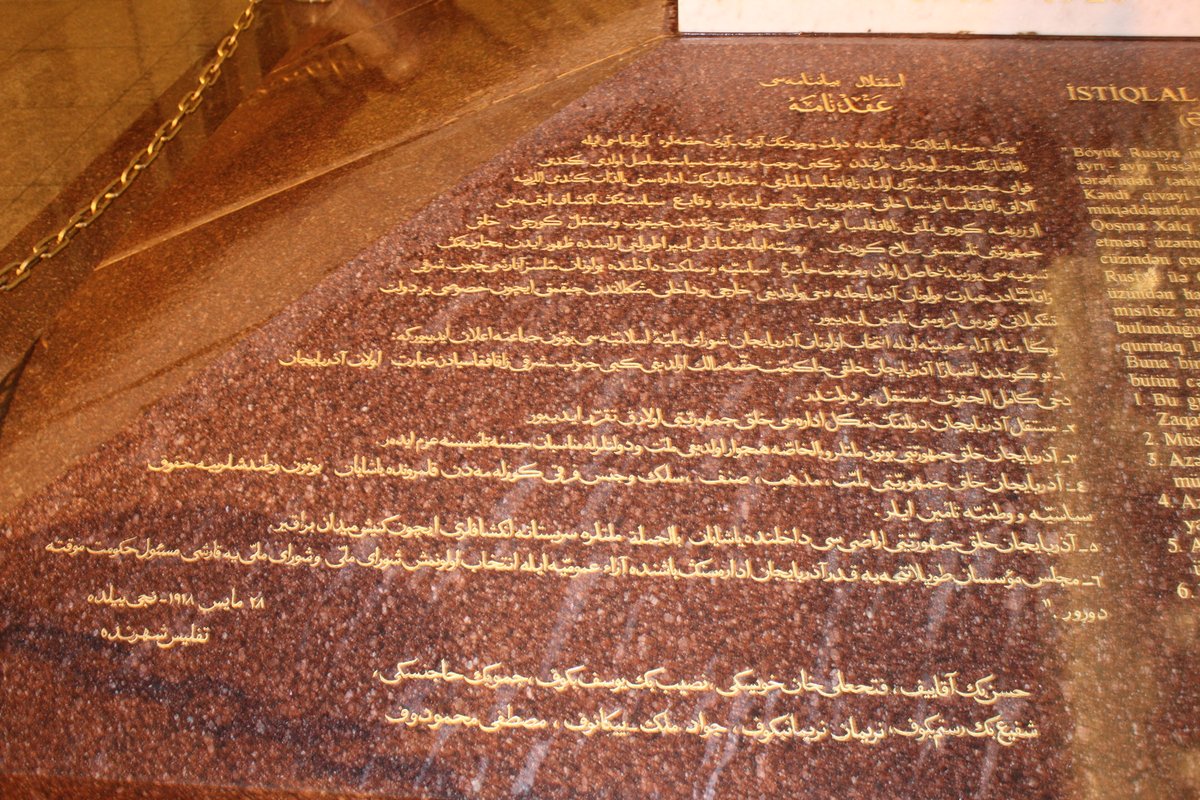
On May 28, 1918, in the aftermath of the Russian Empire’s collapse, the Azerbaijani National Council proclaimed the establishment of the Azerbaijan Democratic Republic. This declaration marked not only the country’s first assertion of modern statehood but also the emergence of the first secular and democratic republic in the Islamic world. The text, known as “Azərbaycanın İstiqlal Bəyannaməsi,” emphasized self-determination, equality, and civil rights for all citizens (Wikipedia).
Despite the ADR’s brief existence—overthrown by Soviet forces in 1920—its ideals endured, inspiring subsequent generations through periods of cultural suppression and political upheaval.
Soviet Rule and the Revival of National Identity
From 1920 until 1991, Azerbaijan remained under Soviet control. Yet, the spirit of independence survived through cultural expression, collective memory, and periodic calls for greater autonomy. The late 1980s and early 1990s were marked by renewed nationalist movements, most notably the Black January events of 1990, which galvanized public support for sovereignty (MexicoHistorico).
The 1991 Declaration of Independence
On October 18, 1991, Azerbaijan declared independence from the Soviet Union, reaffirming the principles of the 1918 ADR. This act, supported in a nationwide referendum, reestablished Azerbaijan as a sovereign state and set the stage for modern nation-building (Office Holidays).
The Monument: Symbolism, Architecture, and Location
Design and Symbolism
The Declaration of Independence Monument is constructed of granite and white marble, with inscriptions of the 1918 declaration rendered in both old Arabic and modern Latin scripts. These features symbolize Azerbaijan’s linguistic and cultural continuity across eras. The monument also prominently displays national emblems, such as the crescent and eight-pointed star, and artistic motifs referencing the country’s heritage as the “Land of Fire” (Wikipedia, tdbb.org.tr).
Urban Context and Accessibility
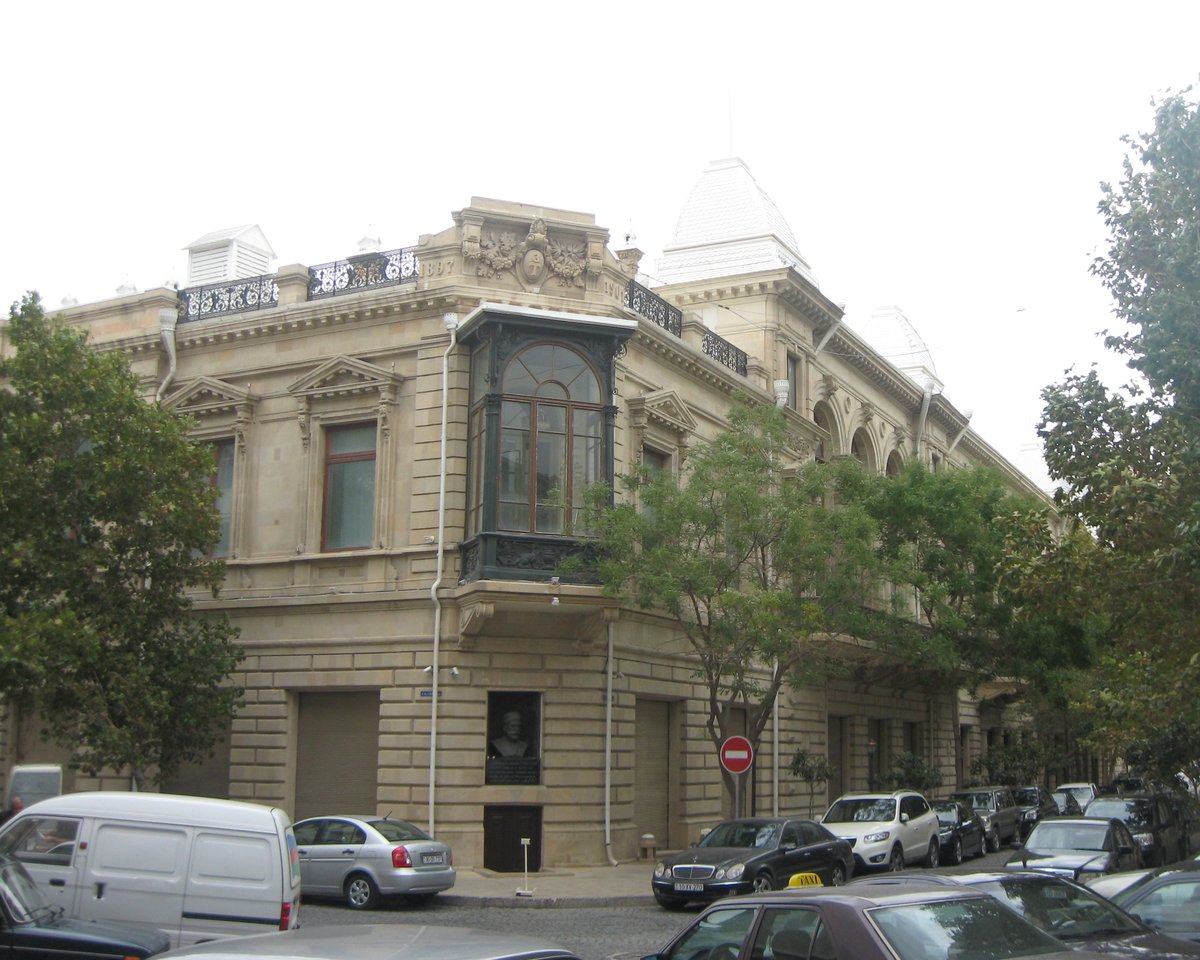
Strategically situated on Istiglaliyyat Street in the Nasimi district, the monument is flanked by the Institute of Manuscripts and the Azerbaijan State Economic University (DBpedia). Its central location places it within easy reach of major landmarks such as the Old City (Icherisheher), Highland Park, the Flame Towers, and Martyrs’ Lane (Trek Zone). The surrounding area, enhanced by urban renewal initiatives, features wide, accessible sidewalks and green spaces.
Visiting Information: Hours, Tickets, and Access
Visiting Hours and Admission
- Open 24/7: The Declaration of Independence Monument is outdoors and accessible at all times.
- Free Entry: No tickets or admission fees are required.
Getting There
- By Metro: The closest station is “Icherisheher” (Red Line), with a 10–15 minute walk along historic streets.
- By Bus: Buses 5, 6, 18, and 65 stop nearby on Istiglaliyyat Street.
- By Taxi/Ride-Hailing: Services like Bolt and Uber are available citywide; specify “Declaration of Independence Monument” or “Istiglal Bəyannaməsi Abidəsi.”
- On Foot: The monument is a pleasant walk from central Baku, passing through Nizami Street and the Old City.
- By Car: Limited street parking is available, especially on Parliament Avenue.
Accessibility
- Wheelchair Access: The area features ramps and wide, paved walkways suitable for visitors with mobility challenges.
- Facilities: While the monument itself has no dedicated amenities, nearby Highland Park and the base of Flame Towers have public restrooms and cafes.
Visitor Experience and Practical Tips
- Best Time to Visit: Spring (April–June) and autumn (September–November) offer mild weather. Republic Day (May 28) is especially vibrant with official ceremonies and cultural events.
- Photography: Permitted at all times; the monument is beautifully illuminated at night.
- Dress Code: No formal requirements, but modest attire is recommended.
- Safety: The area is generally safe, with visible police presence due to nearby government buildings.
- Language: Azerbaijani is official, but English and Russian are widely spoken in tourist areas.
Nearby Attractions
- Highland Park (Upland Park): Panoramic views of Baku and the Caspian Sea.
- Flame Towers: Iconic modern skyscrapers, visible from the monument.
- Martyrs’ Lane (Şəhidlər Xiyabanı): Memorial site honoring those lost in the struggle for independence (Evendo).
- Old City (Icherisheher): UNESCO World Heritage Site with historic mosques and palaces.
- Palace of the Shirvanshahs, Baku Fortress Wall, Aliagha Vahid Monument, and Museum of Miniature Books: All within walking distance, offering a broader exploration of Baku’s heritage (Trek Zone, Caliber.az).
Cultural and Urban Context
Integration with Baku’s Identity
Located at the crossroads of history, academia, and government, the monument reflects Baku’s evolution as a city where East meets West. The use of multiple scripts on the monument highlights Azerbaijan’s linguistic and cultural transitions. Its proximity to universities and research institutions underscores the role of education and intellectual engagement in shaping national identity (Adventure Backpack).
Public Events and National Celebrations
- Republic Day (May 28): The monument becomes the epicenter of national ceremonies, including speeches, patriotic performances, and wreath-laying (Wikipedia).
- Year of Constitution and Sovereignty (2025): Marked by special events, exhibitions, and lectures (Caliber.az).
- Other Events: Civic rallies, student programs, and cultural performances foster community engagement (Guided Azerbaijan, Tickets AZ).
Frequently Asked Questions (FAQs)
Q: What are the visiting hours for the Declaration of Independence Monument?
A: The monument is open 24/7 with free entry.
Q: Is the monument accessible for visitors with disabilities?
A: Yes, ramps and paved pathways ensure accessibility.
Q: Are guided tours available?
A: Many city tours include the monument; check with local operators for details.
Q: When is the best time to visit?
A: Spring and autumn for weather, or Republic Day (May 28) for special events.
Q: Can I take photographs?
A: Yes, photography is encouraged; be respectful during ceremonies.
Summary and Final Tips
The Declaration of Independence Monument in Baku is more than a historical landmark—it is a living symbol of Azerbaijan’s enduring spirit, democratic legacy, and cultural pride. Its central location, open access, and integration into public life make it a cornerstone for anyone seeking to understand Azerbaijan’s journey to nationhood. Combine your visit with nearby attractions for an enriching exploration of Baku’s diverse heritage. For enhanced experiences, explore guided tours, online resources, and mobile applications like Audiala for audio guides and cultural insights (Guided Azerbaijan, tdbb.org.tr, Wikipedia).
Listen to the full story in the app
The whole The Declaration Of Independence Monument,
told well.
Audio guides for 1,100+ cities across 96 countries. History, stories, and local insight — offline ready.
Verified, and shown.
Researched and written by the Audiala editorial team from historical records, architectural archives, and local expertise.
Researched from Wikidata, Wikipedia & official sources · fact-checked · How we make our guides →