Plan and listen to Sheikh Ibrahim Mosque with Audiala.
Audio guide in your pocket, itinerary in your browser. Built for the way you actually visit.
Introduction
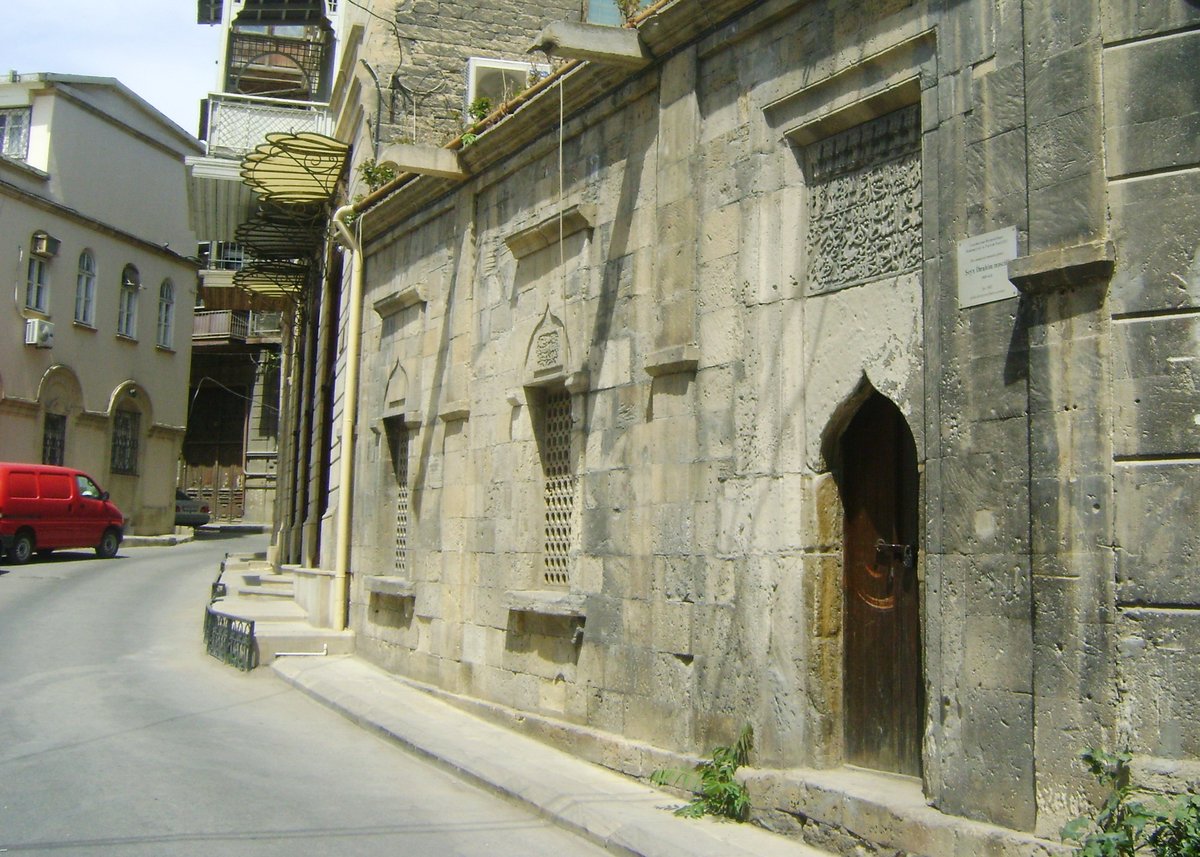
Sheikh Ibrahim Mosque, gracefully positioned in the heart of Baku’s UNESCO-listed Old City (Icherisheher), stands as a living testament to Azerbaijan’s enduring Islamic heritage and architectural tradition. Built in the early 15th century during the reign of Shirvanshah Ibrahim I, this mosque is not only an emblem of spiritual devotion but also a showcase of the Shirvan-Absheron architectural school—renowned for its use of local limestone, intricate muqarnas, and Arabic calligraphy. Today, the mosque continues to serve as a madrasa and community hub, harmonizing with the labyrinthine streets of Icherisheher and inviting visitors into a vibrant chapter of Baku’s layered past (Wikipedia, Eurasia Travel, LetsGoBaku).

Historical Background and Cultural Significance
Foundation and Legacy
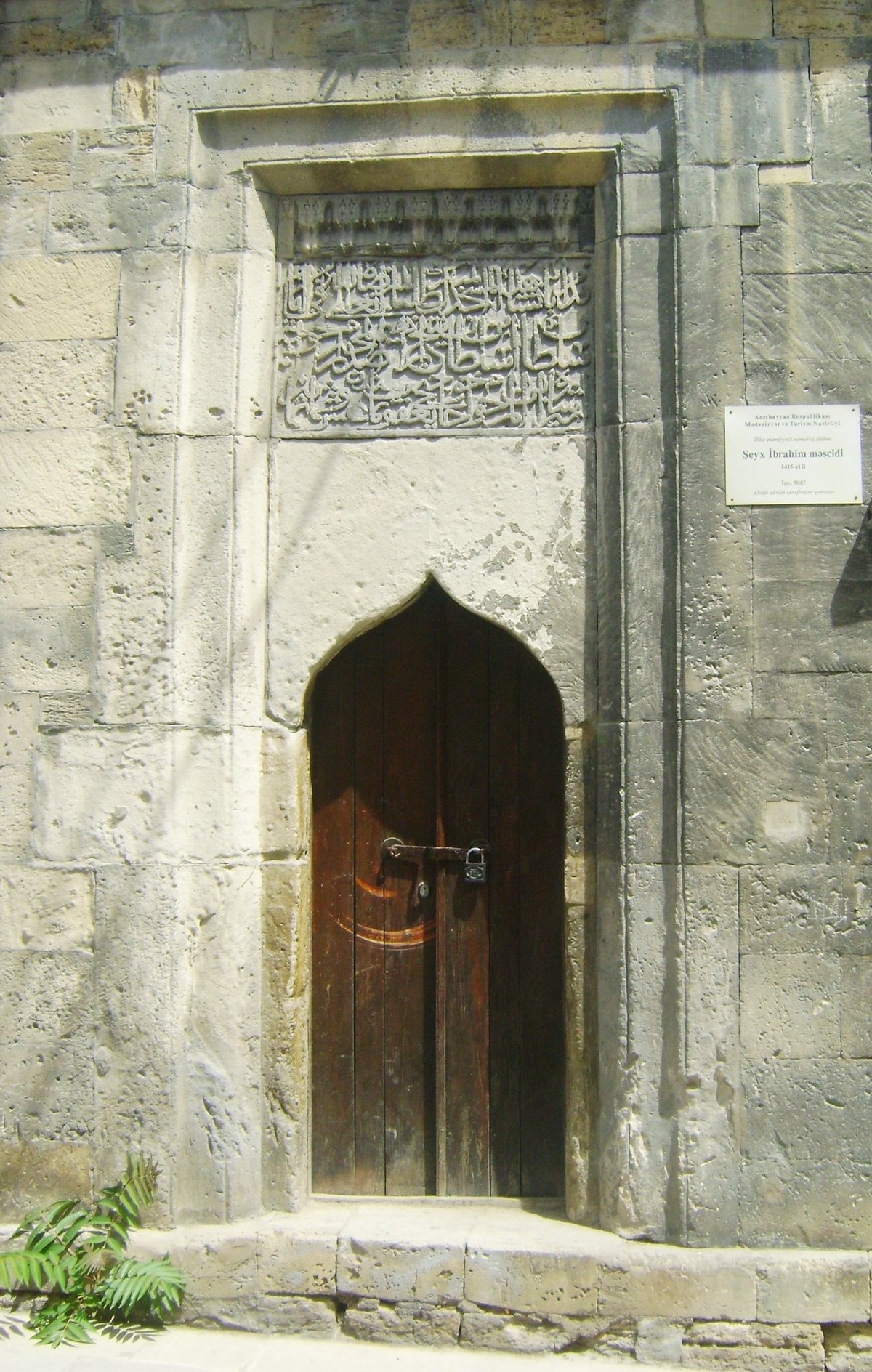
Constructed in 1434/1435 CE (838 AH), as confirmed by a wall inscription, Sheikh Ibrahim Mosque was commissioned by Haji Amirshah ibn Yagub under the patronage of Shirvanshah Ibrahim I. The Shirvanshah dynasty’s support for religious and cultural institutions is evident in the mosque’s proximity to the Palace of the Shirvanshahs and other significant sites in Icherisheher (Wikipedia).
Architecture and Artistic Features
The mosque exemplifies the Shirvan-Absheron style, marked by its use of pale local limestone, modest yet harmonious proportions, and decorative elements like muqarnas and calligraphic inscriptions. The rectangular prayer hall, oriented towards Mecca, features a finely carved mihrab and restrained ornamentation. Over centuries, Sheikh Ibrahim Mosque has been preserved through community efforts, most notably by Agha Gafar Haji Murad oghlu, whose dedication is immortalized in an inscription. Among Icherisheher’s 23 religious monuments, it remains one of just five functioning mosques (Arts & Culture Google).
Resilience Through Adversity
During the Soviet era, religious activities in Azerbaijan were heavily restricted, and many mosques were closed or repurposed. The number of operational mosques dropped dramatically, but Sheikh Ibrahim Mosque endured, regaining its status as a religious and educational center after Azerbaijan’s independence. In 2001, it was designated a national historical and cultural monument, reflecting its importance to the country’s heritage (Wikipedia).
Community and Spiritual Role
Beyond serving as a place of worship, Sheikh Ibrahim Mosque has historically been a site for education and community gathering. Its ongoing function as a madrasa under the administration of the nearby Juma Mosque underscores its enduring legacy in fostering religious learning and social cohesion in Baku (LetsGoBaku).
Practical Visitor Information
Visiting Hours and Tickets
- Hours: Open daily from 9:00 AM to 6:00 PM. Access to the interior may be restricted during prayers or educational sessions.
- Admission: Free of charge. Donations are welcome to support preservation.
Guided Tours
Several local operators include Sheikh Ibrahim Mosque in Old City walking tours, often alongside the Maiden Tower and Palace of the Shirvanshahs. For deeper insights, consider joining a guided tour (LetsGoBaku).
Accessibility
Located on Asaf Zeynalli (or Kichik Gala) Street in Icherisheher, the mosque is easily accessible on foot but note the Old City’s uneven, cobbled lanes. Visitors with mobility challenges should plan accordingly.
Photography
Photography is allowed in exterior areas and, where permitted, inside the mosque. Always ask for permission and avoid using flash during prayers.
Dress Code and Etiquette
- Attire: Modest dress is required—men in long trousers, women with covered arms, legs, and headscarves.
- Shoes: Remove shoes before entering the prayer hall.
- Behavior: Maintain silence, avoid interrupting prayers, and seek permission before taking photos (Learn Religions, Mairaj Ul Quran).
Architectural Highlights
Exterior Features
- Materials: Locally quarried limestone, giving the building its distinct warm hue and fine grain (cyberleninka.ru).
- Portal: Pointed arch with muqarnas and geometric calligraphy.
- Minaret: Slender, cylindrical, capped with a conical roof and adorned with Kufi inscriptions.
Interior Elements
- Prayer Hall: Square plan with a conical dome, high windows for diffused light, and excellent acoustics.
- Mihrab and Minbar: Finely carved mihrab with Quranic inscriptions and muqarnas; adjacent minbar for sermons.
- Decorative Art: Intricate muqarnas, geometric patterns, and Kufi script, reflecting advanced craftsmanship.
Integration with the Old City
Sheikh Ibrahim Mosque’s modest scale fits naturally into Icherisheher’s dense urban fabric, serving as a neighborhood focal point and symbolizing the adaptability of Azerbaijani architects to the city’s sloping terrain (cyberleninka.ru).
Visiting Experience and Nearby Attractions
- First Impressions: The mosque’s understated elegance is complemented by the surrounding Old City’s medieval walls and winding alleys.
- Nearby Sites: Maiden Tower, Palace of the Shirvanshahs, caravanserais, and museums—ideal for combining into a full-day heritage tour (eurasia.travel, makemytrip.com).
Visitor Tips & Recommendations
- Visit during spring or autumn for comfortable weather.
- Schedule your visit outside major prayer times for a quieter experience.
- Respect local customs and contribute to preservation efforts through donations.
- Combine your mosque visit with a guided tour of Icherisheher’s highlights.
Frequently Asked Questions (FAQ)
Q: What are the mosque’s visiting hours?
A: Daily from 9:00 AM to 6:00 PM, with possible variations during religious holidays.
Q: Is there an entrance fee?
A: No, entry is free; donations are encouraged.
Q: Are guided tours available?
A: Yes, through local tour operators and some community programs.
Q: Is the mosque accessible for people with disabilities?
A: Accessibility is limited due to the historic setting and uneven surfaces.
Q: Can I take photos?
A: Photography is allowed outside and, where permitted, inside. Always ask for permission.
Listen to the full story in the app
The whole Sheikh Ibrahim Mosque,
told well.
Audio guides for 1,100+ cities across 96 countries. History, stories, and local insight — offline ready.
Verified, and shown.
Researched and written by the Audiala editorial team from historical records, architectural archives, and local expertise.
Researched from Wikidata, Wikipedia & official sources · fact-checked · How we make our guides →